Where to Find Distressed Properties: A Real Investor's Field Guide (2026)

TL;DR: Distressed properties are not hidden. They are scattered across disconnected county databases, court filing systems, and tax records that most investors never systematically access. The six primary sources are tax delinquency records, lis pendens filings, probate court records, code violation databases, absentee owner records, and bankruptcy filings. Each signal type identifies a different type of motivated seller. A platform that aggregates all six across 3,200+ counties gives investors a systematic edge over those relying on Zillow, MLS, or one-off driving-for-dollars campaigns. Browse distressed property signals by county at DistressIQ.
Most investors looking for distressed properties are working from an incomplete map. They check Zillow. They drive neighborhoods on weekends. They ask their agent about MLS listings with deferred maintenance. And they wonder why the same 10 properties keep appearing in their search results.
The uncomfortable truth is that distressed properties are not hard to find. They are hard to find systematically. They are scattered across six or seven separate public record systems, none of which talk to each other. Most investors know one or two of these systems at best, and miss the rest entirely.
This guide covers every legitimate source for finding distressed properties in 2026. Some are free and slow. Some are fast and expensive. The goal is to understand all of them so you can decide where to spend your time.

Why Distressed Properties Are Worth Finding
Distressed properties are off-market by definition. The owner is not casually testing the market. They are dealing with a specific situation, financial or personal, that makes a clean, fast sale more valuable than waiting for retail pricing. That situation creates pricing leverage for the buyer.
A homeowner facing pre-foreclosure needs to sell before the auction date. An heir settling an estate has no emotional attachment to the property and needs liquidity. A tax-delinquent owner facing a county auction will accept a below-retail offer to resolve the debt cleanly. Every signal type represents a different motivated-seller archetype. The investor who monitors all six simultaneously casts a wider net than one relying on Zillow or a single lead source.
The Six Primary Sources for Distressed Property Leads
1. Tax Delinquency Records
County tax assessor databases track every property where taxes have gone unpaid beyond the grace period. The signal is simple: a property owner who has not paid property taxes has a cash flow problem that does not resolve on its own. Either they catch up, sell the property, or the county places the lien up for auction.
Tax-delinquent properties are valuable because the county sale process creates a hard deadline. When a tax sale date is set, the owner has a fixed window to redeem the property or lose it at auction. That deadline concentrates motivation in a way MLS listings never do. The challenge: each county maintains its own list, format, and search interface, requiring navigation of multiple separate systems to cover even five counties.
2. Lis Pendens and Pre-Foreclosure Filings
Lis pendens is a legal notice filed in county court indicating that a property is involved in a lawsuit that could affect title. In most states, a lender filing for foreclosure records lis pendens on the property, appearing in county court records before the auction notice or auction date is set.
This is one of the earliest public signals that a foreclosure is in progress. The window between lis pendens filing and the actual foreclosure auction is measured in months in most states. That is months of negotiation time before the property becomes an auction listing that every county investor is competing for. An investor monitoring lis pendens filings has a structural time advantage over one waiting for auction listings to appear on public portals.
3. Probate Court Records
When a property owner dies, the estate goes through probate court and any real property becomes an asset that must be liquidated, distributed, or refinanced by the heirs. Heirs frequently have no desire to become landlords, particularly with out-of-state or deteriorated properties. A fair cash offer with a quick close solves their problem cleanly. Probate court records are public, though access varies by jurisdiction. Some publish filings online; others require courthouse visits. The information exists. The access is the work.

4. Code Violation Records
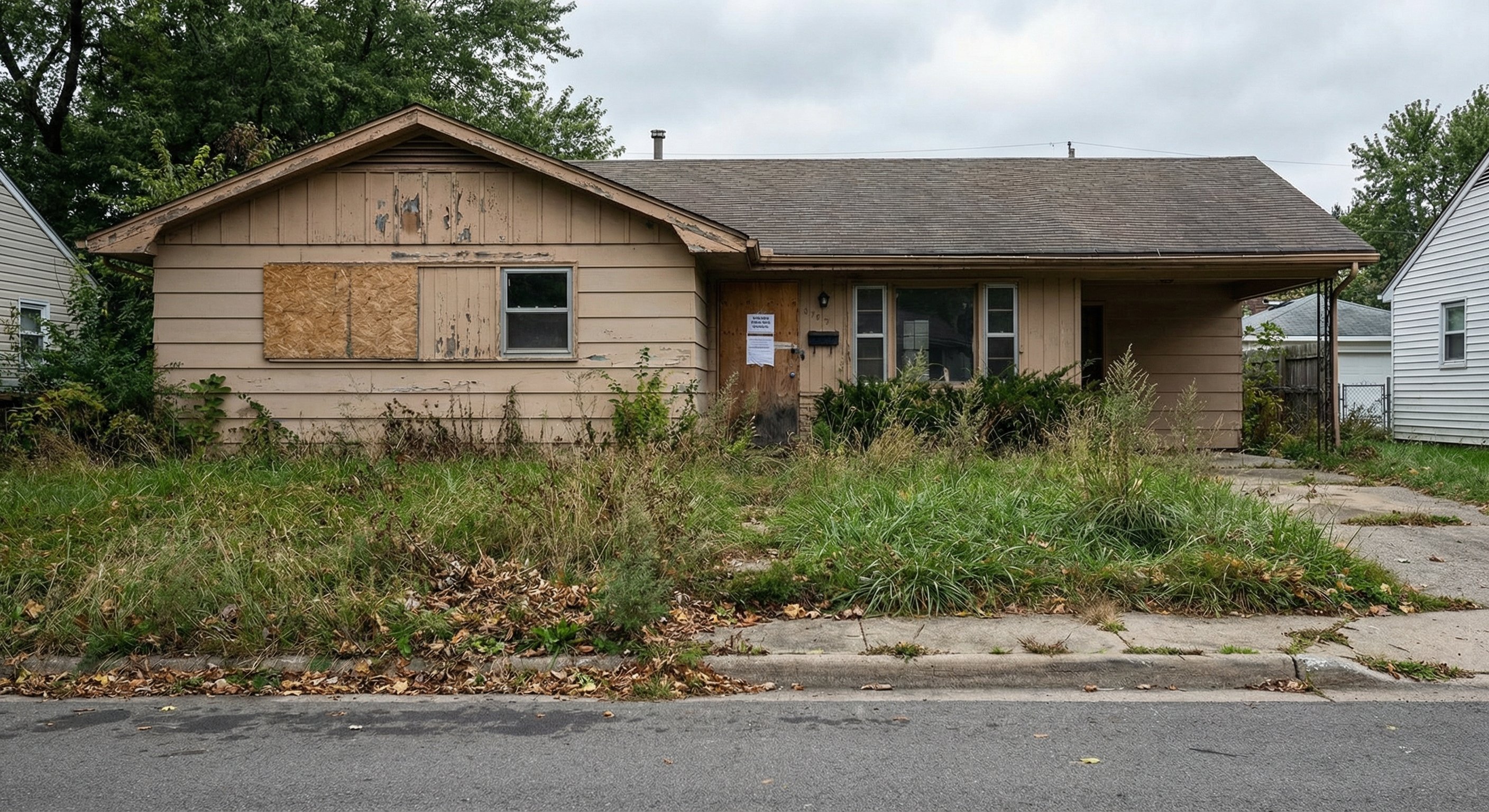
Code enforcement departments track properties with building code violations, overgrown grass complaints, abandoned vehicle violations, and similar municipal infractions. Code violations are a leading indicator of property distress. An owner who has ignored multiple notices is likely dealing with a financial problem, an ownership dispute, or a property that has become a liability. These situations do not improve without intervention. The property either gets sold or the violations accumulate until the city places a lien or demolition order. Code violation databases provide the most granular view of neighborhood-level distress in a specific city or ZIP code.
5. Absentee Owner Records
Absentee owner properties are homes where the mailing address on file differs from the property address, a public record data point available through county assessor databases in most jurisdictions. Many absentee owners are out-of-state landlords who stopped managing the property due to distance, cost, or tenant problems. Some inherited the property and never moved in. They are frequently motivated to sell. The property is not their home. Carrying costs and maintenance demands make holding it a hassle. A clean offer with a quick close has genuine appeal. The signal is particularly valuable when stacked with other distress signals, such as tax delinquency or code violations.
6. Bankruptcy Filings
Bankruptcy court records are federal public records accessible through the PACER system. When a property owner files, the filing creates an automatic stay affecting any foreclosure proceedings. Chapter 13 bankruptcy filings are particularly relevant for real estate investors because they involve structured repayment plans that often include provisions for the debtor to catch up on mortgage arrears while keeping the property during the plan period. The bankruptcy signal is less commonly used by retail investors because it requires federal court access and familiarity with bankruptcy procedures. For investors willing to do the research, it is a relatively uncrowded source of highly motivated sellers.
Why Public Portals Miss Most Opportunities
Most investors begin on Zillow or MLS. These platforms are useful for tracking bank-owned properties after a foreclosure is complete. For finding distressed properties before they hit the retail market, they have structural blind spots.
Pre-foreclosure properties are not listed on Zillow. Probate properties are not listed unless the estate has already engaged an agent. Tax-delinquent owners months away from a sale have not listed anything. MLS has a lag between when an owner decides to sell and when a listing appears, during which the most motivated sellers are avoiding public exposure. Even when REO properties do appear on Zillow, institutional buyers have typically had access to the pre-listing data for weeks and already bid the price toward retail. No major portal captures all six distress signal types simultaneously. The data exists in public records. The portals do not pull from all of it.
Free Weekly Alerts
See What's Distressed in Your Market
Get free weekly alerts — new distressed properties, motivation scores, and hot neighborhoods in your area. Addresses and contact info available inside DistressIQ.
Free forever · No credit card · Unsubscribe anytime
How to Evaluate Distressed Properties Quickly
Three metrics determine whether a distressed property is worth pursuing: repair cost estimates, after-repair value, and the net sheet.
Repair costs require on-the-ground information that cannot be obtained from a desktop analysis. Drive-by inspections and Google Street View give a preliminary read. The actual estimate comes from a contractor walkthrough before any offer is made on a property with significant deferred maintenance.
ARV is determined by comparable sales in the same neighborhood. Properties in poor condition often lack clean nearby comps, which requires estimating based on condition-adjusted values of the most similar recent sales. The net sheet combines these: ARV minus repair costs minus carrying costs minus the target profit margin equals the maximum allowable offer. Investors who skip this step tend to overpay on aspirational ARVs or underpay and lose deals to more disciplined competitors.
The most common mistake with found properties is emotional attachment. A property that looks perfect at the drive-by becomes less attractive when the contractor estimate comes back at $85,000 over budget. Discipline in the evaluation step prevents paying retail prices for distressed inventory.

Building a Systematic Lead Pipeline
The investors who consistently find the best distressed property deals have built a systematic pipeline that monitors multiple signal types across their target markets on a recurring basis.
The core is consistent monitoring. A county records a new tax delinquency every week. A probate case opens every time a property owner dies. A lis pendens filing happens whenever a lender initiates foreclosure. These events do not wait for an investor to go looking. The investor who checks county records once a month finds fewer opportunities than the one who monitors continuously.
Manual research across multiple county databases is slow, error-prone, and difficult to scale. Investors who have built sustainable businesses in this space typically use aggregation services that pull multiple signal types into a single interface.
DistressIQ aggregates tax delinquency, lis pendens, probate, code violation, absentee owner, and bankruptcy signals from county records across 3,200+ US counties. Each property carries a motivation score based on the density and recency of distress signals present. Properties with multiple overlapping signals, such as a tax-delinquent absentee owner with an open code violation, rank higher than properties with a single signal. Property characteristics come from county assessor records, not MLS, meaning square footage, lot size, and year built reflect the official government record rather than a listing agent's estimate.
Browse Distressed Property Signals by County
The fastest way to see what distressed property opportunities look like in a specific county is to run a search on DistressIQ. Filter by signal type, motivation score range, and property characteristics. Export results as CSV for offline analysis or skip-tracing.
Founding member pricing: Starter $89 per month, Pro $174 per month, Elite $349 per month. All founding plans include a 30% discount locked for the life of the subscription. Skip tracing is available at $0.08 per record through prepaid credit packs.
Browse distressed property signals at DistressIQ.

Frequently Asked Questions
What type of distressed property is best for investors?
Pre-foreclosure properties offer the best balance of motivated sellers and accessible pricing. The owner has received a foreclosure filing and has a defined window to sell or redeem before auction. There is no institutional competition yet at this stage. Tax-delinquent properties facing an upcoming county sale are also valuable, particularly when the owner has a hard deadline to resolve the debt or lose the property.
Can you find distressed properties without paying for a list?
Yes. County assessor websites are free in most jurisdictions. Tax delinquency lists, absentee owner records, and property characteristic data are available directly from the county. Probate court records and lis pendens filings are accessible through county court websites or in-person visits. The limitation is that each county operates its own system in its own format, making broad multi-county research time-intensive. The data is free. Compiling it systematically is not.
What is the best website for finding distressed properties?
For speed and breadth, DistressIQ covers distressed property signals from 3,200+ US counties in a single interface. For manual research, county assessor websites provide free access to tax records and property data. Third-party platforms compile some of this data with different coverage, update frequencies, and pricing models. Active investors typically combine an aggregation tool with direct county record research in their primary target markets.
What are the main distress signal types?
The primary signal types are pre-foreclosure and lis pendens filings indicating active foreclosure litigation, tax delinquency showing unpaid property taxes with a county lien or upcoming sale, probate cases where an estate must liquidate the property, code violations indicating deferred maintenance or ownership neglect, absentee ownership where the mailing address differs from the property address, and bankruptcy filings affecting the property owner. Each corresponds to a different motivation type. Properties with multiple overlapping signals typically represent the strongest investment opportunities.
The data behind this article
DistressIQ Monitors These Signals in Real Time
Pre-Foreclosures
NOD + NTS filings
Tax Delinquency
County treasurer records
Code Violations
Municipal inspection filings
Probate Filings
Superior Court records
Every lead is scored 0–100 for seller motivation based on signal type, duration, severity, and stacking. Nationwide coverage — every US county, updated daily.
Ready to find deals in your market?
See Live Distress Signals in Your County
Stop calling dead leads. Every lead in DistressIQ is scored 0–100 for seller motivation, with verified contact info included. Browse the free tier to see what's active in your market right now.
Browse Free Leads — No Credit Card