How to Skip Trace Real Estate: The Modern Investor's Field Guide (2026)
How to Skip Trace Real Estate: The Modern Investor's Field Guide (2026)
TL;DR: Skip tracing finds contact info for property owners you can't reach directly. The industry average right-party contact rate is just 25-35%, but premium tools hit 76%+ by using credit header and utility data rather than public search aggregation. For distressed properties specifically, skip tracing alone fails because half the targets are deceased, in probate, or relocated. The smarter approach: use DistressIQ to get pre-enriched contact data and only skip trace as a secondary validation step on leads that have already been scored for motivation.

The Problem Nobody Talks About in Skip Tracing Guides
You have a list of 200 properties. Tax delinquent, pre-foreclosure, some absentee owners. You ran the county data yourself. You have addresses. You have names.
And you can't reach any of them.
The phone numbers are wrong. The mailing addresses are outdated. The owners moved three years ago and left no forwarding information. You've got a list of motivated sellers who have no idea you're trying to find them.
That's the gap in every skip tracing article on the internet. They show you how to run a search. They don't tell you that for roughly half of the properties on a typical distressed property list, a skip trace tool will return garbage data, waste your money, and leave you exactly where you started.
This guide does both. It covers the full picture: how skip tracing actually works, what the accuracy numbers mean in practice, which tools earn their cost, and most importantly, when you should skip tracing at all versus using a platform that already has the contact data enriched and verified.
What Skip Tracing Actually Is
Skip tracing is the process of finding current contact information for a person using limited known data. In real estate investing, you typically start with a name and a property address. The skip trace returns phone numbers, email addresses, and a current mailing address.
The name comes from "skip" — a person who has "skipped" town or become difficult to reach through standard channels.
For real estate investors, the workflow usually looks like this:
- Pull a property list from county records (tax delinquent, pre-foreclosure, code violations)
- Run the list through a skip tracing service to get owner phone numbers and emails
- Launch outreach (cold call, text, direct mail)
- Follow up multiple times until you reach the decision-maker
It sounds straightforward. The problem is in step two, and it is massive.

The Accuracy Gap: Why Most Skip Tracing Fails
Here is the number that should be in every skip tracing tool's marketing material: the industry average right-party contact (RPC) rate is 25-35%. Source: BatchData, 2026
That means if you upload 200 property records, you can expect to reach the actual decision-maker for 50-70 of them. The rest get you wrong numbers, disconnected lines, or people who've never heard of the property in question.
Premium tools do significantly better. BatchSkipTracing reports a 76% RPC rate, roughly three times the industry average. REISkip claims 85-90% match rates using multi-source triangulation. Tracerfy ranges from 70-95% depending on the quality of the input data.
Those numbers are real. But they don't tell the whole story.
The accuracy tier breakdown: Source: PeopleLocator, 2026
| Data Tier | Accuracy | Refresh Rate | Best Use |
|---|---|---|---|
| Free people-search sites | 35-50% | Months-old snapshots | Not recommended for any investor use |
| Premium consumer tools | 55-65% | Weekly or monthly | Preliminary investigation, verify independently |
| Mid-tier paid providers | 25-40% | Static or infrequent | Low-volume, budget-conscious campaigns |
| Premium real estate tools | 65-76% RPC | Daily or real-time | High-volume bulk operations |
The gap between 50% and 95% is not a technology difference. It's a data source difference.
Professional skip tracing services use credit header data, active utility accounts, vehicle registration records, and USPS National Change of Address (NCOA) data. These sources update frequently and are identity-verified.
Free and cheap tools pull from marketing data aggregations, old public records snapshots, and social media profiles. The data is stale. The match rates reflect it.
Free Weekly Alerts
See What's Distressed in Your Market
Get free weekly alerts — new distressed properties, motivation scores, and hot neighborhoods in your area. Addresses and contact info available inside DistressIQ.
Free forever · No credit card · Unsubscribe anytime
Why Distressed Properties Make Skip Tracing Harder
The standard skip tracing advice was written for standard real estate investing. Distressed property investing is a different animal.
The core problem: distressed property owners are disproportionately harder to locate than standard property owners. This isn't a coincidence — the same financial distress that puts a property into pre-foreclosure or tax delinquency often involves relocation, estate complications, or financial instability that makes tracking harder.
Consider the breakdown of a typical distressed property list:
Absentee owners — These properties may be rental homes or inherited properties where the owner lives elsewhere. Out-of-state landlords are a real estate investing staple, but they're also harder to skip trace because they deliberately maintain a different mailing address than the property address. Standard skip tracing will often return the property address, not the actual mailing address where the owner can be reached.
Probate and heir properties — When a property owner dies, the property transfers to an estate. The heirs are now the decision-makers, but they're not necessarily listed in any public record. You might successfully skip trace the deceased owner's name and get a disconnected number. Finding the actual heir who can authorize a sale requires cross-referencing probate court filings, which most skip tracing tools don't touch.
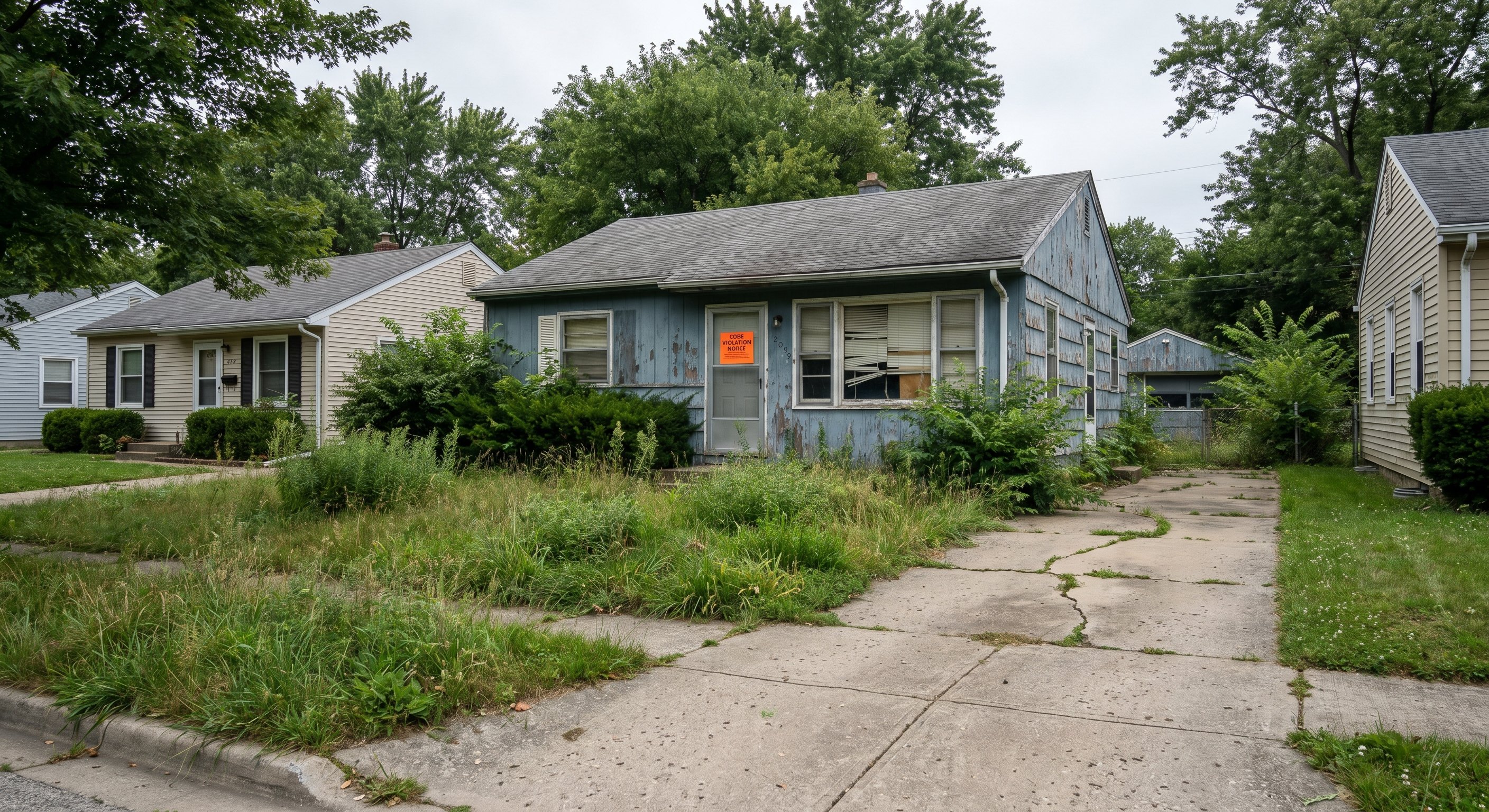
Vacant and abandoned properties — If the owner hasn't been to the property in years, the utility accounts have changed, the mailing address has lapsed, and the phone number on file is probably disconnected. A skip trace of a vacant property address has a higher-than-average failure rate precisely because the property exists outside normal communication channels.
Properties with liens — If there's a judgment lien or second mortgage on the property, the lienholder may have more claim to the proceeds than the owner. A skip trace gives you the owner's contact info, but the owner may not even be legally empowered to sell without the lienholder's involvement.
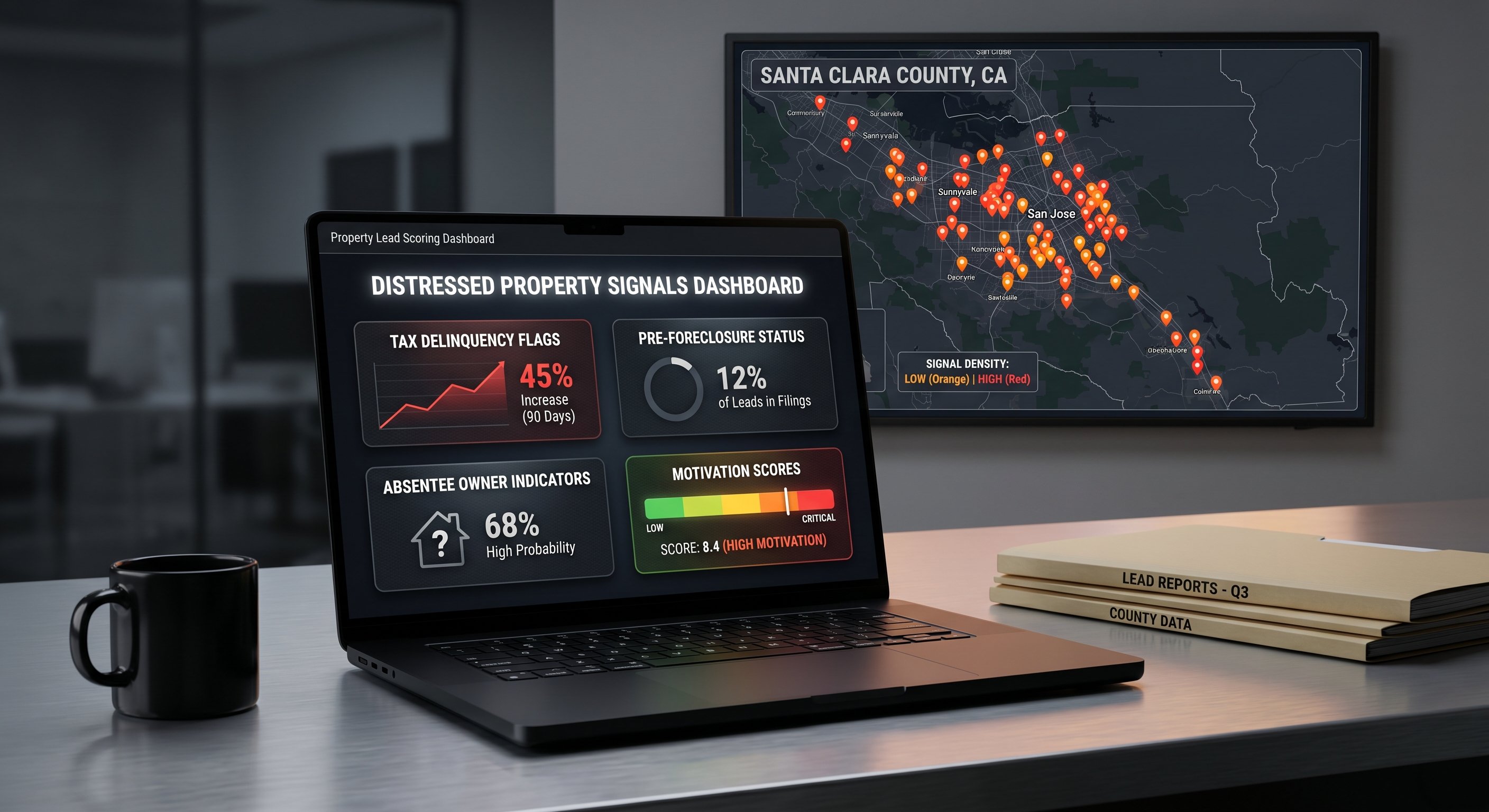
This is why DistressIQ takes a different approach. Instead of starting with raw county data and asking you to skip trace everything, it scores and ranks leads by motivation signal strength and pre-enriches contact data so you can focus on the properties most likely to result in a conversation, not the properties that are technically locatable but practically unreachable.
The Five Skip Tracing Methods Ranked by Effectiveness
There are five ways to get contact information for a property owner. They vary dramatically in cost, accuracy, and scalability.
1. Automated Bulk Skip Tracing (Recommended for Volume)
Upload a CSV of property records to a service like BatchSkipTracing, TLO, or Voter.com. Within 24-48 hours, you receive a report with phone numbers, email addresses, and current mailing addresses.
Cost: $0.02 to $0.15 per record depending on the provider and the data tier you request.
Accuracy: 65-76% RPC for premium providers.
Best for: Investors processing 100+ leads per week who need consistent, scalable results.
The key variable is the data provider's source depth. Services that only check public records and marketing databases get 40-55% accuracy. Services that cross-reference credit header, utility data, and NCOA records get 75%+. Ask your provider specifically what data sources they use and how recently they were updated.
2. Manual Online Search (Free but Slow)
This means manually searching Facebook, LinkedIn, and public records for each property owner. Search by name + last known city. Cross-reference employment information, mutual connections, and any public posts that include an address or phone number.
Cost: Free (just your time).
Accuracy: Variable. For owners with active social media presence, you might find accurate data. For people who've deliberately gone private, you get nothing.
Best for: Vetting a small batch of high-priority leads before spending money on a bulk skip trace. Not scalable past 10-15 properties per session.
3. County Recorder Cross-Reference
The county recorder's office maintains all deed records, which include the grantee's mailing address at time of purchase. For properties where the owner hasn't updated their mailing address with the county, this can return an old address rather than a current one. But for properties where the owner has filed a homestead exemption or recently updated contact information, this gives you a direct source that's more reliable than marketing databases.
Cost: Free (usually) if you can access it online. Nominal per-document fee if you need physical copies.
Accuracy: Moderate. The data is authoritative but often stale. Good for verification, not primary sourcing.
Best for: Confirming a skip trace result or doing a small-batch manual lookup when you don't want to pay for a bulk service.
4. Probate Court Records Search
For deceased owners, the probate court records are your primary path to finding the actual decision-maker. Probate filings identify the executor or administrator of the estate, their attorney, and in many cases, the heirs. This information rarely appears in standard skip tracing tools.
Cost: Free to nominal per-document. Time-intensive to search manually.
Accuracy: High for the information it covers (deceased owner estates). Completely missing for non-probate properties.
Best for: Distressed property lists where you suspect a significant portion of the properties are heir-owned or in estate administration. This is one of the most underutilized skip tracing methods for investors who work probate and tax-delinquent properties specifically.
5. Neighbor and Local Contact (High-Effort, Context-Dependent)
Driving to a property and talking to neighbors is one of the oldest investor techniques. Neighbors often know whether the owner still lives there, where they moved, whether the property is being maintained by a family member, and whether there's an ongoing estate or dispute.
Cost: Free (gas and time).
Accuracy: Highly situational. Works best in stable neighborhoods with long-term residents. Useless in vacant properties, rural areas, or properties with no neighboring occupants.
Best for: High-value leads where you've confirmed a motivated seller situation through other signals and want to confirm the contact path before spending money on formal skip tracing.
How to Structure a Skip Tracing Workflow That Actually Works
The investors who get the best results from skip tracing don't run every record they find through a skip tracing service. They run a filtered list through a premium service and use a CRM to manage the follow-up sequence.
Here is the workflow:
Step 1: Pull your property list. Use county records, tax delinquent lists, pre-foreclosure filings, or a distressed property platform. Aim for 200-500 records per batch.
Step 2: Score and rank by motivation. Before you skip trace anything, filter for distress signals. Properties with code violations, prolonged vacancy, existing liens, and probate filings are far more likely to result in a motivated seller conversation than a clean pre-foreclosure. Skip tracing a list of 500 unmotivated sellers gets you a 76% RPC rate on leads that will never sell. That's not a good outcome.
Step 3: Run the top tier through a premium skip tracing service. Pull the top 50-100 properties by motivation score. Run them through BatchSkipTracing or a comparable premium provider. Budget $0.02-$0.15 per record. Accept that you'll spend $1-15 for this batch.
Step 4: Scrub for DNC and litigious numbers. Before you call, run your results through a TCPA scrub. Calling numbers on the Do Not Call registry exposes you to lawsuits, and calling people who have filed TCPA complaints in the past will get you into expensive litigation. This step is not optional if you're calling at volume.
Step 5: Launch multi-channel outreach. Cold calls get you a conversation rate of 1-3% on a good day. Adding text messages and direct mail to the same leads dramatically improves your overall contact rate. The data from skip tracing tells you who to contact; your follow-up system determines whether you actually reach them.
Step 6: Follow up. The majority of motivated sellers don't respond to the first contact. They respond to the third or fourth. Build a follow-up sequence: call day one, text day three, mail day seven, call day fourteen. If you're not following up, you're leaving deals on the table.
The Better Approach: Start With Enriched Data
Skip tracing is a valuable tool. It's not the right first step for every property list.
When DistressIQ builds its lead lists, it starts with county-direct public records, cross-references them against multiple data enrichment sources, and scores each lead by the strength and recency of distress signals. The contact data comes pre-verified. The motivation scoring tells you which leads to prioritize.
For an investor working 200 distressed property leads, the difference between "run skip tracing on all 200" and "start with pre-enriched data on all 200, then skip trace the top 50" is thousands of dollars and weeks of wasted outreach on leads that were never going to convert.
Distressed property leads with pre-enriched contact data — browse motivated seller signals in your target state and county. Try DistressIQ free →
What Good Skip Tracing Data Actually Costs
The math matters here. If you're paying $0.10 per record for skip tracing on a list of 500 properties, you're spending $50. If your RPC rate is 70%, you get working numbers for 350 records. If 10% of those contacts convert to a real conversation, you have 35 conversations. If 20% of those conversations result in a signed deal, you've reached 7 deals on a $50 investment.
That's a reasonable return. But that's assuming a 70% RPC rate, which requires a premium provider, not a cheap one.
If you use a mid-tier service at $0.03 per record, you spend $15 on the same 500 records. But if your RPC rate drops to 35%, you have working numbers for 175 records, which gives you roughly 17-18 conversations and 3-4 signed deals. The cost per deal doesn't change much, but the volume of deals does.
The cheaper option isn't always the better option. For investors running large batches, the premium services earn their cost through volume. For investors working a small list of 20-30 properties per month, a mix of manual search and one-on-one verification makes more sense.
Common Skip Tracing Mistakes That Cost Investors Deals
Running skip tracing on a list that hasn't been filtered. If half your list has no distress signals and no motivation to sell, you're spending $0.10 per record to reach people who won't take your call. Always score and rank before you trace.
Using free tools for bulk operations. Free people-search sites work for 1-2 lookups. They don't work for 200. The data is stale, the match rates are 40% at best, and you'll spend more time chasing wrong numbers than you save on the upfront cost.
Not scrubbing DNC numbers. This is the mistake that puts investors in litigation. Before you call 200 numbers, run them through a DNC and litigator scrub. The cost is negligible; the legal exposure if you skip it is not.
Calling once and giving up. A single call to a motivated seller is not enough. Most real estate transactions don't happen on the first contact or the fifth. Follow up on every lead at least 4-5 times across multiple channels. Source: RunWithTrip, 2026
Not verifying ownership before calling. If a property is held in an LLC or trust, the skip trace will often return the entity name rather than the managing member's name. You need to resolve the entity first, then skip trace the individual. Some services handle this automatically; others require a separate step.
Frequently Asked Questions
What is a good skip tracing accuracy rate for real estate investors?
The industry average right-party contact rate is 25-35%. Premium services like BatchSkipTracing and REISkip consistently hit 65-76% by using credit header data, utility records, and real-time NCOA matching rather than stale marketing databases. If your current skip tracing service is returning less than 60% contactable numbers, you're wasting money on bad data.
How do I skip trace a property owner for free?
The free methods are manual online searches (Facebook, LinkedIn, public records), county recorder lookups, and neighbor interviews. These work for small batches of 5-15 properties but don't scale. The accuracy of free methods typically ranges from 35-55%, compared to 65-76% for premium automated services. Free is fine if you're working 10 leads. It's not viable if you're working 200.
What is the best skip tracing service for real estate investors?
For bulk operations, BatchSkipTracing is the most documented premium option with a 76% RPC rate and per-record pricing that works for investors at any scale. REISkip, TLO, and Voter.com are also widely used. The key variable is the data source: services that cross-reference credit header, utility, and NCOA data outperform those using only public records aggregation.
How do I skip trace an LLC-owned property?
Most investment properties are held in LLCs, trusts, or corporate entities. A standard skip trace of the LLC name will return the entity's registered agent address, not the actual decision-maker's contact. You need entity resolution: first identify the managing member or authorized signatory through state business filings, then skip trace that individual's name and last known address. Some services handle this two-step process automatically; others require you to resolve the entity before running the trace.
Why does skip tracing fail on distressed properties specifically?
Distressed property owners are harder to locate because they disproportionately fall into categories that standard skip tracing tools handle poorly: deceased owners (requires probate court research), out-of-state absentee owners (mailing address differs from property address), and vacant property owners (utility accounts have lapsed, phone numbers disconnected). The fix isn't a better skip tracing tool — it's starting with a platform that pre-enriches contact data for distressed properties specifically and scores leads by motivation before you ever run a trace.
The data behind this article
DistressIQ Monitors These Signals in Real Time
Pre-Foreclosures
NOD + NTS filings
Tax Delinquency
County treasurer records
Code Violations
Municipal inspection filings
Probate Filings
Superior Court records
Every lead is scored 0–100 for seller motivation based on signal type, duration, severity, and stacking. Nationwide coverage — every US county, updated daily.
Ready to find deals in your market?
See Live Distress Signals in
Stop calling dead leads. Every lead in DistressIQ is scored 0–100 for seller motivation, with verified contact info included. Browse the free tier to see what's active in your market right now.
Browse Free Leads — No Credit Card