Tax Delinquent Properties in New York: How to Find and Buy Them in 2026
Tax Delinquent Properties in New York: How to Find and Buy Them in 2026
TL;DR: New York has two completely different tax delinquency systems — one for New York City and one for the 57 upstate/downstate counties. NYC uses a unique "in rem" foreclosure process and had an active third-party lien sale program that was paused in 2022, creating a backlog of distressed owners now carrying compounding interest. Upstate counties run traditional tax deed auctions. The investor angle depends entirely on where you're targeting. For either market, verified distress signals and motivation scoring tell you which owners are close to breaking point — before your competitors call.
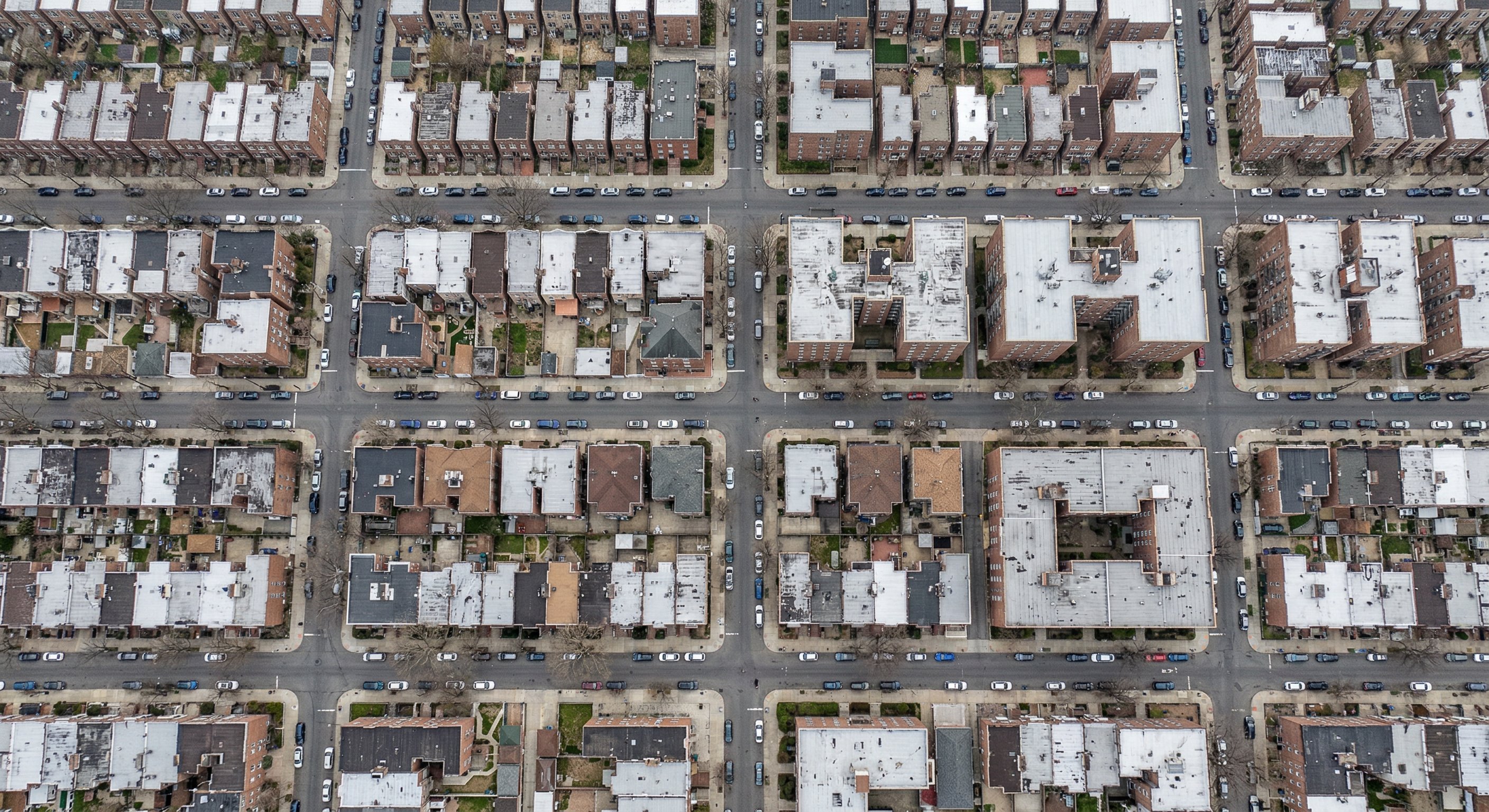
New York is the most expensive real estate market in the country and also one of the most complex for tax delinquency investing. Unlike most states where the process is fairly uniform county to county, New York operates two fundamentally different systems under the same state flag. Get them confused and you'll miss deals, show up to the wrong auction, or waste months chasing properties that aren't going anywhere.
Here's what's actually happening with tax delinquent properties in New York right now — and where the real investor opportunities are in 2026.
The Two New York Tax Systems Investors Need to Know
System 1: New York City (The Five Boroughs)
NYC operates its own Department of Finance (DOF), separate from the 57-county state system. The city doesn't just put properties up for tax deed auction — it can sell the lien itself to a third-party trust or foreclose directly through a legal process called in rem foreclosure.
The math: NYC charges interest on delinquent property taxes at rates that compound daily. As of FY2025, that interest rate is 18% annually for most residential properties (Class 1 and Class 2 properties under the assessed value threshold) and up to 16% for higher-value commercial properties. Compounding daily at 18% means owners who ignore tax bills for 24 months are staring down a debt that's grown by 39%+ on top of the original balance.
For investors, this creates motivated sellers — owners who can't service the debt, can't sell at full retail fast enough to catch up, and are quietly looking for a way out before the city forecloses.
The LienConnect Pause: NYC ran a Third-Party Transfer (TPT) and lien sale program for years, where it would bundle and sell delinquent tax liens to private purchasers. In 2022, the program was paused amid community pushback over gentrification concerns. The city is working on a replacement ("LienConnect") but as of 2026, the traditional lien sale mechanism remains on hold.
What that pause means: owners who would have had their liens transferred are instead just running up compounding interest directly with the DOF. Many of them are now 3-4 years into delinquency with no pressure release valve. That's a motivated seller cohort building in silence.
In rem foreclosure — where the city takes title directly — still proceeds for the most severe cases. These properties end up going to the city's in rem list and then to disposition through the Department of Housing Preservation and Development (HPD) or auction. Tracking in rem filings is one way to get ahead of these opportunities.
System 2: Upstate and Long Island Counties (The 57-County System)
Outside the five boroughs, New York's 57 counties each run their own tax enforcement process following New York Real Property Tax Law Article 11. The standard sequence:
- Year 1-2: Taxes unpaid, penalties accrue
- Year 2-3: County files a tax lien on the property
- Year 3-5 (varies by county): County initiates In Rem Tax Foreclosure under RPTL Article 11
- After judgment: Property is auctioned off by the county — either at a public auction or through a private listing
The key number: New York counties charge 12% annual interest on delinquent taxes by default. Some counties have passed local laws pushing that to 18% for commercial properties. It's not as aggressive as Texas or Florida, but five years of 12% interest on a $15,000 tax bill gets painful fast.
County auctions vary wildly. Westchester County runs its own, Nassau runs one, Suffolk does smaller batches, upstate counties like Erie (Buffalo), Monroe (Rochester), and Onondaga (Syracuse) all have different schedules. Albany County auctions annually. Some counties list surplus properties with brokers instead of auctioning them publicly.
Where the Volume Is: Top New York Investor Markets
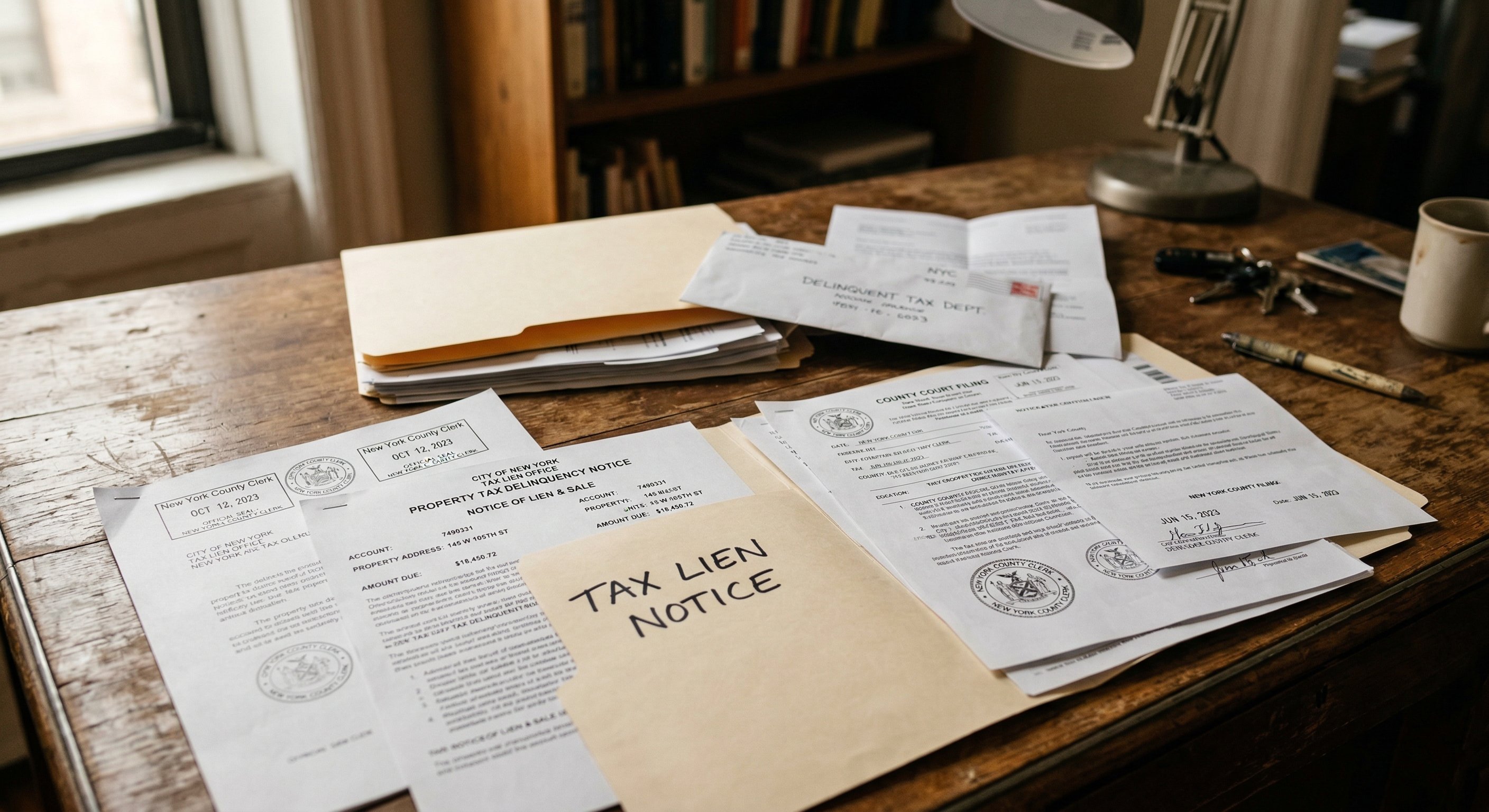
New York City (All Five Boroughs)
The math on NYC delinquencies is staggering. The city has hundreds of millions in unpaid property taxes at any given time. But most of that is commercial. The residential motivated seller opportunity concentrates in:
- Brooklyn (Kings County): Highest residential delinquency volume in the outer boroughs. East New York, Brownsville, Flatbush, and parts of Canarsie have the most cases.
- Bronx: The highest foreclosure and delinquency rates in the city per capita. The South Bronx in particular. Many multi-family properties.
- Queens: Outer Queens neighborhoods — Jamaica, Far Rockaway, Springfield Gardens — have elevated delinquency. Also hit hard during COVID.
- Staten Island: Lower volume but single-family dominated, which tends to convert better for residential investors.
- Manhattan: Very low delinquency on residential. Commercial is a different story, but that's a different deal size.
Erie County (Buffalo)
Buffalo and its suburbs have consistently high tax delinquency volumes relative to property values. Erie County runs a public in rem auction annually. Properties here are cheap enough that even modest delinquency represents significant leverage on equity.
Monroe County (Rochester)
Rochester has been a target market for out-of-state investors for years, partly because of low prices and relatively high rental yields. Monroe County's delinquency pipeline is steady, with regular auctions.
Onondaga County (Syracuse)
Syracuse is one of the most affordable mid-sized cities in the Northeast. Onondaga County's tax auction is an investor event — single-family properties in the $20,000-$80,000 range that go at auction for sometimes half that.
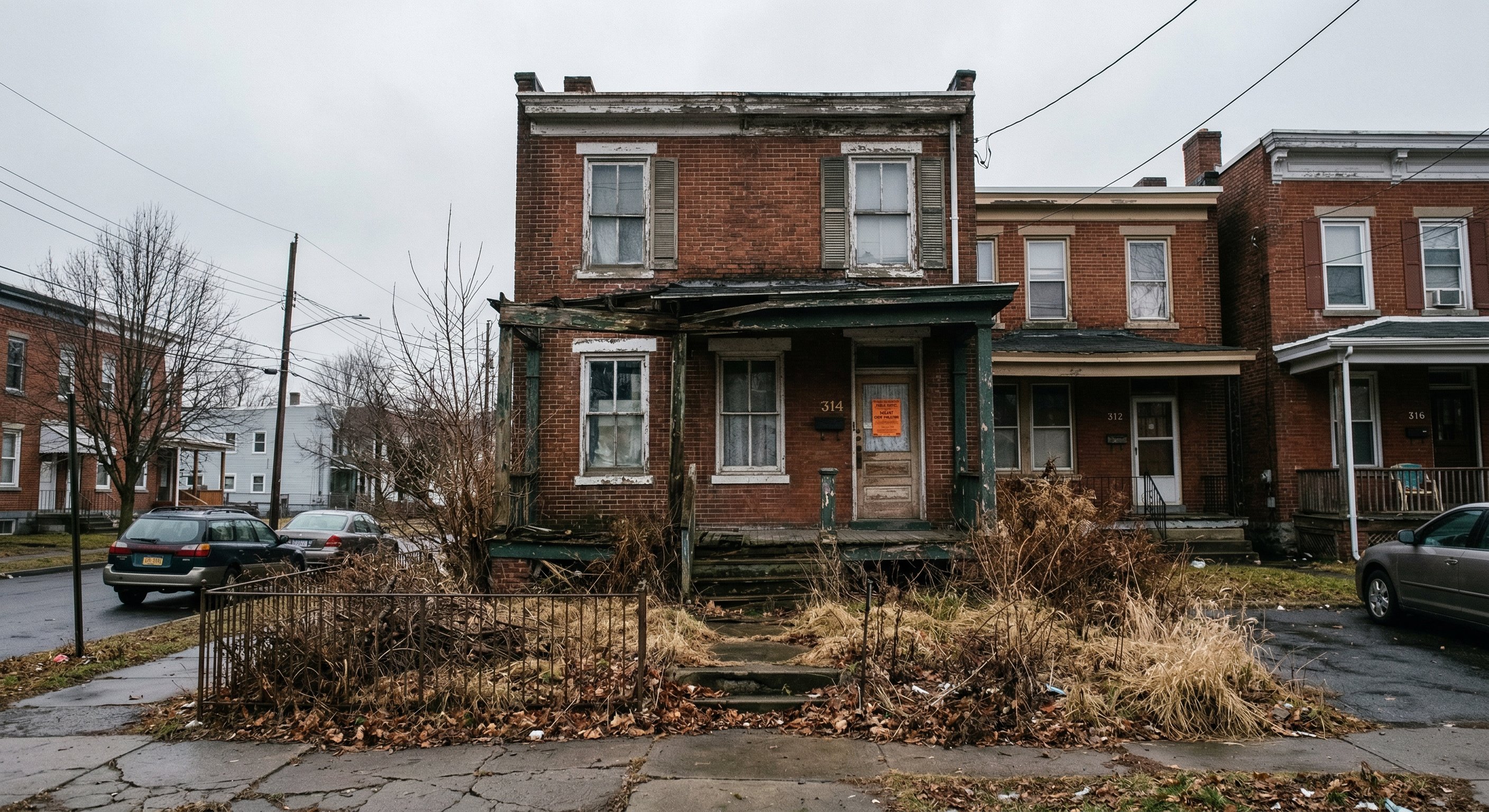
Nassau and Suffolk (Long Island)
Long Island is counterintuitive: property values are high but so is the delinquency problem. The cost of living on LI is brutal, and homeowners who bought at peak valuations in the early 2000s have been quietly struggling. Nassau runs its own lien sale program (separate from the city). Suffolk has significant delinquency in the eastern townships.
The Problem with Manually Sourcing Tax Delinquent Lists in New York
Here's where investors lose weeks of work: New York's county-by-county fragmentation means there's no single source.
To manually build a statewide or even regional list, you're doing something like this:
- NYC: Navigate the DOF's property search, cross-reference with HPD's building database, check in rem motion calendars in Brooklyn and Bronx Surrogate's Court
- Nassau: Request the Nassau County lien sale spreadsheet, which is updated periodically but not daily
- Erie: Check the Erie County Tax Claim office — sometimes online, sometimes you're calling
- Monroe: Pull from the Monroe County Real Property Portal
Each system has different fields, different update frequencies, different access protocols. In 2026, a lot of this is still either paper-based or locked behind call-the-office access. When you finally assemble a list, you have raw addresses — no equity data, no contact info, no signal stacking, no way to prioritize which 50 of your 2,000 records to actually call first.
That's the cost of manual sourcing: the list you finish building today is already partially stale, and you have no way to know which property owner is three months from in rem judgment versus three years away.
DistressIQ sources verified tax delinquency signals from county records across all New York counties — NYC, Nassau, Suffolk, Erie, Monroe, and beyond — updated daily. Every property with a verified signal is scored 0-100 for motivation based on signal stacking: how many distress signals overlap, how recent, how urgent. You see the hottest leads ranked at the top, not a raw alphabetical dump of 4,000 addresses.
Find tax delinquent properties in New York — browse free on DistressIQ
Free Weekly Alerts
See What's Distressed in Your Market
Get free weekly alerts — new distressed properties, motivation scores, and hot neighborhoods in your area. Addresses and contact info available inside DistressIQ.
Free forever · No credit card · Unsubscribe anytime
Stacking Tax Delinquency with Other New York Signals
Tax delinquency alone tells you someone hasn't paid their taxes. It doesn't tell you if they're motivated enough to actually sell. The investors who convert the most deals in New York stack delinquency against other signals happening simultaneously on the same property.
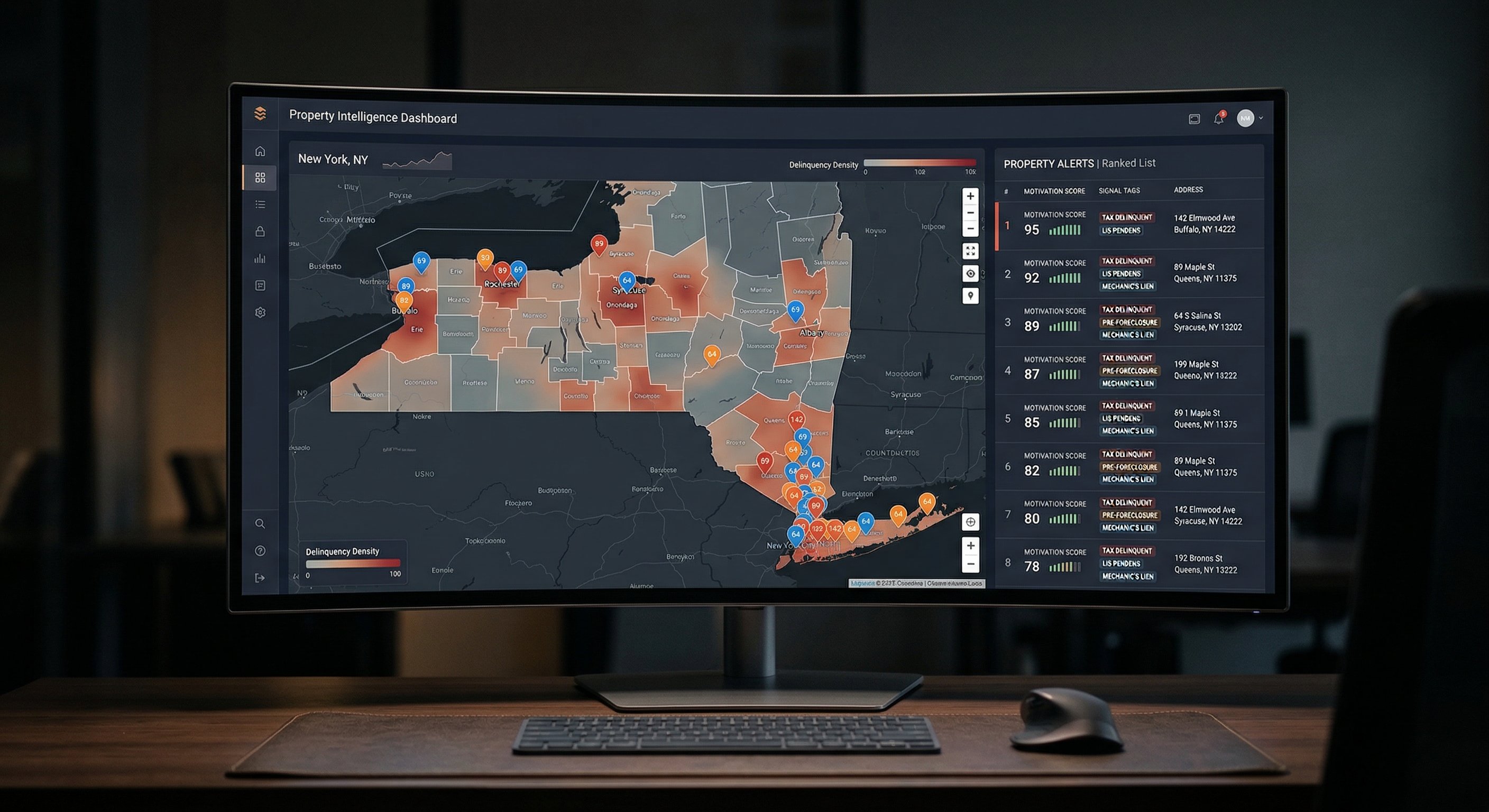
The most powerful New York signal combinations:
Tax delinquent + lis pendens — Tax delinquency AND a foreclosure action filed. Two simultaneous financial crises. These owners are not experimenting with waiting it out.
Tax delinquent + code violation — NYC's HPD issues violations that can run into tens of thousands in fines. An owner with unpaid taxes AND mounting HPD violations is running out of options fast.
Tax delinquent + absentee ownership — Non-occupant owner who isn't paying taxes. Either a failed landlord or inherited property being neglected. Much higher likelihood of willingness to sell.
Tax delinquent + probate filing — Property is mid-estate with unpaid taxes accumulating. The heirs may not even know how bad the delinquency has gotten.
Single-signal sourcing gives you a list. Multi-signal sourcing gives you a priority queue.
How to Actually Approach New York Tax Delinquent Sellers
New York sellers — especially in NYC — deal with more mail volume, more canvassing, and more investor outreach than sellers in most markets. Generic "I want to buy your house" mailers land in the recycling bin before you finish affixing the stamp.
What works better:
Specificity about their situation. If you know they have delinquent taxes, reference the county records directly. "I noticed there's an outstanding tax balance on the property at [address]" signals that you've done your homework and aren't just shotgunning the neighborhood. In New York, showing you know what's happening is the minimum table stakes.
Call before mail. NYC owners especially don't open mail from investors. A phone call from someone who knows their specific situation converts better. Skip trace the highest-scored leads and call first, mail as a follow-up.
Know the outcome they want, not just the property. A Bronx landlord with four unpaid tax quarters and HPD violations probably wants out of the landlord business entirely. An heir in Nassau dealing with a parent's delinquent property probably wants a fast, clean close that avoids probate complications. Understanding which situation you're in shapes the conversation.
Be honest about value. New York sellers are sophisticated. They have Zillow and StreetEasy. Insulting offers don't start negotiations — they end conversations. Your edge is speed, certainty, and cash, not obscuring information.
New York's In Rem Foreclosure Timeline (Know Before You Outreach)
Understanding the timeline helps you prioritize outreach. Properties closer to judgment are more motivated — but also have shorter windows to close.
| Stage | Approximate Timing |
|---|---|
| First tax delinquency | Month 0 |
| Penalties and interest begin | Month 1-3 |
| County files tax lien | Month 12-24 (varies by county) |
| In rem foreclosure petition filed | Month 24-60 (varies significantly) |
| Court judgment, property vested in municipality | After judgment (months-years) |
NYC's timeline stretches longer than upstate because the DOF has a massive caseload. Upstate counties, especially smaller ones, can move through in rem faster. The practical takeaway: delinquencies in year 2-4 are your sweet spot — enough urgency to motivate a sale, enough time to actually close one.
If a property reaches in rem judgment, the owner loses the right to redeem — and you're buying from the municipality, not a motivated individual.
Where to Start If You're New to New York Tax Delinquent Investing
If you're targeting New York for the first time, be specific about your geography before anything else:
Decide: NYC or upstate/suburban? The process, the price points, and the deal structures are completely different. Don't try to do both at once.
NYC investors: Focus on Brooklyn, Bronx, and Queens outer neighborhoods. Look for multi-signal properties — tax delinquent + code violation + absentee is a potent combo. Skip trace directly and call before mailing.
Upstate investors: Erie, Monroe, and Onondaga are the highest-volume markets with the most accessible price points. Track in rem auction schedules but work the pre-auction pipeline — owners who know they're heading to auction are often relieved to talk to someone offering a real alternative.
Long Island investors: Nassau and Suffolk delinquencies tend to involve higher-equity situations because property values are high. The math on deals can be very good if you're patient.
DistressIQ covers all 62 New York counties — including all five NYC boroughs — with verified tax delinquency signals updated daily. Browse the map, see which properties have stacked signals, and skip trace only the leads worth your time.
See tax delinquent leads in New York, scored by motivation — browse free on DistressIQ
Frequently Asked Questions
How does New York City's tax delinquency process work differently from upstate counties?
NYC uses a system managed by the NYC Department of Finance, including in rem foreclosure and (historically) a third-party lien sale mechanism. Upstate's 57 counties follow RPTL Article 11, which leads to county-run tax deed auctions. The timelines, auction procedures, and investor access points differ significantly between the two systems.
What interest rate does New York charge on delinquent property taxes?
New York City charges 18% annually on most residential properties (Class 1 and Class 2 below assessed value thresholds), compounded daily. Higher-value and commercial properties are charged 16% as of FY2025. Upstate counties typically charge 12% under state law, though some have local laws pushing rates higher for commercial properties.
What is the LienConnect program in New York City?
LienConnect is the successor program NYC is developing to replace its prior Third-Party Transfer (TPT) lien sale program, which was paused in 2022. The original program sold bundled delinquent tax liens to private investors. The pause means many owners who would have had liens transferred are instead accumulating interest directly with the DOF, creating a growing pool of distressed properties that haven't been released through the traditional mechanism.
How long does New York in rem tax foreclosure take?
It varies significantly. NYC's in rem process can take 3-7+ years due to the DOF's caseload and court backlogs. Upstate counties can complete in rem foreclosures in 3-5 years, with smaller counties sometimes moving faster. Investors should target properties in the early-to-middle stages of delinquency, when owners still have time to act and motivation to avoid judgment.
Can I buy tax liens directly in New York City?
Historically, investors could participate in NYC's lien sale program. That program is currently paused (as of 2022), and a replacement program (LienConnect) is in development. Upstate counties with certified lien programs allow individual purchases. The practical investor play in 2026 is to target pre-in-rem-judgment sellers directly — not wait for lien auctions that may or may not happen.
DistressIQ tracks verified tax delinquency signals across all 62 New York counties — including NYC boroughs — updated daily from county records. Every lead includes a motivation score built from stacked distress signals, so you know who to call first. Browse New York tax delinquent leads free.
The data behind this article
DistressIQ Monitors These Signals in Real Time
Pre-Foreclosures
NOD + NTS filings
Tax Delinquency
County treasurer records
Code Violations
Municipal inspection filings
Probate Filings
Superior Court records
Every lead is scored 0–100 for seller motivation based on signal type, duration, severity, and stacking. Nationwide coverage — every US county, updated daily.
Ready to find deals in your market?
See Live Distress Signals in New York
Stop calling dead leads. Every lead in DistressIQ is scored 0–100 for seller motivation, with verified contact info included. Browse the free tier to see what's active in your market right now.
Browse Free Leads — No Credit Card