Tax Delinquent Properties in California: How to Find and Buy Them in 2026
Tax Delinquent Properties in California: How to Find and Buy Them in 2026
TL;DR: California doesn't sell tax lien certificates — it goes straight to tax deed after a five-year delinquency period. That means you're not competing with certificate investors, and properties that reach the deed sale stage are deeply distressed. The strongest investor play isn't the auction — it's contacting owners in years two through four, when financial pressure is real and they still have equity to negotiate. DistressIQ tracks tax-delinquent properties across 3,000+ US counties including California's 58, scored by motivation so you know which owners to call first.
California breaks every assumption real estate investors carry from other states.
In Texas, you're chasing tax lien certificates. In Florida, lienholders earn 18% interest and can foreclose after two years. In most of the country, the tax-delinquency-to-foreclosure pipeline is relatively predictable and investor-friendly.
California does none of that.
Here, the county controller doesn't sell certificates. The state runs a five-year redemption clock, gives the owner every chance to catch up, and only moves to a tax deed sale after the full timeline expires. By the time a California property hits a public tax deed auction, it's already been delinquent for half a decade.
That's not a bug for investors. That's the opportunity — if you know where to look.
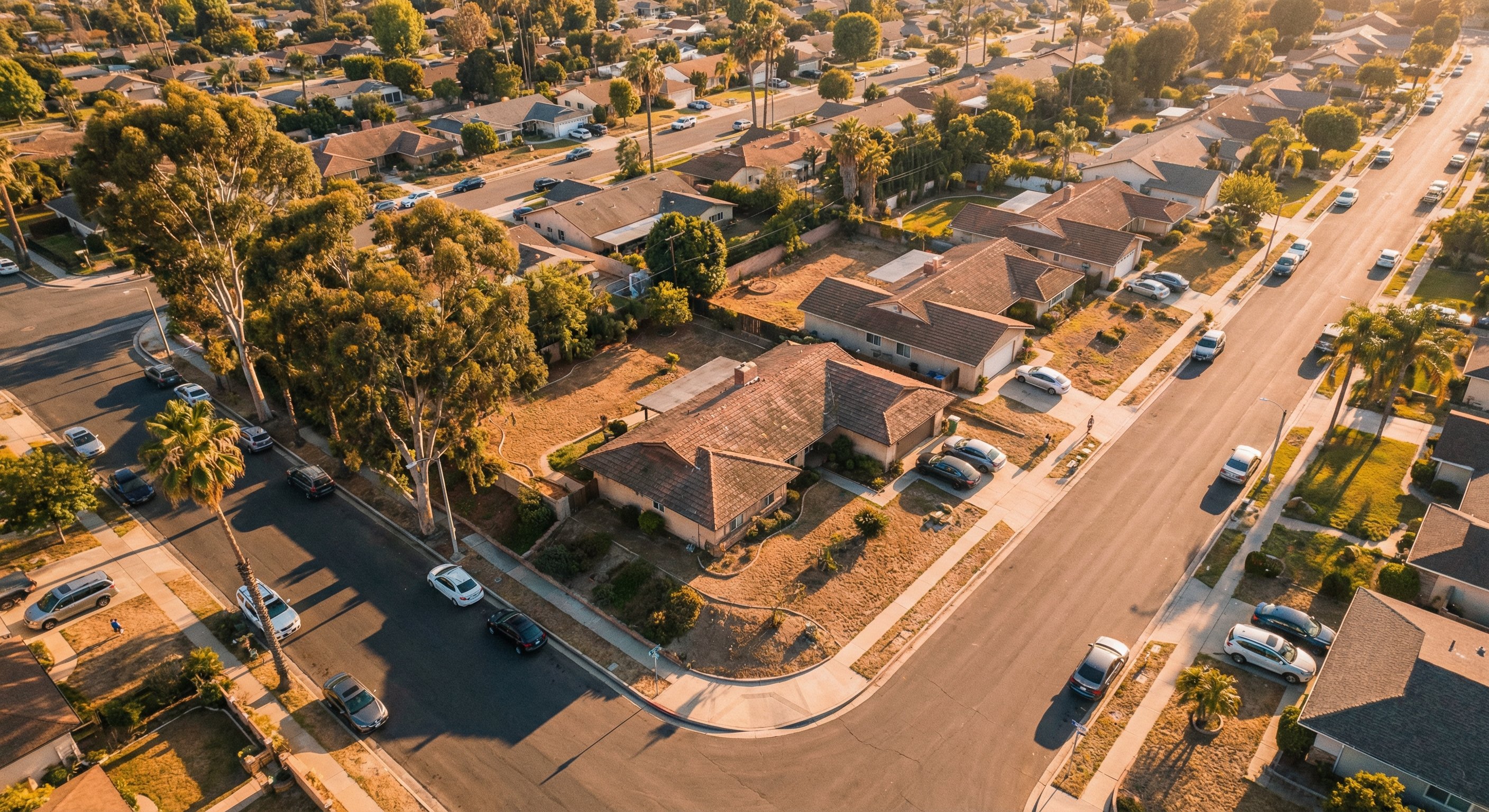
How California's Tax Delinquency System Actually Works
Most states have a two-phase system: tax lien first, then tax deed. California skips phase one entirely.
When a California property owner misses their November or February installment payment, the county marks the account delinquent. After five years of delinquency, the county tax collector transfers the property to the state controller's office, and the county can schedule a public auction — a tax defaulted property sale.
Here's the timeline:
- Year 1 (July 1): Property officially becomes "tax defaulted" at the start of the fiscal year following delinquency. Penalties and interest begin accruing (1.5% per month).
- Years 2–5: Redemption window stays open. Owner can catch up by paying all back taxes plus penalties and fees. Property can also be sold privately — equity is still in play.
- Year 5+: If still unpaid, the county can initiate a tax deed sale process. The county files for the right to auction the property.
- After 90-day notice: Property goes to auction.
The five-year window is the investor's edge. An owner who's two or three years delinquent has a real problem — accruing penalties, the threat of losing their property — but still has time and potentially equity to negotiate. They're motivated without being at the finish line.
That's where the conversations happen.
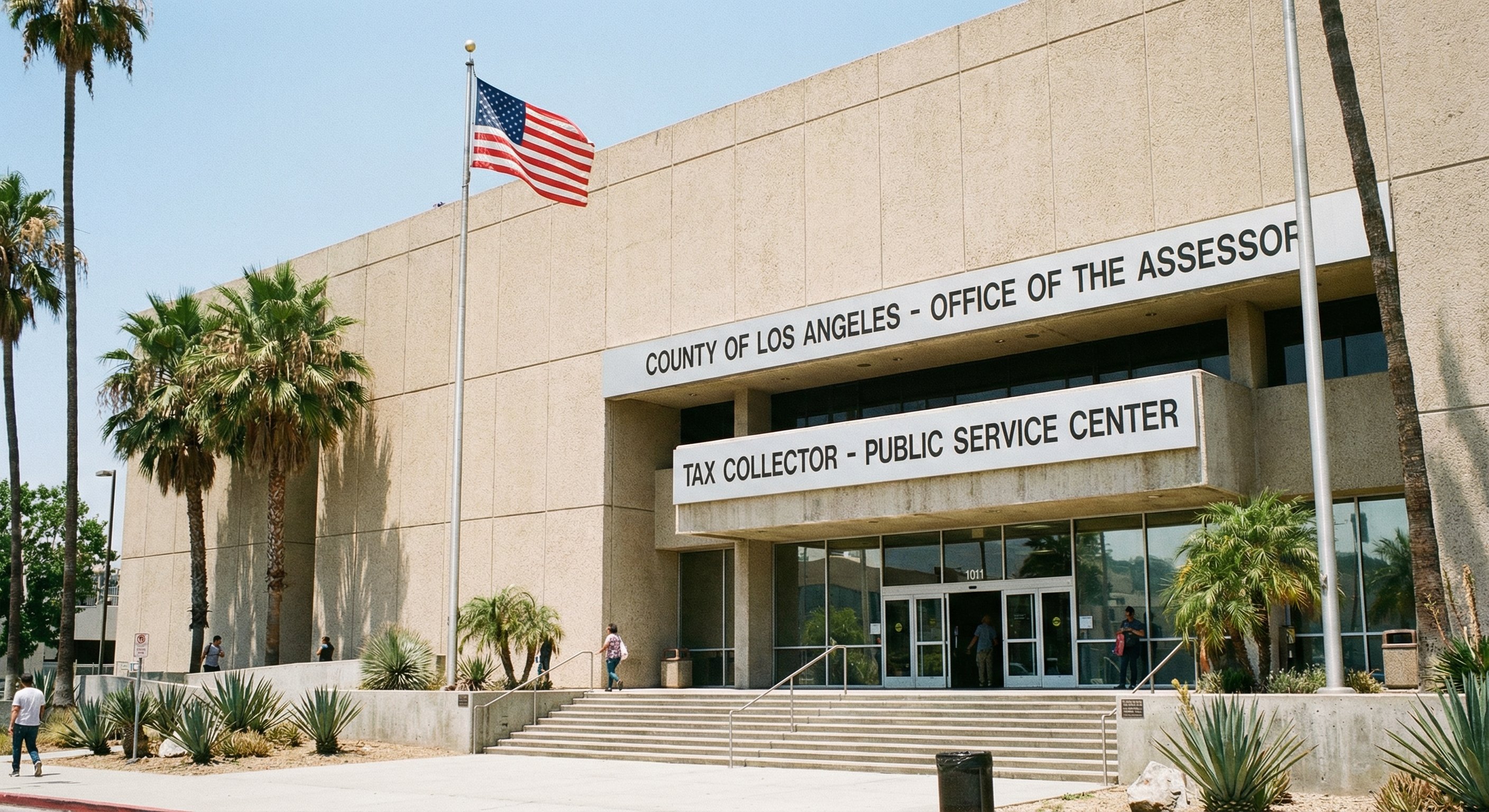
Why California's System Creates Unusual Investor Opportunities
The absence of tax lien certificates changes the competitive landscape entirely.
In Florida or Texas, institutional buyers and certificate funds purchase liens at the auction. By the time a property gets to deed stage, it's often already tied up with a lienholder who's running the show. Your access as an individual investor is limited.
California has none of that intermediate layer. There's no certificate investor standing between you and a tax-delinquent owner. If you find an owner in year two or three of delinquency and make contact, you're often the first investor who has.
The other structural advantage: California home values. The median home price in Los Angeles County regularly sits above $800,000. Even deeply distressed properties carry substantial equity. A homeowner who's three years behind on property taxes in San Jose isn't underwater on their equity — they're just overwhelmed. That combination (real distress + real equity) is exactly what produces motivated sellers.
The challenge is finding them before the situation resolves itself or someone else gets there.
The Four Signals California Investors Should Stack
Tax delinquency alone tells you someone has a cash flow problem. It doesn't tell you how motivated they are to sell, or why. In California, where property tax bills can run $15,000–$30,000+ per year on a median home, delinquency could mean a landlord whose tenants stopped paying rent, a probate estate nobody's managing, a recent job loss, or a speculative investor who overextended in 2022.
Each scenario has different leverage and different contact strategy. That's why the investors generating real deal flow in California aren't just pulling tax-delinquent lists — they're cross-referencing signals.
The four signals worth stacking in California:
- Tax delinquency — Your base signal. Year 2–4 is the sweet spot for outreach.
- Lis pendens (pre-foreclosure) — A property that's both tax delinquent AND has a lis pendens filed is in serious trouble. Double distress means higher motivation.
- Probate — Tax delinquency in an estate is extremely common. The heirs often don't know the taxes haven't been paid. Easy conversation to have. Often a willing seller.
- Code violations — In LA, Fresno, and Sacramento specifically, code violations often cluster with tax delinquency on neglected properties. If a landlord is ignoring tax bills and ignoring city violations, they're done with the property. They're just waiting for someone to make it easy to exit.
A property carrying all four signals in year three of delinquency? That's not a lead. That's a deal waiting to happen.
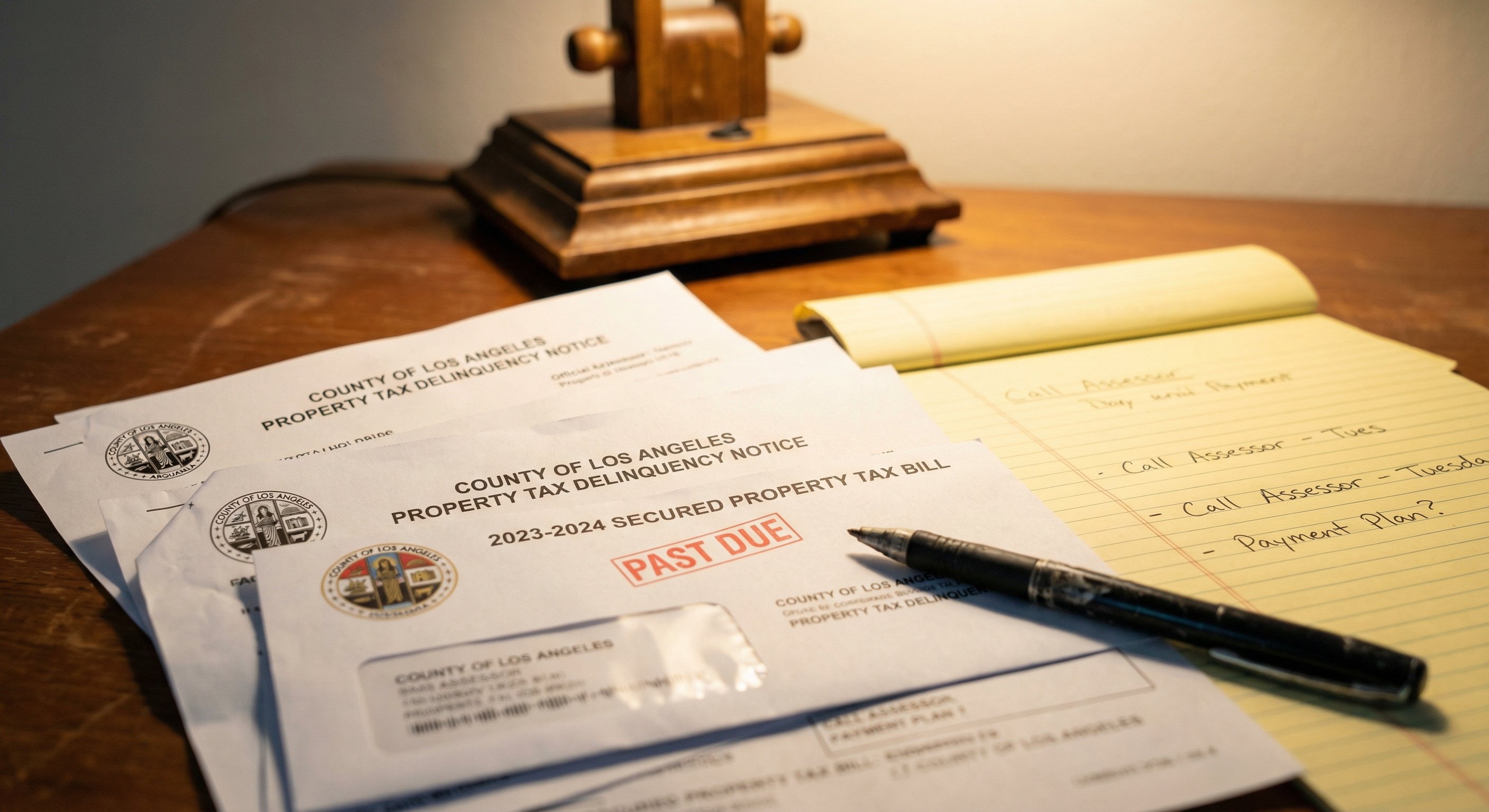
Free Weekly Alerts
See What's Distressed in Your Market
Get free weekly alerts — new distressed properties, motivation scores, and hot neighborhoods in your area. Addresses and contact info available inside DistressIQ.
Free forever · No credit card · Unsubscribe anytime
Which California Counties to Target First
California has 58 counties. Here's how to think about prioritization:
High-Volume Markets (high competition, but deep lead pools)
Los Angeles County is the obvious one — largest county in the US by population, and tax delinquency rates on non-owner-occupied properties run consistently higher than the state average. The sheer volume of multi-family rentals and investment properties means the delinquency pool is large. Competition is stiffer here, but the deal sizes justify it.
Riverside and San Bernardino Counties (the Inland Empire) are where the volume-to-competition ratio tips in your favor. These markets saw significant investor speculation in 2020–2022 followed by sharp corrections. Delinquency on investment properties spiked. Equity is still positive for most longtime owners but the carrying costs (taxes + debt) are real.
San Bernardino County specifically runs one of the most active tax deed sale programs in California — they've cleared backlogs aggressively. That means the redemption window matters more here; if you're not finding these owners in years two through three, they're hitting the auction faster than in other counties.
Mid-Market Counties (better lead quality, lower competition)
Fresno and Kern Counties in the Central Valley have meaningful delinquency rates, lower home prices (making seller outreach economics better), and less institutional competition. These markets aren't where LA-based investors are spending their time.
Sacramento County is underrated. State capital, steady population base, active court system with consistent probate and lis pendens filings. Good secondary market for investors who want California exposure without LA competition.
Up-and-Coming
Stanislaus and San Joaquin Counties saw substantial out-migration from the Bay Area in 2020–2022, then a correction. Properties purchased at peak prices with investor financing in Stockton and Modesto are generating real delinquency signals right now.
The Manual Approach vs. What Actually Works
The county route is technically available to everyone. Each California county publishes its delinquent tax roll, usually annually or semi-annually. You can go to the LA County Treasurer and Tax Collector website, download the defaulted properties list, cross-reference it against the recorder's office for ownership info, run your own skip trace, and start calling.
That's three incompatible systems, two or three different export formats, ownership records that may be months out of date, skip trace costs paid upfront before you know if the number is any good, and a list where every other investor in Los Angeles did exactly the same thing last month.
The data isn't the edge anymore. Everyone can get the data. The edge is in the stacking, the scoring, and getting there before the crowd does.
The investors generating consistent deal flow in California are doing a few things differently: They're not working the full tax roll — they're targeting properties in the year-two to year-four window where the conversation is easier. They're cross-referencing against lis pendens and probate to find the multiply-distressed properties other investors miss. And they're working scored lists — calling the 1,500+ score properties first, not dialing through 8,000 records alphabetically.
DistressIQ tracks tax-delinquent signals across California's 58 counties alongside lis pendens, probate, code violations, and more — scored 0–100 by verified motivation. Browse free, pay only when you want contact info.
See tax-delinquent properties in your target California counties — browse free on DistressIQ →
What to Say When You Call
California sellers in tax delinquency situations respond best to direct, non-pushy openers that acknowledge the situation without weaponizing it.
The instinct many investors have is to lead with "I know you're behind on taxes" — don't. It reads as predatory, immediately puts the owner on the defensive, and isn't necessary. They know what's going on.
Better opener: "Hi, I'm a real estate investor in the area — I work with homeowners who are thinking about selling and want a straightforward process without listing fees or a long timeline. Is that something you'd want to hear more about?"
If they're receptive: ask questions before making numbers. What's their situation? How long have they owned it? What would make selling easy for them? You'll learn whether taxes are the primary problem or a symptom of something else (estate situation, landlord fatigue, relocation).
If the taxes are the main issue: the math often works. California's five-year accrual means a property delinquent three years might owe $45,000–$90,000 in back taxes and penalties on a home worth $600,000. You can absorb that at closing and still buy well below market. The seller walks away debt-free and liquid.
The sellers who resist are often the ones who don't yet believe you'll actually follow through. Consistency of contact — not pressure — closes these deals.

California's Tax Deed Auctions: Worth It?
If you prefer buying at auction rather than pre-auction outreach, California does run public tax deed sales.
A few realities:
You're bidding against informed buyers. Unlike foreclosure auctions where title issues create uncertainty, tax deed auctions draw experienced investors who've done the due diligence. Prices reflect that.
Redemption can happen at the door. California law allows an owner to redeem the property by paying all back taxes and fees right up until the auction begins. You can spend time and money showing up and lose the property in the final hour.
Title is not clean. A tax deed sale extinguishes most encumbrances, but you'll still want a title search. Mechanics liens, HOA liens, and federal tax liens may survive.
The best properties don't make it to auction. Investors working the pre-auction window have already purchased or negotiated agreements on the properties with real equity. What reaches the auction tends to be the complicated stuff — probate disputes, environmental issues, bizarre title chains.
For most investors, the pre-auction window (years two through four of delinquency) generates better returns with less competition and cleaner closings.
A Quick Note on California Property Tax Bill Timing
California property taxes are due in two installments:
- First installment: November 1 (delinquent if unpaid after December 10)
- Second installment: February 1 (delinquent if unpaid after April 10)
July 1 of the fiscal year following delinquency is when the property officially enters "tax-defaulted" status. The five-year clock starts from that date.
Knowing this timing matters for outreach. The months following the April 10 and December 10 delinquency dates are when new properties enter the system. If you're working refreshed data in May and January, you're reaching owners who just received their first delinquency notice — the earliest and most receptive window.
Conclusion: California Rewards the Patient Investor
California tax delinquency is a long game compared to Texas or Florida. The five-year redemption window means you're not racing against a twelve-month foreclosure clock — you're building relationships with owners who have a real problem and real equity, in one of the highest-value property markets in the country.
The investors who win here are the ones who show up early (year two or three, not year five), stack multiple distress signals to find the truly motivated sellers, and work scored, prioritized lists rather than raw county rolls.
The opportunity is real. The data just needs to be right.
Frequently Asked Questions
Does California sell tax lien certificates?
No. California does not have a tax lien certificate program. Unlike Texas, Florida, and most other states, California counties do not sell certificates to investors at auction. The state runs a redemption period for up to five years, after which the county can schedule a tax defaulted property sale (tax deed auction) directly.
How long does California's tax delinquency process take before a property can be auctioned?
At minimum, five years from the date a property becomes "tax defaulted" (July 1 of the fiscal year following the missed payment). The county must also provide a 90-day notice period before the auction. In practice, many counties take longer — backlogs and appeals can extend the timeline further.
Can a property owner redeem their California property after it's listed for auction?
Yes. California law allows the owner to redeem the property by paying all outstanding taxes, penalties, and fees right up until the auction begins. This is why experienced investors often prefer to work the pre-auction window rather than rely on auctions — redemptions at the last minute are common.
Which California counties have the most tax-delinquent properties?
Los Angeles, Riverside, San Bernardino, Fresno, Sacramento, and Kern counties tend to have the highest volume of tax-delinquent properties due to population size and mix of investor-owned properties. The Inland Empire (Riverside + San Bernardino) has seen elevated delinquency rates since the 2022–2023 market correction.
What's the best way to find tax delinquent properties in California before they go to auction?
Cross-reference the county's defaulted property roll against additional distress signals — lis pendens filings, probate cases, and code violations. Properties with multiple overlapping signals in years two through four of delinquency represent the highest-motivation sellers. Platforms like DistressIQ aggregate and score these signals county-by-county so you don't have to manually reconcile incompatible systems.
Is it safe to buy a property at a California tax deed auction?
California tax deed sales extinguish most encumbrances, but not all. Federal tax liens, certain HOA liens, and mechanics liens may survive the sale. Title insurance on tax deed properties requires careful underwriting. Most experienced investors do a thorough title search before bidding and price in a title cure budget if issues exist.
The data behind this article
DistressIQ Monitors These Signals in Real Time
Pre-Foreclosures
NOD + NTS filings
Tax Delinquency
County treasurer records
Code Violations
Municipal inspection filings
Probate Filings
Superior Court records
Every lead is scored 0–100 for seller motivation based on signal type, duration, severity, and stacking. Nationwide coverage — every US county, updated daily.
Ready to find deals in your market?
See Live Distress Signals in California
Stop calling dead leads. Every lead in DistressIQ is scored 0–100 for seller motivation, with verified contact info included. Browse the free tier to see what's active in your market right now.
Browse Free Leads — No Credit Card