Tax Delinquent Properties in Pennsylvania: How to Find and Buy Them in 2026
Tax Delinquent Properties in Pennsylvania: How to Find and Buy Them in 2026
TL;DR: Pennsylvania uses a two-stage tax delinquency system run by county Tax Claim Bureaus — Upset Tax Sales (property sold subject to prior liens) and Judicial Sales (clear title). Properties with 2+ years of unpaid taxes are eligible. The state's 1.58% average tax rate generates steady delinquency volume, with Philadelphia, Allegheny, and Luzerne counties offering the deepest inventory. Investors who stack tax delinquency with pre-foreclosure or code violation signals consistently find the most motivated sellers. DistressIQ tracks tax delinquent leads across all Pennsylvania counties, updated daily and scored by motivation.
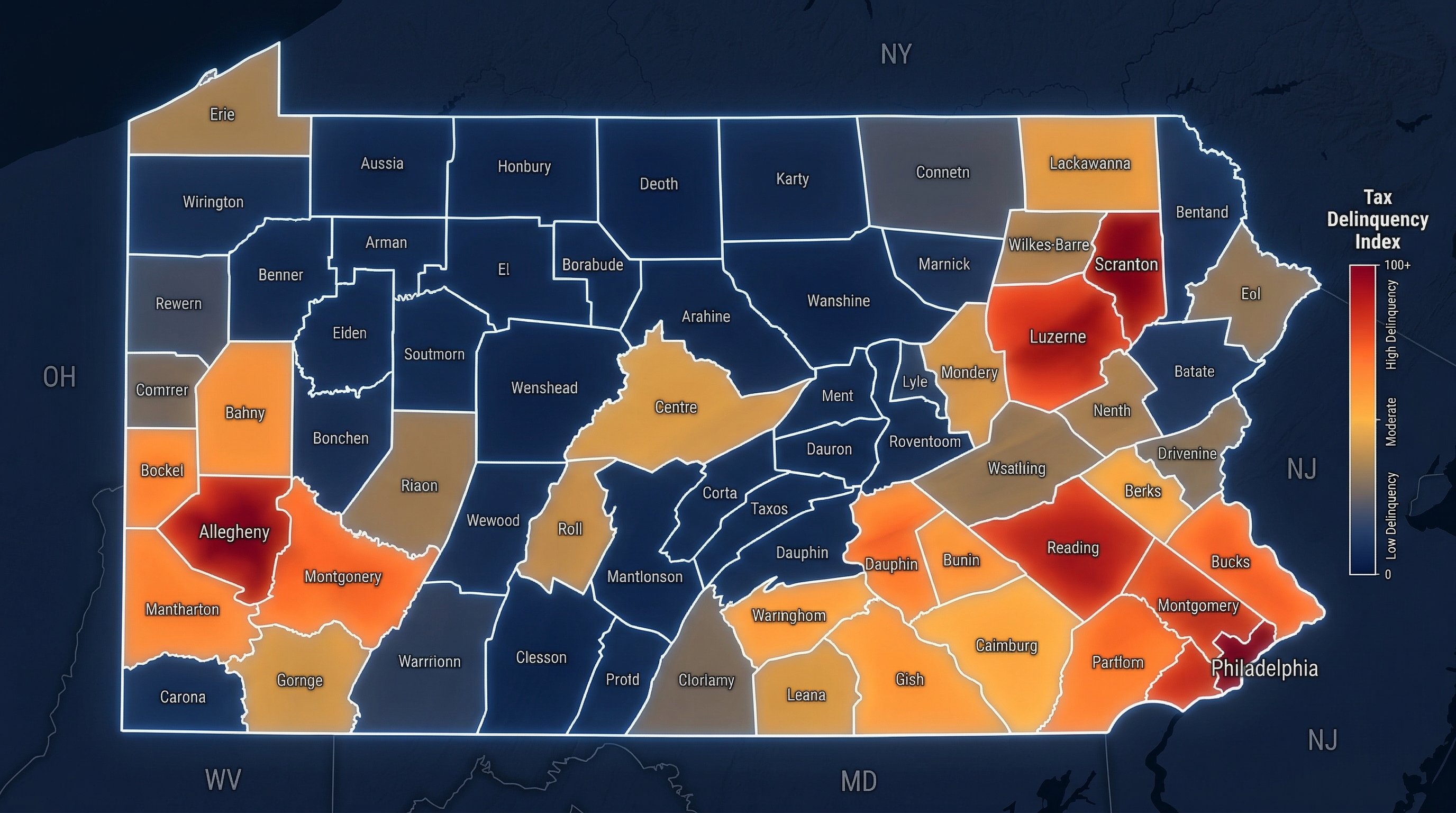
Pennsylvania is a different animal than most states when it comes to tax delinquent investing. There are no tax lien certificates to purchase at auction. No 3-5 year redemption window while you wait out a homeowner. Pennsylvania goes straight from delinquency to sale — and the two-stage system (Upset Sale followed by Judicial Sale) creates two distinct windows for investors who know how to work both.
The state's 1.58% average effective property tax rate — above the national average — means delinquency happens at a meaningful clip, especially in older industrial cities like Scranton, Allentown, and Pittsburgh where property values haven't kept pace with tax assessments. That mismatch is where deals get made.
Here's exactly how it works — and how to find motivated sellers before they reach auction.
How Pennsylvania's Tax Delinquency System Works
Pennsylvania doesn't use the lien-and-redeem system common in states like Florida or Maryland. Instead, the County Tax Claim Bureau handles all delinquent property taxes, and the process moves from delinquency to sale in two defined stages.
Stage 1: Upset Tax Sale
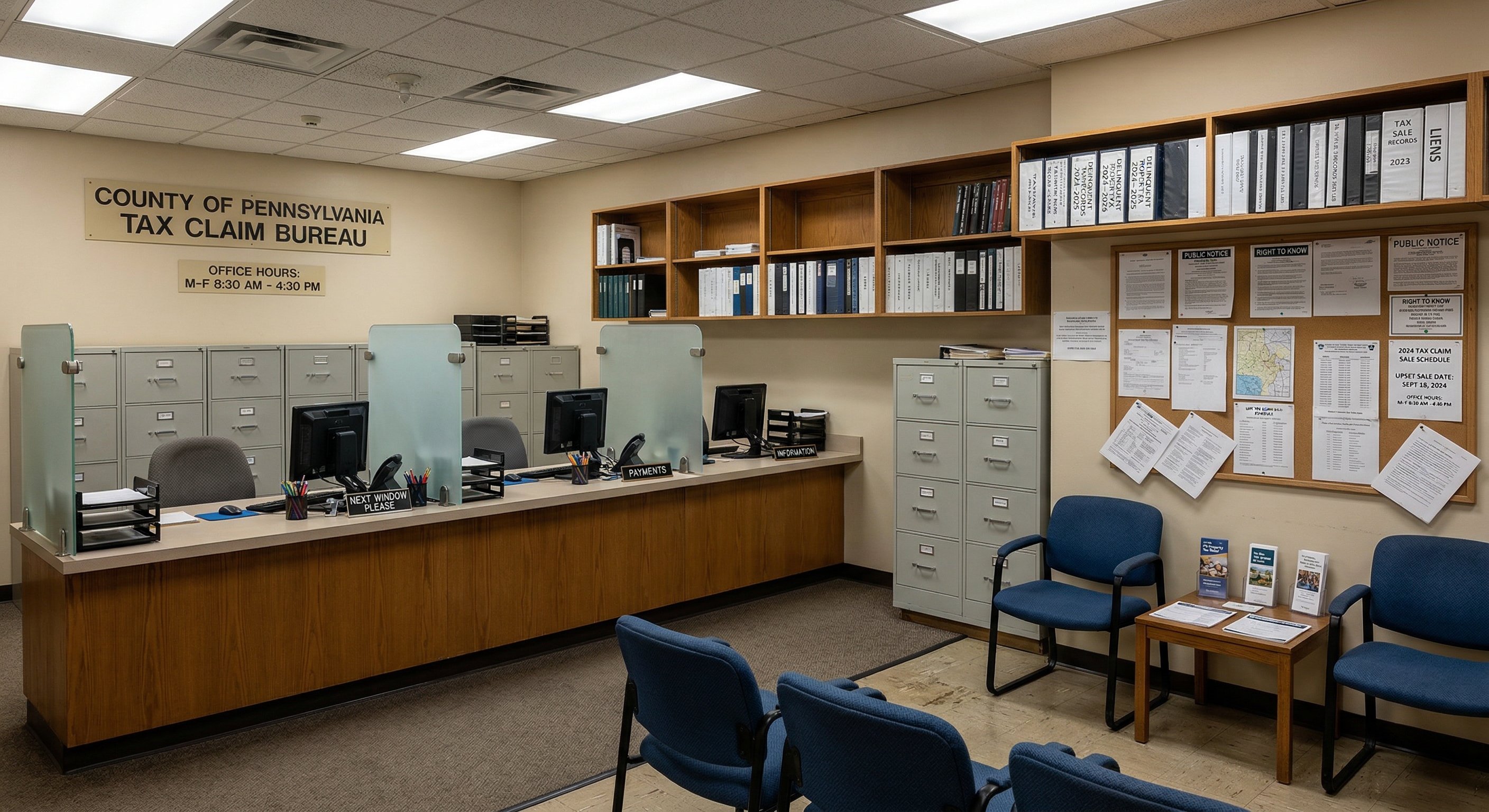
When a property owner fails to pay taxes for two or more years, the county Tax Claim Bureau places the property on the Upset Tax Sale list. The sale is called "upset" because it's sold subject to all prior liens — mortgages, municipal liens, other encumbrances. The buyer takes the property with those liabilities attached.
Key mechanics:
- Minimum bid: The amount of delinquent taxes owed (plus fees)
- Liens: All existing liens remain — the new owner assumes them
- Timing: Most county Upset Sales run September through November
- Notice requirements: PA law requires formal notice to owners, lien holders, and publication in local newspapers
- Right of redemption: Pennsylvania does NOT have a post-sale redemption period for Upset Sales — once the hammer drops, it's done
For investors, the Upset Sale is most useful for properties where you've confirmed there are no underlying mortgages or municipal liens. That's the research homework before you bid.
Stage 2: Judicial Sale
If a property doesn't sell at the Upset Tax Sale — or sells but the transaction falls through — it moves to the Judicial Sale. This is the investor's preferred stage for one critical reason: Judicial Sale conveys a clean, clear title.
The Tax Claim Bureau petitions the Court of Common Pleas, all lien holders are given notice, and the court orders the sale free and clear of all prior encumbrances. The property sells at public auction, and the winning bidder gets a deed with no attached baggage.
Key mechanics:
- Minimum bid: Often set at municipal costs only (can be dramatically below market value)
- Title: Free and clear of all prior liens after court confirmation
- Timing: Usually 12-18 months after an unsuccessful Upset Sale
- Competition: Much lower than Upset Sales — most investors don't want to wait
This is the stage where the serious money gets made in Pennsylvania. Properties sell for pennies on the dollar because the pool of informed bidders is smaller, minimum bids are low, and the title risk that scared buyers away at the Upset Sale is gone.
Why Pennsylvania's Tax Rate Creates More Opportunity
Pennsylvania's statewide average effective tax rate of 1.58% sounds manageable until you look at specific municipalities. Philadelphia's effective rate runs close to 1.32%, but places like Reading (~3.2%), Scranton (~4.1%), and Chester (~4.0%) are among the highest-taxed municipalities in the country.
At a 4% effective rate on a $100,000 property, a homeowner pays $4,000/year in property taxes. Two years of delinquency means $8,000+ owed before fees and penalties — a real financial burden that accelerates the sale timeline once the Tax Claim Bureau gets involved.
For investors, high-tax regions create a higher delinquency rate, which means larger Upset and Judicial Sale pools. Markets like Luzerne County (Wilkes-Barre), Lackawanna County (Scranton), and Philadelphia produce consistent volume of motivated sellers who genuinely need an exit.
The Best Counties for Tax Delinquent Leads in Pennsylvania
Pennsylvania has 67 counties — all running Tax Claim Bureaus with varying levels of activity. The highest-volume markets for delinquent investor activity:
Philadelphia County — The state's largest market, with the highest raw volume of tax delinquent properties. Philadelphia also runs its own municipal tax sale system (Sheriff's Sale) parallel to the standard county process. Savvy investors monitor both. Competitive but high inventory.
Allegheny County (Pittsburgh) — Pennsylvania's second-largest urban market. Industrial neighborhoods and changing demographics create consistent delinquency in specific zip codes. The Tax Claim Bureau publishes sale lists annually.
Luzerne County (Wilkes-Barre) — High effective tax rates combined with significant economic hardship have produced one of the state's most active Judicial Sale markets. Strong cash-flow rental plays from Judicial Sale properties here.
Lackawanna County (Scranton) — Historically high tax rates and a steady supply of older properties makes this an active delinquency market. Scranton metro area continues to see investor interest driven by proximity to New York City.
Berks County (Reading) — With one of the highest municipal tax rates in the state, Reading consistently generates motivated sellers. Properties are often in the $60,000-$120,000 range — accessible for smaller operators.
Montgomery County (suburban Philadelphia) — Higher-value properties mean higher-stakes sales, but the county also produces motivated sellers when property values have declined relative to tax assessments.
Erie County (Erie) — Rust Belt dynamics similar to Ohio. Property values are low, tax rates are high, and motivated sellers are plentiful. Judicial Sales here often produce the highest yield-to-purchase ratios in the state.
Free Weekly Alerts
See What's Distressed in Your Market
Get free weekly alerts — new distressed properties, motivation scores, and hot neighborhoods in your area. Addresses and contact info available inside DistressIQ.
Free forever · No credit card · Unsubscribe anytime
Finding Tax Delinquent Leads Before the Sale
The most valuable position in Pennsylvania tax delinquent investing isn't at the auction. It's in the 12-24 months BEFORE the auction.
By the time a property appears on the Upset Tax Sale list, the Tax Claim Bureau has already sent formal notices, the property is publicly listed, and every auction-hunter in the county knows about it. Competition at the sale drives prices up, eats margins, and you're still taking on lien risk at the Upset stage.
The investors who consistently win work the pre-sale window. Here's what that looks like:
Stage 1: Identify delinquency early. Tax delinquency is a public record. Properties appear in county records at the point of delinquency — before they ever make an official sale list. The earlier you can identify that a property owner has fallen behind on taxes, the better your position.
Stage 2: Stack signals to find real motivation. Tax delinquency alone isn't a deal — it's a data point. The most motivated sellers in Pennsylvania are the ones where tax delinquency is the symptom, not the disease. A property that's also in pre-foreclosure (Notice of Intent to Foreclose filed), carries code violations, or sits in probate proceedings is a seller with multiple converging reasons to act.
Stage 3: Reach out directly. Contact the property owner directly — before they receive a formal notice of Upset Tax Sale. Owners in this window are often embarrassed, overwhelmed, or simply unaware of how far behind they've fallen. A respectful, professional reach-out often opens conversations that never happen once the property is listed publicly.
The Manual Research Problem in Pennsylvania
Here's what it looks like when investors try to find PA tax delinquent properties the manual way:
Start with Philadelphia. The city has a public tax records portal — but it's a raw data download, no mapping, no prioritization. You download a CSV with thousands of records, strip out the noise, try to cross-reference with mortgage records on a separate county system, check the recorder's office for lis pendens filings on a third portal, and then repeat for each county.
That's just Philadelphia. If you want to cover Allegheny County and Luzerne County in the same research session, you start over with two different county systems, two different data formats, two different query interfaces.
Most investors spend 4-6 hours pulling together a working list for a single county — and it's already stale by the time they're done. County databases update on different cadences. A property that showed "delinquent" last Tuesday might have been resolved on Friday. You don't know until you check again.
What experienced Pennsylvania investors actually want isn't a raw data download. It's a ranked list of properties where tax delinquency is stacked with other signals — where the owner is ALSO in pre-foreclosure, or the property ALSO has outstanding code violations, or the property is ALSO in probate. Those are the deals. The single-signal lists are the ones everyone else is chasing.
If you want to work Pennsylvania tax delinquent leads without drowning in county portals, DistressIQ tracks delinquency signals across all 67 Pennsylvania counties, updated daily from county sources. Every property with a verified distress signal is scored 0-100 by motivation — so instead of sorting through 3,000 raw records, you're working from the top 50 most motivated sellers in your target counties.
Browse Pennsylvania tax delinquent leads free — only pay when you want contact info.
What Happens at the Upset Tax Sale: A Walk-Through
Understanding the mechanics helps you decide whether to buy at Upset or wait for Judicial. Here's what actually happens:
Registration: Most PA counties require bidders to register in advance and provide proof of residency (or non-residency). Some counties require upfront deposits.
The opening bid: The minimum bid covers delinquent taxes, penalties, interest, and administrative fees. In a high-tax county with a property that's been delinquent for 3-4 years, minimum bids can reach $15,000-$30,000 on a property with market value of $50,000. That's not a steal — do the math including what liens you're assuming.
Lien research is critical: Before bidding at an Upset Sale, you must know what liens are attached. Check the county recorder's office for mortgages, the municipal lien bureau for code violation fines and water/sewer liens, and the county court system for judgment liens. In Pennsylvania, water and sewer liens are often superior to mortgage liens — another quirk to understand before you bid.
After the hammer: You typically have 24-72 hours to deliver the full payment (cash or certified funds). Winning bids at Upset Sales are final. No contingencies.
The deed: The Tax Claim Bureau issues an Upset Sale deed, which is NOT a warranty deed. You get what was there — with liens attached.
Stacking Tax Delinquency with Other Pennsylvania Signals
The most productive strategy in Pennsylvania (or any state) is signal stacking. Tax delinquency is a strong indicator of financial stress — but it's most predictive when combined with other verified distress events.
Tax delinquency + pre-foreclosure (lis pendens): A homeowner behind on both taxes AND mortgage payments is under real dual pressure. They need an exit before the bank takes the property AND before the Tax Claim Bureau sells it. Investors who can move fast often buy these before either sale ever happens.
Tax delinquency + probate: When a property owner passes away and heirs are dealing with an estate, unpaid taxes are often part of a larger financial mess. Heirs who inherit a property they don't want — especially one with tax liabilities — are often motivated to accept fair offers rather than navigate the Tax Claim Bureau process.
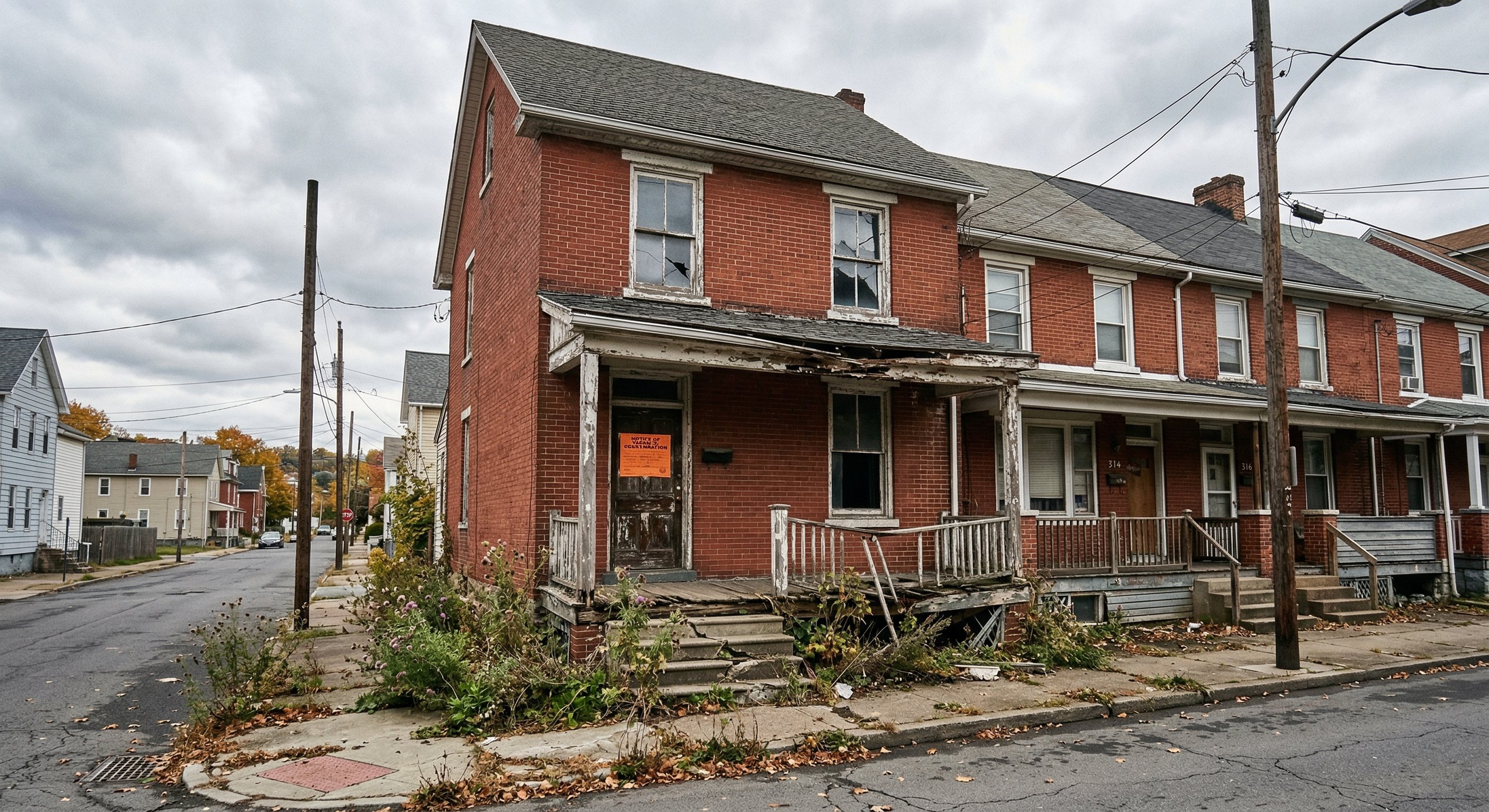
Tax delinquency + code violations: Code violations signal a property that isn't being maintained. Combined with tax delinquency, it suggests an owner who has functionally abandoned the property — or who lacks the resources to maintain it. These properties often come with negotiating leverage for investors.
Tax delinquency + vacacy: Pennsylvania municipalities often flag vacant properties for additional fees. A vacant, tax-delinquent property with a motivated owner out of state is a classic fast-close deal.
Researching PA Properties: What to Look Up and Where
For investors doing manual research in specific Pennsylvania counties:
Tax delinquency: County Tax Claim Bureau (most have websites with delinquent lists, though format varies widely)
Mortgages and liens: County Recorder of Deeds — each county maintains its own database. Philadelphia uses the city's OPRA system. Allegheny County uses its online Recorder of Deeds portal.
Code violations: City/township code enforcement office — often the most time-consuming to access, many are not digitized
Probate filings: County Court of Common Pleas (Orphans' Court division in Pennsylvania)
Pre-foreclosure (lis pendens): County prothonotary's office — lis pendens in Pennsylvania is filed with the prothonotary, not the recorder. This distinction trips up investors from other states. Philadelphia's prothonotary is accessible online; many other counties require in-person or phone access.
The cross-referencing required to build a properly stacked lead list manually takes days. That's the real research burden in Pennsylvania, and it's why investors who rely on county-direct data platforms gain a meaningful edge.
Key PA Tax Sale Timelines
| Stage | Typical Timing | What It Means for Investors |
|---|---|---|
| Tax delinquency begins | Year 1 | Best time to identify + reach out |
| Formal Tax Claim Bureau notice | Year 2 | Owner receiving official correspondence |
| Upset Tax Sale listing | September-November (Year 2+) | Property goes public — competition increases |
| Upset Tax Sale | Fall of Year 2-3 | Auction — liens remain, minimum bid = taxes owed |
| Judicial Sale (if unsold) | 12-18 months post-Upset | Clear title, lower minimums, less competition |
The Right Mindset for PA Tax Delinquent Investing
Tax delinquency is a financial crisis for the people living through it — not an opportunity to celebrate. The best Pennsylvania investors in this space consistently succeed because they approach it as a problem-solving business: they're offering a clean exit to property owners who genuinely need one.
A homeowner who's fallen two years behind on property taxes is often also dealing with job loss, medical bills, a divorce, or a combination of all three. The investors who build sustainable businesses in this space are the ones who show up with respect, a fair offer, and a clear path forward — not the ones trying to extract maximum discount from someone's worst year.
That mindset also produces better deals. Sellers who trust the investor they're working with are more likely to accept a reasonable offer and close quickly. Sellers who feel preyed upon stall, negotiate erratically, or walk away at the last minute.
Work the pre-sale window. Make fair offers. Close fast. That's the PA tax delinquent playbook that compounds over time.
DistressIQ tracks tax delinquent signals across all 67 Pennsylvania counties alongside 20+ other distress indicators — pre-foreclosure filings, code violations, probate activity, and more. Every lead is scored 0-100 by motivation so you know exactly who to call first. Browse Pennsylvania leads free — no credit card required.
See Tax Delinquent Leads in Pennsylvania →
Frequently Asked Questions
Does Pennsylvania sell tax liens to investors?
No. Pennsylvania is a tax deed state, not a tax lien state. The county Tax Claim Bureau handles delinquent properties internally, and properties go directly to Upset Tax Sale and then Judicial Sale — there are no tax lien certificates available for investors to purchase.
How long does a property stay delinquent before Pennsylvania sells it?
Properties become eligible for the Upset Tax Sale after two consecutive years of delinquency. The sale typically occurs in September-November following that two-year period. If unsold, the property moves to Judicial Sale 12-18 months later.
What is a Pennsylvania Judicial Sale and why is it better for investors?
A Judicial Sale is a court-ordered sale of a tax delinquent property that conveys clear title — all prior liens are extinguished by court order. This makes Judicial Sale purchases less risky than Upset Sales, where the buyer assumes all existing liens. Minimum bids at Judicial Sales are also often lower, since they cover only court and administrative costs rather than the full delinquency amount.
Do I need to be a Pennsylvania resident to bid at a tax sale?
No — out-of-state investors can bid at Pennsylvania tax sales, but registration requirements vary by county. Some counties require upfront deposits, others require pre-registration by a specific deadline. Check with the county Tax Claim Bureau before showing up to a sale.
What liens survive a Pennsylvania Upset Tax Sale?
All existing liens survive an Upset Tax Sale — mortgages, judgment liens, municipal liens (including water and sewer), and code violation fines. This is why lien research is critical before bidding. Water and sewer liens in Pennsylvania can take priority over first mortgages, which creates additional risk if not researched beforehand.
How do I find Pennsylvania properties before they reach the Upset Tax Sale?
Tax delinquency is a public record from the moment it occurs. County Tax Claim Bureau records are public. The most efficient approach is using a platform that aggregates county-direct data across all 67 Pennsylvania counties so you can identify delinquent properties early — and stack that signal with pre-foreclosure, code violations, and probate data to find the highest-motivation sellers.
The data behind this article
DistressIQ Monitors These Signals in Real Time
Pre-Foreclosures
NOD + NTS filings
Tax Delinquency
County treasurer records
Code Violations
Municipal inspection filings
Probate Filings
Superior Court records
Every lead is scored 0–100 for seller motivation based on signal type, duration, severity, and stacking. Nationwide coverage — every US county, updated daily.
Ready to find deals in your market?
See Live Distress Signals in Pennsylvania
Stop calling dead leads. Every lead in DistressIQ is scored 0–100 for seller motivation, with verified contact info included. Browse the free tier to see what's active in your market right now.
Browse Free Leads — No Credit Card