Tax Delinquent Properties in Ohio: How to Find and Buy Them in 2026
Tax Delinquent Properties in Ohio: How to Find and Buy Them in 2026
TL;DR: Ohio tax delinquent properties run through a dual-track system — county auditors can sell tax lien certificates OR pursue direct foreclosure, and the path varies by county. The best buying opportunities are at the foreclosure auction stage, but savvy investors contact owners before the case even files. Cuyahoga, Franklin, and Hamilton counties run the highest volumes. Leads with stacked distress signals (tax delinquency + pre-foreclosure + code violations) convert 3x better than single-signal lists. DistressIQ surfaces verified Ohio tax delinquent leads county-direct, scored by motivation.
Ohio has one of the more nuanced tax delinquency systems in the country. It's not as simple as "find the list, buy the property." The state gives counties flexibility, so what works in Franklin County doesn't necessarily work the same in Stark or Lorain. Investors who don't understand the two-track system lose time chasing deals that were already resolved — or miss the contact window entirely.
Here's what actually works in Ohio in 2026.
How Ohio Handles Tax Delinquency
Ohio's property tax delinquency process is governed by the Ohio Revised Code (ORC) Chapter 323. Every year, county auditors compile the list of properties with unpaid taxes. But unlike some states where delinquency leads to a straightforward tax lien sale, Ohio counties have two legal pathways:
Path 1: Tax Certificate Sale Some Ohio counties — particularly larger ones — sell tax certificates at auction. A tax certificate is essentially the county's right to collect the delinquent taxes, transferred to an investor. You buy the certificate, not the property. The investor earns interest (up to 18% annually under Ohio law), and if the owner doesn't redeem within the statutory period, you can initiate foreclosure proceedings to take title.
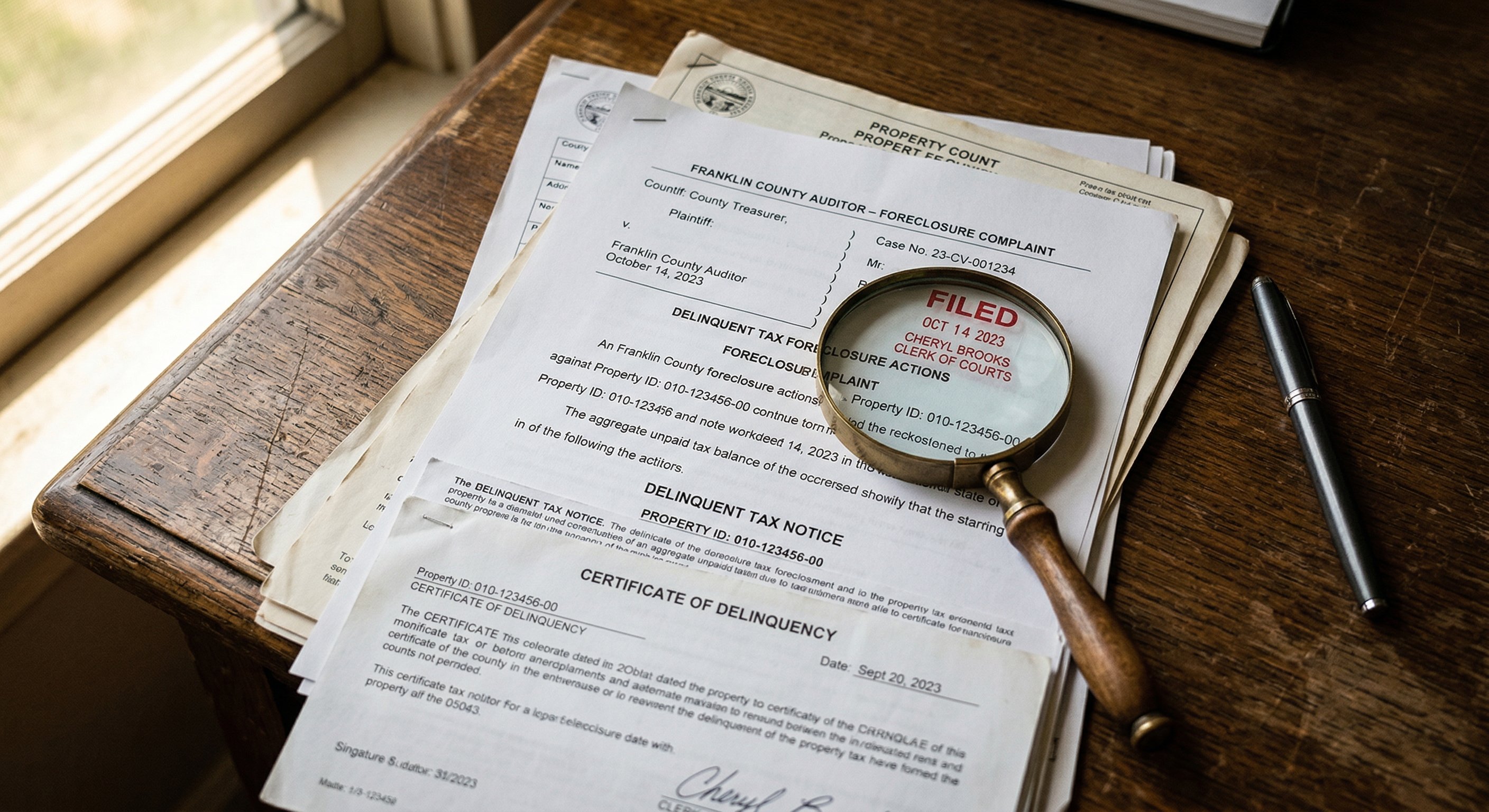
Path 2: County Auditor Foreclosure Other counties skip the certificate sale and pursue foreclosure directly through the county auditor's office under ORC 323.25. The county handles the legal filing, gets a judgment, and the property goes to sheriff's sale. This process typically takes 6-18 months from filing to auction.
Both paths create opportunities. Tax certificate investing is slower but builds passive yield while you wait for the door. Auditor foreclosures move faster and the sheriff's sale is where you bid.
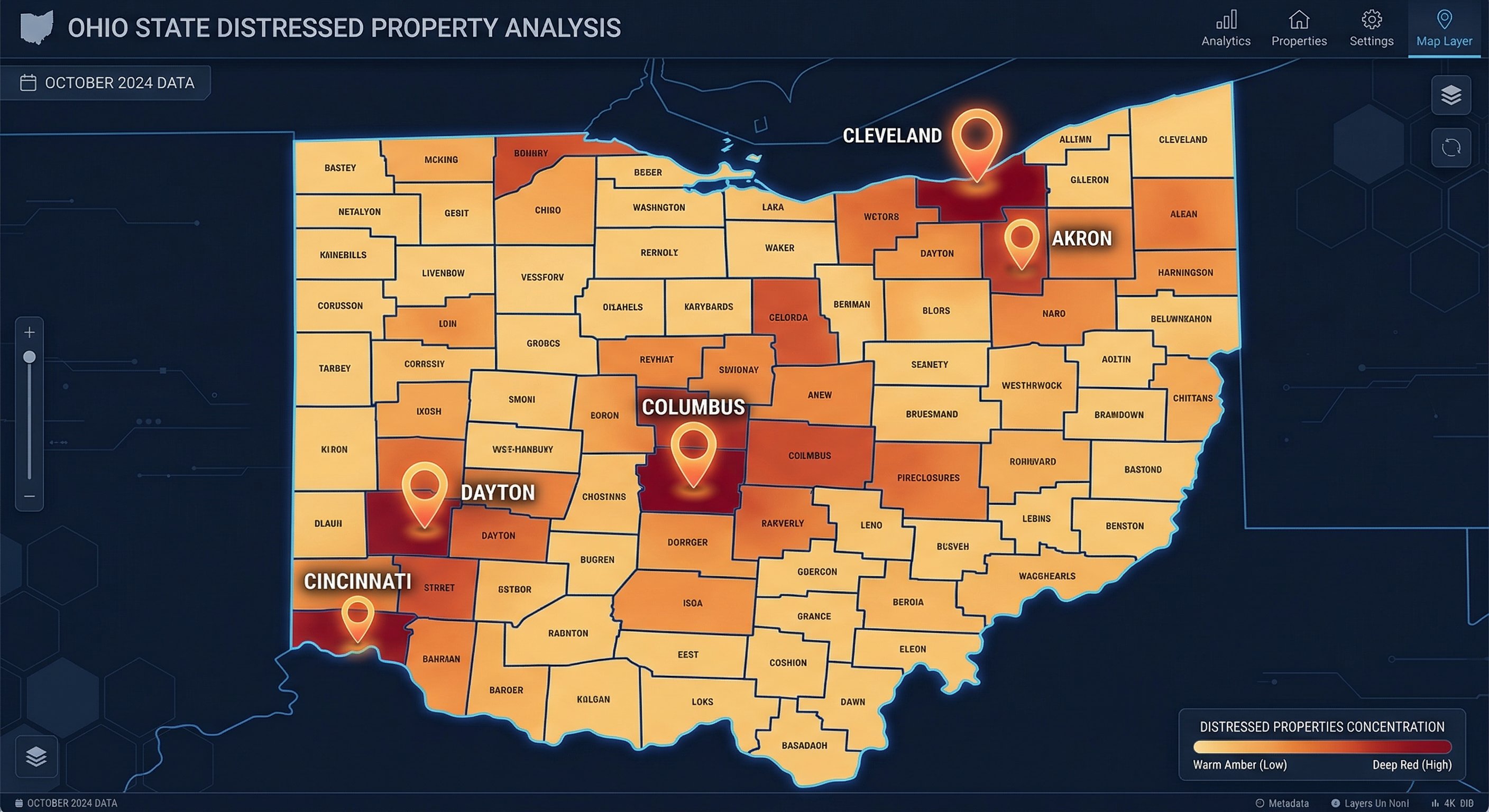
The 88-county problem: Ohio has 88 counties, each operating somewhat independently. There's no centralized state portal with all tax delinquent properties listed in one place. You're working county by county — which is exactly why most investors only cover 2-3 counties in their market and leave the rest underworked.
Where to Find Tax Delinquent Property Lists in Ohio
County Auditor and Treasurer Websites
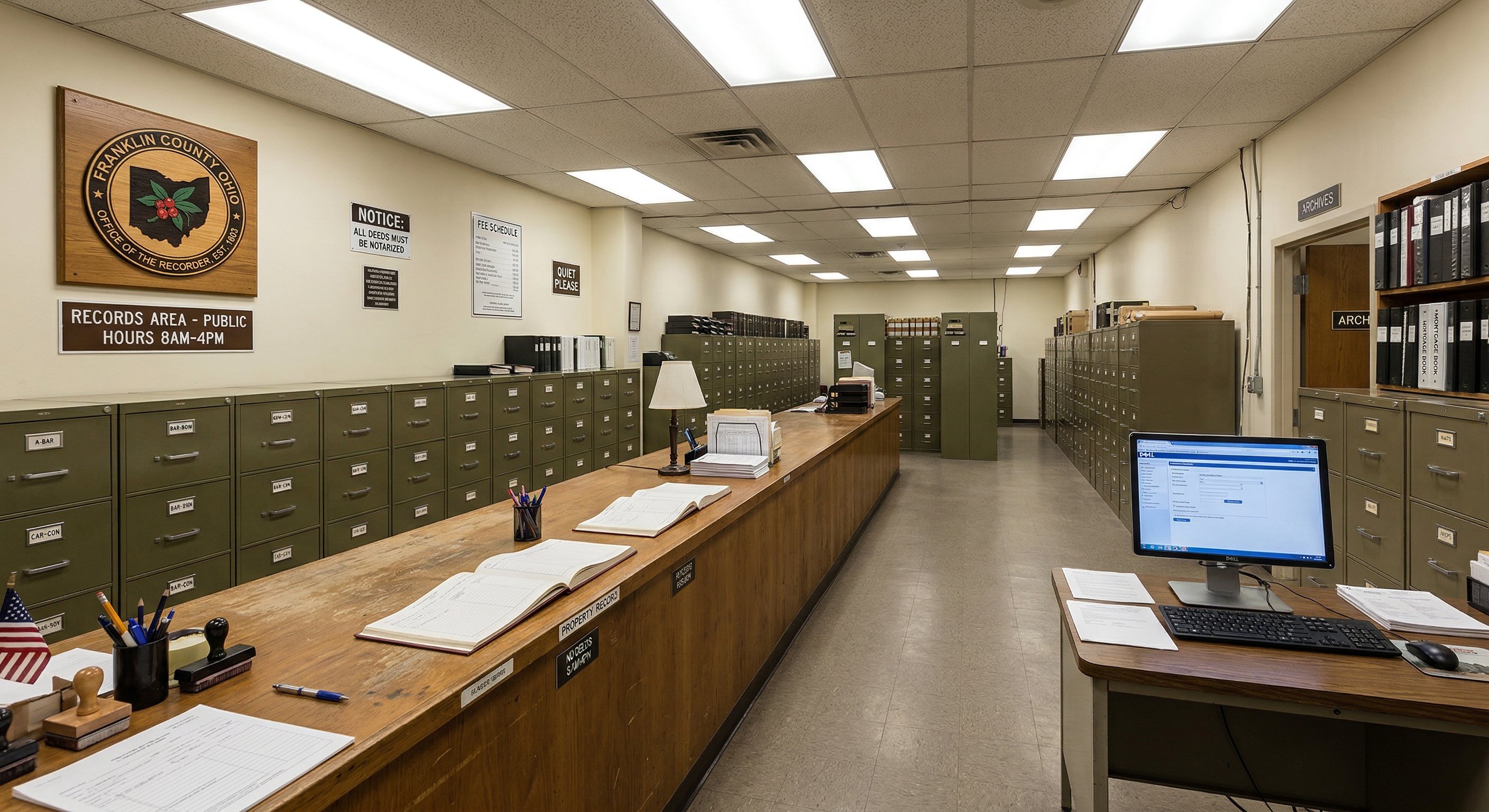
Every Ohio county publishes delinquent tax lists — some as downloadable PDFs, others as searchable databases. Start with these high-volume counties:
Cuyahoga County (Cleveland metro): The Cuyahoga County Fiscal Officer publishes delinquent tax information through their online property search. The county also runs one of the state's most active tax certificate programs, with annual sales. Search at fiscal.cuyahogacounty.us.
Franklin County (Columbus metro): The Franklin County Treasurer posts delinquent notices and has a searchable database. Columbus is one of the fastest-growing metros in the Midwest — distress here often comes with underlying equity, making for better margins.
Hamilton County (Cincinnati metro): Hamilton County Auditor's office maintains delinquent property records. The Cincinnati market has strong rental demand, so buy-and-hold investors compete here.
Summit County (Akron): Summit County runs direct auditor foreclosures. The docket publishes on the county's website, and you can track cases from filing to auction.
Montgomery County (Dayton): Dayton has some of the lowest home prices in the state, which means tax delinquency rates run high. More leads per square mile, but median prices require tight ARV discipline.
Ohio Land Bank Program
Ohio's County Land Reutilization Corporations (CLRCs) — commonly called land banks — acquire tax-forfeited properties from counties and sell them to qualified buyers for rehabilitation. If you're in the renovation business, land banks are worth knowing:
- Cuyahoga Land Bank — one of the most active in the country, processes hundreds of properties annually
- Montgomery County Land Bank — Dayton-focused, significant inventory
- Lucas County Land Bank — Toledo area
Land bank properties are heavily discounted but often come with rehabilitation requirements and deed restrictions. Know what you're buying.
Sheriff's Sale Listings
Once auditor foreclosure cases are filed and judgments entered, properties go to sheriff's auction. County sheriff offices post upcoming sale listings on their websites:
- Cuyahoga County Sheriff: ccso.us
- Franklin County Sheriff: sheriff.franklin.oh.us
- Hamilton County Sheriff: hcsheriff.org
Ohio sheriff sales require 10% down on bid day (cash or certified funds), with balance typically due within 30 days. Bid remotely at some counties; others require in-person appearance.
The Best Opportunities: Before the Auction
Here's the investor reality nobody in the YouTube tutorial space tells you: the best tax delinquent deals in Ohio close before they ever reach sheriff's sale.
Once a property hits the sheriff's auction, you're competing against every other investor who scanned the same public docket. The redemption math is known, the price is public, and the best deals are usually contested.
The real edge is pre-foreclosure contact. An owner who's three years behind on taxes and just received a foreclosure complaint from the county auditor is in crisis mode. They want out. They don't want to lose equity to a forced sale. That's the motivated seller you want to reach — before the auction commoditizes the deal.
The window is typically 60-180 days after the auditor files the complaint, before the property goes to sheriff's sale. That's where the motivated seller leads with any real negotiating room live.
The contact problem: Pulling a delinquent list is step one. But raw delinquent lists don't tell you which owners are genuinely motivated, which are in estates, which are already in active negotiation with the county, and which are just slow payers who'll catch up next month. Stacking a second or third distress signal is what separates the 200-name list you can actually work from the 2,000-name list that burns your marketing budget.
Free Weekly Alerts
See What's Distressed in Your Market
Get free weekly alerts — new distressed properties, motivation scores, and hot neighborhoods in your area. Addresses and contact info available inside DistressIQ.
Free forever · No credit card · Unsubscribe anytime
What Tax Delinquency Alone Doesn't Tell You
A property on Ohio's delinquent list has unpaid taxes. That's it. It doesn't tell you:
- Owner motivation level — Is this a strategic holdout? An estate with no heirs engaged? A temporary hardship about to be resolved?
- Property condition — Three years of back taxes on a property with $60k in deferred maintenance is a different deal than three years of back taxes on a well-maintained home where the owner just lost their job
- Equity position — Negative equity changes everything. A property underwater won't produce a seller with motivation to take a discount
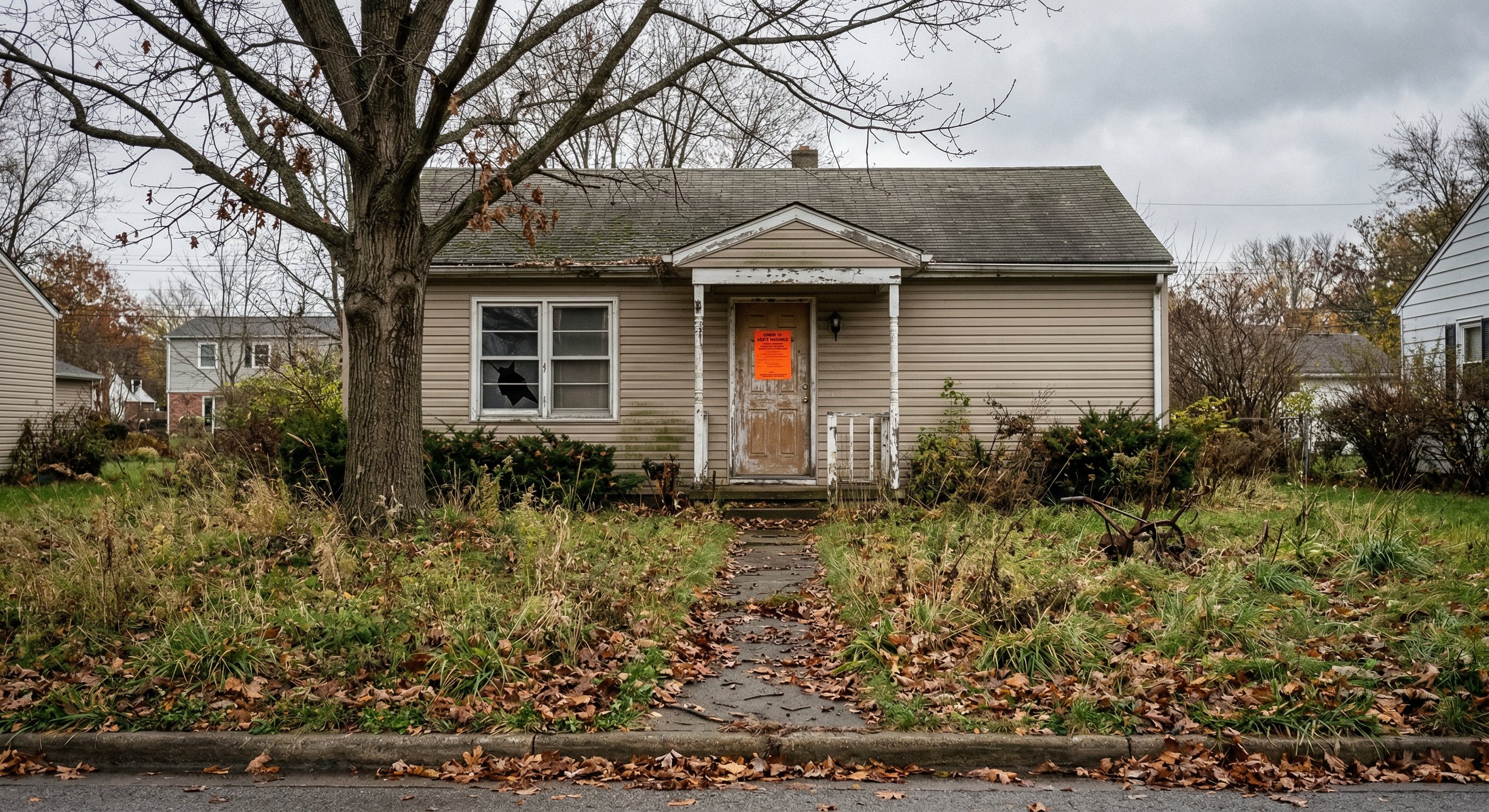
- Additional signals — Pre-foreclosure filing, code violations, and probate cases stacked on top of tax delinquency multiply motivation dramatically
The math on stacking signals: Across Ohio markets with 12+ month delinquency timelines, leads showing tax delinquency PLUS a pre-foreclosure filing convert at roughly 2.8x the rate of tax delinquency alone. Add a code violation and that ratio climbs further. This isn't theory — it's the reason sophisticated investors build multi-signal filters before they make a single outreach call.
Ohio County-by-County: What's Different
Ohio's markets are genuinely different from each other. A few things experienced investors know:
Cuyahoga County: Longest processing times in the state — auditor foreclosures here can drag 18-24 months. More time on market means more owner distress by the time a deal closes. Tax certificate investors have competed here for years, so the institutional competition is real. The opportunity is in properties with layered distress that certificate buyers pass over.
Franklin County: Columbus growth absorbs inventory quickly. Tax delinquent properties here don't sit. If you're going pre-foreclosure, you need fast outreach — owners get approached early. Columbus also has strong Section 8 demand, which makes even distressed rentals viable with proper rehab.
Hamilton County: Cincinnati has a strong wholesale market. More competition at the auction level means the pre-auction contact strategy is even more critical. Hamilton County also has significant probate activity — which often layers on top of tax delinquency in older estate properties.
Montgomery County: Dayton is the outlier. Lower prices, higher delinquency rates, and a softer exit market. Buy-and-hold works here if your numbers are tight. Flip margins are thin unless you're buying at auction for pennies. Motivated seller contact rates are higher here than any other major Ohio market — owners are more likely to engage because their options are worse.
Lucas County (Toledo): One of the highest tax delinquency rates in the state relative to property values. The land bank absorbs a lot of this inventory. But properties the land bank passes over often have motivated sellers worth engaging.
Building Your Ohio Tax Delinquent Lead Workflow
Here's how experienced investors structure their Ohio outreach:
Step 1: Pull the delinquent list for your target county. County auditor and treasurer sites are the primary source. Some counties publish monthly, others quarterly, others only during the certification period. Know your county's publication schedule.
Step 2: Cross-reference against pre-foreclosure filings. County court dockets publish auditor foreclosure case filings. Filter your delinquent list against active cases — this identifies owners who are already in the legal process and have the highest urgency.
Step 3: Layer code violation data. Many Ohio municipalities publish code enforcement actions. Properties with both tax delinquency and active code violations are in double-trouble — the owner is getting pressure from two directions simultaneously.
Step 4: Filter by equity position. Cross-reference with county assessor values and any mortgage records. Negative equity deals rarely produce motivated seller discounts — the math doesn't work for the seller.
Step 5: Skip trace the filtered list. Don't pay to skip trace 2,000 names. Skip trace the 200 that survived your signal filter. Skip trace quality matters more than quantity — a bad phone number wastes your time and your outreach budget.
Step 6: Sequence your outreach. Letter first (establishes intent, lower cost). Follow with phone for high-signal leads. Door knock the top 20-30 if your geography allows.
This whole workflow, done manually, takes weeks. Most investors cut corners — they buy a generic tax delinquent list, blast a mailer, and wonder why they get 3 callbacks from 5,000 pieces.
How DistressIQ Handles Ohio
DistressIQ pulls county-direct data from Ohio county records — auditor filings, court dockets, assessor records — and scores each property using a multi-signal motivation model. The map view shows you distressed properties across Ohio's 88 counties, each with a 0-100 motivation score based on signal depth.
Browse free, unlimited. When you find a lead worth pursuing, unlock owner contact info on demand — skip-traced when you need it, not pre-packaged in lists you pay for upfront.
For Ohio specifically, DistressIQ surfaces:
- Tax delinquent properties with days delinquent and delinquency amount
- Pre-foreclosure filings stacked on top of delinquency
- Code violation cases layered in
- Probate cases that often accompany estate-owned tax delinquent properties
- Assessor-verified property data — not MLS estimates
If you're working Cuyahoga, Franklin, Hamilton, or any other Ohio county, browse distressed Ohio properties free on DistressIQ — sorted by motivation score so you call the highest-urgency leads first.
When to Buy at Auction vs. Pre-Auction
Buy at auction when: You're comfortable with as-is condition, you've done the drive-by, and your bid price reflects the unknowns. Sheriff sales in Ohio are typically no-inspection buys.
Go pre-auction when: You want inspection access, negotiating flexibility, seller financing options, or the ability to structure creative deals. Pre-auction contact produces better margins — more friction (finding and reaching owners), but less competition.
The hybrid play: Use the public auction docket as a prospecting tool. When a case files, contact the owner immediately. Most will either resolve it (pay the taxes) or be willing to talk. The ones who don't pay and don't call back are the most distressed — those are your best auction bids.
Ohio Redemption Rights
In Ohio, property owners have the right to redeem (pay off delinquent taxes) until the sheriff's deed actually transfers. That means a deal can technically fall apart at the last minute if an owner pays off the debt. This is less common in advanced foreclosure stages but worth knowing.
For tax certificate investments, the redemption period runs until the certificate holder initiates foreclosure proceedings — which requires waiting a minimum period after purchase (varies by county).
Build redemption risk into your underwriting. It's rare for fully-progressed cases, but it happens.
Frequently Asked Questions
How do I find the tax delinquent property list in Ohio?
Each of Ohio's 88 counties publishes its own delinquent tax list through the county auditor or treasurer's office. Start at the county's official website and search for "delinquent tax list" or "delinquent property search." Cuyahoga, Franklin, Hamilton, Summit, and Montgomery counties have the largest volumes. There is no single statewide portal — you search county by county.
Does Ohio sell tax lien certificates?
Some Ohio counties sell tax lien certificates at annual or semi-annual auctions. Investors who purchase certificates earn up to 18% annual interest. If the owner doesn't redeem within the statutory period, the certificate holder can pursue foreclosure. Not all counties use the certificate system — some pursue auditor foreclosure directly. Check your target county's treasurer's office for its specific process.
How long does the Ohio tax foreclosure process take?
Typically 6-18 months from auditor filing to sheriff's sale, though Cuyahoga County cases routinely run 18-24 months. The timeline depends on the county's court docket, whether the owner contests the case, and administrative processing time. Pre-foreclosure contact works best in the first 60-90 days after a case is filed — that's when owners are most receptive and have the most options.
Can I buy directly from the county in Ohio?
Yes, through land banks. Ohio's County Land Reutilization Corporations (CLRCs) acquire tax-forfeited properties from counties and resell them to qualified buyers, often at significant discounts but with rehabilitation requirements. Cuyahoga, Montgomery, and Lucas County land banks are among the most active in the state.
What's the best Ohio market for tax delinquent investing?
For volume: Cuyahoga County (Cleveland). For margins: Franklin County (Columbus) due to strong equity and appreciation. For motivated sellers: Montgomery County (Dayton) has the highest distress rates relative to home prices. For hybrid tax/probate strategies: Hamilton County (Cincinnati) where estate properties with delinquent taxes are common.
How do I avoid overpaying at an Ohio sheriff's sale?
Know your ARV cold before bidding. Sheriff sales are as-is, no inspection — factor 15-25% condition uncertainty into your max bid. Know the opening bid (usually the delinquent tax amount plus fees, sometimes first mortgage) before the auction. Check the title for senior liens that survive the sheriff's sale. Many experienced investors pass on 90% of auction properties because the numbers only rarely work — and that discipline is what makes the 10% profitable.
The data behind this article
DistressIQ Monitors These Signals in Real Time
Pre-Foreclosures
NOD + NTS filings
Tax Delinquency
County treasurer records
Code Violations
Municipal inspection filings
Probate Filings
Superior Court records
Every lead is scored 0–100 for seller motivation based on signal type, duration, severity, and stacking. Nationwide coverage — every US county, updated daily.
Ready to find deals in your market?
See Live Distress Signals in Ohio
Stop calling dead leads. Every lead in DistressIQ is scored 0–100 for seller motivation, with verified contact info included. Browse the free tier to see what's active in your market right now.
Browse Free Leads — No Credit Card