Tax Delinquent Properties in Michigan: How to Find and Buy Them in 2026
Tax Delinquent Properties in Michigan: How to Find and Buy Them in 2026
TL;DR: Michigan's 3-year tax delinquency-to-foreclosure timeline creates a clear pre-auction window where motivated owners are reachable — and receptive. The real opportunity isn't the county auction (where you'll compete with 200 bidders). It's the forfeiture stage, typically Year 2, when the clock is running but owners can still redeem and may genuinely want a clean exit. DistressIQ tracks tax-delinquent signals across all 83 Michigan counties, updated daily from county treasurer records — so you can find these properties before they hit any public list.
Michigan's tax foreclosure pipeline is one of the most investor-friendly in the Midwest — if you understand how it works. Miss the timing, and you're bidding against every bargain hunter in Wayne County at a public auction. Get the timing right, and you're talking to owners directly, months before the property ever goes to auction.
Here's the full picture.
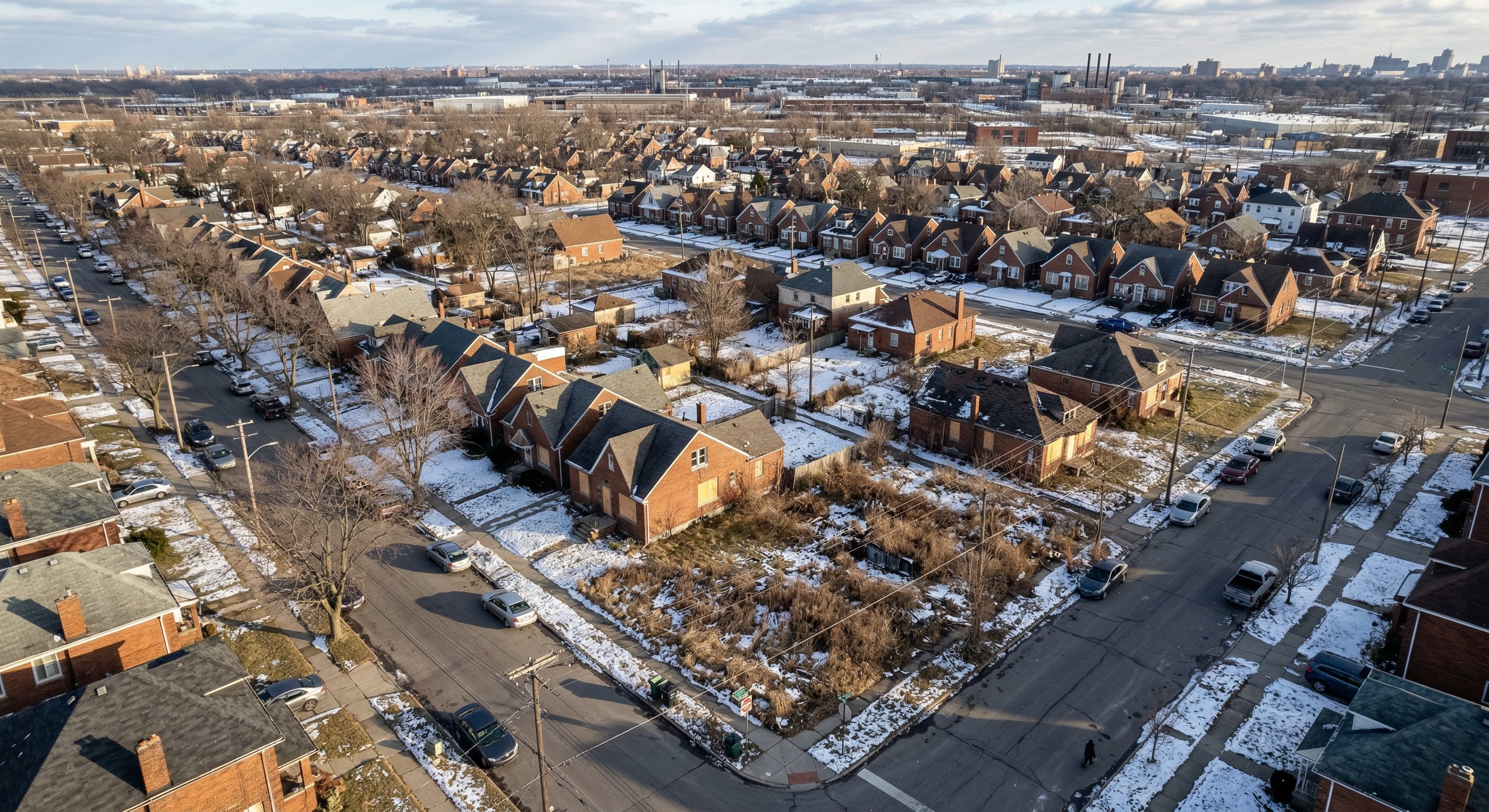
Michigan's 3-Year Tax Delinquency Timeline
Michigan's General Property Tax Act (MCL 211.78) governs the entire process. Unlike some states where a single missed tax year triggers immediate consequences, Michigan gives property owners meaningful time — and that runway is exactly what makes this market different.
Here's how it plays out:
Year 1 — Delinquency Begins Property taxes go unpaid by March 1. The county treasurer takes over collection from the local municipality. The parcel is now "delinquent." Penalties start accruing — typically 4% interest + administrative fees. Owners still have time to pay and clear the record entirely.
Year 2 — Forfeiture If taxes remain unpaid on March 1 of the following year, the property is forfeited to the county treasurer. This is not foreclosure yet — owners can still pay and recover the property. But the forfeiture is recorded, the penalties increase significantly, and the pressure escalates. This is the window investors care about most.
Year 3 — Foreclosure March 31: If the owner hasn't redeemed by this deadline, the county treasurer petitions the circuit court for foreclosure. Once the court approves, the county takes absolute title. The property is then scheduled for auction.
The auction sequence:
- First auction (typically July-August): Open only to governmental entities at a minimum bid equal to the full delinquent amount. Most properties don't sell here.
- Second auction (typically September-October): Open to the public. Minimum bid drops to the county's costs. This is where individual investors can bid.
The second auction looks like an opportunity. Often it's a bidding war.
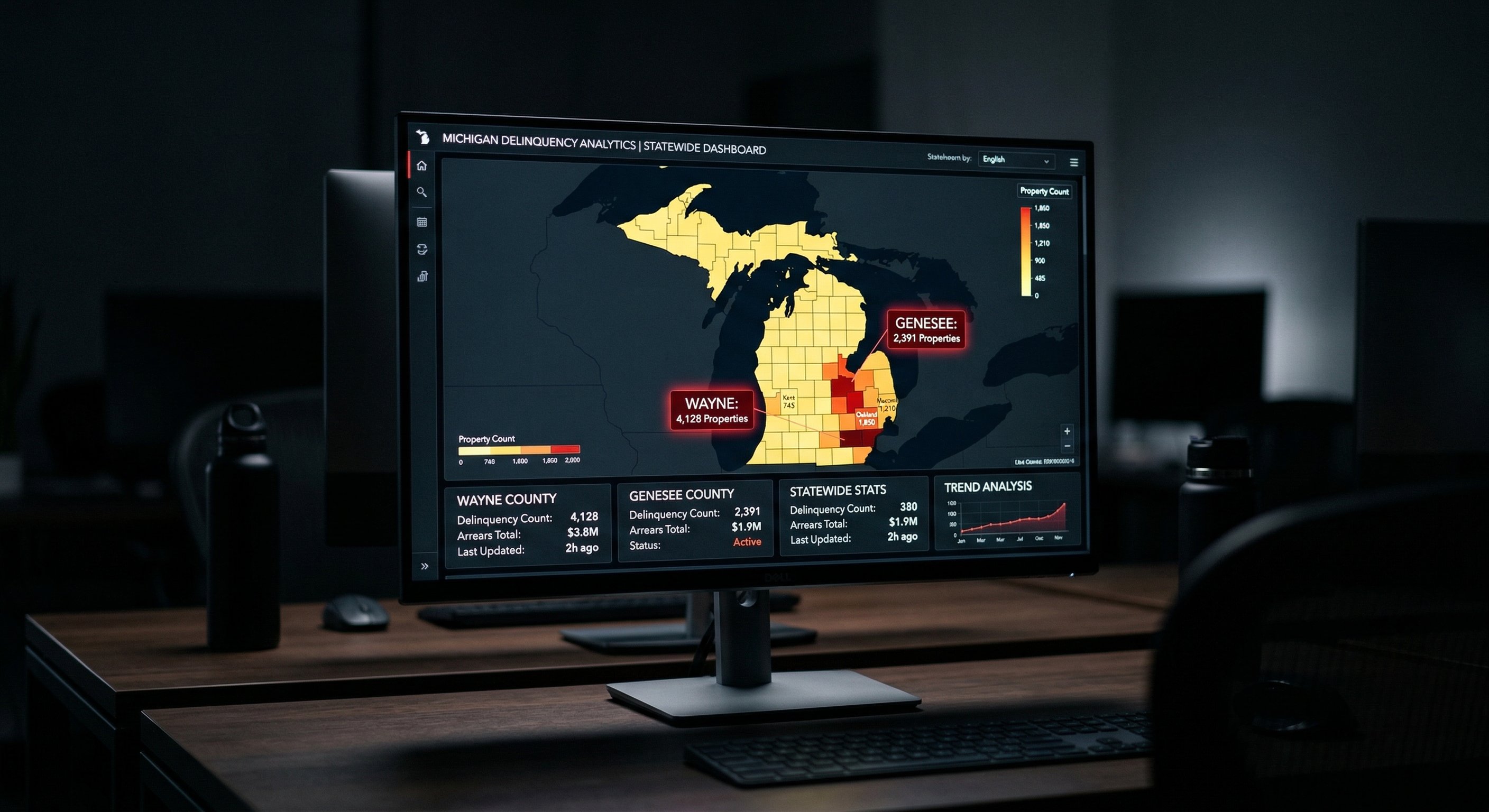
Where Michigan's Tax Foreclosure Volume Actually Lives
Michigan has 83 counties. They are not created equal when it comes to tax delinquency volume.
Wayne County (Detroit Metro): The largest tax delinquency market in the state — by a wide margin. Detroit has gone through decades of population decline that left tens of thousands of properties chronically delinquent. Wayne County auctions thousands of properties annually, and the Detroit Land Bank Authority (DLBA) holds an additional inventory acquired through forfeiture.
Genesee County (Flint): Another high-volume market shaped by economic contraction. Flint's population loss and legacy industrial decline translate to persistent tax delinquency.
Oakland County: Higher property values, but active investor market. Many tax-delinquent properties here are held by landlords who let taxes slide on rental properties — a different seller profile than Wayne County.
Kent County (Grand Rapids): Growing market. Tax delinquency here is lower by volume but properties typically carry more equity — better ARV math for investors.
Macomb County: Strong suburban market north of Detroit. Delinquency is typically driven by landlord neglect rather than homeowner hardship.
The difference matters. Your outreach strategy for a Wayne County forfeited property (where the owner may be overwhelmed by an underwater situation) looks different than your approach to an Oakland County landlord who's behind on taxes for a property they could sell.
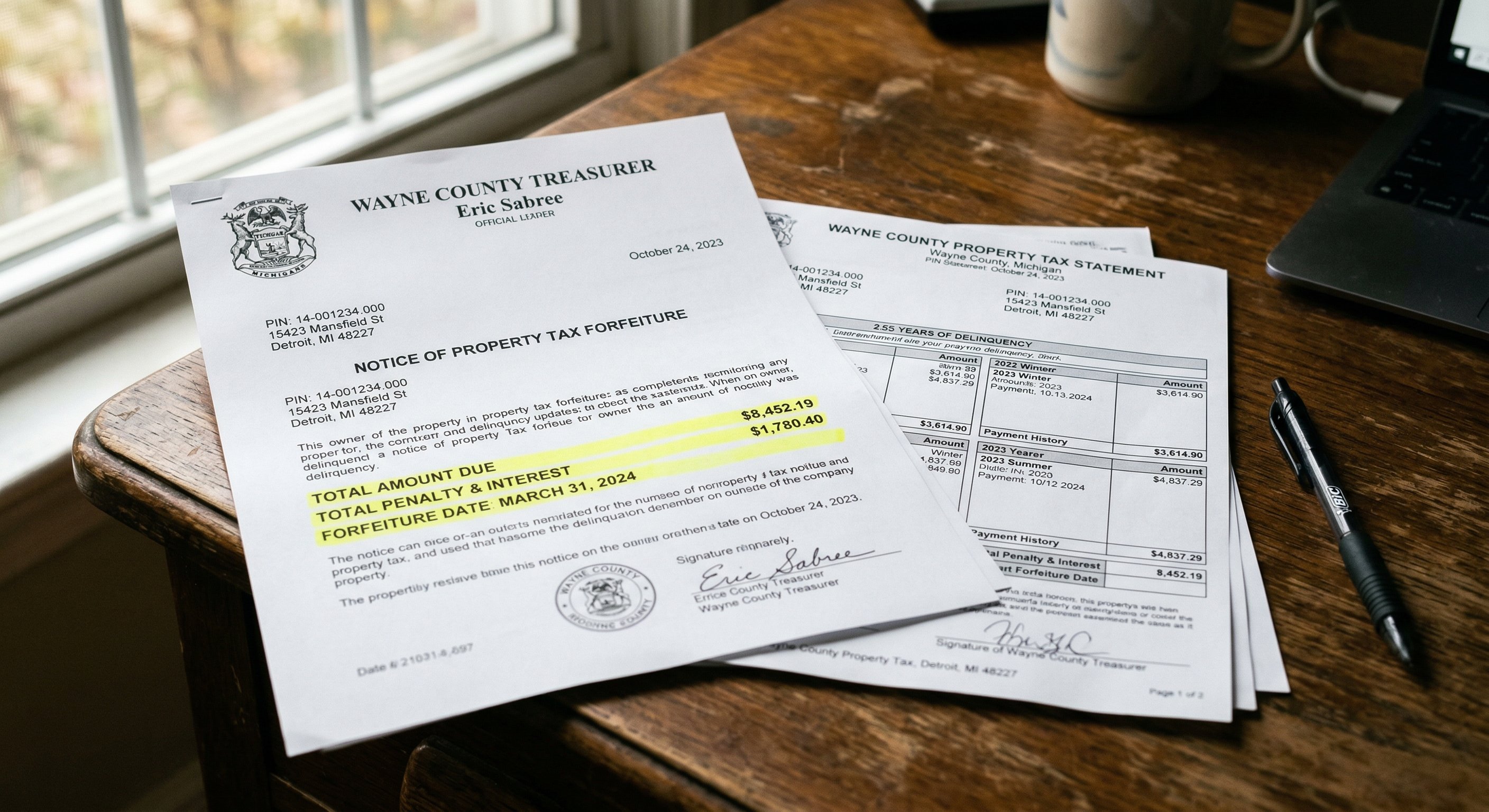
The Forfeiture Stage: Why It's Better Than the Auction
The county auction gets all the attention. It's visible — there are lists, schedules, marketing around it. That visibility is exactly why it's crowded.
A forfeited property in Year 2 is not on any marketing list. The county has recorded the forfeiture (it's public record), but there's no auction calendar, no bidding event, no urgency signal that tips off the broader investor market. You're essentially reaching the owner before the pressure goes from theoretical to real.
At this stage, the math is often in the owner's favor for selling. The delinquent taxes plus penalties have to be paid to redeem — and in some Wayne County cases, that's $8,000-$25,000 in accumulated debt on a property worth $40,000-$80,000. If the owner can't come up with that cash, they're likely to lose the property in five or six months anyway.
An investor who approaches at this stage and offers to cover taxes, fees, and still put cash in the owner's pocket is genuinely solving a problem. That's the dynamic that creates reasonable offers that get accepted.
The auction comparison: At the second auction, you're competing publicly. Minimum bids may be low, but bidding competition drives prices up — sometimes above market. You also don't get the property until well after the foreclosure is finalized, which means carrying nothing productive while you wait.
Free Weekly Alerts
See What's Distressed in Your Market
Get free weekly alerts — new distressed properties, motivation scores, and hot neighborhoods in your area. Addresses and contact info available inside DistressIQ.
Free forever · No credit card · Unsubscribe anytime
How to Find Michigan Tax Delinquent Properties
County Treasurer Portals
Every Michigan county treasurer maintains some form of delinquent tax list, but the format and accessibility vary enormously.
Wayne County publishes forfeiture and foreclosure lists on the county treasurer's website with parcel data. Oakland County's portal (Access Oakland) is among the more functional in the state — you can filter by delinquency status and pull parcel data.
For most rural counties, the process involves calling the treasurer's office or navigating legacy portals that are sometimes still PDF-only. If you're targeting 5-10 counties across the state, plan to spend hours working through each one separately.
Michigan Land Bank Fast Track Authority
Properties that don't sell at auction often go to the Michigan Land Bank Fast Track Authority or county-level land banks. The Detroit Land Bank Authority is the largest, holding thousands of parcels in various programs:
- Own It Now: DLBA sells directly to buyers at fixed prices (often $1,000-$15,000 for vacant lots and some structures)
- Auction: Traditional bidding on higher-value properties
- Side Lot program: Sells adjacent vacant parcels to neighboring homeowners
For investors, DLBA properties can be a source of deeply discounted deals — though competition for the better ones is real, and some properties come with significant condition issues that don't show up in the parcel data.
GIS and Parcel Data Tools
Many Michigan counties have GIS portals that allow you to layer delinquency status over parcel maps. This is genuinely useful for visual market analysis — identifying block-by-block delinquency concentration, spotting neighborhoods where tax-delinquent properties cluster, and spotting patterns that suggest where motivated seller density is highest.
The challenge: you need to access each county's GIS separately, and not all counties maintain current data layers. What looks like a comprehensive picture is often months out of date.
What You're Looking for in a Michigan Tax Delinquent Lead
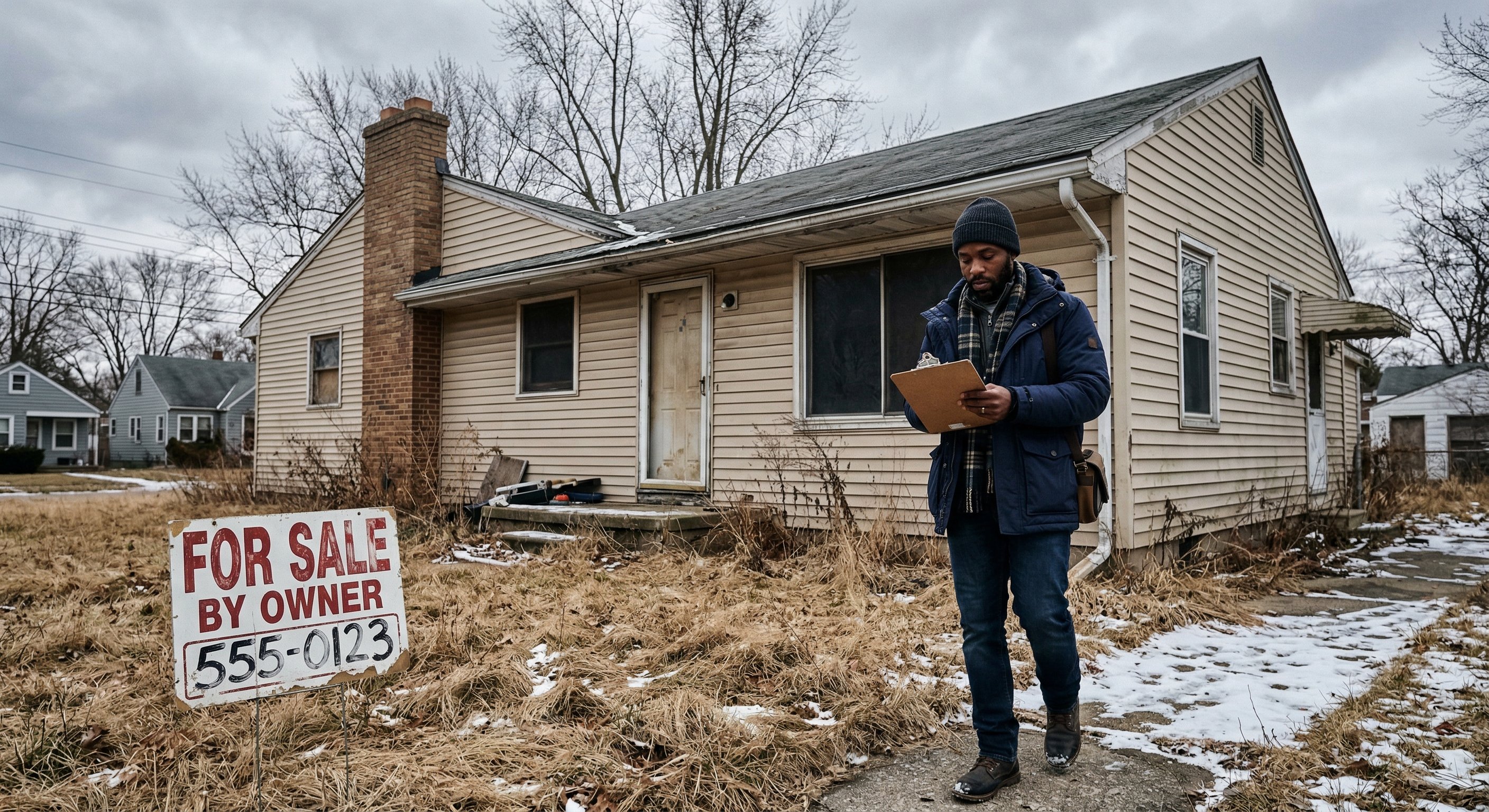
Not every delinquent property is worth your time. Michigan's tax delinquency market — especially Wayne County — includes thousands of properties that are delinquent because they're basically worthless. Burned structures, collapsed roofs, contaminated lots, properties in zones where there's no buyer market.
Filter for motivation, not just delinquency:
Multiple distress signals stacked: Is the property also flagged for code violations? Is the owner showing an out-of-state address (absentee owner)? Is there also a lis pendens on the record? A property with 3-4 active distress signals isn't just tax-delinquent — the owner is likely dealing with compounding problems and may be very open to a clean exit.
Timeline position: How deep into the 3-year clock are they? Year 2 forfeiture is your sweet spot. Year 1 delinquency is early — the owner may not feel urgency yet. Year 3 approaching the March 31 foreclosure deadline may be too late for a straightforward deal.
Owner type: Absentee owner landlords who've let taxes slide often still have equity and might be motivated to unload. Owner-occupants going through hardship situations are different — the conversation needs to be handled with care, and your offer needs to genuinely solve their problem.
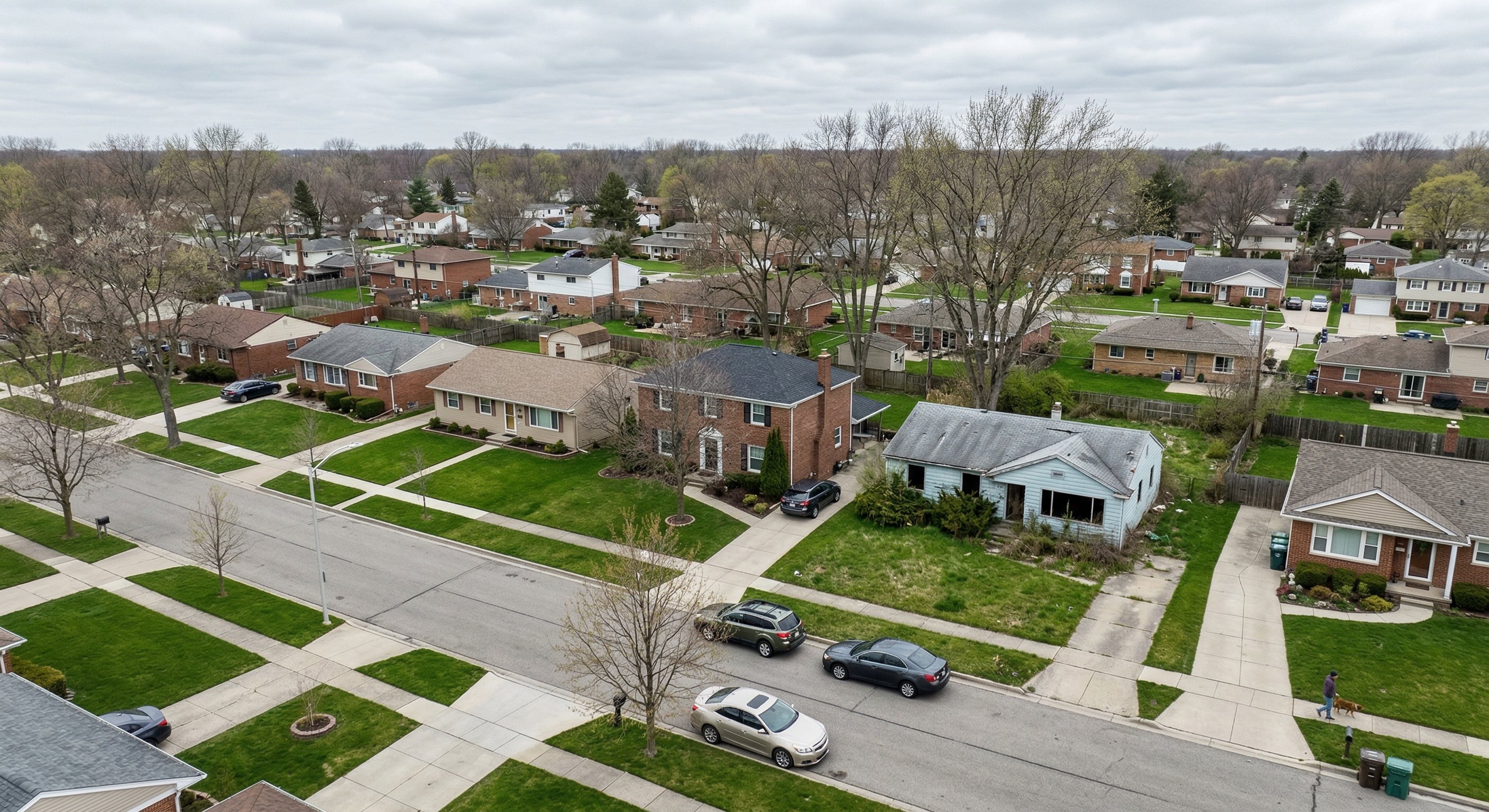
Property condition signals: If you can access Street View and aerial imagery before you pick up the phone, you can triage fast. Boarded windows, overgrown lots, accumulated debris — these signal vacancy and neglect that correlate with real motivation. A property that looks lived-in might just have a temporary cash flow problem.
DistressIQ shows all of this in one lead card: the signal types, the property data (verified against county assessor records), and built-in Street View and aerial imagery so you can see the property before you call. The leads are sorted by motivation score — so if you're working the Michigan market, you're starting with the stack of signals that actually predicts a deal, not a raw delinquency list where you're guessing.
Outreach That Works for Michigan Tax Delinquent Sellers
Two things shape how you reach Michigan delinquent property owners:
1. The situation is often genuinely hard. Behind many tax-delinquent properties in Wayne and Genesee counties is an owner who's lost income, dealing with a property that needs more work than they can fund, or trying to manage a family estate situation from out of state. The best opening isn't a sales pitch — it's a direct acknowledgment that you know the situation is stressful and that you buy properties in exactly this condition.
2. Timing sensitivity is real. A forfeited property with six months until the March 31 foreclosure deadline has urgency built in — you don't have to manufacture it. Just tell the truth: "You have until March 31 to redeem or sell. I can close in two to three weeks and cover the delinquency."
What to include in direct mail:
- That you buy as-is, cover closing costs, can close in 2-3 weeks
- That you know the property is in forfeiture (shows you did homework, signals you're serious)
- A clear way to reach you — phone and a simple landing page
Cold calling: Works in Michigan's metro markets, but requires good skip-traced contact info. Tax records often have outdated addresses, especially for absentee owners who moved. Invest in reliable skip tracing — calling the wrong number 20 times isn't a lead strategy.
The Detroit Land Bank: Opportunity and Reality
The DLBA is one of the most significant inventory sources for investors in the Detroit market. It holds tens of thousands of parcels — vacant lots, occupied homes, commercial buildings — acquired through tax foreclosure.
The opportunity is real. Properties sell at prices well below retail, and the DLBA programs are designed to move inventory.
The reality: the best properties attract competitive bidding. Condition can be severe — some DLBA properties have been vacant for 10+ years with significant structural issues. And the DLBA has requirements attached to most programs (owner-occupant requirements for some, timeline commitments for renovation, etc.) that affect how investors can hold or flip.
For investors who understand Detroit's micro-markets — where the genuine buyer demand exists, which neighborhoods are improving versus declining — DLBA can be a consistent deal source. For out-of-market investors without local knowledge, the pricing looks attractive but the execution risk is high.
If you're building a Michigan strategy, treat the DLBA as one piece — supplement it with direct outreach to forfeiture-stage owners in the suburban counties where properties carry more equity and fewer condition surprises.
Running a Michigan Tax Delinquent Campaign in Practice
Step 1: Define your target counties. Start with 2-3 counties you understand. Wayne and Oakland if you're doing Detroit metro. Kent if you're focused on Grand Rapids. Don't spread across all 83 counties before you've closed your first deal.
Step 2: Get the forfeiture list. Contact the county treasurer's office. Most Michigan counties will provide a forfeiture list; some have it online. This is your starting point for Year 2 properties.
Step 3: Layer filters. Pull properties from the forfeiture list that also show code violations, absentee ownership, or other distress signals. These are your priority targets.
Step 4: Skip trace. Property tax records often have the owner's name and mailing address, but that address may be stale. Run skip tracing on your filtered list before you spend money on mail.
Step 5: First outreach — direct mail. A simple letter, personal tone, clear offer. Send to your top 100-200 properties. Track response rates.
Step 6: Follow up by phone. Skip-traced phone numbers let you follow up on your mailers. Most deals don't happen on the first contact.
Step 7: Build the timeline into your offer. Know exactly how many days until the March 31 deadline for each property. Use it honestly in your conversation — not as pressure, but as shared reality.
DistressIQ can anchor step 3: pulling Michigan tax-delinquent leads already filtered and sorted by motivation score means you're working the most signal-rich properties first, not doing that manual layering yourself.
See Michigan's tax-delinquent leads scored by motivation — browse free on DistressIQ
What Michigan Does Differently (and Why It Matters)
A few Michigan-specific mechanics worth understanding before you build your strategy:
The right of redemption lasts until March 31 of Year 3. Even after the circuit court approves the foreclosure petition, owners retain the right to redeem by paying the full delinquency plus fees. This means deals can still fall apart close to closing if the owner scrapes together funds. Build this contingency into your closing timeline.
Title is clean after foreclosure. Once the county takes absolute title through the circuit court process, the title is clear of prior liens (with limited exceptions). This makes tax-deed properties in Michigan cleaner to finance than in states where redemption rights linger longer post-sale.
Michigan's distressed tax exemption. Some Michigan cities (Detroit included) offer property tax abatements or special assessment forgiveness programs tied to rehabilitation commitments. If you're buying a foreclosed property with the intent to rehab, investigate whether you qualify — it can materially affect your holding cost math.
IRS federal tax liens survive. Federal tax liens are not extinguished by Michigan's state tax foreclosure process. If a property has a federal IRS lien attached, that lien follows the property through the auction. Always run a title search before bidding at auction.
Frequently Asked Questions
How many years of unpaid taxes does it take to lose a Michigan property to foreclosure?
Three years under Michigan law (MCL 211.78). Year 1 is delinquency, Year 2 is forfeiture (recorded, but still redeemable), and the March 31 deadline in Year 3 is when the county treasurer can obtain absolute title through circuit court. Owners can redeem at any point before that March 31 deadline.
Where can I find Michigan's tax delinquent property list?
County treasurer websites are the primary source. Wayne County and Oakland County have relatively functional online portals. Smaller rural counties often require a direct request to the treasurer's office. The Michigan Land Bank Fast Track Authority also maintains inventory of post-foreclosure properties statewide.
Can I buy Michigan tax delinquent properties directly from the owner before auction?
Yes — and this is typically more efficient than competing at auction. Property owners in the forfeiture stage (Year 2) can sell conventionally; they need proceeds sufficient to cover the delinquency plus any other liens. An investor who covers the delinquency and provides additional cash gives the owner a path out without losing everything to the auction process.
What happens to properties that don't sell at Michigan tax auctions?
Properties unsold at both auctions (the governmental first auction and the public second auction) are typically transferred to the county land bank or the Michigan Land Bank Fast Track Authority. Detroit properties not sold through the Wayne County auction often end up with the Detroit Land Bank Authority (DLBA), which resells them through its own programs.
Is Michigan a tax lien or tax deed state?
Michigan is a tax deed state. County treasurers, after completing the foreclosure process through circuit court, take absolute title and then sell properties at auction. Unlike tax lien states, there are no separate tax lien certificates to purchase.
Do federal tax liens survive Michigan tax foreclosure?
Yes. Federal IRS liens are not extinguished by Michigan's state tax foreclosure process. This is a critical distinction — always pull a title search before bidding on any Michigan auction property to identify federal liens that will survive and travel with the deed.
The data behind this article
DistressIQ Monitors These Signals in Real Time
Pre-Foreclosures
NOD + NTS filings
Tax Delinquency
County treasurer records
Code Violations
Municipal inspection filings
Probate Filings
Superior Court records
Every lead is scored 0–100 for seller motivation based on signal type, duration, severity, and stacking. Nationwide coverage — every US county, updated daily.
Ready to find deals in your market?
See Live Distress Signals in Michigan
Stop calling dead leads. Every lead in DistressIQ is scored 0–100 for seller motivation, with verified contact info included. Browse the free tier to see what's active in your market right now.
Browse Free Leads — No Credit Card