Tax Delinquent Properties in Illinois: How to Find and Buy Them in 2026
Tax Delinquent Properties in Illinois: How to Find and Buy Them in 2026
TL;DR: Illinois is a tax lien state with some of the highest property taxes in the country — which means motivated sellers and serious investor opportunity. The process works in two phases: buy a tax lien certificate at the annual county tax sale, then wait out the redemption period (2.5 years for residential). If the owner doesn't pay, you can pursue a tax deed. But the real edge isn't just the lien process — it's identifying owners showing multiple distress signals before the tax sale, so you can approach them directly and buy the property outright, often at a bigger discount than the auction.
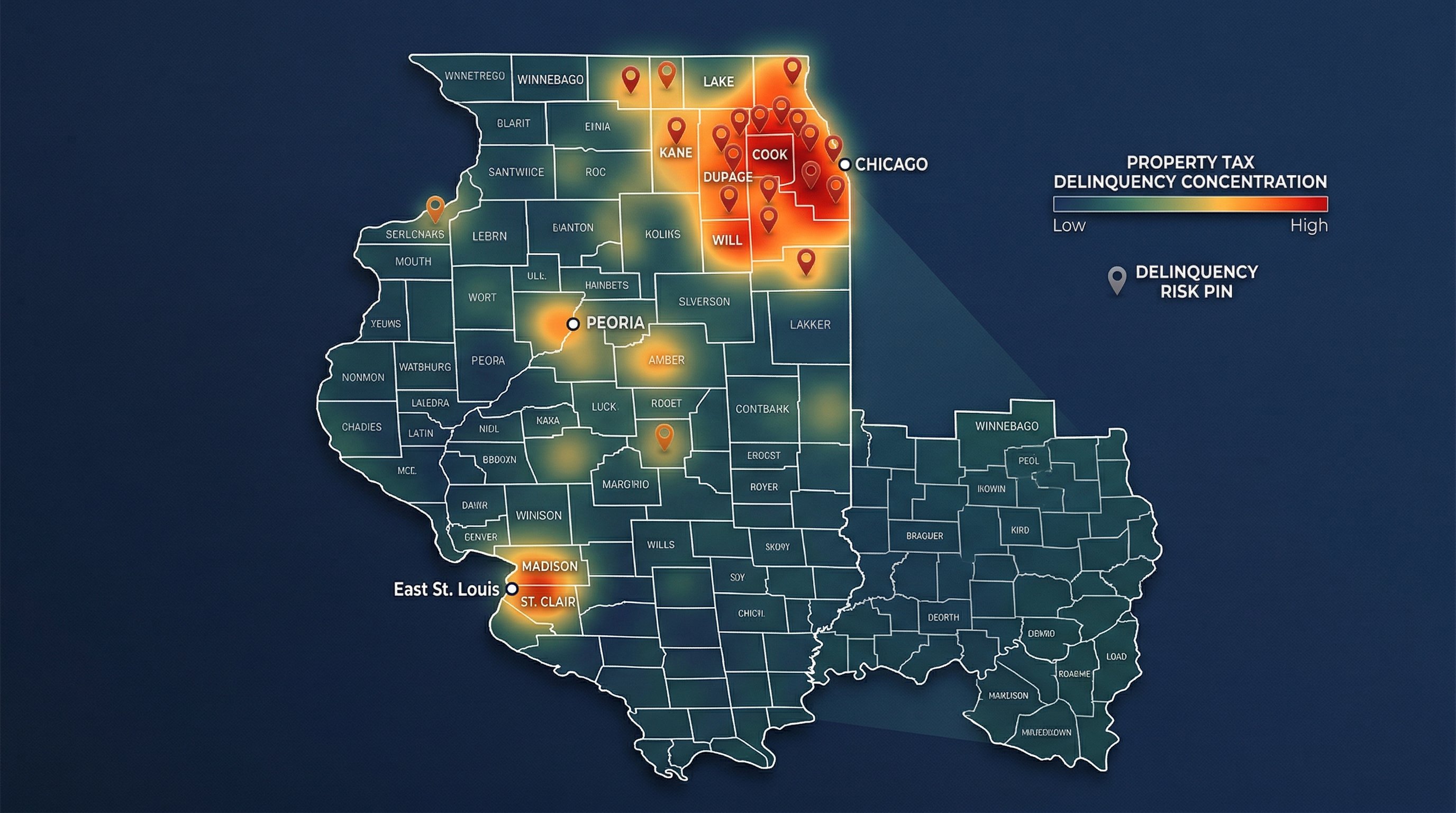
Illinois has the second-highest property tax rate in the country. The average effective rate is 2.07% — and in Cook County (Chicago), that number climbs higher. When property taxes go unpaid for long enough in a state like this, something interesting happens: the list of delinquent properties gets long, the owners get stressed, and investors who understand the system have a real edge.
The catch is that Illinois isn't a tax deed state where you just buy the property at auction. It's a tax lien state, which means there's a specific process involving certificates, redemption periods, and a legal path to ownership that takes patience. Most investors skip Illinois because they don't understand how it works. That's your advantage.
How Tax Delinquent Properties Work in Illinois
Illinois counties hold an annual tax sale — typically in the fall, though Cook County runs on its own timeline — where unpaid property tax liens are auctioned off to investors. You're not buying the property. You're buying the right to collect on the delinquent tax debt, plus statutory interest.
Here's the timeline:
- Taxes go unpaid — typically for the prior year's tax bill
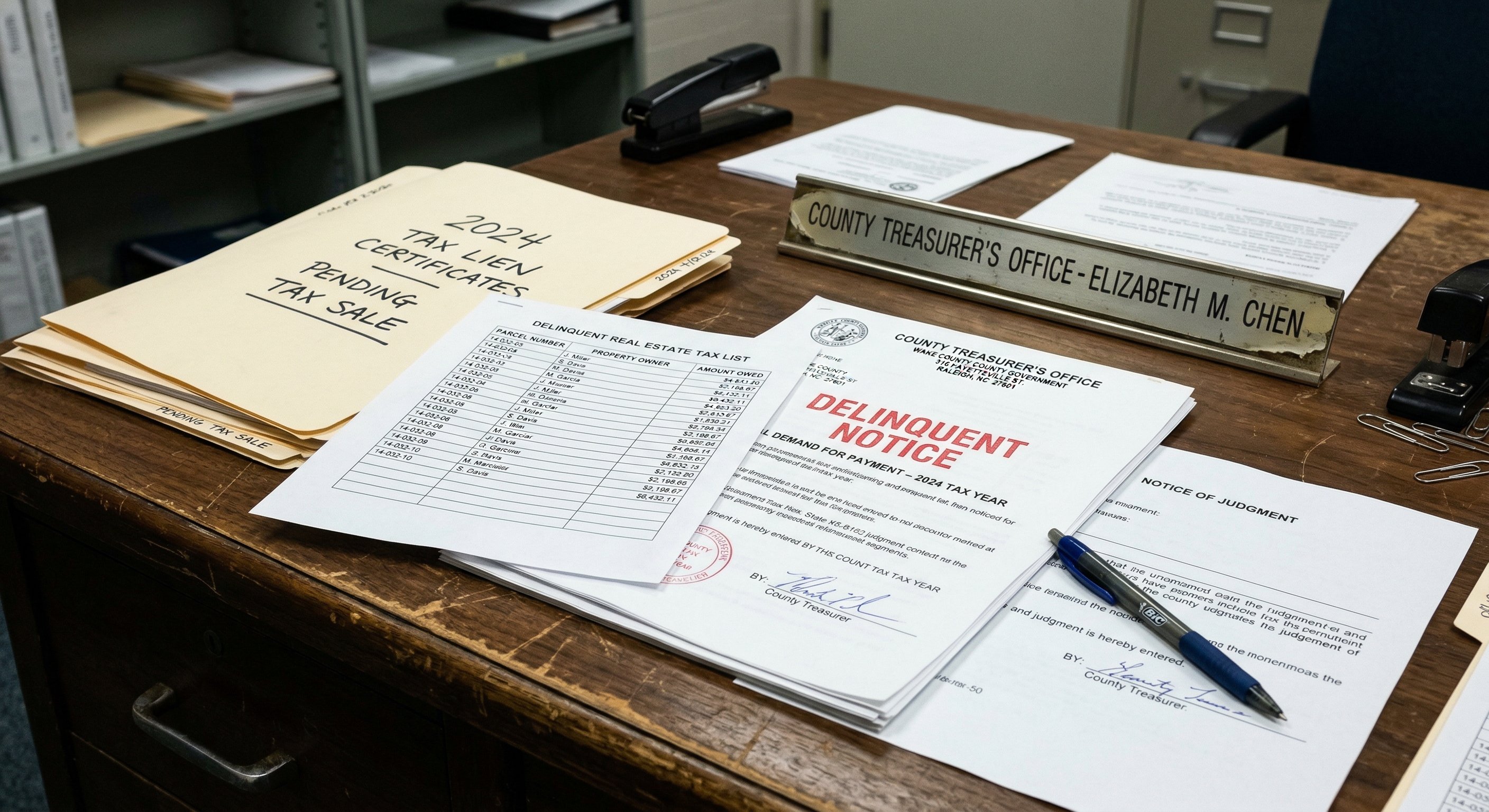
- County publishes a delinquent tax list — usually 4-6 weeks before the tax sale
- Annual tax sale is held — investors bid on the penalty rate (not the amount owed)
- Winning bidder receives a tax lien certificate — you've paid the county, now the property owner owes you
- Redemption period begins — in Illinois, property owners have up to 2.5 years to redeem (pay off the lien plus interest)
- If unredeemed, you apply for a tax deed — after the redemption period, you can petition the court for ownership
The interest rate you earn is set by statute: 18% per 6-month period in most cases, applied to the face value of the delinquent taxes. The bidding process is a "penalty bid" — investors bid down the penalty rate, with winning bids sometimes near zero because competition is high in desirable counties.
Cook County is different. Chicago runs the Scavenger Sale separately, targeting properties that have been delinquent for multiple years. These are harder to research but can yield better deals on deeply distressed assets.
Why Illinois Is Underrated for Motivated Seller Targeting
Most investors who know the Illinois tax lien system focus on the certificate process — and that's fine if you want to earn 18% interest. But the bigger play is using the delinquent tax list as a lead generation tool, not just an auction list.
Think about the owner of a property on the Cook County delinquent tax list. They owe thousands in back taxes. In Chicago, where rates on a $300,000 property can run $6,000-8,000 per year, two or three years of non-payment means $18,000-24,000+ in unpaid taxes. That's not a landlord who forgot to set up autopay — that's someone who can't or won't pay, and may have a compelling reason to sell.
Now layer in what often accompanies unpaid taxes: a lis pendens filing, a probate proceeding, code violations from a city inspector, or an absentee ownership situation. These aren't random — they cluster. A property that shows up on the delinquent tax list and has a probate filing and has an outstanding code violation is a different kind of lead than a clean pre-foreclosure with one signal.
That multi-signal concentration is what separates genuinely motivated sellers from people who are just temporarily behind on a bill.
Finding Delinquent Tax Properties in Illinois: County by County
Illinois has 102 counties. The process is similar across all of them, but the resources and timelines vary.
Cook County (Chicago Metro)
Cook County is the most complex — and the most active. The county Treasurer's website publishes delinquent tax information, and the Scavenger Sale (for properties with 2+ years of delinquency) runs separately from the annual tax sale.
- Annual Tax Sale: Typically held in November, with the delinquent list published in late September/October
- Scavenger Sale: Held every two years for properties that didn't sell at prior annual sales
- Research tool: cookcountytreasurer.com has a searchable database of delinquent accounts
Cook County is judicial — meaning the tax deed process goes through the circuit court. Budget 6-18 months after the redemption period before you hold a deed.
Collar Counties: DuPage, Lake, Will, Kane, McHenry
These suburbs of Chicago see consistent delinquency, particularly in transitional neighborhoods. DuPage County's Treasurer runs a clean online delinquent tax search. Lake County (Waukegan, Winthrop Harbor) has pockets of chronic delinquency in older industrial corridors.
Annual tax sales in the collar counties typically run October-November. Each county treasurer maintains its own delinquent list, usually available online 4-6 weeks prior to sale.
Downstate Markets
Peoria, Rockford, Springfield, and East St. Louis (Metro East area / St. Clair County) have high concentrations of long-term delinquency. In some St. Clair County neighborhoods, delinquency rates exceed 20% of assessed properties. These are trickier markets — values are lower, and demand is thinner — but for investors who know the neighborhoods, the entry prices are compelling.
St. Clair County publishes a detailed delinquent real estate publication list publicly accessible from the county treasurer site. It's not pretty, but it's data you can work with directly.
Free Weekly Alerts
See What's Distressed in Your Market
Get free weekly alerts — new distressed properties, motivation scores, and hot neighborhoods in your area. Addresses and contact info available inside DistressIQ.
Free forever · No credit card · Unsubscribe anytime
The Redemption Period: What Investors Get Wrong
The biggest misconception about Illinois tax lien investing is underestimating the redemption period. Residential properties have a 2.5-year redemption window. That's not a typo. If you buy a lien certificate in November 2026, the owner has until May 2029 to pay you off.
During that window, the property owner can redeem at any time by paying:
- The original delinquent tax amount
- Your penalty rate (whatever you bid at the sale)
- Any subsequent tax payments you've made to protect your lien
In competitive Cook County, redemptions are common — especially in neighborhoods where values have risen. An owner who couldn't pay in 2024 may find a way to refinance or sell before your deed application. You earn 18% on the investment, but you don't get the property.
This is exactly why the direct approach often beats the certificate approach. If you can identify the property owner before the tax sale and negotiate a direct purchase, you skip the 2.5-year wait entirely. The owner avoids losing the property through a legal process, and you close at a below-market price that still makes them whole on the taxes owed.
How to Get the Delinquent Tax List
Each county publishes its delinquent tax list differently. Here's the general pattern:
- County Treasurer website — Start here. Most Illinois counties maintain searchable online delinquent databases. Search "[County Name] county treasurer delinquent tax list 2026"
- Newspaper publication — Illinois law requires counties to publish delinquent tax notices in a local newspaper of record before the tax sale. These are public record.
- In-person request — Some smaller counties still handle list requests at the treasurer's office. Call ahead to ask about format and cost.
- Third-party data aggregators — Services exist that compile IL delinquent lists for a fee, but quality varies and the lists go stale fast.
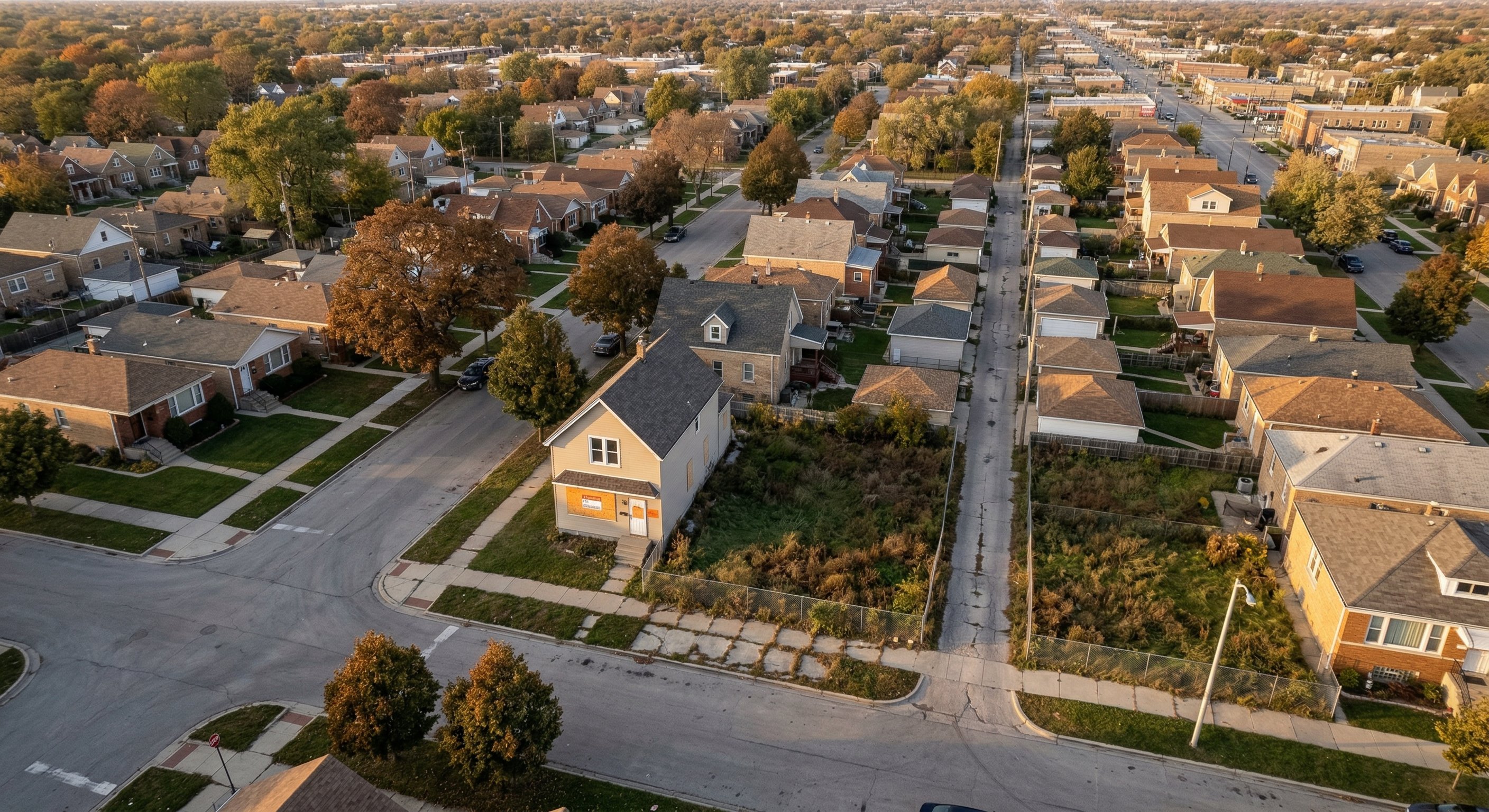
The raw list is a starting point. It gives you parcel numbers, owner names, and amounts owed. What it doesn't give you is the full picture of what's happening with that property — other distress signals, contact information, or any context about why taxes went unpaid.
That's where combining the delinquent tax list with other signal types becomes the actual strategy.
Stacking Signals: The Illinois Investor's Edge
A delinquent tax property in Chicago's West Side is not the same lead as a delinquent tax property in Naperville. The signal tells you something, but not everything. To know which properties are worth pursuing — and in what order — you need to know what else is happening with each one.
In practice, Illinois investors who consistently close deals aren't working off the raw county list. They're cross-referencing it against:
- Lis pendens filings — filed when a lender starts foreclosure proceedings. A property in both the delinquent tax list and in active lis pendens has an owner under serious financial pressure from two directions.
- Probate records — circuit court probate filings are public in Illinois. An inherited property that hasn't been paying taxes is a classic motivated seller scenario.
- Code violations — Chicago's Department of Buildings and individual suburban municipalities maintain violation databases. A property racking up code violation fines while also delinquent on taxes is a compounding pressure situation.
- Absentee owner status — where the owner's mailing address doesn't match the property address. Absentee owners with delinquent taxes are among the most motivated sellers in any market.
The math works in your favor when signals compound. Each additional distress indicator narrows the universe of leads while simultaneously increasing the probability that the owner is genuinely open to a conversation about selling.
DistressIQ tracks all of these signals across every Illinois county, updated daily from county sources, and scores each property 0-100 based on motivation signals stacked together. Instead of manually cross-referencing the Cook County Treasurer site, the circuit court probate index, and the city's building violations database — you see a ranked list of which properties in Illinois have the most concentrated distress. Browse motivated sellers in Illinois — free on DistressIQ.
Common Illinois Tax Delinquent Investing Mistakes
Buying certificates without understanding the neighborhood. A lien on a $40,000 South Side Chicago property with structural issues isn't the same as a lien on a $200,000 Aurora ranch home. The interest rate is the same, but your actual outcome isn't. Know the market before you bid.
Missing subsequent tax payments. If you hold a lien certificate and the subsequent year's taxes also go unpaid, you have the option (and often the strategic need) to pay those taxes yourself to protect your position. Missing that step can compromise your lien priority.
Underestimating legal costs on the deed application. Getting from "lien certificate" to "recorded deed" in Cook County involves a circuit court petition, publication requirements, and attorney fees. Budget $2,000-5,000 in legal costs minimum, plus 6-18 months of calendar time. Many investors get surprised by this.
Ignoring the direct-purchase opportunity. The most common mistake is treating the tax sale as the only path to acquisition. The delinquent list is published weeks before the auction. That's your window to contact owners directly — before the process becomes adversarial and public.
Working the System: A Practical Illinois Workflow
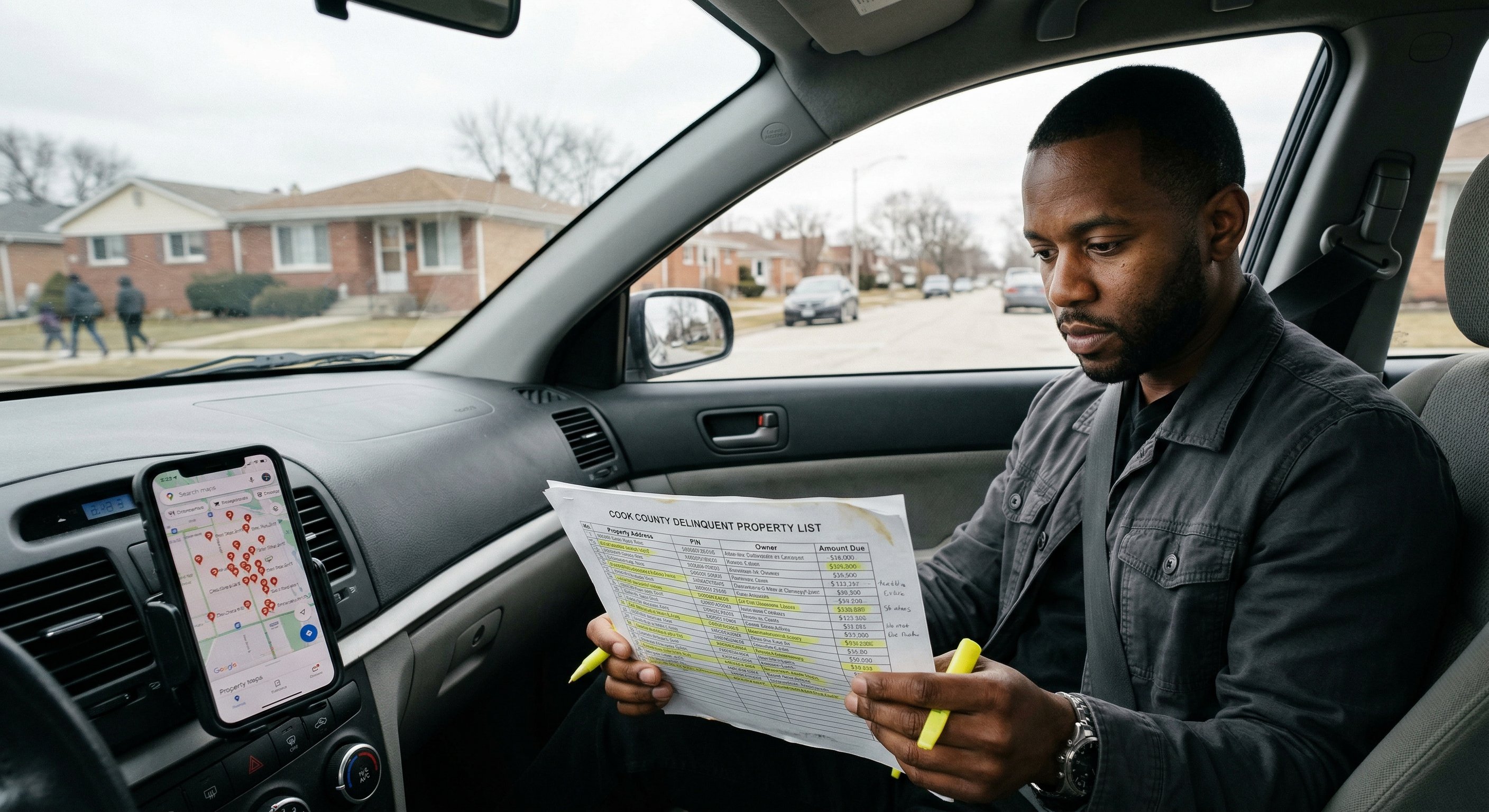
For investors new to Illinois tax delinquent strategies, here's a framework that works:
Step 1: Pull the delinquent list — 4-6 weeks before the annual tax sale in your target county. Focus on properties in neighborhoods where you'd actually want to own real estate.
Step 2: Filter by delinquency amount and duration — properties with 2+ years of unpaid taxes at amounts over $5,000 indicate a more motivated situation than a single missed payment.
Step 3: Cross-reference additional signals — search the same parcels in circuit court records (probate, lis pendens), city violation databases, and assessor records for absentee owner indicators.
Step 4: Skip trace owner contact information — the county record has a name. You need a phone number and current address. Skip tracing services typically run $0.08-0.20 per record. Don't skip this step — a letter to an old mailing address in a delinquency situation often goes nowhere.
Step 5: Prioritize outreach by signal concentration — owners with 3+ distress signals get your calls first. Single-signal properties go lower on the list or get a direct mail piece.
Step 6: Make contact before the auction — your pitch is simple: "I know the taxes are behind. I can close in two weeks and pay cash. No auction, no public record of foreclosure, no waiting." For the right seller, that offer lands.
Step 7: For remaining properties, bid at the tax sale — properties you couldn't contact or couldn't reach a deal on go to the lien certificate strategy. You earn statutory interest while you decide whether to pursue the deed.
Illinois Tax Lien vs. Tax Deed: Know the Difference
Illinois is a tax lien state at heart, but every lien eventually can become a tax deed if the owner doesn't redeem. The deed process is judicial and slow, but it's real.
A few states adjacent to Illinois (Indiana, Wisconsin, Iowa) run tax deed auctions where you can buy properties directly at the sale — no redemption period, no certificate. If you're active in multiple states, knowing the distinction matters for how you structure your acquisitions budget and timeline expectations.
In Illinois specifically: certificates first, deeds later — usually 3-4 years after purchase if you go the full route. Plan your capital accordingly.
What Makes Illinois Different From Other States
- 2nd highest property taxes in the US — more owners looking for alternatives when they fall behind, creating a larger market for direct sales
- Tax lien state — certificate-to-deed path is longer than a tax deed state but better-protected legally
- Cook County complexity — separate Scavenger Sale process, judicial circuit courts, and high competition mean higher research investment
- Downstate markets — dramatically lower prices with higher delinquency rates; different risk/return profile than Chicago suburbs
- Strong absentee owner segment — Chicago's population migration over two decades left a significant inventory of properties owned by people who moved away; many are delinquent and genuinely available
DistressIQ tracks distress signals across all 102 Illinois counties — tax delinquency, lis pendens, probate, code violations, and more — scored and ranked by motivation so you know which leads to call first. Browse Illinois motivated sellers free on DistressIQ.
Frequently Asked Questions
How does the Illinois annual tax sale work for investors?
Each county holds an annual tax sale — typically in the fall — where unpaid property tax liens are auctioned. Investors bid on the penalty rate they'll accept. The winning bidder pays the delinquent taxes and receives a tax lien certificate. The property owner then has a redemption period (up to 2.5 years for residential) to repay the investor plus interest. If they don't redeem, the investor can petition for a tax deed through circuit court.
What is the redemption period for tax delinquent properties in Illinois?
Residential properties in Illinois carry a 2.5-year redemption period from the date of the tax sale certificate. Commercial properties may have a shorter period (6 months in some circumstances). During this window, the owner can pay off the lien — including your penalty rate — and reclaim the property. Plan your capital with this timeline in mind before bidding.
Where can I find the delinquent tax property list in Illinois?
Each county treasurer publishes delinquent tax information separately. Start with the county treasurer's website for your target area. Cook County lists are at cookcountytreasurer.com. Most county treasurers also publish the delinquent list in a local newspaper of record 4-6 weeks before the annual tax sale, as required by Illinois law.
What is the interest rate on Illinois tax lien certificates?
Illinois statutes provide for an 18% per 6-month penalty on tax lien certificates in most circumstances. At the tax sale, investors bid down this penalty rate — so competition in desirable markets can reduce returns. In less-competitive downstate counties, investors more often win certificates at or near the statutory maximum.
Is it better to buy the tax lien or approach the owner directly before the sale?
Both strategies have merit. Direct owner contact before the auction gives you the chance to buy the property outright — typically at a larger discount than the lien certificate would eventually yield, and without the 2.5-year wait. The delinquent tax list is published 4-6 weeks before the sale, giving you a window to make contact. For owners you can't reach or who aren't interested, the certificate is still a solid return. Many experienced Illinois investors run both simultaneously.
What are the best Illinois counties for tax delinquent investing?
Cook County has the most volume and the most complexity. The collar counties (DuPage, Lake, Will, Kane) offer suburban deals with better-documented titles and cleaner redemptions. Downstate markets like St. Clair (Metro East), Peoria, and Rockford have higher delinquency rates and lower prices — better yields if you know the neighborhoods, but thinner buyer pools if you need to sell quickly.
The data behind this article
DistressIQ Monitors These Signals in Real Time
Pre-Foreclosures
NOD + NTS filings
Tax Delinquency
County treasurer records
Code Violations
Municipal inspection filings
Probate Filings
Superior Court records
Every lead is scored 0–100 for seller motivation based on signal type, duration, severity, and stacking. Nationwide coverage — every US county, updated daily.
Ready to find deals in your market?
See Live Distress Signals in Illinois
Stop calling dead leads. Every lead in DistressIQ is scored 0–100 for seller motivation, with verified contact info included. Browse the free tier to see what's active in your market right now.
Browse Free Leads — No Credit Card