The Real Cost of Bad Property Data for Real Estate Investors
The Real Cost of Bad Property Data for Real Estate Investors
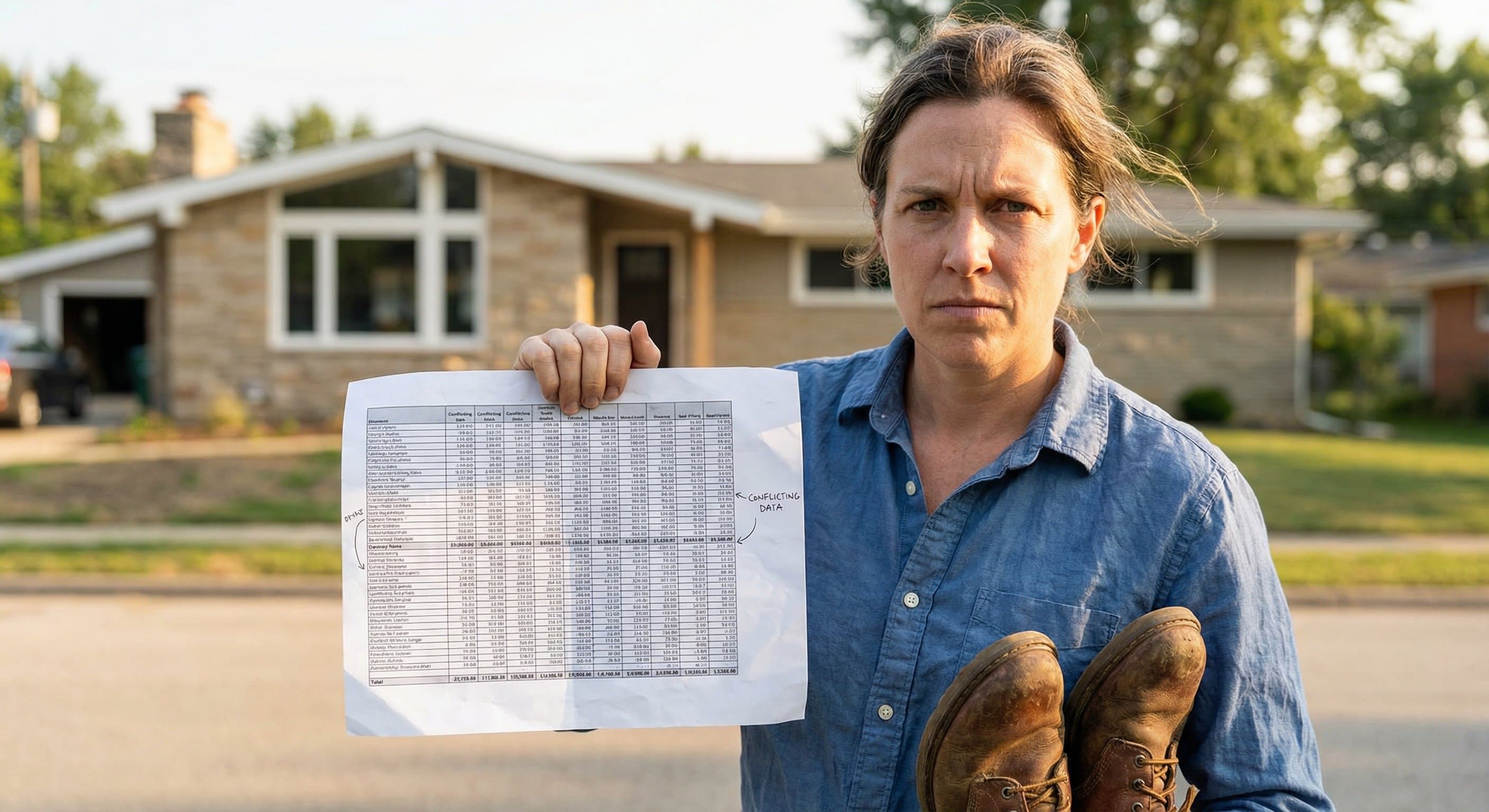
TL;DR: Bad property data does not just create inconvenience. It creates direct financial losses on every deal where inaccurate information drives wrong comps, inflated ARV estimates, and wasted outreach on properties that do not pencil. The core problem: MLS data is marketed data, not legal record data. County assessor records are the legal foundation for valuation. Investors using MLS alone systematically overpay by an average of 8-12% on ARV in markets where assessor records diverge from listing data. The solution is verifying property characteristics against county assessor records before running any deal numbers.
It Starts With One Number
An investor in the Kansas City market pulls a flip deal in early 2025. The MLS listing shows the subject property as 2,400 square feet. Three comparable sales in the area support a $285,000 ARV. The numbers work. The investor wins the bid, closes, and starts the rehab.
Six weeks in, a contractor asks about permit pull records. The county assessor shows the property as 1,890 square feet. The actual livable area is 510 square feet less than what MLS reported.
The comps were wrong. The ARV was wrong. The investor is now underwater before the first coat of paint goes on.
This is not a rare edge case. It is a structural feature of how most real estate investors make their biggest financial decisions.
What "Bad Property Data" Actually Means
The phrase sounds technical. It is not. Bad property data means one of four things:
Wrong square footage. The most common error. Listings add heated living space that is not heated, include basement square footage as if it were above-grade, or simply have transposed numbers from original construction records. A property listed at 2,400 square feet might legally be 1,890.
Incorrect lot size. County records and MLS frequently disagree on exact lot dimensions. Lot size drives per-square-foot comp calculations. A 0.18-acre lot versus a 0.28-acre lot is not the same property in a comp analysis.
Outdated condition flags. Properties flagged as "move-in ready" or "updated" on MLS often reflect the 2021 renovation, not the 2025 deferred maintenance that followed a tenant departure. Data that looked current 18 months ago is stale.
Absentee owner or occupancy mismatches. Investor lead lists frequently show a mailing address that differs from the property address. Without cross-referencing county records, outreach goes to the wrong place entirely. Mail goes to a Snowbird's winter address in Arizona while the actual property sits vacant in Ohio.
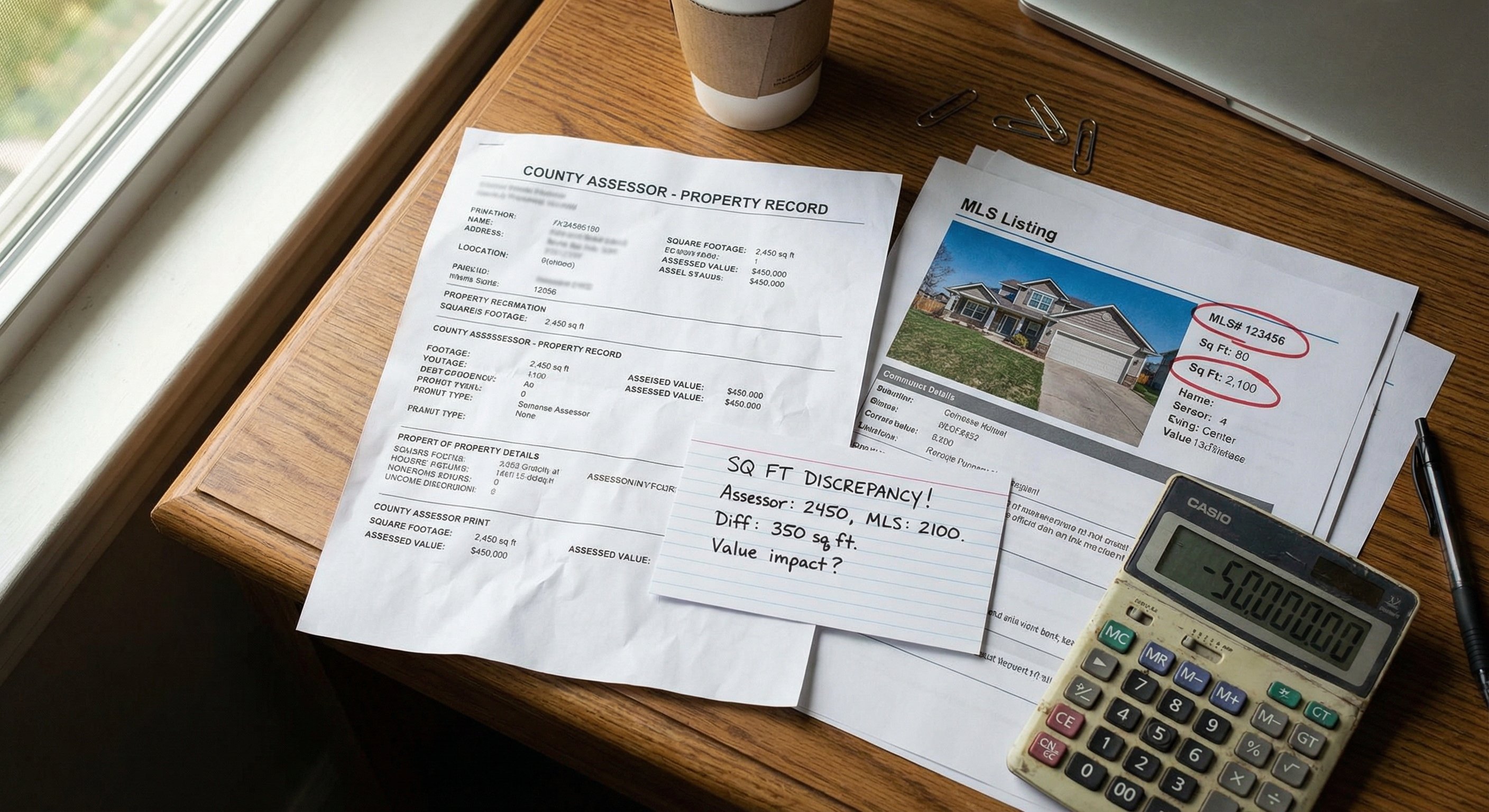
Every one of these looks fine in a spreadsheet. None of them pencil correctly when the deal runs.
The Five Costs of Bad Property Data
1. Bad Comps and Wrong ARV
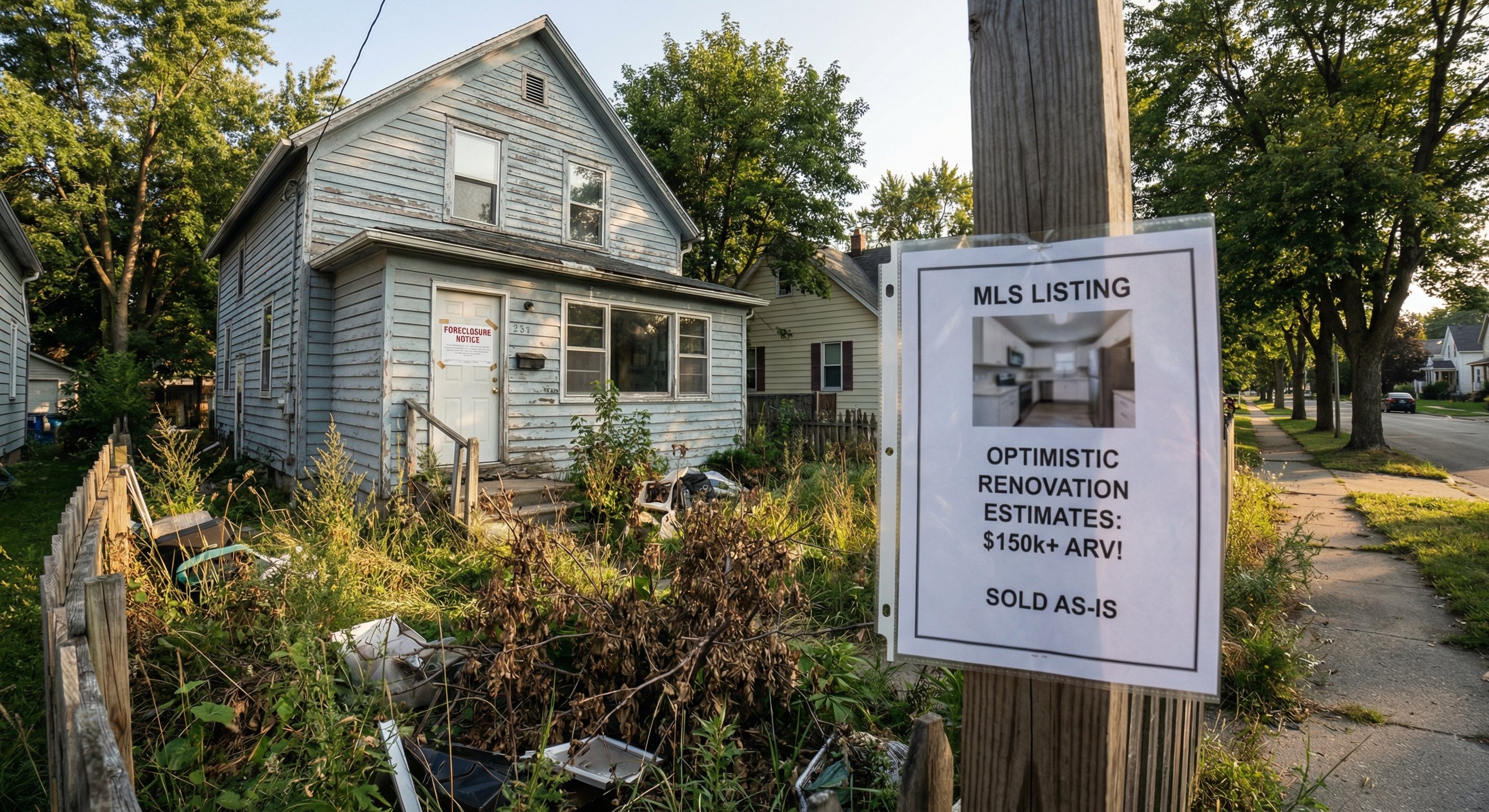
The most expensive consequence. When square footage is wrong, every comparable sale that uses the same bad data produces an inflated ARV. The investor anchors to a number that cannot be supported at resale.
A National Association of Realtors study found that MLS listed prices differ from actual HUD-1 transaction prices in roughly 8.75% of cases. That is not a rounding error. In a $300,000 market, that is a $26,250 gap on every single comp in that dataset.
For distressed properties, the problem compounds. Distressed properties frequently have not been transacted in the MLS in years. The most recent comp might be a 2019 sale that was entered incorrectly and never corrected. An investor relying on that comp is building a financial model on a foundation that does not exist.
The fix is not complicated: every ARV calculation should be anchored to county assessor square footage, not MLS listed square footage. County assessor data is the legal record. MLS is a marketing platform.
2. Wasted Outreach on Bad Leads
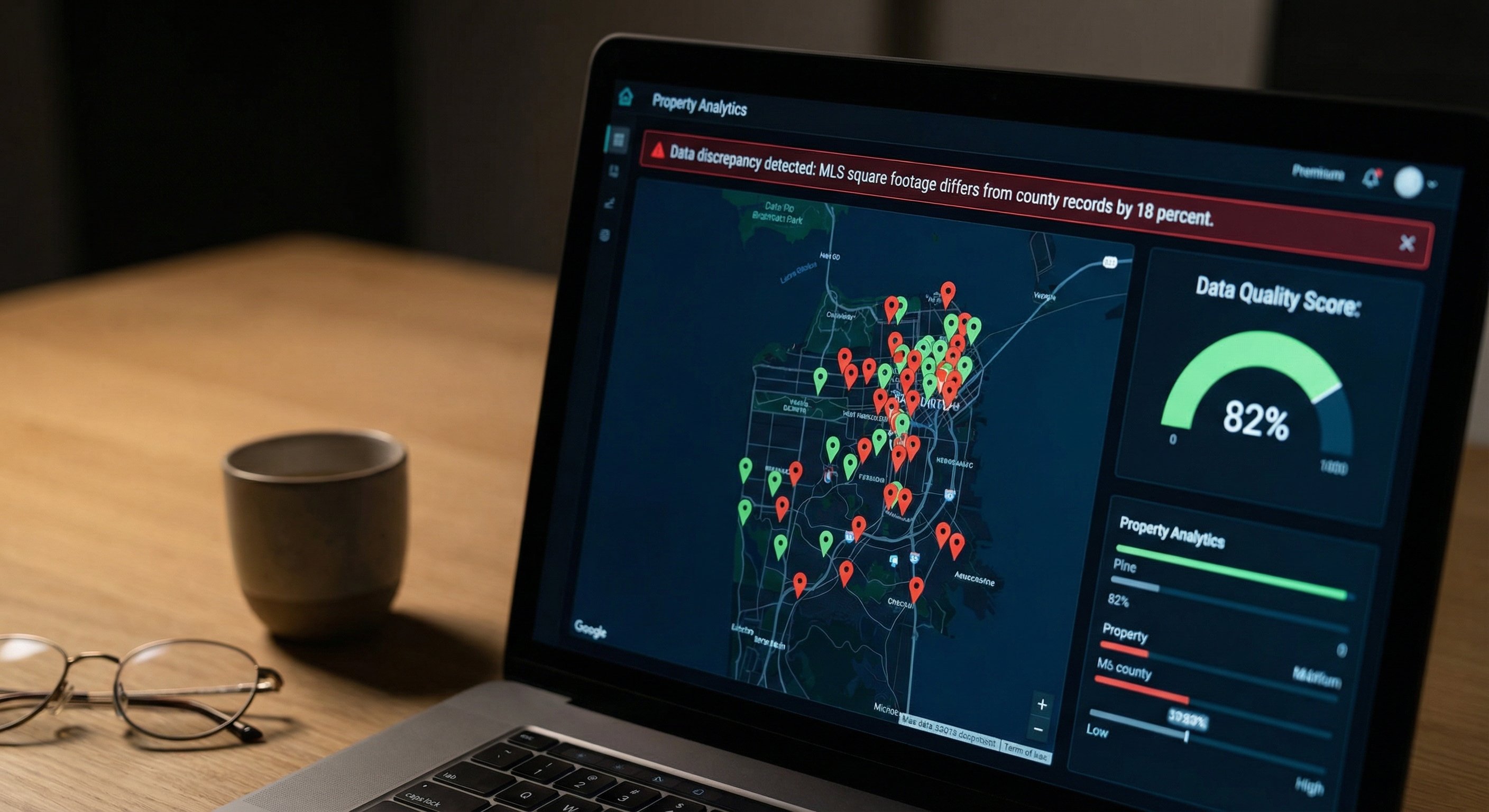
Distress signal lead lists are only as good as the data behind them. An absentee owner flag means nothing if the mailing address on file is a decade out of date.
Skip tracing a wrong address is not just a wasted $0.08 per record. It is a wasted 20-minute conversation with a vacant tenant who has no authority to sell. It is a direct mail piece sent to a property that has been demolished. It is a cold call to a number that was ported to a new owner three years ago.
In markets with high absentee owner rates, bad address data affects 15-30% of lead records. That is not a small list problem. That is a direct cost multiplier on every outreach dollar spent.
Verified owner addresses cross-referenced against county assessor mailing records dramatically reduce this waste. The difference between a 20% bad address rate and a 3% bad address rate is the difference between burning $200 in skip trace credits per 1,000 leads and burning $24.
3. Deal Analysis Paralysis
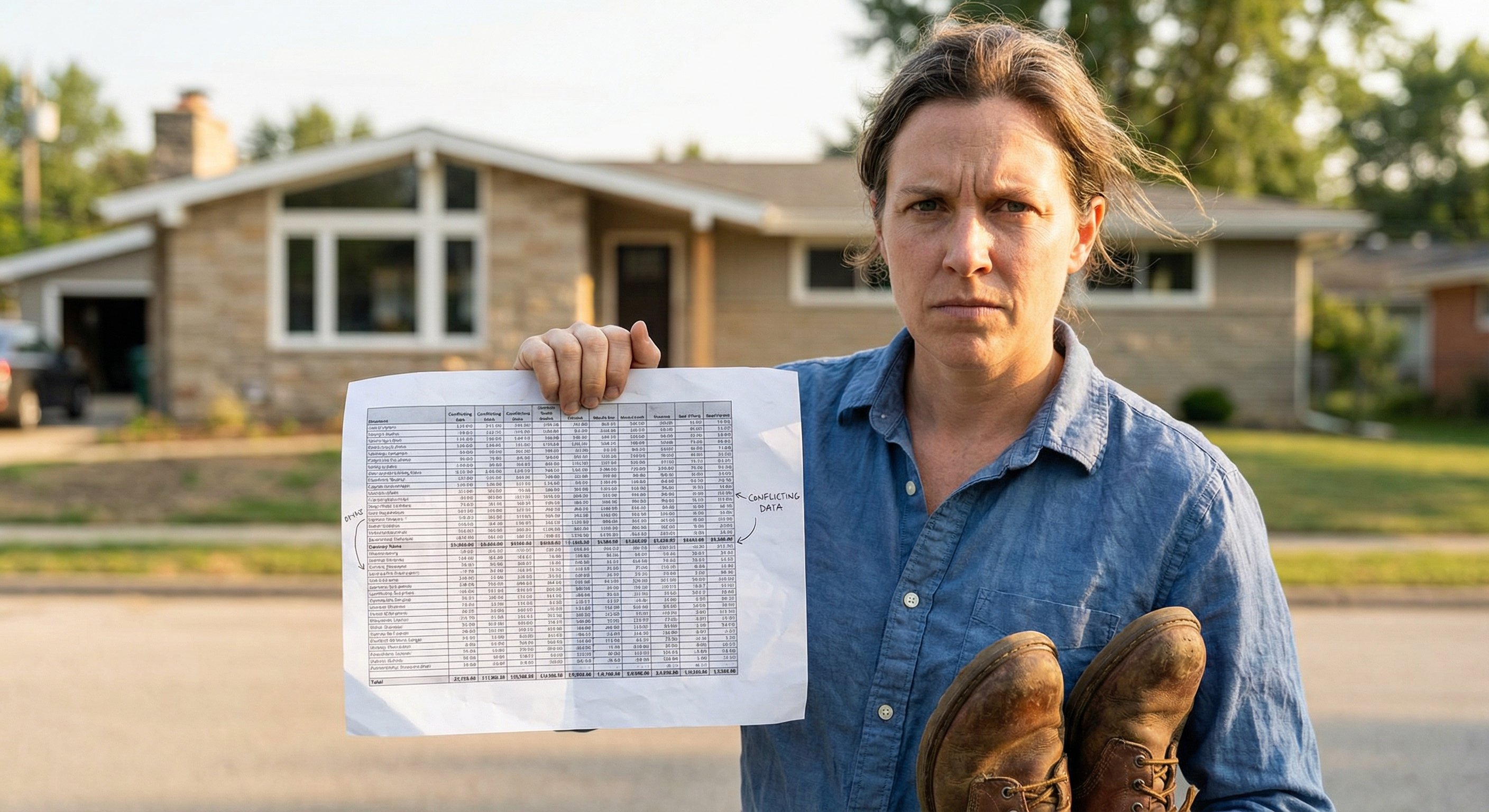
Investors who do not trust their data do not move on deals. When a lead shows conflicting information between two data sources, the natural response is to pause, investigate, and ultimately either skip the deal or over-discount it to account for the uncertainty.
Both responses are costly. Skipping a good deal means no profit. Over-discounting to protect against data uncertainty means losing the deal to a more decisive competitor who already verified the data.
The investor who has one trusted data source moves faster and with more confidence. Speed matters in distressed property markets. The best leads get 3-5 investor calls within the first 48 hours of hitting a lead list.
4. Financing and Appraisal Failures
Hard money lenders and appraisers use county assessor data, not MLS data. When a deal closes with an ARV based on MLS square footage and the appraisal comes in based on county records, the gap falls on the investor.
A construction lender in Atlanta told a DistressIQ user in early 2026 that their firm uses county assessor records as the baseline for all draw requests. If the rehab budget was based on an inflated ARV from bad MLS data, the loan-to-after-rehab-value ratio breaks. The deal either renegotiates at closing or the investor covers the gap in cash.
Appraisal gaps on flip projects average $15,000-$30,000 in major metro markets when data discrepancies surface late in the process. That is a solvable problem if the data is verified before the offer, not after the inspection period.
5. Legal and Title Exposure
This one is less obvious but equally real. When investor analysis is based on wrong property characteristics, the financial model that supported the purchase price may not survive due diligence. Deals that fall apart during inspection because the property condition does not match the data are frustrating. Deals that fall apart because the investor's entire financial model was wrong are catastrophic.
Title issues compound this. Properties with incorrect legal descriptions in county records can delay or block closings. An investor who identifies these issues during the title search phase is fortunate. An investor who discovers them after funding is in a different situation entirely.
Free Weekly Alerts
See What's Distressed in Your Market
Get free weekly alerts — new distressed properties, motivation scores, and hot neighborhoods in your area. Addresses and contact info available inside DistressIQ.
Free forever · No credit card · Unsubscribe anytime
The Source Problem: MLS Versus County Records
The reason bad property data persists is not because investors are careless. It is because the most accessible data source is the wrong one.
MLS data is a marketing database. Its purpose is to sell properties. Listings are written to make properties look as attractive as possible. Square footage gets rounded up. Lot sizes get approximated. Condition flags get softened.
County assessor records are a legal database. Assessors use these records to calculate property taxes. The numbers are legally binding. Errors create tax liability for the county, which creates institutional pressure to get them right.
When these two datasets agree, an investor has high confidence. When they disagree, county records should win every time.
The practical implication: a platform that verifies property characteristics against county assessor records, not just MLS listings, gives investors a data foundation they can actually build on.
How to Protect Every Deal
Step 1: Verify square footage against county assessor records before running any deal numbers. This takes 30 seconds on a county assessor website. If the MLS square footage differs from the county record by more than 5%, recalculate ARV using the county number.
Step 2: Cross-reference owner mailing address against county assessor records for all distress signal leads. Absentee owner flags are only useful if the mailing address on file matches the county record. When they differ, use the county assessor address for outreach.
Step 3: Pull the legal description from county records before closing. This is the description that matters for title. MLS listings sometimes use simplified descriptions that do not match the legal description of record.
Step 4: Use county Direct assessor data for lot dimensions and property characteristics. Lot size, property type, year built, and assessed value from the county are the legal record. These should anchor the investment analysis, not the marketing description.
Where DistressIQ Fits
DistressIQ uses county assessor records to verify property characteristics for every distressed property in its database. Where county data is available, investor lead cards include verified beds, baths, square footage, lot size, year built, and assessed value from the source that matters legally.
The result is that every distress signal in DistressIQ is paired with property data an investor can actually use to run deal numbers. A pre-foreclosure lead in Franklin County, Ohio shows the same property characteristics the county uses to calculate property taxes. The investor is not guessing whether the square footage is correct. It has been verified.
This is what the data quality problem actually costs: it costs the investor who relies on marketing data instead of legal record data on every single deal where the numbers diverge.

Frequently Asked Questions
Q: How much does bad property data actually cost per deal?
In markets where MLS square footage diverges from county assessor records by more than 5%, the ARV miscalculation alone can cost $15,000-$40,000 on a typical flip deal in major metro areas. That is before accounting for wasted outreach on bad addresses, appraisal gaps at closing, and deal analysis delays. Conservative estimate: bad data costs $500-$2,000 per 1,000 leads in wasted skip tracing and outreach alone.
Q: Is MLS data ever accurate enough to use for investment analysis?
MLS data is directionally useful for market-level comp analysis and neighborhood pricing trends. Where it fails is property-specific characteristics: square footage, lot size, condition history, and owner occupancy status. Use MLS for market context. Use county assessor records for property-specific investment analysis. The two datasets answer different questions.
Q: How do I verify county assessor records for a property?
Every county in the United States has an online assessor database. Search "[County Name] assessor" and look for the official county government website. Most assessor sites allow free searches by property address or parcel number. Key fields to verify: total square footage, lot size, year built, assessed value, and owner mailing address. Compare these against MLS listings before running deal numbers.
Q: Does DistressIQ show county assessor data on lead cards?
Yes. For counties where DistressIQ has assessor data coverage, every distressed property lead includes verified property characteristics: beds, baths, square footage, lot size, year built, and assessed value. These come from county assessor records, not MLS listings. This is the data foundation investors need to run accurate deal analysis without cross-referencing multiple sources manually.
Q: What is the fastest way to check if a property's MLS square footage is wrong?
Search the county assessor website for the property address. Compare the listed square footage and lot size against what the MLS listing shows. If the difference is more than 5%, treat the county assessor number as correct and recalculate your ARV using the county figure. This 5-minute check can prevent a $20,000 ARV mistake before the first offer is written.
DistressIQ tracks 11M+ active distress signals across 3,200+ counties, verified against county assessor records where available. Browse distressed property leads free to see verified property data alongside every distress signal.
The data behind this article
DistressIQ Monitors These Signals in Real Time
Pre-Foreclosures
NOD + NTS filings
Tax Delinquency
County treasurer records
Code Violations
Municipal inspection filings
Probate Filings
Superior Court records
Every lead is scored 0–100 for seller motivation based on signal type, duration, severity, and stacking. Nationwide coverage — every US county, updated daily.
Ready to find deals in your market?
See Live Distress Signals in Your County
Stop calling dead leads. Every lead in DistressIQ is scored 0–100 for seller motivation, with verified contact info included. Browse the free tier to see what's active in your market right now.
Browse Free Leads — No Credit Card