Real Estate Data Aggregators vs. County-Direct Data: What Investors Need to Know in 2026

Real Estate Data Aggregators vs. County-Direct Data: What Investors Need to Know in 2026
TL;DR: Real estate data aggregators compile public records from multiple counties, clean them, and resell them to platforms. County-direct data is pulled fresh from the same county systems investors would visit in person. The freshness difference can be three to six months in practice, which in distressed property investing is the difference between finding a lead and finding a deal that already sold. Investors evaluating property data tools should ask where the data originates and how frequently it is updated before signing up for any subscription.
The Scenario That Costs Investors Real Money
Picture this. You pull a lead list from a popular real estate data platform. A tax-delinquent property in Cook County checks every box: three years of unpaid taxes, clear signal, strong motivation score. You run skip trace, draft your letter, and start your outreach sequence.
Six weeks later you find out the property sold at the county auction three months before you pulled the list. The data you were working from was six months old.
This is not an edge case. This is the documented reality of how most real estate data reaches investors in 2026.
The core issue is not whether the data is accurate. Aggregated property records are generally reliable. The issue is when that accuracy applies and what it costs investors to act on information that no longer reflects reality.

What Is a Real Estate Data Aggregator?
A real estate data aggregator is a company that collects public property records from counties and municipalities across the United States, processes and standardizes that data, and then resells access to it through software platforms.
The largest aggregators include ATTOM Data, CoreLogic, and BlackKnight (now part of ICE). These companies maintain enormous national databases containing deed records, mortgage filings, tax assessment data, foreclosure filings, and more. They license this data to real estate software platforms, which then build investor-facing tools on top of it.
The process looks like this: a county recorder publishes a new deed filing. ATTOM or CoreLogic picks it up through a data licensing agreement with that county or through a third-party feed. The data enters a processing pipeline where it is cleaned, standardized, and merged with existing property records. Finally, it is made available to licensed platform customers.
That pipeline introduces latency. By the time a filing moves through aggregation and reaches an investor platform, three to six months is common. In some counties with less standardized digital records, delays can stretch to nine months or longer.

What Is County-Direct Data?
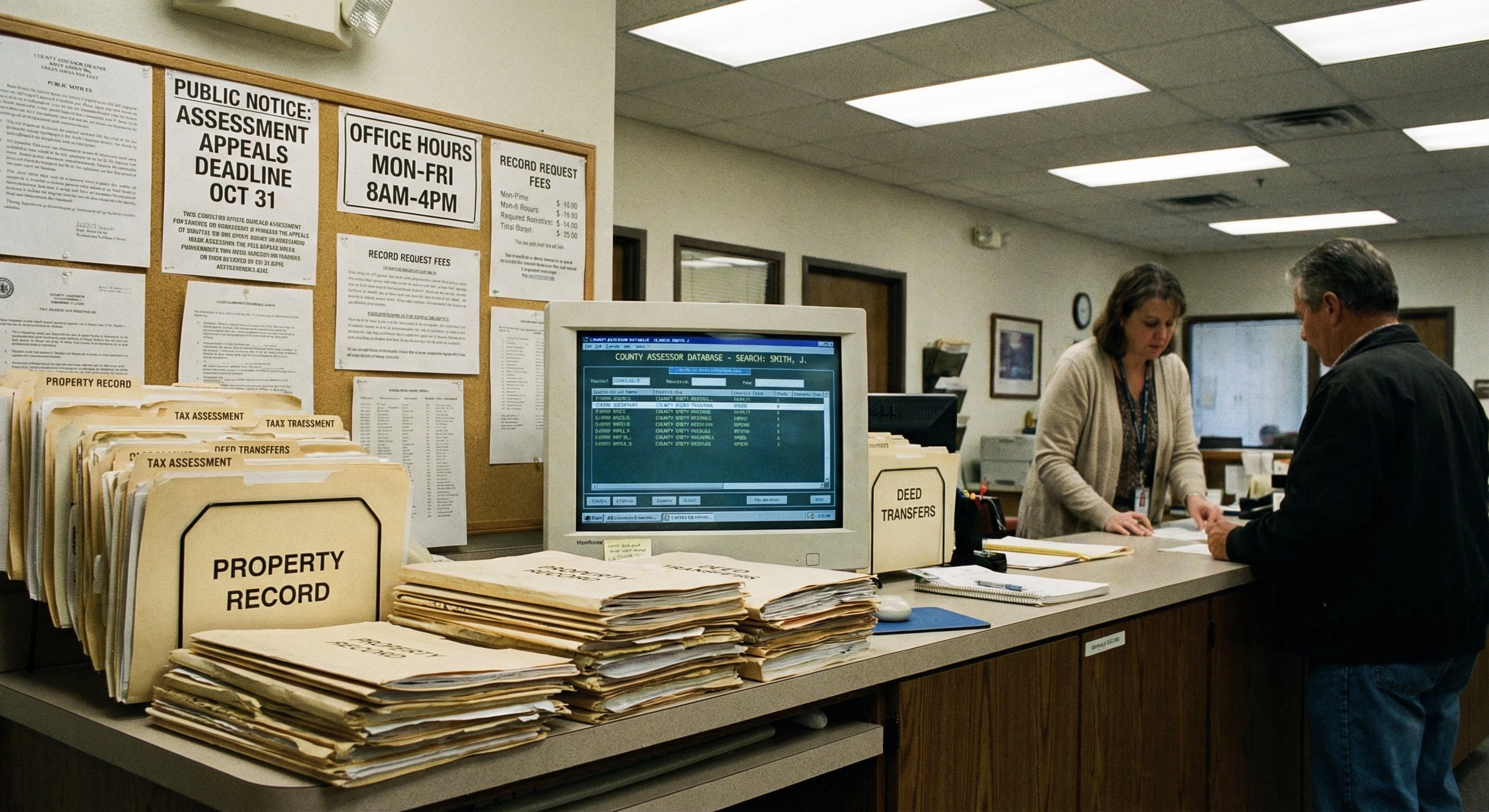
County-direct data means pulling property records straight from the source systems counties use every day: the county assessor database, the sheriff's office foreclosed property list, the circuit court lis pendens index, the county recorder's deed filings, and the code enforcement case log.
These are the same systems a real estate investor would access by visiting the county courthouse or searching the county's online portal. The information is the official government record of what is actually happening with a property.
The freshness advantage is immediate. A lis pendens filing that appears in the county court system at 9 a.m. on Tuesday is available in a county-direct system that same day. A tax delinquency that hits the county assessor's annual published list in January shows up in a county-direct feed as soon as that list is published, not months later after an aggregator processes and resells it.
For distressed property investors, this difference is not theoretical. Pre-foreclosure timelines can compress rapidly. A property with a scheduled sheriff's sale can have that date move with little notice. An HOA lien filing can trigger an immediate forced-sale scenario. Acting on stale data means investors are chasing properties that no longer exist in the state they think they do.
Free Weekly Alerts
See What's Distressed in Your Market
Get free weekly alerts — new distressed properties, motivation scores, and hot neighborhoods in your area. Addresses and contact info available inside DistressIQ.
Free forever · No credit card · Unsubscribe anytime
Why the Data Freshness Gap Matters for Distressed Properties
Most real estate investors can absorb some data staleness. If a rental property's assessed value is eight months out of date, it is an inconvenience. If a distressed property lead is eight months out of date, it is a money pit.
Here is the specific cost breakdown that experienced investors recognize:
Wasted outreach. Every letter, cold call, and skip trace costs money. Running outreach on a property that already sold at auction is pure waste, and the costs add up faster than most investors expect. Skip tracing alone runs $0.08 per contact on most platforms. Multiply that by dozens of stale leads per month and the waste becomes material.
Missed urgency windows. Pre-foreclosure timelines in most states run 60 to 120 days from notice of default to auction. If an aggregator's data is three months stale, an investor working from that data may be attempting to contact a homeowner who received their notice of default two months before the list was even compiled. That is not a warm lead. That is a closed deal.
Bad ARV calculations. After-repair value estimates depend on accurate property characteristics. Square footage errors, incorrect lot dimensions, and missing recent sales comparables all flow from stale aggregated data. A property that appears to be a solid flip candidate based on bad data becomes a losing deal the moment an investor visits in person or pulls the actual county record.
The National Association of REALTORS has documented that MLS price data diverges from actual transaction prices in roughly 8.75 percent of cases (NAR Market Trends Report). For distressed properties, which often sell off-market and do not appear in MLS at all, the discrepancy rate is materially higher. Investors relying on aggregator data for distressed property ARV are working from a dataset that was never designed for their use case.
The HUD-1 Settlement Statement data provides the government record that serves as the factual baseline for comparing MLS representations against what properties actually sold for.
The Three Hidden Costs of Relying on Aggregated Property Data
1. The Compounding Staleness Problem
Aggregators do not just have one-time delays. Their data pipelines are in a constant state of lag behind real-time county activity. A platform with a three-month average staleness is three months behind on every single lead in its database at any given moment. This means investors are always working from a queue of properties that looked active when the data was compiled but may have resolved in the weeks or months since.
2. The Black Hole of Off-Market Activity
Most aggregators struggle most with the distressed property signals that matter most to investors: code violations, HOA liens, municipal utility delinquencies, and recent lis pendens filings. These records are often held in systems that aggregators do not have automated access to, or they require special processing that adds further delay. Investors who rely on aggregator data may find that their lead pipeline looks solid on paper but contains almost no properties with recent urgent distress signals.
3. The Data Homogenization Problem
Because multiple investor platforms license from the same two or three aggregators, their lead lists are largely identical. Every investor on PropStream, BatchLeads, DealMachine, and similar platforms is working from the same underlying ATTOM or CoreLogic feed. They are all calling the same homeowners, mailing the same zip codes, and competing for the same deals. This creates a race-to-the-bottom dynamic where the investor who moves fastest from an identical dataset wins, rather than the investor who found a genuinely different lead in the first place.
County-direct data breaks this cycle. Not because it is proprietary or magical, but because the effort required to maintain fresh connections to thousands of county systems is significant. That effort is a barrier to entry that most platforms built on aggregator licenses never cross.
How DistressIQ Approaches Data Differently
DistressIQ pulls property records directly from county assessor databases, sheriff's office foreclosure lists, court filing systems, and recorder documents. Every record is verified against county assessor data, which is the legal record the government uses to calculate property taxes.
County assessor data differs from MLS data in an important way. MLS is a marketing database designed to sell homes. Assessor records are government records designed to be legally accurate. For distressed properties in particular, assessor data tends to be more reliable because the government's interest is in correct valuation, not attractive listings.
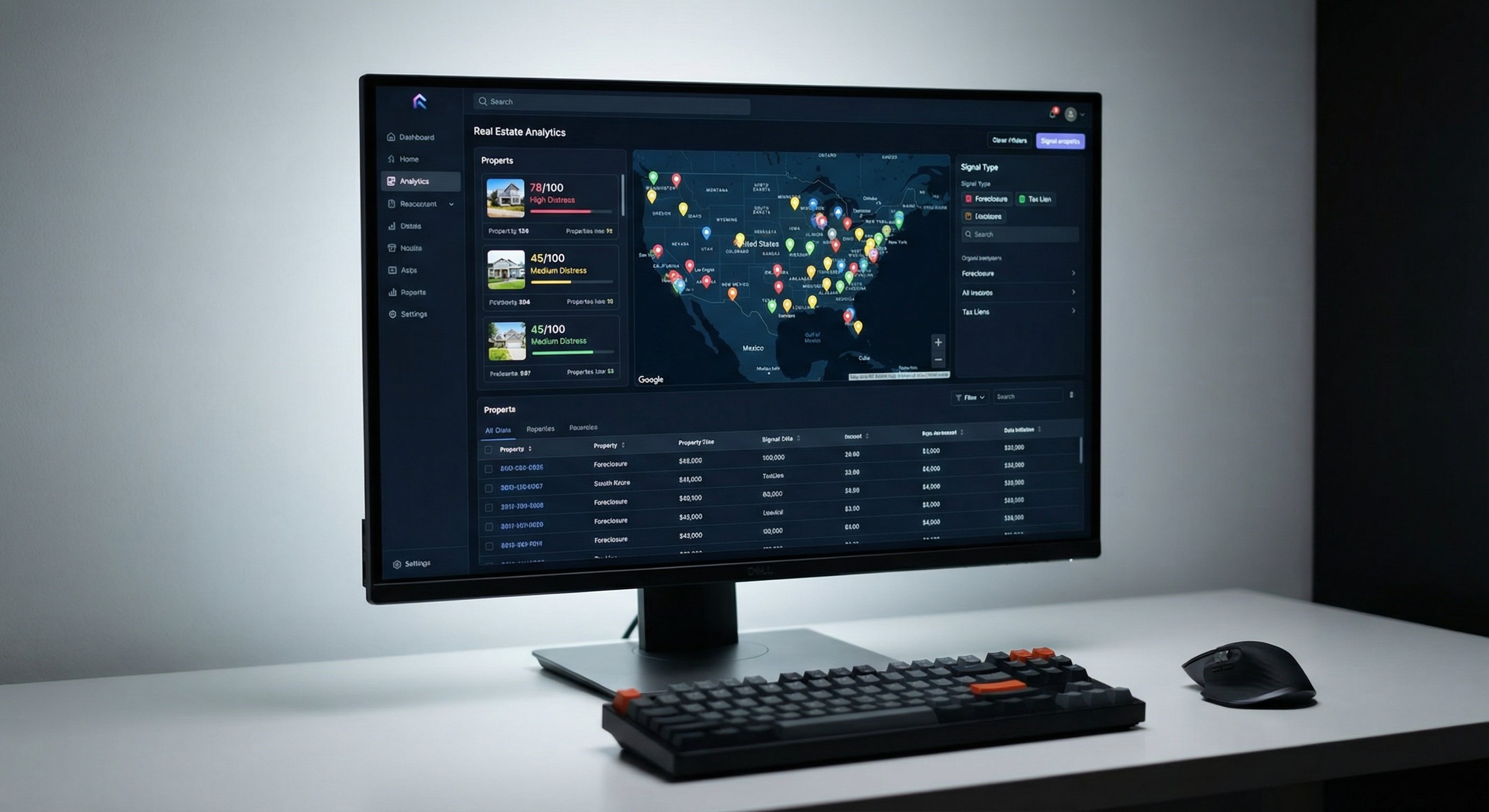
DistressIQ updates its data from county sources on a daily basis. There is no multi-month aggregation pipeline. The signal types available on the platform are specifically chosen for distressed property investing: tax delinquency, lis pendens, pre-foreclosure, code violations, probate filings, and more.
Every property lead on DistressIQ comes with at least one verified distress signal. Properties are not included because they meet generic criteria. They are included because county records confirm something is actively happening with that property.
The platform is free to browse. Investors can see the map, filter by signal type, and evaluate properties before paying for contact information. Street View and aerial imagery are included on every lead, allowing investors to assess exterior condition before they pick up the phone.
What Investors Should Look for in a Property Data Source
If you are evaluating where to get your next lead list, ask these questions before signing up for any subscription:
When was this property's record last updated by the county, not by the platform? The answer tells you the actual freshness of the data. If the platform cannot answer this question, they are working from aggregated data with an unknown delay.
Where does this data come from? If the platform is vague about sources or says it "aggregates from multiple sources," you are likely looking at a repackaged ATTOM or CoreLogic feed. Ask specifically whether the data is sourced directly from county systems.
What distress signals are available, and how are they verified? Tax delinquency status and pre-foreclosure stage are baseline signals. The more signal types a platform can surface, and the more recent those signals are, the more useful the data is for distressed property investing.
What is the assessed value discrepancy rate between your data and the county assessor record? Platforms that rely on MLS data frequently have assessed values that diverge from what the county actually has on file. This is one of the most common sources of bad ARV calculations in fix-and-flip deals.
How is the data delivered, and what prioritization tools exist? Raw lead lists require significant filtering and sorting work on the investor's end. Platforms that offer built-in motivation scoring, signal stacking, and filterable map views save hours of list-building work per week.
Frequently Asked Questions
Q: What is a real estate data aggregator?
A real estate data aggregator is a company that collects public property records from counties and other government sources, processes and standardizes that data, and resells it to software platforms or directly to end users. Major aggregators include ATTOM Data, CoreLogic, and BlackKnight. Most investor platforms build their tools on top of aggregator data rather than maintaining their own direct county connections.
Q: How fresh is the data from a real estate aggregator?
In most cases, aggregated property data has a three to six month lag behind current county records. This is due to data licensing agreements, processing pipelines, and the logistics of consolidating records from thousands of counties with different systems and formats. Some county-level records, particularly code violations and HOA liens, can have even longer delays before they appear in aggregator feeds.
Q: What is county-direct property data?
County-direct property data comes directly from the county government systems that create and maintain the records: the assessor database, circuit court filings, sheriff's office foreclosure lists, and recorder documents. It reflects the same information an investor would find by visiting the county courthouse in person.
Q: Why does data freshness matter for distressed property investing?
Distressed property situations are time-sensitive by nature. Pre-foreclosure timelines in most states run 60 to 120 days. Sheriff's sale dates can move with limited notice. A three to six month data lag means investors may be attempting to contact homeowners whose properties already sold at auction or who are no longer in pre-foreclosure. Stale data converts outreach effort into wasted money.
Q: How does DistressIQ source its data?
DistressIQ pulls property records directly from county assessor databases, sheriff's office foreclosure lists, court filing systems, and recorder documents. Data is verified against county assessor records and updated on a daily basis. Every property on the platform carries at least one verified distress signal confirmed by county records.
Q: Can I verify a property's status independently of any platform?
Yes. Every property's current status can be verified directly through the county assessor website, the county circuit court clerk, and the county sheriff's office (for foreclosure auction schedules). These are public records and are accessible to anyone. This is the most reliable method for confirming any individual property's status, and it is the same source data that DistressIQ uses.
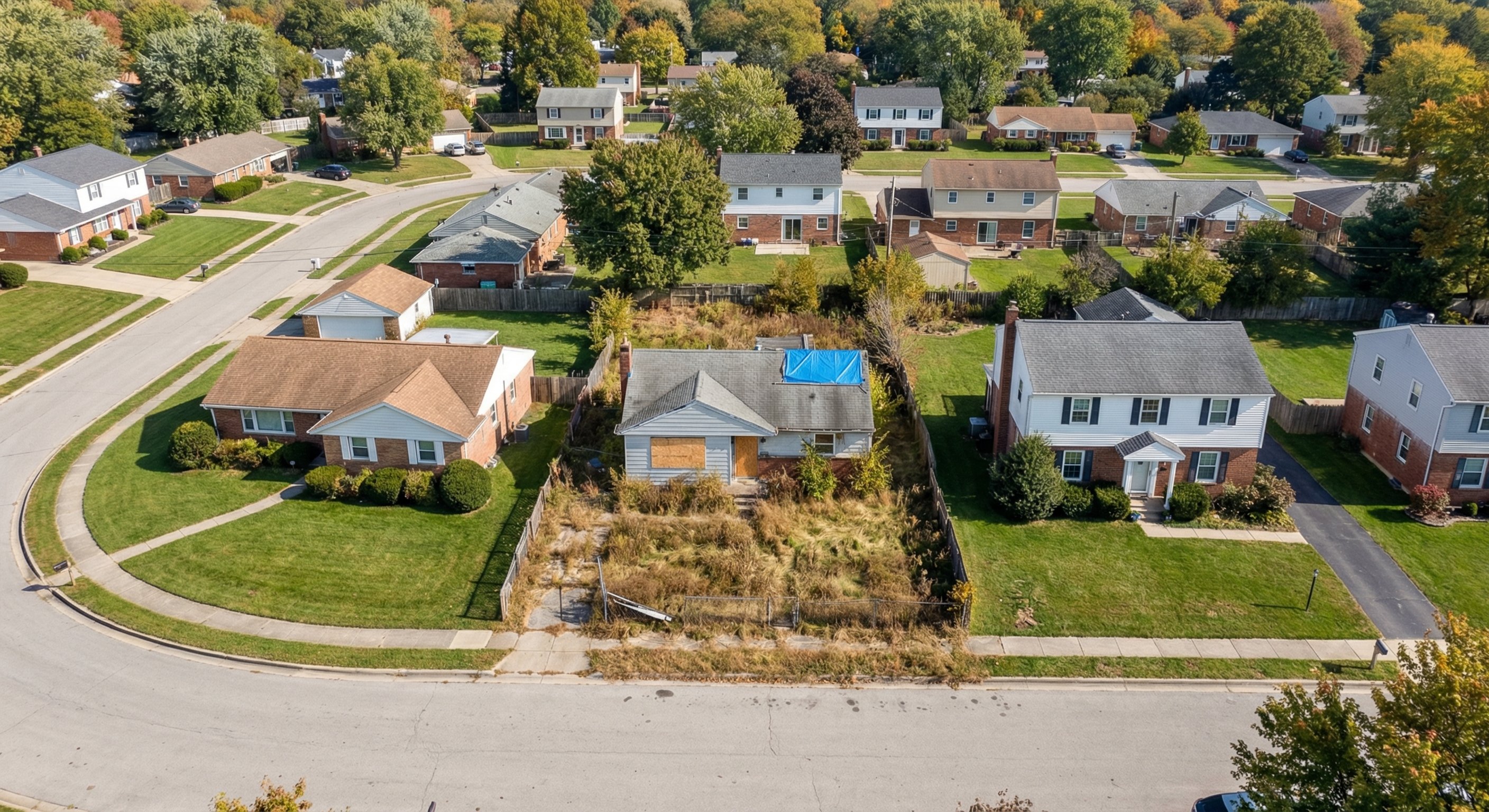
For investors tired of working from lead lists that everyone else already has, the question is not whether county-direct data is better. It is whether the platform they are using is willing to put in the work to get it. DistressIQ tracks distressed property signals across 3,200-plus counties and updates daily from county sources. Browse the map free at distressiq.ai.
The data behind this article
DistressIQ Monitors These Signals in Real Time
Pre-Foreclosures
NOD + NTS filings
Tax Delinquency
County treasurer records
Code Violations
Municipal inspection filings
Probate Filings
Superior Court records
Every lead is scored 0–100 for seller motivation based on signal type, duration, severity, and stacking. Nationwide coverage — every US county, updated daily.
Ready to find deals in your market?
See Live Distress Signals in Your County
Stop calling dead leads. Every lead in DistressIQ is scored 0–100 for seller motivation, with verified contact info included. Browse the free tier to see what's active in your market right now.
Browse Free Leads — No Credit Card