County Assessor Data vs MLS: Which Property Records Should Real Estate Investors Actually Trust?
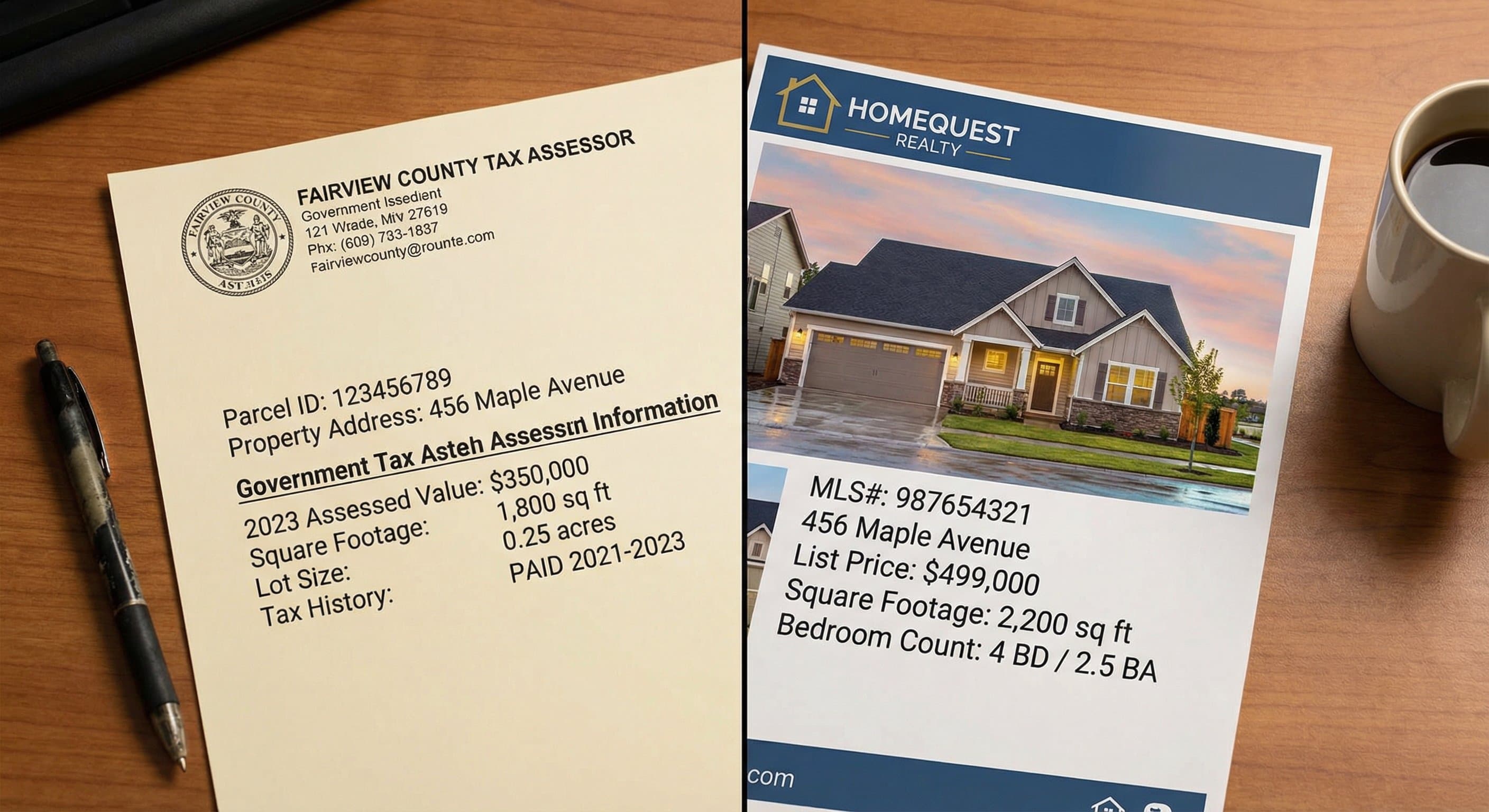
TL;DR: County assessor records and MLS listings frequently show different property data for the same address. MLS data can be off by hundreds of square feet, phantom bedrooms, and inflated values because it relies on agent input rather than legal documentation. County assessor data is the government's legal record of truth, used to calculate property taxes and establish assessed value. For real estate investors, assessor-verified data is the more reliable foundation for accurate ARV and MAO calculations. Using MLS alone risks overpaying for properties and building deals on incorrect assumptions.
County Assessor Data vs MLS: Which Property Records Should Real Estate Investors Actually Trust?
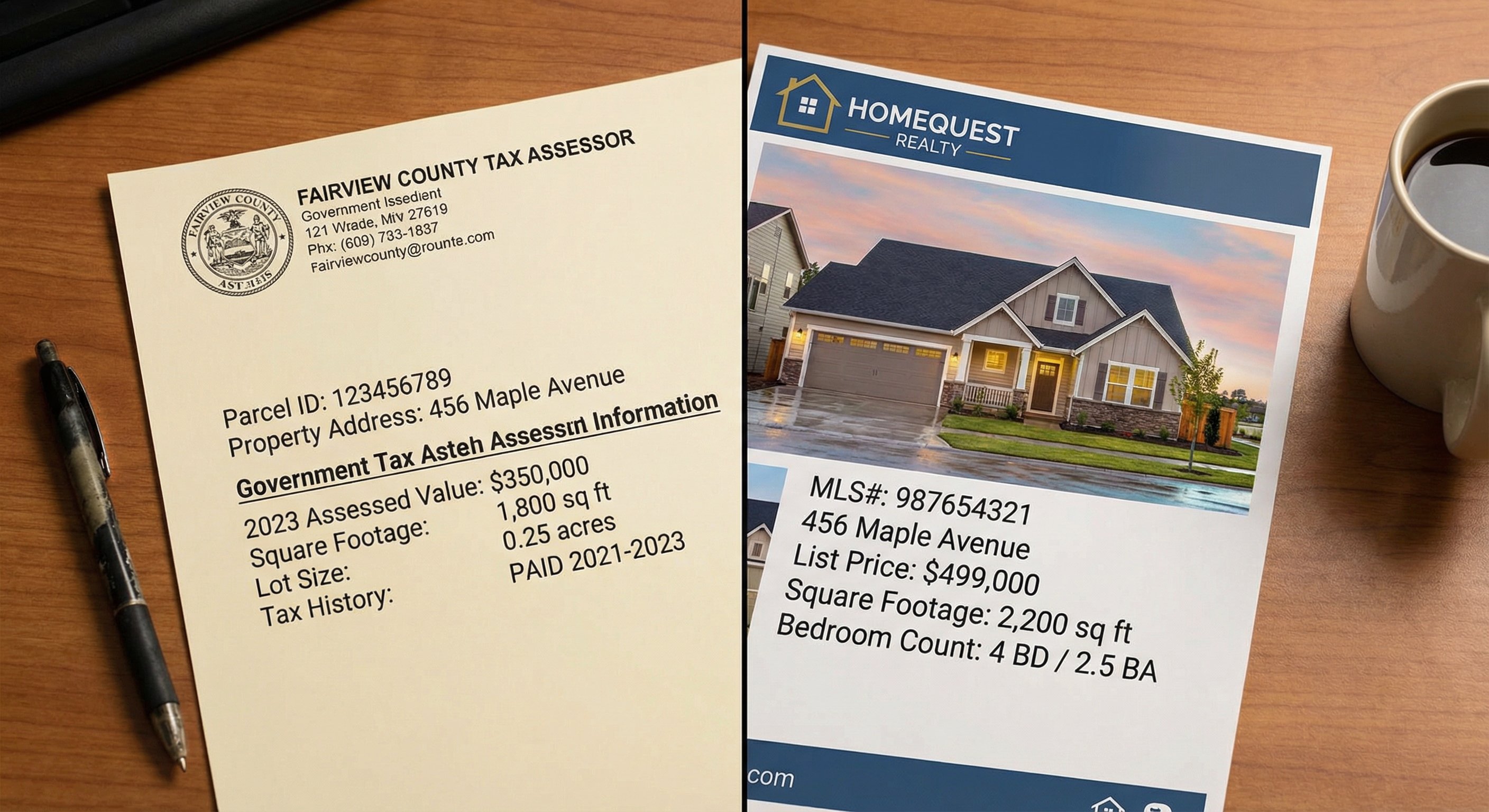
Every wholesaler and fix-and-flip investor has run into this situation: MLS shows a comp at 2,400 square feet. The county assessor says 1,890. Which one is correct when it comes time to calculate ARV and make an offer?
It is a question that seems minor until it costs an investor thousands of dollars on a single deal. The difference between trusted and unverified property data is the difference between a profitable exit and a deal that hemorrhages money on a rehab that cannot support the purchase price.
Understanding the fundamental difference between these two data sources is not optional for serious investors. It is the foundation every sound investment strategy rests on.
What the County Assessor Actually Does
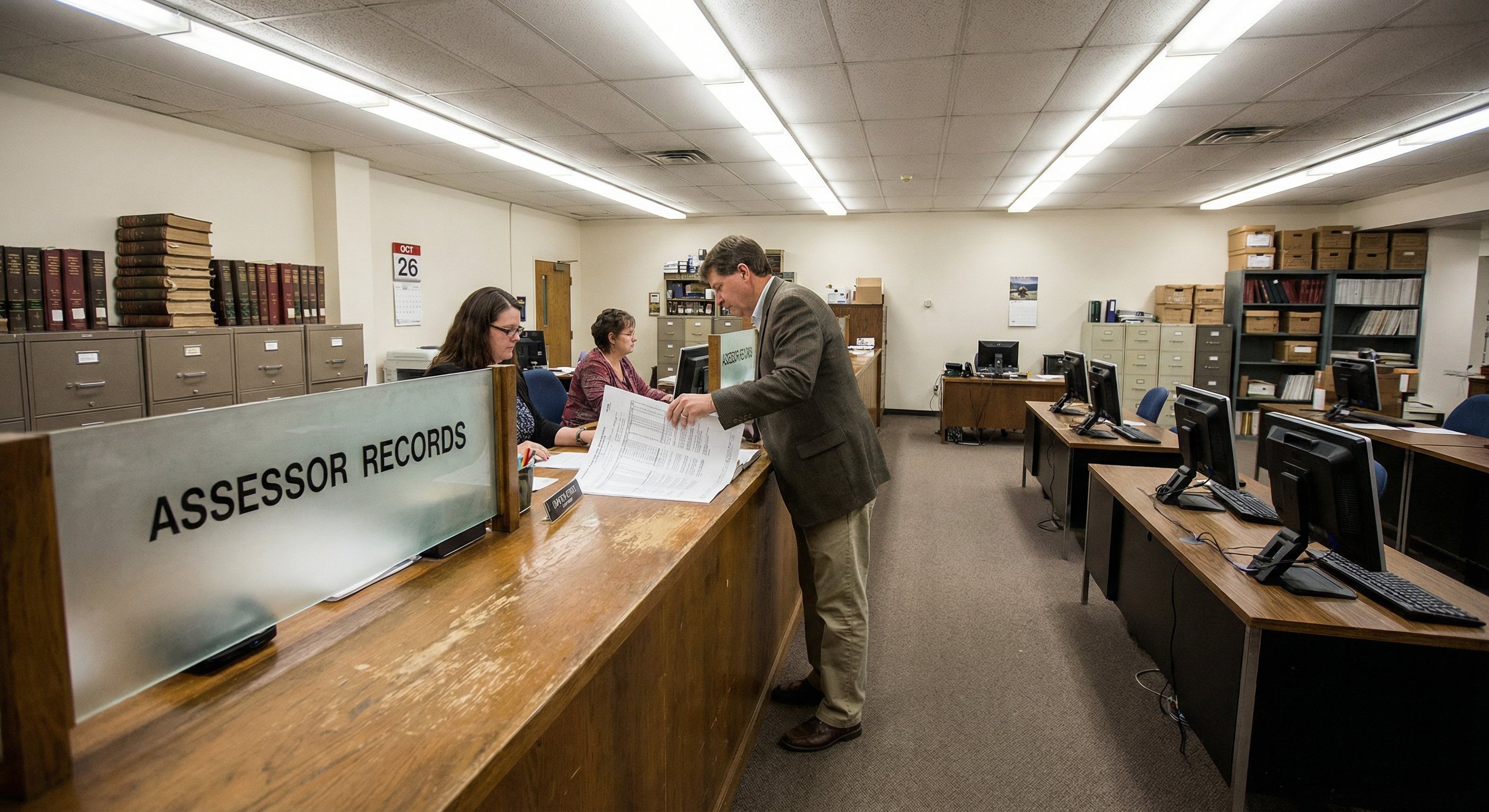
County tax assessors are government officials responsible for valuing every property in their jurisdiction for tax purposes. Their records exist because property taxes fund local services, schools, and infrastructure. The assessed value on file with the county is not an opinion. It is the legal basis for the tax bill the owner pays every year.
This creates a built-in accountability mechanism. When an assessor records a property as 1,890 square feet, that figure is tied to the structure's legal footprint. If the assessor inflates the number, the owner pays more in property taxes and has every incentive to challenge the assessment. If the assessor understates it, the county leaves money on the table.
The result is a self-correcting record that tends to be more conservative and more accurate over time. Assessor records also typically include:
- Land value separated from improvement value
- Actual year built (not the year of a renovation permit)
- Lot size and parcel dimensions
- Tax history including delinquencies and exemptions
- Ownership history with grantor and grantee names
For investors hunting off-market deals, this ownership history is especially valuable. It tells you exactly who holds title and when it last transferred.
What MLS Is and Where It Falls Short
MLS, or the Multiple Listing Service, is a private database real estate agents use to list properties for sale. It is a marketing platform, not a government record. The data entered into MLS comes from agents who may have measured a property themselves, relied on previous listings, or copied figures from other databases without verification.
This matters in ways that are not always obvious. A 2024 investigation by Real Estate Witch found that data discrepancies between MLS listings and public records were present in a significant percentage of listings reviewed. Fabricated square footage, phantom bedrooms, and incorrect lot sizes were not rare exceptions. They were recurring patterns that affected what properties appeared to be worth.
MLS also has a built-in incentive problem. Agents want listings to look as attractive as possible. Overstating square footage, adding features that may not exist, or listing the highest possible comp price all serve the goal of winning the listing. Nobody is penalized for an optimistic MLS entry the way an assessor would be penalized for an inaccurate tax assessment.
For investors, MLS data serves a legitimate purpose. It shows what properties are actively listed for, what they are marketed as, and what comparable properties actually sold for at closing. But it should never be the foundation for ARV calculations on off-market deals where the investor is relying on public records to establish value before anyone else does.
Why the Same Property Shows Different Numbers
When an investor sees a square footage discrepancy between the county assessor and MLS, the question is not which one is wrong. Both might be wrong, or one might be right. The question is which source is more likely to reflect the legal reality of the property.
Common reasons for mismatches include:
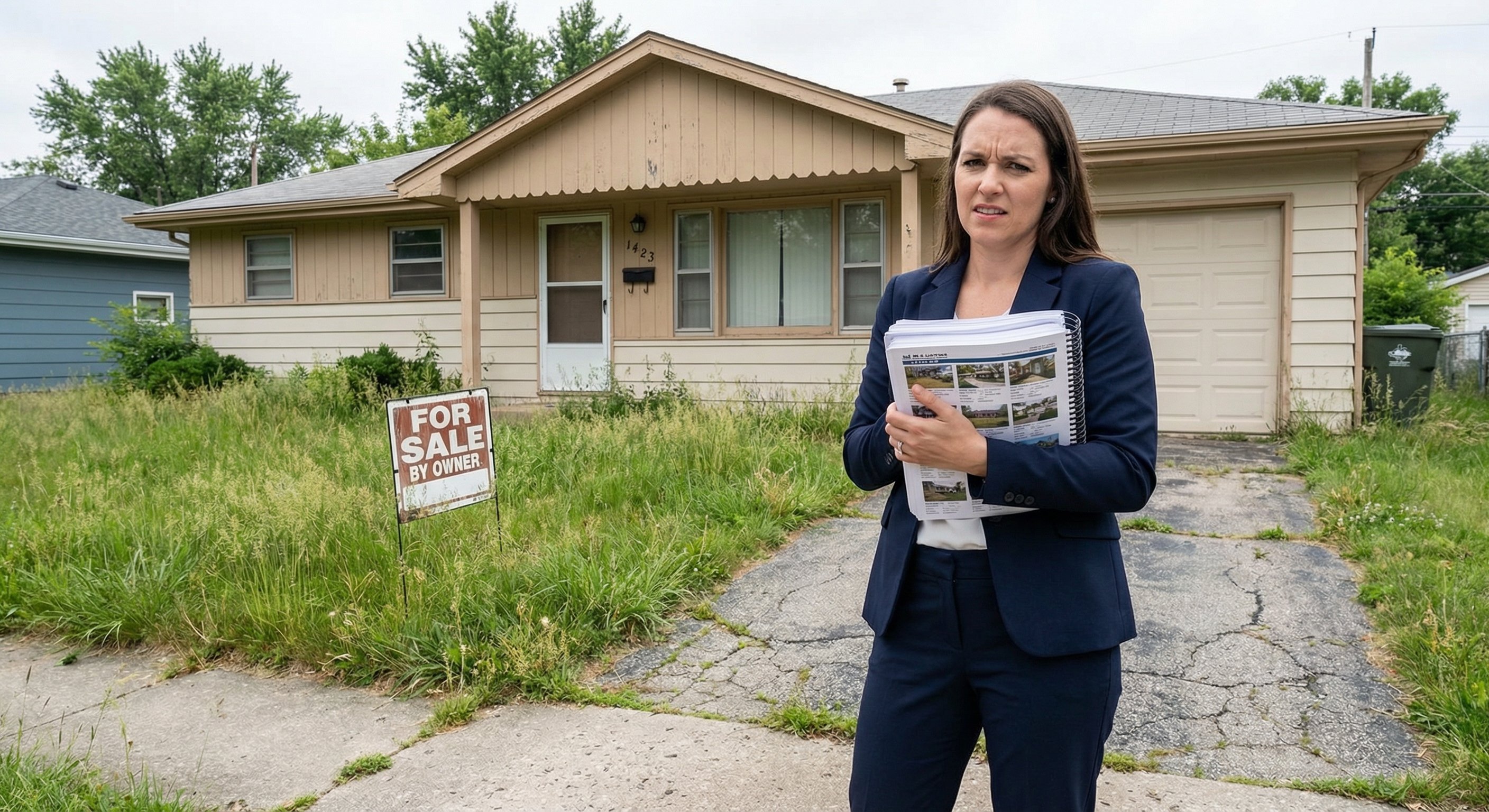
Agent estimation errors. Agents frequently rely on public records data that they do not independently verify. If the previous agent entered 2,400 square feet and that figure propagated through multiple MLS listings, it may persist for years even if the assessor records 1,890.
Unpermitted additions. A garage converted to living space without a permit will not appear in the assessor's records but may be included in MLS marketing. This is especially common in older neighborhoods where decades of incremental updates accumulate without triggering reassessment.
Tax assessment appeals. Property owners who successfully appealed their assessment may have a lower assessed value than the property's actual market worth. MLS agents who use the lower assessed value as a starting point can significantly understate what a property is worth.
Assessment timing lags. County assessors typically reassess on a fixed schedule, sometimes only every three to five years. In rapidly appreciating markets, the assessed value may lag current market conditions by a significant margin.
Free Weekly Alerts
See What's Distressed in Your Market
Get free weekly alerts — new distressed properties, motivation scores, and hot neighborhoods in your area. Addresses and contact info available inside DistressIQ.
Free forever · No credit card · Unsubscribe anytime
How Incorrect Property Data Destroys Deals
The financial consequences of building a deal on bad data are concrete and immediate.
Consider a wholesaler evaluating a off-market property in a suburban market. MLS comps suggest similar homes sold recently at $215 per square foot. The wholesaler pulls the county assessor record and finds the subject property is recorded at 1,890 square feet. At $215 per square foot, the ARV comes to approximately $406,000.
But the MLS records the same property as 2,400 square feet. If the wholesaler relies on MLS data and runs the numbers at 2,400 square feet, the ARV calculation jumps to $516,000. Using the 70% MAO rule for fix-and-flip financing, the maximum allowable offer would be roughly $361,000 under the MLS-based calculation versus $284,000 under the assessor-based calculation.
The difference is $77,000 in the offer price based entirely on which data source the wholesaler trusted.
If that deal goes to contract at $355,000 based on the inflated MLS figure and the rehab comes in at $65,000, the investor is now into the property for $420,000 in a neighborhood where accurate comps suggest true ARV of $406,000. That is a $14,000 loss before holding costs, financing, and selling expenses are accounted for.
This is not a hypothetical scenario. It is a pattern that plays out in every market where investors rely on marketing data instead of legal records.

The ARV Problem: Building on Sand
After repair value is the cornerstone of every fix-and-flip and wholesale deal. It determines the sale price at exit, the size of the loan a hard money lender will write, and the maximum price an investor can pay and still exit profitably.
Every lender and every smart investor calculates ARV using comparable sales. The question is which comparables to use and whether those comps accurately reflect the subject property.
When assessor records show a different square footage than MLS, the correct approach is to use the assessor's figure as the baseline and adjust from there. The legal record of the property is what the assessor has on file. A county recorder's office does not issue building permits based on MLS listings. Title insurance policies are underwritten based on assessor records, not marketing data.
DistressIQ pulls property characteristics from county assessor records where available. Every lead card shows the official recorded data alongside any available MLS information, so investors can see both figures and make their own judgment calls about which to rely on.
What Experienced Investors Actually Do
Investors who run deals consistently and profitably tend to share a common discipline: they verify before they calculate.
The standard verification workflow looks like this:
- Pull the county assessor record for the subject property first. This is the legal baseline.
 2. Note any discrepancies between the assessor square footage and what the MLS listing shows.
3. Verify lot size, year built, and property type against the assessor record.
4. Pull three to five comparable sales that also cross-reference with assessor data.
5. If MLS comps are materially different from assessor records, default to the assessor figure.
2. Note any discrepancies between the assessor square footage and what the MLS listing shows.
3. Verify lot size, year built, and property type against the assessor record.
4. Pull three to five comparable sales that also cross-reference with assessor data.
5. If MLS comps are materially different from assessor records, default to the assessor figure.
This approach does not eliminate all risk from a deal. It eliminates the specific risk of building a financial model on numbers that were never accurate to begin with.
A practical example: a property shows as a 4-bedroom, 2-bath home on MLS with 2,200 square feet. The county assessor shows it as a 3-bedroom, 1-bath at 1,740 square feet. The $460,000 ARV calculation at $215 per square foot using MLS data becomes a $374,000 ARV using the assessor's figures. The 70% MAO drops from $322,000 to $262,000. An investor who anchors to the MLS figure and makes an offer at $310,000 is already underwater before the first hammer swings.
Where DistressIQ Fits Into This Picture
DistressIQ surfaces county assessor data as part of every distressed property lead. For investors working off-market deals, this is the most reliable starting point because it reflects the property as the government legally records it, not as a marketing agent described it.
The platform covers 3,200-plus counties and displays assessor-verified property characteristics alongside distress signals like tax delinquency, code violations, lis pendens, pre-foreclosure filings, and probate records. Investors can cross-reference the official property record against the distress signal to determine whether a deal makes financial sense before spending money on a title search or physical inspection.
This combination of distress signal data and assessor-verified property information gives investors a clearer picture of what they are actually acquiring and what they can realistically expect to recover at sale.
DistressIQ pulls property characteristics from county assessor records alongside distress signals for every lead. Investors can cross-reference the official property record against verified distress data to determine whether a deal makes financial sense before spending money on a title search or physical inspection. Browse distressed properties with assessor-verified data on DistressIQ.
Frequently Asked Questions
Q: Can MLS data ever be more accurate than county assessor records?
A: Yes, in specific situations. In markets where assessor records are infrequently updated, MLS may reflect recent renovations, permitted additions, or improvements that have not yet triggered a reassessment. The key is to verify rather than assume either source is automatically correct.
Q: How do I access county assessor records for a specific property?
A: Most counties publish assessor records online through their tax assessor or treasurer's website. You can search by property address or parcel number. DistressIQ surfaces assessor data for properties with verified distress signals, making it easier to find off-market opportunities where the assessor record has not been updated to reflect current market conditions.
Q: Why would an assessor undervalue a property compared to MLS comps?
A: Assessors are required to assess at market value for tax purposes, but they work from historical sales data and may not capture rapid appreciation in fast-moving markets. Additionally, homestead exemptions, tax freezes for senior citizens, and assessment caps can keep recorded assessed values significantly below market rates even when the property has appreciated substantially.
Q: Should I always use county assessor data instead of MLS for ARV calculations?
A: Use assessor data as your verified baseline and adjust from there. If MLS data suggests a higher square footage that is supported by visual evidence like permits, satellite imagery, and public records, those adjustments are legitimate. The problem arises when investors use unverified MLS data as the starting point without checking it against the legal record.
Q: Does DistressIQ show both MLS and assessor data?
A: Yes. DistressIQ pulls property characteristics from county assessor records and displays them alongside distress signals for every lead. Investors can see the official recorded data and compare it against any available MLS information to make informed decisions about which figures to use in their ARV calculations.
The data behind this article
DistressIQ Monitors These Signals in Real Time
Pre-Foreclosures
NOD + NTS filings
Tax Delinquency
County treasurer records
Code Violations
Municipal inspection filings
Probate Filings
Superior Court records
Every lead is scored 0–100 for seller motivation based on signal type, duration, severity, and stacking. Nationwide coverage — every US county, updated daily.
Ready to find deals in your market?
See Live Distress Signals in Your County
Stop calling dead leads. Every lead in DistressIQ is scored 0–100 for seller motivation, with verified contact info included. Browse the free tier to see what's active in your market right now.
Browse Free Leads — No Credit Card