How to Find Probate Leads in Pennsylvania (2026 Investor Guide)
How to Find Probate Leads in Pennsylvania (2026 Investor Guide)
TL;DR: Pennsylvania processes tens of thousands of estate filings annually through its 67 county Register of Wills offices. Many inherited properties — especially older homes in Philadelphia, Pittsburgh, and the Rust Belt suburbs — go to heirs who live out of state and have no interest in managing them. PA's inheritance tax structure often accelerates the decision to sell. The fastest way to find these deals is through public estate filings at the Register of Wills, legal notice publications, and county-direct distress data that surfaces probate signals before they hit the open market.
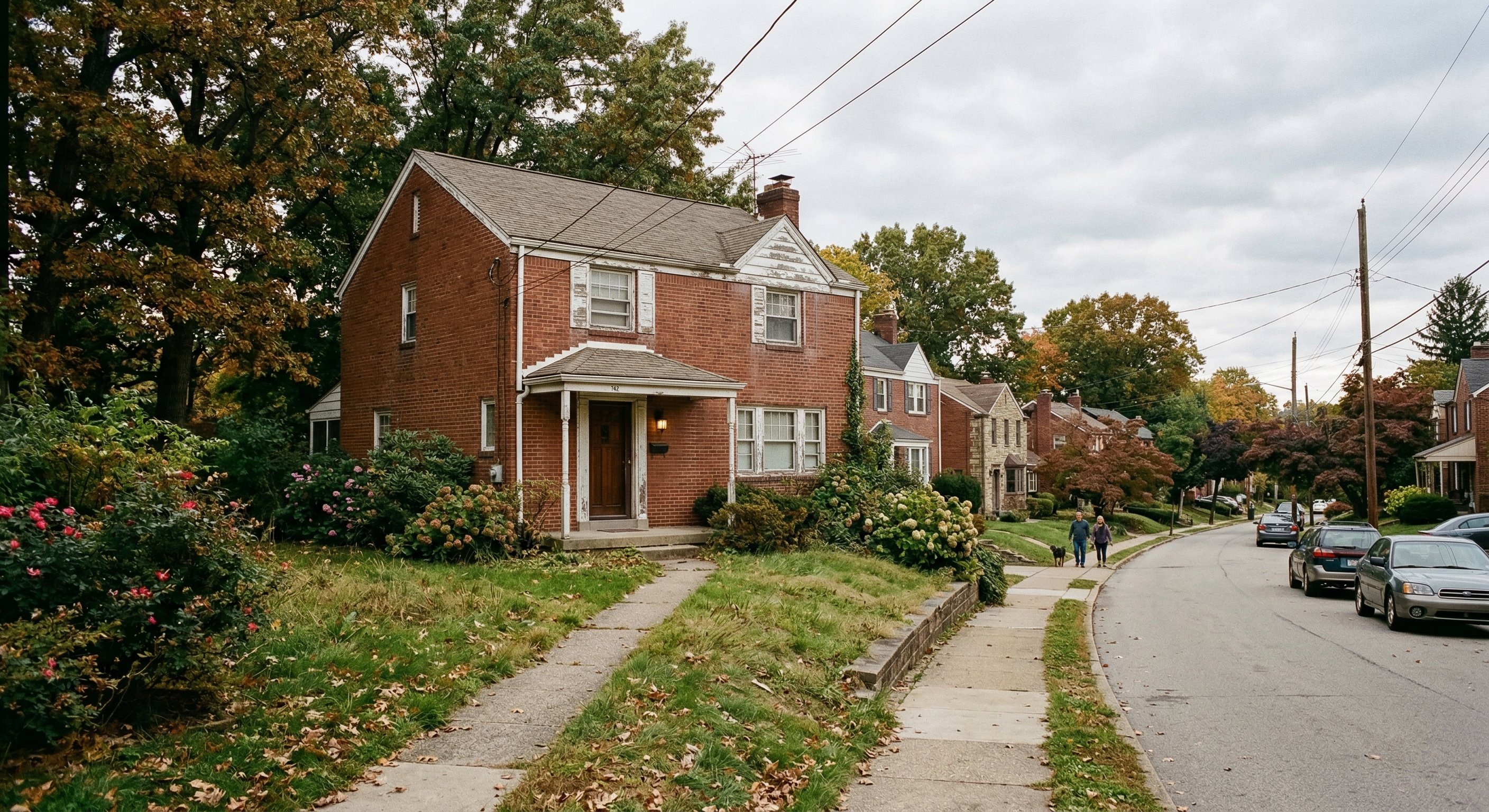
Pennsylvania's real estate market is built on older housing stock. Philadelphia's iconic row homes date back a century. Pittsburgh's inner-ring suburbs are packed with mid-century bungalows and two-story colonials where the same families lived for 40 or 50 years. When those homeowners die — and they do, consistently — what happens to the house?
In most cases: probate. And in most cases, heirs who didn't plan for this.
The family is scattered. Someone's in New Jersey, someone's in Florida. The house needs work. Nobody wants to manage contractors from three states away. They want cash, they want clean, and they want to move on.
That's not exploitation — that's a real service. A fair cash offer lets a family close a difficult chapter without becoming accidental landlords or getting dragged into a years-long probate dispute. The deal works because everyone benefits. But you have to find these situations before 50 other investors do.
Here's how Pennsylvania's probate system actually works, where the deals are, and how to source them efficiently.
How Pennsylvania Probate Works (What Investors Need to Know)
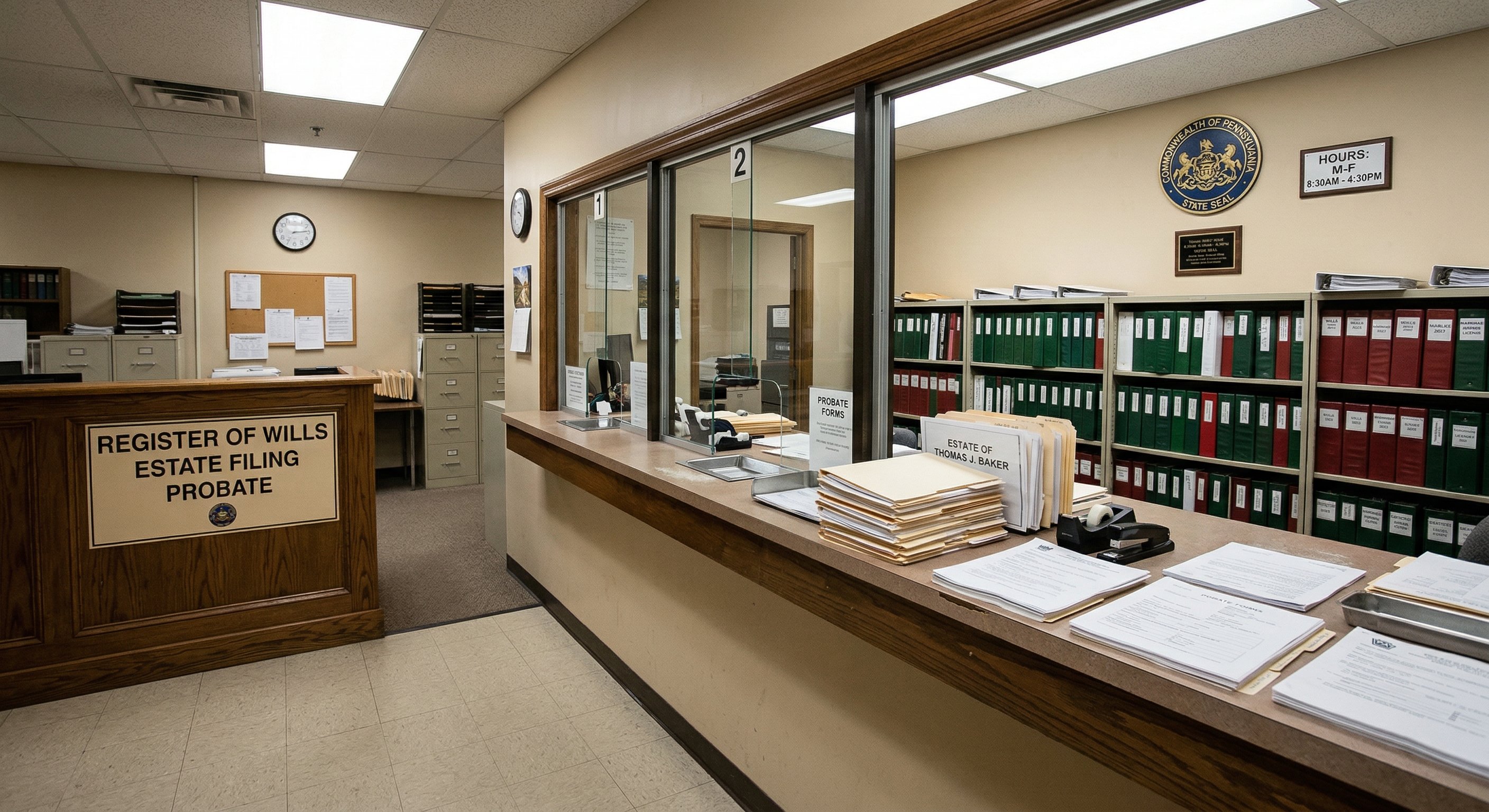
Pennsylvania uses a term most investors don't recognize: Register of Wills. This is the county official who handles estate filings — analogous to the Surrogate's Court in New York or the Probate Court in other states. Every Pennsylvania county has one.
When someone dies with or without a will, the executor (or administrator, if there's no will) files with the Register of Wills in the county where the decedent lived. The Register issues Letters Testamentary (with a will) or Letters of Administration (without a will). Once those are granted, the estate is officially "open."
The Orphans' Court Connection
For contested estates or complex matters, Pennsylvania routes cases through the Orphans' Court Division — a specialized division of each county's Court of Common Pleas. Most routine probate filings never go there. But if heirs dispute the will, challenge the executor, or contest asset distribution, it ends up in Orphans' Court. For investors, this is worth knowing: estates in active litigation are harder to purchase and slower to resolve.
PA Inheritance Tax — The Hidden Accelerator
Here's the Pennsylvania detail most investors miss: Pennsylvania imposes an inheritance tax on inherited property, not just an estate tax. The rates depend on the heir's relationship to the decedent:
- Surviving spouse: 0%
- Direct lineal heirs (children, grandchildren, parents): 4.5%
- Siblings: 12%
- Other heirs (nieces, nephews, cousins, non-relatives): 15%
This tax is due within nine months of death. If the estate has illiquid assets — like a house — heirs often need to sell to pay it. That creates motivated sellers on a clock.
An heir inheriting a $200,000 row house in South Philadelphia owes $9,000 in inheritance tax within nine months if they're the decedent's child. If it's a sibling inheriting, that number jumps to $24,000. They're not waiting around.
Where Are Pennsylvania's Probate Deals?
Pennsylvania has 13 million residents spread across 67 counties. Not all markets are equal for probate investing.
Philadelphia County: Volume, Competition, and Row Homes
Philadelphia is the state's largest city and one of the densest urban housing markets in the country. The city has roughly 60,000+ row homes — many of them aging, many of them passing through estates.
The volume of probate filings in Philadelphia County is substantial. The competition is also higher than anywhere else in the state — wholesalers, hedge funds, and iBuyers all actively work the Philadelphia market.
Where Philadelphia probate stands out for investors:
- Older housing stock — many homes are 80-100+ years old, often needing significant updates
- Absentee heirs — Philadelphia's population has shifted; many decedents' children left the city decades ago
- High equity — homes in neighborhoods like South Philly, Fishtown, and Kensington have seen significant appreciation even when owners weren't aware of it
- Estate disputes — Philadelphia's density means more complex family situations and contested estates
The downside: deal flow is competitive. You need to be early.
Allegheny County (Pittsburgh): The Underrated Market
Pittsburgh doesn't get the attention Philadelphia does, but Allegheny County may be the better probate market for returns.
Why:
- Older housing age — Pittsburgh's inner-ring suburbs (Dormont, Carnegie, McKeesport, Wilkinsburg, Duquesne) are packed with homes built in the 1930s-1960s owned by the same families for generations
- Lower competition — fewer institutional investors, more opportunity for local wholesalers and flippers
- Significant distress — the Mon Valley and other steel-legacy areas have seen population decline, leaving behind properties with complicated ownership situations
- Lower price point — entry costs are manageable; a distressed Allegheny County property can often be purchased and rehabbed for total costs that work
Pittsburgh probate deals often surface through the Allegheny County Register of Wills and the legal notices section of the Pittsburgh Legal Journal — a legal newspaper that publishes probate filings by requirement.
Secondary Markets Worth Watching
- Lehigh Valley (Allentown/Bethlehem): Growing market with older housing stock; probate activity is steady
- Delaware County and Montgomery County (Philadelphia suburbs): Higher home values, significant equity in estate properties
- Lancaster and York Counties: Rural and semi-rural markets with older farmhouses and legacy properties — less competition, unique deal types
- Erie County: Distressed market with substantial probate activity and low competition from outside investors
How to Find Probate Leads in Pennsylvania
1. Register of Wills Records (Public Access)
Every Pennsylvania county's Register of Wills maintains public estate records. The level of online access varies:
- Philadelphia County: Has an online docket system through the First Judicial District website — you can search estate filings and download pleadings
- Allegheny County: Online access through the county portal, searchable by decedent name and filing date
- Smaller counties: May require in-person access at the courthouse; some are transitioning to online portals
What to look for when reviewing filings:
- Date of filing (fresher is better — heirs haven't had time to get organized)
- Property assets listed in inventory
- Out-of-state administrator address (strong signal for absentee heirs)
- Large number of beneficiaries (more parties = more motivation to settle cleanly)
2. Pennsylvania Legal Journals (Required Publication)
Pennsylvania law requires estates to publish a legal notice in the county's designated legal newspaper within 3 months of filing. This is how creditors are notified and how the public clock starts.
Major publications by market:
- Philadelphia: The Legal Intelligencer (philadelphialegal.com)
- Pittsburgh: Pittsburgh Legal Journal (plj.org)
- Other counties: Usually a local legal newspaper or the county's designated publication
These notices are public record and searchable. They include the decedent's name, address, and estate filing information — enough to find the property and research the heirs.
3. County-Direct Distress Data
The most efficient route is using a platform that aggregates probate signals directly from county records across all 67 Pennsylvania counties — surfacing them in one place, scored by motivation level.

Manually working the Register of Wills across 67 counties is a genuine research project. Each county uses different systems, different search interfaces, and different update schedules. A platform like DistressIQ pulls probate signals from county-direct sources — not resold list data — and scores each property by motivation. You see which estates have multiple distress signals (probate + tax delinquency, for example), which are in markets with strong investor demand, and which have been sitting long enough that heirs are likely ready to move.
Browse Pennsylvania probate leads free on DistressIQ — no credit card required to see the map and signals. Only pay when you want contact details.
Free Weekly Alerts
See What's Distressed in Your Market
Get free weekly alerts — new distressed properties, motivation scores, and hot neighborhoods in your area. Addresses and contact info available inside DistressIQ.
Free forever · No credit card · Unsubscribe anytime
The PA Probate Workflow That Actually Works
Finding the property is step one. Getting to a deal is the rest of it.
Step 1: Identify the Executor/Administrator
The Register of Wills filing lists the executor or administrator by name and address. This is your contact. They're legally authorized to negotiate the sale — not the individual heirs.
Important: the executor has a fiduciary duty to the estate. They cannot simply accept a low offer because one heir wants to sell fast. They need to demonstrate they acted in the estate's interest. This means:
- Don't lowball aggressively (it will get rejected and poison the relationship)
- Come with comps showing why your offer reflects fair market value given condition
- Offer speed and certainty — in probate, a bird in hand is worth more than a retail listing that might not close
Step 2: Research the Property Before You Call
Before contacting anyone, know the property:
- Pull the county tax assessor record (Philadelphia and Allegheny County both have strong online assessor portals)
- Check for other distress signals: are there delinquent taxes? Code violations? Deferred maintenance visible via Street View?
- Run comps for the neighborhood — both retail and ARV assuming the needed rehab
- Check if the property is already listed (some executors go retail first; if it's been sitting 60+ days, they may be open to alternatives)
Step 3: The Outreach Approach
Pennsylvania executors handling inherited properties are often dealing with this for the first time. Your first contact should be:
- Professional and clear about who you are and what you do
- Not pushy — they're managing an estate, not running a sales call
- Honest about what you'd offer and why (condition, speed, certainty)
- Patient — probate timelines vary, and "not yet" is often just "not now"
Follow up. Estates take months. The executor who wasn't ready in February may be ready in April after six family arguments about what to do with the house.
What Makes Pennsylvania Probate Different
A few PA-specific factors that shape how these deals work:
The inheritance tax deadline pressure is real. Nine months sounds like a long time until you're managing an estate. Heirs who owe $15,000+ in inheritance tax and aren't sure the house will sell at retail in time are very open to conversations.
Philadelphia's court system is overloaded. Estate filings in Philadelphia can take longer to process than in suburban counties. An executor dealing with a slow court and impatient heirs is a motivated seller by the time they hear from you.
Row home condition is a negotiating point. Philadelphia row homes often have shared walls, deferred maintenance, and systems that are decades past their prime. A thorough inspection is standard — and the gap between assessed value and after-repair value is often where the deal lives.
Absentee administrators are common. Many Pennsylvania estates are administered by heirs who left the state long ago. They don't want to fly in to manage contractors. They want a straightforward transaction. That's the pitch.

Using DistressIQ for Pennsylvania Probate
DistressIQ tracks probate signals across all 67 Pennsylvania counties, updated daily from county-direct sources. Each property is scored 0-100 based on motivation — how many signals are active, how recent they are, and what the combination suggests about seller urgency.
An estate with active probate filing + tax delinquency + no recent sale activity scores significantly higher than a fresh probate with no other signals. You know where to focus your time before you pick up the phone.
Browse Pennsylvania probate leads free — see the map, see the signals, see the motivation scores. When you find the property worth pursuing, unlock contact info for the executor or administrator. One action credit, one contact. No commitment required to explore.
DistressIQ tracks probate signals across every Pennsylvania county — browse free at distressiq.ai
Frequently Asked Questions
Q: How long does probate take in Pennsylvania?
Pennsylvania probate timelines vary by county and estate complexity. Uncontested estates with no real estate disputes can move through in 9-18 months from filing to final distribution. Philadelphia County often runs longer due to court volume. Contested estates can take years. For investors, the key window is the first 6 months after filing — heirs are still figuring out what they want to do and are often most receptive to clean offers.
Q: Can I buy a property directly from an estate before probate closes?
Yes. Estates can sell property during probate — the executor has authority to do so once Letters Testamentary are granted. In Pennsylvania, court approval is typically required for real estate sales unless the will specifically grants the executor power of sale without court order. This adds a step but doesn't prevent the sale. Work with a title company experienced in Pennsylvania estate transactions — they'll flag what's needed.
Q: Where do I find probate filings in Pennsylvania?
Each county's Register of Wills maintains estate records. Philadelphia and Allegheny County both have online portals. For smaller counties, start at the county courthouse website — most link to the Register of Wills directly. You can also monitor legal notice publications (The Legal Intelligencer for Philadelphia, Pittsburgh Legal Journal for western PA) where estates are required to publish creditor notices. Platforms like DistressIQ aggregate probate signals from county-direct sources across all 67 counties in one searchable interface.
Q: What is Pennsylvania's inheritance tax and why does it matter for investors?
Pennsylvania levies inheritance tax on the transfer of assets from a deceased person to their heirs. The rate depends on relationship: 0% for spouses, 4.5% for lineal heirs (children, parents), 12% for siblings, and 15% for all others. This tax is due within 9 months of death. When an estate's primary asset is real property, heirs often need to sell to pay this tax — creating time pressure that makes them more receptive to offers with certainty and speed.
Q: How competitive is Pennsylvania probate investing?
It depends heavily on the market. Philadelphia is highly competitive — institutional investors, hedge funds, and active wholesale networks all work the city. Pittsburgh's inner-ring suburbs are more accessible, with less institutional competition and higher relative returns. Smaller markets (Lehigh Valley, York, Lancaster, Erie) see even less competition. The edge in any market comes from finding properties early — before they're widely circulated — which requires sourcing from county records rather than waiting for marketing lists.
The data behind this article
DistressIQ Monitors These Signals in Real Time
Pre-Foreclosures
NOD + NTS filings
Tax Delinquency
County treasurer records
Code Violations
Municipal inspection filings
Probate Filings
Superior Court records
Every lead is scored 0–100 for seller motivation based on signal type, duration, severity, and stacking. Nationwide coverage — every US county, updated daily.
Ready to find deals in your market?
See Live Distress Signals in Pennsylvania
Stop calling dead leads. Every lead in DistressIQ is scored 0–100 for seller motivation, with verified contact info included. Browse the free tier to see what's active in your market right now.
Browse Free Leads — No Credit Card