How to Find Probate Leads in Michigan (2026 Investor Guide)
How to Find Probate Leads in Michigan (2026 Investor Guide)
TL;DR: Michigan has 83 counties, each with its own Probate Court that maintains public records on every estate filed. The state's probate process typically takes 5–12 months, creating a clear window to reach heirs before properties hit MLS. Wayne County (Detroit) is the largest source of probate filings — and the most interesting market for investors willing to do the work. Oakland, Kent, and Macomb counties offer higher-value estates with motivated sellers who often live out of state. DistressIQ tracks probate signals across every Michigan county, scored daily so you know which leads to call first.
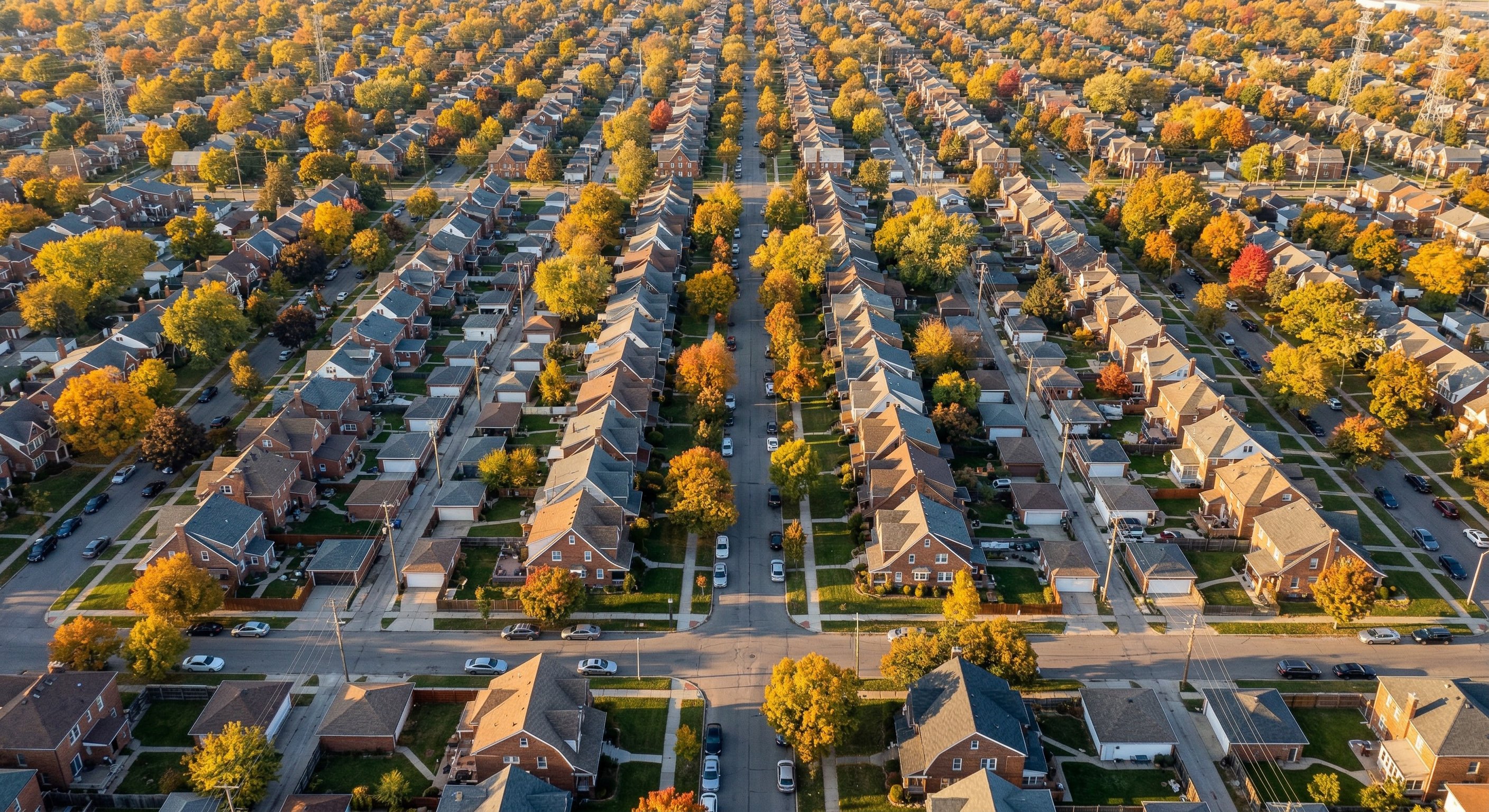
Most investors hunting probate deals in the Midwest stop at Illinois and Ohio. Michigan gets skipped because investors assume Detroit equals trouble and the rest of the state is too thin to bother. Both assumptions are wrong — and that's exactly why Michigan's probate pipeline is quieter than it should be.
Wayne County alone generates thousands of probate filings per year. Oakland County, just north of Detroit, has one of the highest concentrations of inherited properties in the Midwest, many owned by heirs who have moved to Florida or Arizona and have zero interest in managing a home from a thousand miles away. Grand Rapids (Kent County) is growing fast, with an older housing stock that means plenty of estate situations. None of these markets are saturated with investors working the probate channel.
Here's how to work it.
How Michigan's Probate Court System Works
Michigan runs a standalone Probate Court in each of its 83 counties — separate from the Circuit Court system that handles most civil matters. This matters for investors because there's no centralized state database. You're not going to one portal and pulling every Michigan probate filing. You're working county by county, or using a platform that does it for you.
Each Michigan Probate Court handles:
- Decedents' estates (what investors care about)
- Guardianships and conservatorships
- Mental health matters
- Trust proceedings
The public record for estate filings includes the decedent's name, the personal representative (PR), the date the estate opened, and the property addresses in the estate. Some counties have online access; many still require a physical trip or a public records request.
The Michigan Probate Timeline
From a practical standpoint, the Michigan probate process looks like this:
Month 1–2: Estate is opened in Probate Court. A personal representative is appointed. The court issues Letters of Authority. This is when the public filing appears — and when early access investors move.
Month 2–5: Notice to creditors runs for four months from the date of publication. The estate can't distribute assets until this window closes.
Month 5–8: PR inventories and appraises estate assets, including real property. If heirs want to sell the property, the PR typically has authority to list or sell with court approval.
Month 8–12+: Final distribution, accounting, and estate closure. Complex estates with disputes, multiple heirs, or significant debt can run 18–24 months.
The investor window: The sweet spot is months 2–6. The estate is open, heirs are aware, the creditor period is running — and many families are already thinking about what to do with the property. That's when an investor who reaches out with a fair, straightforward offer is actually welcomed.
Why Michigan Probate Leads Convert
The profile of a Michigan probate property skews toward situations where selling quickly is a genuine relief — not just for financial reasons, but practical ones.
Detroit-area housing stock is old. The median home age in Wayne County exceeds 60 years. Inherited homes often need significant work — deferred maintenance, outdated systems, sometimes years of neglect if the owner had been ill. Heirs inheriting a 1,950s bungalow in Detroit or Dearborn face a hard choice: invest in renovations they may not want to manage, rent it and become accidental landlords, or sell. A substantial portion choose to sell.
Heirs frequently don't live nearby. Michigan has had significant population out-migration over the past three decades. It's common for Wayne or Genesee County heirs to be living in Georgia, Texas, or Arizona. Managing a Michigan property from 1,500 miles away is a headache most people don't want. Cash offers with flexible timelines are often a genuine solution for these families.
Multi-heir estates create natural complexity. When a home passes to three adult children who can't agree on what to do with it, the PR needs a clean path forward. Investors who understand how to work with multiple decision-makers — and close quickly — provide real value to families in that situation.
This is also what makes empathy non-negotiable. Probate situations involve loss, family dynamics, and real emotional weight. The investors who close deals in this space show up ready to listen, explain the process clearly, and give families the time they need to make a decision. High-pressure tactics don't work here and they damage your reputation in markets where word travels.
Top Michigan Counties for Probate Leads
Wayne County (Detroit)
The largest probate market in the state by volume. Detroit's decades-long economic challenges created an unusual real estate environment: large inventory, aging housing stock, and a disproportionate share of properties that have passed through multiple generations. Probate is common. Property values have risen significantly in Detroit's recovery neighborhoods (Corktown, Midtown, Indian Village, East English Village), while outer neighborhoods remain accessible.
Key for investors: Wayne County Probate Court is in Detroit at 1305 Coleman A. Young Municipal Center. Court records are partially accessible online via the State of Michigan's case management portal. The high volume means active investors can build a consistent pipeline from Wayne County alone.

Oakland County
Directly north of Detroit, Oakland County is Michigan's wealthiest county by median household income. Probate estates here involve higher-value properties — older homes in Birmingham, Bloomfield Hills, Troy, and Royal Oak frequently hit the probate pipeline. Heirs are often professionals who have relocated. Properties tend to be in better condition but also more likely to sit if the family can't agree. The motivated seller profile here is often a PR under pressure to distribute assets, not a financially distressed heir.
Oakland County Probate Court is in Pontiac. Records are accessible through the county's online court portal.
Kent County (Grand Rapids)
Grand Rapids has been one of the Midwest's fastest-growing metros for the past decade. That growth brings new housing — but Kent County's older west-side neighborhoods still generate steady probate volume. Probate leads here often involve properties in areas that have appreciated significantly since the original owners bought them, creating equity-rich estate situations that convert well.
Kent County Probate Court is in Grand Rapids. The court maintains an online case search system.
Macomb County
Michigan's third-most-populous county, stretching north of Detroit through Sterling Heights, Warren, and Clinton Township. Heavy working-class housing stock from the auto industry boom years means lots of 1960s–1980s ranch homes and colonials entering estate situations. This is a high-volume, practical market — not the highest values but consistent deal flow for investors who work the system.
Genesee County (Flint)
Genesee County generates significant probate activity against a backdrop of one of the most economically distressed markets in Michigan. Properties here are lower-priced but the motivated seller signal is often stronger. Heirs inheriting Flint-area properties frequently want to move them quickly. For investors comfortable with the Flint market, this is an overlooked probate channel.
Free Weekly Alerts
See What's Distressed in Your Market
Get free weekly alerts — new distressed properties, motivation scores, and hot neighborhoods in your area. Addresses and contact info available inside DistressIQ.
Free forever · No credit card · Unsubscribe anytime
How to Find Michigan Probate Leads
Manual Research: County Probate Court Records
Every Michigan Probate Court maintains public records on estate filings. The challenge is that access varies county by county:
- Wayne, Oakland, Kent, Macomb: Partial or full online case search available through the state court portal (courts.michigan.gov)
- Many smaller counties: Records require a walk-in visit to the courthouse or a formal public records request
- Detroit-specific: Wayne County has a backlog — expect some delay between filing and online availability
What you're looking for in the public record: decedent name, date of death, personal representative name, estate filing date, and any property descriptions listed. From there, you cross-reference against property records to identify the address and owner history.
The manual process — opening multiple county portals, cross-referencing property records, building your own list — takes serious time. For a single active investor working multiple counties, you're looking at hours per week just to maintain a current pipeline.
Stacking Probate with Other Distress Signals
Here's what separates probate investors who close consistently from those who don't: the leads that convert fastest are almost never just probate. They're probate plus something else.
A property in probate where the decedent was also tax delinquent signals the estate is under financial pressure — heirs are inheriting debt along with the property, and their motivation to resolve it quickly is much higher. A probate property with a code violation suggests deferred maintenance and likely a vacant or neglected property. Lis pendens stacked with probate means there's active litigation — timelines get urgent fast.
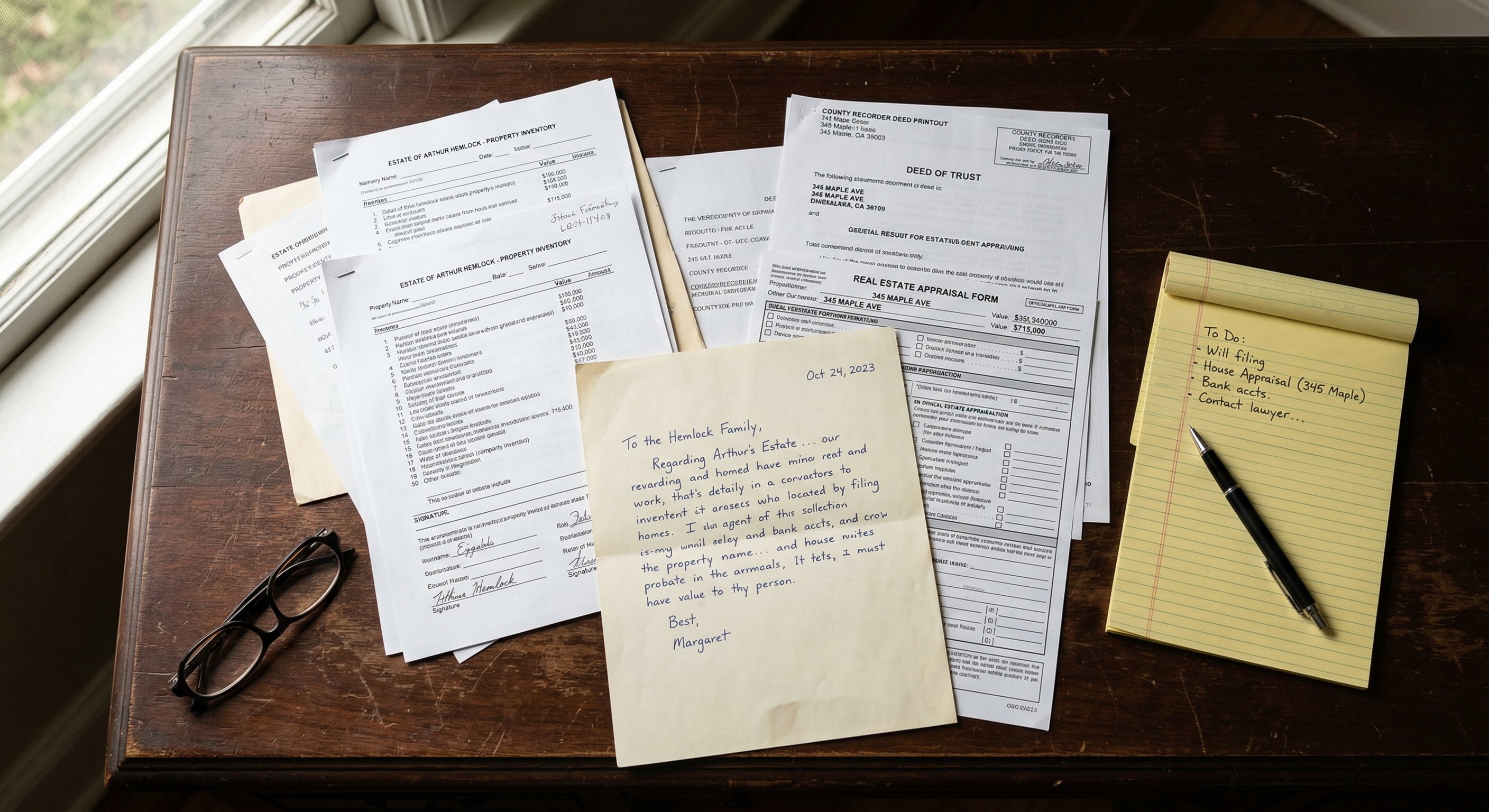
Single-signal lists — just probate, no other filters — convert at a fraction of the rate of multi-signal leads. The math is simple: if 30% of probate estates will sell to an investor, but 75% of probate-plus-tax-delinquent estates will, you want the stacked list. The challenge is building it manually across 83 counties.
Working Michigan Probate Leads
Reaching the Right Person
In Michigan probate, you contact the personal representative (PR) — not the heirs directly, and not the decedent (obviously). The PR is named in the court filing and has legal authority to transact on behalf of the estate. Letters of Authority confirm this authority.
Get the name right. Address your initial contact to the PR specifically, reference the estate (decedent's name, county), and be clear about your purpose. Vague mailers that say "we buy houses" get thrown away. Specific outreach — "I'm a local investor who works with Michigan estates and I'm interested in the property at [address]" — gets callbacks.
Understanding the Sale Process
The PR can often sell estate real property without court approval if the will grants "Independent Administration" authority or if all heirs consent. When court approval is required, add 4–8 weeks to the closing timeline.
This is worth flagging in your initial outreach. Many heirs don't know their PR has authority to sell without a court hearing. Explaining that clearly — and offering to connect with your closing attorney to walk through the process — builds the kind of trust that separates you from the form-letter investors.
Timeline Expectations
Don't push for a fast close if the estate isn't ready. Michigan's creditor period runs four months. If you're contacting a recently opened estate, acknowledge that they may not be in a position to sell immediately — and that you're willing to wait. Investors who call back in month four, after the creditor window has closed, often find the family has moved from "maybe" to "yes."
Using DistressIQ for Michigan Probate Leads
Manually pulling records from 83 different Michigan Probate Courts and cross-referencing them with property and tax data isn't a repeatable business process — it's a part-time job. That's the problem DistressIQ solves.
The platform tracks verified probate filings across every Michigan county, updated daily from county-direct records. Every lead is scored on a 0–100 motivation scale that accounts for stacked signals — probate plus tax delinquency, probate plus code violations, probate plus lis pendens. The hottest leads surface at the top. You're not wading through hundreds of records to find the 20 that are actually worth calling.
The map view lets you pull leads by county, zip code, or neighborhood — so you can work Wayne County's east side, or filter for Oakland County properties above a certain assessed value, or build a statewide pipeline. Browse free and unlimited; only pay when you unlock contact details.
See live Michigan probate leads on DistressIQ — browse free, no credit card required.
Frequently Asked Questions
How long does probate take in Michigan?
Michigan probate typically takes 5–12 months for straightforward estates. The creditor notice period alone runs four months from publication. Complex estates with disputes, multiple heirs, significant debt, or out-of-state property can extend to 18–24 months. Small estates under $15,000 in assets may qualify for a simplified small estate affidavit, bypassing full probate.
Where do I find Michigan probate court records?
Michigan maintains a state court portal at courts.michigan.gov where you can search case records by county. Wayne, Oakland, Kent, and Macomb counties have the most accessible online systems. Smaller or rural counties may require a visit to the courthouse or a formal FOIA request. Coverage varies significantly by county.
Can I buy a property directly from an estate in Michigan?
Yes. The personal representative of a Michigan estate has authority to sell real property on behalf of the estate. If the decedent's will grants independent administration powers, or if heirs consent, the PR can transact without a court hearing. When court approval is required, expect a 4–8 week addition to your closing timeline. Always confirm the PR's authority and get a copy of the Letters of Authority before proceeding.
What makes Michigan probate leads different from other states?
Michigan's older housing stock — particularly in Wayne, Genesee, and Macomb counties — means many inherited properties require significant work. Combined with the state's history of population out-migration, a large percentage of Michigan heirs live out of state and have no practical way to manage a local property. This creates a motivated seller profile that is both common and genuine. Michigan also uses independent Probate Courts in each of its 83 counties, so there's no single statewide database — making systematic county-level data collection essential for investors building a pipeline.
Is Detroit a good market for probate investing?
Yes, with realistic expectations. Wayne County generates consistent probate volume and Detroit's recovering neighborhoods (Corktown, East English Village, Indian Village, Midtown fringe) have seen significant appreciation. Properties in outer Detroit neighborhoods or Downriver communities require more thorough due diligence on condition, local market comps, and buyer pool. Investors who know the market, do the repair math correctly, and work with experienced local contractors find Detroit probate to be a productive channel.
DistressIQ tracks verified probate signals across all 83 Michigan counties, updated daily and scored by motivation. Browse Michigan leads free.
The data behind this article
DistressIQ Monitors These Signals in Real Time
Pre-Foreclosures
NOD + NTS filings
Tax Delinquency
County treasurer records
Code Violations
Municipal inspection filings
Probate Filings
Superior Court records
Every lead is scored 0–100 for seller motivation based on signal type, duration, severity, and stacking. Nationwide coverage — every US county, updated daily.
Ready to find deals in your market?
See Live Distress Signals in Michigan
Stop calling dead leads. Every lead in DistressIQ is scored 0–100 for seller motivation, with verified contact info included. Browse the free tier to see what's active in your market right now.
Browse Free Leads — No Credit Card