How to Find Probate Leads in Illinois (2026 Investor Guide)
How to Find Probate Leads in Illinois (2026 Investor Guide)
TL;DR: Illinois processes tens of thousands of probate estates annually, with Cook County alone generating more probate filings than most states. The window between estate opening and property sale is typically 12-18 months — long enough to reach motivated sellers before the market does. Probate properties in Chicago's collar counties and downstate markets often sell at meaningful discounts because executors prioritize speed over price. DistressIQ tracks probate filings across all 102 Illinois counties, updated daily, so you can identify leads the moment they appear in court records.
Illinois isn't the first state that comes to mind when investors talk about probate leads. Texas and Florida get most of the attention — bigger populations, louder marketing. But Illinois probate is quietly one of the most productive signals in the country, and most investors who know it won't tell you why.
Here's why: Cook County alone — Chicago and its immediate suburbs — generates more probate filings per year than many entire states. Add in DuPage, Lake, Will, Kane, and the other collar counties, and you're looking at a market with enormous probate volume, a long court timeline, and motivated executors who almost universally prefer a fast, clean sale over months of property management on a house they don't live in.
The investors working Illinois probate aren't competing against everyone. They're competing against the few who figured out how to find these leads before the family lists the property.

How Illinois Probate Works (The Investor Version)
Illinois is a supervised probate state — meaning most estate sales require court approval, which creates a paper trail you can find. Here's the timeline that matters:
Filing → Publication → Claims Period → Court Approval → Sale
Estate opens: An executor (or administrator if no will) files with the Circuit Court in the county where the decedent lived. This is public record the day it's filed.
Publication notice: Illinois law (755 ILCS 5/9-8) requires notice to be published in a local newspaper for three consecutive weeks. This starts a 6-month creditor claims period.
Creditor claims window: During these six months, the estate can't distribute assets — but it CAN accept offers on real property. Many executors actively want to sell during this period to reduce carrying costs (taxes, insurance, utilities on a vacant house).
Court approval: Once an offer is accepted, the sale must be confirmed by the probate court. This adds 4-8 weeks to closing. Investors should factor this into their timelines and offers.
Sale closes: Proceeds go to pay creditors, then distribute to heirs. The executor's job ends.
The investor sweet spot is months 2-5. Early enough that the family is still organizing, the property hasn't been listed, and the executor is often motivated to accept a fair all-cash offer that eliminates their carrying costs and ends their responsibilities. Late enough that the estate is stable and an executor has authority to act.
Why Illinois Probate Converts
A few factors make Illinois probate leads convert better than the state average:
High property carrying costs. Illinois has among the highest property tax rates in the country — Cook County effective rates frequently exceed 2% of assessed value. On a $250,000 Chicago bungalow, that's $5,000+ per year. An executor managing estate taxes, insurance, utilities, and deferred maintenance on an inherited property is highly motivated to sell. Every month the property sits costs them real money.
Long timelines create urgency. The 6-month creditor window plus court approval adds 8-12 months before many estates wrap up. Executors who started thinking "we'll list in the spring" are often calling investors by month four.
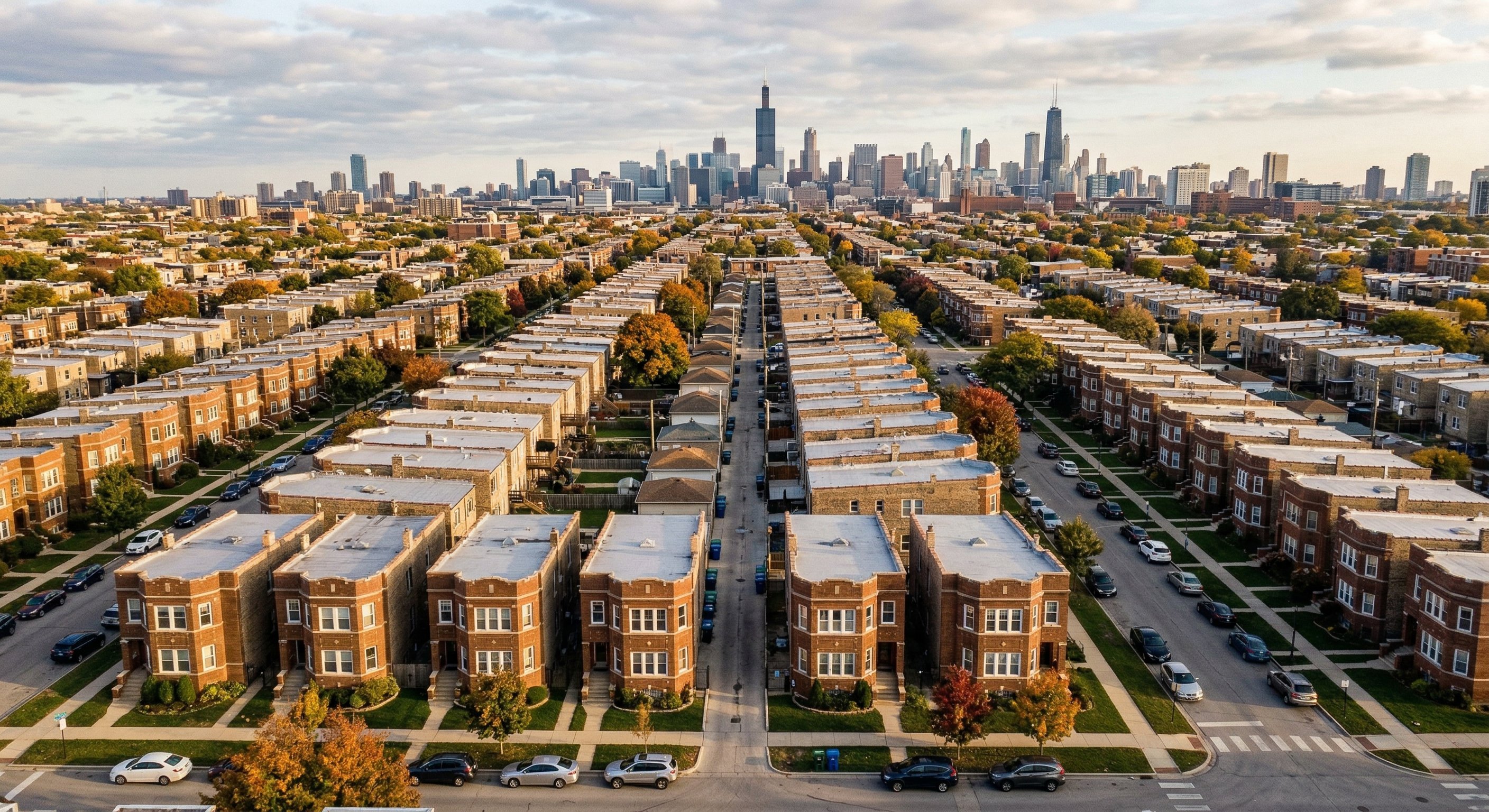
Chicago's aging housing stock. The Midwest's older housing inventory — pre-war bungalows, two-flats, post-WWII ranches — means inherited properties frequently need significant work. Listing on MLS at retail pricing requires rehab. Selling to an investor who buys as-is eliminates that burden entirely.
Heirs are often out-of-state. Families scatter. The person administering an estate in Cook County may live in Florida or California. The property is just a problem to solve, not a family home to cherish.

Where Illinois Probate Volume Lives
Illinois has 102 counties and 25 judicial circuits. Probate is filed at the county Circuit Court level. Here's where the volume is:
Cook County is in its own category. The Circuit Court of Cook County's Probate Division handles thousands of estates annually — more than any other single jurisdiction in the Midwest. Chicago proper plus 30+ suburban municipalities fall under Cook County. If you're doing probate investing in Illinois and not prioritizing Cook County, you're leaving most of the market on the table.
The collar counties — DuPage, Lake, Will, Kane, McHenry — are the next tier. These are Chicago's immediate suburbs: affluent areas with significant real estate values, high property tax rates, and an aging population driving steady probate volume. DuPage County (Wheaton) and Lake County (Waukegan) alone generate hundreds of probate filings per year.
Downstate secondaries — Peoria, Sangamon (Springfield), Champaign, Madison (Metro St. Louis suburbs), Winnebago (Rockford), McLean (Bloomington-Normal). These are smaller markets with less competition and properties at lower absolute price points — but the distress signal quality is often just as strong. An executor in Peoria isn't getting flooded with investor calls the way a Cook County executor is.
The opportunity in downstate: Because few investors are systematically working downstate Illinois probate, motivated executors in markets like Rockford and Peoria are often waiting for someone to call. The same 6-month window, far less competition.
Free Weekly Alerts
See What's Distressed in Your Market
Get free weekly alerts — new distressed properties, motivation scores, and hot neighborhoods in your area. Addresses and contact info available inside DistressIQ.
Free forever · No credit card · Unsubscribe anytime
How Investors Currently Find Illinois Probate Leads (The Manual Approach)
The traditional playbook for Illinois probate leads runs through the courts directly:
Circuit Court filings: Each county's Circuit Court maintains probate case records. Cook County's Clerk of the Circuit Court has an online case search. Most collar counties have similar systems. You can search filed estates, identify cases where real property is listed as an asset, and pull the executor's contact information from the filing.
The problem: you're searching one county at a time, each with a different interface, different data structure, and different update cadence. Cook County's online system is reasonably current. Some downstate counties are weeks behind. A few still require in-person requests.
Published notices: Illinois law requires publication, which means newspaper legal notice sections still carry probate announcements. Tracking these across 102 counties' local papers is impractical at scale.
Paid lead lists: Vendors like the ones you'll find in a Google search for "Illinois probate leads" scrape court filings and sell lists — often with 30-60 day lag times, limited filtering, and no motivation scoring. You're buying a raw data dump and doing all the prioritization yourself.
None of these approaches answer the question that actually matters: of the 200 probate estates with real property in Cook County right now, which 10 do I call first?
What Changes When You Have Scored Probate Leads
The raw probate filing tells you an estate exists. A scored lead tells you which ones are worth your time.
DistressIQ pulls probate data county-direct across all 102 Illinois counties — the same court filings, but aggregated, updated daily, and scored against 20+ motivation signals. A probate lead that also shows tax delinquency, utility liens, or code violations gets a higher motivation score — because each additional signal compounds the executor's urgency to sell.
A Cook County estate with back taxes, a vacant property, and a filing date from four months ago sits at the top of the list. A fresh filing on a well-maintained Lincoln Park townhouse with no additional distress signals sits lower. Both are probate. One is far more likely to close.
Browse the full map of Illinois probate leads — free, no credit card required. See the signals, the motivation scores, the property details. When you find one worth pursuing, unlock the owner contact information with a single action.
Browse Illinois probate leads on DistressIQ — see the map, see the signals, browse free
Working Illinois Probate Leads: What Actually Converts
Finding the lead is step one. The approach matters just as much.
Lead with empathy, not urgency. The person you're calling just lost someone. The estate process is stressful and unfamiliar. Investors who lead with "I can close in 10 days for cash" sound like vultures. The ones who convert lead with: "I know you've got a lot going on with the estate — I work with families in this situation and can make the property part as simple as possible."
Contact early, follow up consistently. Most probate conversions happen on follow-up call 3 or 4, not the first. The executor is often in shock at month one. By month four, they've had six more months of property tax bills and are ready to talk.
Understand the executor's constraints. Illinois probate requires court approval of the sale. That means your contract needs to account for it — longer inspection periods are standard, and executors will need to disclose your offer to heirs before the court hearing. This isn't a problem, it's a process. Know it going in.
Work the attorney channel. Probate attorneys in Cook County and the collar counties regularly interact with executors who want out. Building relationships with 5-10 probate attorneys in your target markets creates a referral pipeline that doesn't depend on cold outreach at all.
Price for certainty, not the top of the range. Executors need a number they can present to the court and to heirs. A slightly below-market price with cash and certainty beats a higher offer that might fall through. Your closing certainty IS part of your price.

The Stacking Advantage in Illinois Probate
Probate alone is a strong signal. But the properties that convert fastest carry more than one distress indicator.
In Illinois, these stacking combinations are the most actionable:
Probate + Tax Delinquent: The estate stopped paying property taxes — common when the owner passed and heirs didn't know the bills existed or couldn't afford them. Illinois has high property tax rates, which means the delinquency accrues fast. An executor facing a tax sale on top of estate administration is highly motivated.
Probate + Code Violation: Chicago's Department of Buildings and several collar county municipalities actively cite vacant or neglected properties. A code violation on a probate property signals: vacant, deteriorating, and the estate is under pressure from the municipality in addition to everything else.
Probate + Long Estate Duration: An estate that's been open 8-10 months with property still unsold is a signal in itself. Something is holding it up — heirs disagreeing, title issues, deferred maintenance. These estates often welcome outside help the most.
When a property carries multiple signals, DistressIQ's motivation score reflects that compounding. These leads are sorted to the top so you call them first.
Illinois Probate Leads: What to Expect on the Numbers
Illinois probate real estate varies enormously by market. Some rough benchmarks:
Cook County (Chicago): ARVs range from $150K (south and west side bungalows) to $800K+ (North Shore and Gold Coast). Probate discounts typically run 10-25% below market — executors are trading price for certainty and speed.
Collar counties: DuPage, Lake, Will, Kane, and McHenry average higher property values than Cook (especially DuPage and northern Lake County). Probate discounts are similar — executors face the same motivations regardless of price point.
Downstate secondary markets: Rockford, Peoria, Springfield, Champaign offer probate properties in the $60K-$200K range. Rehab costs are similar but margins are tighter. Competition is dramatically lower.
The math works in any of these markets if you're buying right. The mistake is chasing only the Chicago collar markets while ignoring downstate — where the competition-to-volume ratio often favors the investor.

Getting Started: Your Illinois Probate Lead Workflow
If you're building an Illinois probate operation from scratch:
Pick your target geography first. Cook County offers volume. Collar counties offer higher ARVs. Downstate offers lower competition. Most serious investors work 2-3 counties in proximity — don't try to cover all 102 at once.
Identify your target estate age window. Fresh filings (0-60 days) need different messaging than estates 90-180 days old. Build separate outreach sequences for each.
Set up filtered lead alerts. You want probate filings in your target counties, especially ones with additional distress signals. DistressIQ's daily digest alerts push new high-scoring leads to your inbox so you're not manually checking.
Build your approach script around the executor's situation. Executors are not homeowners. They have fiduciary duties, heirs to answer to, and a court process to follow. Your pitch needs to account for all three.
Close your first probate deal before scaling. The court approval process has nuances. Do one deal in Cook County before you're running 20 at once. Know what the closing timeline actually looks like in practice.
The investors doing well in Illinois probate are not necessarily doing more. They're doing it earlier — finding leads the moment they file, reaching executors before anyone else calls, and offering certainty when uncertainty is the executor's primary problem.
DistressIQ tracks every probate filing across Illinois's 102 counties, scored by motivation and updated daily. Browse live probate leads in Illinois — free. When you find one worth calling, the owner contact is one click away.
Frequently Asked Questions
How do I find probate leads in Illinois?
Probate leads in Illinois are public record filed at each county's Circuit Court. You can search probate case records directly at county clerk websites, with Cook County having the most robust online system. For multi-county coverage with motivation scoring, platforms like DistressIQ aggregate filings from all 102 Illinois counties, updated daily, so you can identify and prioritize leads without searching each court individually.
How long does Illinois probate take?
Most Illinois probate estates take 12-18 months from filing to closure. The timeline includes a mandatory 6-month creditor claims period after publication, plus court approval of any property sale (which adds 4-8 weeks to closing). Investors should account for these timelines in their contracts and purchase offers.
Which Illinois counties have the most probate leads?
Cook County generates the highest volume of probate filings by far — Chicago and its suburbs account for a disproportionate share of Illinois's probate activity. DuPage, Lake, Will, and Kane counties (the collar counties) are the next most active. Downstate markets like Winnebago (Rockford), Peoria, Sangamon (Springfield), and Madison (Metro St. Louis) are smaller but often less competitive.
Can probate properties be sold before probate is complete in Illinois?
Yes. In Illinois, real property can be sold during the probate process — the estate doesn't need to be fully closed. The sale does require court approval once an offer is accepted, which typically adds 4-8 weeks. Executors can and do accept offers during the 6-month creditor claims period, making months 2-5 the prime investor window.
What's the typical discount on Illinois probate properties?
Probate properties in Illinois typically sell at a 10-25% discount to market value, depending on the executor's motivation, the property's condition, and the presence of additional distress signals (tax delinquency, code violations, extended estate duration). Properties with multiple distress indicators tend to carry larger discounts because executor urgency is compounded.
Do I need to work with a probate attorney to buy Illinois probate properties?
You don't need your own probate attorney, but it helps to understand the process. The executor's attorney manages the estate — your role is to get a signed contract accepted by the executor, which then goes to court for approval. For larger transactions or contested estates, having your own real estate attorney who understands probate is valuable. Building relationships with probate attorneys in Cook County and the collar counties also creates a referral pipeline for off-market deals.
The data behind this article
DistressIQ Monitors These Signals in Real Time
Pre-Foreclosures
NOD + NTS filings
Tax Delinquency
County treasurer records
Code Violations
Municipal inspection filings
Probate Filings
Superior Court records
Every lead is scored 0–100 for seller motivation based on signal type, duration, severity, and stacking. Nationwide coverage — every US county, updated daily.
Ready to find deals in your market?
See Live Distress Signals in Illinois
Stop calling dead leads. Every lead in DistressIQ is scored 0–100 for seller motivation, with verified contact info included. Browse the free tier to see what's active in your market right now.
Browse Free Leads — No Credit Card