How to Find Pre-Foreclosure Leads in Arizona (2026 Investor Guide)
How to Find Pre-Foreclosure Leads in Arizona (2026 Investor Guide)
TL;DR: Arizona processes foreclosures without court involvement, relying on a trustee sale system that gives homeowners 90 days to cure a default after the Notice of Trustee's Sale is recorded. That compressed timeline produces highly motivated sellers, particularly in Maricopa and Pima counties. There is no post-sale redemption period for residential properties. Investors who understand the NOTS timeline have a structural advantage over those applying judicial-state methods to Arizona data.
Arizona's foreclosure system moves faster than almost any state in the country. A homeowner can go from first missed payment to completed trustee sale in under five months. No judge signs off. No court docket tracks the case. The trustee records a notice, a 90-day clock starts, and when it expires the property sells at auction.
That speed creates a specific kind of opportunity for real estate investors. Homeowners in Arizona's pre-foreclosure pipeline face a hard deadline that shrinks every day. They are not casually considering a sale. They are running out of time. That urgency makes Arizona one of the more productive states for pre-foreclosure lead generation, provided the investor understands how the process works and where the data lives.
Arizona's Non-Judicial Foreclosure Timeline
Arizona operates under a deed of trust framework. Most residential foreclosures proceed through a non-judicial trustee process rather than the court system. Under Arizona Revised Statutes Title 33, Chapter 6 (ARS 33-807 et seq.), the trustee named in the deed of trust has the authority to sell the property after following specific notice requirements.
The sequence:
- Borrower defaults. Missed payments accumulate, typically reaching 90 to 120 days before the servicer acts.
- Notice of Trustee's Sale (NOTS) is recorded. The trustee records the NOTS with the county recorder. This filing is public record the day it is recorded.
- 90-day reinstatement period begins. The borrower has 90 days from the NOTS recording date to reinstate by paying all past-due amounts, fees, and costs.
- Trustee's sale occurs. If the default is not cured, the property sells at public auction. In Maricopa County, sales take place at 101 W. Jefferson Street in Phoenix.
- No redemption period. Arizona provides no statutory right of redemption for residential trustee sales. Once the gavel falls, the sale is final.
That 90-day reinstatement period is the investor's primary window. Short enough to create real urgency, but long enough to negotiate a deal if outreach starts early.
What "Pre-Foreclosure" Means in Arizona
In judicial foreclosure states like Florida or New York, "pre-foreclosure" typically begins when a lis pendens is filed with the court. Arizona's system is different. Most Arizona foreclosures do not involve a court filing at all.
The document to watch is the Notice of Trustee's Sale (NOTS), recorded with the county recorder, not filed in a court. Searching for "lis pendens" in Arizona returns civil litigation records, not foreclosure data.
Third-party data providers that apply judicial-state terminology to Arizona often mislabel or miss NOTS filings. A provider scanning court dockets for lis pendens may not reliably capture recorder's office data in the correct document category. Anyone searching county records manually should use "Notice of Trustee Sale" as the document type. Broader terms return too much noise, and "lis pendens" returns the wrong records entirely.
Where Arizona's Pre-Foreclosure Volume Concentrates
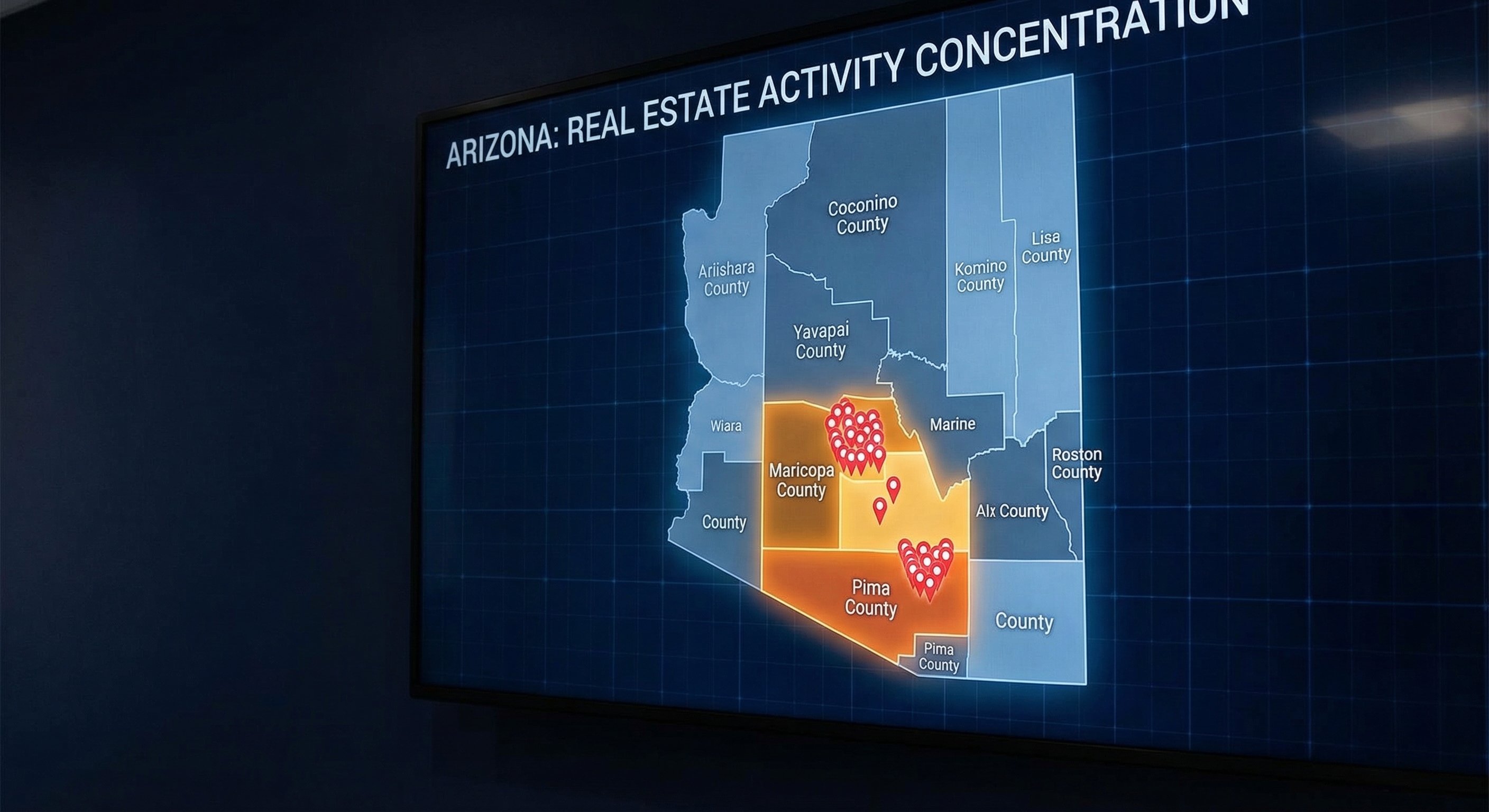
Arizona has 15 counties, but activity skews heavily toward a few metros.
Maricopa County generates more pre-foreclosure filings than the other 14 counties combined. Phoenix, Chandler, Mesa, Gilbert, Glendale, Tempe, Surprise, and Peoria all produce consistent NOTS volume. The county recorder publishes new filings daily.
Pima County (Tucson) ranks second. Older neighborhoods and retirement-adjacent areas produce steady volume with less investor competition than Maricopa.
Pinal County sits between Phoenix and Tucson along the Casa Grande corridor. Rapid growth during the 2010s and early 2020s left some pockets with elevated mortgage stress.
Yavapai County (Prescott) has a retirement-heavy demographic where fixed incomes meet rising assessments. Probate and pre-foreclosure overlap is common.
The remaining counties generate lower volume with correspondingly fewer competing investors.

Free Weekly Alerts
See What's Distressed in Your Market
Get free weekly alerts — new distressed properties, motivation scores, and hot neighborhoods in your area. Addresses and contact info available inside DistressIQ.
Free forever · No credit card · Unsubscribe anytime
Why Arizona Pre-Foreclosure Gets Less Competition Than It Deserves
Texas and Florida attract heavy investor attention. The same lead lists circulate to hundreds of buyers within days. Arizona receives less attention relative to its deal volume.
Out-of-state investors misunderstand the process. Investors trained on judicial methods often do not recognize Arizona's NOTS-based system as "pre-foreclosure." They look for court filings, find none, and conclude there is no inventory.
The 90-day timeline filters out unprepared buyers. Investors who rely on slow mail campaigns wash out quickly. The compressed timeline rewards efficient processes.
Post-2008 equity creates deal potential. Arizona was among the hardest-hit states in 2008. Today's pre-foreclosure homeowners often have substantial equity built during the recovery. According to the Arizona Department of Housing, homeowners in the current market frequently have options their 2009 counterparts did not.
Snowbird and investor-owned properties add a unique distress driver. Arizona's seasonal population includes many second-home owners and out-of-state investors. When these owners fall behind, they are often less emotionally attached and more responsive to a fast transaction.
Three Ways to Find Arizona Pre-Foreclosure Leads
Manual County Recorder Search
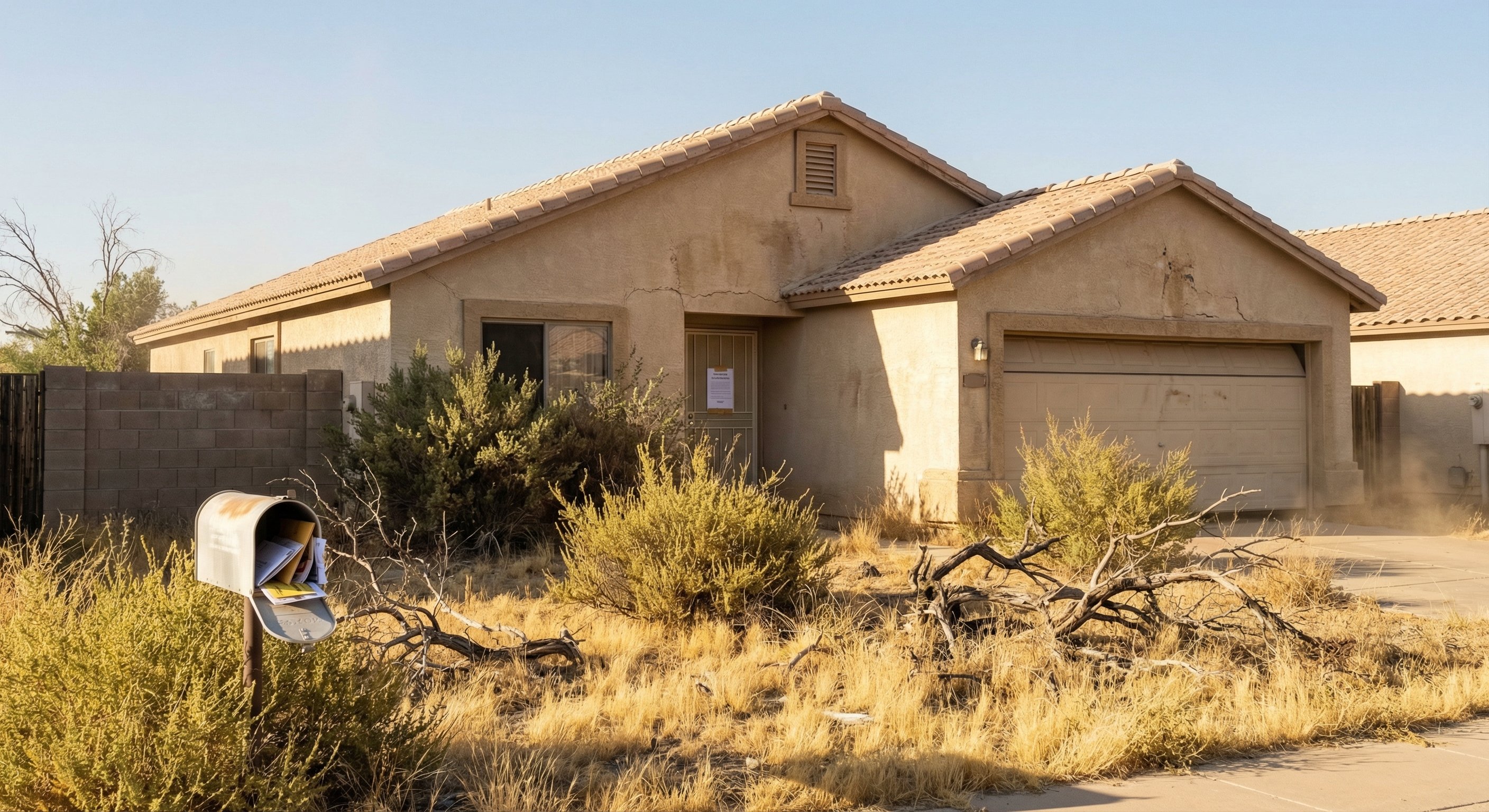
Maricopa County's recorder portal at recorder.maricopa.gov allows searches by document type, including "Notice of Trustee Sale." Each county maintains a separate portal. The data is free, but cross-referencing a NOTS filing with ownership records, tax status, and contact information requires navigating multiple databases per lead. For investors evaluating dozens of leads weekly, manual research does not scale.
Third-Party Data Aggregators
Platforms like PropStream and BatchLeads aggregate data from multiple states. The limitation for Arizona is latency and classification accuracy. Aggregators pull from data providers who pull from county records, introducing delays of days or weeks. In a 90-day timeline, a two-week lag eliminates 15 percent of the window before the investor sees the lead. Because Arizona's NOTS filings do not match the lis pendens format aggregators are built for, some platforms mislabel or miss filings entirely.
County-Direct Data Platforms
The most reliable approach is a platform pulling directly from county recorder data rather than through intermediaries. DistressIQ surfaces pre-foreclosure signals in Arizona with motivation scoring based on verified distress signals. Every lead has at least one confirmed signal from county records. The free map view shows where activity is concentrated before any payment is required.
Properties with stacked signals deserve priority. A NOTS combined with delinquent taxes, an open code violation, or a prior NOTS that was cured and re-filed indicates a homeowner facing multiple pressures. Those multi-signal leads are worth more outreach investment because the data says the seller is more likely to respond.
How to Prioritize Outreach Within the 90-Day Window
First 7 days after NOTS recording: Obtain owner contact information. Cross-reference the filing against tax records and code enforcement. Determine ARV, outstanding loan balance, and equity position before making contact.
Weeks 2 through 4: Initial outreach by phone, text, or mail. Arizona homeowners in pre-foreclosure tend to respond better to text-based outreach than mailed letters, particularly in Phoenix and Tucson. If no response on the first attempt, follow up through a different channel.
Weeks 4 through 8: Homeowners who did not respond earlier may be dealing with denial or exploring alternatives. A second contact attempt during this window often reaches sellers who were not ready to talk before.
Weeks 8 through 10: The final stretch. Sellers who ignored all prior contact sometimes become highly responsive when the sale date is days away. This is the last practical window for negotiation.
After the sale: The property is gone. No redemption period means no second chance.
What Makes a High-Priority Lead

High priority:
- Multiple distress signals (NOTS plus tax delinquency, code violations, or HOA liens)
- Significant equity, meaning the homeowner has something to lose
- Vacant or absentee-owner status, suggesting lower emotional attachment
- Prior NOTS filings that were cured and re-filed
Lower priority:
- Underwater loans with no equity
- Recent building permits, suggesting the owner is engaged
- Active title disputes adding complexity
A single NOTS tells an investor someone is behind on payments. A NOTS combined with two years of delinquent taxes and an open code case tells an investor the homeowner is overwhelmed and running out of options. Those are different leads.
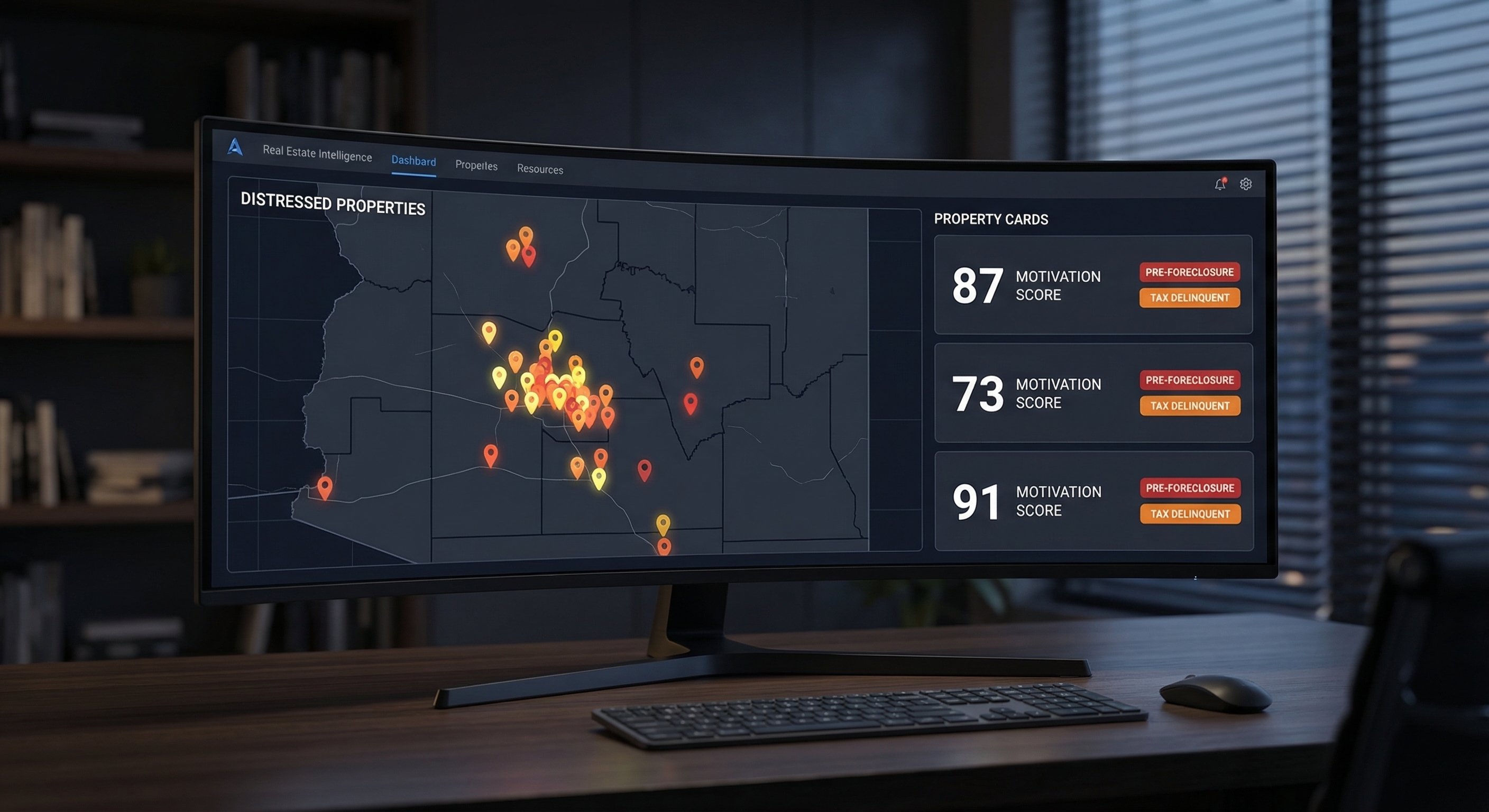
DistressIQ's motivation scoring surfaces multi-signal properties automatically. Instead of manually cross-referencing recorder data, assessor records, and code enforcement files, the stacked picture appears in one view. Browse Arizona pre-foreclosure leads free on DistressIQ.
Frequently Asked Questions
What is the pre-foreclosure process in Arizona?
Arizona uses a non-judicial foreclosure process governed by ARS 33-807 and related statutes under Title 33, Chapter 6. Foreclosures are administered by a trustee named in the deed of trust, not through the court system. The process begins when the trustee records a Notice of Trustee's Sale (NOTS) with the county recorder. Once recorded, the homeowner has 90 days to reinstate the loan by paying all past-due amounts, interest, fees, and trustee costs. If the default is not cured within that window, the trustee conducts a public auction. There is no judicial oversight of the sale, and the process can move from first missed payment to completed sale in under five months.
How long does pre-foreclosure last in Arizona?
The statutory minimum from NOTS recording to trustee's sale is 91 days per Arizona law. Borrowers are typically already 90 to 120 days delinquent before the servicer instructs the trustee to record the NOTS. The total timeline from first missed payment to auction can be as short as four to five months. By the time the NOTS appears in public records, the homeowner's remaining window is approximately three months. This is significantly faster than judicial foreclosure states like Florida, where the process can take 12 to 24 months.
Does Arizona have a redemption period after a trustee's sale?
No. Arizona does not provide a statutory right of redemption for residential properties sold through the trustee's sale process under a deed of trust. Once the auction is complete and the trustee's deed is delivered, the sale is final. The former owner has no legal mechanism to reclaim the property. This is a critical distinction from states like Minnesota or Michigan, where post-sale redemption periods can last six months or more. In Arizona, the pre-sale window is the only opportunity for the homeowner or an investor to negotiate a resolution.
Where can I find Arizona pre-foreclosure listings for free?
Each of Arizona's 15 counties maintains a recorder's office with public search capabilities. Maricopa County's portal at recorder.maricopa.gov allows searches by document type including "Notice of Trustee Sale," filtered by recording date. Pima County and other counties maintain separate portals with varying interfaces. The data is free, but cross-referencing multiple databases per lead to identify ownership and contact details requires significant time. DistressIQ aggregates county-direct pre-foreclosure data across Arizona counties and provides a free map view showing where activity is concentrated, with no credit card required.
Which Arizona counties produce the most pre-foreclosure leads?
Maricopa County (Phoenix metro) generates the highest NOTS filing volume by a wide margin, typically exceeding the other 14 counties combined. Pima County (Tucson) ranks second. Pinal County (Casa Grande corridor) and Yavapai County (Prescott) follow. Pima and Pinal often present lower investor competition than Maricopa while producing comparable deal quality, making them attractive for investors willing to work outside the Phoenix metro.
Can I contact a homeowner during Arizona's pre-foreclosure period?
Yes. No Arizona statute prohibits investor contact with homeowners during pre-foreclosure, provided outreach complies with general consumer protection laws and does not constitute fraud or misrepresentation. The 90-day reinstatement period is the most productive time to make contact, particularly during the first 30 days after the NOTS records, when the homeowner has the most options. Earlier outreach typically produces better results because the seller has more time to evaluate offers before the auction deadline compresses choices.
Sources: Arizona Revised Statutes Title 33, Chapter 6 (ARS 33-807); Arizona Department of Housing, Avoiding Foreclosure resources (housing.az.gov); Maricopa County Recorder public records.
The data behind this article
DistressIQ Monitors These Signals in Real Time
Pre-Foreclosures
NOD + NTS filings
Tax Delinquency
County treasurer records
Code Violations
Municipal inspection filings
Probate Filings
Superior Court records
Every lead is scored 0–100 for seller motivation based on signal type, duration, severity, and stacking. Nationwide coverage — every US county, updated daily.
Ready to find deals in your market?
See Live Distress Signals in Arizona
Stop calling dead leads. Every lead in DistressIQ is scored 0–100 for seller motivation, with verified contact info included. Browse the free tier to see what's active in your market right now.
Browse Free Leads — No Credit Card