How to Find Pre-Foreclosure Leads in Texas (2026 Investor Guide)
How to Find Pre-Foreclosure Leads in Texas (2026 Investor Guide)
TL;DR: Texas pre-foreclosure leads come from lis pendens filings at the county district court level — public records that most investors either don't know how to access or don't bother pulling directly. The best leads are properties with multiple simultaneous distress signals: lis pendens + tax delinquency, or lis pendens + code violations. Texas's non-judicial foreclosure process moves fast (21-day notice period), meaning pre-foreclosure windows are narrow. Investors who identify and contact owners early — before the lender posts the foreclosure notice — have a 3–5x higher conversion rate than those who work the list after it's been circulating for 30 days.

Texas is one of the best states in the country for distressed property investing — massive population, active foreclosure activity across hundreds of counties, and a legal framework that moves fast enough to create real opportunity. But "pre-foreclosure leads in Texas" is one of those terms that sounds simpler than it is. Most investors hear "pre-foreclosure" and picture a single list they can buy somewhere. The reality is more complicated — and more interesting.
What "Pre-Foreclosure" Actually Means in Texas
Texas uses a non-judicial foreclosure process, which is faster and more investor-hostile than most states realize. Here's what that means in practice:
When a borrower defaults, the lender doesn't need court approval to foreclose. The process works on a 20-day cure period followed by a 21-day posting notice. The foreclosure sale happens on the first Tuesday of the month at the county courthouse — publicly announced but not always well-publicized.
The lis pendens filing (Notice of Pendency of Action) is a different beast — it signals a lawsuit affecting the property, usually a judicial foreclosure action or other legal dispute. In Texas, judicial foreclosures are less common but do happen, particularly for home equity loans.
The pre-foreclosure window in Texas is real but narrow. Once a lender sends the Notice of Default, you typically have 60–90 days before the courthouse steps sale. That sounds like enough time, but by the time a list circulates through data aggregators, you've often burned through 30–40 of those days. Working county-direct data, rather than buying a stale compiled list, is how you get in front of owners when the window still matters.
Where Texas Pre-Foreclosure Data Lives
District Court Filings
Lis pendens in Texas are filed at the county district court level. Most large Texas counties have online portals — but the format, update frequency, and search interface vary wildly:
- Harris County (Houston): Harris County District Clerk (www.hcdistrictclerk.com) — filings generally searchable within 24–48 hours
- Dallas County: Dallas County Clerk records portal — searchable by name or legal description
- Tarrant County (Fort Worth): Tarrant County District Clerk — filings indexed by case type
- Bexar County (San Antonio): Bexar County District Clerk portal
- Travis County (Austin): Travis County Clerk — lis pendens filings logged under real property records
The challenge: each county has its own portal, its own search interface, and its own export format. Pulling lis pendens across even five Texas counties manually means logging into five different systems, running different queries, and normalizing the data yourself. That's before you've even looked at tax delinquency filings, which live at the county appraisal district.
Texas Foreclosure Posting Notices
One Texas-specific data source that investors often miss: Substitute Trustee's Sale notices. These are published in local newspapers of record 21 days before a courthouse steps sale — legally required for non-judicial foreclosures.
Many Texas counties have aggregated these through services like the Texas State Law Library, local bar association publications, or commercial data providers. These notices represent properties that are already in the foreclosure pipeline — the homeowner's window to cure is closing fast.

The Texas Counties Where Pre-Foreclosure Volume Is Highest
Not all Texas counties are created equal for distressed property investing. Concentration matters — because sourcing data manually from 254 Texas counties is a full-time job that doesn't leave room for actually working leads.
Tier 1 — Highest Volume (focus here first):
- Harris County (Houston metro) — The largest county in Texas. High foreclosure volume, diverse property types, strong investor market. Harris has active sub-markets in different price ranges — from Katy to Fifth Ward to Clear Lake.
- Dallas County (Dallas metro) — Dense urban and suburban inventory. Oak Cliff, Garland, Irving, and the older suburbs generate significant pre-foreclosure activity.
- Tarrant County (Fort Worth metro) — DFW expansion means rising home values, but also rising defaults in lower-income zip codes as adjustable-rate exposure worked through the market.
- Bexar County (San Antonio) — Military population creates unique distress patterns. PCS (Permanent Change of Station) relocations sometimes create motivated sellers who can't sell fast enough and fall behind.
- Travis County (Austin) — Higher price points mean bigger spreads, but also bigger competition for pre-foreclosure leads. Savvier investors and faster-moving sellers.
Tier 2 — Significant Volume:
- El Paso County, Hidalgo County (McAllen), Cameron County (Brownsville), Nueces County (Corpus Christi), Montgomery County (Houston suburbs)
The pattern across all Texas Tier 1 counties: pre-foreclosure volume spikes consistently in the first quarter (Q1) and third quarter (Q3) — correlating with tax filing season financial pressure and fall semester disruptions for families.
Free Weekly Alerts
See What's Distressed in Your Market
Get free weekly alerts — new distressed properties, motivation scores, and hot neighborhoods in your area. Addresses and contact info available inside DistressIQ.
Free forever · No credit card · Unsubscribe anytime
How to Prioritize Texas Pre-Foreclosure Leads (The Part Nobody Talks About)
Here's the frustration that experienced Texas investors know intimately: you can pull 500 lis pendens filings across Harris County in a month. Maybe 400 of those homeowners aren't going anywhere — they've got equity, they'll cure, they'll refinance, they'll fight the lender. The 100 who are actually motivated sellers have something else going on besides a legal filing.
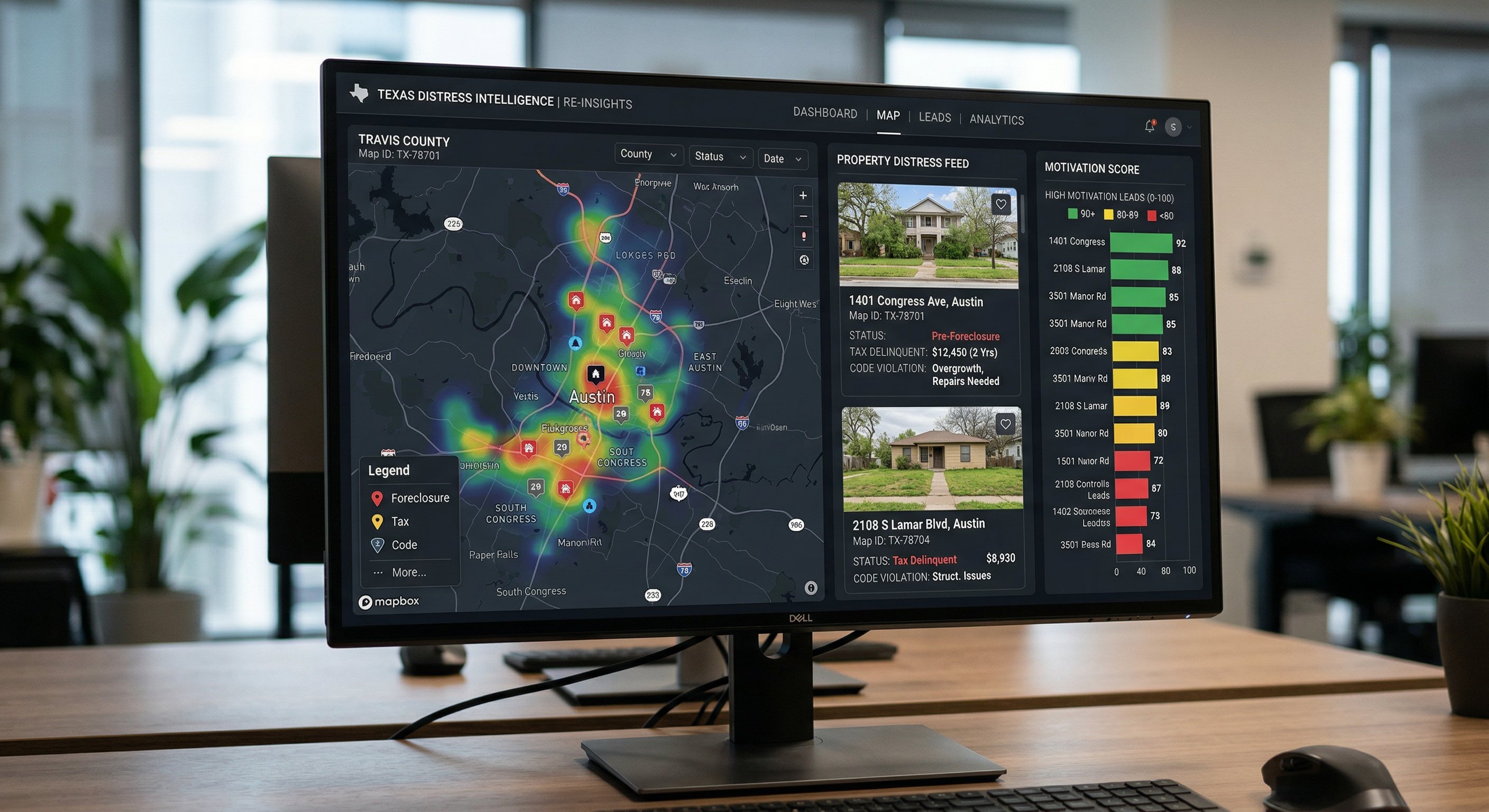
The differentiation isn't having the pre-foreclosure data. It's identifying which properties have co-occurring distress signals that predict actual motivation to sell:
- Lis pendens + tax delinquency: The owner faces two separate financial obligations converging — unpaid property taxes and a mortgage default. A direct sale can resolve both, which is why this combination converts dramatically better than lis pendens alone.
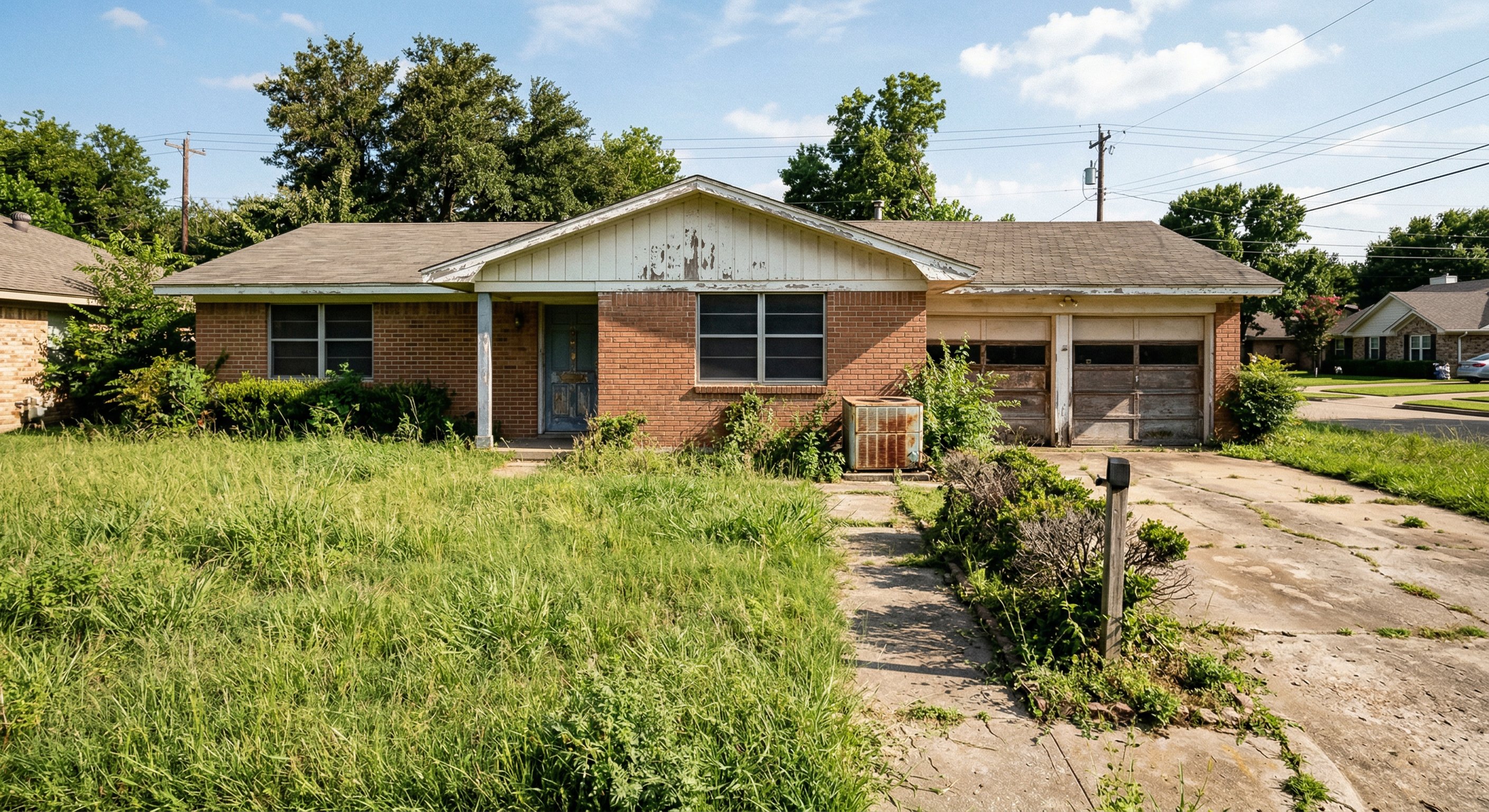
- Lis pendens + code violations: Indicates deferred maintenance — the owner is likely underwater emotionally and financially. They're not investing in the property, which means they're probably not planning to hold it.
- Lis pendens + probate activity: Estate situation layered on top of foreclosure is a particularly motivated scenario. Heirs often want a clean exit more than maximum value.
- Long-timeline lis pendens: A filing that's been sitting for 90+ days without resolution suggests the lender is pursuing judicial action — slower, but often indicates the owner has more equity and may be fighting it. Different approach, different script.
Most investors working generic pre-foreclosure lists don't segment by co-occurring signals. They mail the entire list, get a 0.3% response rate, and wonder why pre-foreclosure investing "doesn't work."
The Manual Research Reality
To do this manually across Texas's largest counties, here's what it actually looks like:
- Log into Harris County District Clerk — search lis pendens, export what you can (usually a PDF or CSV with minimal fields)
- Log into Harris County Appraisal District — cross-reference each address for tax delinquency status
- Log into the City of Houston's code enforcement database — check for active violation notices
- Pull the Substitute Trustee's Sale notices from the local newspaper archive for any that have advanced to posting
- Skip trace each remaining property to get owner contact info
- Manually score and sort by your own intuition about who to call first
Now repeat that for Dallas County, Tarrant County, Bexar County, and Travis County. Each with different portals, different search interfaces, different data formats.
That's the process. It works. Investors who do it manually develop real skill. But it's also 25–35 hours per week just on data, before you've made a single phone call.
If you're doing this at any scale — running a team, working multiple markets, or covering more than 2–3 counties — manual data sourcing becomes the bottleneck that caps your deal volume.
Platforms like DistressIQ exist to solve exactly this: county-direct data across 3,200+ counties, updated daily, with pre-foreclosure properties surfaced alongside their co-occurring distress signals and ranked by motivation score (0–100). You browse the map free — no commitment — and only pay when you want to unlock owner contact info. Worth checking how many active pre-foreclosure leads are showing in your target Texas markets before you build a whole manual process around something that's already solved.
How to Contact Texas Pre-Foreclosure Owners
The timing and messaging are different from other lead types.
Timing: Contact early — within the first 30 days of the lis pendens filing if possible. After 60 days, you're competing with 10–20 other investors who've bought the same list.
Channel: Direct mail plus phone. In Texas, most pre-foreclosure owners are not yet in "I need to sell" mode — they're still hoping the situation resolves. The first touch is about building awareness that an option exists, not closing on the first call.
Messaging angle: Lead with empathy, not a lowball offer. Something like: "I know this situation is stressful — I've bought properties from owners in similar situations and I'm not here to take advantage. I'd rather give you a fair offer and get you out cleanly than see the bank take it."
What to avoid: Foreclosure rescue framing. Texas has specific regulations around foreclosure rescue schemes, and anything that sounds like you're promising to stop the foreclosure (rather than buy the property) can create legal exposure.
Texas Pre-Foreclosure Investing: The Numbers That Matter
A few real benchmarks to calibrate expectations:
- Average cure rate: Roughly 60–70% of lis pendens filings in Texas cure before reaching courthouse sale. You're working the 30–40% who don't — and you want to identify them before the situation becomes fully public.
- Response rate by contact method: Handwritten mail runs 3–5% response in pre-foreclosure; typed mail runs 0.5–2%; cold calls to skip-traced numbers run 8–15% answer rate with 2–5% conversion to conversation.
- Time to close: If an owner is motivated, a Texas pre-foreclosure deal can close in 10–21 days with a cash buyer. The legal framework supports fast closings.
- Spread potential: Pre-foreclosure deals in Texas Tier 2/3 markets (El Paso, Amarillo, Lubbock) often have less competition and better spreads than DFW or Houston. Don't ignore secondary markets.
Frequently Asked Questions
Q: Is pre-foreclosure data public in Texas?
Yes. Lis pendens filings are public records at the county district court level. Substitute Trustee's Sale notices are published in newspapers of record as required by law. Both are accessible, but sourcing them across multiple counties requires navigating different portals and formats.
Q: How fast does Texas foreclosure move?
Very fast compared to judicial foreclosure states. From Notice of Default to courthouse sale, Texas non-judicial foreclosure runs roughly 60–90 days total. The cure window is 20 days from notice. This means pre-foreclosure windows are narrow — getting in front of owners early matters more in Texas than in states like New York or New Jersey where the process drags for years.
Q: What's the difference between lis pendens and pre-foreclosure in Texas?
In Texas, lis pendens is a specific filing — it's a legal notice attached to the property title indicating an active lawsuit. It's used for judicial foreclosures (less common) and other legal disputes. "Pre-foreclosure" more broadly includes properties in any stage before the courthouse sale — including those with Substitute Trustee's Sale notices posted but not yet sold. Both are valuable; a lis pendens filing often gives you a longer runway than a posted sale notice.
Q: Should I focus on one Texas county or multiple?
Start with one. Harris County alone has enough volume to keep a solo investor busy. Spreading across Dallas + Tarrant + Harris before you have a functional system for one county is how investors burn time and miss deals. Master the workflow in one market, then expand.
Q: How do I verify ownership before contacting a pre-foreclosure owner?
The county appraisal district records show current owner of record. In Texas, most counties (HCAD for Harris, DCAD for Dallas, TCAD for Travis) have free online search. Always verify the name matches before you send mail — pre-foreclosure properties sometimes have complex title situations (inheritance, LLC ownership, recent transfers) that change the outreach approach entirely.
DistressIQ covers pre-foreclosure leads across 3,200+ counties for free. No commitment until you unlock contact info.
The data behind this article
DistressIQ Monitors These Signals in Real Time
Pre-Foreclosures
NOD + NTS filings
Tax Delinquency
County treasurer records
Code Violations
Municipal inspection filings
Probate Filings
Superior Court records
Every lead is scored 0–100 for seller motivation based on signal type, duration, severity, and stacking. Nationwide coverage — every US county, updated daily.
Ready to find deals in your market?
See Live Distress Signals in Texas
Stop calling dead leads. Every lead in DistressIQ is scored 0–100 for seller motivation, with verified contact info included. Browse the free tier to see what's active in your market right now.
Browse Free Leads — No Credit Card