How to Find Distressed Properties in 2026 (The Investor's Data Guide)
How to Find Distressed Properties in 2026 (The Investor's Data Guide)
TL;DR: The most accurate way to find distressed properties is cross-referencing multiple county-sourced signals, including tax delinquency, lis pendens filings, probate cases, divorce filings, and code violations. Single-signal lists convert at 1-2%. Properties stacking three or more simultaneous signals convert at 8-12%. This guide covers the five primary signal categories, where the data lives, and why timing and signal quality matter more than list volume.
Seventy-three percent of properties on a typical tax delinquent list will never sell to an investor. The owner catches up on taxes, enters a payment plan, or simply lets the lien sit. Meanwhile, a property that shows tax delinquency, a pending lawsuit, and active code violations tells a completely different story: an owner who has stopped managing the asset entirely. That distinction is the difference between 200 calls and two callbacks versus 40 calls and six contracts.
The investors who consistently find distressed properties before competitors do not buy bigger lists. They build better signal stacks.
What Actually Defines a Distressed Property
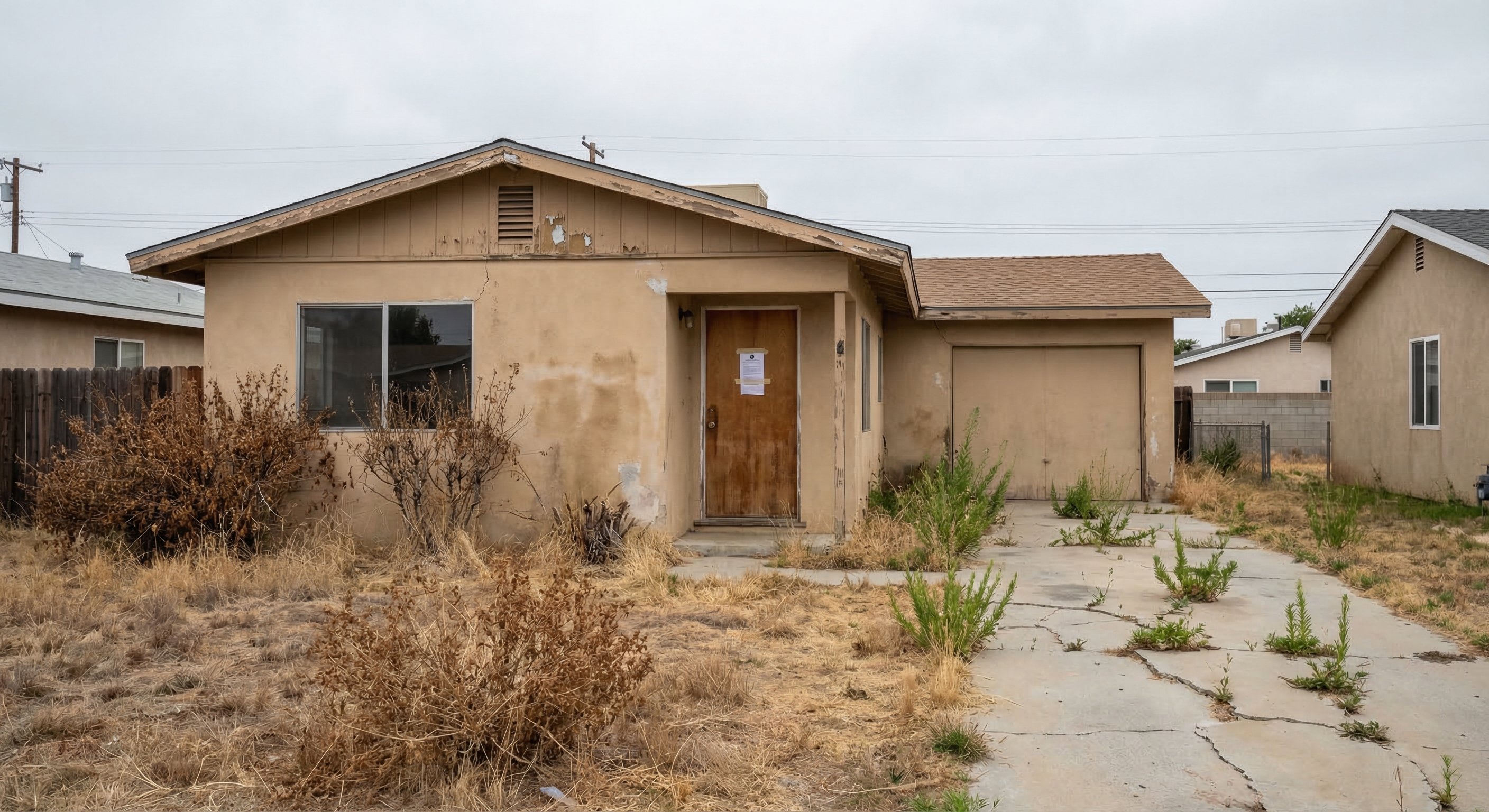
A distressed property is not a house that looks rough. It is a property where a documented financial, legal, or physical event has created measurable pressure on the owner to sell, often below market value. The event is on record at a county office. Distress is a fact in a database, not an impression from the curb.
Appearance is a lagging indicator. A vacant-looking house with tall grass might be a rental between tenants. A well-maintained house with a manicured lawn might have an owner three months behind on mortgage payments and a lis pendens filed yesterday. Visual condition and ownership distress are separate problems. The data tells you which one is real.
The five primary distress signal categories that investors should track:
Tax delinquency. The owner has stopped paying property taxes. County treasurers and assessors maintain these records. Tax delinquency is one of the earliest indicators of financial stress because property taxes are often the first bill an owner stops paying when money gets tight.
Lis pendens and foreclosure filings. A lender has initiated the foreclosure process. In judicial foreclosure states, this appears as a lis pendens filed at the county recorder. In non-judicial states, it shows as a notice of default. Either way, the clock is running toward auction.
Probate. The property is part of a deceased owner's estate. Heirs frequently want to liquidate rather than manage an inherited asset, especially when they live out of state. Probate filings are public record through the county probate court.
Divorce filings. Marital dissolution often requires selling jointly held real estate. Both parties may want a fast, clean transaction. Civil court filings at the county level capture these cases.
Code violations. Municipal citations for property condition, tall grass, structural issues, or nuisance conditions. These indicate deferred maintenance and sometimes vacancy, though code violations alone are a weaker signal than the other four categories.
Each signal tells a partial story. The properties worth pursuing are the ones where multiple signals overlap.
Where the Data Lives: Public Record Sources
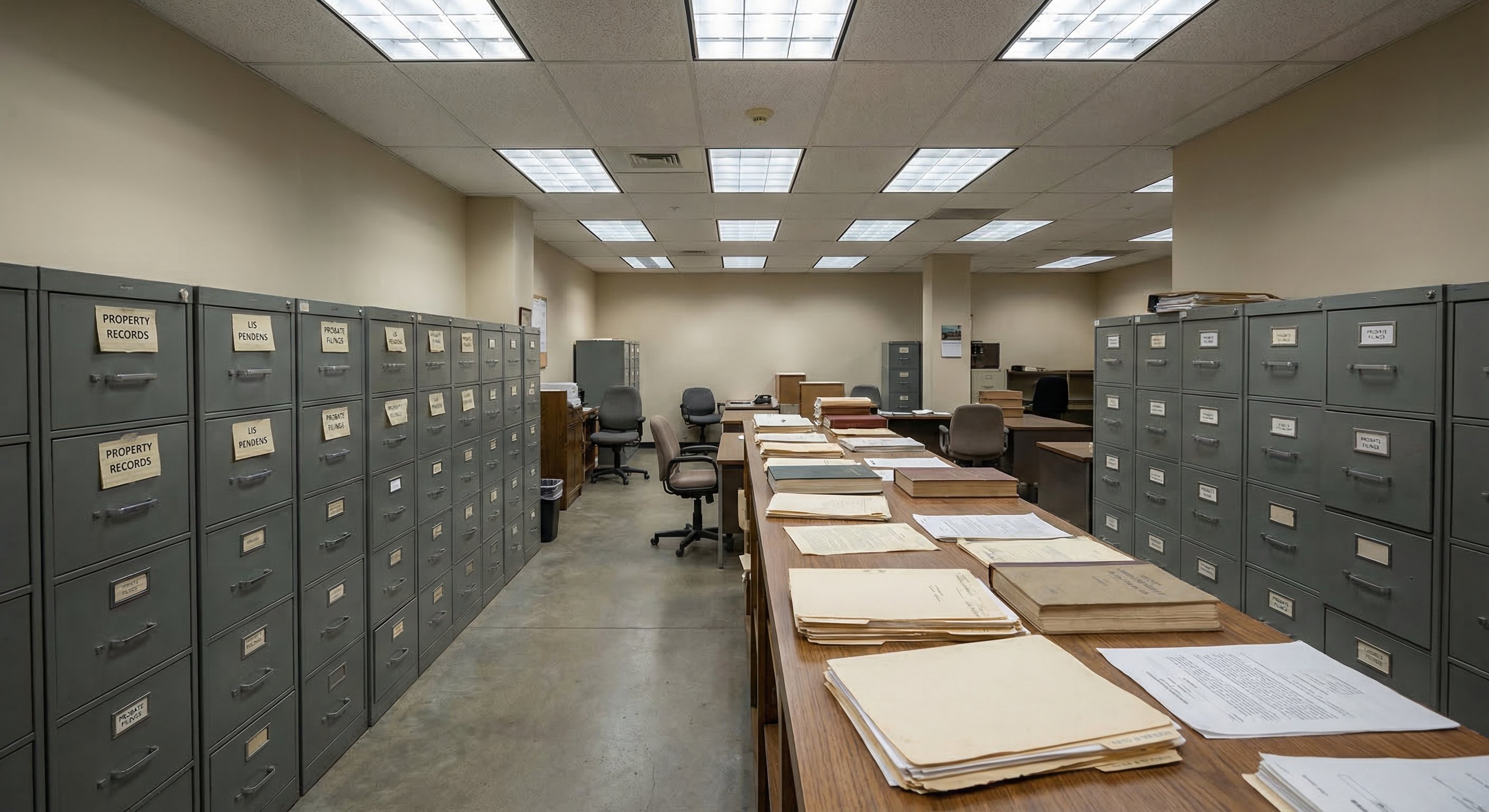
Every distress signal listed above originates from a government office. County recorders hold lis pendens filings, deed transfers, and lien records. County treasurers and assessors track tax delinquency and property valuations. Probate court dockets list estates with real property. Civil court filings capture divorce cases and partition actions.
These records are public. The question is never whether the data exists. It is how quickly and completely an investor can collect it, cross-reference it, and act on it before competitors do the same thing.
Manual courthouse research works, but the cost is time. Pulling tax delinquency records, pre-foreclosure filings, and probate cases for a single mid-size county takes two to four hours per week. Many county websites limit search results to 100 records per query, use different data formats across offices, and experience frequent downtime.
Data platforms like PropStream and ListSource aggregate this information. The tradeoff is freshness. Most batch-update on weekly or monthly cycles. A notice of default filed on a Monday may not appear in a third-party platform until weeks later. By then, every investor buying that vendor's list has the same data.
Signal Stacking: Why Multiple Indicators Change Everything
Single-signal lists have a conversion rate of roughly 1-2%. Call 100 tax delinquent owners, get one or two conversations that lead anywhere. That ratio holds across most signal types when used in isolation.
Properties with three or more simultaneous distress signals convert at 8-12%. A property that is tax delinquent, has a lis pendens filed, and shows active code violations is owned by someone who has stopped engaging with the asset on multiple fronts. The probability that this owner wants to talk about selling is dramatically higher than for an owner who missed one tax payment.
Signal stacking also solves the volume problem. Instead of working 500 single-signal leads, an investor can work 50 high-signal leads and get better results with a fraction of the outreach.
Free Weekly Alerts
See What's Distressed in Your Market
Get free weekly alerts — new distressed properties, motivation scores, and hot neighborhoods in your area. Addresses and contact info available inside DistressIQ.
Free forever · No credit card · Unsubscribe anytime
The Timing Problem: Why Day 3 Beats Day 45
Foreclosure timelines are public and finite. Once a notice of default or lis pendens is filed, the homeowner has a defined window before auction: 90 days in some states, over two years in others.
Timing determines who gets the deal. The investor who contacts an owner on day three after a notice of default is having a conversation no one else has started. The investor who finds that same filing six weeks later is the fifteenth person to call. By day 45, the owner has stopped answering unknown numbers.
Platforms that batch-update weekly or monthly deliver leads that are already stale. County-direct data, refreshed daily, surfaces filings within hours of recording. In competitive markets, that difference is the difference between a signed contract and a voicemail that never gets returned. DistressIQ tracks signals daily across all 3,200-plus US counties, pulling directly from county sources.
Driving for Dollars: What It Gets Right and What It Misses
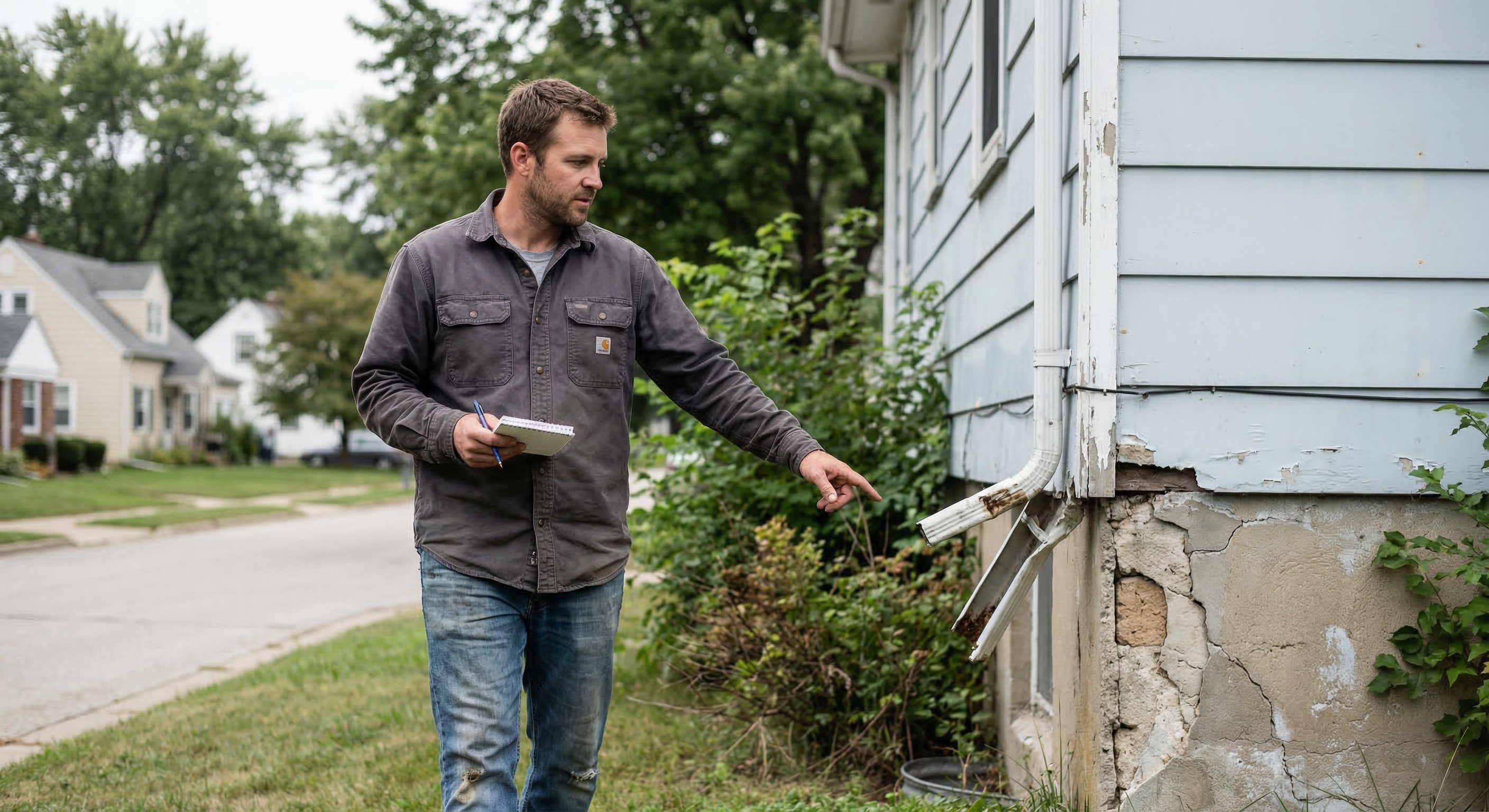
The "driving for dollars" method means an investor drives through target neighborhoods looking for visible signs of distress: overgrown lawns, broken windows, mail piling up, utility disconnection notices.
This method is valid for identifying vacant or neglected properties. It costs nothing beyond gas and time, and in tight geographic markets it can surface leads that data has not yet captured.
The critical limitation is that visual inspection does not confirm ownership distress. A house that looks abandoned might be a rental between tenants. The property might be under active estate settlement already. Without cross-referencing against public records, driving for dollars produces addresses that need further investigation, not motivated sellers.
The smartest approach combines both methods. Drive to identify candidates, then check county records for tax delinquency, lis pendens filings, probate status, and code violations before making contact.
Manual Research Versus Data Platforms: The Honest Tradeoffs
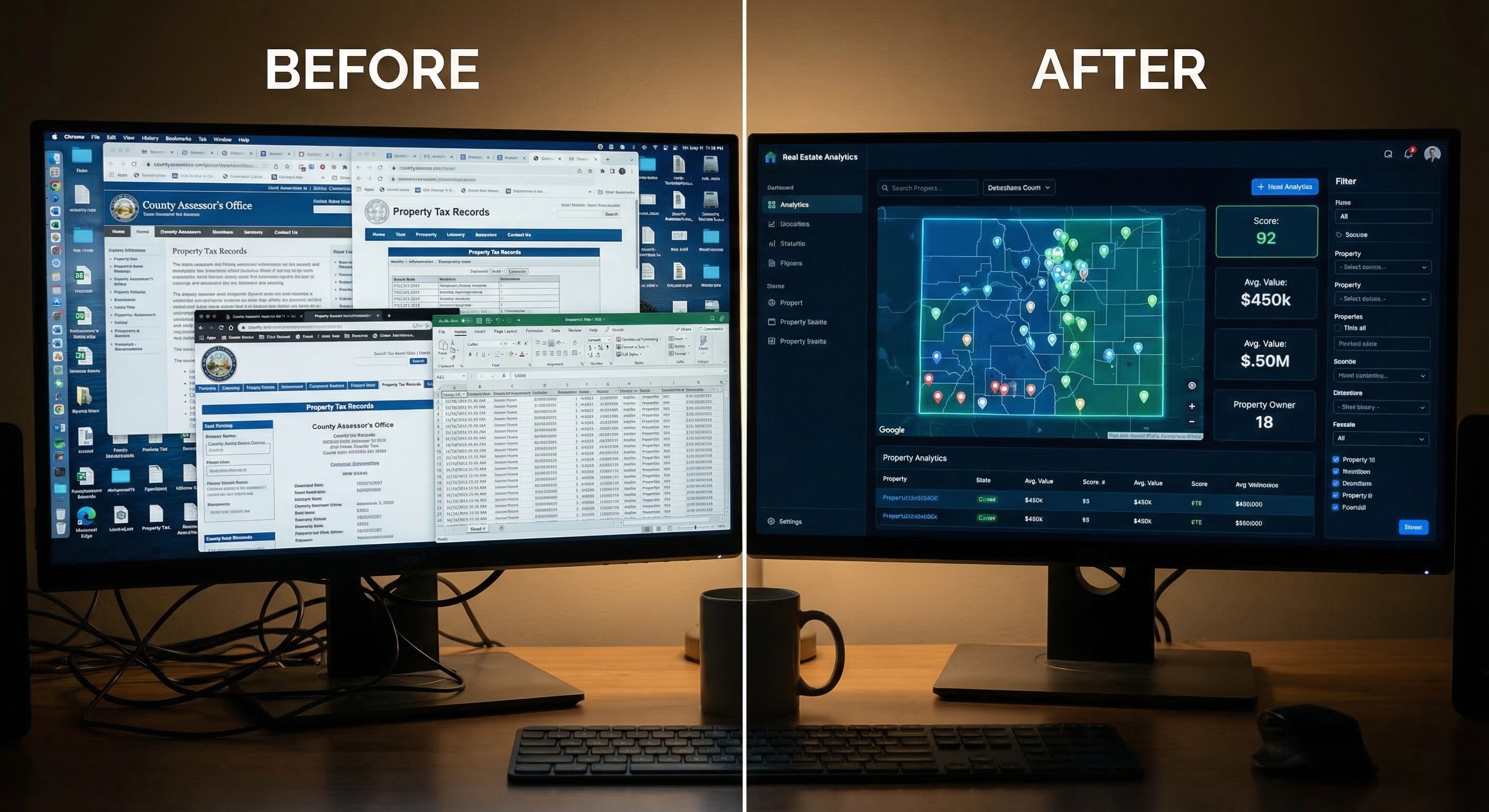
Courthouse research is free. The cost is labor hours and opportunity cost. An investor spending four hours per county per week on manual research is not spending those hours making calls, negotiating deals, or managing renovations. For someone working one or two counties, manual research is viable. For multi-state scale, it becomes unsustainable.
Data platforms solve the labor problem but introduce freshness issues. Aggregated data varies wildly in currency. Some vendors update weekly, others monthly, a few quarterly. An investor buying a list has no way to verify when a specific record was last refreshed without checking the county source directly.
The ideal system pulls county-direct data daily, cross-references across signal types automatically, and surfaces leads ranked by signal strength.
FAQ
Q: What is the most reliable way to find distressed properties?
The most reliable method is cross-referencing multiple county-sourced distress signals rather than relying on any single list. Tax delinquency data, lis pendens filings, probate cases, divorce filings, and code violation records each tell part of the story. Properties appearing in three or more of these categories simultaneously have dramatically higher conversion rates than single-signal leads. Public records are the foundation, but signal stacking is what turns raw data into actionable leads.
Q: How do I find distressed properties before other investors?
Speed and freshness are the primary edges. County-direct data sourced daily gives investors access to filings before those records flow into third-party platforms that update weekly or monthly. The investor who contacts an owner within days of a notice of default filing is having the first conversation, not the fifteenth. Building a sourcing workflow that checks for new filings daily, rather than waiting for batch-updated lists, is the single most impactful timing advantage available.
Q: Is driving for dollars still a viable strategy?
Yes, with caveats. Driving for dollars is useful for identifying vacant or neglected properties, especially in tight geographic markets where an investor has local knowledge. However, visual inspection alone cannot confirm ownership distress. Every address identified through driving should be cross-referenced against county records for tax delinquency, pending litigation, and code violations before outreach begins.
Q: What is signal stacking and why does it matter?
Signal stacking is the practice of cross-referencing multiple distress indicators for the same property. Instead of working a single tax delinquent list, an investor pulls tax data, pre-foreclosure filings, code violations, and probate records, then identifies properties appearing in multiple datasets. Single-signal leads convert at roughly 1-2%. Properties with three or more overlapping signals convert at 8-12%. Signal stacking reduces the total number of leads an investor needs to contact while dramatically increasing the quality of each conversation.
Q: How fresh does distressed property data need to be?
Freshness is critical for pre-foreclosure and lis pendens leads specifically. Once a notice of default is filed, competing investors begin contacting the owner immediately. Data that is 30 to 60 days old has already been worked by multiple buyers. For tax delinquency and probate leads, freshness matters less because those situations develop over longer timelines. As a general rule, pre-foreclosure data should be refreshed daily to weekly, while other signal types can be refreshed monthly without significant loss of opportunity.
Q: Are distressed property lists from data platforms accurate?
Accuracy varies significantly by vendor and record type. Most platforms aggregate data from county sources, but the refresh cycle determines how current the information is. Weekly or monthly batch updates mean some records are stale by the time they reach the investor. The most accurate approach is county-direct data sourced and refreshed daily. Investors should always verify a vendor's update frequency before relying on their data.
Q: Is it ethical to contact owners of distressed properties?
Yes, when approached with honesty and genuine respect for the owner's situation. Many homeowners facing foreclosure, tax liens, or inherited property they cannot maintain genuinely need options. A fair cash offer can help an owner avoid foreclosure damage to their credit, liquidate an inherited property they do not want to manage, or resolve an financial burden they cannot sustain. The standard is transparency about who the investor is and what the offer represents. Investors who lead with honesty close more deals than those who do not.
Ready to find distressed properties with stacked signals and daily freshness? Browse the map free at distressiq.ai and see every active signal in your target county before the competition does.
Sources
- County Recorder's Office public records (lis pendens, deed filings, lien records)
- County Treasurer/Assessor tax delinquency databases
- National Association of Realtors, "Distressed Property Sales Data" (2025)
The data behind this article
DistressIQ Monitors These Signals in Real Time
Pre-Foreclosures
NOD + NTS filings
Tax Delinquency
County treasurer records
Code Violations
Municipal inspection filings
Probate Filings
Superior Court records
Every lead is scored 0–100 for seller motivation based on signal type, duration, severity, and stacking. Nationwide coverage — every US county, updated daily.
Ready to find deals in your market?
See Live Distress Signals in Your County
Stop calling dead leads. Every lead in DistressIQ is scored 0–100 for seller motivation, with verified contact info included. Browse the free tier to see what's active in your market right now.
Browse Free Leads — No Credit Card