Code Violation Leads in Real Estate: The Signal Most Investors Overlook
Code Violation Leads in Real Estate: The Signal Most Investors Overlook
Most investors hunting motivated sellers have the same short list: pre-foreclosures, tax delinquencies, probate. Those are solid. But there's a fourth signal that shows up in almost every high-motivation deal — and most investors walk right past it.
Code violations.
Not because investors don't know they exist. Because they don't understand what they mean — and they have no efficient way to find them at scale.
TL;DR: Code violation properties are often owned by landlords or homeowners who can no longer afford repairs, are out-of-state, or are mentally and financially done with the property. Municipal violations create a ticking clock — the owner faces fines, forced remediation, or condemnation. When stacked with other signals like tax delinquency or lis pendens, code violations identify some of the highest-motivation sellers in any market. DistressIQ tracks municipal code violations across US counties alongside 19+ other distress signals, so you can spot the overlap without manually searching city inspection portals.
What Code Violations Actually Signal
A code violation notice means the city or county has determined a property falls below minimum standards — and given the owner a deadline to fix it.
That sounds like a property problem. But it's usually a people problem.
The owners who ignore code violations fall into predictable categories:
Absentee owners who don't know (or pretend not to). Out-of-state landlords with aging rentals discover violations when fines stack up, not when the notice arrives. By the time they're delinquent on fines, they've often already decided the property isn't worth managing from 1,500 miles away.
Owners who can't afford the fix. A roof violation that costs $18,000 to repair doesn't just cause code issues — it means the owner can't sell on the MLS (no buyer's lender will finance it), can't rent it legally, and can't absorb the carrying costs while it sits. That's a motivated seller in slow motion.
Elderly owners on fixed income. Deferred maintenance accumulates for years. What started as a gutter repair becomes structural, then code violations, then code-plus-tax-delinquent. These owners often haven't had a realistic path to remediation for years and have been dreading this conversation.
Landlords after a bad tenant exit. A property trashed by tenants often has health, sanitation, and structural violations. The landlord is exhausted, angry, and calculating whether the repair cost exceeds their equity. Many decide it does.
In all four scenarios, the investor isn't exploiting a desperate person — they're offering a realistic exit from a situation the owner hasn't been able to solve through conventional means.
Which Code Violations Actually Matter (And Which Don't)
Not all code violations signal the same thing. A missing building permit for a deck addition is different from structural condemnation. Know the hierarchy before you start calling.
High-motivation violations:
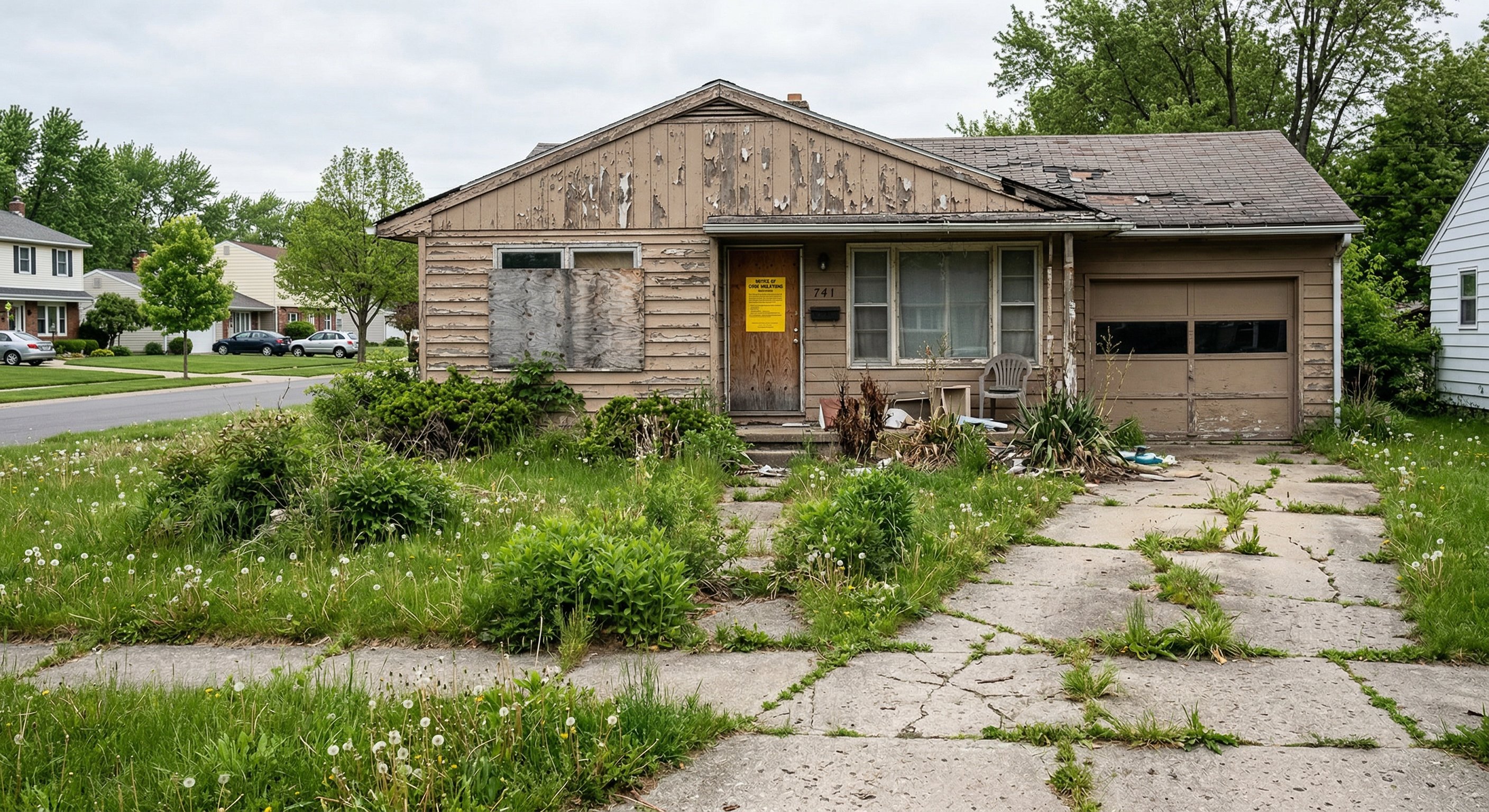
- Structural deficiencies — foundation issues, roof failure, compromised load-bearing walls. These are expensive, un-financeable, and they don't improve with time. Owners of structurally compromised properties are often stuck — too expensive to fix, too broken to sell retail.
- Habitability violations — substandard housing classifications, lack of functional utilities, health and sanitation notices. These come with mandatory tenant relocation orders in many cities, which means the owner loses rental income immediately while carrying the property.
- Vacant and abandoned notices — cities actively mark and fine vacant properties. An owner who's let a property sit vacant long enough to get officially flagged has usually already decided they're not coming back.
- Fire safety violations on rentals — egress, sprinkler, detector failures in rental properties trigger immediate city involvement. Landlords face occupancy suspension. That's a clock running.
- Repeat violations — a single code notice might be nothing. Three separate violations across 18 months is a different story. Repeat noncompliance tells you the owner is financially or emotionally unable to engage.
Lower-priority violations:
- Overgrown vegetation (first notice) — often resolved quickly, low motivation signal alone
- Minor fence/setback issues — usually bureaucratic, not financial
- Permit issues on recent construction — more often builders and flippers than distressed owners
The rule: severity plus recency plus other signals determines motivation. A 90-day-old structural violation on a property that's also tax delinquent and has an absentee owner out of state? That's a high-priority call. A lawn notice on an owner-occupied property with no other signals? Probably not worth your time.
Why Code Violations Alone Are a Weak List
Here's where most investors get this wrong.
Some lead providers sell pure code violation lists — properties with any open violation. That sounds useful, but it produces a lot of noise. Owners who are actively fixing violations aren't motivated sellers. Landlords who just received a first notice will often resolve it. Even serious violations sometimes get handled.
The signal sharpens dramatically when you stack it.
A property with an open structural violation becomes a completely different conversation when the owner is also:
- 18+ months behind on property taxes
- Named in a lis pendens (active foreclosure)
- Listed as an absentee owner in a different state
- On a repeat violation list (3+ notices in 24 months)
The overlap of these signals — a structural violation and tax delinquency and absentee ownership — narrows the list from hundreds of properties to dozens. And those dozens convert at rates that make your per-contact economics look completely different from generic list-buying.
This is why treating code violations as a standalone source rarely produces results. The violations are context — a layer of evidence that confirms what other signals already suggest. The investor who understands this stacks the signals and works the overlap. The investor who doesn't buys a bulk list and wonders why nobody calls back.

Free Weekly Alerts
See What's Distressed in Your Market
Get free weekly alerts — new distressed properties, motivation scores, and hot neighborhoods in your area. Addresses and contact info available inside DistressIQ.
Free forever · No credit card · Unsubscribe anytime
How to Find Code Violation Properties at Scale
The manual approach:
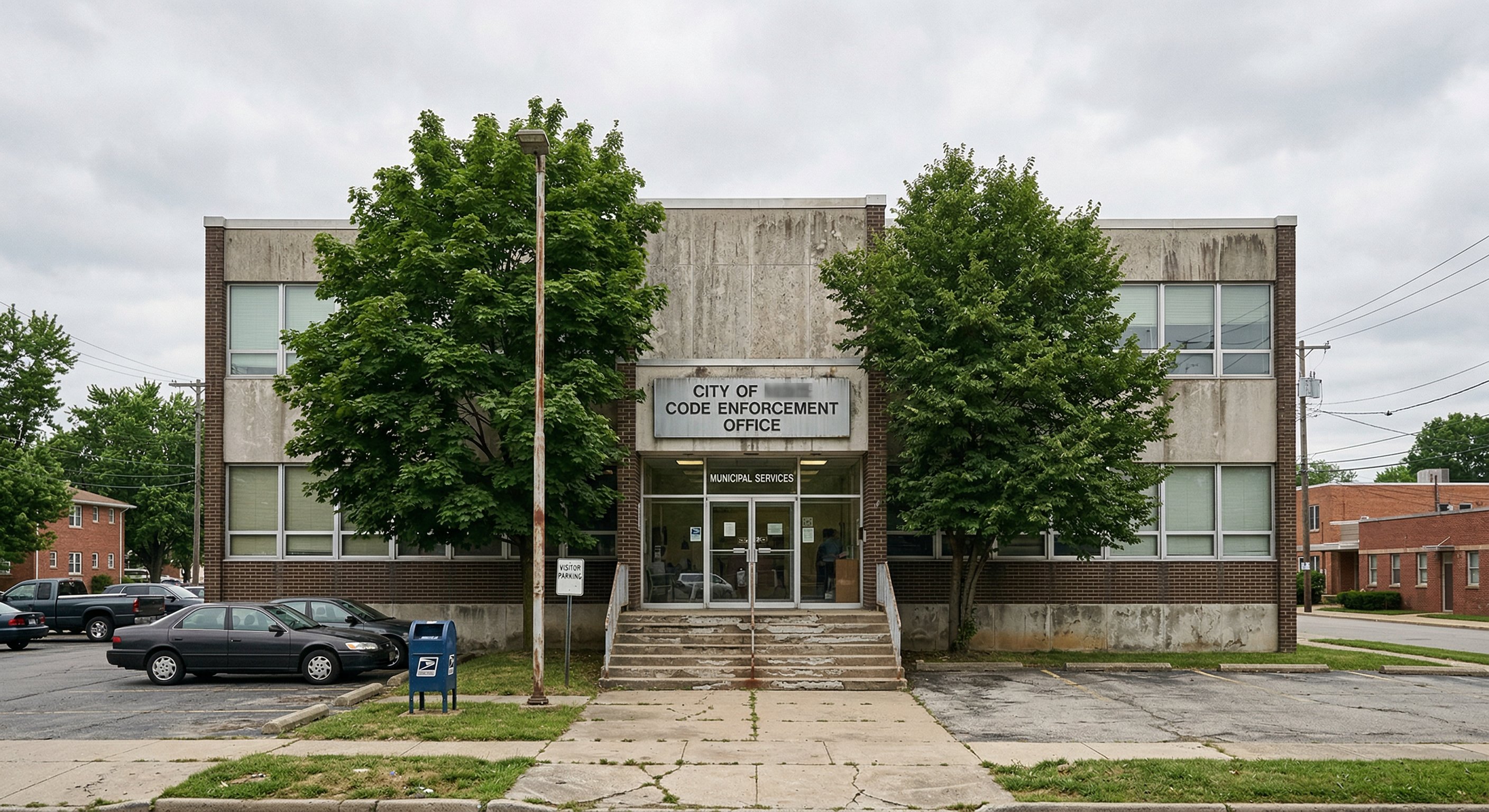
Most code violation data is technically public — but finding it requires working city by city. Some cities post active violations on their planning department websites. Some publish inspection reports in PDF format. Others only provide them through FOIA requests. There's no national standard.
The manual workflow looks like this: Search your target city's code enforcement database (if it has one). Download the violation list (if it's downloadable). Cross-reference with the county assessor to get owner names and mailing addresses. Skip-trace the owners to get current contact info. Repeat for every city in your market. This typically takes a full workday to cover one mid-sized city — before you've made a single call.
If you're working multiple markets? That's weeks of data work to get a usable list that's already aging by the time you use it.
The efficient approach:
DistressIQ aggregates code violation data directly from county and municipal sources across every US county — updated daily. Instead of spending a week building a list for one city, you open a map, filter by code violations, layer on your other signal criteria (tax delinquency, absentee ownership, lis pendens), and get a working list in minutes. Every property shows its motivation score — a 0-100 ranking that incorporates the number, type, and recency of signals.
The properties where code violations overlap with other high-motivation signals rise to the top automatically. You're not manually cross-referencing spreadsheets — you're calling the 20 highest-scored properties first, with context on exactly what each one is dealing with.
How to Approach Code Violation Sellers
The outreach strategy matters as much as the list.
Code violation owners aren't always distressed in the traditional sense — some are frustrated, some are overwhelmed, and some are embarrassed about their property's condition. The investor who opens with "I see you have code violations" will get hung up on. The investor who opens with "I help property owners in situations where the repairs don't make financial sense" will get a conversation.
A few principles that work in this context:
Lead with solutions, not problems. The owner knows about their violations — the city has been sending notices. You don't need to remind them. Open with your ability to buy the property as-is, handle the remediation yourself, and close quickly without them lifting a hammer.
Don't underestimate the relief factor. For elderly owners or out-of-state landlords, an offer to take the property off their hands — violations, deferred maintenance, and all — is a genuinely welcome call. Many of these owners have been dreading what to do with this property for years. You're giving them an answer.
Respect the timeline. Code violations create urgency, but the owner may not be ready to sell immediately. Multiple touches over 60-90 days outperform a single aggressive call. These owners need to process a decision that often involves ending a chapter of their life — whether that's letting go of a rental investment that stopped working, or selling a property that became unmanageable. Give them space to arrive at the decision themselves.
See distressed properties with open code violations, stacked against tax delinquency, absentee ownership, and active foreclosure filings — scored by motivation and mapped across every US county. Browse code violation leads free on DistressIQ.

The Competitive Angle: Code Violations as a Market Edge
Most investors in your market are working the same pre-foreclosure list the county published last month. The same tax delinquent registry that 40 other wholesalers downloaded last quarter.
Code violation data is different. Most investors don't work it systematically because it requires city-level sourcing and manual cross-referencing — work they're not set up to do. That means the properties with high-severity violations, especially those overlapping with other signals, are relatively un-contacted.
Less competition on a property means more time to negotiate, more seller patience, and less pressure to overpay to win the deal. For investors working in saturated markets — any major metro where everyone's running the same lists — code violations are one of the few remaining angles that aren't yet crowded.
They won't stay that way. Adopt this signal while the competition hasn't figured it out yet.
Frequently Asked Questions
Q: Are code violation records public information?
Yes. Municipal code violation records are public in virtually every US jurisdiction. Cities are required to document code enforcement activity, and those records are accessible through planning departments, code enforcement offices, and public records requests. Some cities post them online; others require requests. Aggregated data services compile and normalize these records across jurisdictions so you don't have to work city-by-city.
Q: Which states have the most code violation activity?
Older housing stock cities typically generate the highest volume: Cleveland, Detroit, Baltimore, Philadelphia, St. Louis, and Newark consistently rank high for code enforcement activity relative to their housing size. Sun Belt metros with rapid growth and older rental stock — Atlanta, Dallas, Houston — also generate significant volume. However, code violation data is useful in any market where you can stack it against other distress signals.
Q: How often is code violation data updated?
City-generated code violation data varies — some municipalities update their systems daily when new notices are filed; others batch weekly. When using an aggregated data provider, check their data refresh frequency. DistressIQ updates county and municipal data daily, so you're working from current enforcement records rather than a stale quarterly download.
Q: Can I buy a property with open code violations?
Yes, but understand the implications before contracting. Open violations transfer with the property in most jurisdictions — meaning you (as the new owner) inherit the responsibility to remediate. Factor the remediation cost into your offer. In some cities, there are also "nuisance property" designations that include liens on the title that must be cleared at closing. Always run a title search and know what you're acquiring before signing.
Q: How do I find code violation properties that are also tax delinquent?
Manual cross-referencing between a municipal code enforcement database and a county tax delinquency list is doable but time-intensive — typically a half-day per county per market. DistressIQ combines both signals (plus 18+ others) into a single map view with a stacked motivation score, so you can filter for properties carrying both signals in seconds. The overlap list is typically much smaller than either list alone — and significantly more motivated.
The data behind this article
DistressIQ Monitors These Signals in Real Time
Pre-Foreclosures
NOD + NTS filings
Tax Delinquency
County treasurer records
Code Violations
Municipal inspection filings
Probate Filings
Superior Court records
Every lead is scored 0–100 for seller motivation based on signal type, duration, severity, and stacking. Nationwide coverage — every US county, updated daily.
Ready to find deals in your market?
See Live Distress Signals in Your County
Stop calling dead leads. Every lead in DistressIQ is scored 0–100 for seller motivation, with verified contact info included. Browse the free tier to see what's active in your market right now.
Browse Free Leads — No Credit Card