Absentee Owner List California: Where the Best Opportunities Actually Are

Absentee Owner List California: Where the Best Opportunities Actually Are
TL;DR: California absentee owners are uniquely motivated sellers because Proposition 13 has locked many of them into decades of artificially low property taxes — creating landlords who've held on far longer than they would have otherwise. When they finally decide to sell, the equity is massive and the properties are often underimproved. The best markets are the Inland Empire, South LA, East Bay, Sacramento Valley, and Central Valley metros. County assessor records and stacked distress signals are the most reliable way to find them.

California has more absentee owners than almost any state in the country — and they behave differently than absentee owners everywhere else. Understanding WHY requires a short history lesson that directly impacts how you source and approach these leads.
In 1978, California voters passed Proposition 13. It capped property tax increases at 2% per year from the year of purchase. The effect compounded over decades: a landlord who bought a Riverside rental in 1985 for $110,000 is still being taxed on an assessed value close to that original purchase price, not on today's $450,000 market value. Their annual tax bill might be $1,400 while a neighboring property that sold last year pays $5,600 on the same square footage.
That's a powerful incentive to hold — even when the property is problem-ridden, vacant, or racking up code violations. And that's exactly what creates the opportunity.
Why California Absentee Owners Are Different
In most states, absentee owners are motivated by the math of distance: managing a rental from 1,200 miles away is hard, expensive, and stressful. California has that dynamic too — the post-COVID migration wave sent hundreds of thousands of people to Texas, Nevada, Arizona, and Florida, and many of them kept their California rentals rather than selling into a hot market.
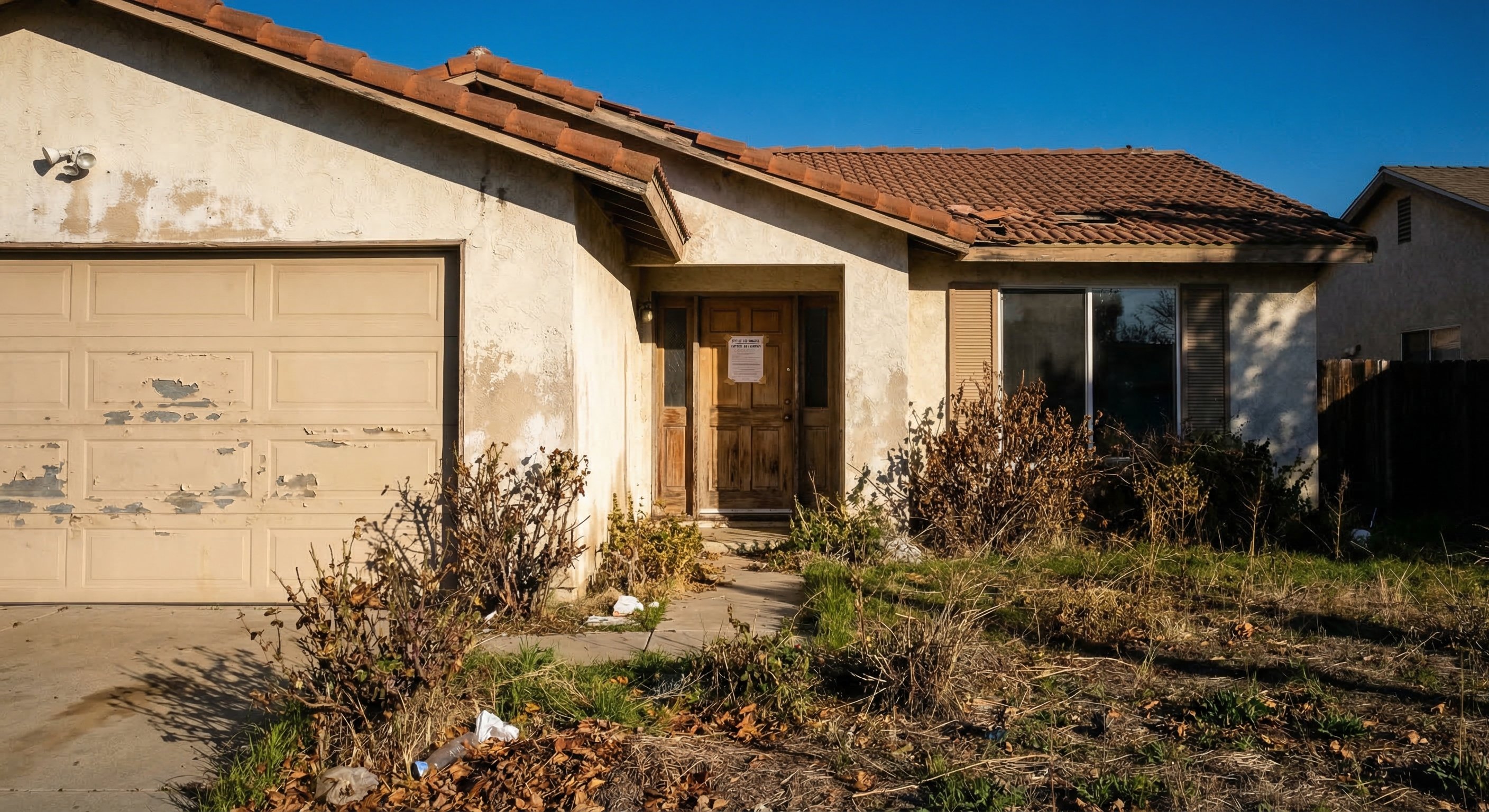
But the deeper motivation is Proposition 13 math. The longer an absentee owner holds, the wider the gap between their locked-in tax basis and current market value. When they finally do decide to sell — forced by a probate, a divorce, health issues, or just exhaustion — they're sitting on equity that can be 3 to 10 times their original investment.
What that means for investors: California absentee sellers often have:
- Massive equity cushions that allow room for a below-market cash offer
- Years of deferred maintenance because managing from afar, especially with low carrying costs, means repairs get ignored
- No urgency to stay — they're often long past wanting to deal with tenants, taxes, or property management
- Limited local market knowledge — absentee owners who haven't been to the property in years often underestimate current condition and overestimate what they'd net through an agent
That's a motivated seller profile almost regardless of the specific distress signal attached.
How to Build an Absentee Owner List in California
County Assessor Records
California's 58 counties maintain public assessor rolls that include both the property address and the owner's mailing address. When those two addresses don't match — that's your absentee owner flag.
The challenge: each county has a different online portal, data format, and update cadence. Los Angeles County's assessor portal is relatively accessible. Riverside and San Bernardino counties offer bulk data downloads. Smaller counties may require in-person requests or paid data subscriptions.
The quality of the absentee owner list is only as good as the underlying assessor data. Mailing addresses go stale. Owners die and properties pass to heirs whose addresses haven't been updated. That's why data currency matters more in California than almost anywhere — the state's probate system generates a constant flow of heirs who inherited an absentee-owned property and now have the same management headaches without the emotional attachment.
County Recorder Deeds
The last recorded deed tells you who owns the property and when they bought it. Deed date + absentee ownership = holding period. A property bought in 2001 by an owner with a Nevada mailing address has 25 years of equity and (likely) decades of deferred maintenance. That's a fundamentally different conversation than someone who bought in 2019.
Cross-referencing deed data with assessor records gives you a richer picture: not just "absentee owner," but "long-hold absentee owner with massive unrealized equity."
Stacked Signals (The California Advantage)
Absentee ownership alone is a list. Absentee ownership stacked with additional distress signals is a lead. California's high property values mean the stakes are higher on both sides — more potential profit, but also more competition from other investors.
The highest-quality California absentee owner leads combine:
- Absentee owner + code violation — the property is actively deteriorating and the city is involved
- Absentee owner + tax delinquency — Prop 13 kept taxes artificially low, so if they're not paying even that, there's real financial pressure
- Absentee owner + probate filing — inherited property, often absentee from day one
- Absentee owner + lis pendens — pre-foreclosure on a rental they're no longer managing
Best California Markets for Absentee Owner Leads
Inland Empire (Riverside & San Bernardino Counties)
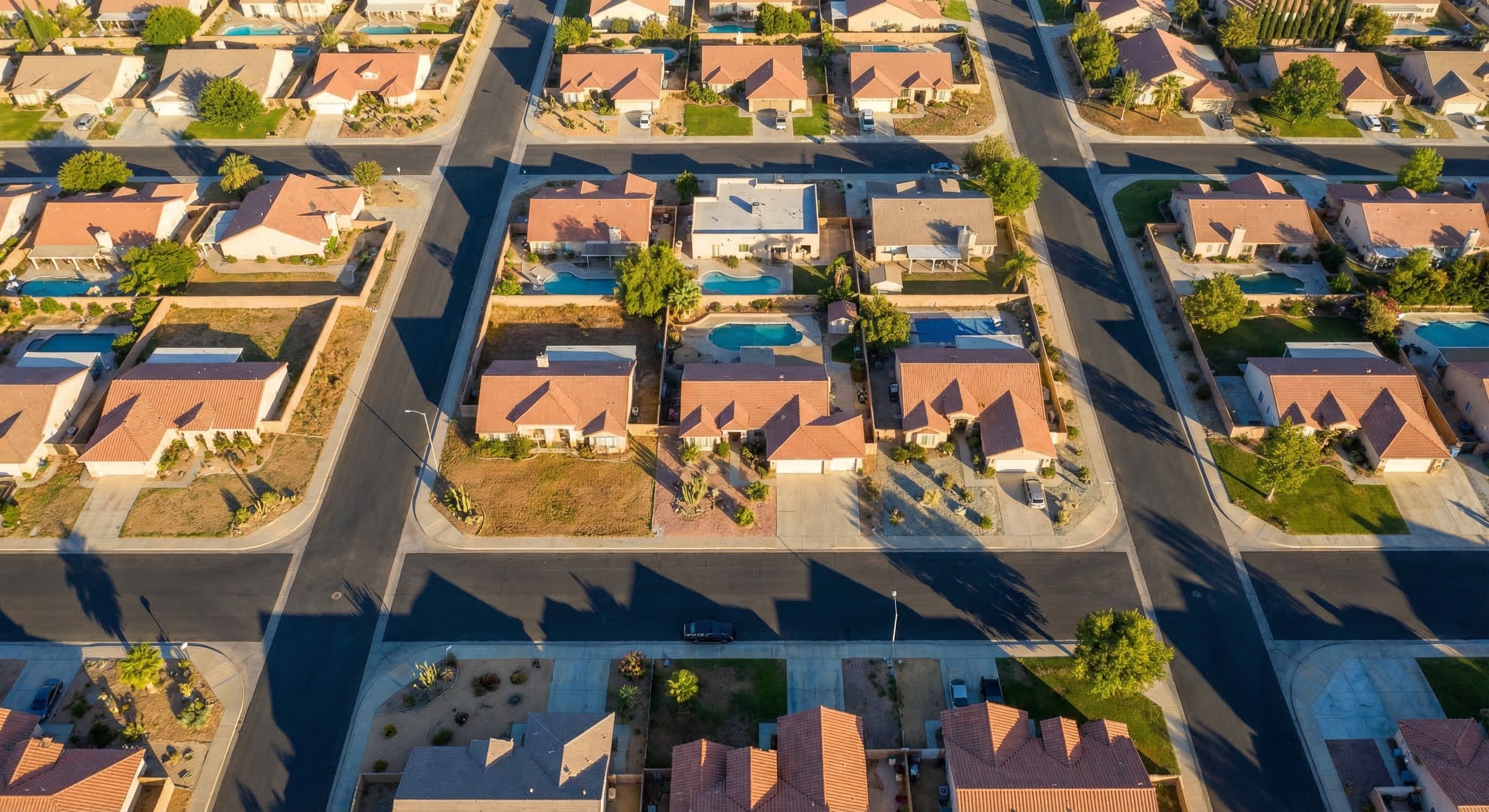
The Inland Empire is ground zero for California absentee owner opportunity. Property values are lower than coastal California, which means more investors purchased rentals here in the 1990s and 2000s as "affordable" California real estate — then moved to the coast, the mountains, or out of state entirely.
Riverside County alone has hundreds of thousands of residential parcels with owner mailing addresses outside the county. San Bernardino County has similar density. Both counties have experienced significant appreciation over the past decade, meaning absentee owners who bought for $150,000-$250,000 in the 2000s are sitting on properties now worth $400,000-$600,000.
Key cities to focus: Riverside, San Bernardino, Rialto, Fontana, Moreno Valley, Perris, Hemet. Code violation density in these areas is high — the building departments are active, which means stacked signals are findable.
South Los Angeles / Compton / Inglewood
This market has been transforming since SoFi Stadium opened and Amazon/Netflix moved in. Many properties are owned by people who bought in the 1980s-1990s, moved away, and have been collecting rent (or not) ever since.
The challenge: LA County's legal protections for tenants (rent control, just-cause eviction requirements, SB 1079 right of first refusal on foreclosures) add complexity to deal structures. But absentee sellers who are done with the California landlord landscape and want out of the business — not just the property — are often more willing to negotiate.
Focus your list on properties with longer holding periods, owner mailing addresses outside California or in wealthier LA-area zip codes (the original owner moved up and kept the rental), and properties with open code cases.
Sacramento Valley
Sacramento absorbed a wave of Bay Area migration in the 2010s, but the older absentee owner stock dates to the 1980s-1990s when Sacramento was a government-worker rental market. Long-hold absentee owners in Arden-Arcade, North Highlands, Citrus Heights, and South Sacramento are a consistent source of leads.
Sacramento County's assessor data is among the more accessible in the state. Tax delinquency rates in certain pockets are meaningfully above state averages — those are your highest-priority stacked signals.
East Bay (Alameda & Contra Costa Counties)
Oakland, Richmond, and the eastern Contra Costa cities have significant absentee owner concentrations. Many Bay Area investors bought East Bay rentals in the 2000s-2010s as a more affordable alternative to San Francisco, then cashed out or moved elsewhere while keeping the rentals.
Property values have risen sharply, creating massive equity for long-hold owners. Oakland's code enforcement is aggressive — the city maintains a rental registry and actively issues violations, which means stacked signals here are especially reliable indicators of a motivated absentee owner.
Central Valley (Fresno, Bakersfield, Stockton)
Lower price points, higher distress signal density. These markets don't have the coastal equity story, but they do have high concentrations of out-of-town investors who bought cheap rentals and have been struggling with property management ever since. Distress-to-price ratios here often produce the highest-percentage deals.

Free Weekly Alerts
See What's Distressed in Your Market
Get free weekly alerts — new distressed properties, motivation scores, and hot neighborhoods in your area. Addresses and contact info available inside DistressIQ.
Free forever · No credit card · Unsubscribe anytime
What to Do With Your California Absentee Owner List
Verify Before You Call
California absentee owner lists go stale fast. The state's probate system means many "owners of record" have been deceased for months before any filing appears. The high transaction volume means ownership changes frequently. Before committing to a mail campaign or direct outreach:
- Verify the mailing address is current — cross-reference with county assessor and skip trace if needed
- Check for recent deed activity — if there's been a deed transfer in the last 6-12 months, your list is already outdated for that parcel
- Check for active probate filings — if the owner died, you want to find the estate representative, not the deceased
Outreach That Works in California
California sellers — especially long-hold absentee owners — tend to be more sophisticated than average. They've owned property long enough to understand value, they've probably been approached before, and they're skeptical of lowball wholesaler postcards.
What works better:
- Specific, data-driven letters — reference the property address, acknowledge they've owned it a long time, note something specific about the current condition (without being insulting)
- Phone approach that leads with empathy — many long-hold CA absentee owners are tired, not desperate. The conversation that works is "we understand managing from a distance is hard" not "I can get you cash fast"
- Multi-touch campaigns — direct mail + phone + text sequencing. First contact by mail establishes credibility; follow-up by phone converts
The Prop 13 Conversation
One tactical edge: understand Prop 13 reassessment. When an absentee owner sells, the property reassesses to full market value — which can more than triple the new owner's annual tax bill. Some sellers use this as a reason to hold. But for an investor buying with cash, your holding cost calculation is different. Understanding this dynamic helps you answer seller objections confidently.
How DistressIQ Surfaces California Absentee Owner Leads
Manually building a California absentee owner list from 58 county assessor portals — each with different formats, update schedules, and access methods — is a weeks-long project that produces a list that's already partially outdated before you finish.
DistressIQ aggregates county-verified ownership data across California's major markets, matches absentee mailing addresses against property addresses, and stacks 31 additional distress signal types on top of absentee ownership status. The result: not just a list of absentee owners, but a ranked feed of absentee owners showing additional distress indicators that predict motivation.
A California absentee owner with a code violation and a tax delinquency isn't just a lead — they're a seller. DistressIQ shows you which ones, without the manual county-by-county research.
Ready to see California absentee owner leads with stacked signals? Founding member pricing is still available: Starter $89/mo, Pro $174/mo, Elite $349/mo — locked for life. Browse DistressIQ California coverage →
Key Takeaways
- Proposition 13 is the defining factor in California absentee owner behavior. Low locked-in taxes mean owners hold longer, equity compounds higher, and when they finally sell, the deals are exceptional.
- Best markets: Inland Empire (Riverside/San Bernardino), South LA, Sacramento Valley, East Bay, Central Valley metros
- Stacked signals beat lists: Absentee owner + code violation + tax delinquency = motivated seller. Single-signal lists produce mediocre conversion rates.
- Data currency matters: California ownership data changes fast. Verify mailing addresses and check for recent deed activity before outreach.
- Approach with sophistication: California long-hold absentee owners have been around the block. Lead with empathy and specific knowledge about their situation, not generic "we buy houses" messaging.
Frequently Asked Questions
Q: What is an absentee owner in California?
An absentee owner is a property owner whose mailing address — as recorded with the county assessor — is different from the property address. This means the owner doesn't live at the property and is likely using it as a rental, leaving it vacant, or holding it as an investment from out of area or out of state. California's Proposition 13 has historically encouraged long-term absentee ownership by keeping property taxes artificially low.
Q: How do I find absentee owners in California?
The primary sources are county assessor records, which list both the property address and the owner's mailing address. When those don't match, you have an absentee owner. In California, each of the 58 counties maintains its own assessor portal. For large-scale list building, data aggregators that compile county assessor data across all California counties are more practical than manual county-by-county research.
Q: Does Proposition 13 affect absentee owner motivation in California?
Significantly. Prop 13 caps annual property tax increases at 2% per year from the purchase date. This means long-term absentee owners in California often have carrying costs far below current market rates. It creates an incentive to hold even when the property isn't performing well. However, when these owners do decide to sell — due to estate issues, health, divorce, or fatigue — the combination of massive equity and deferred maintenance creates strong deal-making conditions.
Q: Which California counties have the most absentee owner leads?
Los Angeles County has the highest volume by far, followed by Riverside, San Bernardino, Sacramento, Fresno, Alameda, and Contra Costa. For value-per-lead, the Inland Empire (Riverside and San Bernardino counties) consistently produces strong deals because of lower price points combined with significant long-hold equity appreciation.
Q: What distress signals stack best with absentee ownership in California?
Code violations are the highest-value stacker in California because the state's code enforcement agencies are active and aggressive — particularly in LA, Oakland, and Sacramento. Tax delinquency is also a strong signal, since Prop 13 keeps California property taxes relatively low; if an absentee owner can't pay even that reduced bill, there's real financial pressure. Probate filings indicate ownership in transition, where heirs often want liquidity over management headaches.
Q: Is it legal to contact California absentee owners?
Yes. Public assessor records are public — the owner's mailing address is on file with the county and legally accessible. Outreach by direct mail, phone, and text is legal under California law as long as you comply with federal Do Not Call registry requirements for phone outreach and provide required disclosures in written offers. Working with a real estate attorney familiar with California investor transactions is advisable for structuring offers, particularly in rent-controlled jurisdictions.
Q: What makes California absentee owner leads harder to work than other states?
Three factors: (1) California has strong tenant protections in many jurisdictions, which can complicate what happens after you acquire an absentee-owned rental. (2) SB 1079 gives tenants and community organizations a right of first refusal on certain foreclosed properties, which affects deal structure on distressed acquisitions. (3) Seller sophistication is higher in California than in most states — absentee owners who've held for decades have often received many approaches and are cautious about below-market offers. The deals that close tend to be those where the investor understands the specific situation deeply and can speak to it.
External sources: California Board of Equalization — Proposition 13 Overview | California Association of County Treasurers and Tax Collectors | California Legislative Information — SB 1079
For related reading: How to Find Absentee Owners: The Complete Guide | Absentee Owner List Texas: Where the Best Opportunities Are | Absentee Owner List Florida: Where Out-of-State Landlords Are Selling
The data behind this article
DistressIQ Monitors These Signals in Real Time
Pre-Foreclosures
NOD + NTS filings
Tax Delinquency
County treasurer records
Code Violations
Municipal inspection filings
Probate Filings
Superior Court records
Every lead is scored 0–100 for seller motivation based on signal type, duration, severity, and stacking. Nationwide coverage — every US county, updated daily.
Ready to find deals in your market?
See Live Distress Signals in Your County
Stop calling dead leads. Every lead in DistressIQ is scored 0–100 for seller motivation, with verified contact info included. Browse the free tier to see what's active in your market right now.
Browse Free Leads — No Credit Card