How to Find Absentee Owners: The Investor's Complete Guide (2026)

How to Find Absentee Owners: The Investor's Complete Guide (2026)
TL;DR: Absentee owners — property owners whose mailing address differs from their property address — are among the most consistently motivated sellers in real estate. The fastest way to find them is through county assessor records, which flag mismatched mailing addresses. Stacking absentee status with signals like tax delinquency, code violations, or long-term vacancy dramatically increases conversion rates. Platforms like DistressIQ aggregate these signals across 3,200+ counties so investors can filter for the highest-probability leads without manually pulling data county by county.

Here's a number most investors don't talk about: roughly 1 in 5 residential properties in the United States is owned by someone who doesn't live there. That's an absentee owner — and across the country, they represent one of the most reliable sources of off-market, motivated seller leads in residential real estate investing.
The challenge isn't that absentee owners are hard to find. The data is public. The challenge is that most investors are looking at raw absentee owner lists with zero context — no signal stacking, no recency filter, no indicator of who's actually motivated versus who's just a satisfied buy-and-hold landlord. That's where most campaigns fall apart.
This guide covers how to actually find absentee owners, how to separate the motivated ones from the passive ones, and how to build an outreach system that converts.
What Is an Absentee Owner in Real Estate?
An absentee owner is any property owner whose mailing address on file with the county assessor is different from the property address. That's the technical definition — and it's important because it's how the data gets flagged.
In practice, absentee owners fall into a few categories:
Out-of-state landlords are the most common. They inherited a property, bought it as a rental, or relocated and kept the house instead of selling. They're paying property taxes and managing (or not managing) from a distance.
Local non-occupant landlords own rental properties in the same city or county but live elsewhere. They're often more accessible than out-of-state owners, but they can carry just as much motivation to sell if the property is cash-flow negative or problematic tenants are involved.
Investors with vacant properties are the highest-priority absentee owners for most wholesalers. When a property has been vacant for months or years and the owner is absent, the carrying costs are real — taxes, insurance, maintenance — and the motivation to sell builds over time.
Inherited property owners may have received a home through probate and have no intention of managing or living in it. They often don't know what the property is worth, don't want the headache, and will accept a reasonable offer just to be done with it.
The key insight: absentee status alone is not enough signal to predict motivation. An investor with 40 rentals who lives in another state is technically an absentee owner — but they're not motivated. What you're looking for is absentee owners with compounding pressure.
Why Absentee Owners Are Among the Most Motivated Sellers
When someone lives in their home, there's a psychological barrier to selling at a discount. It's their home. Absentee owners don't have that same emotional attachment — especially if the property has become a liability.
The motivating factors that push absentee owners toward selling tend to compound:
- Deferred maintenance adds up when the owner isn't local to catch small problems early
- Tenant issues — evictions, property damage, chronic vacancies — drain cash and patience
- Property taxes become a visible monthly burden when there's no rental income coming in
- Distance makes it hard to manage contractors, deal with tenant calls, or respond to code issues
- Life circumstances like divorce, estate disputes, or financial pressure can force a sale regardless of market conditions
According to the National Association of Realtors, investor-owned properties account for approximately 16-17% of all home sales in a given year — and a meaningful portion of those are distressed situations that sell below market. Absentee owners represent the upstream opportunity before those properties even hit the sale pipeline.
The best absentee owner leads combine absent ownership with at least one other active distress signal. When you see a property where the owner lives in another state, taxes are 18 months delinquent, and a code violation was filed 6 months ago — that's a lead worth pursuing.

How to Find Absentee Owners: 5 Methods
Method 1: County Assessor Records (The Source of Truth)
Every county in the United States maintains assessor records that include the property address and the owner's mailing address. When those two addresses don't match, you've found an absentee owner. This data is public record — but accessing it varies significantly by county.
Some counties make it easy: downloadable bulk data files, searchable online portals, or flat-rate data purchases.
Some counties make it hard: paper-only records, in-person request requirements, or data that's only available for commercial licensing.
The free DIY approach works well for investors who are focused on a single county. Most county assessor websites have a property search function where you can look up individual addresses and check the mailing address. For bulk lists, you'll often need to either pay a data fee or submit a public records request.
The limitation is manual effort. Pulling absentee owner lists for multiple counties, keeping them current, and cross-referencing with other signals requires either significant time or automation.
Method 2: Driving for Dollars (Local Vacancy + Absence Signals)
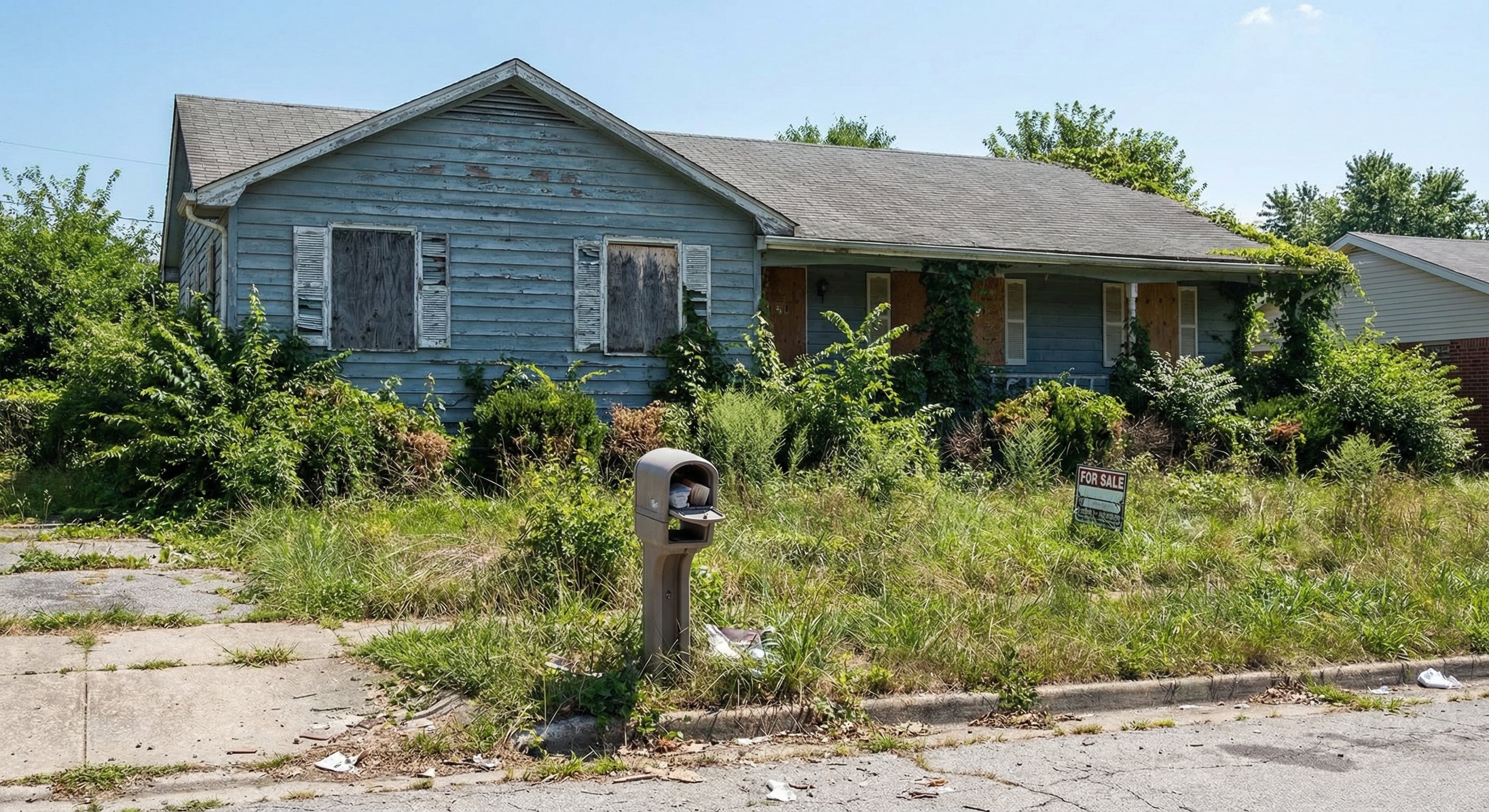
This method doesn't require pulling any data. You drive neighborhoods and look for physical indicators of absentee ownership: overgrown lawns, accumulated mail, peeling paint, broken windows, utility disconnection notices on doors.
When you find a property that looks abandoned or neglected, you can pull the owner of record from the county assessor site and check whether the mailing address is different from the property address.
Driving for dollars is highly targeted and low-cost, but it doesn't scale. It also captures primarily the most visually distressed properties — which are valuable, but represent a fraction of the absentee owner opportunity.
Method 3: Mailing List Brokers
Several companies sell pre-built absentee owner lists filtered by criteria like out-of-state ownership, length of ownership, equity position, and property type. These lists range from a few cents to a few dollars per record depending on the filters applied.
The problem with list broker data is staleness. Lists are often built from assessor data that was pulled months ago, with limited update frequency. Owners sell, pass away, or refinance — and that changes the picture entirely. You end up mailing to people who no longer own the property or whose situation has already resolved.
Freshness matters more than most investors realize. A lead that's 8 months old may already be under contract with another investor.
Method 4: Stacked Signal Platforms
The highest-quality absentee owner leads come from platforms that combine absentee status with other real-time distress signals — not just the mailing address mismatch, but active indicators of pressure.
DistressIQ tracks 31 signal types across 3,200+ counties, including absentee ownership, tax delinquency, code violations, lis pendens filings, probate, and vacancy. When a property has an absentee owner and is 12+ months tax delinquent and has an open code violation, that stacked profile represents a dramatically different opportunity than raw absentee status alone.
The platform updates multiple times daily from county sources, so you're working with current data rather than a snapshot from last quarter. Founding member pricing is currently 30% off for life — Starter at $89/mo, Pro at $174/mo, Elite at $349/mo, with fewer than 50 spots remaining.
Method 5: Probate and Divorce Court Records
Some of the best absentee owner leads emerge from life events. When a property owner dies and leaves a home to an heir who lives in another state, that heir is immediately an absentee owner with high motivation. The same dynamic applies to divorce settlements where one party receives a property they don't want to manage.
Probate records are filed in county probate courts and are generally public. Divorce property settlements appear in county clerk records. Monitoring these sources adds a qualitative layer to your absentee owner strategy — you know why the person became an absentee owner, which informs your outreach approach.
Free Weekly Alerts
See What's Distressed in Your Market
Get free weekly alerts — new distressed properties, motivation scores, and hot neighborhoods in your area. Addresses and contact info available inside DistressIQ.
Free forever · No credit card · Unsubscribe anytime
How to Filter for the Highest-Motivation Absentee Owners
Raw absentee owner lists are commodity data. Any wholesaler with a few hundred dollars can buy one. The competitive edge comes from filtering.
Filter 1: Length of ownership. Owners who have held a property for 10+ years typically have significant equity and lower emotional attachment to the current value. Long-hold absentee owners often haven't thought about what the property is worth recently — and they're frequently surprised (in a good way) by today's prices even at a wholesale discount.
Filter 2: Tax delinquency. Absentee owners who are behind on property taxes are carrying a cost they're not recovering through occupancy or rent. The longer the delinquency, the higher the motivation. Properties with 12+ months of delinquent taxes combined with absentee status are among the highest-converting leads in any market.
Filter 3: Out-of-state mailing address. Local absentee owners can show up and manage the situation. Out-of-state owners face a logistical and emotional barrier to managing or improving the property. The further the mailing address from the property, the higher the friction of holding on.
Filter 4: Code violations or municipal citations. An open code violation means the owner is already in a confrontation with local authorities. They're receiving fines, they may face condemnation risk, and they know the property needs work they either can't afford or don't want to deal with from a distance.
Filter 5: Vacancy. When a property is vacant and absentee-owned, there's no rental income offsetting the carry costs. Taxes, insurance, and maintenance are all outflow. Every month that passes increases motivation.
The goal is finding properties where multiple filters apply simultaneously. That's the lead worth calling first.
Building Your Absentee Owner Outreach Campaign
Finding absentee owners is step one. Converting them requires a system.
Direct mail remains the most reliable channel for absentee owner outreach. Letters outperform postcards for higher-value leads — a handwritten-style envelope gets opened, while a postcard gets read in the driveway or tossed. The message should acknowledge that owning a property from a distance has real costs, offer a solution, and make it easy to respond. Skip the hard sell — most motivated sellers need to feel heard before they're ready to talk numbers.
Cold calling works for the highest-signal leads. If you're running skip tracing alongside your absentee owner list and you have a cell number, a well-timed call can move quickly. The key is timing — calling within 30 days of a new tax delinquency flag or code violation is dramatically more effective than calling cold from a list pulled 6 months ago.
Follow-up frequency matters more than first contact. Studies from real estate investor communities consistently show that deals close most often on the 5th to 8th contact. One mailer doesn't build a campaign. Build a 6-touch sequence across 90 days — mail, call, mail, call, handwritten note, call — and track who responds.
Segmentation by motivation tier. Not all absentee owners get the same treatment. A property with absentee owner + tax delinquency + code violation gets your highest-touch sequence. A simple absentee owner with no other signals goes into a longer, lower-cost nurture sequence. Match resource investment to signal intensity.
According to ATTOM Data Solutions, investor purchases of distressed properties have remained consistently above 15% of all transactions even in tightening markets — which means motivated sellers are transacting. The question is whether they find you or your competition first.
What to Expect When You Call an Absentee Owner
Most absentee owners who are motivated don't open with "I want to sell." They open with a complaint. The property manager stopped responding. The tenant trashed the place. The city sent another letter. Listen first.
Your job on the first call is to understand their situation, not pitch your offer. Ask: How long have you owned it? Are you currently renting it out? What are your plans for it long-term? What would make it easier to deal with?
The sellers who respond best to absentee owner outreach are often relieved that someone is calling them. They've been ignoring the problem, hoping it would resolve itself. An investor who treats them with respect and offers a real solution — not just a lowball number — will win their trust and eventually their business.
Be transparent about what you do. "I buy properties in situations where the owner wants a simple, fast sale without repairs or commissions" is a clear, honest value proposition. It's not for every seller — and that's fine. The ones it is for will tell you.
Streamline Your Absentee Owner Search
Manually pulling county data, cross-referencing tax records, and filtering for stacked signals is a full-time job. DistressIQ does it automatically — 11M+ active distress signals updated multiple times daily across 3,200+ counties. Filter by absentee status, tax delinquency, code violations, vacancy, and 27 more signal types. Every lead comes with Street View + aerial imagery so you can qualify visually before you ever pick up the phone.
Founding member pricing locks in 30% off for life: Starter $89/mo, Pro $174/mo, Elite $349/mo. Fewer than 50 spots remain. Start finding absentee owner leads at DistressIQ →
State-Specific Considerations for Absentee Owner Leads
Absentee owner strategy plays out differently depending on the state — specifically around foreclosure timelines, tax sale rules, and the speed at which distress escalates.
Texas is a non-judicial foreclosure state with a fast timeline — as little as 21 days from notice to sale in some counties. Absentee owners in Texas who fall behind on taxes or mortgages face pressure quickly, which creates urgency on both sides of the transaction.
Florida has a longer judicial foreclosure process (often 18-24 months), but has some of the highest concentrations of absentee owners nationally due to second-home and snowbird ownership patterns. Tax deed sales in Florida are well-attended and highly competitive; catching absentee owners before tax deed is where the real opportunity is.
California has some of the country's highest property taxes in dollar terms, which means carrying cost for absent owners is significant. The state also has a 5-year redemption period after tax default — long enough for owners to ignore the problem, which makes signal stacking even more important for identifying who's truly motivated.
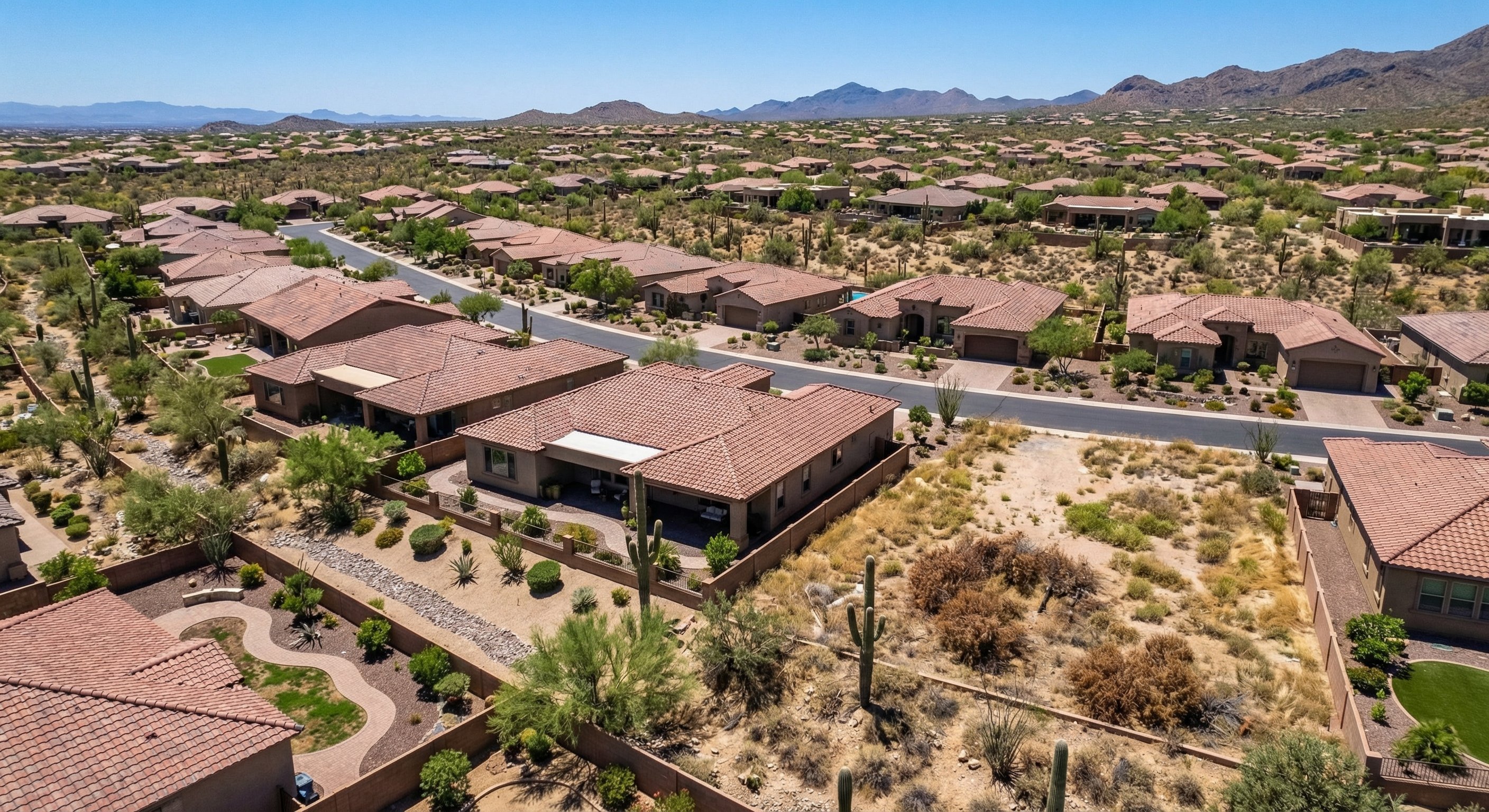
Arizona (our home market) has strong absentee ownership patterns in retirement communities and vacation markets. Absentee owners who purchased during the 2004-2007 run-up and never sold frequently have significant equity now, making them prime targets for wholesale or off-market acquisition.
For state-specific guides on finding foreclosure and pre-foreclosure leads (which often overlap with absentee owner situations), see our guides on finding distressed properties by state and vacant property leads.
Key Takeaways
The investor's absentee owner checklist:
- Pull absentee lists from county assessor records (property address ≠ mailing address)
- Filter for out-of-state mailing addresses, long hold times, and high equity positions
- Stack signals: tax delinquency + absentee = high priority; add code violation or vacancy = highest priority
- Build a 6-touch outreach sequence over 90 days — most deals close after 5+ contacts
- Segment your list by motivation tier; match effort to signal intensity
- Use platforms like DistressIQ to get current, stacked-signal data instead of stale list-broker exports
- Listen on the first call — understand the situation before presenting a solution
Frequently Asked Questions
Q: What's the difference between an absentee owner and a vacant property owner?
A: They often overlap but aren't the same thing. An absentee owner is any owner whose mailing address differs from the property address — the property itself may be occupied by tenants. A vacant property is a property with no occupants, but the owner may live nearby. The highest-value leads combine both: a property that's vacant AND absentee-owned, indicating the owner has no income from the property and no local presence to manage it.
Q: How do I find absentee owners for free?
A: County assessor websites are free to search and contain mailing address data for every property owner. You can manually look up properties address by address and check for mismatched mailing addresses. Some counties also offer bulk data downloads — often at no cost or for a nominal fee. The limitation is time and manual effort. Free works for low-volume searches; for scalable lead generation, a data platform is more efficient.
Q: How current is county assessor data?
A: Most counties update assessor data quarterly, some annually. Some large counties (Los Angeles, Harris County TX, Maricopa County AZ) update more frequently due to transaction volume. The data is accurate for ownership information but lags behind real-time changes. Platforms that aggregate and refresh this data more frequently give you a meaningful edge over investors working from outdated bulk exports.
Q: Is it legal to market to absentee owners?
A: Yes. Absentee owner information comes from public county records, and marketing to property owners is legal in all 50 states. Direct mail has no restrictions beyond standard postal regulations. Cold calling must comply with Do Not Call registry rules and applicable state telemarketing laws — always scrub your list against the DNC registry before calling.
Q: What response rate should I expect from absentee owner direct mail?
A: Industry benchmarks for direct mail to absentee owner lists typically range from 0.5% to 2% response rate on a single touch, depending on list quality, letter quality, and market conditions. With stacked-signal filtering (absentee + tax delinquent), response rates on targeted campaigns often reach 3-5%. Multi-touch sequences of 5-8 contacts over 60-90 days produce significantly better overall results than single-shot campaigns.
Q: What's better — buying a list or pulling it myself from county records?
A: Both have tradeoffs. Pulling from county records yourself is free and current but time-intensive. Buying from a list broker is fast but often stale (90+ days old) and lacks signal stacking. The best approach for most investors is a platform that aggregates county data and refreshes it regularly, giving you the freshness of direct county pulls with the filtering capabilities of a sophisticated data tool.
Q: How many absentee owners should I contact before expecting a deal?
A: This varies significantly by market and list quality. Investors working stacked-signal absentee owner lists (absentee + tax delinquent + code violation) typically report closing 1 deal per 100-150 leads contacted across a full 90-day sequence. Working raw absentee lists without signal filtering, the ratio drops to 1 in 500 or more. The math heavily favors lead quality over lead volume.
Final Thought: The List Isn't the Strategy
Every wholesaler in your market has access to absentee owner data. The data itself is a commodity. What separates the investors who close deals from the ones who burn marketing budget is signal stacking, list freshness, and outreach persistence.
Find the absentee owners with compounding pressure. Reach them before their situation resolves on its own or before another investor gets there first. Treat them like people navigating a hard situation — not like a "pipeline." That combination of data quality and human approach is what actually converts.
For more on building a complete distressed property lead system, see our guide on how to find distressed properties in 2026 and absentee owner leads: why most investors are wasting their marketing budget.
Sources: National Association of Realtors (2025 Investment and Vacation Home Buyers Survey); ATTOM Data Solutions (2025 Year-End Distressed Property Report); U.S. Census Bureau American Community Survey (2024 Rental Vacancy and Ownership Data)
The data behind this article
DistressIQ Monitors These Signals in Real Time
Pre-Foreclosures
NOD + NTS filings
Tax Delinquency
County treasurer records
Code Violations
Municipal inspection filings
Probate Filings
Superior Court records
Every lead is scored 0–100 for seller motivation based on signal type, duration, severity, and stacking. Nationwide coverage — every US county, updated daily.
Ready to find deals in your market?
See Live Distress Signals in Your County
Stop calling dead leads. Every lead in DistressIQ is scored 0–100 for seller motivation, with verified contact info included. Browse the free tier to see what's active in your market right now.
Browse Free Leads — No Credit Card