Vacant Property Leads Wisconsin: What Smart Investors Need to Know in 2026
Vacant Property Leads Wisconsin: What Smart Investors Need to Know in 2026
TL;DR: Wisconsin's cold-weather vacant property market produces distressed inventory that sunbelt states simply do not generate. Freeze-thaw cycles accelerate structural deterioration, and Rust Belt population loss leaves a consistent pipeline of vacant and abandoned homes, particularly in Milwaukee, Racine, Kenosha, and Green Bay. These properties often carry hidden liens, back taxes, and code violation histories that make them deeply discounted compared to occupied equivalents. Investors who know how to identify and work vacant property leads in Wisconsin can acquire assets at 40 to 70 cents on the dollar, but they must understand the state's specific legal timeline, foreclosure process, and local municipal enforcement patterns. DistressIQ tracks vacant property leads across every Wisconsin county, updated daily from county records, with motivation scores that help investors prioritize which vacant properties to pursue first.
Why Wisconsin Produces More Vacant Property Leads Than Most States Realize
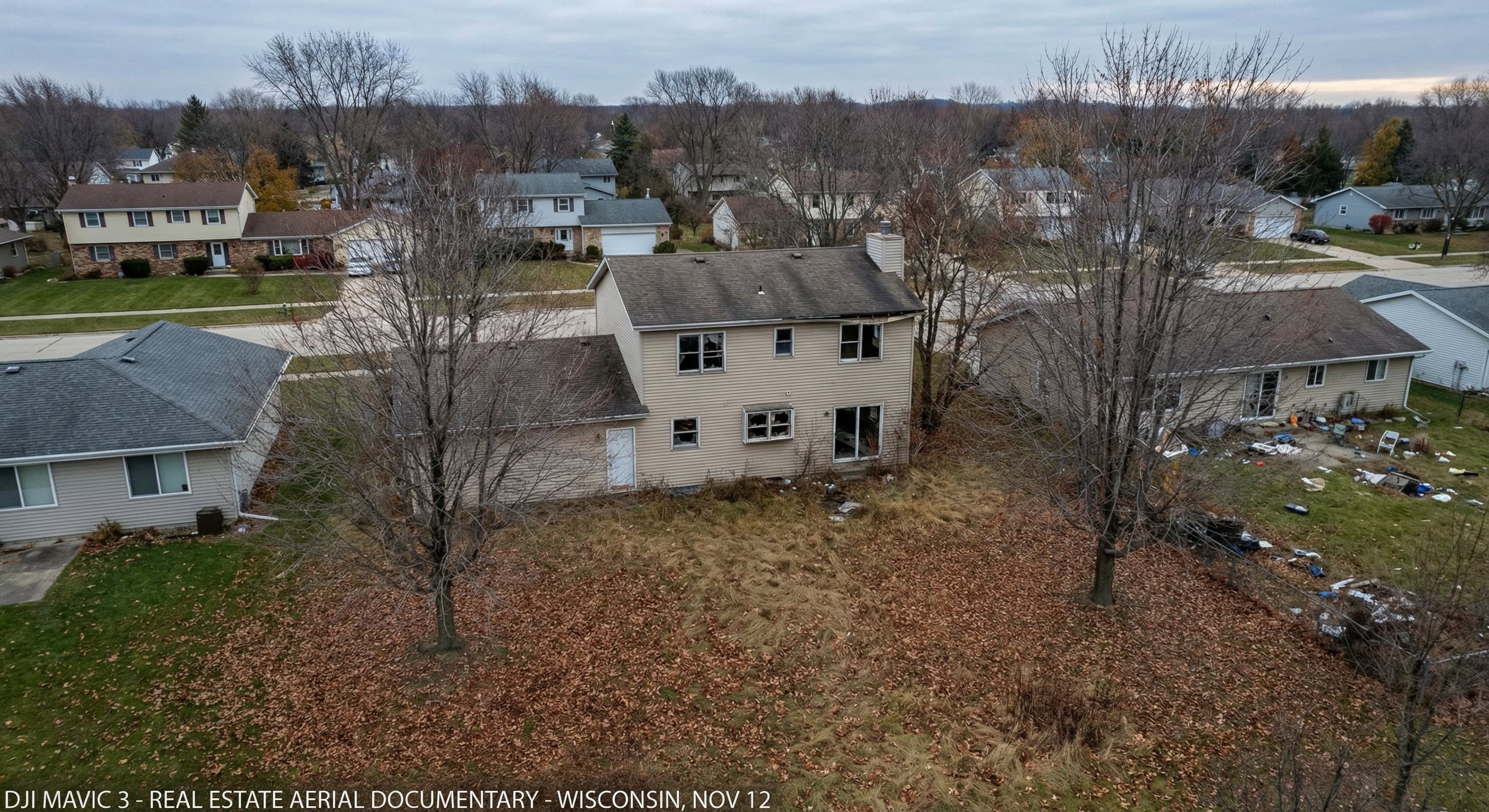
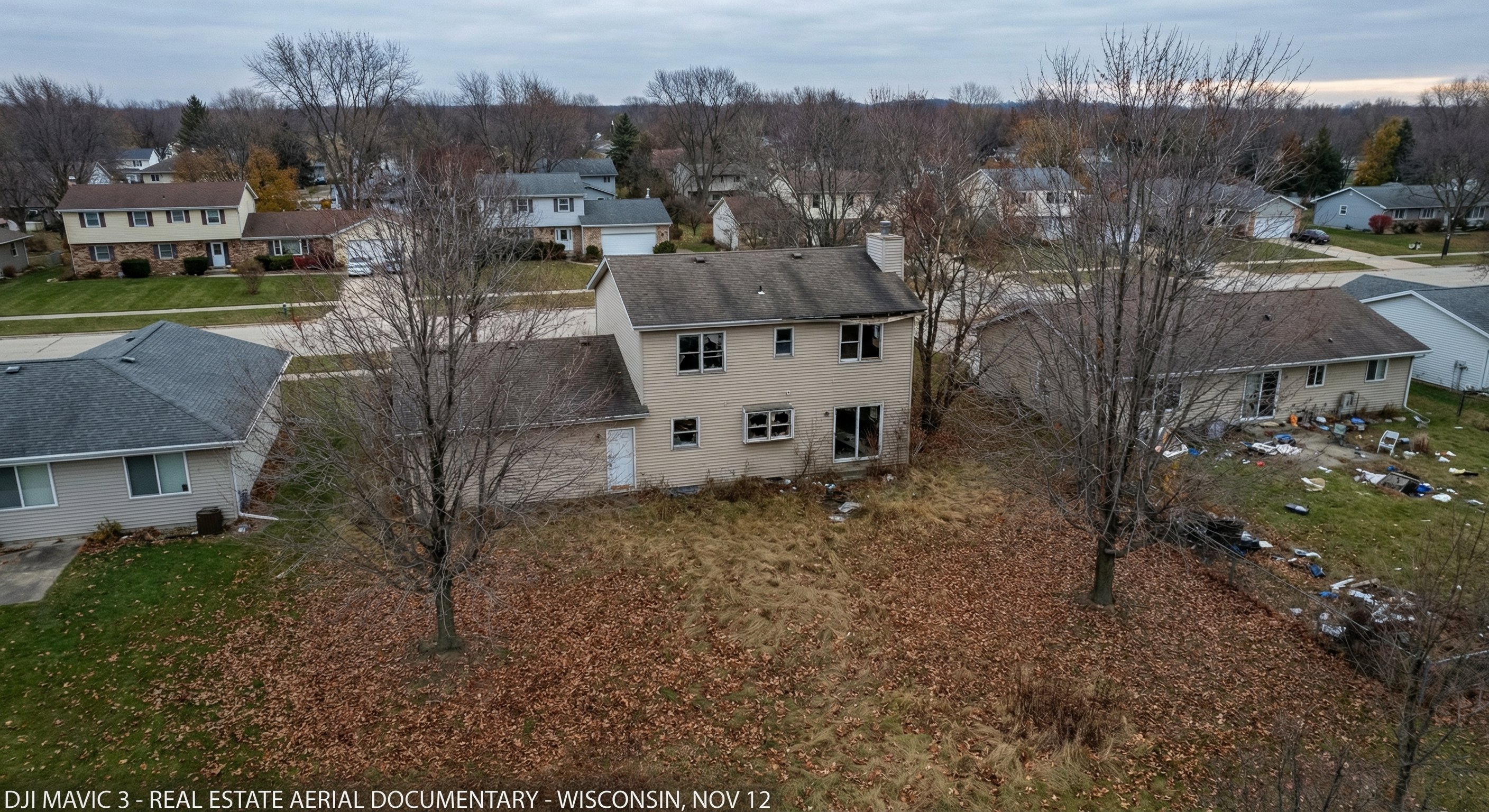
Every Wisconsin winter does something that warm-climate investors never see: it wrecks properties from the inside out. Frozen pipes burst and cause interior flooding that goes unnoticed for months. Ice dams destroy roofing and ceiling structures. Snow load collapses porches and outbuildings. Frost heave shifts foundations. A property that sat vacant through a single Green Bay winter can look five years older than one that sat vacant in Phoenix.
Wisconsin's housing stock compounds this problem. The state has one of the oldest residential property averages in the country outside the Rust Belt corridor. Many vacant homes are 80 to 120 years old, built with balloon framing, lath-and-plaster interiors, and knob-and-tube wiring that makes conventional renovation expensive. These are not cosmetic fixes. Investors who budget $30,000 for a cosmetic renovation routinely discover structural issues that push the actual rehab to $60,000 or more.
The DistressIQ Team has been tracking distress signals across Wisconsin counties since 2023, and the vacant property lead volume has remained consistently elevated compared to national averages. Milwaukee County alone has registered thousands of open vacant property violations annually, according to city data. Racine, Kenosha, and Brown County follow closely. The pattern is geographic and economic, not random: the same post-industrial economic contraction that drained population from Cleveland and Detroit hit Wisconsin's southern manufacturing corridor just as hard.
What this means for investors is straightforward. Wisconsin produces vacant property leads that other states simply cannot match in volume per capita. The discount to market value is typically deeper because local buyers who understand these properties are fewer. Out-of-state investors who take the time to learn Wisconsin's specific legal process consistently find opportunities that local competitors miss.
The Wisconsin Foreclosure Process: What Investors Must Understand First
Before calling on any vacant property leads in Wisconsin, investors need a working understanding of how the foreclosure process operates in this state. Wisconsin is a judicial foreclosure state, meaning every foreclosure goes through the court system. This adds time, typically six to twelve months from the first filing to the sheriff's sale, but it also creates legal records that investors can research to understand exactly where a property stands.
The process starts when a lender files a Summons and Complaint in the county where the property sits. The borrower has twenty days to respond. If no response is filed, the lender can move for a default judgment. If the borrower contests, the case proceeds through the court system until a Judgment of Foreclosure is entered, which establishes the amount owed and starts a redemption period.
Wisconsin grants borrowers a statutory redemption period that varies based on whether the mortgage was recorded before or after July 1, 1977, and whether the property is owner-occupied. For most investment properties, the redemption period is twelve months from the date of the Judgment. This means a property entering the foreclosure system in January may not reach its sheriff's sale until the following winter at the earliest, and possibly longer if legal challenges extend the timeline.
The implication for investors is significant. Properties that appear early in the foreclosure process represent an opportunity to approach the owner directly before the sheriff's sale, negotiate a negotiated sale price, and close before the property hits the auction block. Once a property sells at sheriff's sale to a third-party buyer, the redemption period runs against the new owner, not the original borrower, which means the investor must hold and potentially evict any remaining occupants before taking possession.
Wisconsin also operates a Fedral National Mortgage Association / Freddie Mac repository program for unsold sheriff's sale properties, where properties that fail to sell at auction return to the lender and may eventually become available through specialized channels. Investors who understand these pathways consistently find better deals than those who only monitor public auction listings.
Milwaukee: The State's Dominant Vacant Property Market
Milwaukee generates more vacant property leads than any other Wisconsin market by a wide margin. The city's combination of post-industrial population loss, aging housing stock, and historically weak property values in specific ZIP codes creates a persistent supply of vacant and abandoned homes.
The city's ACT 99 program, passed in 2016, created a land bank mechanism specifically targeting vacant and abandoned properties. The Milwaukee County Land Bank Corporation acquires tax delinquent and code-violation properties and makes them available to responsible owners through a competitive application process. Investors who understand how to work with land bank programs can access properties at below-market costs, though these programs typically require proof of financing, a renovation plan, and a commitment to owner-occupancy or specific affordable housing uses for a defined period.
Within Milwaukee, specific neighborhoods concentrate vacant property leads more than others. The north side, particularly ZIP codes 53206, 53208, and 53210, has historically shown elevated vacancy rates. The 53206 ZIP code in particular has been the subject of significant national media attention for its concentration of vacant and abandoned properties. Investors who understand these neighborhoods recognize that vacancy does not necessarily mean poor location; some of the highest-vacancy ZIP codes sit within minutes of downtown employment centers.
The city maintains a publicly available vacant property registry, updated quarterly, which provides addresses, violation history, and the responsible party for each listed property. Combining this municipal data with county assessor records and DistressIQ's multi-signal scoring creates a comprehensive picture of which vacant properties carry the highest potential return.
Milwaukee's property values have shown meaningful appreciation since 2020, with median sale prices increasing substantially in neighborhoods that had been stagnant for decades. This creates a specific opportunity: buying vacant properties at distressed prices in neighborhoods where the local market is beginning to shift. An investor who acquires a vacant home in 53206 at a 60 percent discount to estimated value and completes a modest $35,000 renovation can frequently sell or rent at prices that would have been impossible to achieve five years earlier.
Free Weekly Alerts
See What's Distressed in Your Market
Get free weekly alerts — new distressed properties, motivation scores, and hot neighborhoods in your area. Addresses and contact info available inside DistressIQ.
Free forever · No credit card · Unsubscribe anytime
Other Wisconsin Markets Worth Targeting
While Milwaukee dominates the vacant property conversation, several other Wisconsin markets offer compelling opportunities with less competition from other investors.
Racine and Kenosha sit directly on Lake Michigan's shoreline, south of Milwaukee, and have historically been influenced by the same economic cycles. Racine's median home prices remain significantly below comparable Midwestern cities, and the city has an active vacant property problem concentrated in its urban core. Investors who combine DistressIQ's vacant property leads with Racine's city-owned property disposal program find opportunities that require less capital than comparable Milwaukee acquisitions.
Green Bay and the broader Brown County area represent a different market dynamic. The Green Bay metro area has a more stable employment base anchored by the Titletown economy and the Port of Green Bay, but the city's older housing stock generates vacant property leads in neighborhoods that have not fully participated in the broader Wisconsin housing appreciation. Green Bay's vacant homes are predominantly concentrated in the east side and near-downtown neighborhoods, where century-old homes sit on lots that newer construction could potentially consolidate.
Madison operates differently from the rest of Wisconsin. The state capital's university-driven economy, government employment base, and growing tech sector have kept residential values relatively stable. Vacant property leads in Dane County are rarer and typically move faster when they appear. Investors who find a vacant property lead in the Madison market should act quickly; the discount to market value is typically narrower than in Milwaukee or Racine, but the exit speed is considerably faster.
Kenosha deserves separate mention for its specific proximity-to-Chicago arbitrage opportunity. Kenosha sits on the Metra commuter rail line to Chicago, making it one of the most accessible Wisconsin communities to the Chicago metropolitan area. Remote workers and Chicago buyers priced out of the Illinois market have increasingly looked to Kenosha. A vacant property lead near the lakefront or the downtown corridor that is purchased at a distressed price and renovated to modern standards can capture this cross-state buyer pool.
What Makes Wisconsin Vacant Properties Different From Other States
Wisconsin's vacant property leads have characteristics that experienced investors from other markets often fail to anticipate.
Cold-weather structural damage is the most significant. Freezing pipes cause basement flooding that ruins furnaces and water heaters. Ice dams create ceiling leaks that go unnoticed until the plaster fails. Frost heave can shift foundation walls. A property that has been vacant for eighteen months through two Wisconsin winters is not simply a cosmetic project. Investors should budget for mechanical system replacement, potential foundation remediation, and mold abatement as standard line items, not worst-case scenarios.
Title complications are more common in Wisconsin's Rust Belt communities. Properties that have passed through multiple generations without a formal probate process often have clouded title, undisclosed liens, or tax judgments that accrued against prior owners. An investor who purchases a vacant property lead at a sheriff's sale and then discovers a five-figure undisclosed mechanic's lien loses most of the profit margin immediately. Title searches are non-negotiable on every Wisconsin vacant property lead, and investors should budget for post-purchase quiet title actions on at least 20 percent of acquisitions.
Seasonal work constraints affect renovation timelines meaningfully. Wisconsin's construction season runs roughly from April through October. Properties purchased in November or December cannot be winter-renovated without significant additional heating and protection costs. An investor who closes on a vacant property in January and expects to list it by April needs to budget for a twelve-to-sixteen-week holding period before meaningful work can begin.
Municipal code enforcement is aggressive in specific cities. Milwaukee's building inspection department has been actively enforcing vacant property registration requirements, and properties that fail to meet maintenance standards face escalating fines that attach to the property as a lien. An investor who purchases a vacant property lead at auction and fails to register with the city within the required window inherits violations and fines that apply to the property regardless of who owned it previously.
How to Find Vacant Property Leads in Wisconsin
The approach to sourcing vacant property leads in Wisconsin determines the quality of opportunity an investor finds. Methods range from publicly available free resources to commercial data platforms, and each has a meaningful quality difference.
County assessor and register of deeds records are the foundation of any Wisconsin vacant property search. Every Wisconsin county maintains digital property records that list current owner, assessed value, tax payment history, and any recorded documents including mortgages, liens, and lis pendens filings. Investors can search by owner name to identify parties who own multiple properties, or by property characteristics to find homes with recent ownership changes, tax delinquency, or recorded abandonment declarations. The challenge is that Wisconsin has 72 counties, each with its own digital record system and search interface. Manually checking all 72 counties is not feasible for most investors.
Municipal vacant property registries are available in Milwaukee, Racine, Kenosha, and several smaller cities. These registries typically list properties that have been declared vacant by the city and are subject to registration fees and inspection requirements. The registry is publicly accessible and provides a cleaner signal than general county records because the city has already made a determination that the property is vacant and problematic.
The Wisconsin State Barber's Association / State Cartographer's Office does not directly help with property searches, but investors should be aware that the Wisconsin Department of Revenue publishes annual property tax statistics by county that can help identify which counties have the highest concentration of tax delinquent properties relative to total parcels. Dane County, Milwaukee County, and Racine County consistently rank highest on a per-capita basis.
Commercial platforms like DistressIQ aggregate distress signals from county records across all Wisconsin counties into a single searchable interface. The platform pulls from county assessor data, court filing records, tax payment histories, and municipal code enforcement databases to identify properties that show multiple signs of vacancy and distress. Each property receives a motivation score based on the number and recency of distress signals, helping investors prioritize which leads to pursue first rather than working through raw county records manually.
The advantage of using a platform approach is time. An investor can identify and evaluate vacant property leads across all 72 Wisconsin counties in under an hour. The alternative is spending days navigating incompatible county record systems that vary in quality, searchability, and update frequency. For investors building a pipeline of Wisconsin vacant property leads, the efficiency difference is the primary value proposition.
DistressIQ Data Across Wisconsin Counties
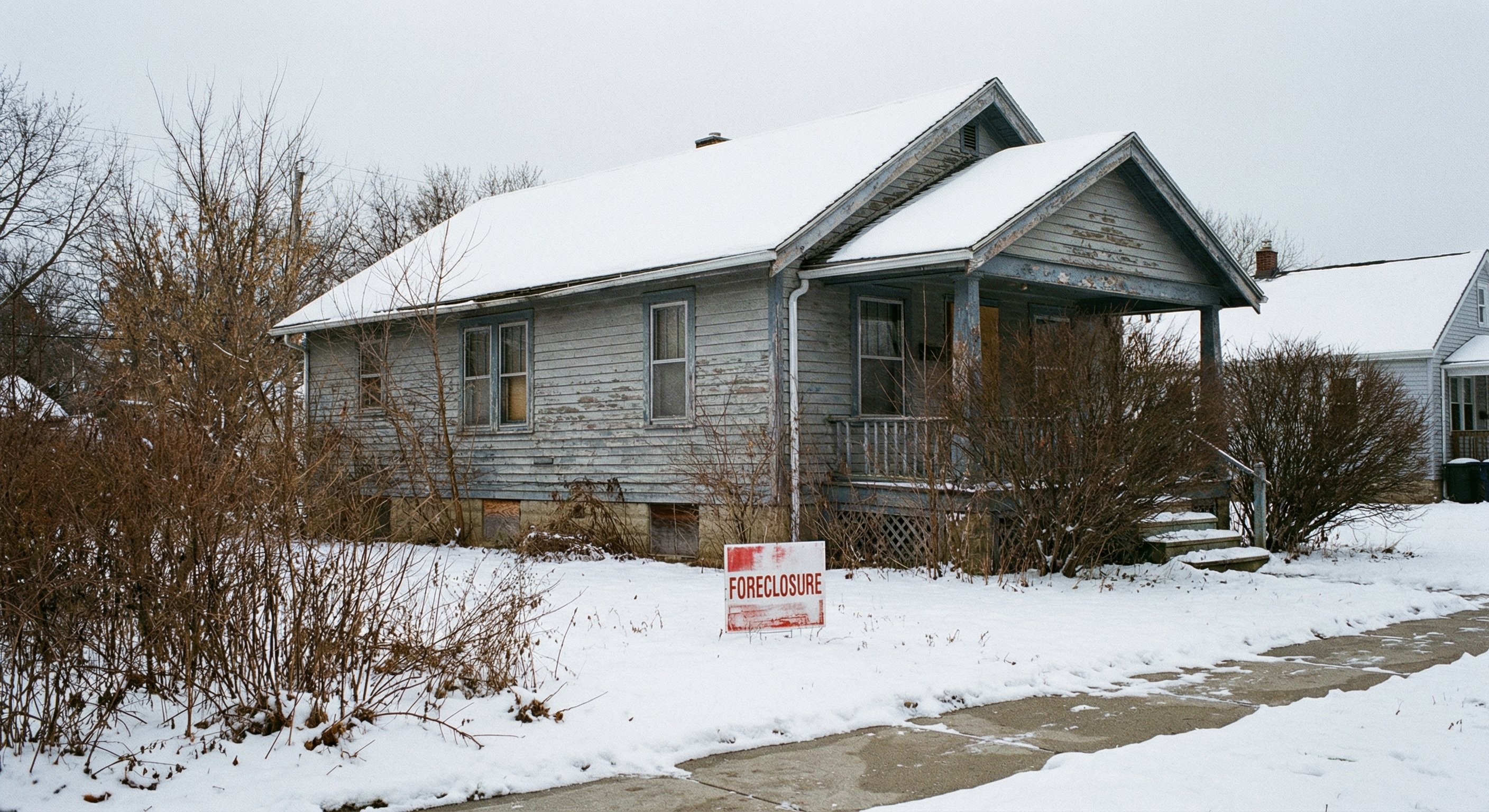
DistressIQ tracks distressed property signals across every Wisconsin county, with particular density in the southern markets where vacancy, tax delinquency, and code violations overlap most frequently.
In Milwaukee County, the platform currently surfaces properties with three or more concurrent distress signals across 47 distinct ZIP codes. Common signal combinations include tax delinquency plus code violation plus lis pendens filing, which indicates a property in the middle of the foreclosure process with active city enforcement action. These stacked signals are strong predictors of motivated sellers because they signal that the property owner has been unable or unwilling to address the accumulating problems.
Racine County shows concentrated signal density in the 53403 and 53405 ZIP codes, where the combination of above-average tax delinquency rates and an aging housing stock creates recurring vacant property patterns. Brown County's signal activity is concentrated in the 54302 and 54303 ZIP codes, with a notable cluster near the old downtown and east-side neighborhoods.
Dane County's distressed signal profile differs from the southern Rust Belt pattern. The signals here tend to be driven by probate (due to Madison's older demographics) and divorce filings, rather than tax delinquency or code violations. Investors looking for Dane County vacant property leads should filter specifically for code enforcement and tax delinquent signals, as probate-triggered sales in Madison more often involve occupied properties rather than vacant ones.
Exit Strategies for Wisconsin Vacant Property Investors
The exit strategy an investor chooses for a Wisconsin vacant property lead depends on the specific market, the property condition, and the investor's holding capacity.
Retail sale to an owner-occupant is the highest-value exit for most Wisconsin vacant properties. A renovated vacant home in Milwaukee's 53208 ZIP code, purchased at 55 cents on the dollar and renovated for $40,000, can frequently sell to an owner-occupant for 85 to 90 cents of comparable market value. The math works because owner-occupants are not cap-rate buyers; they are families who want a specific neighborhood and are willing to pay for a move-in ready home.
Rental exit is more relevant in Milwaukee and Racine than in Madison. Milwaukee's rental vacancy rate has remained below three percent for several years running, according to Census Bureau data, which means a renovated vacant property in a B or B-plus neighborhood will find tenants quickly at market rents. Investors who plan to hold should calculate the gross rent multiplier against their total acquisition and renovation cost. A GRM above 10 on a Wisconsin investment property requires careful scrutiny; a GRM of 7 to 9 is more typical of viable rental exits in Wisconsin markets.
Wholesale exit is faster but yields less per property. An investor who acquires a Wisconsin vacant property lead and cannot complete the renovation themselves can wholesale the as-is property to another investor for 70 to 80 percent of after-repair value minus renovation costs. The advantage is speed and minimal capital requirement. The disadvantage is leaving money on the table compared to a completed renovation exit.
BRRRR strategy applies well in Wisconsin markets where property values permit. The Buy, Rehab, Rent, Refinance, Repeat approach works when the as-repaired value of the renovated property exceeds 75 percent of the rule's loan-to-value threshold for a cash-out refinance. In appreciating Wisconsin markets like Milwaukee's near-downtown neighborhoods and Kenosha's lakefront corridor, this strategy can allow investors to recycle capital rapidly across multiple acquisitions.
What to Watch in 2026
Wisconsin's 2026 legislative session produced no major changes to the foreclosure process or property tax system that would materially affect vacant property investors. The state's property tax levy limits remain in place, which constrains municipal spending but does not directly impact distressed property volume.
Federal Reserve interest rate policy continues to be the most significant external factor affecting Wisconsin vacant property opportunities. Higher mortgage rates reduce the pool of retail buyers who can qualify for conventional financing, which increases the attractiveness of all-cash investor purchases and wholesale transactions. If rates decline in 2026 as expected, the retail buyer pool expands, which typically increases demand for renovated vacant properties and supports higher exit values for investors who acquired distressed inventory in prior periods.
Population trends in Wisconsin's Rust Belt cities remain a concern for long-term investors. Milwaukee has regained some population in recent estimates, but the broader trend in northern and central Wisconsin cities remains negative. Investors who focus exclusively on markets with improving or stable population trends (Madison, Green Bay, the Lake Michigan corridor) are likely to have better long-term outcomes than those who accumulate vacant property leads in communities with sustained population decline.
Cold weather property damage in early 2026 was notable. A severe ice storm in January caused widespread damage across southeastern Wisconsin that will surface as increased vacant property volume in the spring and summer of 2026 as owners who lack insurance or financing to repair storm damage surrender properties to lenders or tax sales.
Frequently Asked Questions
How do I find vacant property leads in Wisconsin for free?
The most reliable free method is searching county assessor websites directly. Every Wisconsin county has an online property search where you can look up properties by address, owner name, or tax payment status. Focus on the Milwaukee County assessor site, the Racine County land records system, and the Dane County property listing service. You can also check municipal vacant property registries in cities that maintain them, particularly Milwaukee and Racine. The trade-off is time: manually checking multiple county systems takes hours, and none of the free sources include motivation scoring to help you prioritize which leads to call first.
What is the redemption period for Wisconsin foreclosures?
Wisconsin grants borrowers a twelve-month statutory redemption period from the date the Judgment of Foreclosure is entered in most cases. This means the timeline from initial filing to sheriff's sale typically spans six to twelve months for the court process, followed by the redemption period. Investors who want to avoid redemption period complications should target properties before the Judgment is entered, ideally during the pre-foreclosure phase when direct negotiation with the owner is still possible. Properties that sell at sheriff's sale carry a redemption period that runs against the new owner in most cases, not the prior owner.
Are Wisconsin vacant properties a good investment?
Wisconsin produces vacant property leads at a rate that outpaces most states on a per-capita basis, and the discount to market value for vacant distressed properties in Milwaukee, Racine, and Kenosha is frequently 40 to 55 percent below comparable occupied homes. This discount compensates for the additional risks specific to cold-weather vacant properties: structural damage from freeze-thaw cycles, title complications in Rust Belt neighborhoods, and seasonal renovation constraints. Investors who budget conservatively for renovation costs and understand Wisconsin's foreclosure timeline find these opportunities consistently profitable. Investors who underestimate cold-weather rehabilitation complexity or fail to budget for title issues frequently lose money.
What cities in Wisconsin have the most vacant property leads?
Milwaukee generates the highest volume by far, with concentrated activity in the 53206, 53208, 53210, and 53212 ZIP codes. Racine, Kenosha, and Green Bay follow. Madison has the lowest vacancy rate among Wisconsin cities and produces the fewest distressed vacant property leads relative to its population. Investors building a Wisconsin acquisition strategy should start with Milwaukee as the highest-volume market and Racine as the lowest-competition alternative, then expand to Kenosha and Green Bay for geographic diversification.
How does Wisconsin's property tax system affect distressed property investments?
Wisconsin levies property taxes annually based on assessed value, and unpaid taxes create a lien against the property that takes priority over most other liens including mortgages recorded before January 2016. Tax delinquent properties are subject to annual tax sale, and properties with multiple years of tax delinquency become targets for tax deed investors. The state uses an annual tax certificate sale process followed by a two-year redemption period before the county can pursue a tax deed. This creates two distinct investment entry points: purchasing the tax certificate at the annual sale for a return of the delinquent taxes plus interest, or purchasing the property after the redemption period expires and the county deeds the property to the certificate holder.
See verified vacant property leads across every Wisconsin county on DistressIQ. The platform aggregates county assessor records, court filings, tax payment histories, and code enforcement data into a single interface, updated daily. Each property is scored by distress signal density so you know which leads to pursue first. Browse free at distressiq.ai.
The data behind this article
DistressIQ Monitors These Signals in Real Time
Pre-Foreclosures
NOD + NTS filings
Tax Delinquency
County treasurer records
Code Violations
Municipal inspection filings
Probate Filings
Superior Court records
Every lead is scored 0–100 for seller motivation based on signal type, duration, severity, and stacking. Nationwide coverage — every US county, updated daily.
Ready to find deals in your market?
See Live Distress Signals in Your County
Stop calling dead leads. Every lead in DistressIQ is scored 0–100 for seller motivation, with verified contact info included. Browse the free tier to see what's active in your market right now.
Browse Free Leads — No Credit Card