Vacant Property Leads Mississippi: What Smart Investors Need to Know About the Magnolia State

TL;DR: Mississippi generates vacant property leads through a combination of aging rural housing, Gulf Coast storm damage, inherited properties from estates, and economic outmigration from smaller towns. The state's non-judicial foreclosure process and tax deed system create predictable timelines for investors. Most opportunity clusters in Hinds County (Jackson metro), Harrison County (Gulf Coast), and DeSoto County (Memphis suburbs), with additional value in rural counties where vacancy runs high and entry prices stay low. DistressIQ aggregates signals across 11M+ active records to surface these leads before they reach the broader market.

Mississippi does not make headlines the way Florida or Texas do in real estate investing circles. That is precisely why the state's vacant property leads deserve closer attention. While investors compete aggressively in coastal markets, the Magnolia State holds a quieter inventory of aging homes, storm-damaged properties, and rural parcels tied to unresolved estates. These are not glamorous deals. They are practical ones, the kind that work for investors who know how to value a Mississippi property correctly.
The DistressIQ Team analyzed property signal patterns across Mississippi's 82 counties and found consistent clusters of vacancy indicators that correlate with motivated-seller situations. Understanding where those signals concentrate and what they mean is the difference between finding a buried gem and chasing a money pit.
Why Mississippi Produces Vacant Property Leads at Scale
Mississippi's vacant property inventory has structural drivers that do not depend on a single market cycle. The state ranks among the highest in the nation for population loss through outmigration, particularly among working-age adults leaving rural counties for opportunities in Jackson, Memphis, or other regional job centers. Each departure potentially leaves behind an inherited property that nobody is actively managing.
That dynamic is compounded by the age of Mississippi's housing stock. Nearly 60 percent of the state's owner-occupied homes were built before 1980, according to U.S. Census Bureau data. Older homes in smaller markets require more maintenance than their current owners can afford, creating conditions where vacancy becomes a long-term status rather than a temporary one.
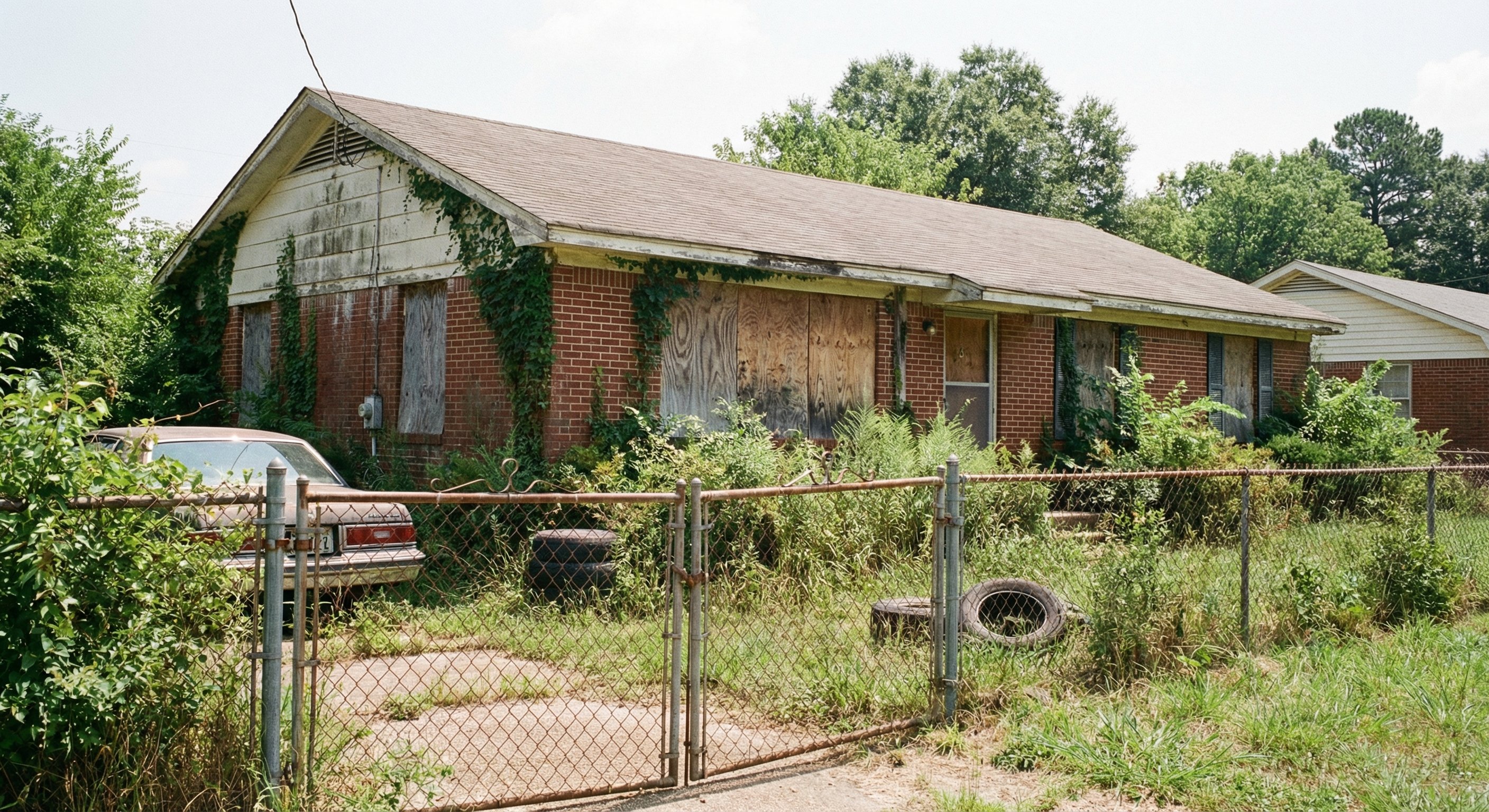
Storm damage from Gulf Coast hurricanes and tropical storms adds another layer. While Mississippi's coastal counties have rebuilt aggressively after major storms, certain inland areas carry lingering effects from flooding and wind damage that made properties uninhabitable. These are the vacant homes that sit on the market for years, visible to neighbors but invisible to out-of-state investors who never think to look in Mississippi.
The Counties That Actually Matter for Mississippi Vacant Property Leads
Not all of Mississippi's 82 counties produce useful vacant property leads for investors. The DistressIQ Team found that signal density clusters heavily in three geographic zones.
The Jackson Metro Area (Hinds, Rankin, Madison Counties)
Hinds County, anchored by Jackson, is the most populous county in Mississippi and the center of the state's employment base. It also carries the highest concentration of code violation records, tax delinquency filings, and registered vacant properties in the state. Rankin County, just east of Jackson, has seen steady population growth as a suburban bedroom community, but older sections of both counties hold a persistent inventory of vacant single-family homes.
The DistressIQ platform tracks properties in Hinds County across multiple signal types simultaneously, flagging properties where tax delinquency intersects with code enforcement records or absentee ownership data. Investors who combine these signals can identify properties where the owner has stopped caring for the asset and may be receptive to an offer.
Madison County, north of Jackson, has become one of Mississippi's wealthier suburban counties, but it still produces distressed inventory through estate situations and older neighborhoods in towns like Canton and Ridgeland where properties have aged past the point of comfortable occupancy for their owners.
The Gulf Coast (Harrison, Jackson, Hancock Counties)
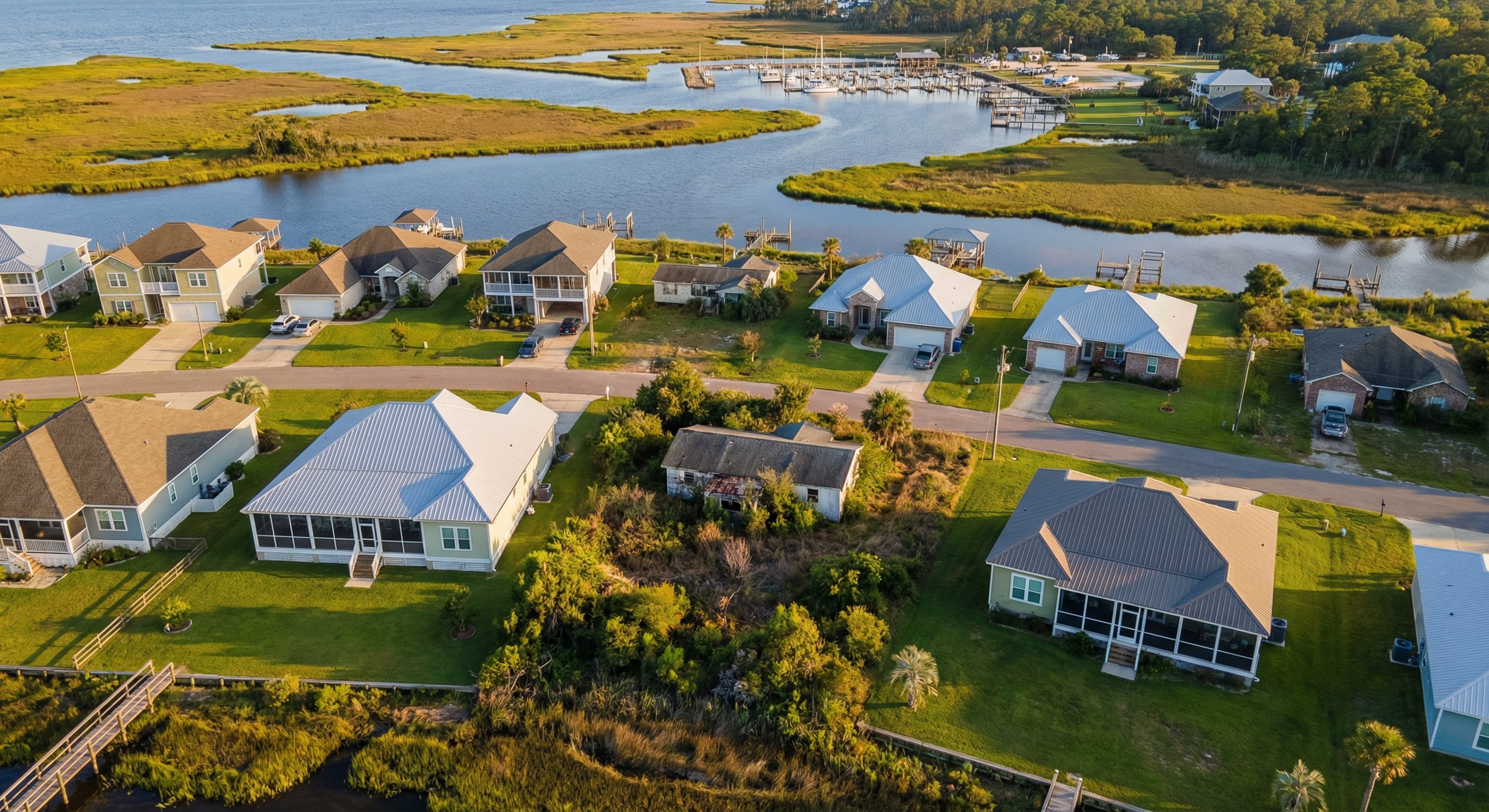
Mississippi's Gulf Coast runs roughly 70 miles from the Louisiana border to the Alabama border. This is the most economically active part of the state, anchored by Biloxi, Gulfport, and Ocean Springs. The Coast has a dual personality for vacant property leads.
On one side, Hurricane Katrina in 2005 created a massive wave of demolition and reconstruction that has only partially resolved. Some parcels still carry storm damage designations years later, and older homes that were repaired after the storm are now reaching the point where a second renovation cycle would be required. Investors who target these properties can acquire them below after-repair value and build equity through renovation.
On the other side, the Coast's popularity as a retirement and second-home destination means a meaningful share of vacant properties are seasonal homes. The signal profile looks different for these properties compared to genuinely distressed assets, and DistressIQ distinguishes between the two by tracking the duration and type of vacancy indicators.

DeSoto County (Memphis Suburbs)
DeSoto County is technically part of the Memphis metropolitan area, one of the fastest-growing city-suburb combinations in the southeastern United States. Its cities, Southaven and Olive Branch, have attracted significant residential development over the past 20 years, which means there is a constant churn of older inventory being replaced by new construction.
The vacant property leads available in DeSoto County skew toward mid-market single-family homes built in the 1980s and 1990s that are now showing their age. Investors who specialize in mid-market rehabs can find workable deals here, particularly in neighborhoods where the school district reputation keeps demand steady even for older homes.
How Mississippi Law Shapes Vacant Property Investment Timelines
Mississippi uses a non-judicial foreclosure process for most mortgage defaults, which means lenders can foreclose without going through the court system. This makes the timeline faster than states like New Jersey or Illinois, where judicial foreclosure can stretch 18 months or longer.
For investors who acquire vacant property leads through pre-foreclosure or auction channels, this matters because the clock runs faster. A property that appears available in January may complete its foreclosure process by April. Investors who have already done their due diligence on a property can move quickly when it hits the auction stage, while investors who are still researching the county records process are typically too late.
Mississippi is a tax deed state rather than a tax lien state. When property taxes go unpaid, the county sells the property at a tax sale and the winning bidder receives a deed to the property. The redemption period for tax deeds in Mississippi is generally two years, which means the original owner has a statutory right to reclaim the property by paying the delinquent taxes plus interest during that window.
For investors, this means tax deed purchases carry a redemption risk that is not present in all states. The DistressIQ platform provides historical data on redemption rates by county, helping investors understand which markets have a higher likelihood of redemption and which have a track record of properties staying with the deed purchaser.

Free Weekly Alerts
See What's Distressed in Your Market
Get free weekly alerts — new distressed properties, motivation scores, and hot neighborhoods in your area. Addresses and contact info available inside DistressIQ.
Free forever · No credit card · Unsubscribe anytime
What Vacant Property Signals Actually Mean in Mississippi
Not every vacant property is a good investment. The DistressIQ Team has found that the most actionable vacant property leads in Mississippi share a cluster of at least two or three concurrent distress signals, rather than a single indicator in isolation.
The strongest signal combination for Mississippi vacant property leads includes tax delinquency paired with an absentee owner record and an open code enforcement case. Properties with all three signals active have a significantly higher probability of the owner being unreachable, unmotivated to repair, and willing to sell at a discount that reflects the actual condition of the property rather than its theoretical market value.
Single signal properties, such as a property that appears vacant but has no tax delinquency and no code violations, frequently turn out to be seasonal homes, recently inherited properties where the estate is still active, or homes that are actively being marketed through a real estate agent. These are not bad properties, but they are not distressed in the way that produces motivated-seller pricing.
How to Build a Mississippi Vacant Property Lead Pipeline
Investors who want a consistent flow of vacant property leads in Mississippi need a strategy that covers three dimensions simultaneously: geographic focus, signal stacking, and outreach timing.
Geographic focus is not optional in Mississippi. The state is too large and the distressed inventory is too dispersed to try to cover all 82 counties with equal attention. The three zones identified above represent the highest-density opportunities for the majority of investors. Within those zones, investors should identify specific ZIP codes or neighborhoods where multiple signal types are overlapping, then build a systematic review process for new inventory in those areas.
Signal stacking means looking for properties where at least two independent distress indicators are present at the same time. Tax delinquency alone is common in Mississippi, particularly in rural counties where economic conditions create seasonal payment difficulties. Code violations alone may indicate an owner who is engaged but struggling to maintain the property. Absentee ownership alone could mean a rental property that is simply temporarily vacant between tenants. It is the combination that creates urgency and negotiability.
Outreach timing matters because Mississippi's non-judicial foreclosure timeline moves quickly. An investor who waits until a property appears at auction is typically competing against other bidders who have already done their research. The window for pre-foreclosure outreach, before the property reaches the courthouse steps, is narrow and requires having a lead generation system that surfaces new filings within days of their entry into the public record.
Mississippi's vacant property market rewards investors who do the analytical work upfront and move decisively when a qualifying property appears. The state is not a place where casual browsing produces results. It is a place where a structured pipeline, grounded in county-verified data, generates the kind of deals that compound over time.
Key Takeaways: Vacant Property Leads Mississippi
Mississippi's vacant property landscape is driven by structural factors that will persist regardless of short-term market conditions. Outmigration from rural counties, aging housing stock, Gulf Coast storm damage, and inherited properties from estates all generate a steady supply of vacant homes that eventually reach the point where their owners become willing to sell.
The state's non-judicial foreclosure process and tax deed system create faster timelines than most judicial foreclosure states, which rewards investors who maintain active monitoring of new distress signals rather than waiting for properties to appear on the open market.
Most of the actionable inventory clusters in three geographic zones: the Jackson metro area (Hinds, Rankin, Madison counties), the Gulf Coast (Harrison, Jackson, Hancock counties), and the Memphis suburbs of DeSoto County. Each zone has a distinct signal profile that reflects the local economy and property type mix.
The most reliable vacant property leads in Mississippi show at least two concurrent distress signals, with tax delinquency paired with absentee ownership or code enforcement representing the strongest combination for identifying genuinely motivated sellers.
For investors who want to access Mississippi vacant property leads with cross-signal coverage across the state's most active counties, DistressIQ provides verified distress signal data across 3,200+ counties nationwide, updated multiple times daily from county sources. The platform allows investors to filter by signal combination, ownership type, and geographic zone, helping separate actionable leads from properties that appear vacant but are not genuinely available.
Frequently Asked Questions
Q: What is the foreclosure timeline for vacant properties in Mississippi?
Mississippi uses a non-judicial foreclosure process that typically takes 60 to 90 days from the initial filing to the auction date, assuming the lender moves without delays. This is faster than judicial foreclosure states, meaning investors working pre-foreclosure leads need to act quickly once a property enters the public record. The redemption period for tax deed purchases runs two years, during which the original owner can reclaim the property by paying the delinquent taxes plus accrued interest.
Q: Which Mississippi counties have the most vacant property leads?
Based on signal density analysis, Hinds County (Jackson metro), Harrison County (Gulf Coast/Biloxi-Gulfport), and DeSoto County (Memphis suburbs) consistently show the highest concentration of multi-signal vacant property leads. These three counties account for a disproportionate share of the state's code violation records, tax delinquency filings, and registered vacant properties. Rural counties also produce inventory, but at lower volumes with longer holding periods before sales close.
Q: Is Mississippi a tax lien state or a tax deed state?
Mississippi is a tax deed state. When property taxes go unpaid, the county sells the property at a public auction and the winning bidder receives a deed to the property. The original owner typically has a two-year redemption period during which they can reclaim the property by paying the delinquent taxes plus interest and associated costs. Investors who purchase tax deeds should verify the redemption history for the specific county before bidding, as redemption rates vary significantly across Mississippi's 82 counties.
Q: What is the average price range for vacant properties in Mississippi?
Vacant property prices in Mississippi vary dramatically by location. In the Jackson metro area and Gulf Coast, distressed vacant homes typically sell between $30,000 and $90,000 depending on condition and neighborhood. In rural Mississippi counties, vacant properties can be found for $10,000 to $40,000, though carrying costs and renovation expenses can offset the low acquisition price. The Memphis suburbs of DeSoto County command higher prices, generally $60,000 to $130,000 for mid-market vacant homes, reflecting the stronger demand from buyer populations in that area.
Q: How does DistressIQ identify vacant property leads in Mississippi?
DistressIQ aggregates multiple public record data streams including county assessor records, tax payment histories, code enforcement filings, mortgage delinquency records, and registered vacant property databases. The platform cross-references these signals to identify properties where multiple distress indicators are present simultaneously, which correlates with a higher probability of the property being genuinely available at a discount. Signal data is updated multiple times daily from county sources across 3,200+ counties.
Q: Can out-of-state investors buy vacant properties in Mississippi?
Yes. Mississippi has no residency restrictions on property ownership or foreclosure purchases. Out-of-state investors can bid at tax sales, purchase through pre-foreclosure channels, and close on distressed properties through the same processes available to in-state buyers. Many of the investors active in Mississippi's distressed property market are based in Tennessee, Louisiana, Alabama, and Texas. Working with a local real estate attorney for closings and a local property manager for post-acquisition oversight is standard practice for out-of-state investors.
Q: What are the main risks when buying vacant property leads in Mississippi?
The primary risks are property condition uncertainty, redemption on tax deed purchases, and holding costs in markets with slower resale timelines. Mississippi's older housing stock means that properties which appear structurally sound from the street may harbor significant hidden defects. Properties purchased at tax sales carry a two-year redemption risk in most counties. Rural vacant properties may have limited buyer demand, which affects both the renovation budget and the exit strategy. Conducting thorough due diligence before contracting on any vacant property is essential regardless of the acquisition price.
Mississippi's vacant property market is not the most competitive investment environment in the country. For investors who do the work to understand the local patterns, that gap between attention and opportunity is exactly where returns are found. The state rewards those who show up with data and move quickly.
The data behind this article
DistressIQ Monitors These Signals in Real Time
Pre-Foreclosures
NOD + NTS filings
Tax Delinquency
County treasurer records
Code Violations
Municipal inspection filings
Probate Filings
Superior Court records
Every lead is scored 0–100 for seller motivation based on signal type, duration, severity, and stacking. Nationwide coverage — every US county, updated daily.
Ready to find deals in your market?
See Live Distress Signals in Your County
Stop calling dead leads. Every lead in DistressIQ is scored 0–100 for seller motivation, with verified contact info included. Browse the free tier to see what's active in your market right now.
Browse Free Leads — No Credit Card