Vacant Property Leads Indiana: What Smart Investors Need to Know in 2026

Vacant Property Leads Indiana: What Smart Investors Need to Know in 2026
TL;DR: Indiana presents a compelling combination of accessible property values and a documented vacant property problem concentrated in legacy industrial cities. Indianapolis, Gary, Fort Wayne, and South Bend each offer distinct lead profiles, but the state's weak vacancy registration enforcement means many distressed properties never appear on official lists. Investors who combine county assessor data with court records and code enforcement databases consistently outperform those relying on a single source. DistressIQ aggregates multiple signal types across Indiana's 92 counties, allowing investors to identify and prioritize vacant property leads before competing buyers enter the market.

Indiana's real estate market has a split personality. In the Indianapolis metro, prices have moved up steadily over the past five years, driven by population growth in Hamilton County suburbs and renewed investment in downtown Indianapolis. But step outside that corridor and the picture changes fast. Gary, East Chicago, Muncie, and Anderson all carry significant inventories of vacant and abandoned properties that local governments lack the resources to address. For investors who understand the distinction between a neglected owner-occupied home and a genuinely vacant distressed property, that gap represents opportunity.
This article walks through what Indiana vacant property leads actually look like in 2026, which counties are producing the strongest opportunities, how Indiana's legal framework affects acquisition timelines, and how to build a lead sourcing system that covers the state's uneven geography.
Why Indiana Has More Vacant Property Leads Than Most Investors Realize
The popular image of Indiana is cornfields and suburban ranch homes. That image is accurate for broad stretches of the state, but it obscures the fact that several Indiana cities carry vacancy burdens that rival larger metropolitan areas nationally. Gary, Indiana, once a city of 180,000 people, now sits below 70,000 and has thousands of vacant parcels. East Chicago and other Lake Michigan shoreline cities face similar structural challenges rooted in deindustrialization that played out decades before today's investors were active.
Even in growing areas, vacancy clusters form around distressed apartment complexes, abandoned commercial conversions, and the slow decay of aging housing stock. A 2023 HUD report on Indiana's vacant property landscape estimated over 12,000 vacant residential parcels across the state's ten largest cities, with the majority concentrated in Lake, Marion, and Allen counties.
Those numbers understate the opportunity. Many vacant properties never appear on any official list because Indiana's vacancy registration requirements are less aggressive than states like New Jersey or Illinois. A property can sit vacant for 18 months before a code enforcement officer files the paperwork that would make it findable in a public records search. Investors who can identify those properties before the paperwork exists have a window that never shows up in a county database query.
The signal that matters most in Indiana is the combination of utility shutoffs, code violation filings, and sheriff sale activity stacked against a single property. A vacant home with an open code violation case and an active lis pendens filing is a three-signal lead that most competing buyers have not yet identified. DistressIQ cross-references these signal types across Indiana county records so investors can find that exact lead in a single search rather than building the connection manually across three separate government databases.
Indiana's Legal Framework for Vacant Property Acquisition
Understanding Indiana's acquisition timeline requires separating two distinct pathways, because they have very different pace and risk profiles.
Sheriff sale acquisition is the faster route for genuinely vacant properties. Indiana uses a non-judicial foreclosure process in most counties, meaning the lender can proceed to auction once the statutory notice period expires without court involvement. The timeline from missed payment to sheriff sale varies by county but typically runs 120 to 180 days in Marion County and Allen County, the two largest Indiana markets outside of Lake County. Lake County follows a modified process that adds roughly 30 to 60 days to the timeline because it straddles the Chicago metropolitan area and handles a higher volume of distressed filings.
Properties that sell at sheriff sale and are not redeemed typically transfer to the winning bidder within 30 days of the auction. From first missed payment to clean title, an investor operating in a cooperative county can realistically close on a sheriff sale property in five to seven months.
Quiet title action is the route for properties that avoid sheriff sale but accumulate unpaid taxes or code violation liens. Indiana allows properties with delinquent taxes to be sold at the annual county tax sale, which happens on the second Monday in September in most counties. Investors buying at tax sale acquire the lien, not the property outright, and must pursue redemption or quiet title through the courts if the owner does not repay within the statutory redemption period, which runs one to two years depending on the county and whether the property is homestead-exempt.
For vacant property leads specifically, the tax sale route is often the more relevant acquisition path because many genuinely vacant properties have fallen behind on taxes precisely because no one is living in them to open the bills. The challenge for investors is finding those properties before the tax sale list goes public, because Indiana does not publish preliminary delinquent tax lists more than 30 days before the auction. A property that appears on a county's pre-sale delinquent list today may already have been bid on by the time an investor using only public tax sale websites discovers it.
The practical implication is that Indiana rewards investors with a multi-source lead strategy. Properties that will hit the tax sale in September should be identifiable in July through a combination of assessor records showing tax delinquency and code enforcement records showing vacancy indicators. Investors who set up that monitoring system for Indiana counties consistently find leads two to three months earlier than those who wait for the public sale list.
Which Indiana Counties Are Producing the Best Vacant Property Leads in 2026
Not all Indiana counties are created equal for vacant property investing. The state's geography creates three distinct opportunity zones that require different sourcing approaches.
Indianapolis Metro (Marion, Hamilton, Hendricks, Johnson Counties)
Marion County, which contains Indianapolis, is Indiana's most active real estate market by volume and also its most competitive for distressed leads. Sheriff sale inventory in Marion County runs higher than anywhere else in the state, but so does buyer activity. Investors focusing on Marion County vacant property leads need to move quickly once a strong multi-signal lead is identified, because the competitive window between lead discovery and acquisition is shorter than in slower markets.
Hamilton County to the north represents the opposite profile. This is where Indiana's population growth is concentrating, driven by migration from the Chicago metro and Indianapolis suburban expansion. Vacant property opportunities in Hamilton County tend to be mispriced teardowns in older subdivisions rather than deeply distressed distressed inventory. The signal profile is different: these properties show code violations and utility shutoffs but are less likely to carry tax delinquency or lis pendens filings.
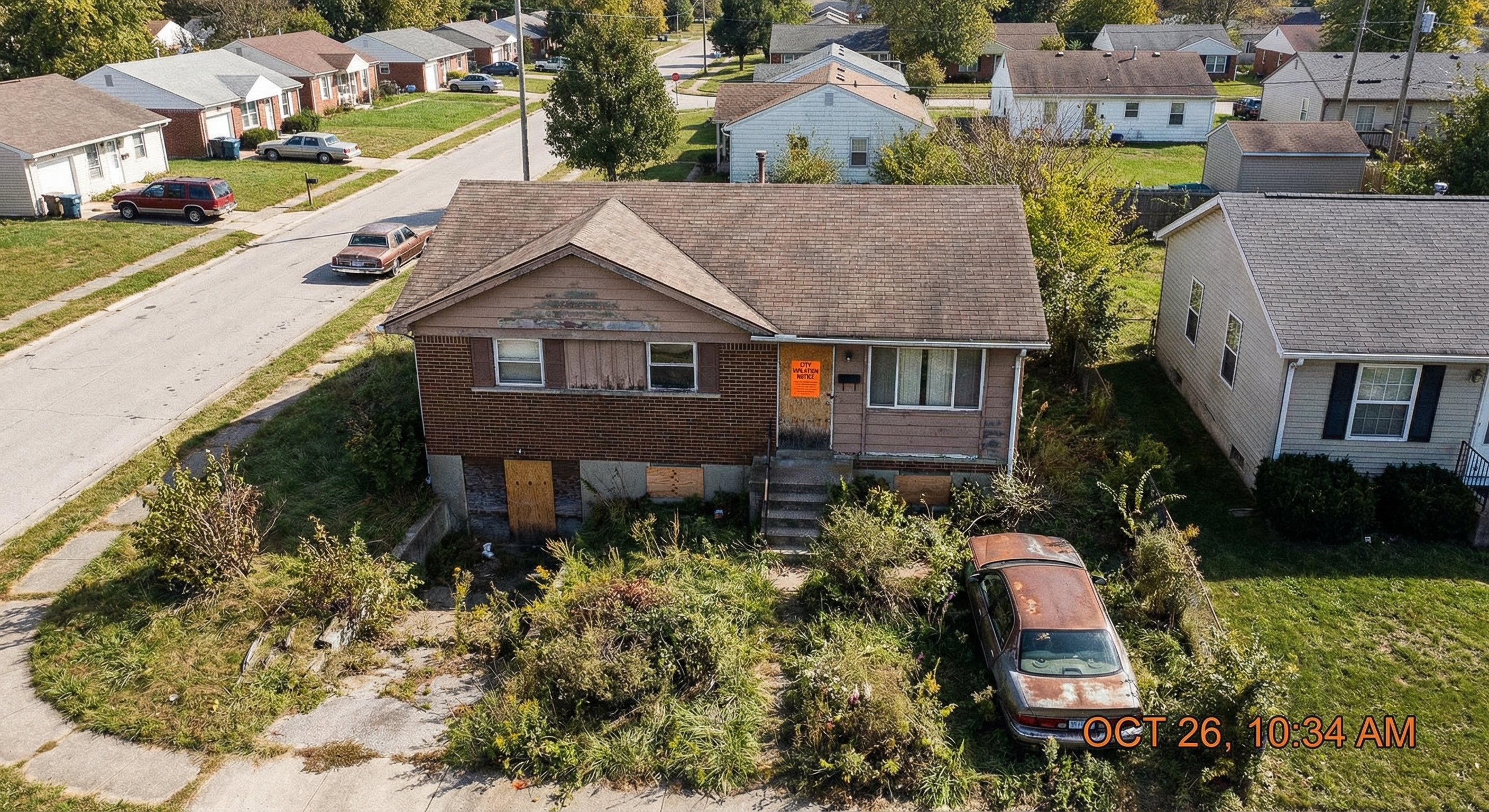
Hendricks and Johnson Counties occupy the middle ground. Both are fast-growing suburban counties with some legacy distressed inventory near their older town centers. Danville, Brownsburg, and Franklin each have small historic cores with aging housing stock that occasionally produces vacant property leads at prices that make renovation economics work.
Rust Belt Lake County (Lake, Porter, LaPorte Counties)
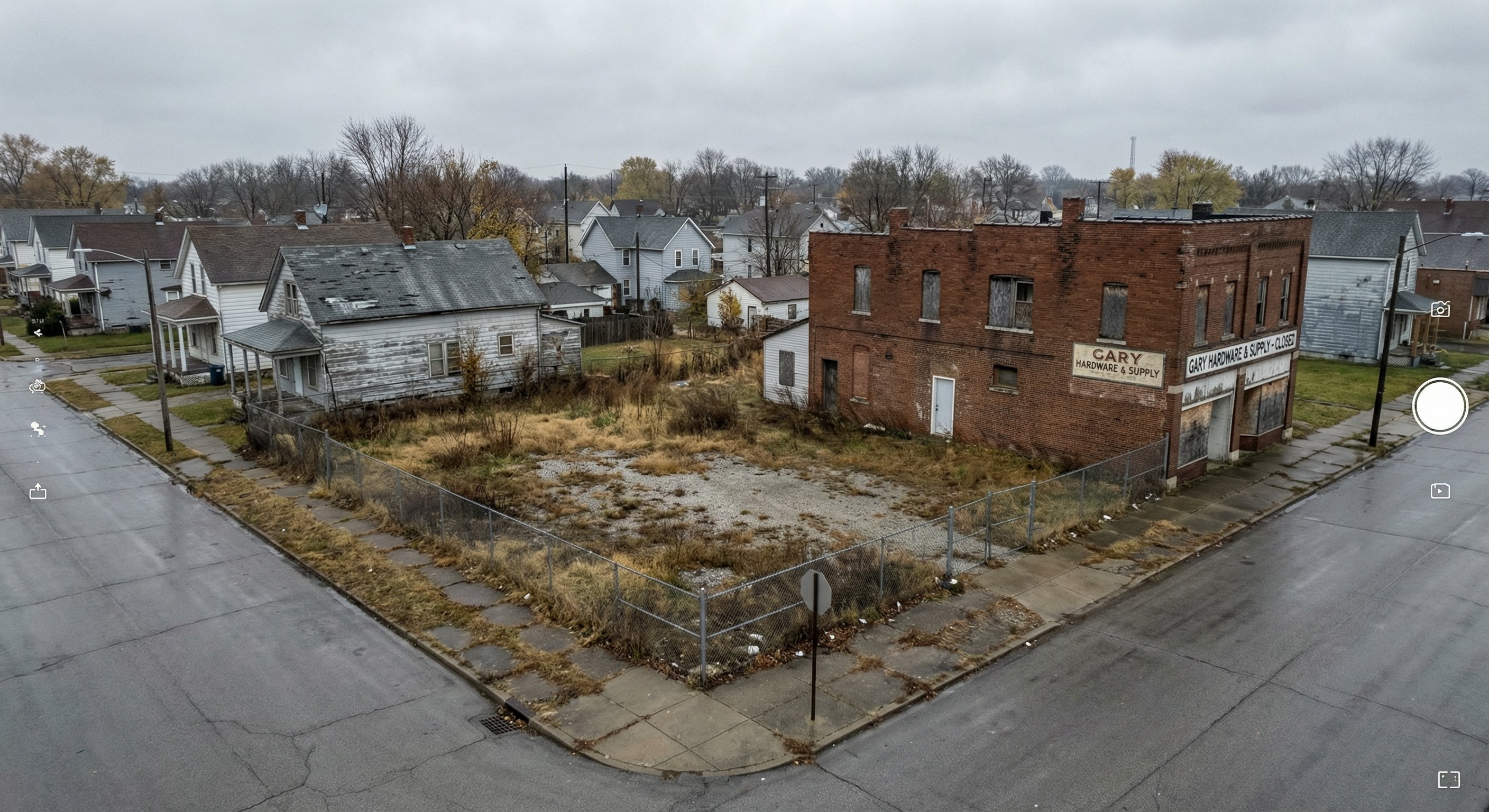
Lake County is Indiana's most concentrated source of genuinely deep-distress vacant property leads. Gary, East Chicago, Hammond, and Michigan City all have significant vacant residential inventories that trace back to steel industry job losses in the 1980s and 1990s. These are not the properties that lenders want to foreclose on because the carrying costs of maintenance on a Gary vacant property often exceed what the property would fetch at auction.
What makes Lake County interesting in 2026 is that several municipalities have begun actively demolishing vacant inventory through blight remediation grants, which means the window to acquire before demolition is closing in specific neighborhoods. Investors who identified Gary vacant property leads in 2024 and 2025 in neighborhoods now slated for demolition may have acquired properties at prices that will not be available again. The current window is in East Chicago and Hammond, where blight designation has not yet triggered the same remediation activity.
Porter County and LaPorte County are quieter but worth monitoring. These counties have lower distressed property volumes but also significantly less competition for whatever inventory does appear. A vacant property lead in LaPorte County that is priced correctly will often sit on the market for 60 to 90 days before attracting a serious inquiry, whereas the equivalent property in Marion County would draw multiple offers within two weeks.
Northern Industrial Cities (Allen, St. Joseph, Elkhart Counties)
Fort Wayne (Allen County), South Bend (St. Joseph County), and Elkhart present a third distinct opportunity profile. These cities experienced manufacturing booms and busts of their own, creating pockets of vacant property in neighborhoods that were built around factories that closed in the 1990s and 2000s. The vacancy in these markets is more scattered than Gary but broadly distributed across multiple city blocks in ways that create acquisition opportunities that larger investors have largely overlooked.
Allen County in particular has seen steady population growth over the past decade as Fort Wayne has attracted logistics and manufacturing investment, creating underlying demand for housing that the existing vacant inventory can partially fill. An investor who acquires a vacant property in a Fort Wayne neighborhood near the General Motors plant or the Ash Brokerage employment hub and positions it correctly for the rental or resale market faces less competition than in any of Indiana's larger metros.
Free Weekly Alerts
See What's Distressed in Your Market
Get free weekly alerts — new distressed properties, motivation scores, and hot neighborhoods in your area. Addresses and contact info available inside DistressIQ.
Free forever · No credit card · Unsubscribe anytime
How to Find Vacant Property Leads in Indiana: The Multi-Source Approach
The single biggest mistake investors make in Indiana is relying on one source to find vacant property leads. Each source captures a different slice of the inventory, and the properties that appear on only one list tend to be either harder to acquire or already known by a competing buyer.
County assessor records are the foundational source. In Indiana, assessor records are public and include fields for occupancy status, tax payment history, and mailing address for the property owner. Properties where the assessor's occupancy field shows vacant and the mailing address is different from the property address are strong candidates for further investigation. The challenge is that Indiana assessor records are not standardized across all 92 counties, and several smaller counties have not fully digitized their occupancy data.

Code enforcement case records are the second layer. Most Indiana cities with populations above 30,000 maintain code enforcement databases that track open cases for vacant properties, including exterior maintenance violations, weeds and vegetation complaints, and structure violations. These records are typically available through city government websites or public records requests. In Marion County, the Indianapolis Metropolitan Development Board publishes quarterly reports on vacant property enforcement activity that provide a useful starting point for lead identification.
Sheriff sale and lis pendens filings provide the third signal layer. Properties entering the foreclosure process generate public filings that are searchable through the county clerk's office. In Indiana, lis pendens filings are recorded at the county recorder's office and are searchable by property address. A property with an active lis pendens filing and a recent code enforcement complaint for exterior violations is exactly the type of multi-signal lead that DistressIQ was built to surface.
Utility shutoff records are an underutilized source in Indiana. Both Indianapolis Power and Light and Northern Indiana Public Service Company maintain internal records of service interruptions due to nonpayment, which are a strong proxy for vacancy. These records are not always publicly accessible without a records request, but they are a source that investors working with local utilities or property management companies can often access.
The investors who build the most reliable vacant property lead flow in Indiana are the ones who layer these sources rather than relying on any single one. A property that appears in the assessor records as vacant, carries an open code enforcement case, and shows a utility shutoff is a three-signal lead that most of the market has not yet identified. A property that appears in only one source may be legitimately uncompeted or may be a data error.
Building Your Indiana Vacant Property Lead Workflow
A practical lead workflow for Indiana vacant properties starts with geographic focus and works inward. Most individual investors and small teams should pick one county to own before expanding. The geography matters because Indiana's 92 counties each maintain their own records systems, and building fluency with Marion County assessor records takes two to three months of regular use. Building that same fluency across five counties simultaneously results in shallow knowledge everywhere.
Once a county is selected, the investor's workflow follows a consistent pattern. Morning check of new sheriff sale filings at the county clerk's office website or public records portal. Weekly review of new code enforcement complaints filed in the target municipality. Monthly review of assessor records for occupancy changes. And a standing records request with the local utility company for properties where service has been discontinued for nonpayment.
For investors who want to compress this timeline, DistressIQ provides a unified view of these signal types across Indiana counties without requiring manual navigation of each county's separate record system. The motivation scoring system ranks vacant property leads by the density and recency of distress signals, surfacing properties with the strongest acquisition potential at the top of the list. An investor in Fort Wayne can pull a ranked list of Allen County vacant property leads with code violations, tax delinquency, and utility shutoffs already cross-referenced, then narrow the list to properties within their target neighborhoods and acquisition price range before making a single public records request.

What DistressIQ Offers for Indiana Investors
DistressIQ covers all 92 Indiana counties with daily signal updates sourced directly from county assessor records, county clerk filings, and municipal code enforcement systems. The motivation scoring model weights signal types based on Indiana-specific acquisition timelines, meaning a property with an active sheriff sale filing in Marion County will score differently than the same signal profile in LaPorte County, where the foreclosure timeline is slower and the redemption period is longer.
The platform's map view allows investors to see geographic clustering of vacant property leads within a county, which is particularly useful in Lake County cities where vacancy is concentrated in specific neighborhoods rather than spread uniformly. An investor can draw a boundary around the East Chicago neighborhoods with the highest code violation density and pull every distressed vacant property lead within that boundary in a single view.
Street View and aerial imagery are integrated into every lead card, allowing investors to assess exterior condition without visiting the property in person. For Indiana's Rust Belt cities, where some streets have multiple vacant properties in a row, the ability to evaluate condition from a desk is a meaningful time savings. An investor can filter a list of 40 vacant property leads down to 8 worth pursuing based on what the aerial imagery shows about roof condition, yard maintenance, and window intactness before making a single phone call.
Pricing starts at $129 per month for Starter access with 2,000 lead detail views, with Pro at $249 per month including 5,000 views and daily digest alerts. Founding member pricing is available at 30% off locked for life for qualifying investors, with fewer than 50 spots remaining.
Frequently Asked Questions
What Indiana cities have the most vacant property leads in 2026?
Gary, East Chicago, Marion County (Indianapolis), and Muncie have the highest concentrations of vacant property leads based on code enforcement data and assessor occupancy records. Fort Wayne and South Bend also produce consistent inventory. The quality of leads varies significantly: Marion County leads are more competitive but move faster, while Gary leads require more capital and patience but offer lower acquisition prices.
How does Indiana's tax sale process work for vacant property investors?
Indiana counties hold annual tax sales on the second Monday in September. Investors purchase liens against properties with delinquent taxes. The redemption period varies by county and property type, typically one to two years. Properties that are not redeemed can be converted to deed ownership through a quiet title action. Investors should research each county's specific redemption period before bidding, as Indiana does not have a uniform redemption timeline across all 92 counties.
Do Indiana cities require vacant property registration?
Indianapolis and several other Indiana municipalities require vacant property registration with the local code enforcement department. Registration fees vary by city. Properties that are not registered can accumulate fines, which attach to the property as liens. However, Indiana's vacancy registration enforcement is less aggressive than states like Illinois or New Jersey, meaning many vacant properties never appear on any official registry. This enforcement gap creates the lead opportunity but also means investors must actively monitor county records rather than relying on city registries.
What signal types indicate the strongest vacant property leads in Indiana?
The strongest leads combine three or more signal types: assessor records showing vacancy, active code enforcement cases for exterior violations, active or recent sheriff sale filings, utility shutoff records, and tax delinquency. Single-signal leads, such as a property that appears vacant in assessor records but has no other distress indicators, are more likely to be data errors or owner-occupied properties where the occupant is simply not present for an extended period.
How is Indiana's landlord licensing requirement affecting vacant property investors?
Indianapolis implemented a rental licensing requirement in 2023 that affects how investors evaluate acquisition-and-rent strategies. Properties acquired at sheriff sale or tax sale that will be held as rental properties require a transfer inspection and licensing before occupancy. Investors should factor licensing timelines into their acquisition economics, particularly for properties in neighborhoods where code enforcement backlog can extend the licensing process by 60 to 90 days.
Start searching vacant property leads across all 92 Indiana counties at distressiq.ai. Browse free, pay only when you want owner contact information and skip-traced phone numbers.
The data behind this article
DistressIQ Monitors These Signals in Real Time
Pre-Foreclosures
NOD + NTS filings
Tax Delinquency
County treasurer records
Code Violations
Municipal inspection filings
Probate Filings
Superior Court records
Every lead is scored 0–100 for seller motivation based on signal type, duration, severity, and stacking. Nationwide coverage — every US county, updated daily.
Ready to find deals in your market?
See Live Distress Signals in Your County
Stop calling dead leads. Every lead in DistressIQ is scored 0–100 for seller motivation, with verified contact info included. Browse the free tier to see what's active in your market right now.
Browse Free Leads — No Credit Card