Vacant Property Leads in Texas: How to Find and Work Them in 2026
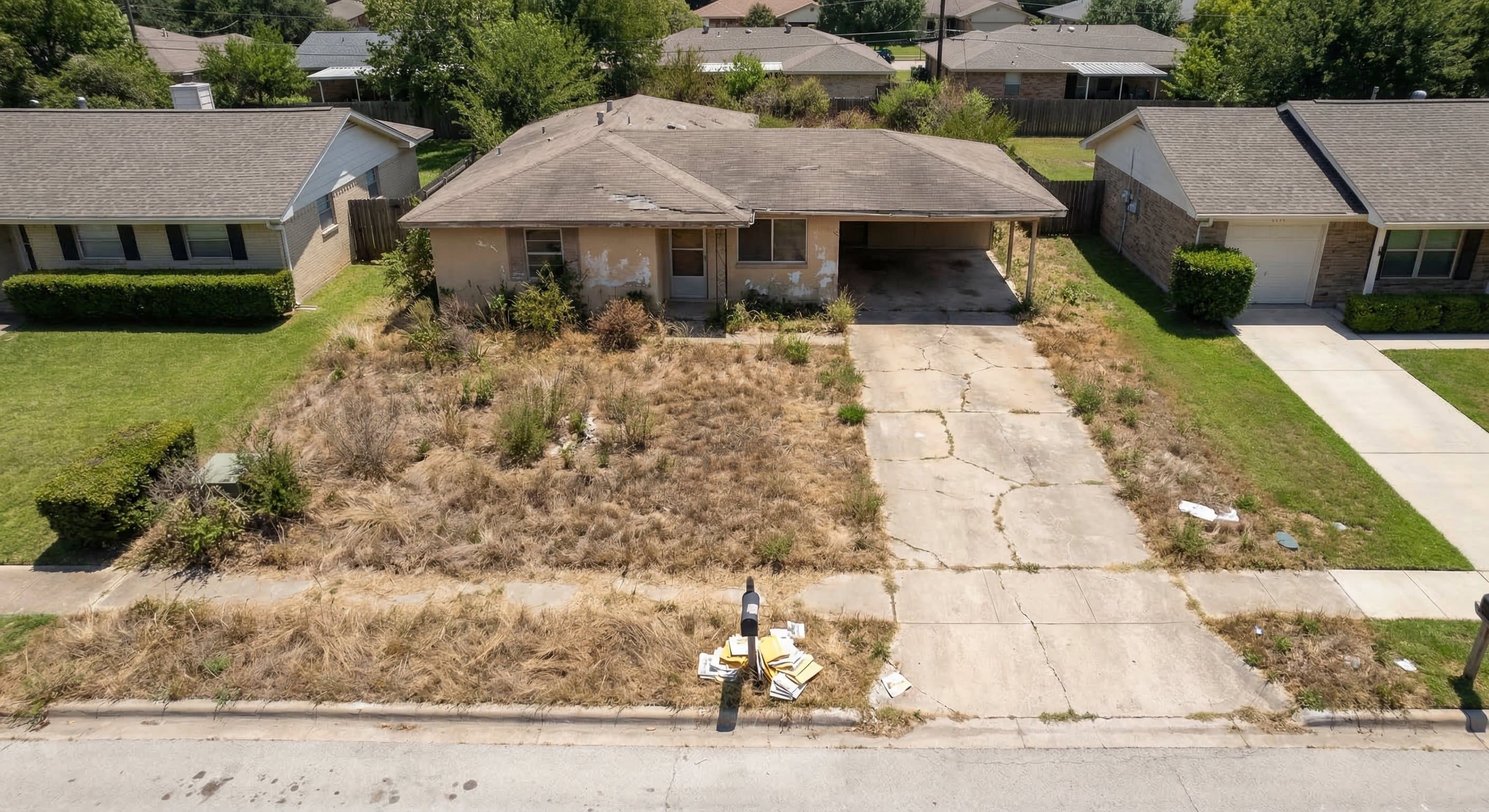
Vacant Property Leads in Texas: How to Find and Work Them in 2026
TL;DR: Texas has over 400,000 vacant residential properties — and they represent some of the most motivated sellers in the market. The best vacant property leads in Texas combine vacancy signals with stacked distress indicators: tax delinquency, code violations, absentee ownership, or probate filings. Platforms like DistressIQ track all of these simultaneously across 3,200+ counties so investors can identify the highest-probability vacant properties without cold-fishing generic lists.
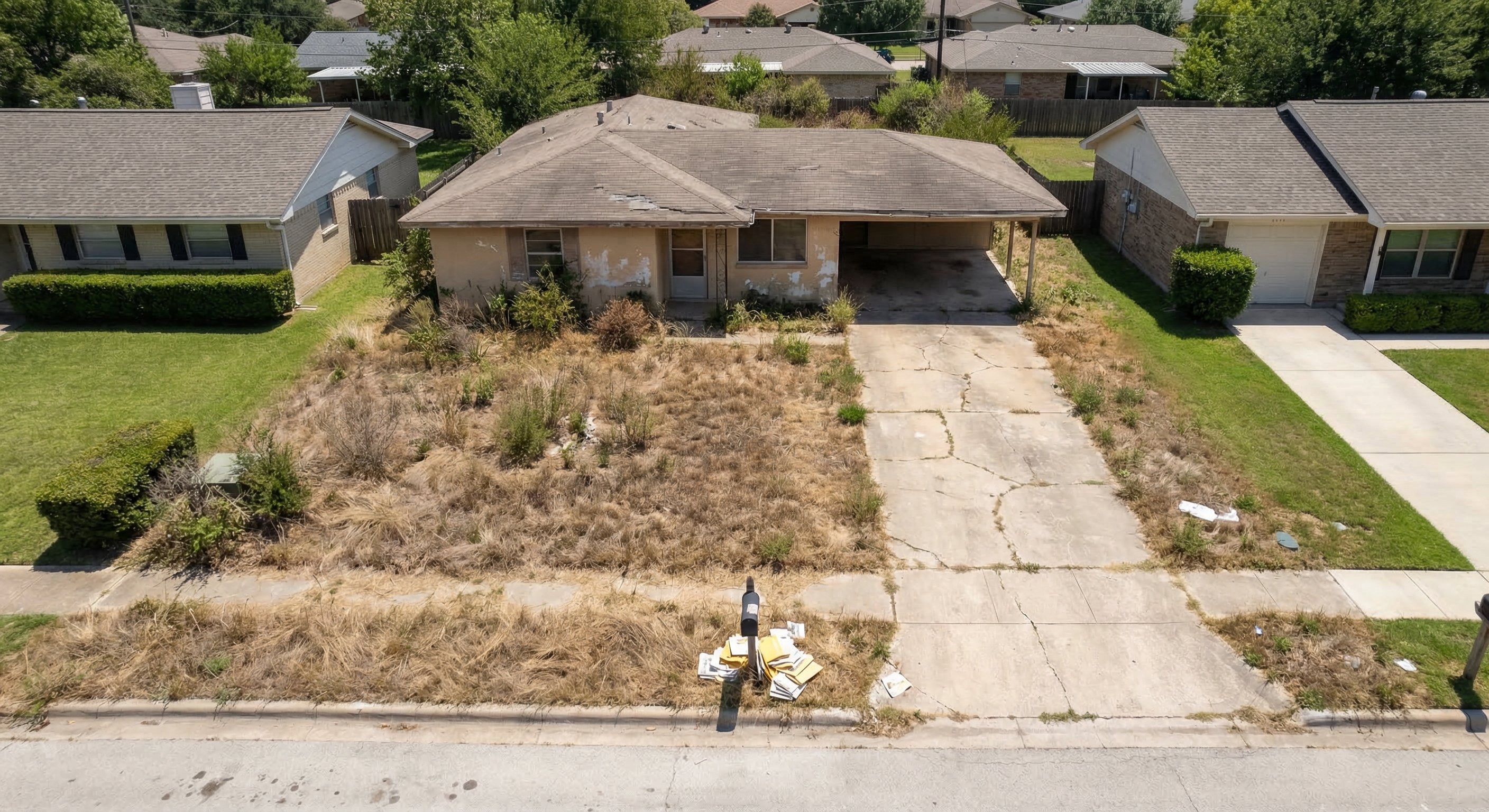
Texas is a massive real estate market — and it has a massive vacancy problem. According to the U.S. Census Bureau, Texas consistently ranks among the top states for vacant housing units, with an estimated 400,000+ homes sitting empty at any given time. That's not dead inventory — that's opportunity.
But here's the thing most investors miss: vacancy alone doesn't make a lead. Every vacant property list includes plenty of homes that are between rentals, under renovation, or owned by someone who has no intention of selling. The real edge comes from knowing which vacant properties are also under financial pressure.
This guide breaks down how Texas investors find, filter, and convert vacant property leads into actual deals in 2026.
Why Texas Has So Many Vacant Properties
Texas's sheer size and geographic diversity create vacancy patterns that don't look like any other state. Understanding why helps you target the right areas.
Boom-and-bust markets. West Texas oil towns like Midland and Odessa cycle through vacancy spikes when oil prices crash. Investors who understand these cycles can move early.
Sprawl and suburban shift. As new construction pushes outward in the DFW and Houston metros, older inner-ring suburbs accumulate vacancy as residents relocate to newer neighborhoods.
Rural depopulation. Small-town Texas — especially in the Panhandle, East Texas, and South Texas border regions — has been losing population for decades. Inherited property sits vacant when heirs live out of state and don't want to deal with it.
Natural disaster overhang. Hurricane Harvey (2017) left thousands of Houston-area homes damaged and unoccupied. Many are still stuck in probate, insurance disputes, or tax delinquency limbo — years later.
Absentee investors who over-bought. The 2020-2022 investment buying frenzy left some out-of-state landlords holding properties they can't rent profitably and won't sell at current prices — but eventually will.
Each of these categories creates a different type of vacant property lead. And each requires a different approach to convert.
What Makes a Vacant Property Lead "Good"
Not all vacancies are equal. Here's how experienced Texas investors evaluate lead quality:
Signal Stacking: The Real Filter
A vacant property is interesting. A vacant property with tax delinquency is a lead. A vacant property with tax delinquency AND code violations AND absentee ownership is a priority lead.
This concept — called signal stacking — is what separates investors who close deals from those who burn through mailer campaigns with 0.5% response rates.
The signals that matter most when layered with vacancy in Texas:
| Signal | What It Adds |
|---|---|
| Tax delinquency | Financial pressure — owner can't or won't pay |
| Code violations | Condition issues, municipal pressure to sell |
| Absentee ownership | Out-of-state owner, lower emotional attachment |
| Probate filing | Heirs want to liquidate, not maintain property |
| Lis pendens | Foreclosure process has started |
| Utility disconnection | Confirmed vacancy — not just "looks empty" |
A single-signal vacant property lead might close at 2-4%. A four-signal stacked lead can close at 15-25% or higher. The math changes your entire outreach strategy.
Days Vacant: Time Creates Motivation
Short-term vacancy (under 90 days) is often transitional — between tenants, light rehab, estate settling. Medium-term vacancy (90-365 days) starts showing pressure. Long-term vacancy (365+ days) almost always indicates a stuck situation: financial, legal, or emotional.
Target the long-term vacancies first. They're harder to find but far more motivated.
Property Condition: The On-the-Ground Reality
Texas summers are brutal. A property sitting empty for 12+ months in Houston or San Antonio without active climate control is deteriorating — mold, foundation shifts from clay soil movement, roof baking. This cuts ARV estimates but often also creates urgency: owners know the clock is ticking.
How to Find Vacant Property Leads in Texas: 5 Methods
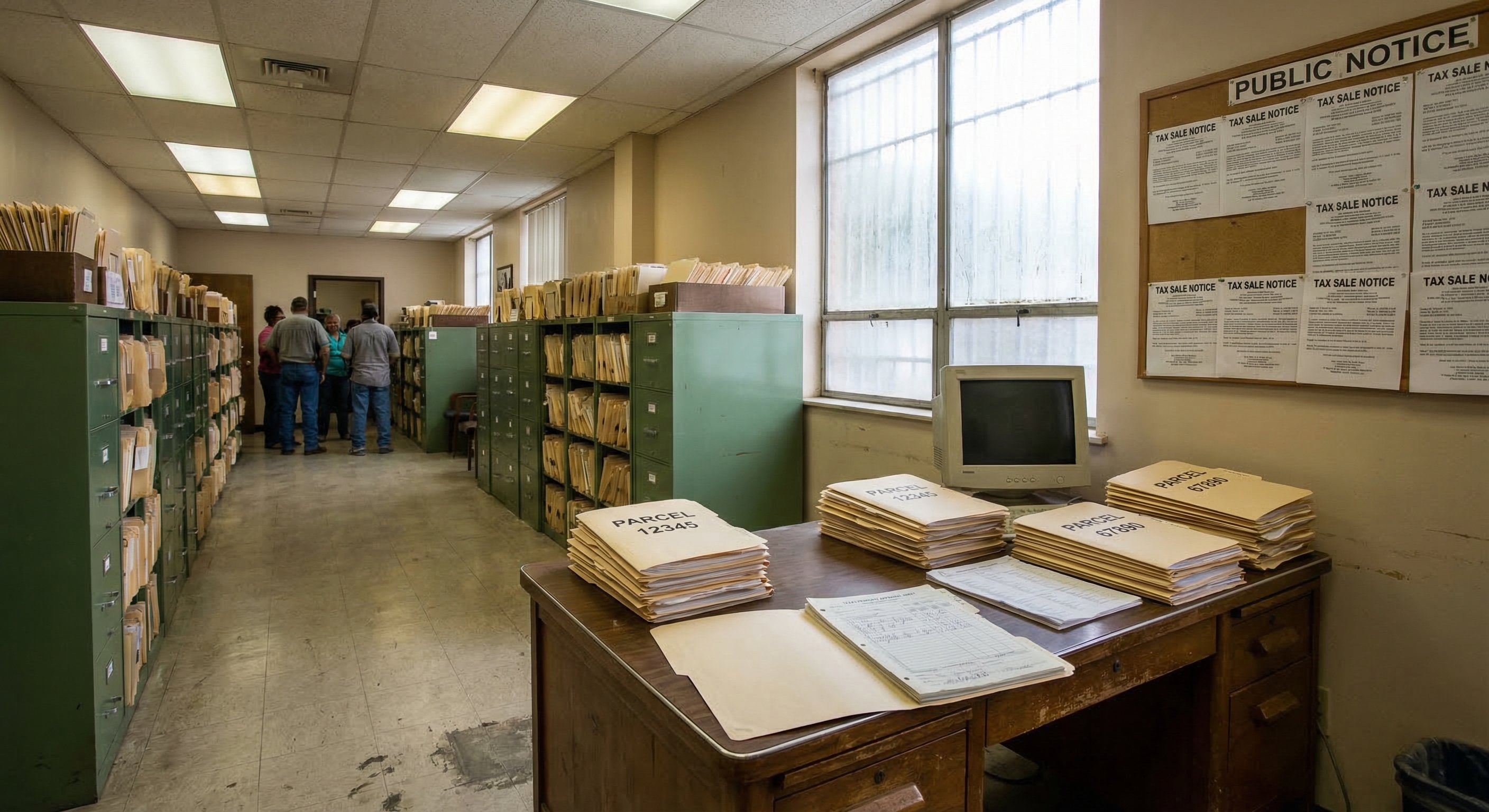
Method 1: County Assessor and Tax Records (Free, Slow)
Texas property tax records are public. Every county tax assessor-collector maintains records on payment status, and many publish annual delinquent tax lists. Key resources:
- Maricopa-level counties (Harris, Dallas, Tarrant, Bexar, Travis): All have online search portals. Search by delinquency status combined with owner-address mismatch (owner mailing address ≠ property address = potential absentee/vacant situation).
- Texas Comptroller's Office: Publishes general property tax data and guidance on exemption records, which can surface homestead-exempt vs. non-homestead properties (non-homestead is a proxy for non-primary-residence).
The limitation: Tax records tell you about financial status, not actual vacancy. You'll still need to drive or cross-reference to confirm.
Method 2: Municipal Vacant Property Registries (Spotty Coverage)
Several Texas cities maintain vacant and abandoned property registries as part of code enforcement:
- Houston (Harris County): The City of Houston tracks "dangerous buildings" and issued demolition orders — these are extreme vacancies but represent motivated-to-sell situations.
- Dallas: The Urban Land Bank program tracks tax-delinquent vacant properties that the city has acquired. Properties adjacent to these are often in similar condition.
- San Antonio: The Vacant Building Monitor program registers properties with outstanding violations.
These are free but cover only a fraction of the actual vacancy landscape, and they're updated irregularly.
Method 3: Driving for Dollars (Ground Truth, Labor-Intensive)
Nothing beats physically driving a target neighborhood. Signs of vacancy in Texas:
- Grass overgrown beyond neighborhood norms (especially notable in HOA-managed areas where code enforcement is aggressive)
- Sun-bleached or missing "For Rent" signs that have been up too long
- No vehicles for extended periods, mail accumulating
- Utility meter blanked or removed
- Peeling paint and deferred maintenance characteristic of uninhabited structures
- Boarded windows or plywood-covered doors (extreme but real)
Apps like DealMachine can help you log properties while driving. But you're still limited to what you can see from the street, and this doesn't give you the owner's financial status.
Method 4: Skip Tracing Lists with Vacancy Filters
Several data companies sell vacant property lists for Texas. The quality varies significantly. What to look for:
- Data sourced from county-level records (more reliable than aggregated national databases)
- Last confirmed update date — stale lists waste mailer budgets
- Built-in filters for absentee ownership, tax status, and property type
The common problem with list vendors: they sell you vacancy. They don't stack it with the distress signals that actually predict deal probability. You'll spend money on outreach to properties that have no urgency to sell.
Method 5: Multi-Signal Data Platforms (Best ROI)
Platforms built specifically for distressed property investors track vacancy alongside financial and legal signals simultaneously. This is where signal stacking becomes automated rather than manual.
DistressIQ monitors 11M+ active distress signals across 3,200+ counties — including Texas's 254 counties — and surfaces properties where multiple signals overlap. When a property shows vacant utility indicators, tax delinquency, and an absentee owner, it rises to the top. When it adds a code violation or lis pendens filing, it becomes a priority lead.
The platform's Street View and aerial view integration means you can visually confirm the property condition before spending anything on outreach.
Free Weekly Alerts
See What's Distressed in Your Market
Get free weekly alerts — new distressed properties, motivation scores, and hot neighborhoods in your area. Addresses and contact info available inside DistressIQ.
Free forever · No credit card · Unsubscribe anytime
Texas-Specific Vacant Property Dynamics You Need to Know
The Texas Foreclosure Timeline Creates Urgency Windows
Texas is a non-judicial foreclosure state, which means the foreclosure process is fast — some of the fastest in the country. A lender can complete a foreclosure in as little as 21 days after the Notice of Sale is posted. For vacant pre-foreclosure properties (a common combo), this creates very short windows to reach the owner.
If you're targeting vacant properties with lis pendens or Notice of Trustee Sale filings, move fast. The window between filing and courthouse steps sale can close before your mailer even arrives.
Texas Homestead Exemption = Key Filter
Texas's homestead exemption is one of the strongest in the nation — it protects primary residences from most forced sales (with the exception of property taxes and mortgage). This is relevant for vacant property leads because:
- A property actively claiming a homestead exemption is unlikely to be truly vacant (owner lives there or maintains legal residence)
- A property that dropped its homestead exemption is a strong signal — owner may have moved out (and become an absentee owner), which correlates with vacancy
Run your vacant leads against homestead exemption history. Properties that lost their exemption in the last 12-36 months are worth prioritizing.
The Rural Texas Opportunity
Major metros get most of the attention, but some of the highest-yield vacant property leads are in rural Texas counties:
- East Texas (Tyler, Nacogdoches, Lufkin area): Inherited timber-land adjacent properties, heirs out of state
- Panhandle (Lubbock, Amarillo metro edges): Ag property adjacent residential, population decline
- Rio Grande Valley: Generational ownership, absentee heirs, complex title situations
- Central Texas small towns: Properties outside the Austin metro that have appreciated but aren't being actively managed
These markets have lower competition, willing sellers, and acquisition prices well below urban markets. The tradeoff is a smaller buyer pool for flips, so buy-and-hold or sub-to strategies work better here.
Working Vacant Property Leads: Outreach That Converts
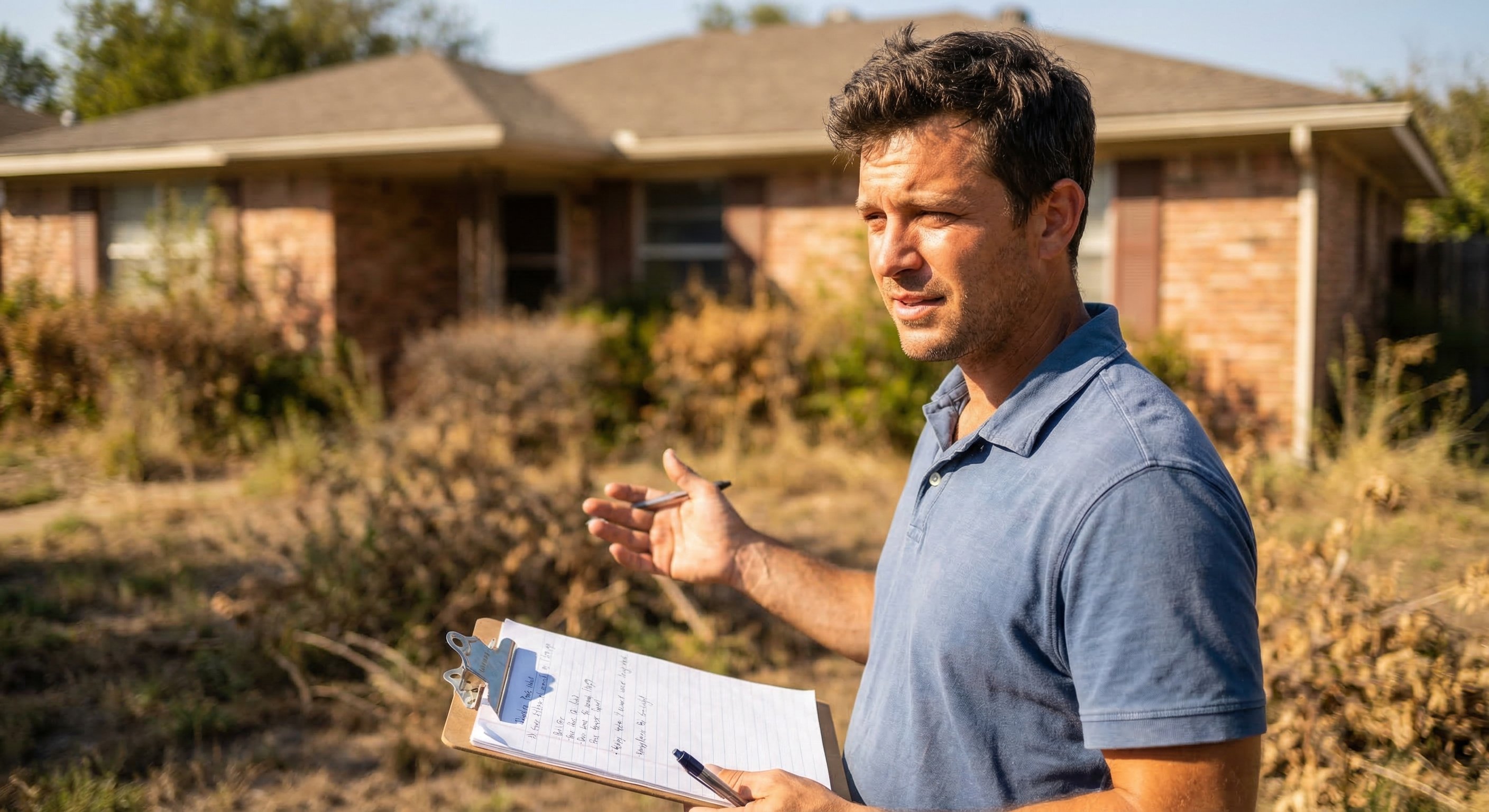
Once you have a prioritized list of stacked vacant property leads, the outreach approach matters as much as the list quality.
Lead with Problem-Solving, Not Lowball Offers
Vacant property owners in Texas are dealing with a real problem. Their property is deteriorating, they're accumulating tax liability, and they may be getting municipal notices. The investor who positions as a solution closes more deals than the investor who positions as a buyer.
Your first contact shouldn't be "I want to buy your house." It should be closer to "I help property owners in difficult situations — is there anything I can do to help with [property address]?"
This framing works especially well for probate-adjacent vacant properties where heirs feel guilty about a family home deteriorating.
Direct Mail Still Works — With Better Targeting
Cold mailers to generic vacant property lists average 0.3-0.8% response rates. Mailers to stacked vacant + tax delinquent + absentee properties average 2-5%. The same spend, applied to better-targeted leads, produces 5-10x the response.
Personalization matters in Texas:
- Reference the specific property address (not "your property")
- Mention the county or city — shows you're local or knowledgeable
- Hand-addressed yellow letters outperform professionally printed postcards in rural Texas (big market, less sophisticated)
Phone Outreach Works Faster
If you have a solid skip trace on the vacant property owner (which a quality data platform should provide), a direct phone call converts faster than mail. Texas property owners — especially rural and small-town owners — respect the directness.
Cold call conversion on stacked vacant leads runs 3-7% in most Texas markets.
The Cost of a Vacant Property Lead in Texas
Investors working the Texas market in 2026 typically spend $15-40 per converted vacant property lead, depending on method:
| Method | Cost Per Lead | Conversion Rate | Cost Per Deal |
|---|---|---|---|
| Generic list + mass mailer | $0.50-1.00 per mailer | 0.3-0.8% | $5,000-15,000 |
| Stacked signals + targeted mail | $1.50-3.00 per mailer | 2-5% | $1,500-4,500 |
| Driving for dollars + skip trace | $0.25/property + $0.50 skip | 3-8% | $800-3,000 |
| Multi-signal platform + phone | $80-250/mo platform | 4-12% | $500-2,000 |
The platform approach has higher monthly fixed cost but dramatically lower cost-per-deal when volume is consistent.
DistressIQ for Texas Vacant Property Leads
Searching for vacant properties across Texas's 254 counties manually would take a full-time team. DistressIQ automates the signal monitoring and stacking across all of them.
For Texas specifically, the platform tracks:
- Vacancy indicators (utility disconnect flags, absentee owner mailing address mismatches, long-term non-homestead status)
- Tax delinquency across all Texas county tax assessor-collector systems
- Lis pendens and foreclosure filings through Texas county clerk records
- Code violation notices in major Texas metros
- Probate filings through Texas district court records
Every lead comes with Street View and aerial imagery so you can visually confirm condition before committing to outreach spend. Other platforms give you a spreadsheet. DistressIQ shows you the property — Street View + aerial on every lead.
Founding member pricing is still available: Starter $89, Pro $174, Elite $349/mo — 30% off locked for life, fewer than 50 spots remaining. See current plans at distressiq.ai.
Key Takeaways
- Texas has 400,000+ vacant properties — but vacancy alone is not a lead
- Signal stacking (vacancy + tax delinquency + absentee + code violation) produces 5-10x higher conversion than single-signal lists
- Texas's fast non-judicial foreclosure timeline creates urgent windows for vacant pre-foreclosure properties
- The homestead exemption history is a powerful filter — properties that dropped their exemption are worth prioritizing
- Rural Texas (East Texas, Panhandle, Rio Grande Valley) offers lower competition and willing sellers
- Cost-per-deal with stacked signal leads is $500-2,000 vs. $5,000-15,000 with generic lists
Frequently Asked Questions
Q: How many vacant properties are in Texas?
The U.S. Census Bureau's American Community Survey consistently estimates 400,000-500,000 vacant housing units in Texas, representing approximately 5-7% of the total housing stock. This includes seasonal vacancies, properties between rentals, and long-term vacancies. Investor-relevant long-term vacancies (365+ days) represent a subset of this figure.
Q: Are vacant property lists in Texas public record?
Partially. Tax delinquency records are public in Texas and accessible through each county tax assessor-collector. Code violation notices are public record in cities that maintain them. True vacancy (physical unoccupancy) is not directly recorded anywhere — it must be inferred from proxy signals like utility disconnection, absentee ownership, and physical observation.
Q: What is the best county in Texas for vacant property leads?
Harris County (Houston), Dallas County, Tarrant County (Fort Worth), and Bexar County (San Antonio) have the largest absolute number of vacant properties due to population size. For investors seeking lower competition and motivated sellers, smaller Texas counties with rural depopulation trends (Panhandle, East Texas, South Texas) offer better ratios of vacancy to active investors.
Q: How do I find the owner of a vacant property in Texas?
Start with the county appraisal district's public property search (every Texas county has one). The ownership record shows the mailing address for tax notices. If the mailing address differs from the property address, the owner is absentee. From there, skip tracing services can provide phone and email contact information.
Q: Can a city in Texas force me to maintain a vacant property I own?
Yes. Texas municipalities have nuisance abatement authority to require minimum maintenance of vacant properties and can charge the owner for code enforcement actions. Some cities have vacant property registration programs that impose annual fees. Chronic violators can face condemnation. This creates motivation for owners to sell before costs escalate.
Q: How long does it take to find and close a vacant property deal in Texas?
Timelines vary significantly. From list generation to contract: 30-90 days is typical when using targeted outreach. Closing timelines in Texas are relatively fast — cash deals can close in 7-14 days. Pre-foreclosure vacant properties may have urgency-driven timelines as short as 3-4 weeks from initial contact to close.
Q: What's the difference between a vacant property and an abandoned property in Texas?
Legally, there's no formal distinction in most Texas jurisdictions. Practically, "vacant" means unoccupied with a known owner; "abandoned" suggests the owner has also ceased maintenance and may have relinquished practical control. For investors, abandoned properties carry higher title risk (potential adverse possession claims, unclear heir situations) but also lower competition and more motivated-to-resolve ownership situations.
Internal links:
- How to Find Vacant Properties in 2026 — national guide
- Tax Delinquent Properties in Texas — pairs well with vacancy
- How to Find Absentee Owners — the absentee owner filter explained
Data referenced: U.S. Census Bureau American Community Survey 5-Year Estimates (Texas housing vacancy data); Texas Comptroller of Public Accounts property tax statutes; National Association of Realtors (NAR) Investor Research.
The data behind this article
DistressIQ Monitors These Signals in Real Time
Pre-Foreclosures
NOD + NTS filings
Tax Delinquency
County treasurer records
Code Violations
Municipal inspection filings
Probate Filings
Superior Court records
Every lead is scored 0–100 for seller motivation based on signal type, duration, severity, and stacking. Nationwide coverage — every US county, updated daily.
Ready to find deals in your market?
See Live Distress Signals in Your County
Stop calling dead leads. Every lead in DistressIQ is scored 0–100 for seller motivation, with verified contact info included. Browse the free tier to see what's active in your market right now.
Browse Free Leads — No Credit Card