Vacant Property Leads in California: How to Find and Work Them in 2026
Vacant Property Leads in California: How to Find and Work Them in 2026
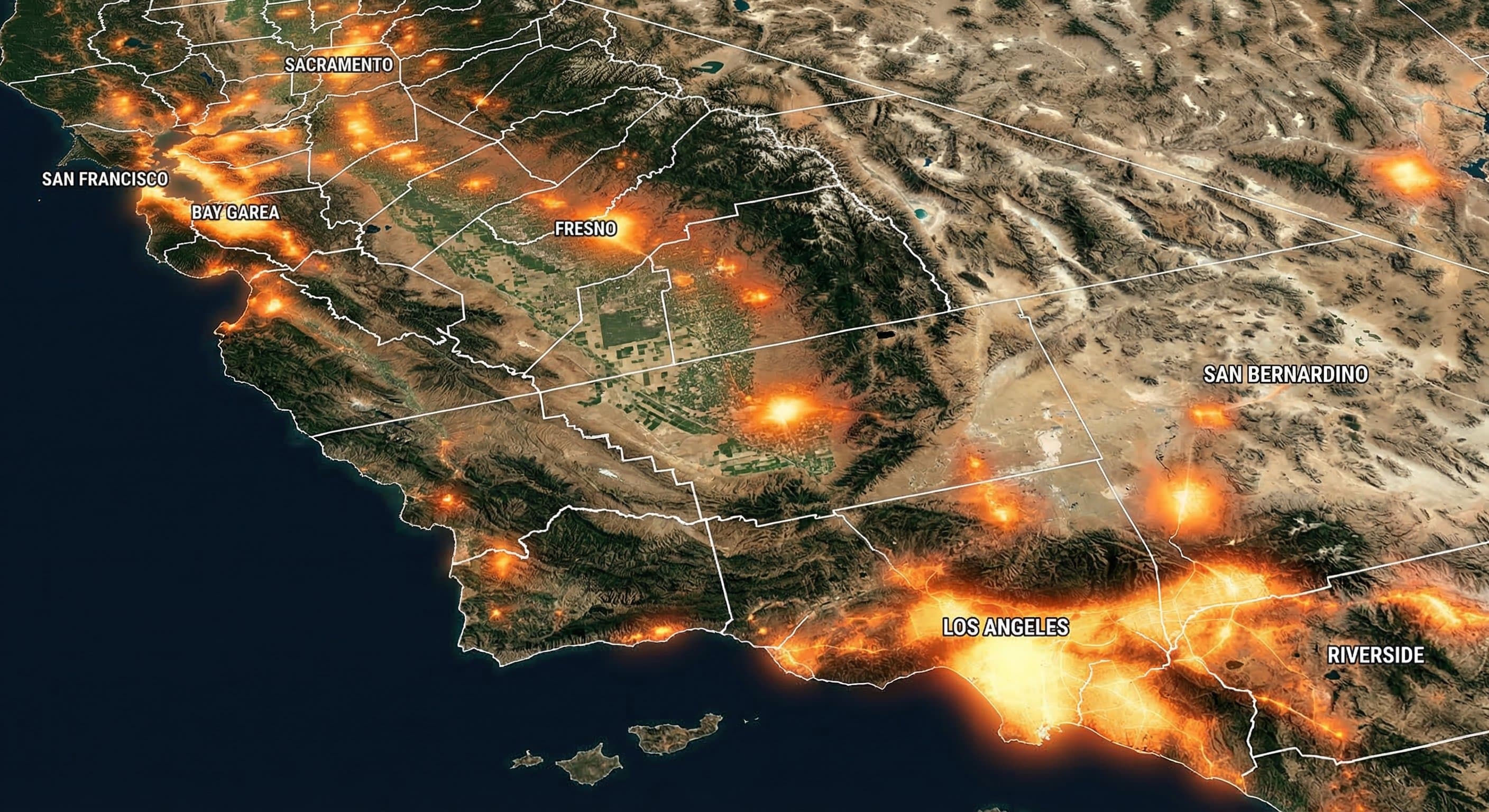
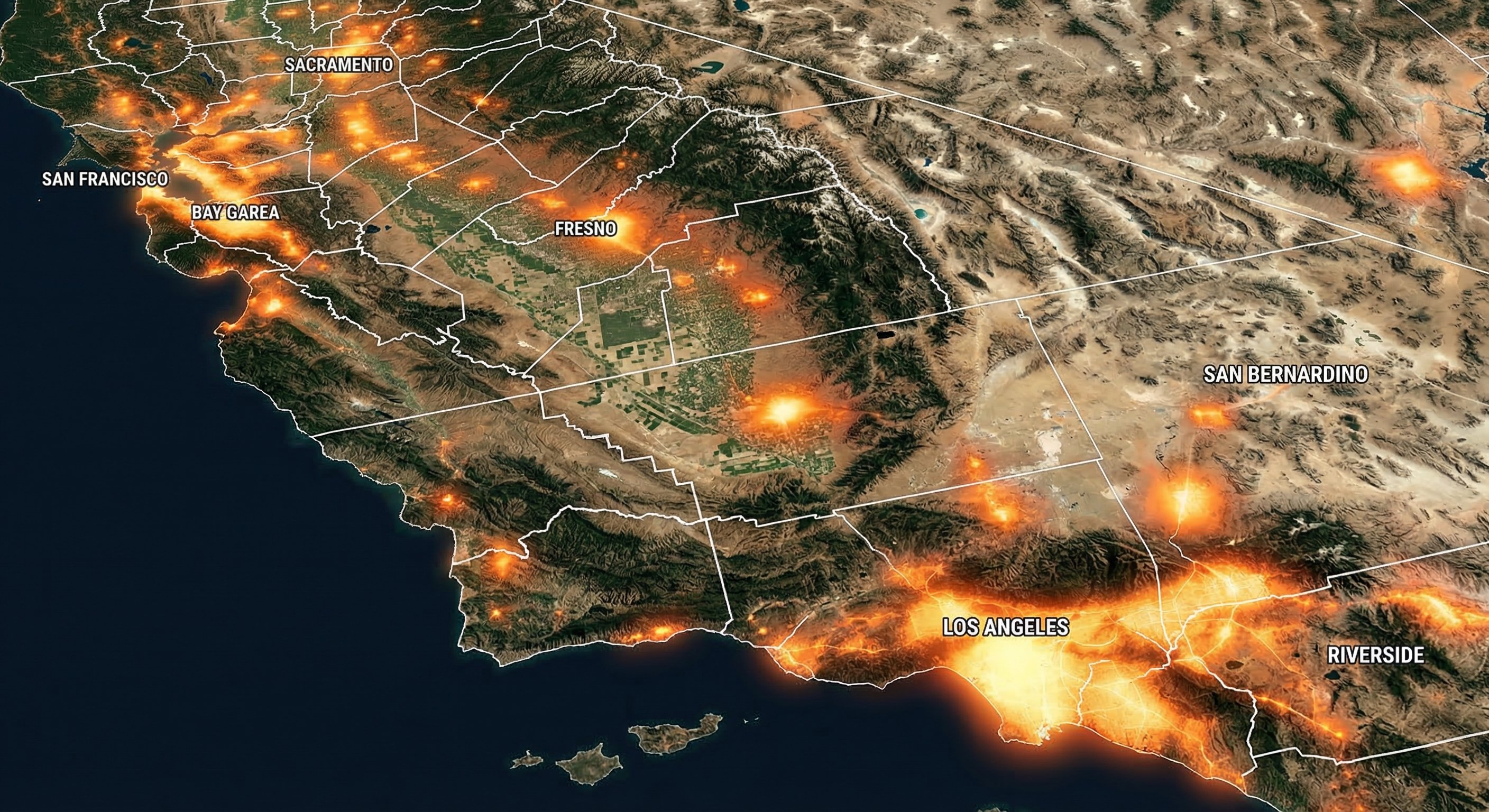
TL;DR: California has one of the largest concentrations of vacant residential properties in the United States — estimates range from 400,000 to 1.5 million units statewide, with Los Angeles County alone tracking 40,000+ vacant homes. Finding vacant property leads in California requires combining county assessor data, USPS vacancy indicators, utility shutoff records, and court filings. The highest-value leads layer vacancy with tax delinquency, absentee ownership, and code violations — three signals that frequently cluster in the same property.
California's real estate market is famous for sky-high prices — but that same dynamic creates some of the most profitable vacant property leads in the country. When a 1,400 sq ft bungalow in Inglewood is worth $700,000, even a neglected, absentee-owned property with $8,000 in back taxes represents a lead worth serious pursuit. The equity is there. The motivation is there. Most investors just don't know how to find it systematically.
What Qualifies as a Vacant Property in California?
California doesn't have a single statewide vacant property registry. Instead, vacancy gets tracked and defined at multiple levels — and understanding these tiers is how you build a complete lead picture.
The USPS vacancy flag is the most commonly referenced indicator. The postal service marks an address as vacant when mail has gone uncollected for 90+ days. This is public data, surfaced through HUD's data releases and available in property intelligence platforms. It's a strong signal — but it's a lagging indicator. A property may have been vacant for six months before the USPS flag appears.
Utility shutoffs are faster. When a property's power or water has been disconnected, that's a near-real-time vacancy signal. Most counties don't publish this data directly, but it surfaces in code enforcement records when neighbors report the condition.
County ordinance registration applies in many California cities. Los Angeles, Oakland, Sacramento, Long Beach, and dozens of other municipalities require owners of vacant properties to register them annually and pay a fee. Failure to register becomes a code violation — and code violations appear in county records.
Tax delinquency is the most powerful secondary signal. California has a five-year redemption period before the county can sell a tax-defaulted property — far longer than most states. That extended timeline means thousands of properties sit delinquent for years before action. Many of those are vacant.
Why California Vacant Properties Are High-Opportunity Leads
A few dynamics make California specifically compelling for vacant property investors:
Prop 19 created a new wave of inherited leads. Passed in November 2020, Proposition 19 eliminated the parent-to-child property tax transfer exemption for investment properties. Before Prop 19, an heir could inherit a rental in East LA and keep the parent's $1,500/year tax bill indefinitely. After Prop 19, that same heir faces reassessment to current market value — often a $10,000–15,000/year jump. Many heirs who inherited marginally profitable rentals chose to sell. But many others simply walked away. Those properties show up as vacant, absentee-owned, and increasingly tax-delinquent.
The absentee ownership rate is exceptionally high. California's investor-landlord culture, combined with population mobility, has left a significant inventory of out-of-state owners who bought during the 2000s boom and haven't been to the property in years. An absentee owner + a deferred maintenance issue + a difficult tenant situation is a classic path to vacancy.
Equity cushion is massive. Even a deeply discounted sale on a vacant California property often leaves the seller ahead. That's not true in every state — in rust belt markets, vacant properties can have negative equity after liens and cleanup costs. In Southern California, the Inland Empire, the Bay Area, and Sacramento, the seller still walks with something meaningful. That changes the conversation.
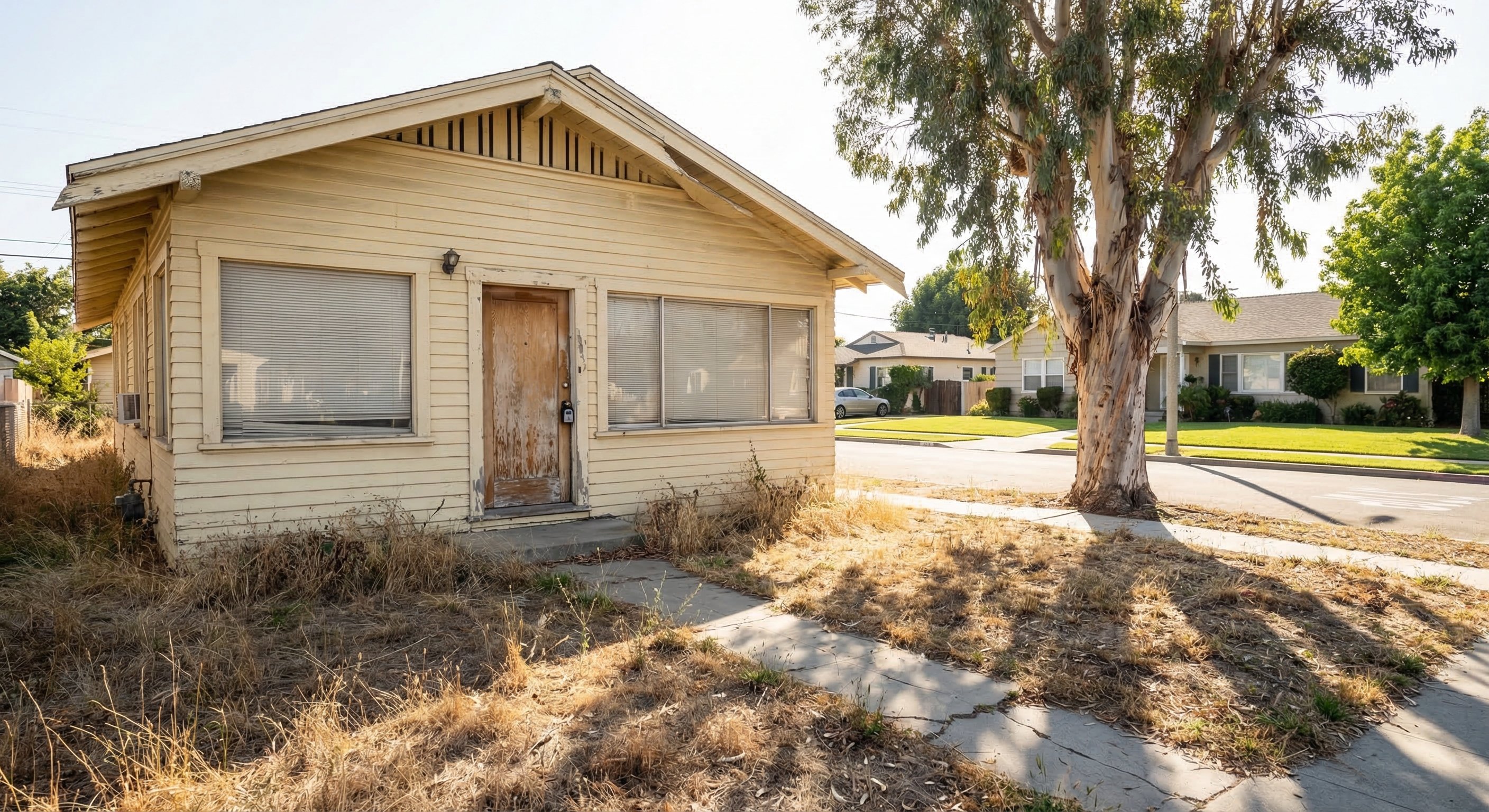
Code violation density is high. California cities aggressively cite properties for code violations — overgrown vegetation, unsecured structures, broken windows, rodent harborage. A single vacant property in an LA neighborhood can accumulate $15,000+ in citation fines within 18 months. That creates pressure to sell fast.
According to the California Department of Housing and Community Development, the state has an estimated 1.5 million vacant housing units when vacation homes and seasonal properties are included. Source: HCD Housing Element Data, 2023.
How to Find Vacant Property Leads in California
1. Start With County Assessor Records and Tax Rolls
Every California county publishes a property tax roll that includes owner mailing addresses. When the mailing address is out of state, or when mail is being returned, that's an absentee or potentially vacancy signal. California's 58 counties each run their own system — some (like LA County and San Diego) have well-developed online parcel search tools; others require in-person visits or data requests.
Key data points to pull from assessor records:
- Owner mailing address (out of state = absentee flag)
- Last sale date (10+ years with no activity suggests long-term hold)
- Assessed vs. market value gap (if Prop 13 basis is $80K and market is $650K, seller has massive equity and potential motivation)
- Tax delinquency status (separate from assessor, but often linkable through county tax collector portals)
2. Monitor County Tax Collector Lists
California's tax collectors publish the Delinquent Property Tax List (also called the "5-year default list") annually. This is public record. Properties on this list have missed at least one year of taxes; those in the 3rd and 4th year of default are most likely to be vacant and to have owners open to negotiation — the five-year clock is running.
The Los Angeles County Treasurer and Tax Collector publishes this at ttc.lacounty.gov. Other counties publish similar lists. Source: California Revenue and Taxation Code § 3371.
3. Pull Code Violation Records
California municipalities publish code enforcement actions. These are gold for vacant property identification because:
- A code violation on an occupied property usually gets resolved in 30 days
- A code violation on a vacant property often sits open for 6–18 months
- Multiple open violations = deep vacancy + low motivation to maintain
Cities that publish this data online (searchable): Los Angeles, San Diego, San Jose, Sacramento, Fresno, Oakland, Long Beach. Smaller cities often require a public records request.
4. Use USPS Vacancy Indicators (Aggregated Through a Platform)
Pulling raw USPS data yourself requires a bulk mail service agreement. Practically, most investors access vacancy flags through a property intelligence platform that aggregates it alongside assessor data, lien records, and court filings. The value isn't the vacancy flag alone — it's seeing that a property is USPS-flagged vacant AND absentee-owned AND has a code violation AND is in its second year of tax delinquency.
That stack is what separates a motivated seller from a temporarily vacant rental.
Free Weekly Alerts
See What's Distressed in Your Market
Get free weekly alerts — new distressed properties, motivation scores, and hot neighborhoods in your area. Addresses and contact info available inside DistressIQ.
Free forever · No credit card · Unsubscribe anytime
Understanding California's County-by-County Approach to Vacancy
California's 58 counties create genuine complexity for investors trying to work statewide. Here's how the major markets differ:
Los Angeles County: The largest and most complex. LA City has a Vacant Building Ordinance requiring registration. Properties in default are handled by the LA County Treasurer-Tax Collector. Pre-foreclosure (lis pendens) filings appear in LA Superior Court records. The Assessor's portal is searchable at assessor.lacounty.gov.
Riverside and San Bernardino Counties (Inland Empire): These two counties have some of the highest concentrations of absentee-owned single-family rentals in the state — a legacy of the 2000s speculative boom. Tax sale properties here move through both counties' tax collector offices, each with separate timelines.
Sacramento County: The Central Valley's biggest market. Strong mix of investor activity and an active code enforcement division that publishes violation data online. Sacramento's older housing stock (1950s–1970s) generates more deferred maintenance leads than coastal markets.
San Diego County: Higher barriers to entry (price), but strong equity cushion and a well-organized Assessor/Recorder/County Clerk portal. Vacant properties in East County and older communities in the South Bay generate the most actionable leads.
Bay Area (Alameda, Contra Costa, Santa Clara): Exceptionally high values mean even marginal vacant leads carry significant upside. The challenging regulatory environment (Oakland's tenant protections, for example) has prompted some landlords to abandon properties rather than navigate eviction processes.
Central Valley (Fresno, Kern, Stanislaus, Tulare): Lower price points but higher distress concentration. These markets have some of the highest rates of tax delinquency in the state relative to property count. Investors who buy and flip here work on volume rather than margin per deal.
What to Do When You Find a Vacant Property Lead
Finding the property is step one. The investor workflow after that:
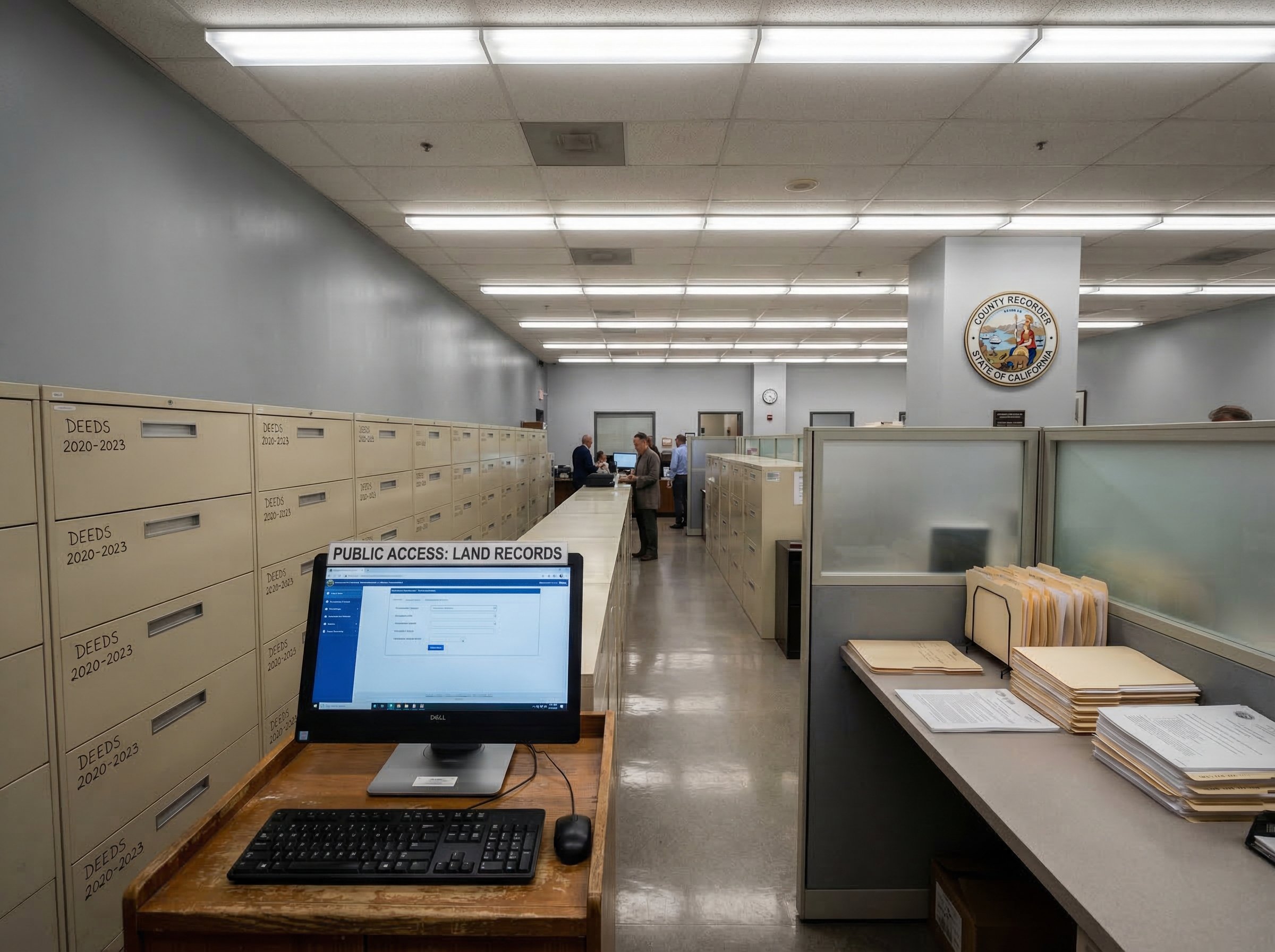
Step 1: Verify current ownership. California assessor data can lag by 6–12 months on ownership changes. Pull a current owner search through the County Recorder's office (most are searchable via GovEase or the county portal directly) before making contact.
Step 2: Locate the owner. Absentee owners and estate heirs often don't list a phone number in public records. Skip tracing (cross-referencing name + last known address against phone and email databases) is standard. California's skip tracing landscape has tightened slightly with CCPA data privacy rules, but investor-grade skip tracing services still operate legally.
Step 3: Understand the lien stack. California vacant properties frequently have layered liens: property taxes, utility liens, municipal code violation fines (sometimes recorded as liens), Mello-Roos assessments, and HOA delinquencies. Before making an offer, pull a title search or use a preliminary title commitment to understand total encumbrances.
Step 4: Lead with problem-solving, not a lowball. An heir who inherited a vacant East Oakland bungalow from a deceased parent isn't looking to be haggled. They're looking for someone to make the problem go away. Investors who approach the conversation with empathy and a clear explanation of what happens if the property keeps sitting vacant (5-year countdown to tax sale, accumulating code fines) consistently close higher than those who open with the number.
Why Stacking Signals Beats Working a Single Vacant Property List

A single-signal vacant property list is a commodity. Every wholesaler in your market has the same list.
The properties worth pursuing in California aren't just vacant — they're vacant AND something else. The combinations with the highest closing rates:
- Vacant + Tax Delinquent: Owner isn't maintaining the property and isn't paying taxes. The five-year clock is running. Urgency is real.
- Vacant + Absentee Owner + Out-of-State: Owner hasn't been to the property in years, may not even know the condition. Surprise outreach tends to convert well.
- Vacant + Probate: Estate property, heirs may be in disagreement or simply overwhelmed. Patient outreach with a clear cash offer often breaks the logjam.
- Vacant + Code Violation + HOA Delinquency: Multiple parties are applying pressure. Seller motivation is real and time-limited.
- Vacant + High Equity (Prop 13 basis): Owner bought in 1988 for $90K, property is worth $480K today. Even a below-market cash offer puts $300K in their pocket with no realtor, no repairs, no open houses.
DistressIQ tracks 31 signal types across 11M+ active leads nationwide. California properties in our database are scored against the full signal stack — so instead of searching a raw county list, you're filtering for the specific combination that matches your investment strategy. Updated daily from county sources across all 58 California counties.
If you're serious about vacant property leads in California, start your free account at distressiq.ai — or lock in founding member pricing at $89/mo (Starter), $174/mo (Pro), or $349/mo (Elite), with 30% off locked for life. Fewer than 50 founding spots remain.
Key Takeaways
- California has 40,000+ vacant homes in LA County alone, with statewide estimates exceeding 400,000 residential units
- No statewide vacant property registry — data must be pulled from county assessors, tax collectors, code enforcement, and court records
- Prop 19 (2020) created a new class of inherited vacant property leads as heirs faced reassessment
- California's 5-year tax default redemption period means properties can sit delinquent for years before action
- The Inland Empire, Central Valley, and East Bay have the highest distress density per square mile
- Multi-signal leads (vacant + tax delinquent + absentee) convert at dramatically higher rates than single-signal lists
Frequently Asked Questions
Q: Is there a public list of vacant properties in California?
There's no single statewide list. California's approach to vacant properties is decentralized across 58 counties and hundreds of municipalities. The closest thing to a "list" is each county's delinquent tax roll (published annually) and code enforcement databases (published by individual cities). Investors typically combine multiple county data sources or use an aggregated platform to get full coverage.
Q: How does California's 5-year tax redemption period work for vacant property investors?
When a California property owner fails to pay property taxes, the county tax collector adds the property to the "default" list. After five consecutive years of default, the property becomes subject to a "tax deed sale" where the county can sell it to recover unpaid taxes. During those five years, the owner retains the right to redeem the property by paying all back taxes, penalties, and interest. Investors target properties in years 3 and 4 — enough urgency to motivate a seller, but still before the public sale window.
Q: Can I directly access California county code violation databases?
Yes, many California cities publish code violation data online. Los Angeles, San Diego, San Jose, Sacramento, Fresno, and Oakland all have searchable portals. For smaller cities, you can typically submit a public records request (CPRA request) to obtain the list. Source: California Public Records Act, Gov. Code § 7920.
Q: How has CCPA affected skip tracing for vacant property leads in California?
The California Consumer Privacy Act (CCPA) applies to businesses that sell personal data commercially. Investor-grade skip tracing services have largely adapted by focusing on business-affiliated records, property ownership data (which is public record), and court filing data rather than pure consumer profile databases. Working with a reputable skip tracing provider and maintaining a legitimate investment purpose remains the standard approach.
Q: What's the difference between a vacant property and an abandoned property in California?
Legally, these terms overlap but aren't identical. "Vacant" typically means unoccupied — the owner hasn't abandoned ownership, they just aren't using it. "Abandoned" usually implies the owner has given up possession and potentially ownership interest. In practice, most "abandoned" properties investors encounter in California are legally still owned — the owner has simply stopped maintaining them and may have stopped paying taxes. The legal process to acquire a truly abandoned property is complex; most investors focus on negotiated purchases from traceable owners.
Q: Which California markets have the best ROI for vacant property flips?
The Inland Empire (Riverside and San Bernardino Counties) consistently produces strong returns — lower acquisition costs than coastal markets with solid post-renovation values. Sacramento and Fresno offer good volume-to-competition ratios. In Southern California, East LA neighborhoods and parts of the South Bay still have distressed inventory at scalable price points. The Bay Area (East Oakland, parts of Richmond, Vallejo) has higher acquisition costs but enormous equity spreads on properly underwritten deals.
Q: How many distress signals does DistressIQ track for California properties?
DistressIQ monitors 31 signal types for California properties — including USPS vacancy, tax delinquency, probate filings, lis pendens, code violations, absentee ownership flags, utility liens, and HOA delinquencies — across all 58 California counties, updated daily from county sources. The platform scores each property against the full signal stack, so you're not manually cross-referencing county databases.
Sources: California HCD Housing Element Data (2023); California Revenue and Taxation Code § 3371; California Public Records Act, Gov. Code § 7920; LA County Treasurer and Tax Collector, ttc.lacounty.gov
Related reading: How to Find Vacant Properties in 2026 | Vacant Property Leads in Texas: How to Find and Work Them | How to Find Absentee Owners: The Investor's Complete Guide
The data behind this article
DistressIQ Monitors These Signals in Real Time
Pre-Foreclosures
NOD + NTS filings
Tax Delinquency
County treasurer records
Code Violations
Municipal inspection filings
Probate Filings
Superior Court records
Every lead is scored 0–100 for seller motivation based on signal type, duration, severity, and stacking. Nationwide coverage — every US county, updated daily.
Ready to find deals in your market?
See Live Distress Signals in Your County
Stop calling dead leads. Every lead in DistressIQ is scored 0–100 for seller motivation, with verified contact info included. Browse the free tier to see what's active in your market right now.
Browse Free Leads — No Credit Card