Tax Lien List Pennsylvania: The Smart Investor's Guide to Upset Sales and Repository Properties
Tax Lien List Pennsylvania: The Smart Investor's Guide to Upset Sales and Repository Properties
TL;DR: Pennsylvania doesn't sell traditional tax lien certificates — instead, counties hold "upset sales" and "judicial sales" where the property itself transfers if taxes remain unpaid. Each of Pennsylvania's 67 counties runs its own auction process with different schedules, minimum bid rules, and redemption rights. The best investor opportunities typically sit in the "repository list" — properties that failed to sell at auction and can often be purchased directly from the county for a negotiated price.
Here's what most investors get wrong about Pennsylvania: they expect to buy tax lien certificates and earn 18-36% interest while the owner redeems. That's not how this state works. Pennsylvania skips the certificate layer entirely. If a property owner falls far enough behind on taxes, you're not buying paper — you're potentially buying the property itself.
That changes the math completely. And for investors who understand the system, it creates opportunities that generic lead lists completely miss.
How Pennsylvania's Tax Sale System Actually Works
Pennsylvania operates under the Real Estate Tax Sale Law (RETSL) — and unlike tax lien certificate states like Florida or Illinois, there's no middle step of buying interest-bearing certificates. The delinquency path goes straight to property conveyance:
Year 1 — Current Taxes: Property owner receives tax bill. If unpaid, taxes become "delinquent" and transfer to the county Tax Claim Bureau.
Year 2 — Tax Claim Bureau: The Tax Claim Bureau (or its equivalent depending on the county) assumes collection. Penalties and interest accrue. Notices are sent.
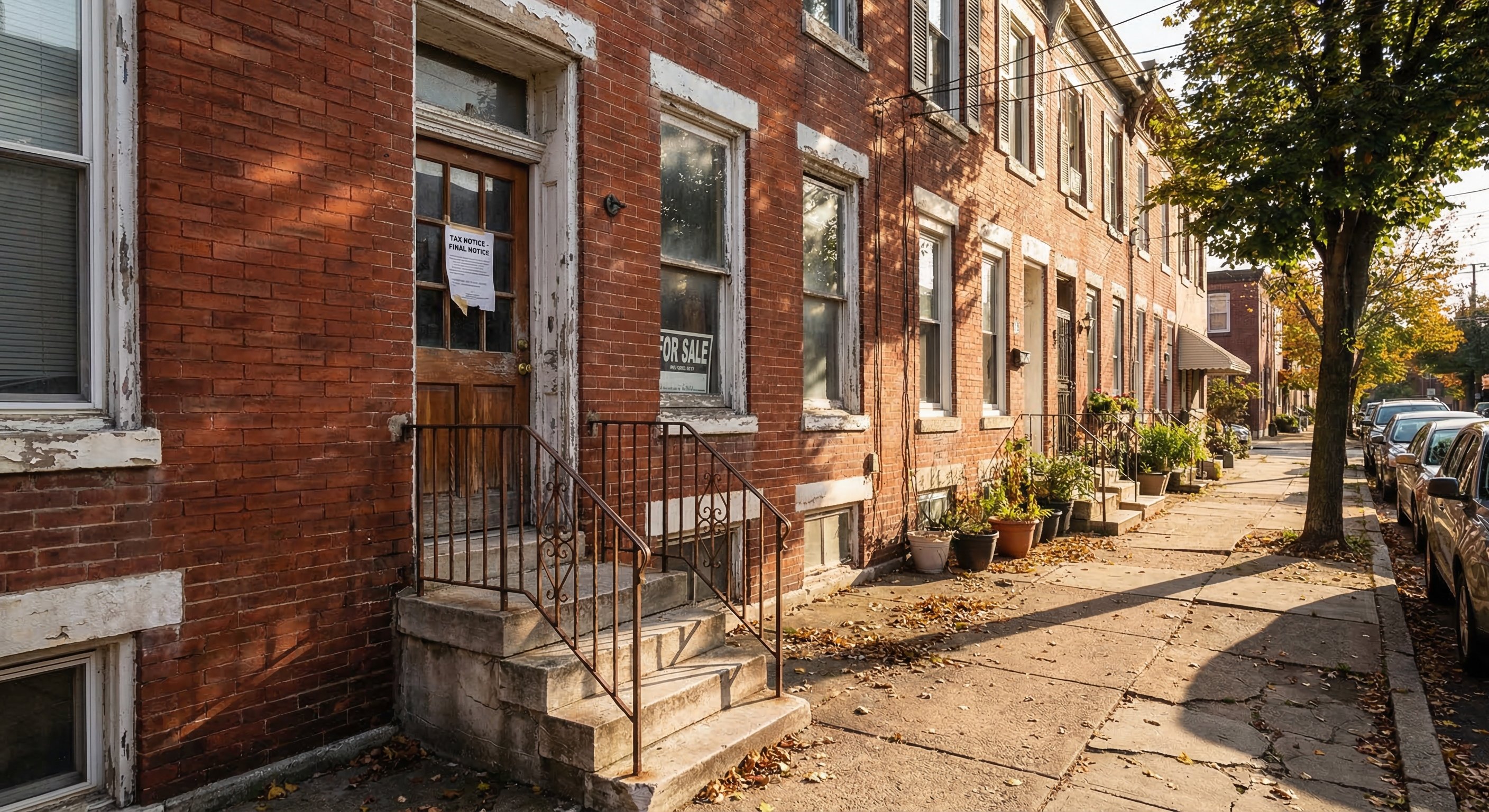
Years 2-3+ — Upset Sale: Properties with at least two years of unpaid taxes become eligible for the county's annual Upset Sale (also called "tax sale" in some counties). At an upset sale, the minimum bid equals all back taxes, interest, penalties, and costs — hence the "upset" price. The buyer takes the property subject to any existing mortgages and liens.
If Unsold — Continued Upset Sale or Repository: Properties that don't sell at the upset sale enter a second attempt, then transfer to the county Repository — a permanent list of properties available for private sale at whatever price the county will accept. Repository properties often sell for $500–$5,000 or less, with no mortgages (those are extinguished after the judicial sale process).
Judicial Sale: If the county pursues it, a judicial sale can extinguish all existing liens including mortgages — resulting in a clean title transfer.
The three tiers — upset sale, repository, judicial sale — each represent different risk/reward profiles. Understanding which tier a property is in changes your entire approach.
The Repository List: Pennsylvania's Hidden Investor Goldmine
The repository is where experienced Pennsylvania investors focus. Here's why:
Properties on the repository list have already gone through the upset sale process without selling. By this point:
- All mortgages may be extinguished (depending on whether a judicial sale occurred)
- The county sets the price — often well below market, especially in rural counties
- Competition is low — repository lists aren't marketed, they're just available
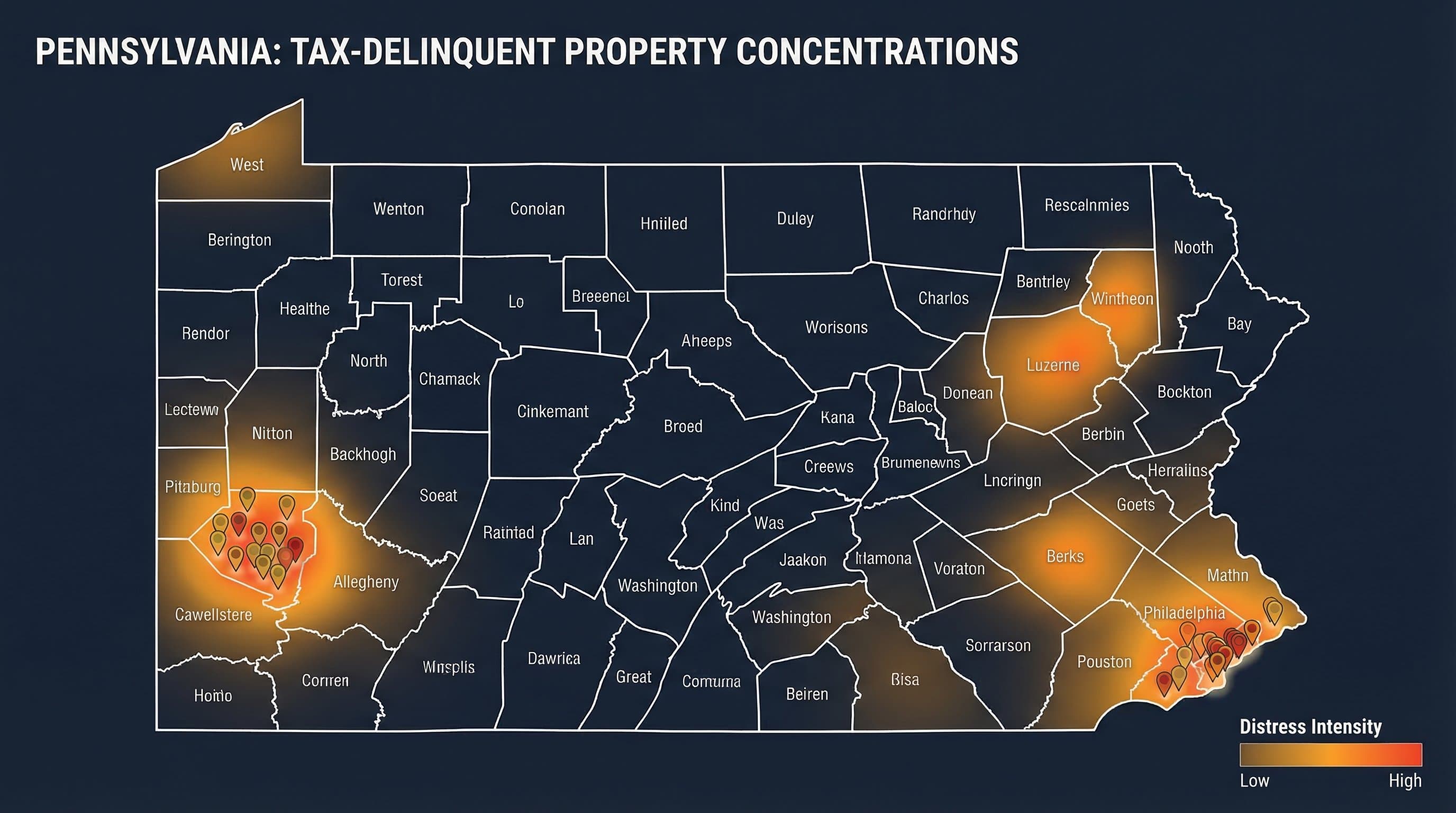
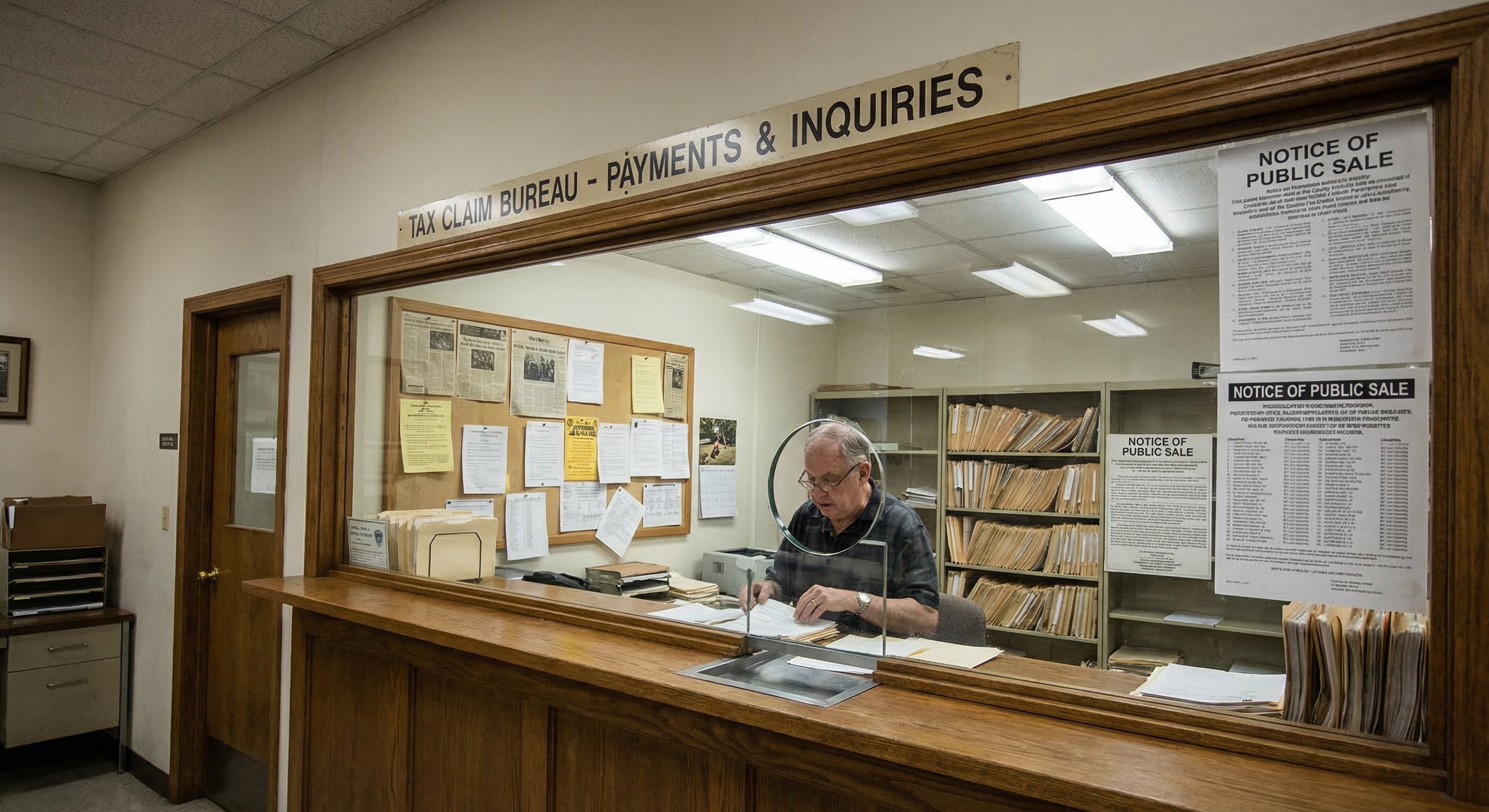
To access repository properties, contact the Tax Claim Bureau in the county you're targeting directly. Most counties maintain physical or PDF lists updated quarterly. Some larger counties (Allegheny, Philadelphia) have online portals.
Negotiation is real here. A county might list a repository property at $10,000 but accept $3,500 from a buyer who submits a written offer with proof of funds. The county's goal is to get properties back on tax rolls — not maximize sale price.
Important: Always conduct a full title search on repository properties before closing. While judicial sales extinguish liens, not all repository properties went through the full judicial sale process. "May be extinguished" is not the same as "guaranteed clean title."
The Upset Sale Process: County by County
Pennsylvania has 67 counties — and 67 slightly different processes. The broad strokes are the same (RETSL), but schedules, procedures, and minimum bids vary.
Here's what matters most:
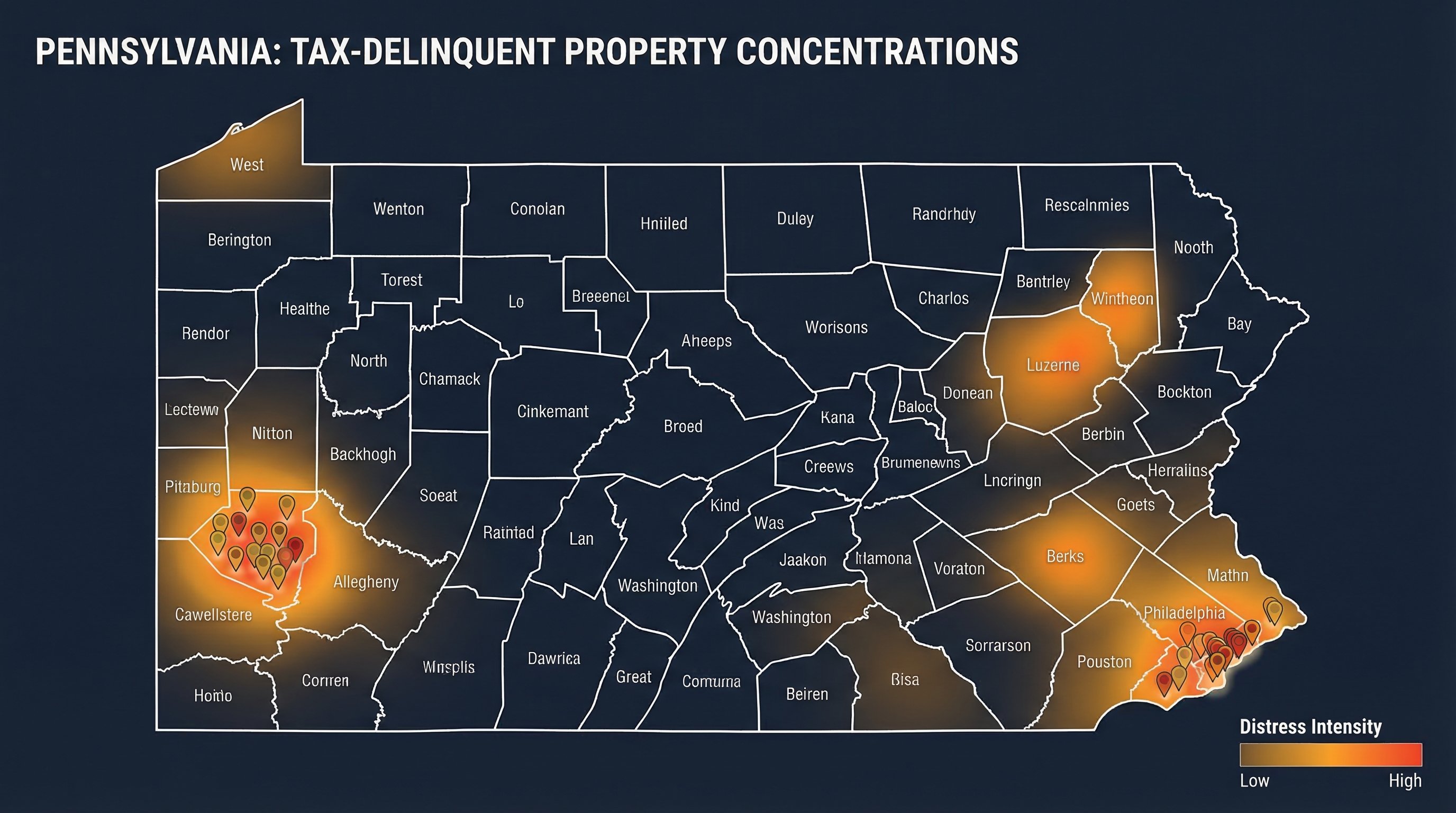
Philadelphia County: Philadelphia has its own municipal structure and operates outside RETSL in some respects. The Philadelphia Land Bank and the Sheriff's Sale system handle tax-delinquent properties. Sheriff sales occur roughly monthly. Competition is high in desirable neighborhoods, but North/West/Southwest Philadelphia sales regularly have properties going at or near minimum bid.
Allegheny County (Pittsburgh): Allegheny County holds its annual upset sale in September, with judicial sales following in November-December. The Allegheny County Tax Claim Bureau maintains an online list updated closer to each sale. Pittsburgh's real estate market has strengthened significantly, making competition higher than it was five years ago — but properties in Homestead, Duquesne, Clairton, and McKeesport submarkets still offer significant value.
Luzerne County (Wilkes-Barre/Scranton area): Luzerne County runs an active repository with hundreds of properties listed at any given time. This is one of the most active markets for budget-minded investors — properties frequently available in the $1,000-$8,000 range, with a high percentage of single-family and multi-family residential.
Berks County (Reading): Berks County holds its upset sale in late October annually. Reading itself is a dense urban market with significant tax delinquency — and historically lower prices than Philadelphia or Pittsburgh. Properties here carry rehabilitation risk but also significant rent-to-value ratios.
Erie, Cambria, Lawrence, Westmoreland Counties: All maintain active Tax Claim Bureau lists. Less competition than the major metros. Repository sales in these counties regularly produce deals under $5,000 for buildable lots and under $20,000 for habitable structures.
Free Weekly Alerts
See What's Distressed in Your Market
Get free weekly alerts — new distressed properties, motivation scores, and hot neighborhoods in your area. Addresses and contact info available inside DistressIQ.
Free forever · No credit card · Unsubscribe anytime
How to Find the Pennsylvania Tax Lien List in Each County
There's no single statewide database for Pennsylvania tax sales. You have three primary options:
Option 1: County Tax Claim Bureau Directly The Tax Claim Bureau (or equivalent office) in each county maintains the official list. Most have websites; many require a phone call or in-person visit for the most current repository list. Search "[County name] Pennsylvania Tax Claim Bureau" to find the relevant office.
Option 2: Legal Newspapers Pennsylvania law requires upset sale notices to be published in the county's official legal newspaper at least 30 days before the sale. The Legal Intelligencer (Philadelphia), Pittsburgh Legal Journal (Allegheny), and county equivalents publish these lists. Many legal newspapers have moved online.
Option 3: County Sheriff's Office In counties where the sheriff conducts sales (Philadelphia and others), the Sheriff's Office website posts upcoming sale lists.
Option 4: Data Aggregators Services like DistressIQ pull tax delinquency signals from county assessor data and flag properties showing multiple distress indicators — enabling you to identify likely Tax Claim Bureau candidates before they appear on any public sale list. This is where the real timing advantage lives: reaching out to property owners 6-18 months before the sale, when a deal is still negotiable.
According to the Pennsylvania State Association of County Commissioners, property tax collection and delinquency enforcement falls entirely to county government — reinforcing why a county-by-county approach is essential. The Pennsylvania Department of Community and Economic Development (DCED) publishes county financial data that can help identify counties with higher delinquency rates.
The Redemption Period Question
Pennsylvania upset sales do include a right of redemption — but the rules differ from pure lien-certificate states:
- Upset sales: Prior owners generally have the right to redeem (reclaim) the property up until the deed is recorded. Once recorded, there's no statutory right of redemption.
- Judicial sales: No redemption right post-sale — the judicial sale extinguishes redemption rights.
- Repository sales: No redemption right — the property was already forfeited through the earlier process.
This matters for investors at upset sales who are acquiring properties subject to existing mortgages. If a mortgage lender wants to protect their interest, they can pay the back taxes — effectively redeeming the property before the deed transfers to you. Always check outstanding mortgages before bidding at upset sales.
Stacking Signals: The Pre-Sale Opportunity
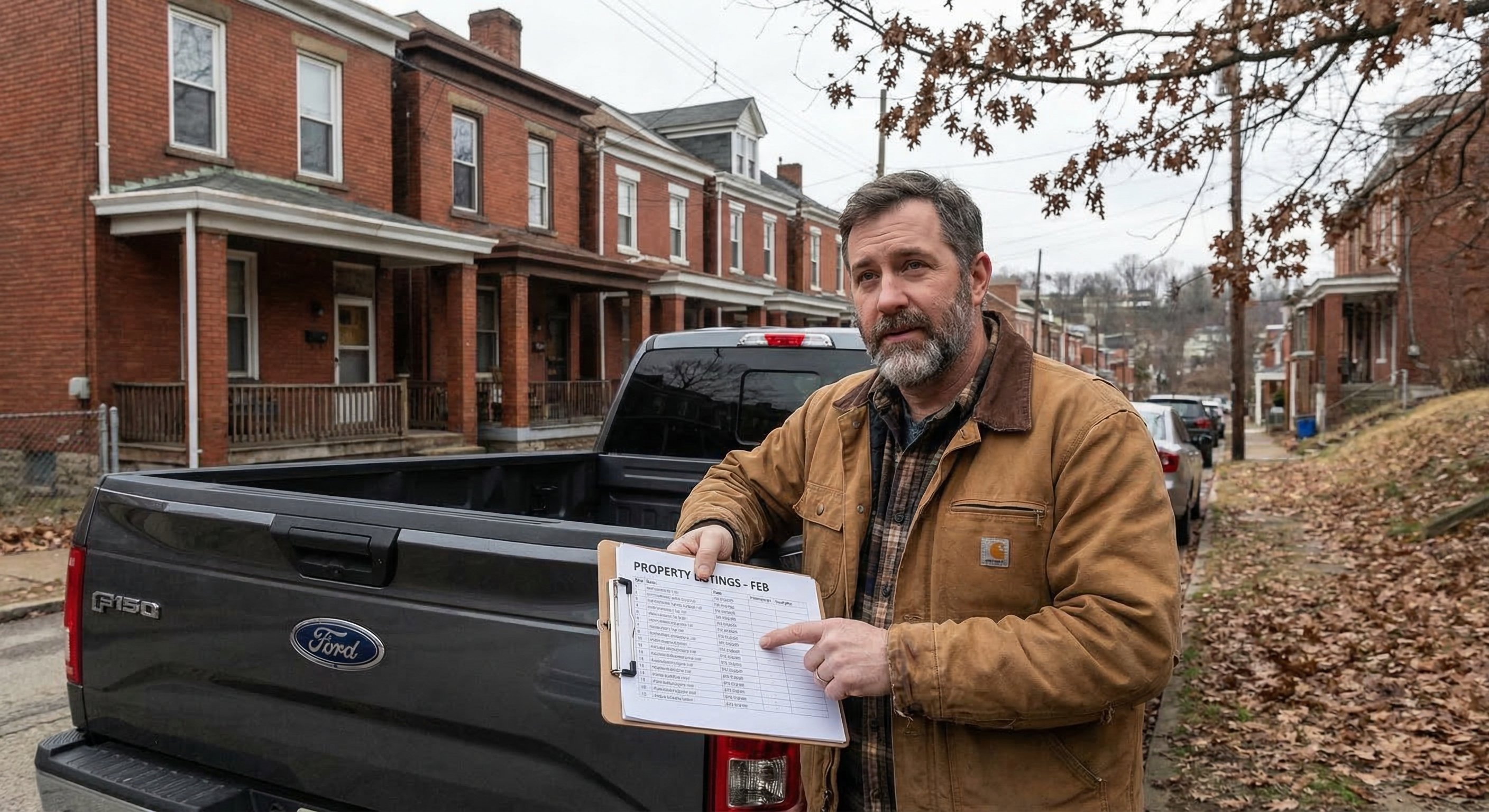
Here's what the raw Tax Claim Bureau list doesn't tell you: which properties are owned by someone who'd actually sell to you now at a discount, before the sale.
The smartest Pennsylvania investors aren't just showing up at auctions. They're:
- Identifying tax-delinquent properties 12-24 months before the upset sale
- Cross-referencing with other distress signals — code violations, vacant property registration, absentee ownership, lis pendens filings
- Reaching out directly to owners who have the most motivation to sell
A property showing tax delinquency + code violations + absentee ownership = an owner who's checked out. That's a motivated seller before they're even on the official list.
DistressIQ tracks 31 signal types including tax delinquency across 3,200+ counties, stacking signals to surface the highest-probability leads. In Pennsylvania, we cover every county with Tax Claim Bureau data — giving you a running start before the public lists publish.
If you want to stop showing up to auctions where everyone's already seen the same list, start your DistressIQ trial at distressiq.ai — Starter $89/mo, Pro $174/mo, Elite $349/mo (founding member pricing, 30% off for life while spots remain).
What to Watch Out For: Pennsylvania-Specific Investor Traps
The "upset price" trap: At upset sales, the minimum bid covers only back taxes and costs — NOT existing mortgages. A property with $8,000 in taxes but $85,000 in mortgages can look like a deal at the auction but become a liability the moment you learn about the encumbrances. Always pull title before bidding.
The "clean title" misconception: Not all properties that go through upset sale have clean title. Only a completed judicial sale process reliably extinguishes all liens. Check whether the county went through judicial sale before assuming repository properties have clean title.
Third-party noticing requirements: Pennsylvania law requires Tax Claim Bureaus to attempt to notify all parties with interest in a property before an upset sale. If notice procedures weren't followed correctly, a sale can be challenged. This creates additional due diligence responsibility for buyers.
Philadelphia's unique structure: Philadelphia operates its own Land Bank and processes tax delinquency differently from the rest of the state. If Philadelphia is your target market, treat it as a separate research project — the RETSL framework applies differently there.
Delinquent municipal assessments: In some Pennsylvania municipalities (especially in Allegheny County), municipal utility liens and local improvement assessments can survive an upset sale separately from property taxes. These must be separately researched.
Quick Reference: Pennsylvania Tax Sale Calendar
| County | Typical Upset Sale Month | Notes |
|---|---|---|
| Philadelphia | Monthly (Sheriff Sales) | Check phila.gov/sheriff |
| Allegheny | September | Judicial sale: November-December |
| Bucks | September | |
| Chester | September | |
| Delaware | October | |
| Montgomery | September | |
| Luzerne | September | Large repository list |
| Berks | October | |
| Lancaster | September | |
| Northampton | September | |
| Erie | September-October | |
| York | September | |
| Dauphin | September | |
| Lackawanna | September |
Dates change year to year. Always verify with the county Tax Claim Bureau before committing.
Key Takeaways
- Pennsylvania is a tax deed state, not a lien certificate state. You're buying properties, not interest-bearing certificates.
- Three tiers: Upset sale (property subject to mortgages) → Judicial sale (liens extinguished) → Repository (negotiated price, often the best deals)
- The repository list is underexplored and available in most Pennsylvania counties directly from the Tax Claim Bureau.
- 67 counties = 67 processes. Know the specific county you're targeting.
- Pre-sale outreach beats auction competition. Identify delinquent owners early, reach out before the list goes public.
- Always pull title — especially at upset sales where existing mortgages survive.
Frequently Asked Questions
Q: Does Pennsylvania sell tax lien certificates?
No. Pennsylvania is a tax deed state. The county does not sell interest-bearing lien certificates to investors. Instead, the Tax Claim Bureau holds upset sales and judicial sales where the property itself is transferred. There is no redemption period interest income as with Florida or New Jersey certificates.
Q: How do I find the Pennsylvania tax lien list for a specific county?
Contact that county's Tax Claim Bureau directly. Most county websites list their Tax Claim Bureau contact information. Upset sale lists are also published in local legal newspapers at least 30 days before the sale. For Philadelphia specifically, visit the Philadelphia Sheriff's Office website for upcoming sales.
Q: What is the redemption period after a Pennsylvania upset sale?
Prior owners can redeem (reclaim) the property after an upset sale until the deed is officially recorded. Once the deed records, the statutory right of redemption ends. After a judicial sale, there is no redemption right at all.
Q: What is a repository property in Pennsylvania?
A repository property is one that failed to sell at the upset sale and subsequent judicial sale attempts, then was placed into the county's "repository" — a list of properties available for direct purchase from the Tax Claim Bureau. Repository properties often have lower prices than auction properties and may have liens extinguished through the prior judicial sale process. Buyers can often negotiate directly with the county.
Q: Do existing mortgages survive a Pennsylvania upset sale?
Yes — typically. At an upset sale, the buyer takes the property subject to existing mortgages and municipal liens. This is different from a judicial sale, which can extinguish all liens including mortgages. Always research outstanding mortgages and liens before bidding at an upset sale.
Q: What are the best counties in Pennsylvania for tax lien/deed investing?
Luzerne County (Wilkes-Barre area) has one of the most active repositories in the state with competitive pricing. Philadelphia's Sheriff Sales offer volume but higher competition. Allegheny County (Pittsburgh) provides a mix of urban and suburban properties. Berks, Erie, Cambria, and Lawrence counties offer lower competition and more negotiating room at the Tax Claim Bureau level.
Q: How can I find tax-delinquent properties in Pennsylvania before they go to auction?
County assessor data shows delinquency status, but accessing it county by county is time-consuming. Data platforms like DistressIQ aggregate tax delinquency signals across all 67 Pennsylvania counties along with co-occurring distress signals (code violations, vacant property registrations, absentee ownership), letting you identify motivated sellers well before their properties appear on any public auction list.
Pennsylvania's tax sale system rewards the investors who learn its quirks. The upset sale / judicial sale / repository structure is more complex than a simple lien certificate auction — but that complexity is exactly why the competition is lower, the prices are better, and the off-market opportunities are richer.
The investors making real money here aren't just showing up at auctions. They're working the repository lists, building county Tax Claim Bureau relationships, and — most importantly — reaching out to delinquent owners before the county ever schedules the sale.
See verified tax delinquency signals across all 67 Pennsylvania counties at distressiq.ai — updated daily from county sources, stacked with code violation, vacancy, and absentee ownership data. Founding member pricing: Starter $89, Pro $174, Elite $349/mo.
The data behind this article
DistressIQ Monitors These Signals in Real Time
Pre-Foreclosures
NOD + NTS filings
Tax Delinquency
County treasurer records
Code Violations
Municipal inspection filings
Probate Filings
Superior Court records
Every lead is scored 0–100 for seller motivation based on signal type, duration, severity, and stacking. Nationwide coverage — every US county, updated daily.
Ready to find deals in your market?
See Live Distress Signals in Your County
Stop calling dead leads. Every lead in DistressIQ is scored 0–100 for seller motivation, with verified contact info included. Browse the free tier to see what's active in your market right now.
Browse Free Leads — No Credit Card