Tax Lien List New York: NYC's Lien Sale vs. Upstate County Auctions
Tax Lien List New York: NYC's Lien Sale vs. Upstate County Auctions
TL;DR: New York's tax lien system is split into two distinct worlds. New York City runs an annual "bundled" lien sale where pools of delinquent liens are sold to institutional servicers — not individual investors. Outside NYC, most counties run In Rem tax foreclosure proceedings that end in deed auctions, while a handful like Suffolk and Nassau sell individual lien certificates. Across the state, the biggest opportunity isn't the auction — it's reaching delinquent owners before the sale list ever goes public.
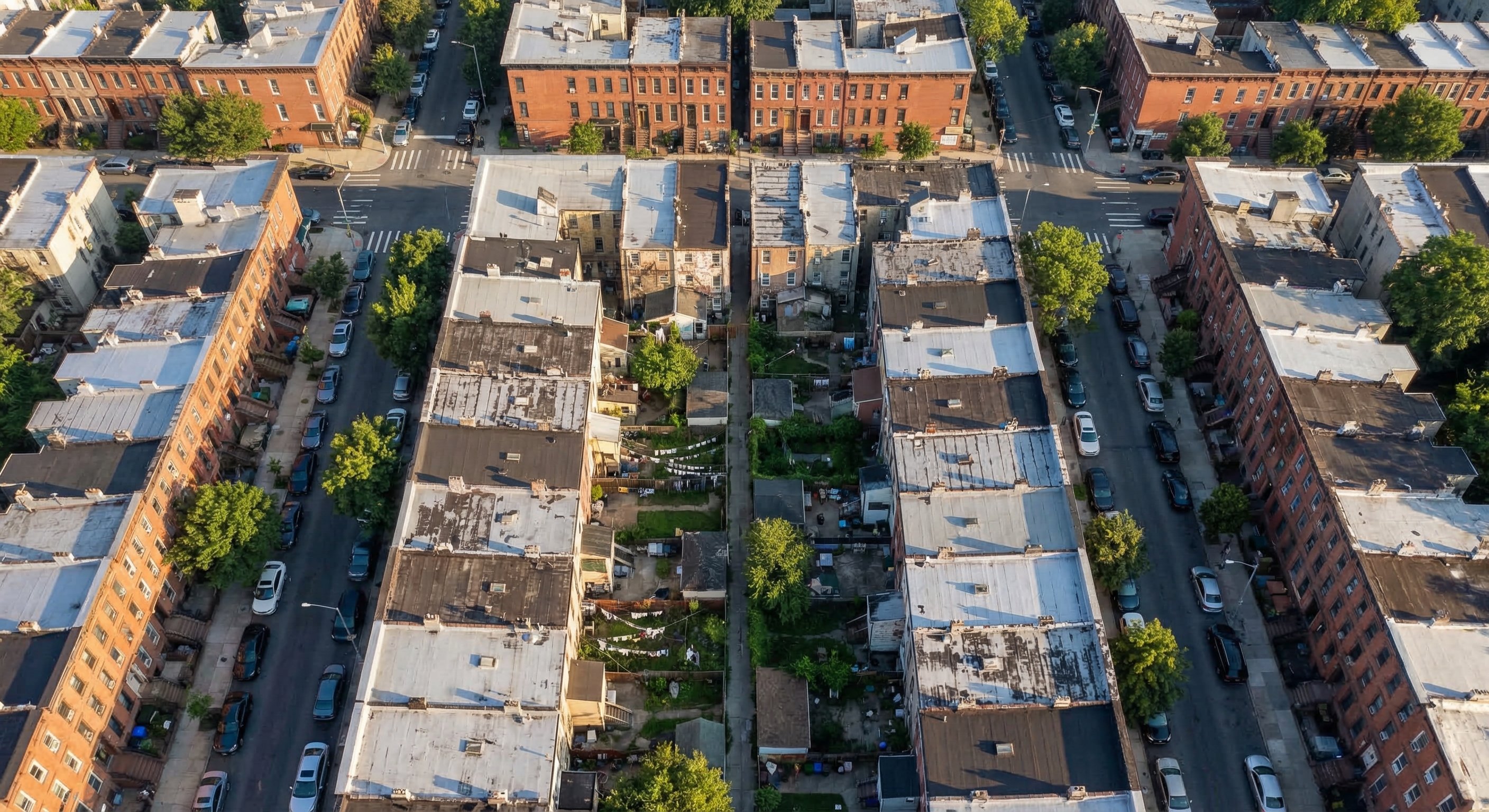
Every investor who's heard "New York has great tax lien opportunities" has eventually hit the same wall: the NYC tax lien sale isn't open to retail investors. The city bundles delinquent liens into pools and sells them to institutional servicers. You can't walk in with $25,000 and buy liens on Brooklyn brownstones.
But that doesn't make New York a dead end — it means the strategy has to match the state's unusual structure. Upstate counties like Suffolk, Nassau, Erie, Monroe, and Westchester run accessible tax sales with real investor opportunity. And across all 62 counties, the properties that reach auction represent a fraction of the actual distressed seller pool. The real margin is pre-auction — reaching owners before the competition even knows the property exists.
What Makes New York's Tax Lien System Unique
Most states run some variation of the same playbook: counties sell tax lien certificates at annual auctions, investors earn interest while owners redeem, and if they don't, the investor can foreclose. New York doesn't follow that script.
The state has three distinct structures operating simultaneously:
- New York City — an annual bundled lien sale sold to institutional entities, not individual buyers
- Select downstate counties (Suffolk, Nassau, Westchester) — traditional tax lien certificate sales, more investor-accessible
- Most upstate counties — In Rem tax deed proceedings where the county forecloses and auctions the actual deed
Understanding which structure applies to your target market determines your entire approach. Behind every entry on these lists is a property owner navigating real financial pressure — a job loss, a health crisis, an inherited property that's become unmanageable. Investors who reach out early and offer straightforward solutions often find owners who are relieved to hear from them.
How New York City's Tax Lien Sale Works
New York City holds its tax lien sale annually, typically in May, administered by the NYC Department of Finance. Properties become eligible when:
- Class 1 properties (1–3 family residential): taxes delinquent for three or more years, or delinquent for one year and totaling more than $5,000
- Class 2, 3, and 4 properties (co-ops, rentals, commercial): taxes delinquent for one year
When a property qualifies, the city packages its lien alongside hundreds of others into a certificated pool. That pool is sold to a single institutional buyer — typically an authorized trust entity. The trust charges interest capped at 18% per year under NYC law and can initiate foreclosure if the owner doesn't redeem within the allotted window.
Key implication for investors: You cannot buy individual NYC liens at the city's sale. If you want exposure to NYC lien pools, you'd need to purchase secondary-market assignments from a pool participant — a niche strategy that requires institutional-level capital and legal infrastructure.
The overlooked window: The city mails delinquency notices months before the sale. Owners who receive a lien sale notice and can't pay are exactly the motivated sellers worth contacting. That pre-sale delinquency list — published by the NYC Department of Finance in advance of each annual auction — is publicly accessible and represents a direct roster of distressed property owners.
NYC exemptions to know: Owner-occupied 1–3 family homes where the owner qualifies for a hardship exemption, SCRIE or DRIE recipients (senior and disability income freeze programs), and owners who enter payment plans can be removed from the sale list. This matters if you're doing outreach — some owners believe they're automatically protected and haven't explored their options.
How Upstate New York Tax Sales Work
Outside the five boroughs, New York operates primarily as a tax deed state. Most counties foreclose on the property itself and auction the deed — not a lien certificate. The process runs under Article 11 of the New York Real Property Tax Law (RPTL).
The standard timeline:
- Taxes go delinquent — typically unpaid by January 31st of the year following the levy
- County begins enforcement — accounts move to the delinquent roll; counties generally begin In Rem proceedings within 2–3 years of initial delinquency
- In Rem proceeding filed — the county files a single court action against all delinquent properties simultaneously, with published notice required in a local newspaper per RPTL requirements
- Redemption period opens — owners can pay delinquent taxes plus penalties and interest. Redemption periods are typically two years from the tax levy date in most New York counties
- County acquires title — if unredeemed, the county receives a deed and lists the property for public auction
Auction formats vary: some counties run traditional in-person auctions; others use online platforms. Bid proceeds cover delinquent taxes and costs; any surplus goes to the former owner.
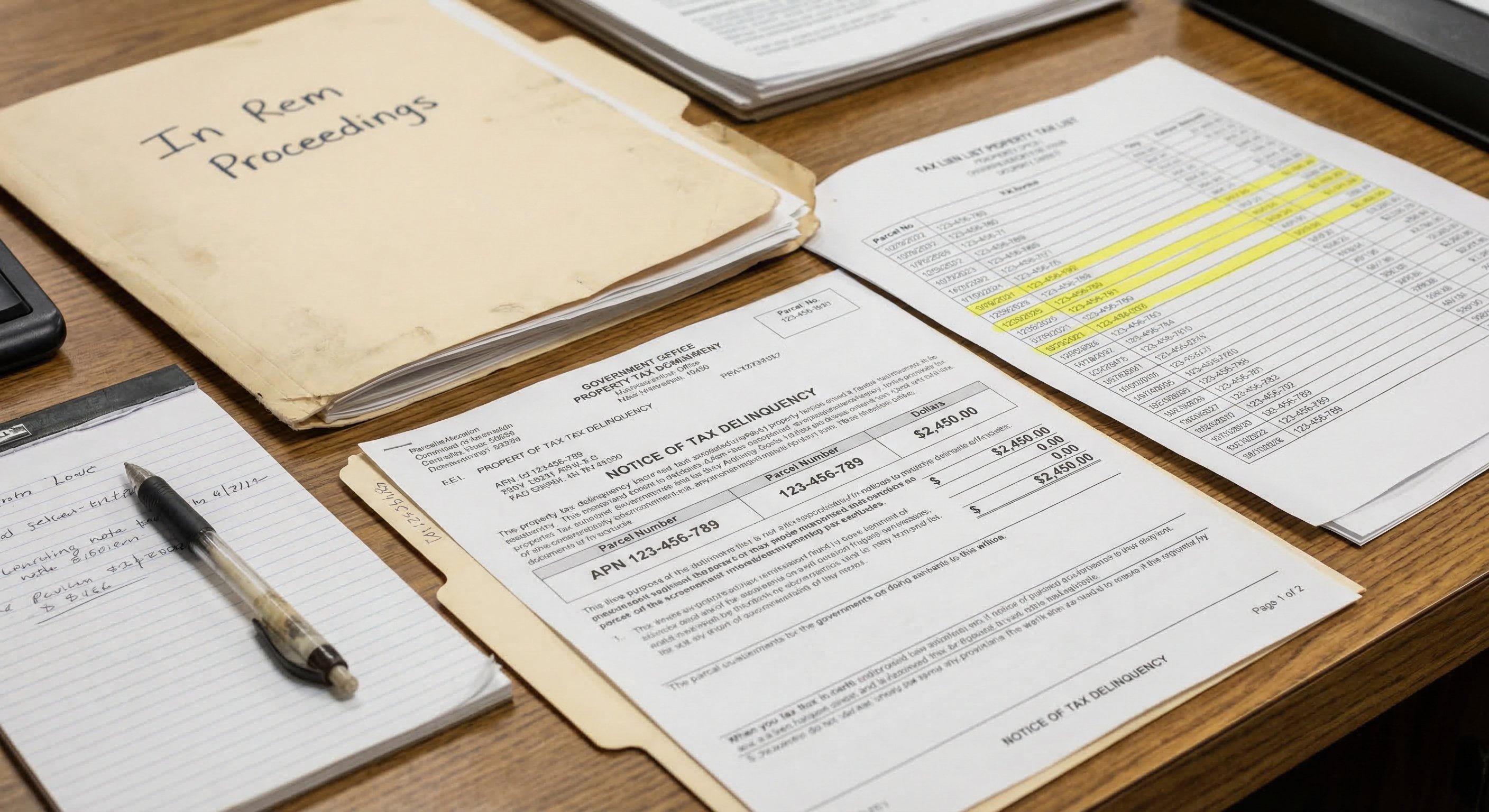
Counties that still sell tax lien certificates:
A handful of New York counties operate more like traditional lien states. Suffolk County is the most notable — it has historically run annual tax lien certificate sales where investors purchase certificates and earn interest while owners redeem. Nassau County and Westchester County have conducted similar certificate sales. Always verify directly with the county treasurer before planning a strategy around this — procedures change, and some counties have transitioned between lien and deed formats in recent years.
Free Weekly Alerts
See What's Distressed in Your Market
Get free weekly alerts — new distressed properties, motivation scores, and hot neighborhoods in your area. Addresses and contact info available inside DistressIQ.
Free forever · No credit card · Unsubscribe anytime
Key New York Counties for Investors
New York has 62 counties spanning the dense urban core to rural upstate markets. These are the ones that matter most:
New York City (5 Boroughs) Not accessible via retail lien investing, but the pre-sale delinquency list is public and valuable. NYC properties carry the highest per-unit values in the state — even a modest distressed row house in a transitional Brooklyn neighborhood represents a significant transaction. The play here is direct outreach to owners on the delinquency list.
Nassau County Long Island's westernmost county. Historically active for tax lien certificate sales, high property values, and significant investor interest. Nassau's suburban single-family inventory is dense — even mid-tier properties have strong ARV floors.
Suffolk County Long Island's eastern half and the most traditional tax lien certificate market in New York. Annual lien sales have historically offered returns in the 7–12% range depending on redemption dynamics. Properties range from modest ranch homes to waterfront estates.
Westchester County Suburban New York directly north of the city. High values, periodic lien sales, and a market where distressed properties trade at a significant premium over most upstate markets.
Erie County (Buffalo) Western New York's population center. Buffalo and the surrounding county have faced decades of industrial contraction, leaving a sustained supply of distressed and delinquent properties. Erie County's In Rem auction typically lists hundreds of properties annually — lower entry prices, lower competition from downstate investors.
Monroe County (Rochester) Rochester's core county. Similar economic dynamics to Erie — older housing stock, measurable vacancy rates, steady delinquency flow through In Rem proceedings. The Monroe County auction attracts less attention than downstate markets, which keeps bid competition manageable.
Onondaga County (Syracuse) Central New York's economic hub. Onondaga's auction circuit is accessible and lower-competition. Syracuse has seen increasing revitalization investment, making pre-auction distress leads particularly timely.
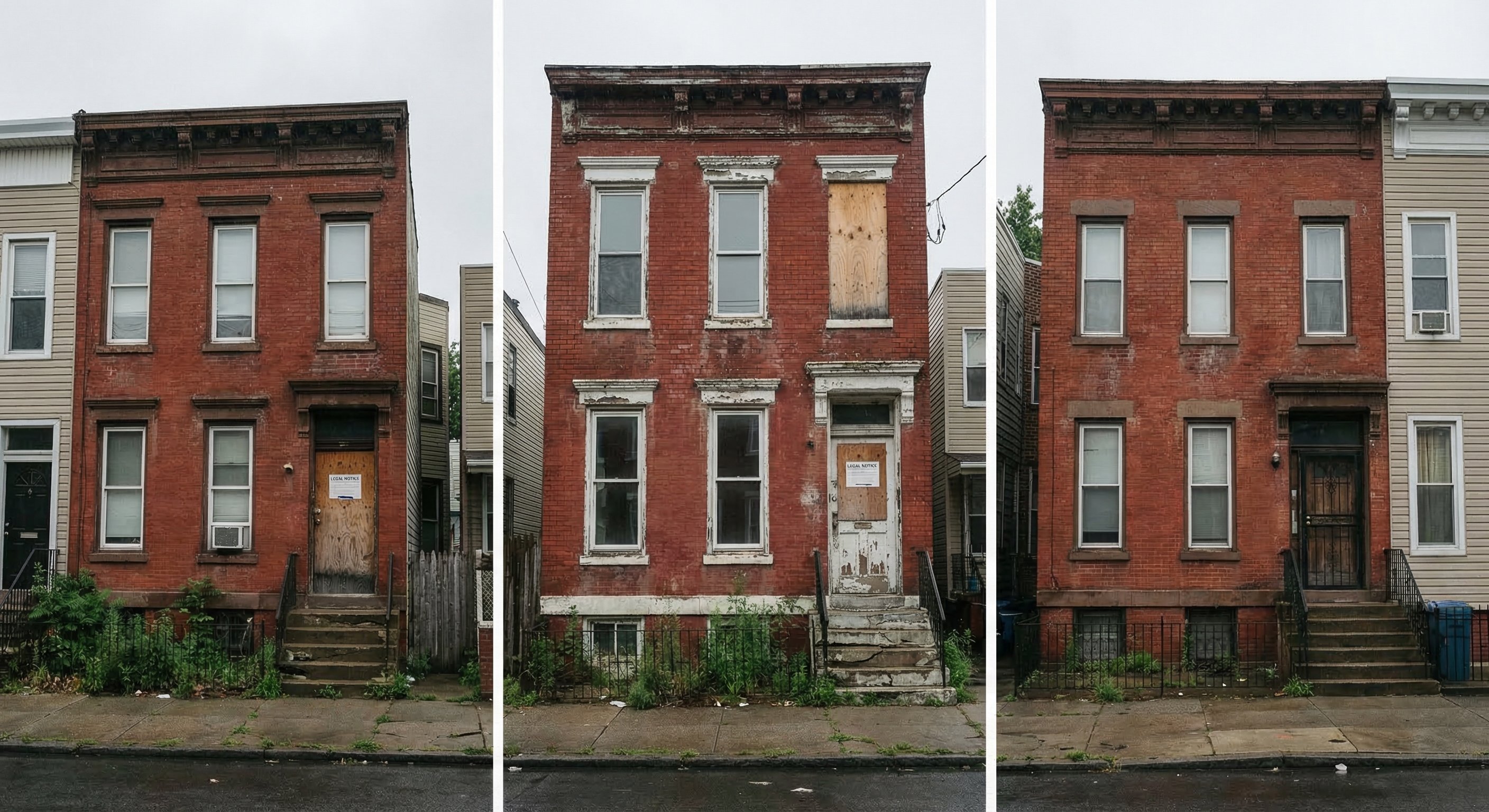
Where to Find the New York Tax Lien List
There is no single statewide list. New York's county-level structure means you need to go directly to each market:
For New York City: NYC Department of Finance → Property Tax → Lien Sale section. The city publishes its annual eligible property list months before the May sale date. Includes parcel IDs, owner names, property addresses, and delinquency amounts.
For Long Island (Nassau and Suffolk):
- Nassau County Treasurer: nassaucountyny.gov — tax lien sale schedules, eligible property lists, and bid deposit requirements
- Suffolk County Department of Finance: suffolkcountyny.gov — annual lien sale information, certificate rates, and property lists
For upstate counties:
- Erie County: erie.gov/comptroller — delinquent tax sale information and In Rem property lists
- Monroe County: monroecounty.gov — county auction information
- Westchester County: westchestergov.com — tax lien or deed sale information by municipality
- Most other counties: search "[County Name] NY treasurer delinquent tax sale" — county sites vary in how current the information is
Third-party aggregators compile New York delinquency data across multiple counties. Quality and freshness vary widely — some data reflects recent county records; other aggregators are pulling months-old snapshots. Always cross-reference with the county source for any serious deal evaluation.
The Pre-Auction Window: Where the Real Opportunity Is
By the time a property appears on a New York tax sale or In Rem auction list, multiple things have happened: the owner received years of delinquency notices, the county initiated legal proceedings, the filing appeared in public records, and competing investors started researching the property.
The motivated sellers are the owners heading toward that list — not yet on it.
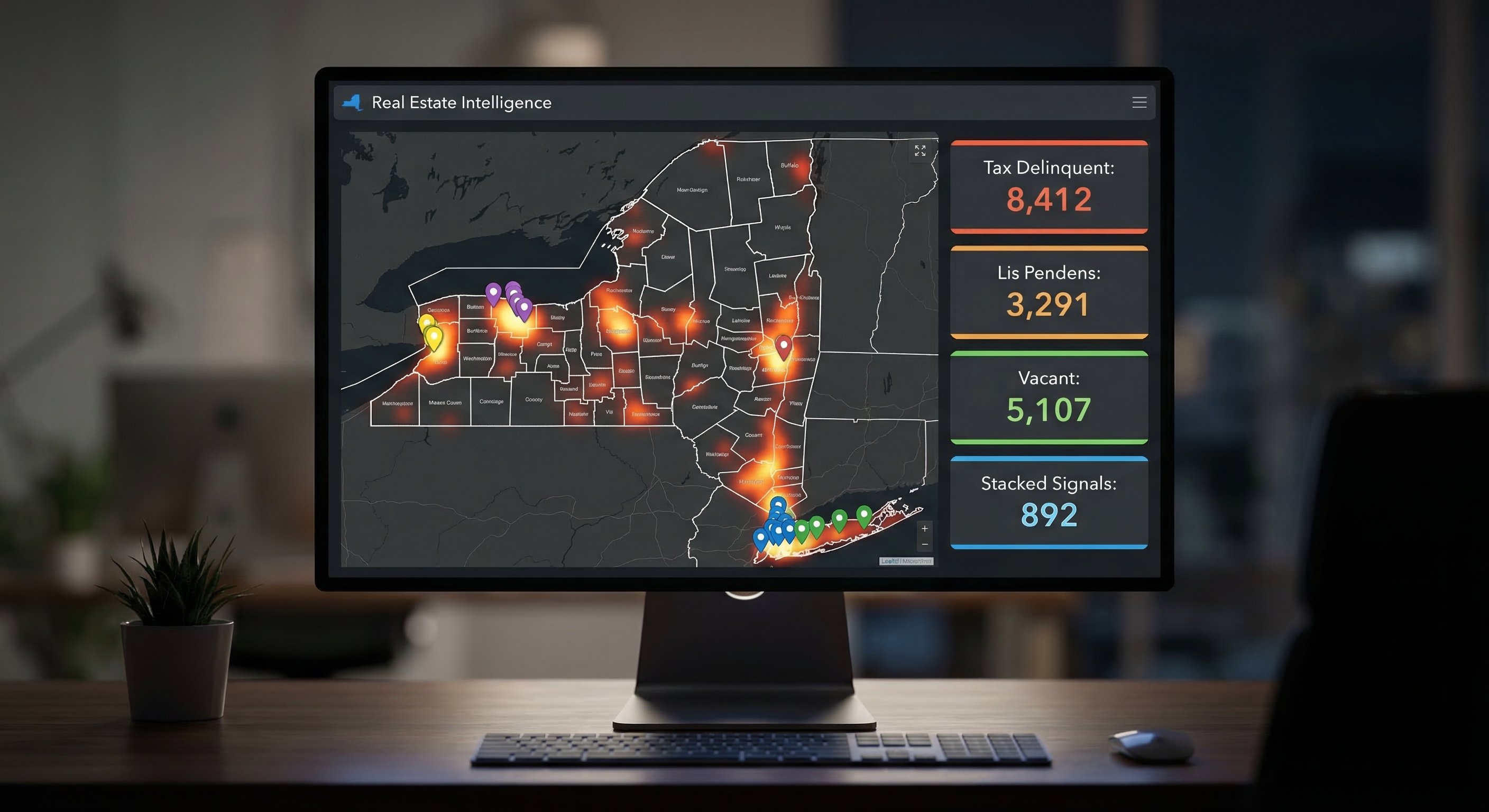
DistressIQ monitors 11M+ distress signals across 3,200+ counties nationwide — including all 62 New York counties — updated multiple times daily from county-verified sources. For a New York investor, that means:
Tax delinquency signals before In Rem: Properties carrying outstanding tax debt flagged before the county initiates formal proceedings. You're contacting the owner while they're motivated but haven't yet been approached by every wholesaler in their zip code.
Lis pendens (pre-foreclosure) leads: New York is a judicial foreclosure state with one of the longest timelines in the country — commonly 18–36 months from lis pendens filing to actual sale, sometimes longer. That runway gives investors an unusually wide contact window. A lis pendens lead in New York is a slow-moving situation with real time to build a relationship.
Stacked signals: The most motivated sellers rarely carry just one distress indicator. A property that's tax delinquent AND vacant AND has a recent code violation is exponentially more motivated than a single-signal lead. DistressIQ stacks 31 signal types — a New York investor can filter specifically for that combination by county, price range, or property type.
Whether your strategy involves attending upstate county auctions, doing direct mail to Nassau County delinquent owners, or working lis pendens leads in Brooklyn — DistressIQ puts you there early, informed, and ahead of the competition.
Key Takeaways
- NYC tax liens are institutional. The city's annual bundled sale isn't open to retail investors. The opportunity is reaching owners on the pre-sale delinquency list before anyone else does.
- Most upstate counties are tax deed, not lien. In Rem proceedings lead to deed auctions — you're bidding on the property itself, not a certificate.
- Suffolk, Nassau, and Westchester have historically run tax lien certificate sales. Verify current schedules directly — these policies shift.
- Redemption period is generally two years from the tax levy date in most upstate NY counties under RPTL Article 11.
- New York's judicial foreclosure process is among the slowest in the country — typically 18–36 months. Lis pendens leads have a long contact window.
- The best list is the pre-auction delinquency roll — not the sale list that every other investor is already watching.
Ready to get ahead of New York's tax sale cycle? DistressIQ monitors tax delinquency, lis pendens, vacancy, code violations, and 27 more signal types across every New York county — updated multiple times daily from county-verified sources. Founding member pricing locks in 30% off for life — fewer than 50 spots. Starter from $89/mo.
Browse New York distress leads on DistressIQ →
Frequently Asked Questions
Q: Can individual investors buy tax liens directly from New York City?
No. NYC's annual tax lien sale is a bundled process — the city packages hundreds of liens into certificated pools and sells the entire pool to a single institutional servicer, not to individual investors. You cannot purchase a single property's lien at the NYC sale. However, the city's pre-sale delinquency list is publicly accessible through the NYC Department of Finance website and is updated in advance of each annual sale. That list is the actionable resource for investors doing direct outreach.
Q: What is the redemption period for tax delinquent properties in New York?
In most upstate New York counties, the redemption period under RPTL Article 11 runs approximately two years from the tax levy date. For NYC, owners of properties whose liens have been sold typically have around one year to redeem before the institutional lienholder can initiate foreclosure proceedings. Specific timelines vary by county and property class — always verify with the relevant county treasurer or the NYC Department of Finance before building a strategy around a specific timeline.
Q: Which New York counties sell individual tax lien certificates?
Suffolk County is the most established tax lien certificate market in New York, running annual sales where investors can purchase certificates and earn interest during the redemption period. Nassau County and Westchester County have also conducted individual certificate sales historically. The majority of other New York counties — particularly most upstate counties — run In Rem foreclosure proceedings that result in deed auctions rather than certificate sales. Confirm the current structure with each county's treasurer or finance office before planning an investment approach.
Q: How long does the foreclosure process take in New York?
New York is a judicial foreclosure state, meaning every foreclosure must proceed through the court system. The timeline from lis pendens filing to completed foreclosure sale typically runs 18–36 months, and in contested cases or during periods of court backlog, it can run considerably longer. According to ATTOM Data Solutions, New York consistently ranks among the top three states for longest average foreclosure timelines nationally. This long process makes lis pendens leads particularly valuable — there is an extended window to contact the owner and structure a deal before the property ever changes hands involuntarily.
Q: What is an In Rem tax foreclosure in New York?
In Rem is the primary tax enforcement mechanism used by most New York counties outside NYC. Rather than filing individual lawsuits against each delinquent property owner, the county files a single court action "against the properties" (in rem means "against the thing") that encompasses all eligible delinquent parcels simultaneously. Property owners receive notice through both direct mail and required newspaper publication and have a redemption window to pay delinquent taxes plus penalties before the county acquires title and proceeds to auction.
Q: Where can I find New York county tax sale schedules?
Each county maintains its own schedule and listing. For NYC, the NYC Department of Finance publishes annual lien sale information and pre-sale eligible property lists at nyc.gov/finance. For Erie County, visit erie.gov/comptroller. Monroe County information is at monroecounty.gov. Nassau County publishes at nassaucountyny.gov and Suffolk County at suffolkcountyny.gov. For other counties, searching "[County Name] NY treasurer delinquent tax sale" generally surfaces the relevant page — though not all county websites maintain current schedules.
Q: How does DistressIQ help with New York tax delinquent leads?
DistressIQ monitors distress signals across all 62 New York counties — tax delinquency, lis pendens filings, vacancy indicators, code violations, and 27 additional signal types — updated multiple times daily from county-verified sources. Rather than waiting for a county to publish its official auction list (when competition is highest), you see properties entering distress early, with the full signal stack visible and owner contact information accessible. You can filter by county, by specific signal combination, and by property characteristics to surface leads that match your exact investment criteria.
Building a New York distressed property pipeline? DistressIQ shows you who's headed toward the tax sale list — before the list ever publishes. Start your free trial at distressiq.ai →
Sources: NYC Department of Finance (nyc.gov/finance), New York Real Property Tax Law Article 11, ATTOM Data Solutions Foreclosure Timeline Report 2025
The data behind this article
DistressIQ Monitors These Signals in Real Time
Pre-Foreclosures
NOD + NTS filings
Tax Delinquency
County treasurer records
Code Violations
Municipal inspection filings
Probate Filings
Superior Court records
Every lead is scored 0–100 for seller motivation based on signal type, duration, severity, and stacking. Nationwide coverage — every US county, updated daily.
Ready to find deals in your market?
See Live Distress Signals in Your County
Stop calling dead leads. Every lead in DistressIQ is scored 0–100 for seller motivation, with verified contact info included. Browse the free tier to see what's active in your market right now.
Browse Free Leads — No Credit Card