How to Find Probate Leads in Arizona (2026 Investor Guide)
How to Find Probate Leads in Arizona (2026 Investor Guide)
TL;DR: Arizona probate filings generate thousands of real estate leads annually, concentrated in Maricopa, Pima, and Pinal counties. The typical AZ probate takes 6–18 months to close, creating a long window to reach heirs before a property hits MLS or auction. The best leads stack probate with additional signals — a delinquent tax bill or code violation filed alongside a probate case signals urgency most investors never see. DistressIQ surfaces Arizona probate leads with multi-signal scoring so you know exactly which estates to contact first.
Most investors searching for probate leads in Arizona are doing it wrong.
They're calling every name on a county probate list, leaving voicemails for grief-stricken heirs who aren't remotely close to a sale decision, and wondering why the deal flow is so slow. Meanwhile, the investors closing three and four probate deals a year in the Phoenix metro are working a completely different list — one built on signal stacking, not names from a court docket.
Here's how Arizona probate actually works, where the real lead volume hides, and why the investors who prioritize urgency signals close faster than everyone else.

Why Arizona Probate Is Worth Targeting
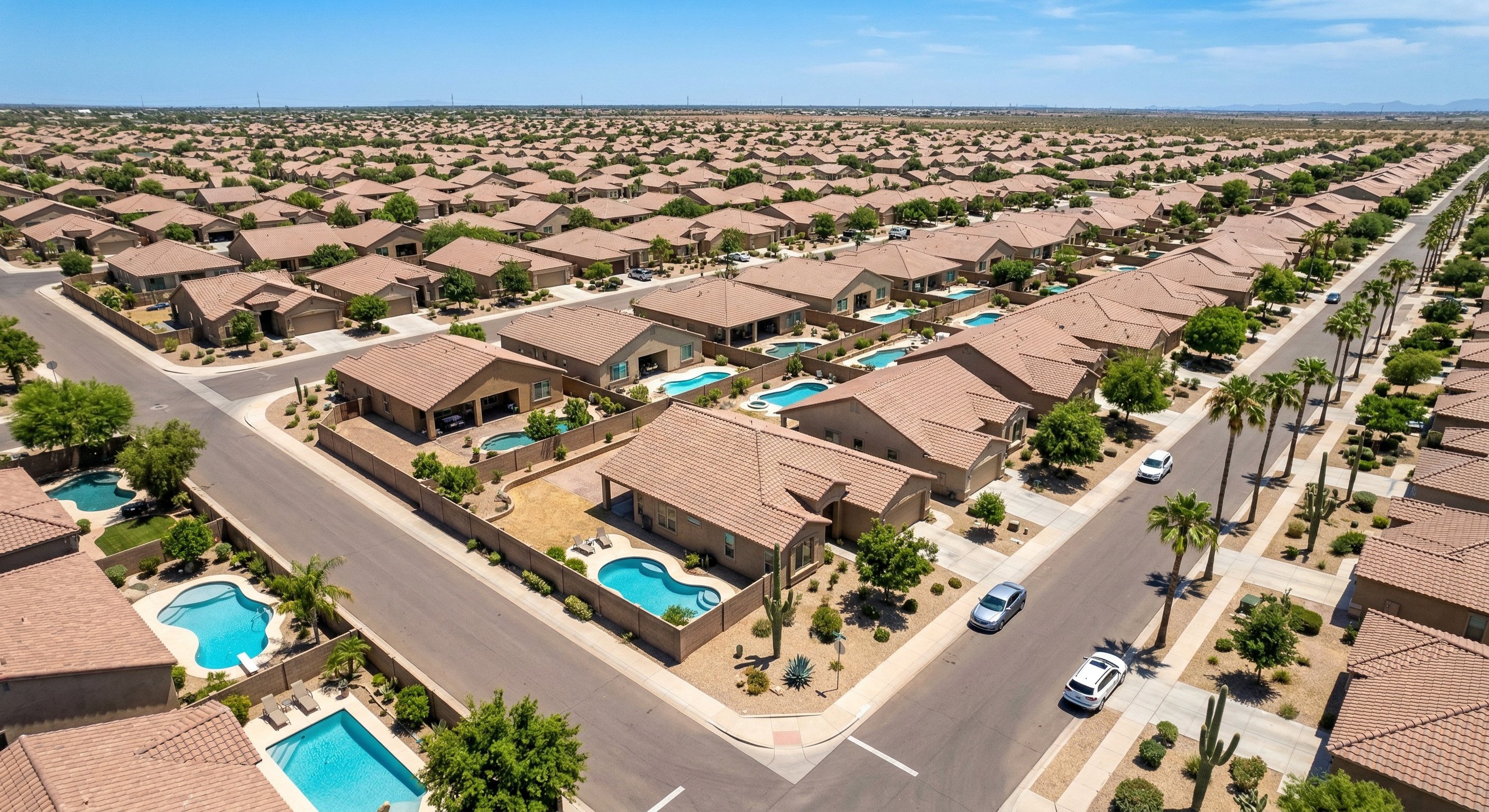
Arizona is one of the most active real estate markets in the country, and that activity runs straight through its probate courts. The state's growing retirement population, combined with significant in-migration from California and other states, means estates are filed constantly — and many of those estates include real property that heirs aren't equipped or motivated to manage.
A few things make Arizona probate particularly investor-friendly:
The timeline creates a window. Arizona probate typically runs 6–18 months depending on whether the estate is contested, the complexity of assets, and how organized the personal representative is. That's a long runway for a patient investor to build a relationship before the property ever hits the open market.
Heirs often want simplicity. Many Arizona probate sellers are out-of-state heirs — adult children in California, Texas, or the Pacific Northwest who inherited a Phoenix-area property they've never lived in and don't want to manage. They want a clean exit, not a listing agent and six months of showings. That's a motivated seller.
The volume is steady. Arizona's population is both aging and growing, which means every county — especially Maricopa — sees consistent probate activity year-round. For investors who approach families respectfully, there's no shortage of situations where a direct offer genuinely helps.
How Arizona Probate Works (What Investors Need to Know)
Arizona uses the Uniform Probate Code, which means the process here is relatively streamlined compared to states like California or New York — but it still takes time, and that time is your competitive advantage.
The Key Steps
Death occurs → petition filed with Superior Court — Probate cases are filed in the Superior Court of the county where the deceased lived. In most cases, that's Maricopa (Phoenix metro), Pima (Tucson), or Pinal (Central AZ).
Personal representative appointed — The court appoints an executor or personal representative, typically within 2–6 weeks of filing. This is who you need to reach — they have authority to negotiate a sale.
Notice to creditors published — A 4-month creditor claim window opens after the personal representative is appointed. Properties generally can't be sold until this window closes.
Property can be marketed and sold — After the creditor window, the personal representative can sell real property without court confirmation in most Arizona probate cases (unlike California's older "probate sale" confirmation process). This is a big deal — it means transactions can close faster once the parties are aligned.
Estate closes — Final accounting, distribution to heirs, case closed.
Your window: Months 2 through 12 are typically ideal for outreach — after the personal representative is confirmed, before heirs have committed to an agent or decided to list.

Where Arizona Probate Leads Come From
County Superior Courts
Every probate case is filed in county Superior Court. Arizona has 15 counties, but the meaningful volume concentrates in a handful:
Maricopa County (Phoenix, Scottsdale, Tempe, Mesa, Chandler, Gilbert, Peoria, Glendale) The biggest probate court in Arizona by far. Maricopa processes thousands of estate cases annually, and a significant percentage involve real property. The personal representative contact information and property addresses are in the public court file — but you have to know where to look and how to get there before the other 50 investors hitting the same list.
Pima County (Tucson and surrounding areas) The second-largest probate market in Arizona. Tucson has a significant retiree population and consistent estate filing volume. Less saturated than Maricopa County for direct outreach.
Pinal County (Casa Grande, Queen Creek, Florence) Fast-growing Central Arizona. Pinal County probate is less targeted by investors because it sits between the two major metros — which makes it a useful secondary market once you have Maricopa and Pima dialed in.
Yavapai County (Prescott, Sedona corridor) Strong retirement population, solid real property rate per estate. Worth adding to a statewide Arizona strategy.
Mohave County (Kingman, Bullhead City, Lake Havasu) High retiree concentration, especially in Bullhead City and Lake Havasu City. Many of these properties are vacation/second homes — heirs are often out-of-state and highly motivated to sell.
Free Weekly Alerts
See What's Distressed in Your Market
Get free weekly alerts — new distressed properties, motivation scores, and hot neighborhoods in your area. Addresses and contact info available inside DistressIQ.
Free forever · No credit card · Unsubscribe anytime
The Problem With Vanilla Probate Lists
Here's what most investors actually do with a probate list: they pull every name filed in the last 90 days, mail them all, call whoever calls back, and track their closing rate.
The investors doing this are averaging one or two deals a year from probate in Arizona, and wondering why it's so hard.
The investors closing three or four deals a year from the same pool are doing something different — they're filtering for urgency.
Probate alone doesn't tell you much. A filing means someone died and left property. It doesn't tell you whether the heirs want to sell, whether they can afford to maintain the property, or whether they're under any financial pressure to move quickly. That's the missing variable.
Stacked signals are what create a motivated seller. When a probate filing appears alongside a delinquent tax account, that's different. The heirs aren't just grieving — they're behind on the property taxes, which means they can't afford to carry the asset. When probate stacks with a code violation, there's a deteriorating property that nobody's managing. When you see all three together, you have a seller who is motivated by grief AND finances AND the physical condition of the property.
Those leads close faster, require less follow-up, and often need less negotiating because the seller genuinely needs to exit.
Most investors never see those stacked signals because they're working a single-source probate list. They mail the same 200 people that 30 other investors mailed last month, then blame the market when the phone doesn't ring.
How to Find Probate Leads in Arizona (The Practical Approach)
Option 1: County Court Records (Free, Painful)
Every Arizona Superior Court has a public case search portal. You can search for estate filings and identify the personal representative and the property addresses. The data is public. The process is:
- Log into Maricopa County Superior Court's eCourt portal
- Filter for probate case types filed in the last 30-90 days
- Pull each case to find property listings, personal representative contact information, and case status
- Cross-reference property addresses with county assessor and recorder data to confirm real property is involved
- Repeat this process every county, every month
If that sounds like six hours of tab-switching per batch run, you're right. And that's just for Maricopa. Add Pima, Pinal, Yavapai, and Mohave and you're looking at an ongoing research operation just to maintain a basic list — before you've cross-referenced a single tax delinquency or code violation.
This approach works. It's just expensive in time, and the data you get is still a single signal.
Option 2: List Brokers (Fast, Expensive, Stale)
Some data providers sell Arizona probate lists. The problems:
- Data freshness varies wildly — some providers are 30-90 days behind on filings
- You get names and addresses, not signal depth (no delinquency cross-reference, no violation data)
- Everyone in your market has access to the same lists for the same monthly fee
- List brokers don't tell you which estates are under financial pressure — you're back to blind outreach
You can close deals from a broker list. But you're competing with everyone else who bought the same list.
Option 3: Distress-Signal-First Platforms
DistressIQ pulls Arizona probate filings directly from county sources and cross-references them against tax records, code enforcement databases, and other public distress data — automatically, daily. Instead of a flat list of names, you get probate leads with motivation scores.
A Maricopa County probate lead with a delinquent tax bill shows up at the top of the list, not buried in a 400-row spreadsheet. You call that lead first. Then the one with the probate-plus-code-violation. Then the plain probate filings. You're still working the same pool of leads — you're just working it in the right order.
Outreach Strategy for Arizona Probate Leads
Timing is everything. The sweet spot for initial contact is 30–90 days after the personal representative is confirmed. Too early and they're deep in grief and haven't touched the estate. Too late and you've missed the window before they listed with an agent.
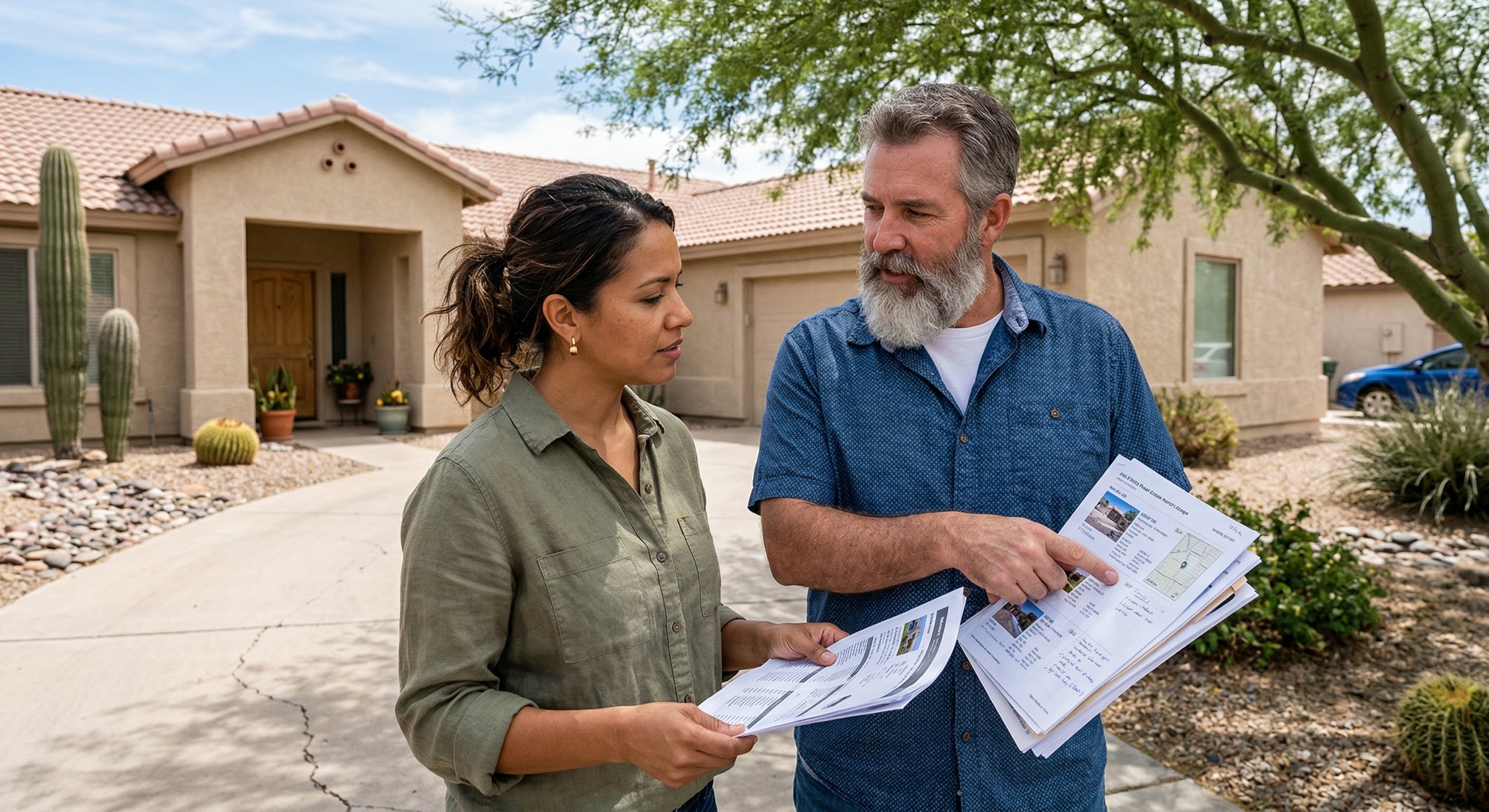
Who to contact: The personal representative is your target — not necessarily the heirs. The PR has legal authority to negotiate. Find their contact information in the public court file or through a skip trace once you have the name.
What to say: Lead with empathy, not an offer. Something like: "I saw a filing for the estate — if the family is thinking about a simple sale without going through a listing process, I'd like to talk." You're not cold-pitching an investment opportunity. You're offering a service to someone in a complicated situation.
Follow-up cadence: Probate deals typically require 3–5 touches before a conversation happens. Many personal representatives are juggling work, grief, and a property they've never managed. Persistence without being pushy — a follow-up every 3-4 weeks is appropriate.
Skip tracing matters here: Personal representatives aren't always in Arizona, especially for Mohave and Yavapai County estates with vacation properties. A good skip trace gets you a working phone number and email, not just a mailing address.
Arizona-Specific Nuances That Change the Math
No Court Confirmation Required (Usually)
Arizona follows the Independent Administration of Estates Act, which means the personal representative can typically sell real property without getting court approval on the sale price — as long as the will or court order grants independent authority. This speeds up closings dramatically compared to states where every sale has to go back before a judge.
Practical impact: when a Maricopa County probate seller says yes, you can move to contract and close without waiting months for a court hearing. California investors who work in both markets notice this difference immediately.
Non-Judicial Foreclosure Running Alongside Probate
Arizona is a non-judicial foreclosure state, which means a delinquent property can go through trustee sale without lengthy court involvement. This creates a meaningful overlap: probate properties with unpaid mortgages can slip into foreclosure faster than in judicial-state markets.
When you see a probate filing stacked with a Notice of Trustee Sale, the timeline just compressed dramatically. The heirs may have very little time to act. That's when a simple, fast offer becomes genuinely valuable to them.
Sun City, Sun City West, and the Retirement Belt
A substantial portion of Arizona's probate real estate is concentrated in retirement communities — Sun City, Sun City West, Sun City Grand, Leisure World (now Leisure World Scottsdale), Arizona Traditions. These communities have aging-in-place populations that generate consistent estate filing volume. Properties here are often well-maintained, have clear title histories, and are owned free-and-clear by retirees who purchased decades ago.
Heirs in these situations frequently prefer a quick sale to a drawn-out listing process. The properties are in good condition, the ARVs are predictable, and the sellers understand cash offers. It's some of the cleanest probate inventory in the Phoenix metro.
CTA: Stop Working a Flat List
Arizona generates more probate filings than most investors have time to manually track — across 15 counties, with cases filed continuously. The investors closing the most deals aren't the ones who work the hardest at research. They're the ones who prioritize the right leads within that pool.
DistressIQ surfaces Arizona probate leads with multi-signal scoring — so when you open your list in the morning, the estate with a delinquent tax bill and a deteriorating property is already at the top. Browse Arizona probate leads free on DistressIQ and see the full signal picture before you make the first call.
Frequently Asked Questions
How do I find probate leads in Arizona?
Arizona probate filings are public records in each county's Superior Court. You can search case management portals for each county directly, though this requires manual effort across all 15 counties. Platforms like DistressIQ aggregate Arizona probate data county-direct and cross-reference it with tax delinquency and code violations to show which leads have the strongest motivation signals.
Which Arizona counties have the most probate real estate leads?
Maricopa County (Phoenix metro) generates the highest raw volume by far. Pima County (Tucson), Pinal County (Central AZ), Yavapai County (Prescott/Sedona), and Mohave County (Bullhead City/Lake Havasu) all have meaningful probate activity, especially given their high retiree populations.
How long does Arizona probate take?
Typical Arizona probate takes 6–18 months from filing to estate closure. Simple, uncontested estates with a cooperative personal representative can move faster. Complex multi-beneficiary estates or contested wills take longer. The creditor claim window (4 months from notice publication) sets a floor on how fast real property can be sold.
What makes a probate lead more motivated than others?
Probate alone is a single signal — it tells you a death occurred and property is involved. The most motivated probate sellers typically have additional financial pressure stacked on top: delinquent property taxes (can't afford to carry), outstanding code violations (deteriorating property), or a Notice of Trustee Sale (mortgage default running alongside the estate). Those multi-signal leads convert faster and at better margins.
Do I need court approval to buy a probate property in Arizona?
In most Arizona probate cases, no. Arizona follows independent administration rules, meaning the personal representative can sell real property without returning to court for price approval — as long as the will or court order grants independent authority. This is a significant advantage over states like California that require court confirmation on probate sales.
Is probate investing worth it in Arizona?
Yes — particularly for patient investors willing to build relationships over a 2–6 month timeline. The Phoenix metro's aging population and strong in-migration create consistent estate volume. The best deals go to investors who identify motivated sellers early (through signal stacking) and make contact before the property is committed to a listing agent.
The data behind this article
DistressIQ Monitors These Signals in Real Time
Pre-Foreclosures
NOD + NTS filings
Tax Delinquency
County treasurer records
Code Violations
Municipal inspection filings
Probate Filings
Superior Court records
Every lead is scored 0–100 for seller motivation based on signal type, duration, severity, and stacking. Nationwide coverage — every US county, updated daily.
Ready to find deals in your market?
See Live Distress Signals in Arizona
Stop calling dead leads. Every lead in DistressIQ is scored 0–100 for seller motivation, with verified contact info included. Browse the free tier to see what's active in your market right now.
Browse Free Leads — No Credit Card