How to Find Pre-Foreclosure Leads in Virginia (2026 Investor Guide)
How to Find Pre-Foreclosure Leads in Virginia (2026 Investor Guide)
TL;DR: Virginia is a non-judicial foreclosure state, which means foreclosures move fast, often 120 to 150 days from first missed payment to trustee sale. That compressed timeline is your window. The best pre-foreclosure leads in Virginia come from lis pendens filings in Circuit Court, county tax delinquency records, and multi-signal distress data that catches properties before the foreclosure clock runs out. Platforms like DistressIQ aggregate all of this in one place, scored and ranked so you know who to call first. The investors winning in Virginia markets right now aren't working harder, they're working with better, faster data.
Virginia isn't a forgiving state for homeowners behind on payments. Unlike New York's multi-year court process or California's trustee timeline that can stretch 9+ months, Virginia runs a lean, trustee-driven system. The lender doesn't need a court order. Once the process starts, the clock moves fast, and if you're a real estate investor, that compressed timeline is everything.
The window between "homeowner misses payments" and "property hits the courthouse steps" is where deals get made. But you need to know where to look, how the process actually works in Virginia, and which markets are worth your attention in 2026.
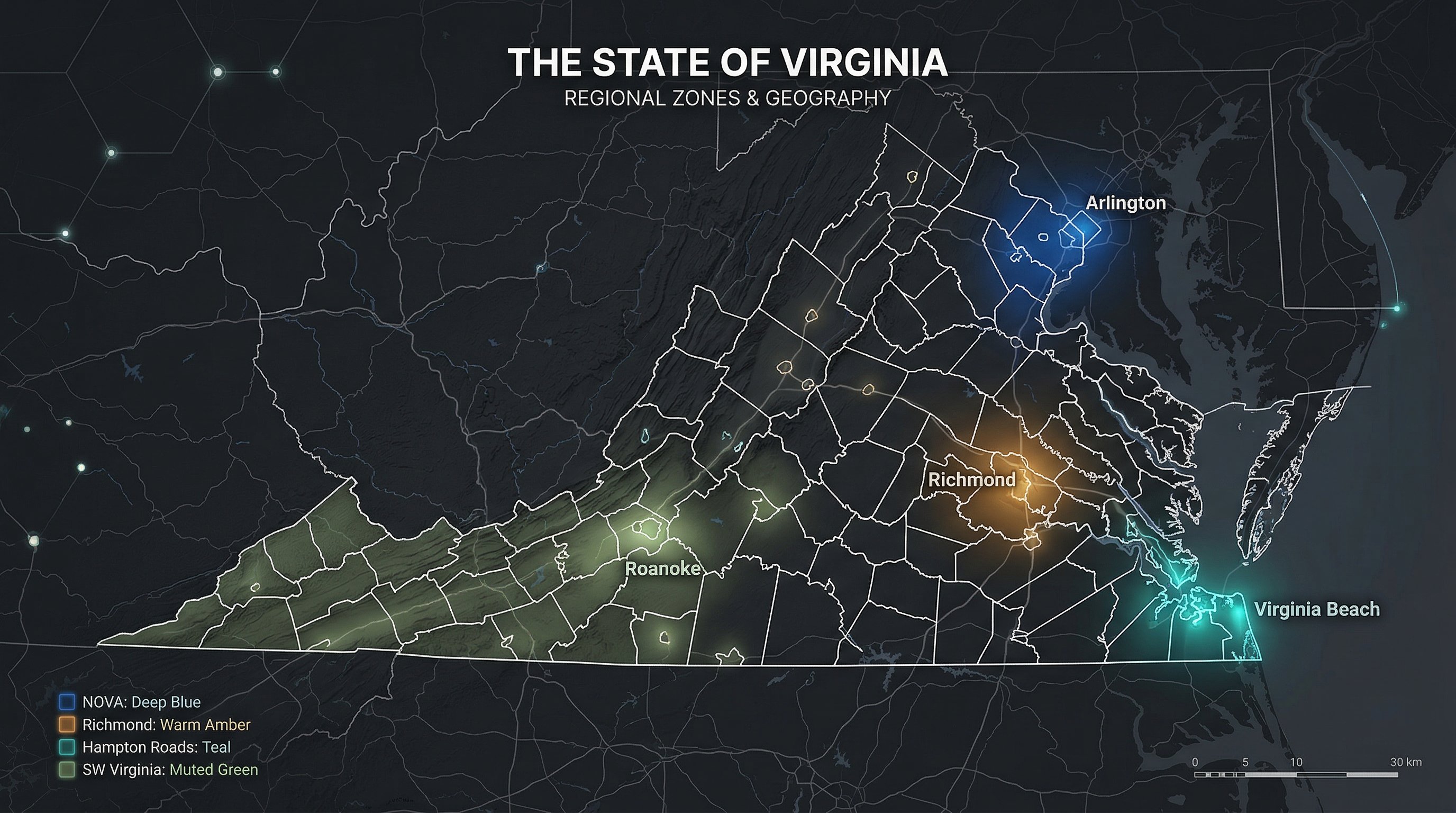
Where Pre-Foreclosure Leads Come From in Virginia
Circuit Court Lis Pendens Filings
For properties with government-backed loans (FHA, VA loans, ironically common in Virginia given the military population) or loans where the lender chooses judicial foreclosure, a lis pendens will be filed with the Circuit Court Clerk in the property's county.
Virginia has 95 counties and 38 independent cities, each with its own Circuit Court. The Circuit Court Clerk's office maintains all real estate records including lis pendens, deeds of trust, and judgment liens. Most are accessible through the Virginia Courts Case Information system or in person.
The catch: non-judicial foreclosures in Virginia don't always generate a lis pendens filing, because there's no lawsuit initiating the process. The notice of sale posted to the property and published in the newspaper is the trigger, and that's not centrally tracked. This is why relying on a single data source in Virginia leaves gaps.
County Treasurer Tax Delinquency Records
Every Virginia county treasurer maintains delinquency records on properties with unpaid real estate taxes. Tax delinquency often precedes foreclosure, when a homeowner is in financial distress, property taxes frequently stop getting paid first. That makes tax delinquent records one of the earliest pre-foreclosure signals available.
Each county handles public access differently. Fairfax County posts delinquent tax lists online. Some smaller counties require an in-person visit or FOIA request to get the data. Virginia's Freedom of Information Act (FOIA) entitles residents to inspect public records, and a written request to the county treasurer typically gets you a delinquency list within five business days.
Notice of Sale Publications
Virginia law requires trustees to advertise the foreclosure sale in a newspaper of general circulation in the county where the property sits, for four consecutive weeks before the sale. These notices contain the property address, sale date, and trustee contact information.
Tracking every Virginia county newspaper is impractical at scale, but this is data that aggregated platforms pull into a unified feed.
Probate and Estate Records
Virginia probate is handled through the Circuit Court system. When a property owner dies, the estate goes through probate before heirs can sell or transfer title. Inherited properties, especially those with out-of-state heirs or multiple heirs who can't agree, frequently become distressed. They sit vacant, taxes lapse, and eventually a lis pendens or tax delinquency follows.
In Virginia, probate can take anywhere from a few months for simple estates to over a year for contested ones. That's a long window of potential distress. Monitoring probate filings in active investor markets is a legitimate sourcing strategy.

Virginia Pre-Foreclosure Markets Worth Your Attention in 2026
Virginia isn't one market, it's five or six distinct real estate ecosystems, each with different dynamics for distressed property investors.
Northern Virginia (NOVA)
Arlington, Fairfax, Loudoun, Prince William, and Alexandria form one of the most expensive metro areas in the country. Median home prices in Northern Virginia regularly exceed $600,000. Pre-foreclosure volume here is lower relative to the market size, but the average deal is significantly larger. The competitive intensity is also higher, NOVA investors are sophisticated and well-capitalized.
The best pre-foreclosure opportunities in NOVA come from multi-signal situations: a lis pendens filing on top of tax delinquency on top of an absentee owner. Single-signal leads in this market get picked over quickly by wholesalers who've been there longer.
Richmond Metro (Henrico, Chesterfield)
Richmond is a different play. Median prices are more accessible ($300–400K range), the investor community is active but not saturated, and the market has steady population growth. Henrico County and Chesterfield County together account for a large share of Richmond-area distressed inventory.
Richmond's pre-foreclosure market is particularly strong for buy-and-hold investors. Military relocation from nearby Fort Lee (now Fort Gregg-Adams) creates steady rental demand. Tax delinquent properties in the city of Richmond proper often turn into solid rental acquisitions after rehab.
Hampton Roads (Virginia Beach, Norfolk, Chesapeake, Portsmouth)
The Hampton Roads metro is military-heavy, with Naval Station Norfolk, Langley-Eustis, and a dozen other installations in the footprint. Military families who PCS (Permanent Change of Station) on short notice can create urgent sell situations that don't always qualify as traditional pre-foreclosure but show similar motivation dynamics.
True pre-foreclosure deals here follow the same pattern as the rest of Virginia, but the military connection creates an additional category of motivated sellers: homeowners who need to move out of state on a 6-week timeline, often carrying a house they can't wait to list.
Virginia Beach's Circuit Court Clerk has one of the more accessible online records systems in the state, which makes sourcing lis pendens data for the Hampton Roads area less painful than some rural Virginia counties.
Roanoke and Southwest Virginia
Less competition. That's the pitch for Roanoke, Lynchburg, and Southwest Virginia. Price points are well below the statewide median, the investor pool is thinner, and there are pre-foreclosure deals that sit longer because fewer people are actively working this territory.
The tradeoff: exit strategies are more limited. Rental yields can be solid, but resale ARV comps are challenging in markets with limited transaction volume. Investors succeeding here typically have strong local contractor networks and patience.
The Manual Research Problem in Virginia
Say you want to build a Virginia pre-foreclosure lead list the hard way. You're looking at 95 counties, 38 independent cities, and 133 separate Circuit Court records systems. Some have decent online portals. Some require a physical visit or a FOIA request that takes a week to come back. Some newspaper notice archives are behind paywalls. Tax delinquency data formats differ across county treasurers.
By the time you've pulled lis pendens data from Fairfax, cross-referenced it against the county tax delinquency list, checked the probate filings in the adjacent county, and sorted out which properties are absentee-owned versus owner-occupied, days have passed. And Virginia's foreclosure timeline doesn't wait.
This is the part of Virginia pre-foreclosure investing that separates investors who do two or three deals a year from the ones doing twelve.
Free Weekly Alerts
See What's Distressed in Your Market
Get free weekly alerts — new distressed properties, motivation scores, and hot neighborhoods in your area. Addresses and contact info available inside DistressIQ.
Free forever · No credit card · Unsubscribe anytime
What the Data Edge Actually Looks Like
DistressIQ pulls distress signal data directly from Virginia county records, lis pendens filings, tax delinquency records, probate proceedings, and code violation notices, across all 133 Virginia jurisdictions, updated daily. Every property is scored 0–100 based on the stack of signals present.
A property with a single lis pendens scores differently than one that has a lis pendens PLUS six months of tax delinquency PLUS a code violation notice. The second property is the motivated seller. The first is someone who might work something out with their lender. The motivation score separates them.
The practical result: instead of sorting through 400 Virginia pre-foreclosure leads and guessing who to call, you start with the top 20 scored by urgency. Your outreach is tighter, your skip trace budget goes further, and you close a higher percentage of conversations.
See Virginia pre-foreclosure leads scored by motivation, browse free on DistressIQ. No credit card to browse. You only pay when you want owner contact info.
Working Virginia Sellers: The Approach That Works
Virginia homeowners in pre-foreclosure are dealing with real financial stress. The best investor outreach in this market acknowledges that directly.
What works: a direct mail piece or call that acknowledges they're in a hard spot, explains what a cash sale looks like versus losing the property at auction, and lets them see the math. A homeowner who sells in pre-foreclosure typically nets significantly more than they would at a trustee sale, and they avoid the credit damage of a completed foreclosure. That's a real solution, frame it that way.
What doesn't work: generic "We buy houses!" mailers that show up in the middle of their mortgage crisis alongside six other identical pieces. In Virginia markets that have been worked hard (NOVA, Richmond, Virginia Beach), that message is white noise. A targeted letter that references the specific situation, with empathy and specificity, gets a callback. Volume sends don't.

Your 2026 Virginia Pre-Foreclosure Action Plan
Pick your target markets. NOVA for larger deal sizes, Richmond for volume and balance, Hampton Roads for military-adjacent opportunities, Southwest Virginia if you want less competition and more patience required.
Layer your data sources. Don't build a Virginia pre-foreclosure strategy on a single signal. The strongest leads show multiple indicators: lis pendens + tax delinquency + absentee ownership. That combination represents a homeowner running out of options, not just one who's behind on a payment.
Act on freshness. Virginia's non-judicial process moves fast. A lis pendens filed today in Prince William County has a finite lifespan before that property hits auction. Old data in Virginia is dead data.
Work the court system where accessible. For Hampton Roads and Richmond, Circuit Court online access is solid. For smaller counties, establish a FOIA request process with the county treasurer and clerk's office so you're not reinventing the wheel every time.
Use tools that aggregate. Virginia's 133-jurisdiction patchwork is specifically the kind of problem that data platforms are built to solve. Manually covering even five Virginia counties takes more time than most investors can justify.

Virginia rewards the investor who shows up with better information and a faster read on who's actually motivated. The manual path is expensive in time. The data-driven path starts with knowing which 20 properties in your target market have the strongest distress signal stack, and then picking up the phone.
Browse Virginia distressed properties on DistressIQ. Pre-foreclosures, lis pendens, tax delinquent leads, every US county, scored by motivation. Free to browse, no subscription required to see what's out there.
Frequently Asked Questions
Q: How does Virginia's non-judicial foreclosure process affect pre-foreclosure investing?
Virginia's trustee-sale process doesn't require court involvement, which means foreclosures move fast, typically 120 to 150 days from first missed payment to auction. Investors have a shorter window to make contact than in judicial foreclosure states. Early data (lis pendens filings, tax delinquency records) is critical for catching properties before the sale date is imminent.
Q: Where can I find lis pendens records in Virginia?
Lis pendens filings in Virginia are recorded with the Circuit Court Clerk in the county or independent city where the property is located. Virginia has 95 counties and 38 independent cities, each with separate records. Many Circuit Courts offer online case lookup through the Virginia Courts Case Information system. Access varies by jurisdiction.
Q: Is Virginia a good state for pre-foreclosure investing?
Yes, particularly in the Richmond, Hampton Roads, and Northern Virginia metro areas. Virginia's non-judicial foreclosure process creates a relatively tight timeline, which motivates sellers to find solutions quickly. The Hampton Roads military population adds an additional layer of urgent-sale situations beyond traditional pre-foreclosure.
Q: How long does the Virginia foreclosure process take?
Virginia foreclosures typically complete in 120 to 150 days from the first missed payment. Non-judicial trustee sales require four consecutive weeks of newspaper publication before the sale date. This is significantly faster than states like New York (600+ days) or Illinois (300+ days).
Q: What distress signals should I track for Virginia pre-foreclosure leads?
The strongest Virginia pre-foreclosure leads combine multiple signals: lis pendens filings, tax delinquency with the county treasurer, absentee owner status, code violations, and probate filings. Single-signal leads in competitive markets like Northern Virginia get worked over quickly. Multi-signal properties represent homeowners with fewer options, and stronger motivation to close.
The data behind this article
DistressIQ Monitors These Signals in Real Time
Pre-Foreclosures
NOD + NTS filings
Tax Delinquency
County treasurer records
Code Violations
Municipal inspection filings
Probate Filings
Superior Court records
Every lead is scored 0–100 for seller motivation based on signal type, duration, severity, and stacking. Nationwide coverage — every US county, updated daily.
Ready to find deals in your market?
See Live Distress Signals in Virginia
Stop calling dead leads. Every lead in DistressIQ is scored 0–100 for seller motivation, with verified contact info included. Browse the free tier to see what's active in your market right now.
Browse Free Leads — No Credit Card