How to Find Pre-Foreclosure Leads in North Carolina (2026 Investor Guide)
How to Find Pre-Foreclosure Leads in North Carolina (2026 Investor Guide)
TL;DR: North Carolina's foreclosure process creates two distinct windows for investors — the pre-hearing period (20-60 days, most motivated sellers) and the post-sale upset bid window (10 days, last-chance steals). Most investors only know about the first window. The best leads come from stacking the Notice of Hearing filing date with tax delinquency and code violation signals, then targeting Charlotte, Raleigh, Durham, and Greensboro before competitors flood those same lists. DistressIQ aggregates NC pre-foreclosure signals from all 100 counties, scored and ranked by motivation — browse free.
Most investors think pre-foreclosure lead generation is the same in every state. It isn't. North Carolina has a foreclosure process unlike most other states — one that creates two distinct buying windows, both visible in public records if you know where to look.
The investors who know the difference are working deals most of their competitors never see.
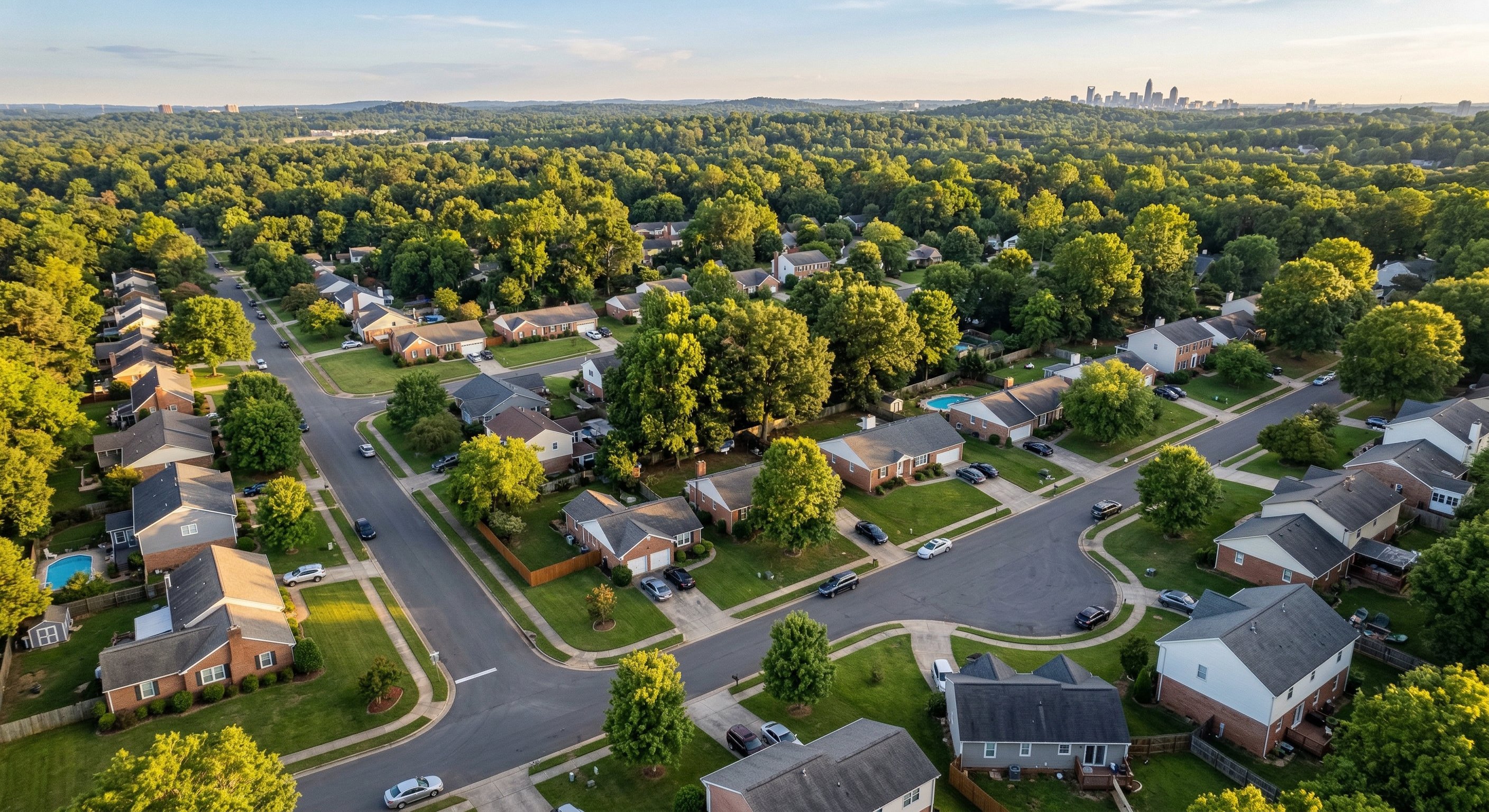
How North Carolina's Foreclosure Process Actually Works
North Carolina uses a court-supervised "power of sale" foreclosure process — it's not purely judicial like New York, but it's also not the simple trustee sale process you see in Texas or Georgia. The result is a longer timeline with more public filing points, which means more early warning signals.
Here's the sequence:
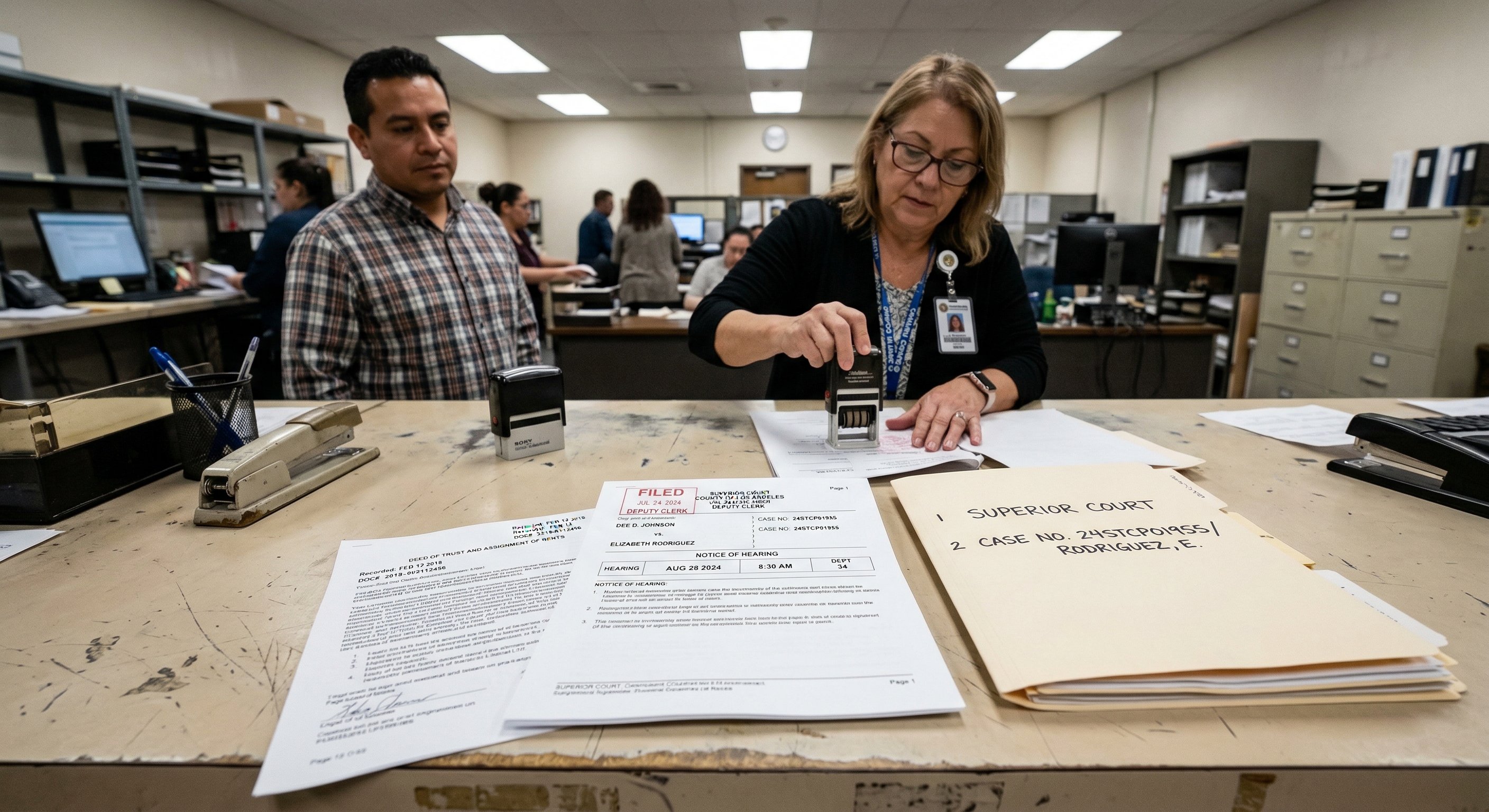
1. Notice of Hearing filed with Clerk of Superior Court When a lender begins foreclosure, they must file a Notice of Hearing with the county's Clerk of Superior Court. This filing is public record, recorded in the county deed registry, and typically happens 20-45 days before the actual hearing. This is the critical first window.
2. The Hearing The Clerk holds a hearing to verify the debt, the validity of the deed of trust, and whether the borrower is in default. If conditions are met, the Clerk issues an order allowing the foreclosure sale.
3. The Foreclosure Sale After the hearing, the property goes to auction — typically at the county courthouse. Minimum bid is usually set at the outstanding loan balance plus fees.
4. The 10-Day Upset Bid Period Here's the part most investors miss entirely. After the initial auction sale, North Carolina law gives anyone — including third-party investors — 10 days to file an "upset bid" that exceeds the winning bid by at least 5%. This can be repeated until no new upset bids come in. This is the second window.
The total timeline from Notice of Hearing filing to completed sale runs 60-120 days in most NC counties. That's a long runway, and the motivated seller window is widest at the beginning — before the homeowner has received 3-4 direct mail pieces from every investor in the county.
The Two Investor Windows in NC (And Which One to Target)
Window 1: Notice of Hearing to Sale (20-90 days)
This is the primary pre-foreclosure window. The homeowner is facing a court date. They know it. Their options are narrowing — catch up on payments, sell, or lose the property. The ones who need to sell will typically price it to move quickly.
The data signal here is the Notice of Hearing filing. Every NC county records these with the Clerk of Superior Court and they're available through public records. Some counties update daily; others are a week behind.
Best targets within this window:
- Homeowners with Notice of Hearing filed 15-45 days ago (recent enough to have urgency, early enough to still act)
- Properties where the same owner also has tax delinquency (signals compounding financial stress)
- Properties with code violations on top of pre-foreclosure (high-urgency, often significant discount)
Window 2: Post-Sale Upset Bid Period (10 days)
This window gets ignored because most investors focus on the pre-foreclosure period. But if the initial auction produces a low winning bid — and in smaller NC counties, it often does — the upset bid period is a chance to acquire a property at a price that was just validated at public auction.
The catch: you need cash or hard money that closes fast, and you need to be watching auction results daily. It's operationally heavier, but the competition is thin.
The 5 NC Markets With the Most Pre-Foreclosure Activity
Not all 100 North Carolina counties are equally productive for pre-foreclosure leads. Volume and conversion rates cluster in the major metros and their adjacent suburban counties.
1. Mecklenburg County (Charlotte)
Charlotte is one of the fastest-growing metros in the Southeast. Mecklenburg County has consistent pre-foreclosure inventory, strong ARVs, and a deep pool of cash buyers — which means exit is reliable. The challenge is competition. Charlotte's investor market is saturated with wholesalers, so the edge comes from data quality, not just having the list.
Focus on: pre-foreclosure filings where the property also appears on the tax delinquent rolls. These sellers have two problems, not one — and they're often willing to take a number that makes your deal work.
2. Wake County (Raleigh)
Wake County has seen explosive appreciation over the past five years. Pre-foreclosure properties here often sit at an ARV that supports healthy margins, even with significant deferred maintenance. The Research Triangle job market keeps demand high, which means flips and rentals both make sense depending on the deal structure.
Notable: Wake County also includes Cary, Apex, and Morrisville — suburban sub-markets where absentee owners accumulate faster than in the urban core. Cross-referencing pre-foreclosure with absentee owner data is especially productive here.
3. Durham County
Durham's investor market is smaller than Charlotte and Raleigh but meaningfully less competitive. Deals that would draw 15 calls in Mecklenburg might draw 4 in Durham. The market has strong owner-occupant demand from the Duke University and Research Triangle Park employment base, which helps exit velocity on renovation flips.
Pre-foreclosure volume in Durham is lower in raw numbers, but conversion rates tend to be better because fewer competing investors are working the same names.
4. Guilford County (Greensboro)
Greensboro is a mid-size market that's often overlooked by investors chasing Charlotte and Raleigh. Median price points are lower, ARVs are more forgiving on rehab overruns, and the pre-foreclosure inventory-to-active-investor ratio is more favorable than the two major metros. For investors who want deal flow without bidding wars, Guilford is worth the attention.
5. Forsyth County (Winston-Salem)
Winston-Salem runs similar dynamics to Greensboro — lower price points, less competition, reliable demand from a mix of owner-occupants and renters. The pre-foreclosure timeline here tends to move a little faster through the court system, which means the urgency window is tighter. Get on these names early.
Free Weekly Alerts
See What's Distressed in Your Market
Get free weekly alerts — new distressed properties, motivation scores, and hot neighborhoods in your area. Addresses and contact info available inside DistressIQ.
Free forever · No credit card · Unsubscribe anytime
Finding NC Pre-Foreclosure Leads: The Manual vs. Sourced Approach
There are two ways to work this list. Let's be straight about what each one actually looks like.
Manual Research (What It Takes)
Each NC county maintains its own public records system. Mecklenburg County has an online portal. Wake County does too. Cumberland County (Fayetteville), Buncombe County (Asheville), Union County — they each have different interfaces, different update schedules, different data formats.
To pull raw pre-foreclosure data manually across even five counties, you're looking at:
- 5-7 different portals, each with its own login and navigation
- Inconsistent data fields (some counties show filing dates, some don't)
- No centralized way to cross-reference with tax delinquency or code violations
- Manual export or copy-paste into a spreadsheet
- Skip tracing on raw address data with no phone confidence indicators
This isn't impossible. Investors have done it for years. But it's a data input job, not a deal-finding strategy. You're spending hours on the front end building a list that still needs significant work before you know who to call.
What Changes With Pre-Screened, Scored Data
When pre-foreclosure signals are sourced directly from county records across all 100 NC counties and cross-referenced with tax delinquency, probate activity, and code violations, you're not starting with a raw address list. You're starting with a ranked queue.
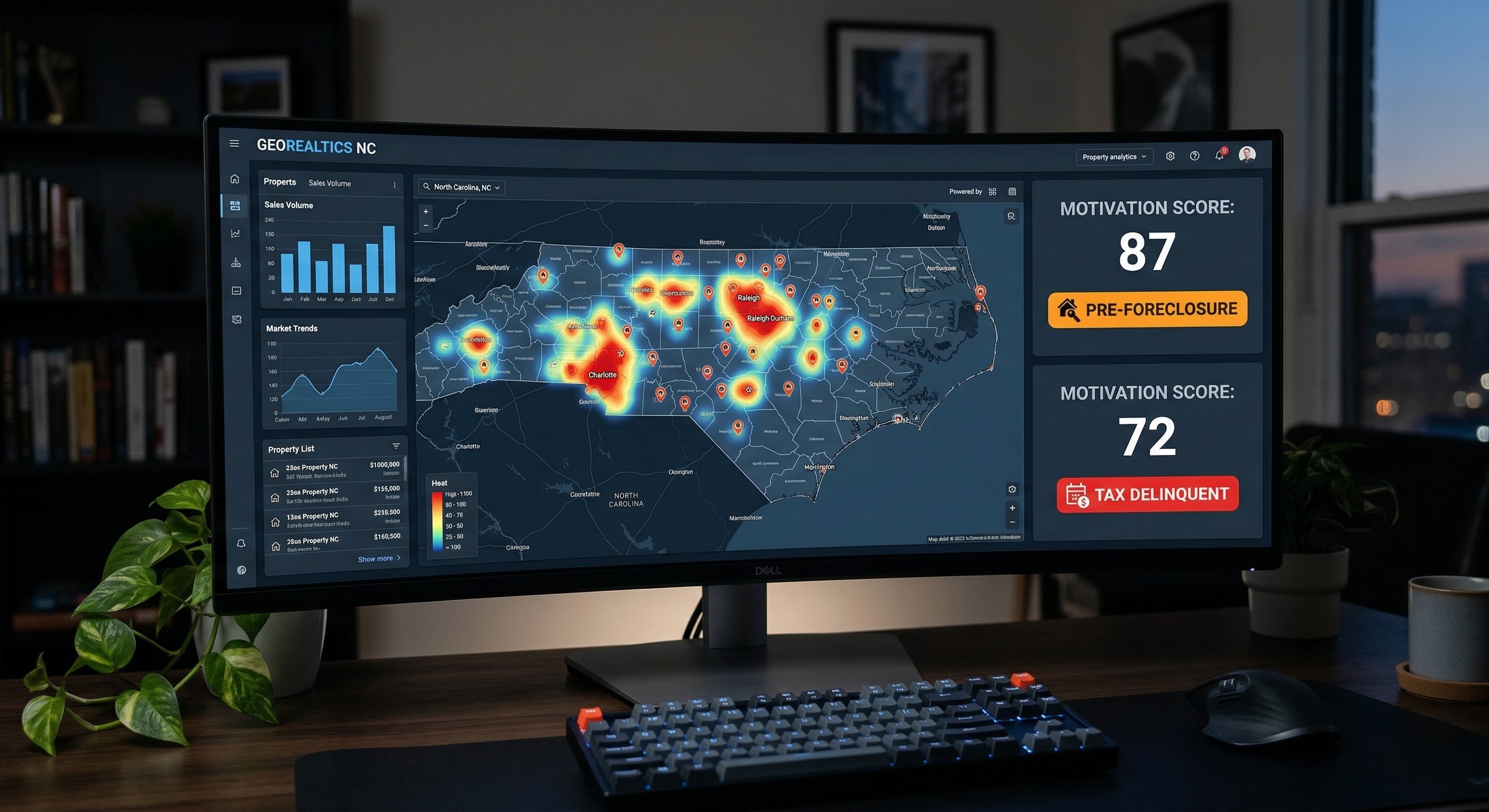
The difference in practice: instead of 200 leads with no indication of where to start, you have 200 leads sorted by motivation score. The ones carrying two or three compounding signals — Notice of Hearing plus delinquent taxes plus code violations — sit at the top. Those are the calls you make Tuesday morning.
DistressIQ sources pre-foreclosure signals from all 100 North Carolina counties, updated daily from public records, scored against 20+ distress signal types. Browse the map for free — see the density, see the signals, only pay when you want the owner contact details.
[Browse NC pre-foreclosure leads free on DistressIQ — all 100 counties, scored by motivation]
Stacking Signals: What High-Motivation NC Sellers Actually Look Like
The single pre-foreclosure filing is useful. A pre-foreclosure filing paired with two other distress signals is what separates a motivated seller from a highly motivated one.
In North Carolina, the most productive signal combinations are:
Notice of Hearing + Tax Delinquency The homeowner is behind on the mortgage AND behind on property taxes — two separate obligations with two separate timelines. A direct sale can resolve both at once, often netting the homeowner more than either a tax sale or foreclosure auction would.
Notice of Hearing + Long-Term Ownership + Probate Activity An older owner who's been in the property for 15-25 years, now facing foreclosure, sometimes with probate activity on the title. These situations are often more complex but represent genuine motivated sellers who need a clean close.
Notice of Hearing + Code Violations A property that's deteriorated to the point of receiving municipal code violations, now also in pre-foreclosure. High repair needs usually mean lower seller expectations on price. The discount needs to work — but when it does, this is the profile that produces the best spread.

How to Work NC Pre-Foreclosure Leads: The Actual Outreach Sequence
The list is just a list until you have a consistent way to work it.
Step 1: Pull your working list by county Start with one or two counties where you have established buyer and lender relationships. Mecklenburg or Wake are the highest-volume options. Guilford or Forsyth if you want less competition.
Step 2: Filter by recency and stacked signals Focus on Notice of Hearing filings from the past 30-60 days. Beyond 90 days, the property is likely already in late-stage foreclosure or the seller has resolved the situation.
Step 3: Skip trace selectively Don't skip trace the entire list. Pre-screen by motivation score and property economics first — ARV estimates, distress signal count. Skip trace the top 15-20% of the sorted list. This isn't about saving a few dollars on skip trace fees; it's about calling people who are actually worth your time.
Step 4: First contact by phone — direct and honest "I noticed your property [address] has a Notice of Hearing filed. I don't know your situation, but I work with sellers who need a fast close. If that's something you want to talk about, I'm happy to take a look."
Short. Honest. Lets them self-select.
Step 5: Direct mail to non-responders Phone non-responders within 7-10 days. Personalized letter, no generic templates. Acknowledge you know they're in a difficult situation. Give them a way to respond on their terms.
Step 6: Follow the upset bid results Pull auction results weekly from your target counties. When a property sells at auction below your estimate of the deal price, watch for the 10-day upset bid window. This is your secondary pipeline that costs almost nothing to maintain.
What to Expect in 2026
North Carolina foreclosure filings were up significantly heading into 2026. The post-pandemic forbearance period wound down, rates remain elevated, and home equity that cushioned many homeowners in 2021-2023 has been drawn down through HELOCs and cash-out refinances. ATTOM Q4 2025 data shows foreclosure starts in the Southeast running 18-26% above year-ago levels.
The opportunity is there. The constraint — as it always is in motivated seller investing — is working the right leads before they're worn out by competing outreach.
North Carolina's longer notice period means the window is wide. The investors who stay ahead of it with fresh, scored signals from all 100 counties will close deals the rest miss.
Frequently Asked Questions
How long does the pre-foreclosure process take in North Carolina?
From the filing of the Notice of Hearing to the foreclosure sale, the process typically runs 60-120 days in NC. The timeline varies by county (Wake and Mecklenburg process faster than rural counties) and by how contested the proceeding is. The pre-hearing window — before the Clerk issues the foreclosure order — is typically the most productive time to approach sellers.
Where can I find pre-foreclosure filings in North Carolina?
Each county's Clerk of Superior Court maintains these records. Major metros like Mecklenburg and Wake have online portals. Smaller counties may require in-person requests or manual searches. For statewide coverage across all 100 counties, DistressIQ aggregates these filings and cross-references them with tax delinquency, probate, and code violation signals.
What is the upset bid period in NC foreclosure?
After a North Carolina foreclosure auction sale is completed, any interested party has 10 days to file an "upset bid" with the Clerk of Superior Court. The upset bid must exceed the winning auction price by at least 5% and requires a 5% deposit. If no one upsets the bid within 10 days, the sale is confirmed. This creates a secondary buying window after the initial auction.
Is North Carolina a judicial or non-judicial foreclosure state?
NC uses a hybrid process — it's court-supervised via the Clerk of Superior Court, but not a full judicial foreclosure like New York or New Jersey. It's sometimes called a "special proceeding" or "power of sale" foreclosure. The court involvement creates more public filings and a longer timeline than pure non-judicial states like Georgia.
Which NC counties have the most pre-foreclosure leads?
By volume, Mecklenburg (Charlotte), Wake (Raleigh), and Guilford (Greensboro) consistently generate the most pre-foreclosure filings. Cumberland (Fayetteville), Durham, and Forsyth (Winston-Salem) follow. For investors who prefer less competition, Durham, Forsyth, and mid-sized counties like Rowan, Cabarrus, and Onslow can offer better lead-to-investor ratios than the major metros.
The data behind this article
DistressIQ Monitors These Signals in Real Time
Pre-Foreclosures
NOD + NTS filings
Tax Delinquency
County treasurer records
Code Violations
Municipal inspection filings
Probate Filings
Superior Court records
Every lead is scored 0–100 for seller motivation based on signal type, duration, severity, and stacking. Nationwide coverage — every US county, updated daily.
Ready to find deals in your market?
See Live Distress Signals in North Carolina
Stop calling dead leads. Every lead in DistressIQ is scored 0–100 for seller motivation, with verified contact info included. Browse the free tier to see what's active in your market right now.
Browse Free Leads — No Credit Card