The House Flipping Checklist Every Investor Needs Before Signing
The House Flipping Checklist Every Investor Needs Before Signing
TL;DR: A house flipping checklist is a structured due diligence sequence covering deal analysis, repair scope, exit strategy, and financing before signing on any property. The investors who lose money on flips almost always skipped at least one of these steps. Key items: confirm ARV with three comparable sales, verify the repair scope in person, establish a financing contingency, and identify your exit strategy before you close.
The Real Problem With Most House Flippers
Most investors who lose money on a house flip did not pick the wrong market. They did not get unlucky with a contractor. They signed on a deal that failed their own checklist before they even owned it.
The numbers are consistent across markets: roughly 60% of first-time flippers lose money or break even, according to industry surveys of real estate investors. The pattern is not bad luck. The pattern is skipping the due diligence sequence in the rush to close a deal that feels urgent because another investor is also looking at it.
A proper house flipping checklist does not guarantee every deal works. It guarantees that every deal that fails was a known risk, not a surprise.
Step 1: Confirm the ARV Before Anything Else
After repair value is the foundation of every flip. If that number is wrong, no amount of smart renovation work saves the deal.
The standard rule used by experienced flippers is the 70% rule: you should not pay more than 70% of the after repair value, minus the repair costs. That leaves a margin for financing costs, unexpected problems, and selling carrying costs that always take longer than planned.
Confirming ARV requires three comparable sales from the same neighborhood, ideally within the last 90 days. Comps older than six months can be misleading in either direction. Look for properties that are similar in bedroom count, bathroom count, square footage, and lot size. A 2,200-square-foot home in a neighborhood of 1,800-square-foot homes is not a valid comp, even if it is the same distance from downtown.
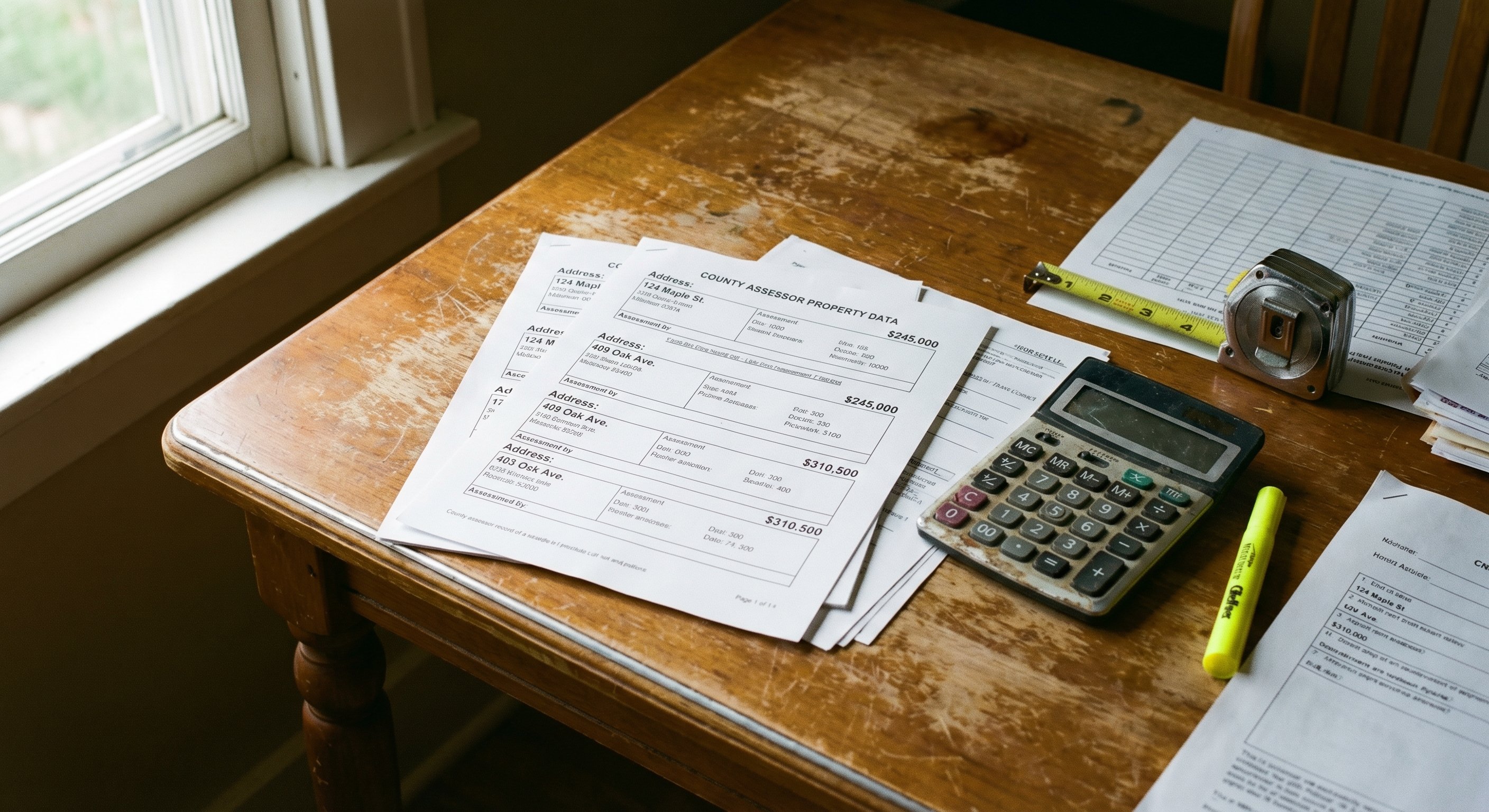
Use county assessor records to verify the data rather than relying on listing sites, which frequently contain errors in bedroom counts, square footage, and lot dimensions. DistressIQ surfaces assessor-verified property characteristics as part of its distress signal data, so the property characteristics are already in view alongside the signals that made the deal appear on the radar in the first place.
If the numbers do not work on paper, they do not work in the field. Walk away.
Step 2: Verify the Distress Signal in Person
Public records show that a property has a distress signal. They do not show why the distress signal exists or whether the underlying property condition is even salvageable.
A property with a tax delinquency is not automatically a good flip candidate. The county may have placed a lien on a property that has severe structural damage, a failed septic system, or title complications that make it uninsurable. Investors who skip the in-person verification step frequently discover these problems after closing, when the cost to remediate is entirely theirs.
Walk the property before signing any purchase agreement. At minimum, verify the following in person:
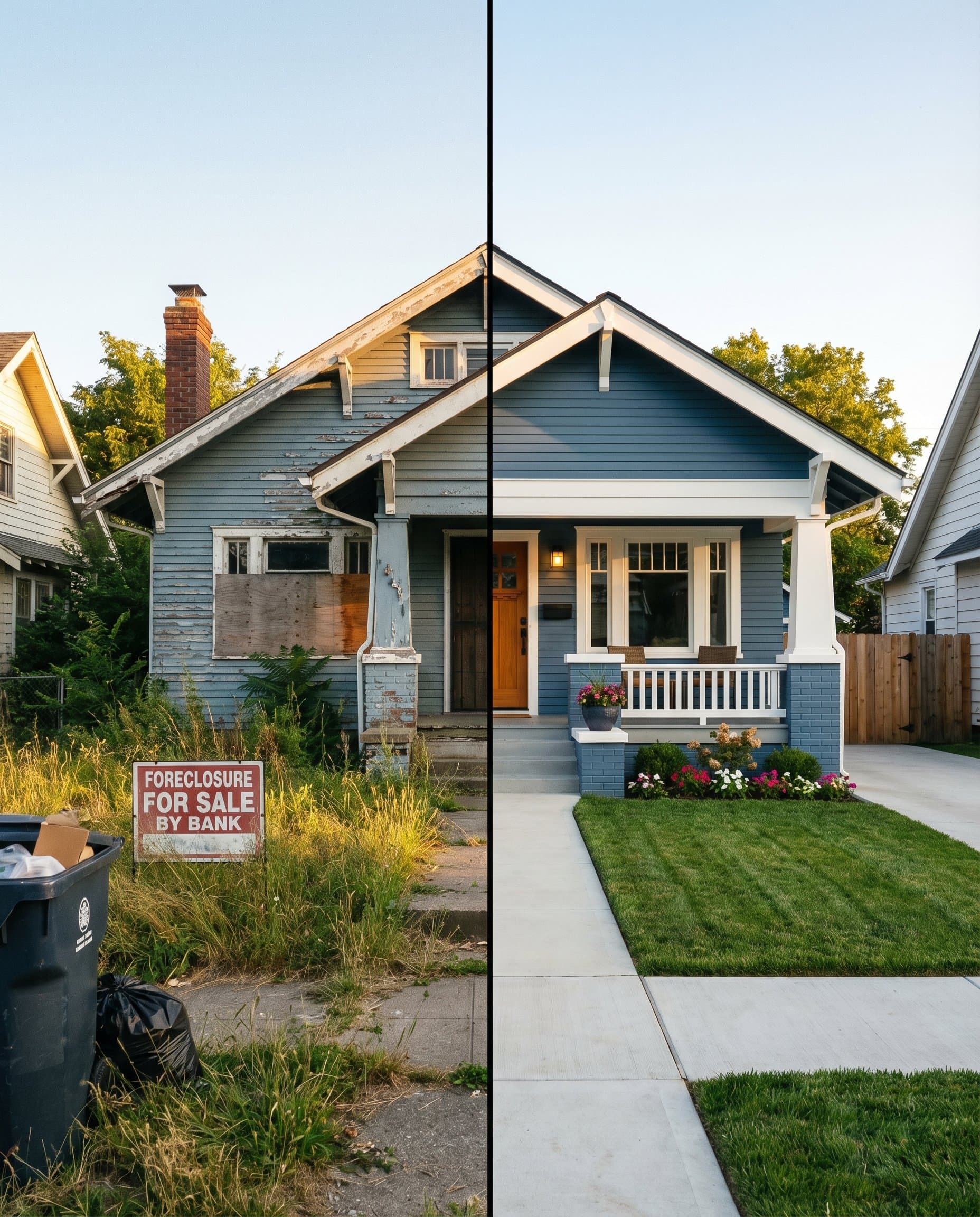
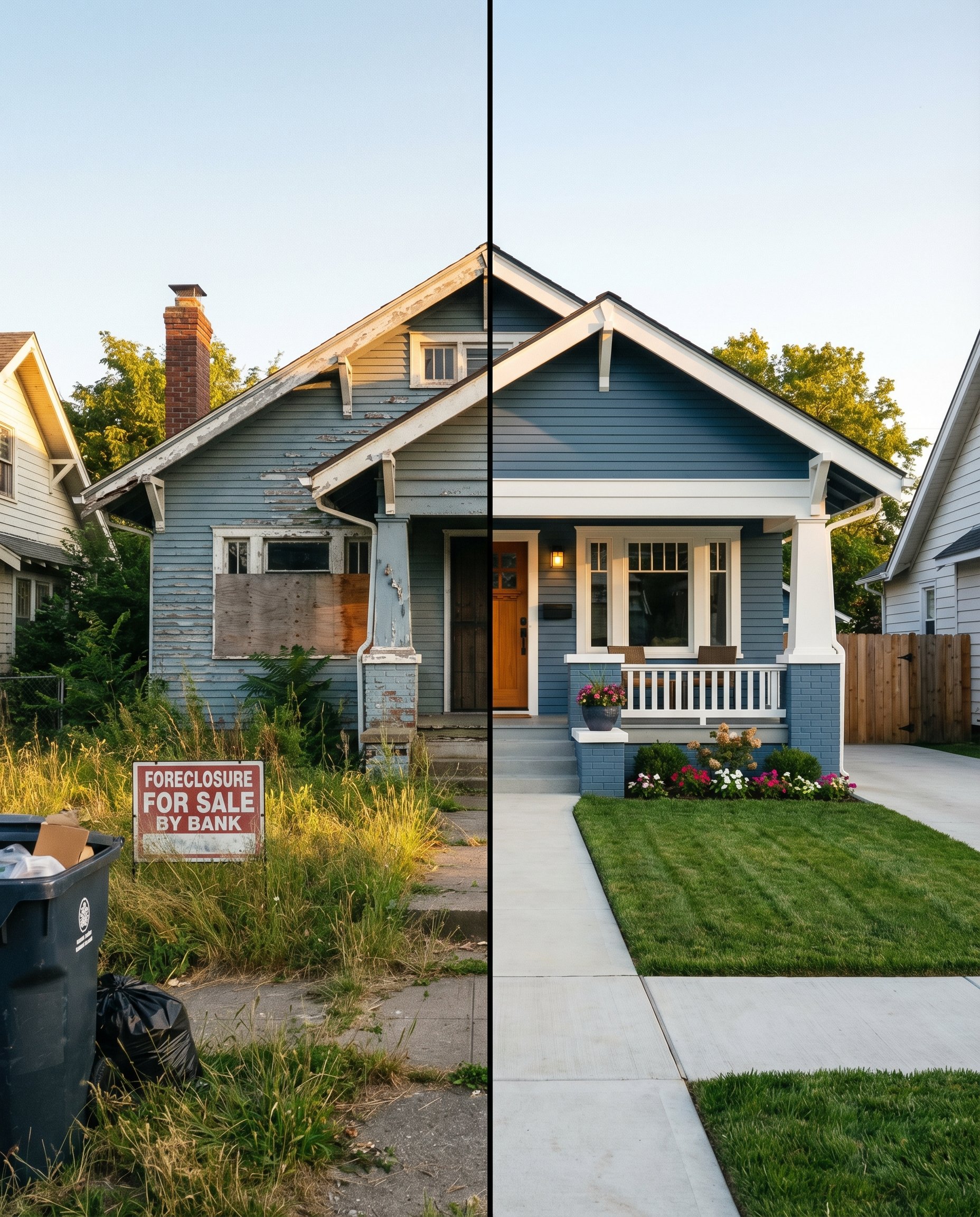
The exterior condition of the roof, siding, windows, and foundation shows whether the property has been neglected for years or just experienced a short-term financial problem. Properties with short-term distress often have deferred maintenance but structurally sound bones. Long-term neglect typically means deferred structural issues that compound during renovation.
Interior water damage is the most expensive surprise in a flip. Look at the ceilings, the corners of rooms, and the basement or crawl space for signs of active or past leaks. A water-stained ceiling might mean a $500 repair or a $20,000 structural remediation. The difference matters for your scope and budget.
The layout and floor plan determine whether the renovation can create meaningful value. Some properties are priced low because the floor plan is fundamentally awkward, not because the finishes are dated. A cosmetic renovation on a bad floor plan rarely recovers its cost at sale.
HVAC, plumbing, and electrical systems determine whether the property is a light cosmetic flip or a full gut renovation. Properties with original electrical from the 1960s, cast iron plumbing, or aging furnaces require permitting and licensed trades that multiply costs and extend timelines.
Free Weekly Alerts
See What's Distressed in Your Market
Get free weekly alerts — new distressed properties, motivation scores, and hot neighborhoods in your area. Addresses and contact info available inside DistressIQ.
Free forever · No credit card · Unsubscribe anytime
Step 3: Build the Repair Scope With a Contractor Present

Never build a repair scope from a drive-by or a listing photos walkthrough. The repair scope is built with a licensed contractor standing in the property, pricing each line item.
A contractor who has not been inside the property is guessing. A contractor who has been inside but is not pricing permits, disposal fees, and cleanup is also guessing. The scope must be a line-item budget, not an estimate.
Experienced flippers typically break the repair scope into four categories.
Cosmetic repairs include interior and exterior paint, flooring replacement, fixture updates, cabinet refinishing or replacement, and landscaping. These are the highest-ROI items in a flip. Buyers see cosmetic condition first and form an opinion before they examine anything else.
Mechanical repairs include HVAC replacement, water heater replacement, and electrical panel upgrades. These are often required by code and by lenders who finance the end buyer's mortgage. A property with a failed HVAC system will not appraise without a new system, regardless of cosmetic condition.
Structural and exterior repairs include roof replacement, foundation crack repair, siding replacement, and drainage correction. These are the most expensive items and the most commonly underestimated by first-time flippers. If the property needs a new roof, do not price it at shingle replacement cost alone. Factor in scaffolding, permit fees, and the possibility that sheathing damage will be discovered once the old roof is removed.
Soft costs include financing fees, carrying costs, real estate commissions, transfer taxes, and closing costs. In high-property-tax markets, carrying costs on a six-month renovation can represent 2-3% of the total investment. These costs do not appear in the contractor's scope but they appear in the deal analysis.
Always add a contingency line of 10-15% of the repair budget. Unexpected problems appear in roughly eight out of ten flips, according to experienced investors. The contingency absorbs those costs without breaking the deal.
Step 4: Identify Your Exit Strategy Before You Close
The exit strategy determines the financing structure, the renovation scope, and the timeline. Investors who do not establish the exit before closing often discover mid-renovation that their original plan does not work, and they end up with a property that does not fit their target buyer.
There are three primary exit strategies for house flippers.
The retail buyer exit targets an end buyer who will occupy the property as a primary residence. This exit requires the highest-quality renovation, financing that meets conventional loan requirements, and an ARV that supports the total investment. The advantage is the highest sale price. The risk is a longer marketing time if the local buyer pool is small.
The wholesale exit involves selling the contract to another investor before closing, either at the purchase stage or after a short renovation period. This exit works when the property has significant equity but the investor wants to avoid the carrying costs and renovation risk of a full retail flip. The wholesale price is typically 80-85% of ARV minus repair costs, which means a smaller profit per deal but faster capital rotation.
The buy-and-hold exit applies when a property does not meet retail flip conditions but works as a rental. Some markets have narrow retail spreads but strong rental demand. A property acquired at a distressed sale price in such a market may generate positive cash flow as a rental while appreciation compounds. This exit requires different financing (investment property loans rather than fix-and-flip financing) and a longer hold period.
Establishing the exit strategy before signing determines which deals to pursue. If the comps show a narrow retail spread but the rental market is strong, the deal may only work as a buy-and-hold. If the retail spread is wide but the property needs a full gut renovation, the scope and timeline must reflect that before committing.
Step 5: Verify the Financing Structure and Carry Costs
Fix-and-flip financing has become more specialized over the past decade. Hard money lenders, private lenders, and portfolio lenders each offer different terms, draw schedules, and interest rates. Understanding the financing structure before closing prevents cash flow surprises during the renovation.
Hard money loans are short-term, asset-backed loans typically structured for 12 months or less. Interest rates run higher than conventional financing, usually in the 10-14% range, with points charged at closing. The advantage is speed and flexibility. The risk is that interest accumulates daily and a delayed renovation quickly erodes the profit margin.
Most hard money lenders structure the loan as a draw schedule tied to completed renovation milestones. The lender inspects the property at agreed stages and releases draws against the remaining equity. This protects the lender's position but also means the investor needs enough liquid capital to cover the early renovation stages before the first draw is released.
Before signing, calculate the total carrying cost: loan interest, property taxes, insurance, and any HOA fees for the expected renovation period plus a reasonable buffer for delays. In a market where a flip takes four months, budget for six. In a market where a flip takes six months, budget for nine.
If the carry cost calculation consumes more than 15% of the expected gross profit, the deal needs to be renegotiated or passed.
Step 6: Run the Final Numbers Three Times
The last step before signing is a final review of the complete deal analysis, built from verified numbers only. No comps more than 90 days old. No repair estimates without a contractor walkthrough. No financing terms without a lender's written term sheet.
The complete analysis includes the purchase price, estimated closing costs, total repair budget with contingency, carrying costs for the expected timeline, selling costs including agent commissions and transfer taxes, and the gap between total investment and expected sale price.
If the gross profit is less than 15% of the total investment, the deal is a break-even deal at best. The real estate market does not always cooperate, and a deal that requires everything to go perfectly in order to generate a modest profit is a deal that will likely generate a loss.
Investors who consistently earn 20% or better on their total invested capital over a rolling 12-month period are building a sustainable business. That does not mean every deal earns 20%. It means the portfolio average supports the business model.
Frequently Asked Questions
Q: What is the 70% rule in house flipping?
The 70% rule caps your purchase price at 70% of ARV minus repair costs. A property with a $400,000 ARV and $60,000 in repairs should cost no more than $220,000 to leave room for financing costs, unexpected repairs, and profit.
Q: How do you calculate ARV on a house you are considering flipping?
ARV comes from three recent comparable sales in the same neighborhood with matching bedroom count, bathroom count, square footage, and lot size. County assessor records tend to be more reliable than listing sites, which often contain errors in property data. DistressIQ surfaces assessor-verified property characteristics alongside distress signals, so condition and data accuracy are visible in one place.
Q: How long does a typical house flip take from purchase to sale?
Cosmetic flips typically run three to four months from closing to listing. Full gut renovations or homes requiring structural work run six to nine months. Budgeting an extra two to three months beyond the expected renovation time is standard practice to account for delays.
Q: Do you need a license to flip houses?
Most states let individuals buy and sell property without a real estate license, but contractors must be licensed. Some states require a license if you are selling multiple properties per year or acting as a wholesaler. Hard money loan products may also require a specific entity structure.
Q: How much should a house flip contingency budget be?
Most experienced flippers carry a 10-15% contingency on the total repair scope. A $60,000 repair estimate should have $6,000 to $9,000 set aside for structural damage behind walls, failed septic systems, or asbestos abatement, all of which appear in roughly eight out of ten full renovation flips.
Q: What is the biggest mistake new house flippers make?
Underestimating repair costs and timelines simultaneously. First-time flippers price from a drive-by, accept a low contractor estimate, and assume a three-month timeline in a market where similar renovations take five. A deal that pencils at $50,000 in repairs becomes breakeven when actual costs hit $72,000 and carrying costs run five extra months.
Q: Should I wholesale a flip or sell it retail?
Wholesale rotates capital faster with smaller per-deal profit. Retail captures the highest sale price but requires a finished product meeting conventional lending standards and a buyer pool large enough to absorb the listing. Experienced flippers use wholesale for properties with narrow retail spreads and retail for properties with wide spreads in strong buyer markets.
For investors working across multiple markets, DistressIQ provides distress signal data on properties across 3,200+ US counties, combining county assessor-verified property characteristics with 31 signal types to help identify which distressed properties warrant a full due diligence walkthrough. Verify the deal before you commit to it.
The data behind this article
DistressIQ Monitors These Signals in Real Time
Pre-Foreclosures
NOD + NTS filings
Tax Delinquency
County treasurer records
Code Violations
Municipal inspection filings
Probate Filings
Superior Court records
Every lead is scored 0–100 for seller motivation based on signal type, duration, severity, and stacking. Nationwide coverage — every US county, updated daily.
Ready to find deals in your market?
See Live Distress Signals in Your County
Stop calling dead leads. Every lead in DistressIQ is scored 0–100 for seller motivation, with verified contact info included. Browse the free tier to see what's active in your market right now.
Browse Free Leads — No Credit Card