How to Find Foreclosure Leads in Texas (2026 Investor Guide)
How to Find Foreclosure Leads in Texas (2026 Investor Guide)
TL;DR: Texas is the best state in the country for foreclosure investing, non-judicial process, no redemption period, first-Tuesday monthly auctions in every county. But the competition at courthouse steps is brutal. The real edge is finding motivated sellers in the 60-90 days before the auction using verified distress signal data from county records. This guide covers how Texas foreclosures work, which counties have the volume, how online auctions changed the game, and how to stack signals to find deals nobody else is bidding on.
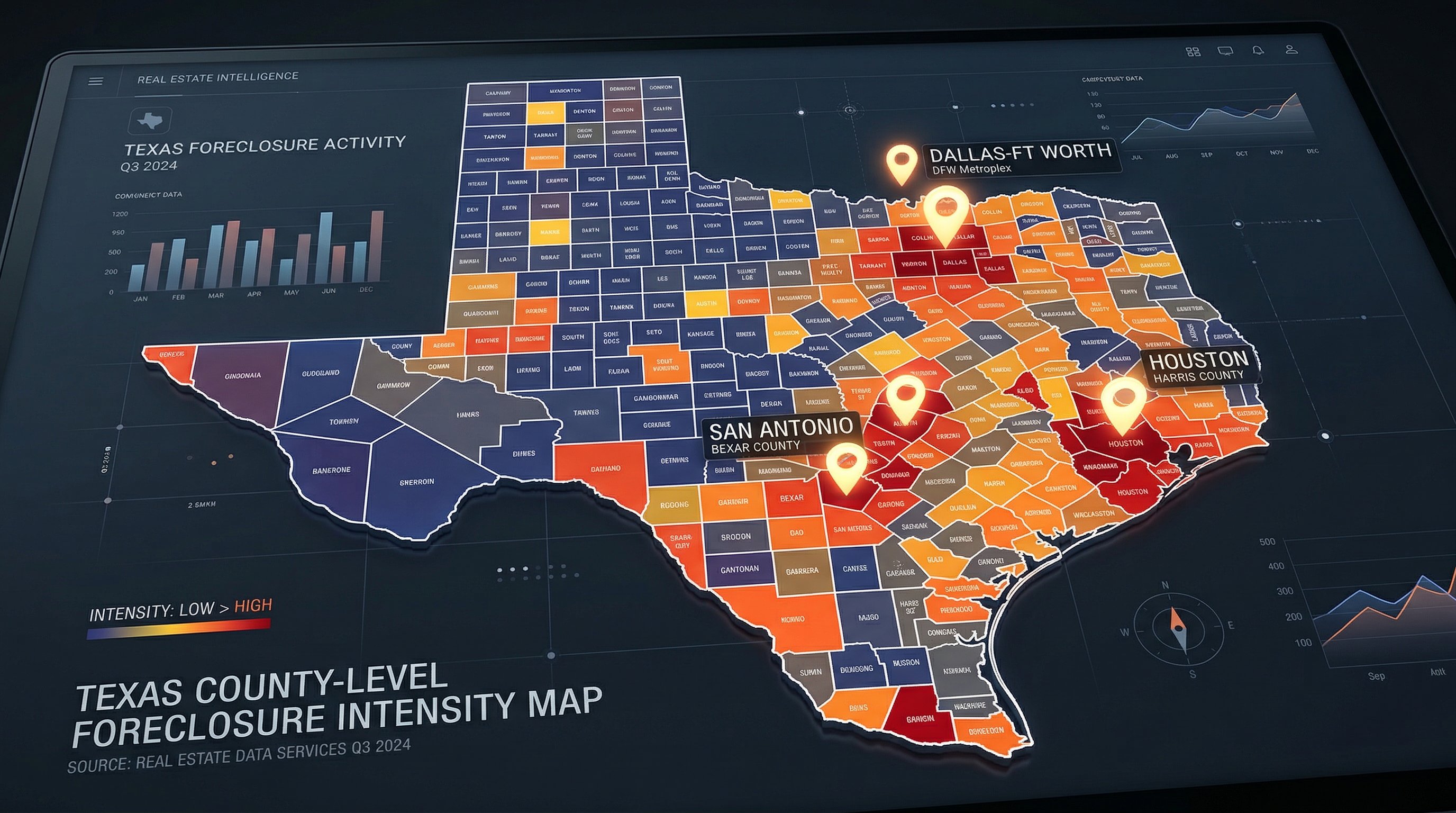
Texas is not a fair fight for investors who aren't paying attention.
The state processes more foreclosure auctions than almost anywhere in the country. Dallas County alone runs hundreds of trustee sales on the first Tuesday of every month. Harris County (Houston) fills entire parking lots outside the courthouse. In Bexar County (San Antonio), the auction volume is large enough that institutional buyers fly in from out of state.
And then there's the other side: Texas is a non-judicial state with no redemption period. Once the hammer falls, the deal is done. The previous owner walks away with nothing left to negotiate. That creates urgency, for everyone involved.
Most guides about foreclosure leads in Texas stop here. "Find the auction list, show up, bid." That's not a strategy. That's how you compete against cash-heavy hedge funds and lose.
The actual edge is upstream. Texas law requires a Notice of Trustee's Sale to be posted at least 21 days before auction. But properties typically fall into default 90-180 days before that notice hits. That's your window, and most investors ignore it entirely.
How the Texas Foreclosure Process Works
Texas uses a deed of trust system, which means foreclosure happens without court involvement. Here's the timeline:
Default → Notice of Default → Notice of Intent to Accelerate When a borrower falls behind, typically 90+ days, the lender sends a written notice of default and intent to accelerate the loan. This triggers the formal process.
20-Day Cure Period After the acceleration notice, the borrower has 20 days to cure the default. Most can't.
Notice of Trustee's Sale Filed Once the cure period expires without payment, the trustee (appointed by the lender) posts a Notice of Trustee's Sale with the county clerk and mails certified notice to the borrower. By law, the sale must occur at least 21 days after posting.
First-Tuesday Auction Texas law requires foreclosure auctions to happen on the first Tuesday of the month, between 10am and 4pm, at the county courthouse. In practice, Dallas County operates in an online system. Most large counties have made the shift.
No Redemption Period Unlike Michigan or other states with post-sale redemption rights, Texas gives the previous owner zero recourse after the gavel drops. The winning bidder gets a trustee's deed at the auction.
Total Timeline: 41-180 days from default to sale The minimum is about 41 days (20-day cure + 21-day notice). In practice, most lenders wait until 90-180 days of delinquency before filing, so most foreclosures take 4-6 months from first missed payment to auction.
Why Texas Foreclosure Data Is an Edge (When You Get It Early)
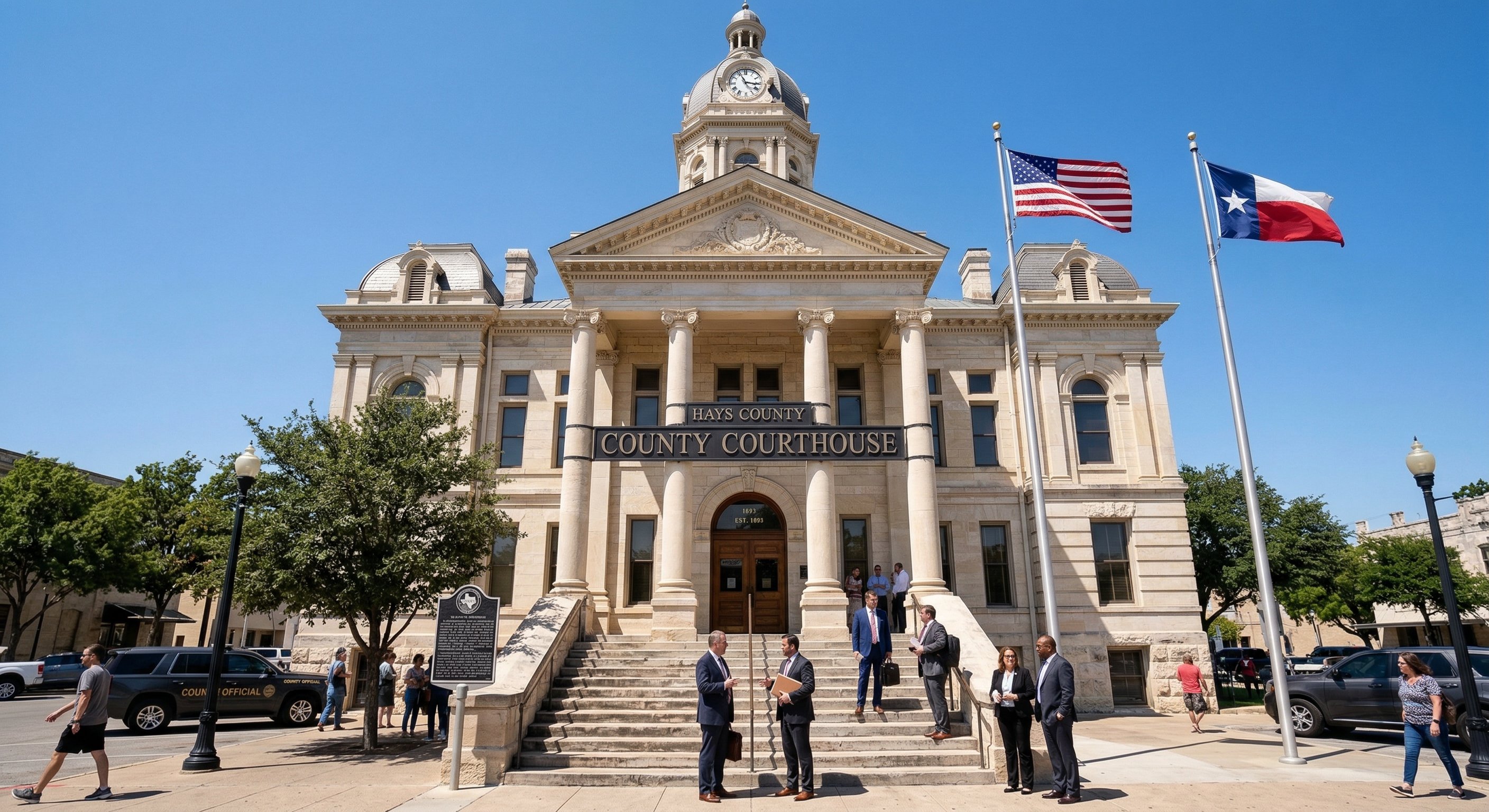
The Notice of Trustee's Sale is public record. Anyone can look it up at the county clerk's office. So can your competition.
The real information edge is earlier in the chain:
Lis pendens signals, In judicial states, foreclosure lawsuits create lis pendens filings. Texas is non-judicial, so there's no automatic court filing. But lenders sometimes file lis pendens when there's title complexity or borrower dispute. These are early warning signals most investors miss.
Tax delinquency cross-reference, A homeowner in pre-foreclosure is often also delinquent on property taxes. Stacking both signals, mortgage default + tax delinquency, is one of the strongest motivation indicators in Texas. Harris County, Dallas County, and Tarrant County all publish their delinquent tax rolls publicly.
Code violations, Vacant or neglected properties in foreclosure accumulate code violations quickly. The city files the violation; the county records the mortgage default. Cross-referencing both gives you properties where the owner is checked out, both financially and physically.
Probate + distress overlap, Texas has a significant population of inherited properties where heirs are struggling with both estate administration and underlying mortgage payments. The property gets pulled in two directions at once. That double pressure accelerates motivation dramatically.
The investors who consistently win in Texas aren't waiting for the auction list. They're tracking distress signals 90 days before the sale, and calling motivated sellers before anyone else does.
The Top Texas Counties for Foreclosure Volume
Not all Texas counties are equal. Here's where the volume concentrates:
Harris County (Houston) The largest county in Texas by population and one of the highest-volume foreclosure markets in the country. First Tuesday auctions run at the Harris County Civil Courthouse on Congress Avenue. Hurricane Harvey aftermath, persistent flood zone concerns, and Houston's economic volatility all contribute to consistent distress signal flow.
Dallas County (DFW Metroplex) Dallas County now runs its trustee sales through an online auction platform at the George Allen Courts Building. Hundreds of properties go through monthly. The DFW market is massive and diverse, everything from aging inner-ring suburbs to value-add multifamily.
Tarrant County (Fort Worth) High volume, slightly less competition than Dallas proper. Fort Worth's older east-side neighborhoods generate consistent pre-foreclosure and tax delinquent signal overlap. Tarrant County runs auctions on the courthouse steps on the east side of the county courthouse complex in downtown Fort Worth.
Bexar County (San Antonio) Texas's second-largest city runs a high-volume auction. Military population turnover (Joint Base San Antonio) creates cyclical distress patterns. Bexar County has notable pockets where tax delinquency and mortgage default cluster.
Travis County (Austin) Lower volume by ratio, but extremely high property values make each deal more significant. Pre-foreclosure signals here matter because the spread between distressed pricing and ARV can be enormous in high-demand Austin zip codes.
El Paso County Border market, lower price points, but consistent foreclosure volume driven by economic pressures and cross-border workforce dynamics. Less institutional competition than Dallas/Houston.
Williamson County (North Austin) Suburban Austin growth corridor. Fast appreciation in recent years followed by affordability stress creates motivated seller flow, particularly in newer subdivisions where buyers stretched to qualify.
Free Weekly Alerts
See What's Distressed in Your Market
Get free weekly alerts — new distressed properties, motivation scores, and hot neighborhoods in your area. Addresses and contact info available inside DistressIQ.
Free forever · No credit card · Unsubscribe anytime
Texas Online Foreclosure Auctions: What Changed
COVID-19 permanently altered how many large Texas counties run their auctions. Several migrated to online platforms that are now the permanent default:
Bid4Assets, Used by several Texas counties for tax sale auctions. Requires pre-registration and a refundable deposit.
FFA Texas (First Foreclosure Auction), Processes trustee sale auctions for multiple counties. Properties listed before the first Tuesday, bids submitted online.
County Courthouse Steps, Many mid-size and rural counties still run traditional live auctions. You show up with a cashier's check, bid, and take your deed.
For online auctions, registration and deposit requirements create a barrier that eliminates casual tire-kickers. For institutional buyers with capital, it removes the geographic friction, they can bid on Dallas County properties from New York.
The implication: courthouse-step competition is now higher, not lower, because capital can participate from anywhere.
That makes pre-auction contact strategy even more important. If you're waiting for the auction list, you're already competing against the big money.
How to Find Pre-Auction Texas Foreclosure Leads
The smart strategy is finding motivated sellers in the 60-90 day window before the Notice of Trustee's Sale gets posted. Here's how:
Option 1: County Clerk Filings (Manual) In Texas, lenders file the Notice of Trustee's Sale with the county clerk. You can search these records at the county clerk's office directly. For Harris County, the system is online. For smaller counties, it's an in-person trip.
The limitation: you're still getting leads at the 21-day mark, competing with every other investor who pulls the same list. The auction is already scheduled.
Option 2: Cross-Reference Delinquent Tax Rolls Texas tax assessor-collector offices publish delinquent tax rolls. Properties that appear on the delinquent roll AND have mortgage activity are flagging dual stress. This requires pulling two separate datasets and matching by address or parcel ID, manually, across county systems that don't talk to each other.
Option 3: County-Direct Distress Signal Data DistressIQ pulls verified distress signals, tax delinquency, lis pendens filings, code violations, probate filings, directly from county records across all 254 Texas counties and stacks them into a single motivation score. Properties with multiple overlapping signals float to the top.
Instead of showing up on auction day with a cashier's check, you're calling the motivated seller directly 60-90 days out. A homeowner who's delinquent on taxes, has a code violation, and is behind on mortgage payments is facing the same inevitable outcome from three different directions. They often want out, they just don't know what their options are yet.
That conversation is completely different from negotiating at the auction. No competing bids. No institutional buyers. Just a property owner who needs a solution and an investor who can provide one.
See live distress signals across all 254 Texas counties, scored and ranked by motivation, on DistressIQ. Browse free, no credit card required.
Outreach That Doesn't Burn Your Reputation
A homeowner facing foreclosure isn't just a data point. They're likely dealing with one of the most stressful periods of their life, job loss, divorce, medical bills, business failure. The investor who approaches that situation with genuine empathy and a real solution gets a very different reception than one who opens with "I know your house is in foreclosure, give me a low-ball price."
The approach that works:
- Lead with options, not offers. "There are a few ways I can help you avoid the foreclosure hitting your credit. Can I walk you through them?" That conversation earns trust.
- Be honest about your timeline. Sellers in Texas know that the first-Tuesday auction is coming. Pretending otherwise erodes trust fast.
The investors who build long-term businesses in Texas are the ones sellers tell their neighbors about: "This person helped me avoid a foreclosure and made the process as painless as possible."
DistressIQ tracks distress signals across all 254 Texas counties, updated daily from county records. Browse Texas foreclosure leads free, unlock contact info only when you find the deal worth calling.
Frequently Asked Questions
Q: When are foreclosure auctions held in Texas?
Texas law requires foreclosure auctions to take place on the first Tuesday of each month, between 10am and 4pm, at the county courthouse. Many large counties, including Dallas, Harris, and Bexar, now offer online bidding platforms as an alternative to physical courthouse attendance.
Q: Does Texas have a redemption period after foreclosure?
No. Texas is a non-judicial foreclosure state with no statutory redemption period. Once the trustee's sale occurs and the deed is delivered to the winning bidder, the previous owner has no right to reclaim the property. (Exception: the IRS has a 120-day redemption right on properties with federal tax liens.)
Q: How do I find the Notice of Trustee's Sale in Texas?
Notices of Trustee's Sale are filed with the county clerk in the county where the property is located. Most large counties post these online. For Dallas County, foreclosure listings are posted through the Dallas Morning News (as required by law) and available through the Dallas County clerk's site. Harris County posts through the Harris County clerk portal.
Q: How far in advance can I find Texas foreclosure leads?
The Notice of Trustee's Sale must be posted at least 21 days before auction. But properties typically fall into delinquency 90-180 days before that notice is filed. Cross-referencing tax delinquency rolls, code violation filings, and court records can surface motivated sellers 3-6 months before the auction date, long before the property appears on any foreclosure list.
Q: Is it safe to buy at Texas courthouse-steps auctions?
It can be, but it requires thorough due diligence. Courthouse sales are cash-only, sold as-is, with no inspection rights. Title clouds from IRS liens, HOA liens, mechanic's liens, or junior mortgages can survive the sale in some circumstances. Always commission a thorough title search before bidding, and work with a title company experienced in trustee deeds.
Q: What makes Texas attractive for foreclosure investors compared to other states?
Texas combines high property volume, a fast non-judicial process (no courts required, no delays), no redemption period, and four of the largest real estate markets in the US (Houston, Dallas, San Antonio, Austin). The result is consistent deal flow in a legal framework designed for speed. The downside is that those advantages are well-known, competition at auction is correspondingly intense.
Texas foreclosure data is sourced from county clerk records, tax assessor-collector offices, and court filings across all 254 TX counties. DistressIQ updates distress signals daily from the source, not from resold third-party aggregators.
The data behind this article
DistressIQ Monitors These Signals in Real Time
Pre-Foreclosures
NOD + NTS filings
Tax Delinquency
County treasurer records
Code Violations
Municipal inspection filings
Probate Filings
Superior Court records
Every lead is scored 0–100 for seller motivation based on signal type, duration, severity, and stacking. Nationwide coverage — every US county, updated daily.
Ready to find deals in your market?
See Live Distress Signals in Texas
Stop calling dead leads. Every lead in DistressIQ is scored 0–100 for seller motivation, with verified contact info included. Browse the free tier to see what's active in your market right now.
Browse Free Leads — No Credit Card