Foreclosure Leads in Oklahoma: A Non-Judicial Process That Rewards Fast Investors

TL;DR: Oklahoma uses a non-judicial foreclosure process that typically completes in 90 to 180 days, giving investors a narrower but predictable window between default and auction. The best opportunities cluster in Oklahoma County, Tulsa County, and Cleveland County, where high foreclosure volume creates consistent deal flow. DistressIQ tracks verified foreclosure signals across every Oklahoma county, updated daily from county records, so investors can focus on motivation scoring rather than manual record searches.
Foreclosure Leads in Oklahoma: A Non-Judicial Process That Rewards Fast Investors

Most investors hear "Oklahoma foreclosure" and assume the same slow, court-heavy process they deal with in Texas or Kansas. That assumption costs them deals. Oklahoma is one of the faster non-judicial foreclosure states in the country, and the investors who understand that distinction consistently find motivated sellers that others miss entirely.
The numbers bear it out. Across Oklahoma County, Tulsa County, and the surrounding metros, foreclosure volume has remained steady between 800 and 1,200 filings per year, according to county recorder data. That is not a flood, but it is a reliable current, and it runs on a predictable schedule that patient investors can exploit.
This guide covers what actually drives the Oklahoma foreclosure process, which counties produce the most actionable leads, what signals separate a genuine opportunity from a mirage, and how to build a sourcing workflow that does not waste your time on public records offices.
Why Oklahoma's Non-Judicial Foreclosure Changes Everything
The single most important thing to understand about foreclosure leads in Oklahoma is the process type. Oklahoma is a non-judicial foreclosure state, meaning the lender can foreclose without going through the court system, provided the mortgage deed contains a power-of-sale clause. In practice, this means timelines are shorter, legal costs are lower for the lender, and the auction date arrives faster after a default.
Compare that to neighboring states. Kansas uses judicial foreclosure almost exclusively, meaning every case goes through the court system and timelines routinely stretch to 12 to 18 months. Texas is also non-judicial in most counties but with significantly longer notice requirements. Oklahoma sits in a middle zone: fast enough to create real urgency, predictable enough that a disciplined investor can plan around it.
For an investor, a non-judicial process means two things. First, the redemption period is shorter. Oklahoma law allows a statutory right of redemption, but the practical window between auction and new ownership is narrow enough that most investors who win at auction can close within 60 to 90 days. Second, the process creates a specific population of homeowners who received a notice of default 90 to 120 days before the auction and did not resolve it. Those homeowners are often the most motivated sellers you will find.
The Oklahoma Foreclosure Timeline: Where the Deals Actually Live
Understanding the sequence matters more than memorizing the dates. Here is how a standard Oklahoma foreclosure moves from default to auction.
Default and Notice of Default: Once a borrower misses a payment, the lender typically sends a notice of default after 30 to 60 days of delinquency. In Oklahoma, this notice is recorded with the county clerk and initiates the official timeline.
Notice of Sale: After the statutory waiting period, the lender records a notice of sale with the county clerk and serves the borrower. This notice specifies the date, time, and location of the auction. In most Oklahoma counties, this notice appears 30 to 90 days before the auction.
Auction: Oklahoma foreclosure auctions are held at the county courthouse steps or a designated location within the county. The property sells to the highest bidder. If the winning bid does not satisfy the outstanding debt, the lender may pursue a deficiency judgment.
Post-Auction: Oklahoma allows a statutory redemption period, but in practice, most transactions close quickly after the auction once the redemption window passes or is waived.
The entire default-to-auction window typically runs 90 to 180 days in Oklahoma, compared to 6 to 18 months in judicial states. For investors, that means the pool of pre-foreclosure leads is smaller but more concentrated. The homeowners in this window are not forgotten. They are actively working through a narrow path.
The Counties That Actually Produce Foreclosure Leads in Oklahoma
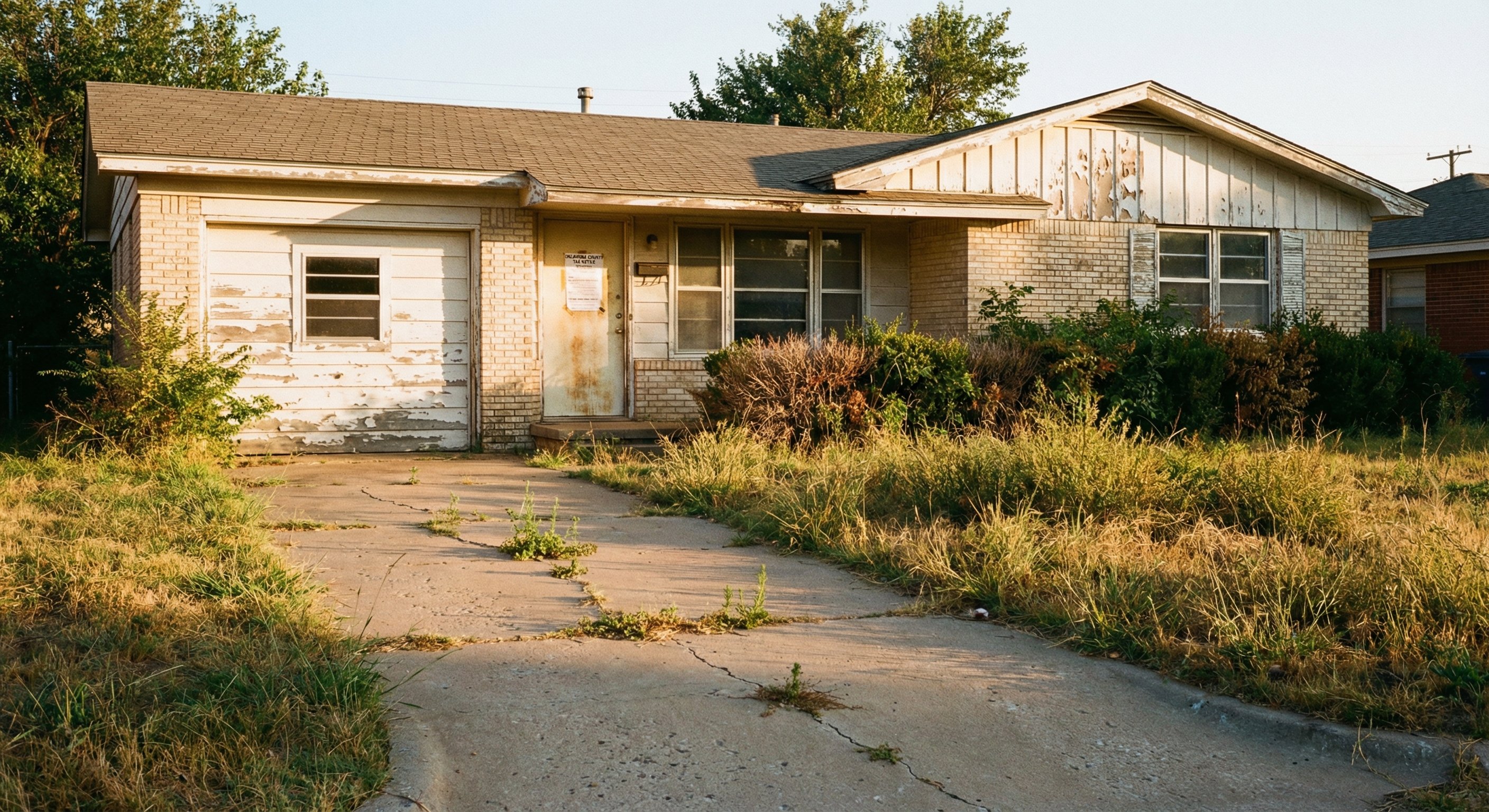
Not all Oklahoma counties generate equal deal flow. Foreclosure activity concentrates in the three most populous counties, and understanding their nuances is where most out-of-state investors get tripped up.

Oklahoma County (Oklahoma City Metro)
Oklahoma County handles the highest volume of any county in the state, with 300 to 500 foreclosure filings per year. The Oklahoma City metro has seen sustained population growth since 2015, which means the underlying real estate market has enough liquidity that distressed properties can move quickly once properly priced.
The critical factor in Oklahoma County: the concentration of older housing stock in neighborhoods like Capitol Hill, Shepherd West, and Creston Hills. These areas have high rates of investor ownership, both as rentals and as flip targets, which creates two-way deal flow. You are not just buying from distressed homeowners. You are buying from investors who overextended on a renovation and need an exit.
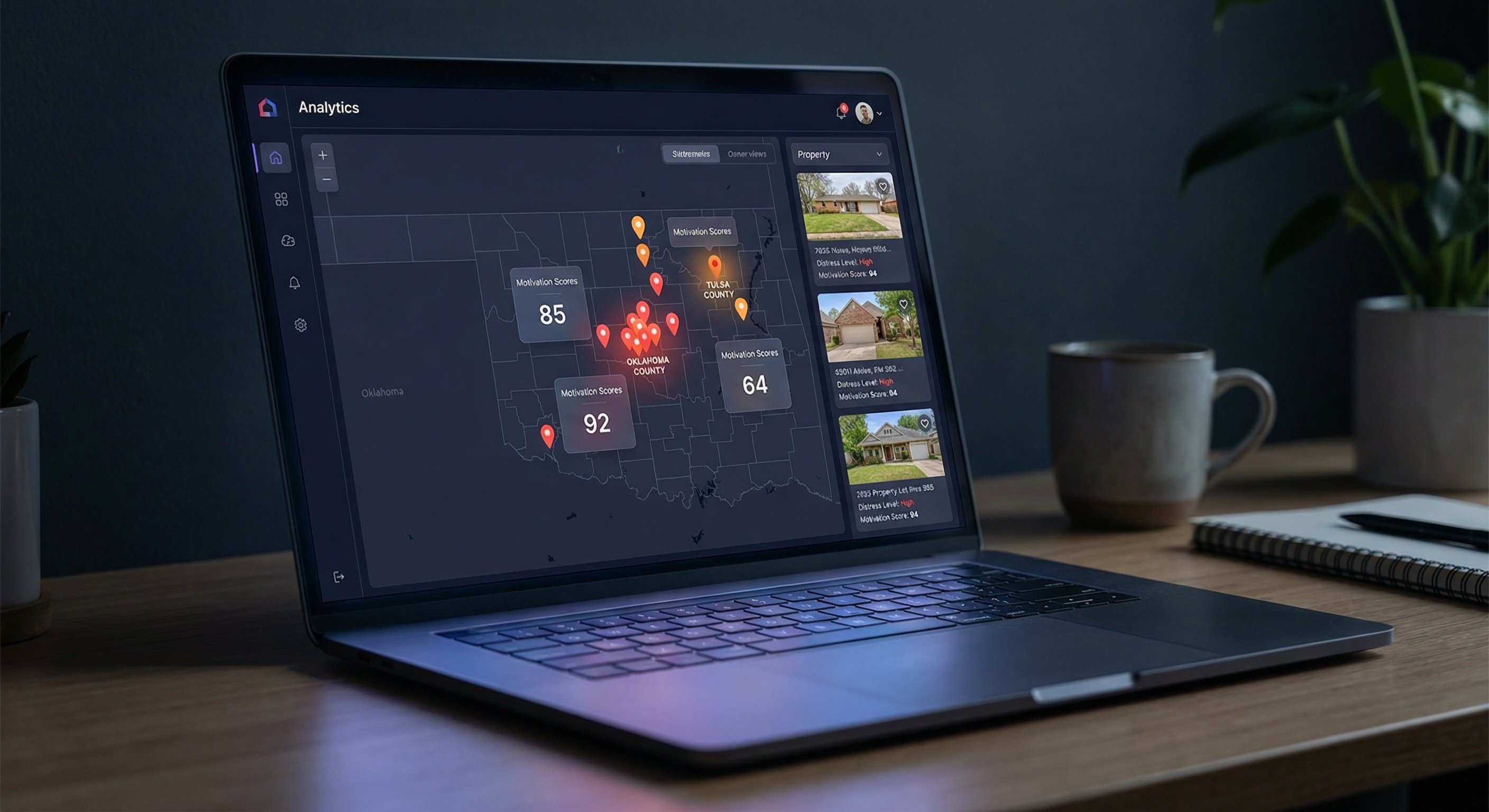
DistressIQ aggregates pre-foreclosure filings, auction notices, and bank-owned inventory for Oklahoma County into a single ranked view, so investors can compare motivation signals across hundreds of properties without manually checking the county clerk's database.
Tulsa County (Tulsa Metro)
Tulsa County is the second-largest market in Oklahoma and historically the most consistent source of pre-foreclosure leads. The local economy has cycled through oil booms and slowdowns for decades, which means Tulsa investors have deep experience with distressed property cycles and tend to price their deals accurately.
The neighborhoods that consistently produce the most actionable leads are in north Tulsa (around the 36th Street North corridor), west Tulsa, and the surrounding suburbs of Broken Arrow and Owasso where rapid suburban expansion has created pockets of over-leveraged new construction.
Tulsa County also has a notably active trustee sale process. Properties at the auction stage in Tulsa tend to have clearer title and fewer encumbrances than comparable properties in some neighboring counties, which reduces post-purchase legal complications.
Cleveland County (Norman)
Cleveland County, anchored by Norman and the University of Oklahoma, produces lower absolute volume than the two major metros but with a higher percentage of owner-occupied distressed properties. Student housing demand creates an unusual dynamic where properties near the university retain value relatively well, but the surrounding residential neighborhoods see consistent turnover.
For investors focused on buy-and-hold, Norman represents one of the most defensible submarkets in Oklahoma. For flippers, the university-adjacent neighborhoods offer renovation premiums that can absorb moderate acquisition costs.
Free Weekly Alerts
See What's Distressed in Your Market
Get free weekly alerts — new distressed properties, motivation scores, and hot neighborhoods in your area. Addresses and contact info available inside DistressIQ.
Free forever · No credit card · Unsubscribe anytime
What Actually Separates a Good Oklahoma Foreclosure Lead from a Bad One
Volume is not the problem in Oklahoma. The county recorder systems are searchable, auction notices are public record, and the timeline is predictable. The problem is prioritization. Every investor with Oklahoma County access can pull the same list of notices of default. The differentiating factor is knowing which leads are worth calling first.
Here is the practical hierarchy that experienced Oklahoma investors use to sort through foreclosure leads:
Signal 1: Length of default. A homeowner who is 60 days delinquent on a first mortgage is in a different situation than one who is 180 days delinquent. The longer the default, the higher the probability that the lender has initiated formal foreclosure proceedings and the homeowner has exhausted their options. Look for properties where the notice of sale has been recorded but the auction has not yet occurred.
Signal 2: Equity position. Oklahoma homeowners who purchased in the last five years with less than 20% down are the most likely to be underwater given the run-up in Oklahoma City and Tulsa home values between 2020 and 2024. A homeowner with negative equity has fewer options and is more likely to accept a short payoff or a below-market cash offer.
Signal 3: Occupancy status. Absentee-owned foreclosure leads in Oklahoma are less valuable than owner-occupied ones, all else being equal. Absentee owners who are underwater have already made the calculation to stop paying. Owner-occupants who are in default are often in a more acute crisis and more motivated to negotiate before the auction date.
Signal 4: Repair needs. Oklahoma's older housing stock in Oklahoma City and Tulsa means many distressed properties also carry deferred maintenance. A property that is both in pre-foreclosure and has code violations or deferred upkeep represents a double motivation signal: the homeowner is in financial distress and the property itself is a liability.
DistressIQ stacks all four of these signals against its county-sourced records and assigns a single motivation score from 0 to 100, so investors do not have to manually cross-reference multiple data sources to know which lead to call first.
The Manual Research Problem: Why Most Investors Stop Here
Any investor can go to the Oklahoma County clerk's website and search for recent lis pendens filings or notices of sale. What they find is a list of 40 to 80 properties with minimal context: a parcel number, a name, a filing date.
What the county record does not tell you is whether that property has a second mortgage that wipes out your margin. It does not tell you whether the property is owner-occupied or rented. It does not tell you whether the homeowner filed for bankruptcy the same week the notice of sale was recorded, which stays the foreclosure in most Oklahoma courts. And it does not tell you how many other investors are already calling that same homeowner, which is the single biggest predictor of call-back rates.
The investors who consistently close Oklahoma foreclosure deals are the ones who run this background research before they pick up the phone. The investors who burn out are the ones who call every notice of default on the list and wonder why their conversion rate is 2%.
A platform that aggregates Oklahoma county records across all 77 counties, cross-references property characteristics from the county assessor, and layers in motivation signals eliminates the manual research burden that causes most investors to underperform this market. Browse Oklahoma foreclosure leads scored by motivation on DistressIQ.
Oklahoma Foreclosure vs. Neighboring States: Why Investors Overlook This Market
Kansas to the north runs judicial foreclosures almost exclusively, with timelines of 12 to 18 months. Texas, while also non-judicial in most counties, has longer notice periods and a more complex homestead exemption structure that protects owner-occupants longer. Colorado to the west has seen rapid price appreciation that has pushed many distressed properties above investor buy thresholds.
Oklahoma sits below these states on investor priority lists, which means less competition for the same distressed inventory. The Oklahoma City metro alone has absorbed significant population growth, yet its foreclosure market remains less densely covered by active investors than comparable markets in Texas or Colorado.
For an investor willing to learn the specifics of Oklahoma county systems, the combination of predictable timelines, moderate competition, and a liquid underlying real estate market makes it one of the more attractive mid-market opportunities in the southern plains.
How to Find Foreclosure Leads in Oklahoma: The Practical Workflow
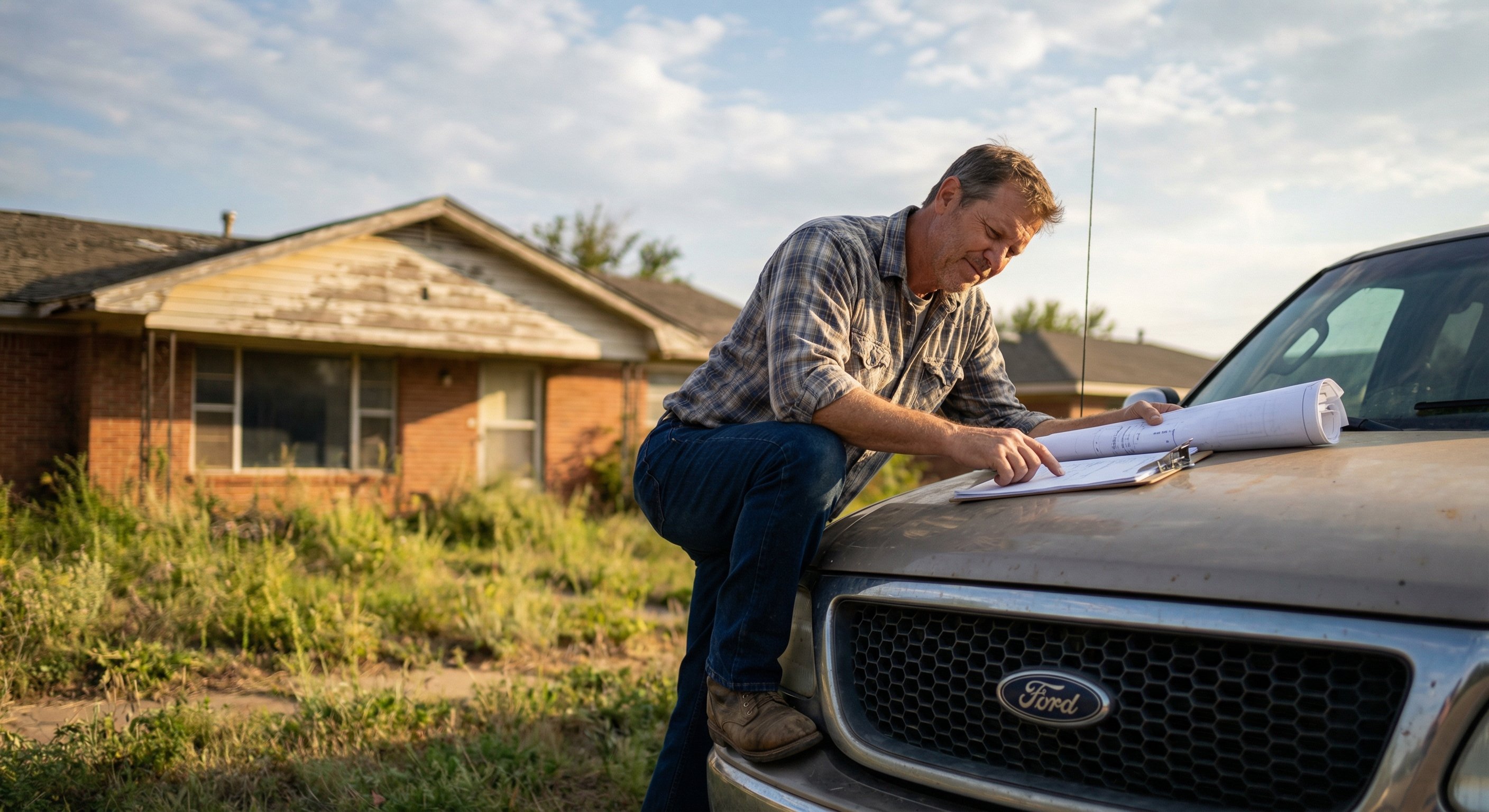
A systematic approach to Oklahoma foreclosure leads follows a three-stage process that most successful investors use consistently.
Stage 1: Identify the active inventory. Pull all properties with recorded notices of default, notices of sale, and trustee sale dates in Oklahoma County, Tulsa County, and Cleveland County from the past 90 days. Focus on properties where the auction date is between 30 and 120 days out. Properties further out have more time but also more uncertainty. Properties within two weeks of auction are often already being pursued by other investors.
Stage 2: Score and filter. Cross-reference each property against county assessor records to confirm ownership status, loan position, and assessed value. Filter for properties where the estimated market value exceeds the outstanding loan balance by enough margin to cover repairs, closing costs, and your target margin. Flag properties with code violations, prior lis pendens filings, or bankruptcy stays.
Stage 3: Contact with context. Call the property owner with specific information about what you found in the public record and a straightforward cash offer structure. Oklahoma homeowners in pre-foreclosure are typically dealing with collectors, lenders, and in some cases family members who have already told them what they should do. A direct investor who knows the facts of their situation and presents a clean path forward stands out.
The investors who win in Oklahoma are not the ones who call the most leads. They are the ones who call with the most information.
Key Takeaways
- Oklahoma's non-judicial foreclosure process typically runs 90 to 180 days from default to auction, faster than most neighboring states and significantly faster than judicial states.
- Oklahoma County, Tulsa County, and Cleveland County produce the majority of actionable foreclosure inventory in the state.
- The key differentiation among Oklahoma foreclosure leads is not availability. It is motivation scoring: equity position, occupancy status, repair needs, and default length.
- Less investor competition in Oklahoma compared to Texas or Colorado creates better entry margins for disciplined investors who do their homework.
- County assessor and recorder records are public but require cross-referencing across multiple fields to produce actionable leads.
Frequently Asked Questions
How long does the foreclosure process take in Oklahoma?
In most Oklahoma counties, the default-to-auction timeline runs 90 to 180 days, depending on whether the lender pursues a non-judicial or judicial path and how quickly notices are recorded with the county clerk. Oklahoma County and Tulsa County tend to move faster due to higher volume and more efficient court clerk processes.
Is Oklahoma a judicial or non-judicial foreclosure state?
Oklahoma is primarily a non-judicial foreclosure state for mortgages with a power-of-sale clause, which covers the vast majority of conventional mortgages. Judicial foreclosures are available but rarely used unless the deed of trust does not contain a power-of-sale provision.
Can you buy a foreclosed home in Oklahoma before the auction?
Yes. Pre-foreclosure leads in Oklahoma represent properties where the notice of default has been recorded but the auction has not yet occurred. Homeowners in this window may be willing to negotiate a pre-auction sale to avoid the auction process, especially if they are represented by an attorney or housing counselor.
What happens after a foreclosure auction in Oklahoma?
The winning bidder at an Oklahoma foreclosure auction typically receives a sheriff's deed or trustee's deed. Oklahoma allows a statutory redemption period, but most investors plan to close within 60 to 90 days post-auction. Properties that do not receive a qualifying bid at auction become bank-owned (REO) inventory.
Does Oklahoma have a deficiency judgment process?
Yes. If a foreclosure auction sale price does not cover the outstanding mortgage balance, the lender may pursue a deficiency judgment against the borrower for the difference. Oklahoma is a recourse state for deficiency judgments, which is one reason lenders in Oklahoma prefer to negotiate pre-foreclosure sales when possible.
DistressIQ tracks verified foreclosure signals across all 77 Oklahoma counties, updated daily from county recorder and assessor records. See motivation-scored leads in Oklahoma County, Tulsa County, and Cleveland County before the auction date arrives.
The data behind this article
DistressIQ Monitors These Signals in Real Time
Pre-Foreclosures
NOD + NTS filings
Tax Delinquency
County treasurer records
Code Violations
Municipal inspection filings
Probate Filings
Superior Court records
Every lead is scored 0–100 for seller motivation based on signal type, duration, severity, and stacking. Nationwide coverage — every US county, updated daily.
Ready to find deals in your market?
See Live Distress Signals in Your County
Stop calling dead leads. Every lead in DistressIQ is scored 0–100 for seller motivation, with verified contact info included. Browse the free tier to see what's active in your market right now.
Browse Free Leads — No Credit Card