Foreclosure Leads Maryland: What Smart Investors Need to Know About the Old Line State
Foreclosure Leads Maryland: What Smart Investors Need to Know About the Old Line State
TL;DR: Maryland requires lenders to file foreclosures through circuit courts, creating a 3-to-8-month pre-sale timeline with mandatory mediation opportunities for owner-occupied properties. Unlike non-judicial states, Maryland investors can monitor court dockets to identify foreclosure cases before auction announcements. Key markets include Baltimore City, Baltimore County, Prince George's County, and Montgomery County. DistressIQ aggregates signals across all 24 Maryland circuit court jurisdictions, delivering pre-foreclosure leads with owner contact information before most investors know the property is listed.
Most investors hear "Maryland foreclosure" and assume it works like the surrounding states. It does not. Maryland is one of roughly 20 states that requires lenders to go through the circuit court system to foreclose. That distinction changes everything for an investor hunting leads.
Judicial foreclosure adds procedural steps that slow the timeline and create a wider window of opportunity during the pre-foreclosure phase. That window is where the best deals live.
This guide covers exactly how Maryland foreclosure works, which counties produce the most actionable leads, and how experienced investors are sourcing those leads in 2026.
Why Maryland's Judicial Process Is Actually an Investor Advantage
The textbooks call judicial foreclosure slower and more cumbersome. For a borrower, that is accurate. For an investor, the delay is a gift.
When a lender cannot foreclose outside of court, the auction date can appear with as little as 21 days notice. In Maryland, the process requires multiple court filings, a published notice period, and a mandatory mediation option for owner-occupied properties. The result is a timeline that typically runs 3 to 8 months from the first missed payment to the actual auction.
That extended window means more time to identify the property, research the owner, make contact, and negotiate a pre-sale purchase. In Virginia or Georgia, where non-judicial foreclosure moves in 30 to 60 days, the property is often gone before most investors even know it exists.
Maryland also prohibits post-ratification redemption. In some states, a borrower can redeem the property by paying the full amount owed after the auction, even after the sale completes. Maryland does not allow this. Once the circuit court ratifies the sale, the buyer owns the property outright with no redemption risk. For investors who win at auction or buy pre-sale, that certainty has real value.
The Maryland Foreclosure Timeline: Stage by Stage
Understanding the stages matters because each one produces a different type of lead signal.
Stage 1: Missed Payment and Notice of Intent (Days 1-90)
The process starts when a homeowner misses a payment. Federal servicing rules generally require the servicer to wait until the borrower is at least 120 days delinquent before filing the foreclosure with the circuit court, though the servicer must send a Notice of Intent to Foreclose at least 45 days before filing. Maryland law adds its own layer: the Notice of Intent must be sent to the borrower with information about loss mitigation options and the right to request mediation.
This is the first public signal. Investors tracking court filings and loss mitigation affidavits can identify distressed properties before the auction is announced.
Stage 2: Order to Docket Filed (Month 2-3)
The lender files the Order to Docket with the circuit court in the county where the property is located. This is a public court filing. Once this happens, the case enters the formal court record and the timeline becomes predictable.
Maryland has 24 circuit court jurisdictions, one for each county and Baltimore City. Each operates independently, which means case volume, scheduling speed, and procedural quirks vary by county. Investors working Baltimore City or Prince George's County deal with significantly higher caseloads than investors working in Garrett County or Talbot County.
Stage 3: Loss Mitigation Affidavits and Mediation Window (Any Point)
Maryland law requires lenders to file both a preliminary and a final Loss Mitigation Affidavit with the court. The final affidavit is filed once the servicer completes its loss mitigation review and includes a Foreclosure Mediation Request form if the homeowner is eligible.
Homeowners have 25 days after receiving the final affidavit to request mediation. The request goes to the Office of Administrative Hearings, which assigns an administrative law judge and schedules the session within 60 days.
The mediation window is one of the most actionable periods for lead generation. When a mediation request is filed, it signals the homeowner is engaged and potentially open to a cash offer as an alternative to losing the property. Investors who identify this signal and reach the homeowner before or during mediation often find the most motivated sellers.
Stage 4: Foreclosure Sale (Month 3-6)
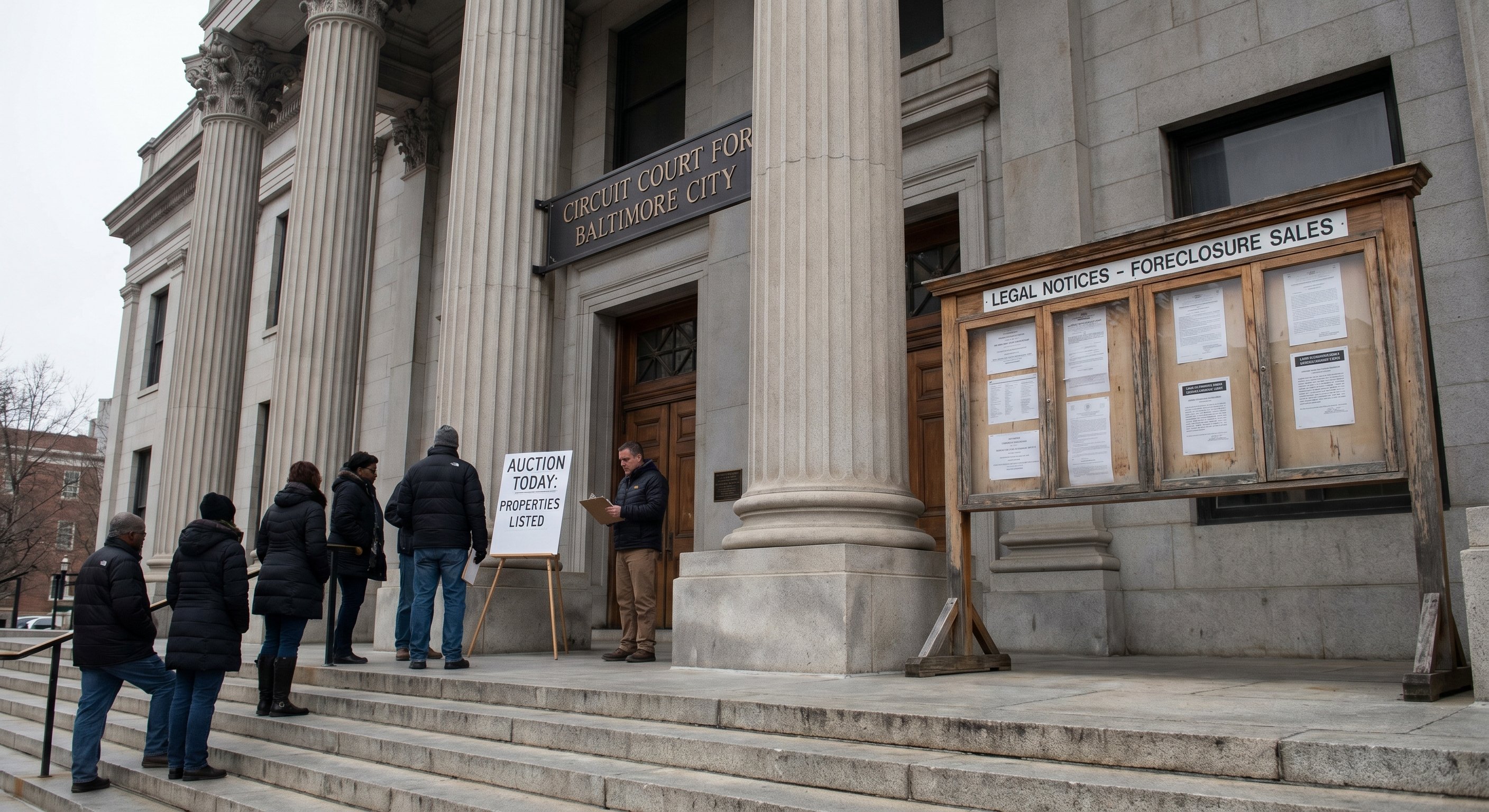
After the mediation period closes and any required notice periods are satisfied, the property is scheduled for auction. Maryland requires at least 10 days notice before the sale date, published in a local newspaper and posted at the courthouse.
Foreclosure sales in Maryland occur at the county courthouse or at a designated location within the county. Winning bidders typically pay immediately or within 24 hours and pay a buyer's premium in addition to the bid amount. Most auctions are held on the courthouse steps, though some counties use online platforms.
Stage 5: Ratification (Month 4-8)
After the sale, the homeowner has 30 days to file exceptions to the sale with the court. If exceptions are not filed or are overruled, the court ratifies the sale. Ratification is the legal event that transfers ownership to the purchaser.
Because there is no post-ratification redemption period in Maryland, the period between ratification and clear title is shorter than in redemption states. For investors, this means faster access to the property and fewer contingencies after the auction.
Key Maryland Counties for Foreclosure Leads
Not all Maryland markets are equal for investors. Volume, discount depth, and deal quality vary significantly by jurisdiction.
Baltimore City
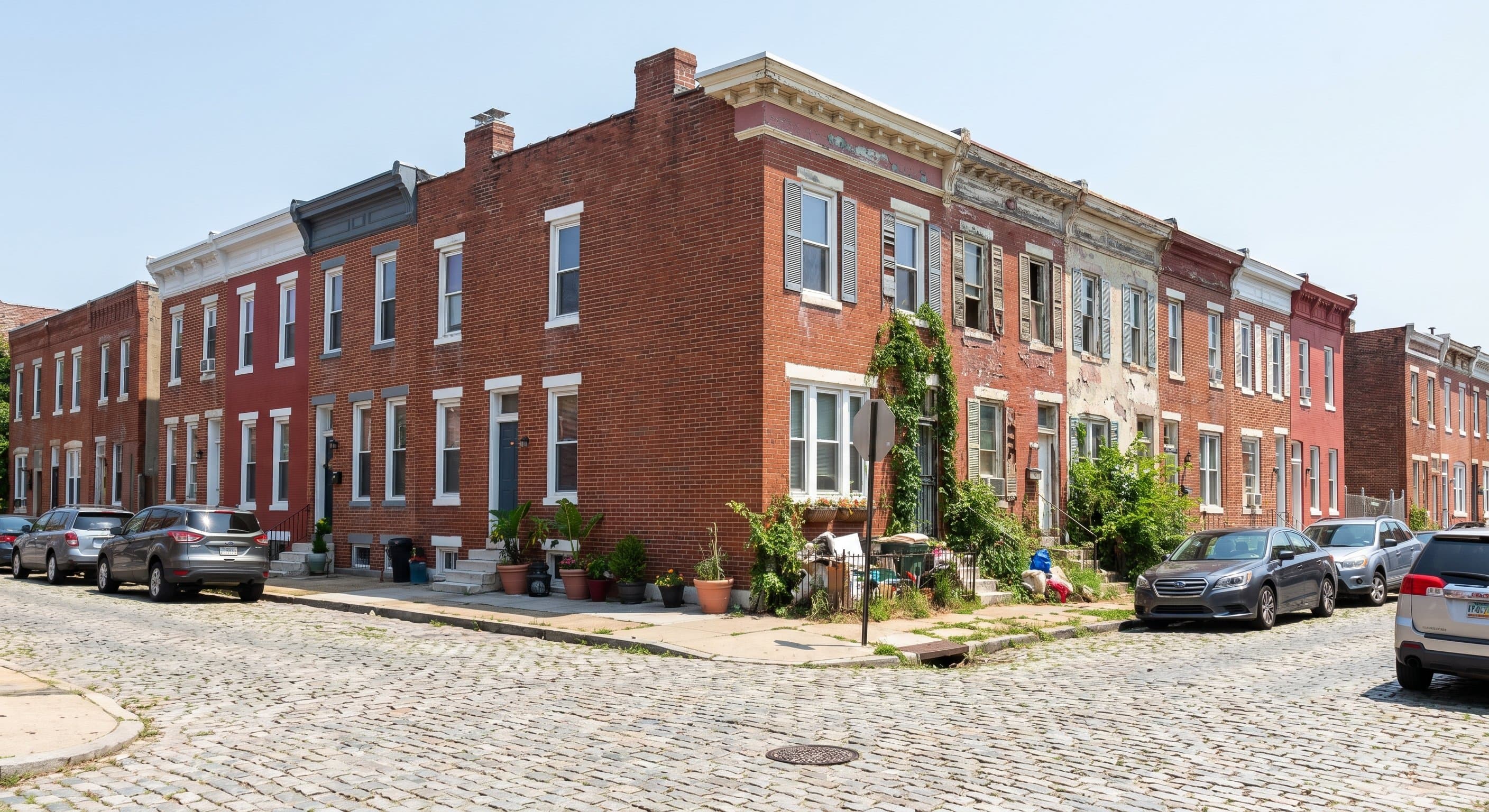
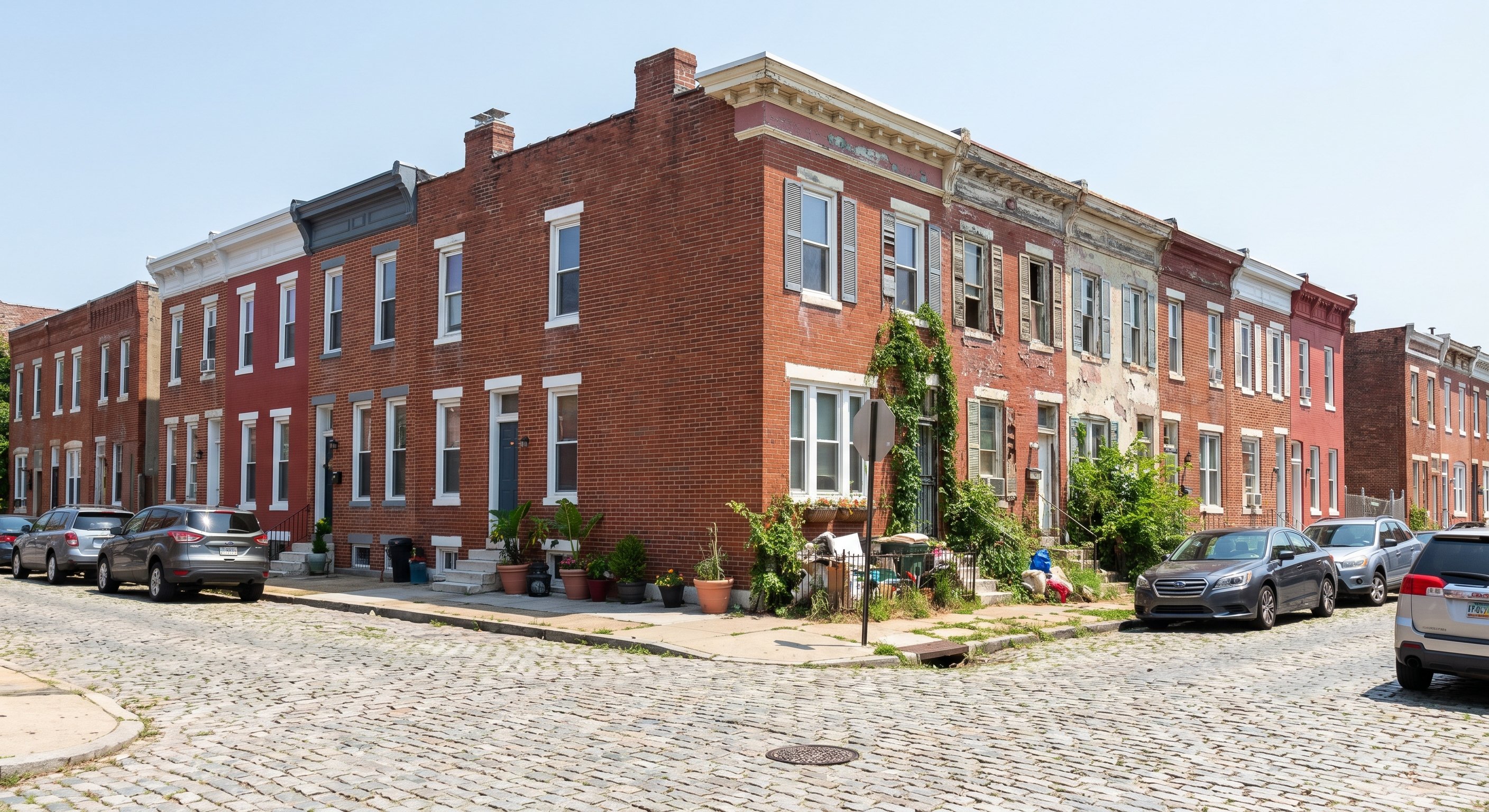
Baltimore City is the highest-volume foreclosure market in Maryland by a significant margin. The city processes hundreds of foreclosures per year across a mix of row houses, single-family homes, and small multi-unit buildings. Median prices in many neighborhoods remain low enough that distressed properties sell at meaningful discounts to estimated repair value.
The city operates its own circuit court, and case volume creates both opportunity and complexity. Investors need to understand that Baltimore properties often carry code violations, back taxes, and deferred maintenance that go beyond the typical distressed property. The discount reflects this.
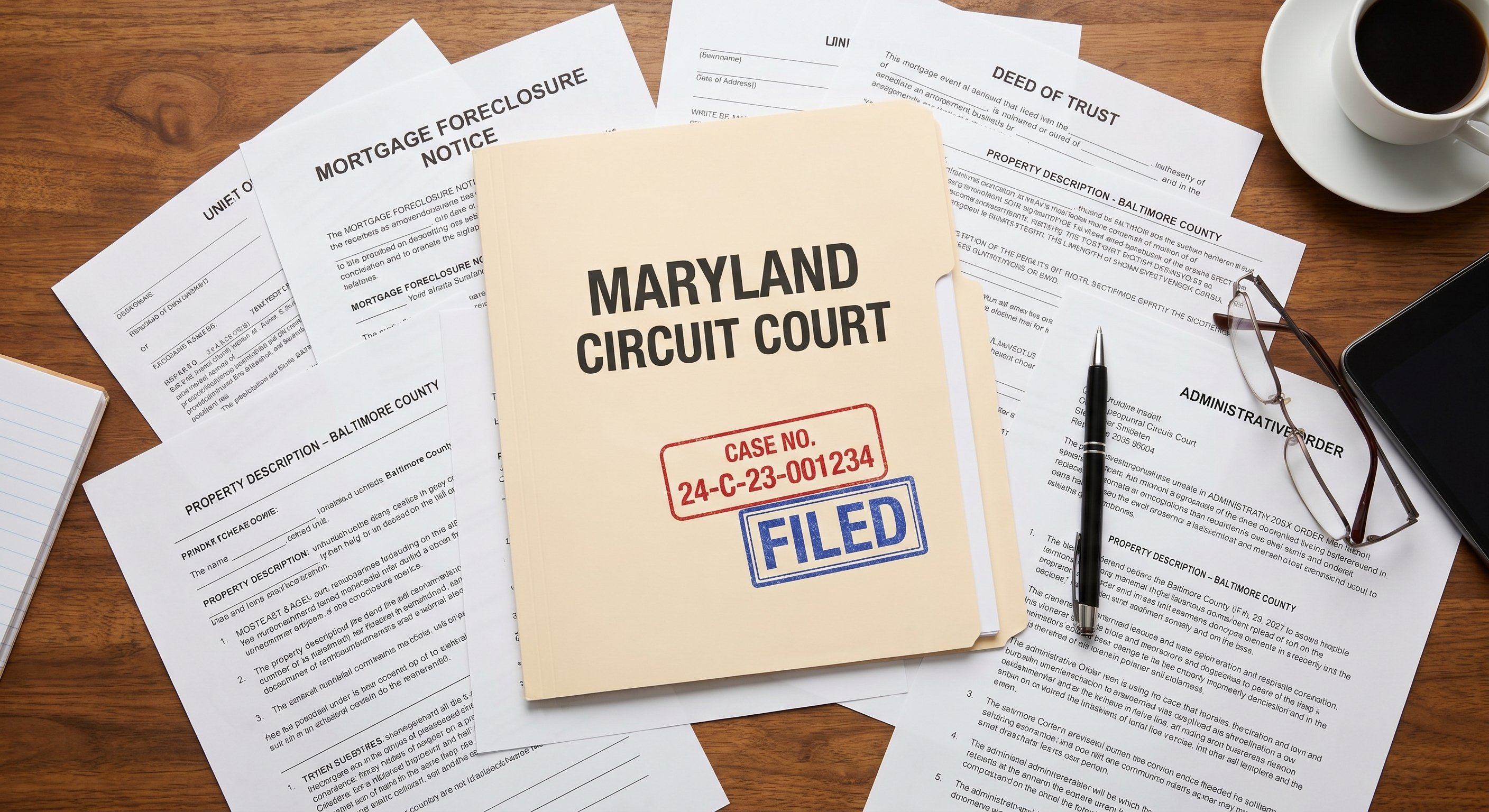
Baltimore County
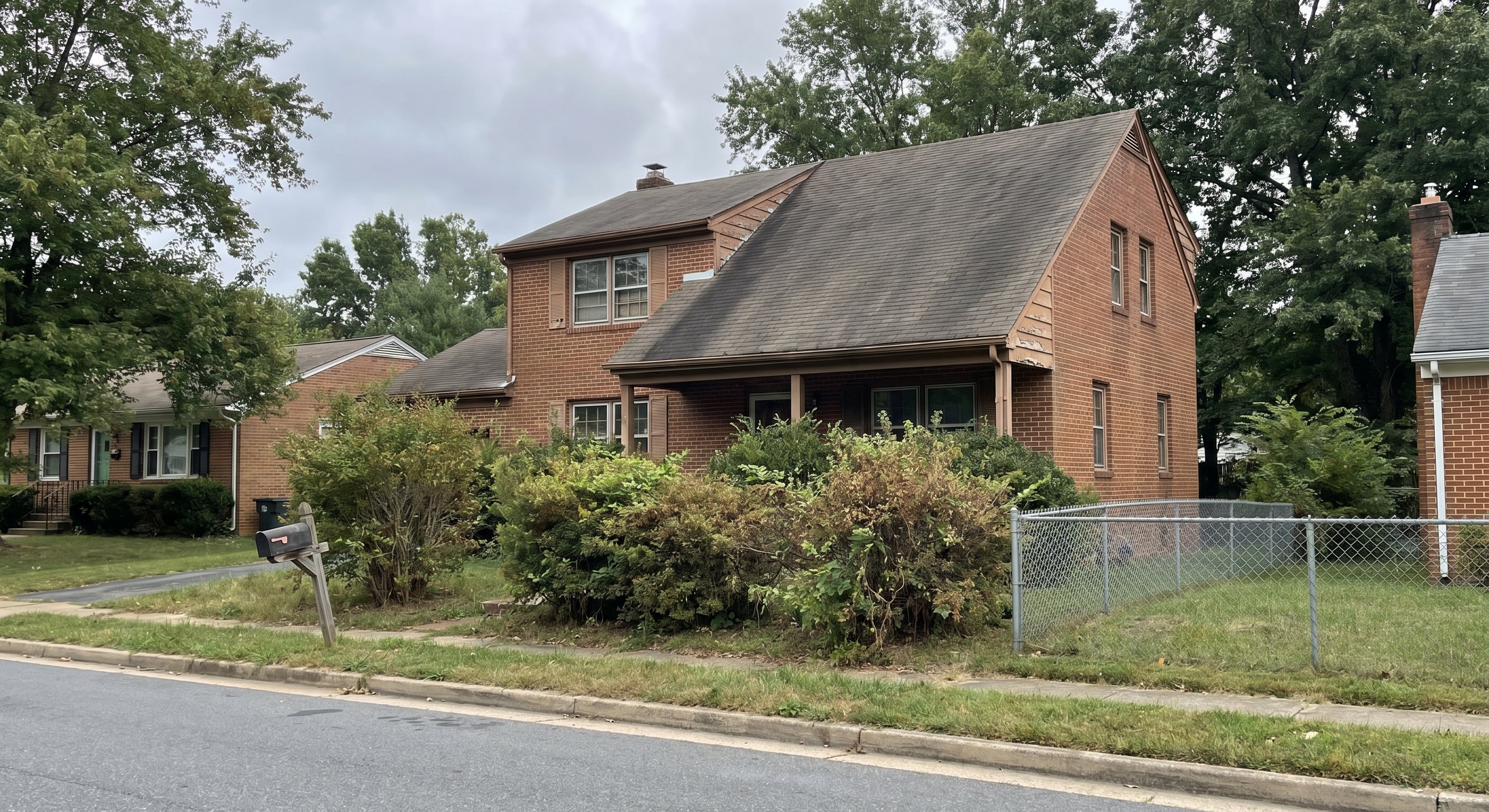
Adjacent to the city, Baltimore County offers higher-priced properties and a more typical suburban investor profile. Foreclosure volume is solid, and the county's population density supports both fix-and-flip and rental strategies. Towson, Catonsville, and the eastern parts of the county near White Marsh generate consistent lead flow.
Prince George's County
Prince George's County is one of Maryland's most populous suburbs and consistently ranks among the highest-foreclosure jurisdictions in the state. Located between Washington D.C. and Baltimore, the county's proximity to the capital drives pricing in some submarkets while foreclosure discounts remain accessible.
Prince George's County has its own circuit court and publishes county-level foreclosure data through its open data portal, a useful resource for investors doing manual research. Bowie, Hyattsville, and College Park are active submarkets.
Montgomery County
Montgomery County is Maryland's wealthiest jurisdiction and produces fewer foreclosures than Prince George's or Baltimore City, but the properties that do come to market tend to be higher-value. For investors focused on premium distressed inventory, the county is worth monitoring, particularly in Germantown, Silver Spring, and Bethesda.
Free Weekly Alerts
See What's Distressed in Your Market
Get free weekly alerts — new distressed properties, motivation scores, and hot neighborhoods in your area. Addresses and contact info available inside DistressIQ.
Free forever · No credit card · Unsubscribe anytime
How to Find Foreclosure Leads in Maryland Before the Auction
The judicial process creates public records at every stage. Investors who know where to look can identify properties weeks or months before the auction date.
Monitor Circuit Court Filings
The Order to Docket, loss mitigation affidavit filings, and mediation requests are all court records. Maryland's circuit courts maintain online case search systems for each county. Investors who run weekly searches for new foreclosure case filings can build a pipeline of pre-foreclosure leads that is invisible to investors who only check auction listings.
This approach requires manual effort and county-by-county navigation. The data is public but not centralized.
Track the Mediation Process
When a homeowner requests mediation, the request goes to the Office of Administrative Hearings. Tracking these filings gives investors a signal that the homeowner is actively engaged and may be open to a negotiated solution. This is a narrow window: mediation sessions are typically scheduled within 60 days of the request, and the homeowner has already been through months of financial stress to reach this point.
Use a Lead Platform with Maryland Court Coverage
Scanning 24 separate court systems manually is time-prohibitive for most investors. DistressIQ monitors circuit court filings across all Maryland jurisdictions and cross-references distressed property signals with owner contact information. Pre-foreclosure leads are delivered with owner names, property details, estimated equity positions, and the filing status, allowing investors to prioritize outreach before the auction crowd arrives.
What Makes Maryland Different from Neighboring States
Investors who work the Mid-Atlantic corridor often compare Maryland to Virginia, Pennsylvania, and Delaware. The differences matter.
Virginia uses non-judicial foreclosure for most properties, meaning the auction can happen in 30 to 60 days after default with minimal court involvement. The lead window is compressed.
Pennsylvania is also judicial, but its redemption period after sale runs up to 12 months in some counties, creating long delays between auction and clear title.
Delaware has a redemption period and a slower court process that can stretch cases beyond 12 months.
Maryland sits in a middle position: slower than Virginia but cleaner than Pennsylvania, with no redemption period after ratification. For investors who want a balance of lead access and deal certainty, it is one of the more favorable judicial foreclosure states in the region.
Risks and Due Diligence Points in Maryland Foreclosures
Maryland foreclosure investing comes with specific risks that require attention.
Title issues are common. Properties that go through foreclosure in Maryland may carry liens from utility bills, HOA dues, municipal codes, or property taxes that survive the foreclosure sale. A title search is non-negotiable on any Maryland foreclosure.
Code violations in Baltimore require escalation. Baltimore City's property maintenance code is aggressively enforced. Properties acquired at auction may carry open violations that require remediation before the property can be resold or rented. Budget accordingly.
Deficiency judgments add risk on the seller side. Maryland allows lenders to pursue deficiency judgments against borrowers after foreclosure for the difference between the loan balance and the sale price. While this primarily affects the former owner, investors who buy subject-to or assume financing should understand the exposure.
Evictions may be required. Maryland's eviction process after a foreclosure sale requires legal action through the district court. The timeline varies by county and can add 30 to 90 days after ratification before the property is vacant.
Finding Foreclosure Leads in Maryland in 2026
The Maryland foreclosure market rewards investors who understand its legal framework and work the pre-sale window actively. The judicial process creates public signals that non-judicial states simply do not provide. Court filings, mediation requests, and loss mitigation affidavits all create traceable events that investors can monitor to identify motivated sellers before the auction.
The challenge is volume and coverage. With 24 circuit court jurisdictions and case documents distributed across separate systems, building a comprehensive Maryland foreclosure pipeline manually requires significant time investment.
DistressIQ tracks Maryland circuit court filings across all jurisdictions and delivers pre-foreclosure leads with verified owner contact information. Investors can search by county, signal type, estimated equity position, and filing status to prioritize the best opportunities.
Frequently Asked Questions
How long does foreclosure take in Maryland?
Maryland foreclosure typically takes 3 to 8 months from the first missed payment to the auction sale. The lender must wait at least 120 days after default (per federal servicing rules) before filing the Order to Docket with the circuit court, then satisfy notice and mediation requirements before the sale can occur.
Does Maryland have a redemption period after foreclosure?
Maryland does not have a post-ratification redemption period. Once the circuit court ratifies the foreclosure sale, the buyer owns the property outright. The homeowner can only redeem the property before the sale by paying the full amount owed.
Can lenders pursue deficiency judgments in Maryland?
Yes. Maryland allows lenders to seek deficiency judgments against borrowers after foreclosure for the difference between the outstanding loan balance and the sale price. This is a factor for investors who assume existing financing or buy subject-to.
Is mediation required in Maryland foreclosures?
Mediation is not automatically required, but homeowners in owner-occupied residential properties have the right to request foreclosure mediation within 25 days of receiving the Final Loss Mitigation Affidavit. If the homeowner requests mediation, it must be scheduled within 60 days through the Office of Administrative Hearings.
Which Maryland counties have the most foreclosure activity?
Baltimore City, Prince George's County, and Baltimore County are the highest-volume foreclosure markets in Maryland. Montgomery County and Anne Arundel County also produce consistent lead flow, though at lower volumes than the top three jurisdictions.
Can I buy a Maryland foreclosure before the auction?
Yes. Pre-sale purchases are common in Maryland and often preferable to auction bidding. Reaching the homeowner during the pre-foreclosure or mediation window gives the seller an exit without the uncertainty of auction terms and the 30-day post-sale exception period.
Maryland foreclosure leads are updated daily from county circuit court filings. Explore properties in Baltimore City, Prince George's County, Baltimore County, and all Maryland jurisdictions at DistressIQ.
The data behind this article
DistressIQ Monitors These Signals in Real Time
Pre-Foreclosures
NOD + NTS filings
Tax Delinquency
County treasurer records
Code Violations
Municipal inspection filings
Probate Filings
Superior Court records
Every lead is scored 0–100 for seller motivation based on signal type, duration, severity, and stacking. Nationwide coverage — every US county, updated daily.
Ready to find deals in your market?
See Live Distress Signals in Your County
Stop calling dead leads. Every lead in DistressIQ is scored 0–100 for seller motivation, with verified contact info included. Browse the free tier to see what's active in your market right now.
Browse Free Leads — No Credit Card