Foreclosure Leads Colorado: What the Public Trustee System Means for Investors
Foreclosure Leads Colorado: What the Public Trustee System Means for Investors
TL;DR: Colorado is the only state that runs foreclosures through a county Public Trustee rather than a sheriff or court sale. The process takes roughly 110 to 125 days from the Notice of Election and Demand to the trustee sale, and most residential properties have no post-sale redemption period. That compressed timeline means investors who find leads early have a real window to work directly with homeowners before the auction. The Denver metro area and El Paso County consistently generate the highest volume of foreclosure filings in the state.
Colorado does not do foreclosures the way most states do. There is no sheriff standing on the courthouse steps. No drawn-out judicial process that stretches 18 months. Instead, the state runs every foreclosure through a county official called the Public Trustee, and the entire process wraps in under four months. For investors sourcing foreclosure leads, Colorado is a faster, more transparent market than almost anywhere else. The speed also means the window to reach homeowners is short, and the data needs to be current.
How Colorado's Public Trustee System Works
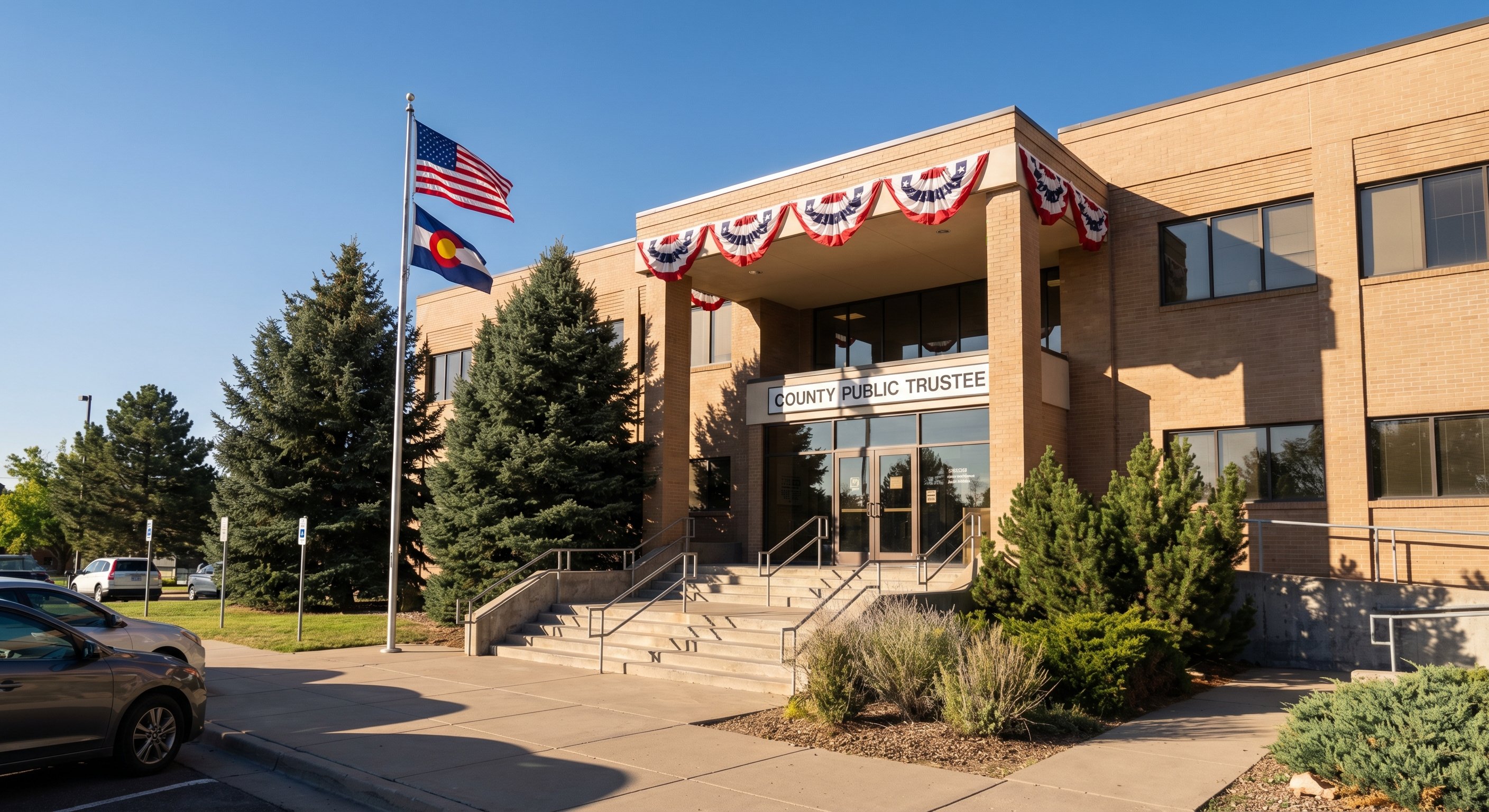
Colorado is the only state in the country where foreclosures are administered by a Public Trustee. Each of the 64 counties has one, and that office handles the entire non-judicial foreclosure process from filing to sale. Lenders do not file a traditional lawsuit. They file a Notice of Election and Demand (NED) with the Public Trustee, which kicks off a statutory timeline.
Before the NED can be filed, the lender must obtain a court order under Colorado Rule 120. This is a streamlined hearing where the court confirms that the borrower is in default and the lender has the right to foreclose. It is not a full judicial foreclosure. The hearing is typically brief, and once the order is granted, the Public Trustee takes over.
The entire sequence from NED filing to sale usually runs 110 to 125 days. During that window, the notice must be published in a local newspaper for five consecutive weeks, and the borrower has the right to cure the default (bring the loan current) up until noon the day before the scheduled sale. This cure right is significant for investors because it means homeowners who find a buyer quickly can often avoid the auction entirely by selling the property and paying off the lien.
No Redemption Period Changes the Math
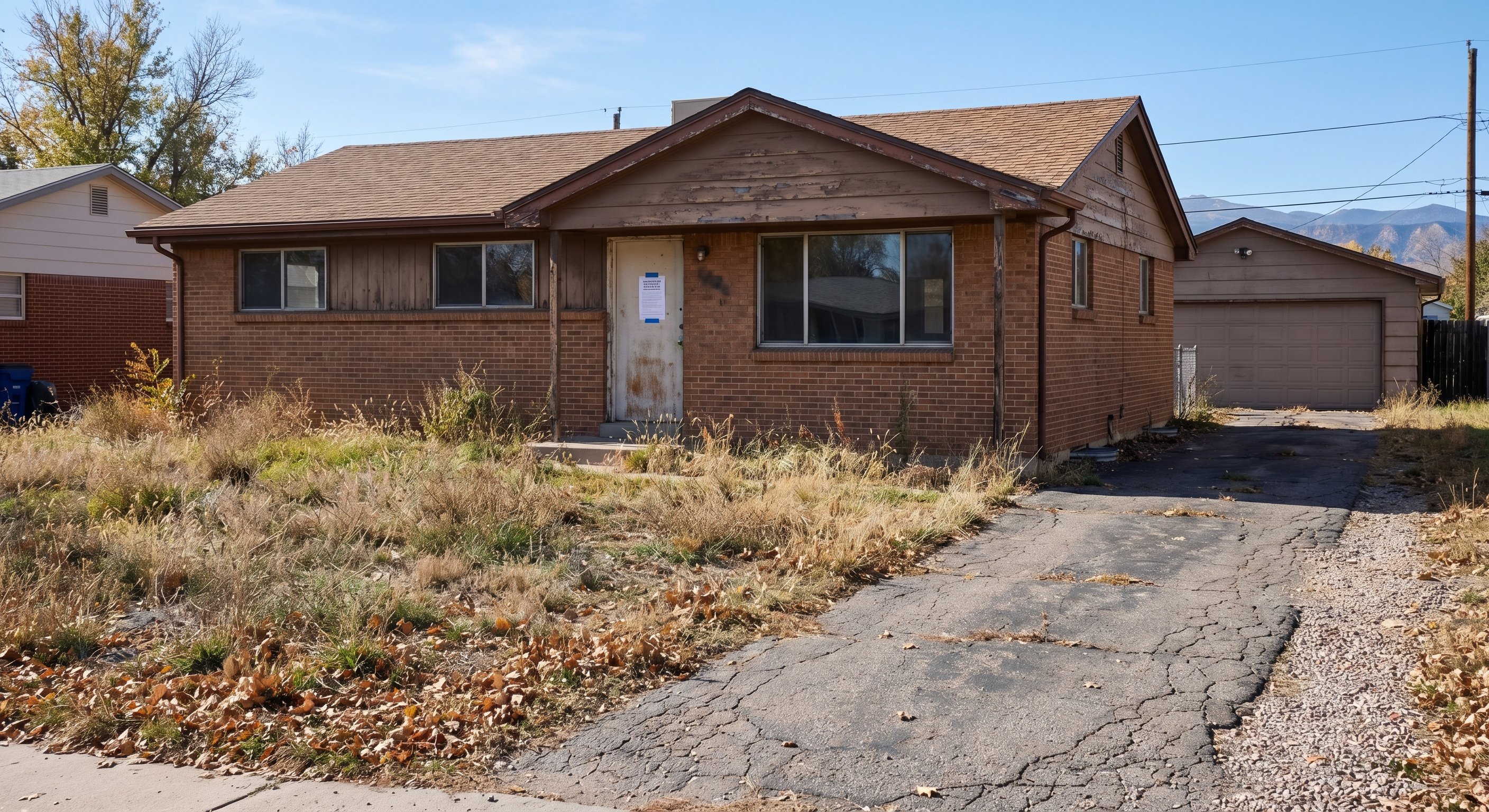
Here is the detail that catches out-of-state investors off guard: Colorado has no post-sale redemption period for most residential properties (one to four units). Once the Public Trustee conducts the sale, it is final. The former owner cannot come back and reclaim the property by paying the sale price plus costs.
This is a direct contrast to states like Minnesota (six-month redemption) or Michigan (six months, extendable to twelve in some cases). In those markets, an investor buying at foreclosure sale takes on the risk that the owner redeems. In Colorado, the sale is the sale. That finality makes trustee sale purchases more attractive, but it also means homeowners who lose the property have no second chance. Investors who reach owners before the sale are providing a genuine alternative.
The no-redemption rule applies to most owner-occupied residential properties. Agricultural and some commercial properties may retain redemption rights, so investors working those segments should verify the specific rules with the county Public Trustee.
Where the Foreclosure Activity Concentrates
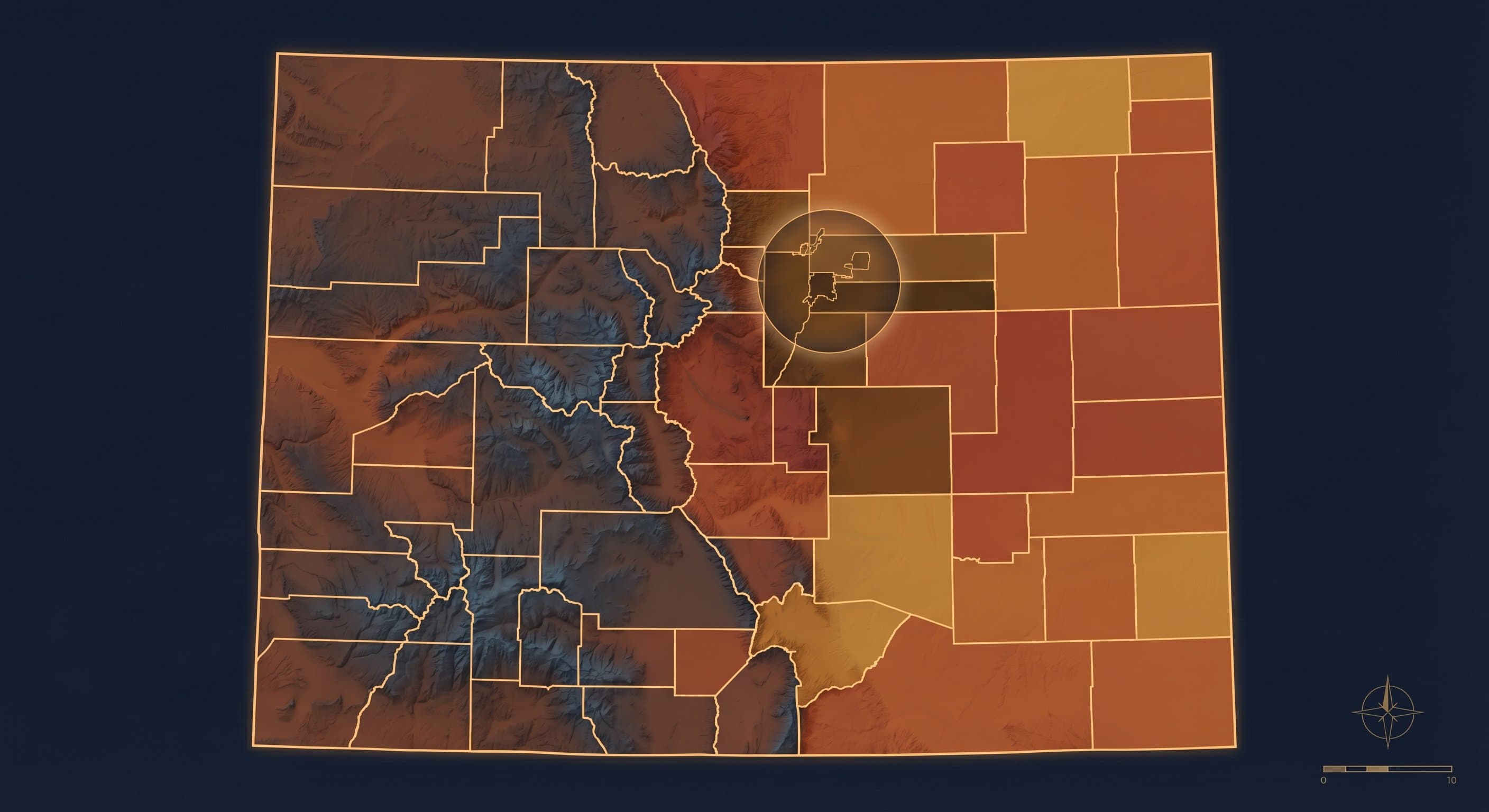
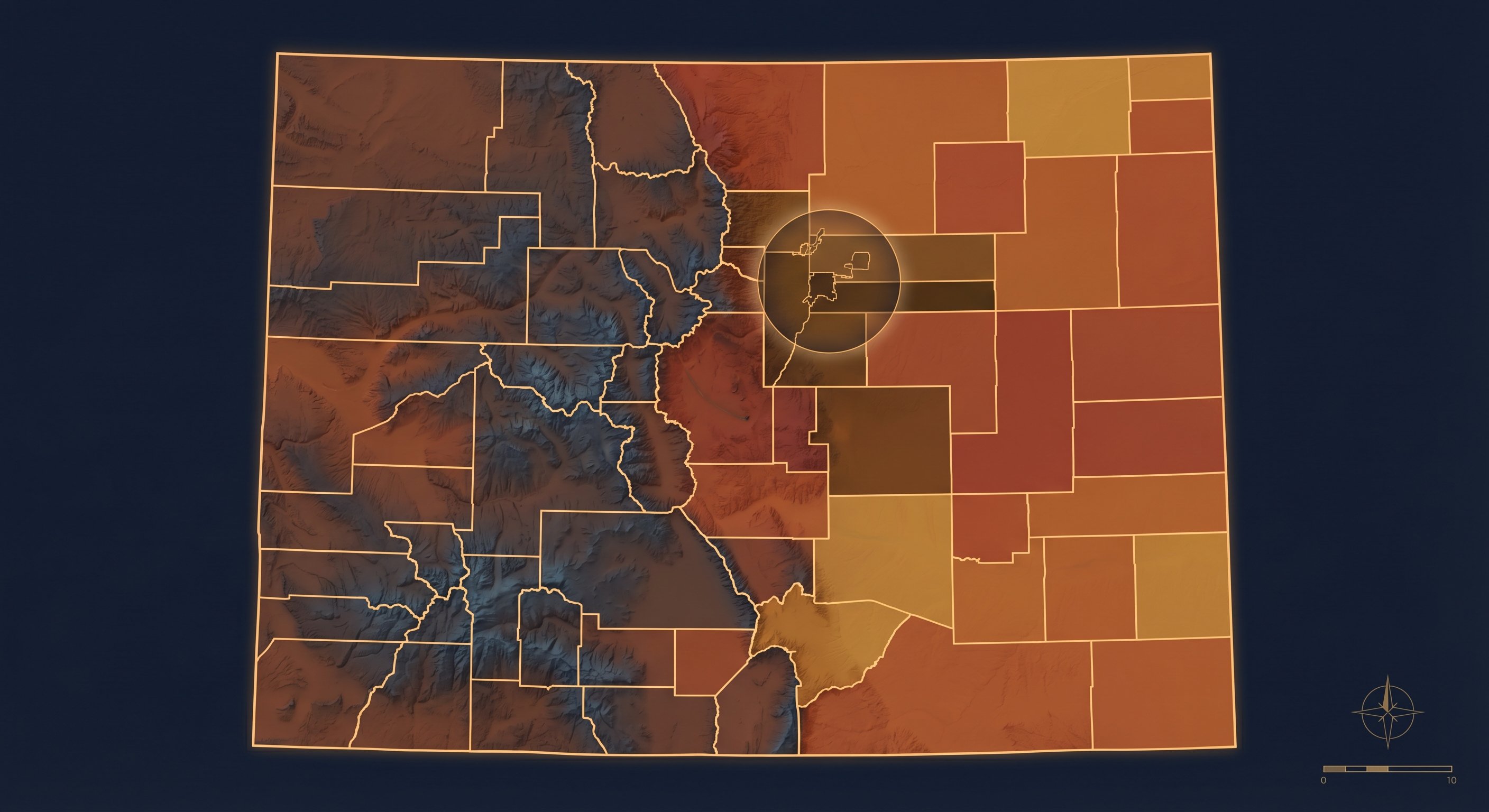
Foreclosure volume in Colorado is not evenly distributed. The Denver metro counties (Denver, Adams, Arapahoe, Jefferson, Douglas) and El Paso County (Colorado Springs) consistently account for the majority of filings. Adams County, with its more affordable housing stock, tends to run higher foreclosure rates per capita than wealthier suburbs like Douglas County.
El Paso County presents an interesting pattern. The military presence (Fort Carson, Peterson Space Force Base, Schriever Space Force Base) creates a transient ownership population. Service members transferred on short notice sometimes struggle to sell or maintain properties, leading to elevated foreclosure activity in certain Colorado Springs ZIP codes. Investors who understand military PCS (Permanent Change of Station) timelines can time their outreach to those neighborhoods.
Weld County (Greeley) sees foreclosure fluctuations tied to the oil and gas economy. When energy prices drop, layoffs in the Wattenberg Field region translate into mortgage defaults within 60 to 90 days. Pueblo County has a different profile: lower home values mean less equity cushion, so defaults happen faster and recovery options for homeowners are thinner.
Free Weekly Alerts
See What's Distressed in Your Market
Get free weekly alerts — new distressed properties, motivation scores, and hot neighborhoods in your area. Addresses and contact info available inside DistressIQ.
Free forever · No credit card · Unsubscribe anytime
The Equity Angle in a High-Price Market
Colorado's median home price has climbed above $600,000 in the Denver metro area, according to the Colorado Association of Realtors, and even more affordable markets like Colorado Springs have seen values double since 2019. This creates a foreclosure environment fundamentally different from the Great Recession era. Many homeowners in default today are sitting on significant equity. A borrower who bought in 2018 with a $350,000 mortgage on a property now worth $550,000 has $200,000 in paper equity even while missing payments.
For investors sourcing foreclosure leads in Colorado, this means the deal profile skews toward equity-rich, time-poor sellers rather than underwater borrowers. The homeowner is not facing a shortfall. They are facing a deadline. The investor who can close quickly, handle the lien payoff, and leave the seller with cash after the mortgage is satisfied provides real value in that scenario.
This dynamic also means short sale opportunities are rare in Colorado. Lenders have little incentive to accept less than the full balance when the property value exceeds the debt. The investor play is purchasing from the homeowner before the trustee sale, not negotiating with the lender after.
Sourcing Leads in a Fast Timeline
Colorado's 110-day foreclosure window sounds generous, but the practical working timeline is shorter. The NED filing is public record, and by the time it appears, the homeowner may already be 90 days or more behind on payments. The lender's Rule 120 hearing has likely already happened. That leaves investors roughly 60 to 80 days from the time the NED becomes visible to reach the homeowner, negotiate a purchase agreement, and close before the trustee sale.
This is where data freshness matters. Lists that are weeks old miss the early part of that window. Colorado's Public Trustee offices update their records at different cadences, and some smaller counties still publish notices in print newspapers with limited online presence. A lead source that tracks NED filings daily across all 64 counties gives investors the maximum possible time to work each file.
Investors who also track pre-foreclosure signals (late payments, lis pendens filings from other creditors, tax delinquency) can identify distressed properties weeks before the NED is filed. That early identification is where the best deals come from in a fast-moving market.

Working the Trustee Sale Directly
For investors buying at auction, Colorado's trustee sales offer structural advantages. The Public Trustee conducts each sale at a published time and location. The minimum bid is set by the lender (typically the outstanding loan balance plus costs). The highest bid wins, and the sale is final. The Colorado Division of Housing publishes regular reports on state foreclosure trends that can help investors identify seasonal patterns.
The risk profile is real. Properties are sold as-is, and junior liens may survive depending on recording date. Title insurance is not available at the sale. Investors who work trustee sales regularly build relationships with title companies that run preliminary searches on upcoming sale properties. The no-redemption structure eliminates one major risk, but compressed due diligence time is the tradeoff.
Deficiency Judgments and What They Mean
Colorado allows lenders to pursue deficiency judgments after foreclosure, but they must file within six months of the sale date. The deficiency amount is generally the difference between the outstanding debt and the sale price. In a high-equity market like Colorado, most properties sell at or above the debt at trustee sale, making deficiency judgments less common for residential properties.
For investors, the deficiency judgment risk is more relevant when purchasing junior liens or working with homeowners who have multiple mortgages. A second lienholder whose position is wiped out at the trustee sale has six months to pursue a personal judgment against the borrower. That judgment can become a lien on other real property the borrower owns.

Tracking Foreclosure Leads Across All 64 Counties
Colorado's decentralized Public Trustee system means there is no single statewide portal for foreclosure data. Each county operates independently, and the quality of online records varies widely. Denver, Adams, and Arapahoe counties maintain relatively accessible online databases. Smaller counties like Hinsdale, San Juan, or Mineral may require phone calls or in-person visits to the Trustee's office.
This fragmentation is both a barrier and an opportunity. Investors willing to track all 64 counties can find deals in markets that competitors are not watching. A foreclosure filing in Kiowa County or Baca County attracts nothing like the competition of one in Jefferson County, and lower property values in those rural markets can produce higher percentage returns.
DistressIQ tracks foreclosure filings, pre-foreclosure signals, tax delinquency, and 20+ additional distress indicators across every Colorado county, updated daily. Investors can filter by motivation score, signal type, and property characteristics to identify the highest-probability opportunities before the trustee sale date approaches. Browse Colorado foreclosure leads free at distressiq.ai.
Frequently Asked Questions
Q: How long does foreclosure take in Colorado?
Colorado's non-judicial foreclosure process runs through the county Public Trustee and typically takes 110 to 125 days from the Notice of Election and Demand filing to the trustee sale. The lender must first obtain a Rule 120 court order confirming the default, which adds additional time before the NED is filed. Borrowers can cure the default (bring the loan current plus costs) up until noon the day before the scheduled sale. Once the sale occurs, there is no redemption period for most residential properties.
Q: What is a Public Trustee in Colorado foreclosure?
The Public Trustee is a county official unique to Colorado who administers non-judicial foreclosure sales. Every one of Colorado's 64 counties has a Public Trustee. When a lender forecloses, the process goes through the Trustee's office rather than the sheriff's department or a court. The Trustee receives the Notice of Election and Demand, publishes the required legal notices, conducts the sale, and issues the trustee's deed to the winning bidder. This system provides a standardized process across the state, though individual counties may have slight procedural variations.
Q: Can you buy a property before the foreclosure sale in Colorado?
Yes. Homeowners in foreclosure retain the right to sell their property at any point before the trustee sale. Many Colorado homeowners facing foreclosure have significant equity due to the state's rising home values, making a pre-sale purchase viable. The buyer pays off the mortgage (and any junior liens) from the purchase price, and the seller keeps any remaining equity. This avoids the auction entirely and gives the buyer time for inspections and title research that are not available at a trustee sale. The homeowner must close before the sale date, which typically means working within a 60 to 90 day window after the NED filing.
Q: Which Colorado counties have the most foreclosure filings?
Adams County, El Paso County (Colorado Springs), Denver County, Arapahoe County, and Weld County consistently rank highest in foreclosure filing volume. Adams County's more affordable housing stock contributes to higher per-capita rates. El Paso County benefits from military base activity that creates transient ownership patterns. Weld County sees fluctuations tied to the oil and gas economy. Jefferson and Douglas counties have lower rates but higher property values, meaning individual deals may carry more dollar-denominated equity.
Q: What happens to junior liens at a Colorado trustee sale?
Junior liens (second mortgages, HELOCs, judgment liens) recorded after the foreclosing lien are typically extinguished by the trustee sale. The junior lienholder's security interest in the property is wiped out. However, the debt itself is not erased. Junior lienholders have six months to file a deficiency judgment against the borrower for the unpaid balance. Investors buying at trustee sale should run a preliminary title search to understand which liens survive the sale (some tax liens and assessments may survive regardless of recording date) and which are eliminated.
Q: Does Colorado have a right of redemption after foreclosure?
Colorado eliminated the post-sale redemption period for most residential properties (one to four units, owner-occupied). Once the Public Trustee completes the sale, the property transfers to the winning bidder with no redemption window. This is a significant difference from states like Minnesota, Michigan, or Oregon, where redemption periods of six months or more are standard. Agricultural properties and some commercial properties in Colorado may retain redemption rights, so investors working those asset classes should verify the specific rules with the county Public Trustee and a local attorney.
The data behind this article
DistressIQ Monitors These Signals in Real Time
Pre-Foreclosures
NOD + NTS filings
Tax Delinquency
County treasurer records
Code Violations
Municipal inspection filings
Probate Filings
Superior Court records
Every lead is scored 0–100 for seller motivation based on signal type, duration, severity, and stacking. Nationwide coverage — every US county, updated daily.
Ready to find deals in your market?
See Live Distress Signals in Your County
Stop calling dead leads. Every lead in DistressIQ is scored 0–100 for seller motivation, with verified contact info included. Browse the free tier to see what's active in your market right now.
Browse Free Leads — No Credit Card