Driving for Dollars App: How Technology Changed the Most Effective Real Estate Strategy
Driving for Dollars App: How Technology Changed the Most Effective Real Estate Strategy
TL;DR: Driving for dollars is one of the oldest off-market sourcing strategies in real estate investing, but manually canvassing neighborhoods is slow and physically limited. A new generation of driving for dollars apps now overlays public records, satellite imagery, and distress signal data onto digital maps, letting investors identify motivated sellers across entire markets without leaving their desk. The best approach combines what apps do well with the irreplaceable value of physical property assessment.
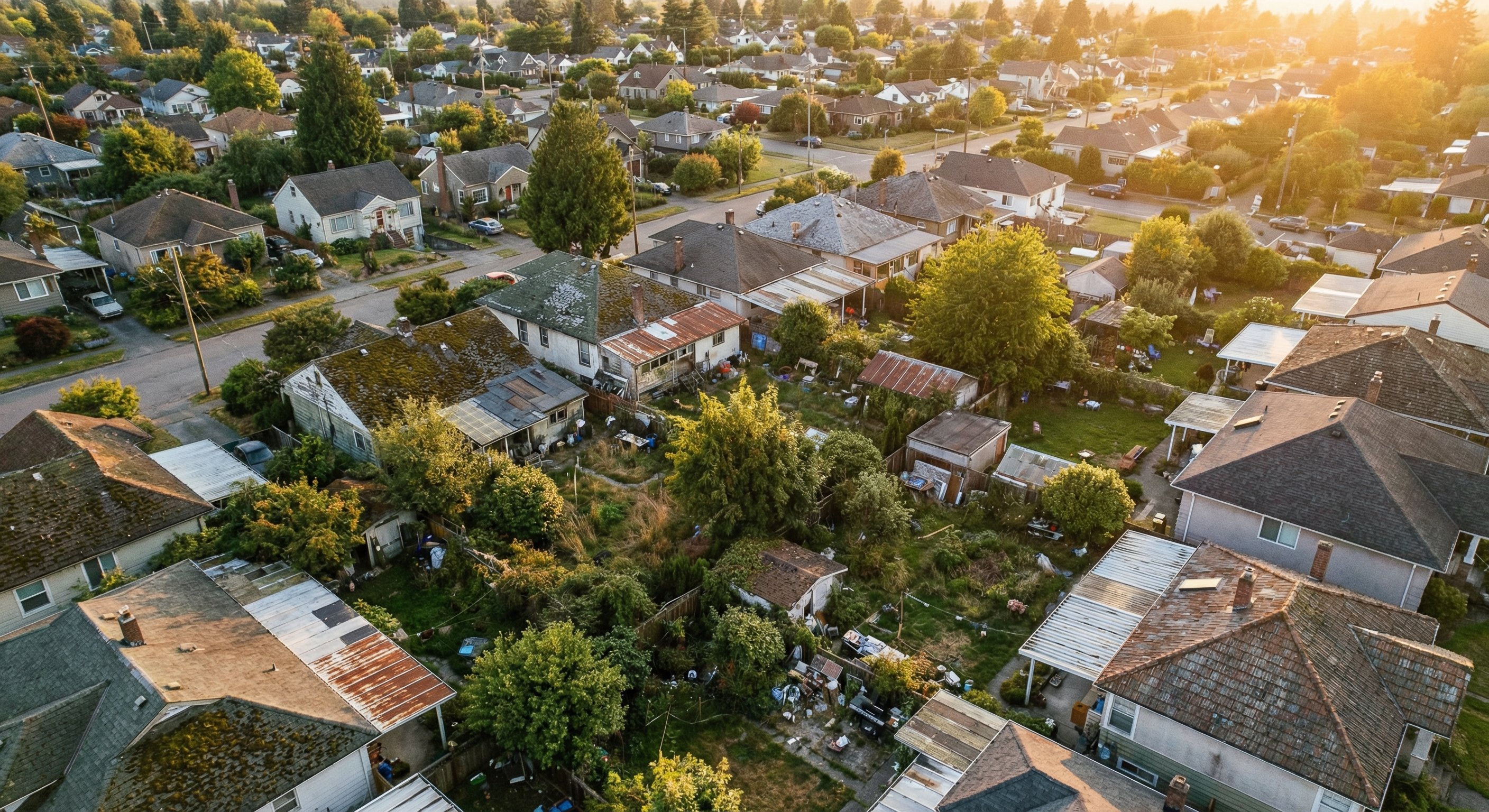
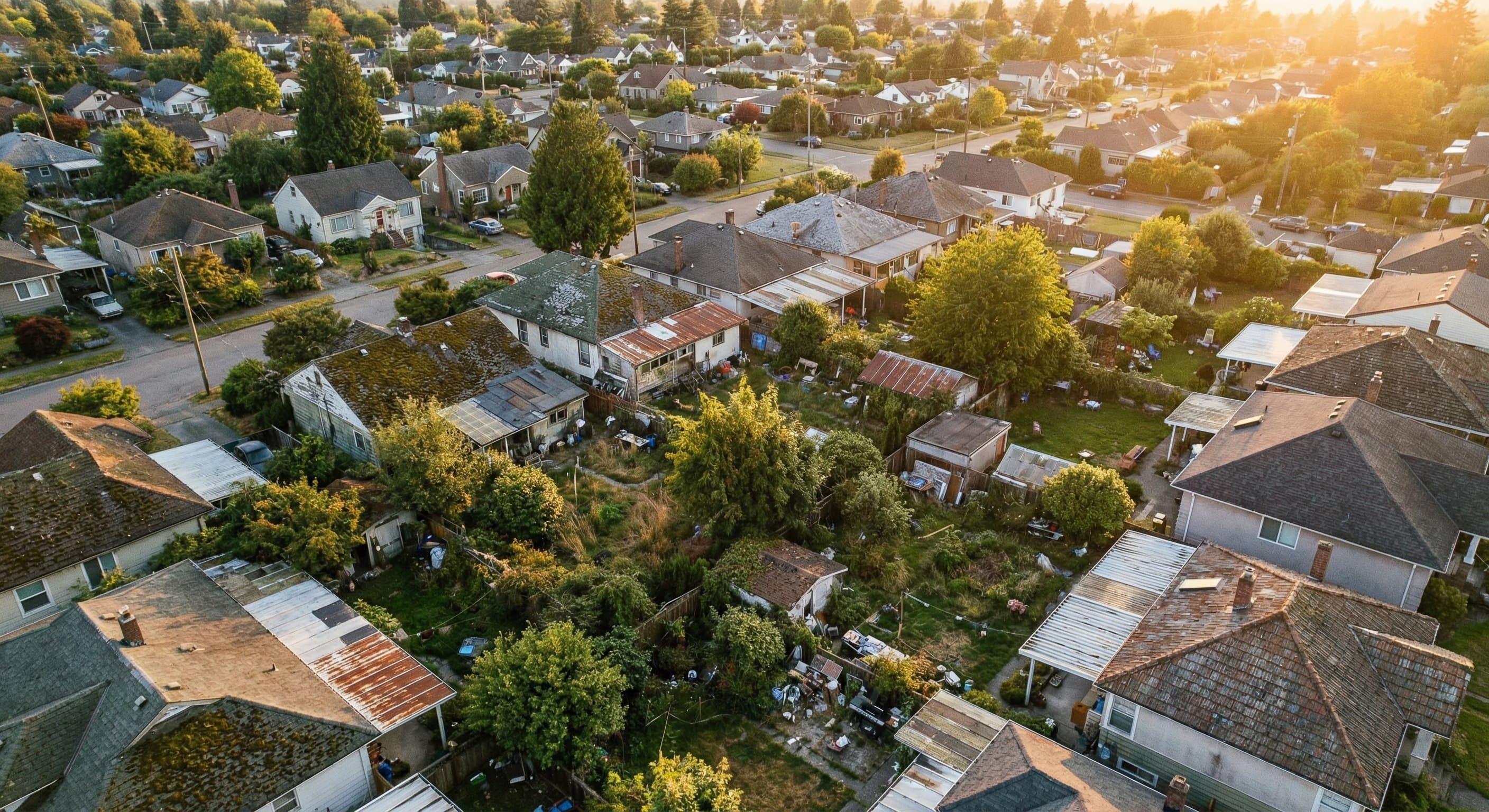
The strategy has been passed down at every real estate investing meetup for decades. Drive through neighborhoods. Look for overgrown yards, deferred maintenance, boarded windows. Write down the address. Track down the owner. Make an offer.
That approach still works. The investor who walks a neighborhood sees things no satellite can capture: the way a roof sags in a way that does not show up in any appraisal, the neighbor who waves and says the house has been empty for eight months. Physical observation is genuinely irreplaceable.
The problem is scale. One investor driving a single ZIP code for four hours might identify 15 to 20 properties worth investigating. Multiply that across a market with 50 ZIP codes, and the strategy collapses under its own logistics. The investor who can cover the most ground wins the most deals, and doing it entirely by car in 2026 is like using a fax machine to send contracts.
Technology changed the math. A driving for dollars app does not replace the physical drive, but it changes what the drive is for. Instead of spending four hours finding 20 properties to investigate, an investor uses an app to identify 200 candidates in 20 minutes, then drives 10 worth seeing in person.
What a Driving for Dollars App Actually Does
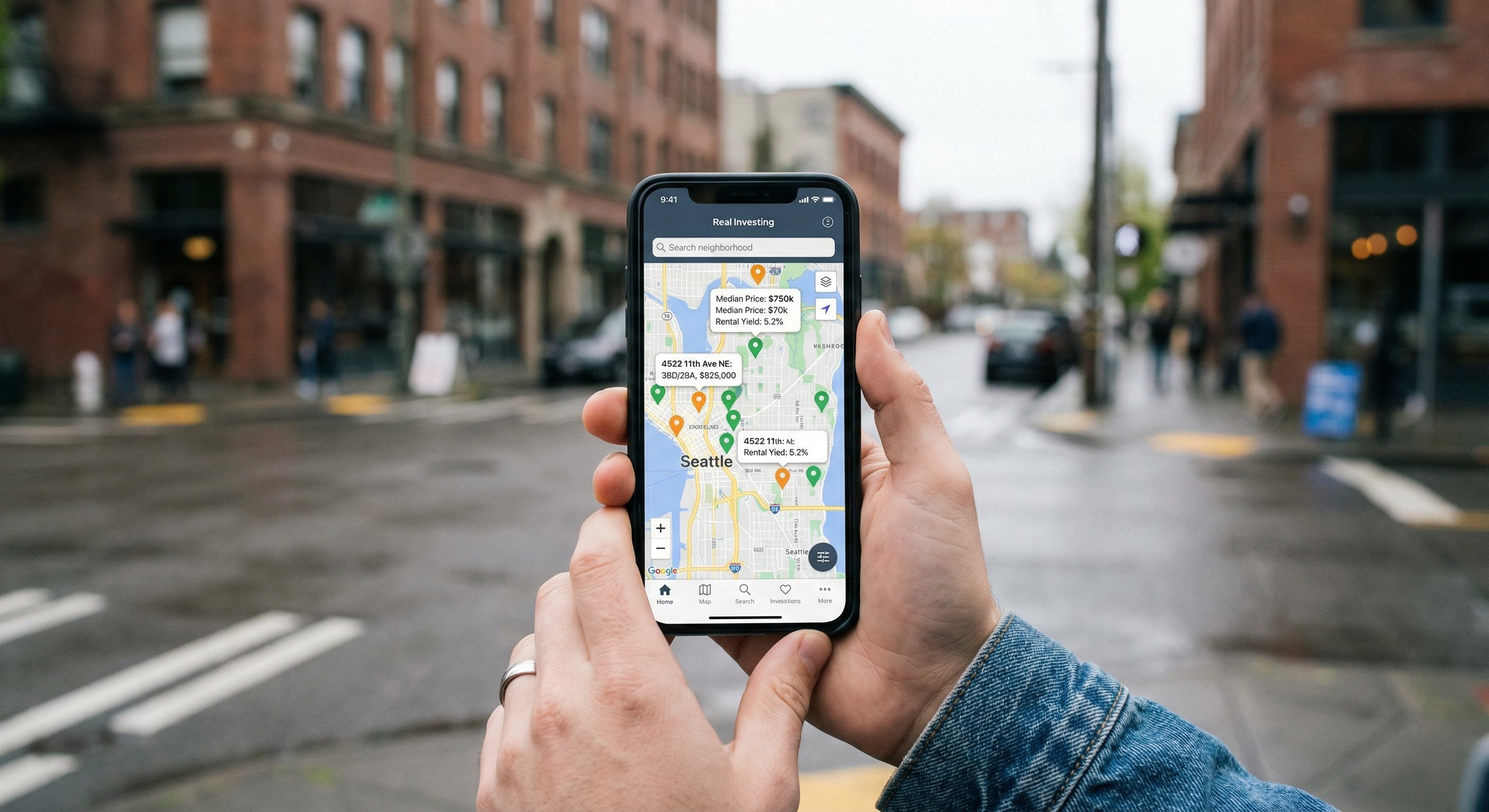
A driving for dollars app is a property identification tool that combines public records data, satellite and street-level imagery, and in some cases direct public distress signal feeds into a filtered map view. The investor sets criteria, and the app surfaces properties that match.
The core identification criteria most apps use include properties with tax delinquency records, code violation filings, extended vacancy indicators, absentee owner status, pre-foreclosure filings, and court-recorded distress events. According to HUD's Distressed Property Toolkit, properties with code violations or tax delinquency are significantly more likely to result in motivated seller situations than properties with no recorded distress indicators (https://www.hud.gov/sites/documents/98013_DPTK.PDF). Some apps layer in additional signals like building permit activity, utility shutoff records, and owner distance from property.
The practical output is a prioritized list of addresses with supporting data: owner name, assessed value, tax status, distress signal type and date, and visual context from satellite or street view. The investor reviews the list, eliminates properties that do not fit their strategy, and takes the remainder on a targeted physical drive.
This is categorically different from the old approach of driving blind. Instead of guessing which houses might have motivated sellers, the investor drives properties that already have verified indicators of distress in the public record.
What Good Driving for Dollars Apps Do Well
Public records integration. County assessor data, tax payment records, and court filings are public. Apps that integrate directly from county sources show the most current information. Tax delinquency that was recorded last week appears this week, not 60 days from now when an aggregator refreshes its database.
Visual context at scale. Satellite imagery and street view let an investor assess a property from multiple angles before visiting. A roof that looks questionable from above might be a non-issue on the ground. A property that looks fine from the street might have a collapsed fence visible only from the alley.
Absentee owner identification. Properties where the owner lives far from the property are prime driving for dollars targets. Out-of-state landlords are frequently motivated to sell but rarely market the property publicly. Apps that surface absentee ownership automatically save hours of manual research per property.
Distress signal prioritization. Not all driving for dollars targets are equally motivated. A property that has been tax delinquent for 18 months represents a different urgency level than one that just crossed the delinquency threshold. Apps that rank properties by signal recency help investors focus on the highest-probability opportunities.
What These Apps Cannot Do
A driving for dollars app is a sourcing tool, not a closing machine. It identifies candidates. The investor still has to do the work that leads to a signed contract.
The app cannot assess condition inside the property. Satellite imagery shows the outside of a house. It cannot reveal whether the HVAC system is original from 1987, whether there is water damage behind the walls, or whether the electrical panel is a fire hazard. The physical drive still matters for actual property assessment.
The app cannot replace skip tracing. Identifying an owner of record is different from finding a working phone number. Most driving for dollars apps show the owner of record from county assessor data. Connecting that owner to a current phone number requires skip tracing, which is a separate step in the workflow.
The app cannot account for local market context. A neighborhood that looks distressed from the street might be in the middle of a redevelopment wave where all the lots are spoken for. A property that appears pristine might be three months from a lis pendens filing that has not yet been recorded. Local market knowledge has to come from somewhere.
Free Weekly Alerts
See What's Distressed in Your Market
Get free weekly alerts — new distressed properties, motivation scores, and hot neighborhoods in your area. Addresses and contact info available inside DistressIQ.
Free forever · No credit card · Unsubscribe anytime
The DistressIQ Approach to Driving for Dollars

DistressIQ applies the driving for dollars logic to a national dataset of verified distress signals. Rather than starting with a physical neighborhood and working inward to public records, the platform starts with the distress signal and works outward to the physical property.
The distinction matters for efficiency. Driving for dollars by neighborhood means the investor defines the search area first and accepts whatever signal density exists there. A neighborhood with few distressed properties produces few targets regardless of how thoroughly the investor canvasses it.
Starting with distress signals means the investor defines the opportunity set first. Across 3,200-plus counties, DistressIQ tracks more than 11 million active distress signals spanning tax delinquency, pre-foreclosure, lis pendens, code violations, probate filings, and other indicators of motivated sellers. The investor searches by signal type, geography, property value range, and equity position, then zooms into the map to see which properties are worth driving.
This is the technology layer that makes the physical drive actually productive. Instead of driving 30 minutes to look at one promising property, the investor uses DistressIQ to confirm the property has a verified distress signal before getting in the car. The drive becomes confirmation and in-person assessment, not initial discovery.
The workflow looks like this in practice. The investor searches DistressIQ for pre-foreclosure properties in Harris County, Texas, with equity positions between $30,000 and $100,000. The platform returns 340 properties matching those criteria, ranked by motivation score. The investor reviews the top 20 in map view, pulls up Street View and aerial imagery for each, eliminates 12 that are clearly well-maintained or already under contract, and drives the remaining 8 in a two-hour window.
Without the app layer, the same investor canvassing Harris County by car might drive for six hours and find six or eight candidates, of which two or three have verifiable distress signals in the public record. The app does not replace the drive. It ensures the drive is worth the time.
Building a Hybrid Driving for Dollars Workflow
The investors who generate the most consistent deal flow from driving for dollars typically use a hybrid approach that combines digital identification with physical assessment.
Step 1: Digital pre-qualification. Use a driving for dollars app or distressed property intelligence platform to identify candidates with verified distress signals. Set filters for signal type, recency, property value, equity position, and occupancy status. Review the top candidates using satellite and street-level imagery to eliminate properties that clearly do not fit the investment criteria.
Step 2: Physical reconnaissance. Drive the pre-qualified properties in a targeted route. The goal of the physical drive is not to find new candidates but to confirm what the data suggests and identify condition issues the data cannot show. Photograph the exterior. Note the neighborhood context. Talk to neighbors if possible, which often reveals information that is not in any database.
Step 3: Direct owner contact. After the drive, the investor has a shortlist of properties that look promising both in the data and in person. The next step is reaching the owner. This means skip tracing to find current contact information, then making contact through a door knock, phone call, or direct mail. The quality of this outreach still determines whether the opportunity converts to a signed contract.
Step 4: Offer and negotiation. If the owner is receptive and the numbers work after an interior inspection, the investor makes an offer. The driving for dollars process from identification to signed contract typically runs two to six weeks for experienced investors, though motivated sellers in acute distress situations can move much faster.
Common Mistakes Investors Make with Driving for Dollars Apps
Filtering too narrowly. An investor who only looks for properties that are 100 percent match to their ideal criteria surfaces very few candidates. Experienced investors cast a wider net in the app and narrow down during the physical drive and outreach phase. The cost of following up on a lead that does not fit is a phone call. The cost of missing a motivated seller who looked slightly different on paper is a lost deal.
Relying entirely on the app without physical confirmation. A satellite image can be months old. Street view might have been captured before a recent storm or a code enforcement visit. The investor who skips the physical drive because the data looked good often discovers after under-contract that the property has conditions that would have changed the offer price.
Not following up fast enough. A property that just appeared on the tax delinquency list is often the beginning of a motivated seller timeline, not the end. Investors who establish a weekly habit of reviewing new distress signals in their target markets get first contact with sellers who are still deciding whether to act. Investors who check monthly are calling owners who have already received three other offers.
Frequently Asked Questions
Q: Is driving for dollars still effective in 2026?
Yes. The strategy works because motivated sellers still exist in every market and because public distress records are updated faster than most aggregator platforms can distribute them. The investors who still drive report that it produces some of their best deals precisely because the competition is lower. Most serious investors today use apps to pre-qualify properties before driving, which makes the physical effort far more efficient than the blind canvassing of previous generations.
Q: How do driving for dollars apps find motivated sellers?
Most apps identify motivated sellers by cross-referencing public records for distress indicators: tax delinquency, code violations, vacancy indicators, absentee ownership, pre-foreclosure filings, and court-recorded events. Properties with verified distress signals in the public record are significantly more likely to have motivated owners than properties with no recorded indicators (https://www.hud.gov/sites/documents/98013_DPTK.PDF). The toolkit specifically identifies tax delinquency and code violations as primary indicators that investors should prioritize.
Q: What is the biggest mistake beginners make with driving for dollars?
The most common mistake is not following up fast enough. A new distress signal in county records often means the beginning of a motivated seller timeline, not the end. Beginners tend to wait until they have a large batch of leads before making contact. Experienced investors establish a weekly review habit so they reach new candidates within days of the signal appearing, before competing offers arrive.
Q: Do driving for dollars apps work in any market?
The strategy is most effective in markets with high rates of property distress, active investor activity, and diverse housing stock. However, every county has distressed properties. The density varies, and the investor who works a thin market with consistent methodology will find deals. Markets with lower distress density typically reward more patient, long-term approaches, but the deals that exist are often less competitive because fewer investors are actively pursuing them.
Q: How quickly should I follow up after finding a promising property?
As quickly as possible. A new tax delinquency filing or code violation often means the beginning of a motivated seller timeline, not the end. Investors who call or door-knock within 48 to 72 hours of a signal appearing in county records typically encounter owners who have not yet received multiple competing offers. Waiting weeks to follow up on a fresh signal means competing with every other investor who runs the same county-direct data feeds.
Q: How does DistressIQ support a driving for dollars strategy?
DistressIQ surfaces verified distress signals from county-direct records across more than 3,200 counties. Investors search by signal type, property value, equity position, and geography to identify candidates before driving. Every property record includes Street View and aerial imagery so investors can pre-assess condition and prioritize their driving routes. The platform is designed to make the pre-qualification step fast enough that the physical drive always targets properties with verified distress indicators rather than properties that merely look interesting from the street.
For investors who want to see how DistressIQ fits into a driving for dollars workflow, the platform offers free browsing access with no subscription required to start searching at https://distressiq.ai. DistressIQ tracks more than 11 million active distress signals across the country, updated from county-direct sources. The motivated seller opportunities that driving for dollars is built to find are the ones that DistressIQ surfaces fastest.
The data behind this article
DistressIQ Monitors These Signals in Real Time
Pre-Foreclosures
NOD + NTS filings
Tax Delinquency
County treasurer records
Code Violations
Municipal inspection filings
Probate Filings
Superior Court records
Every lead is scored 0–100 for seller motivation based on signal type, duration, severity, and stacking. Nationwide coverage — every US county, updated daily.
Ready to find deals in your market?
See Live Distress Signals in Your County
Stop calling dead leads. Every lead in DistressIQ is scored 0–100 for seller motivation, with verified contact info included. Browse the free tier to see what's active in your market right now.
Browse Free Leads — No Credit Card