Divorce Leads in New York: How to Find Motivated Sellers Before They Hit the MLS

Divorce Leads in New York: How to Find Motivated Sellers Before They Hit the MLS
TL;DR: New York processes roughly 57,000 divorces annually, and many involve marital properties that must be sold as part of equitable distribution settlements. The state's mandatory 30-day "cooling off" period, no-fault divorce law (effective 2010), and Supreme Court-administered divorce proceedings create a predictable paper trail investors can track. The most reliable sources are Supreme Court indexes, county clerk lis pendens filings, and multi-signal platforms that layer divorce data against tax delinquency and vacancy signals.

New York divorces over 57,000 couples per year — and a significant percentage of those cases involve a shared home that neither party wants to keep, can't afford to maintain alone, or must sell to divide assets equitably. That's thousands of motivated sellers scattered across five boroughs, 62 counties, and the full economic spectrum from a $200,000 Buffalo bungalow to a $4 million Manhattan co-op.
Most investors don't touch this market because they think it's too complicated. New York's legal system is famously layered. But that complexity is exactly what creates opportunity — the investors who understand how New York divorce proceedings generate a trackable paper trail are the ones closing deals before anyone else knows the property exists.
Why New York Divorce Creates Real Estate Opportunity
New York is an equitable distribution state, not a community property state. That distinction matters enormously for investors.
In community property states (California, Arizona, Texas), marital assets are split 50/50 by default. In New York, courts divide assets "equitably" — meaning fairly, but not necessarily equally. Judges weigh the length of the marriage, each spouse's economic situation, contributions to the marital estate, and future earning capacity. That means the outcome is less predictable, negotiations drag on longer, and legal costs compound.
The result: more pressure on both parties to liquidate the family home and split the cash rather than battle over who keeps it.
Key New York-specific factors that accelerate motivated seller behavior:
- No-fault divorce (DRL §170(7)): Since 2010, either spouse can cite "irretrievable breakdown" without the other's consent. Filings shot up after the law passed and remain elevated. The lower barrier to filing means more divorces reach the property-sale stage.
- Mandatory financial disclosure: New York requires both parties to file a "Statement of Net Worth" disclosing all assets — including real property. This creates a formal record of the marital home in court filings.
- Pendente lite orders: During the divorce, courts can issue temporary orders preventing the sale, modification, or encumbrance of marital property — but those same orders make it clear a sale is coming once the divorce finalizes.
- Supreme Court jurisdiction: Unlike many states where divorce is handled in family court, New York divorce proceedings run through the Supreme Court (its trial-level court). All filings are indexed and publicly accessible.
The combination of these factors creates a defined, trackable legal window between when divorce papers are filed and when the property eventually hits the market.
The New York Divorce Timeline (And Where Investors Find the Window)
Understanding the divorce timeline tells you exactly when to find motivated sellers:
Stage 1: Filing (Month 0) One spouse files a Summons with Notice or a Summons and Complaint in the Supreme Court of the county where either spouse resides. This filing is indexed by the county clerk and becomes a matter of public record. The index entry typically includes case number, parties' names, and filing date.
Stage 2: Cooling-Off Period (Months 1-2) New York has no mandatory waiting period before a no-fault divorce can be finalized, but uncontested divorces still take 3-6 months minimum due to court scheduling and paperwork processing. Contested divorces — especially those involving real property disputes — often run 1-3 years.
Stage 3: Stipulation of Settlement (Months 3-24+) Divorcing couples with property must either agree on what happens to it (sell and split proceeds, one party buys out the other) or let the court decide. During contested proceedings, a lis pendens may be filed against the property — a clear public signal that litigation is pending.
Stage 4: Sale Window (Months 6-36) This is the investor's window. The couple has agreed or been ordered to sell, but the property often hasn't hit the MLS yet. Attorneys may be managing the transaction, owners may be emotionally exhausted, and pricing may be negotiable because both parties just want it over.
The most motivated sellers are those in Stage 3-4 of contested divorces: the case has been dragging, legal bills are mounting, neither party is maintaining the property well, and a cash offer that closes quickly looks increasingly attractive compared to another six months of litigation.
How to Find Divorce Leads in New York
New York Supreme Court SCROLL System
The most direct source is the New York State Courts Electronic Filing (NYSCEF) system combined with the Supreme Court Online Records and Case Listing (SCROLL) system. Both allow public searches by county.
In NYC's five boroughs (New York County, Kings County, Queens County, Bronx County, Richmond County), SCROLL provides free public access to civil case indexes including divorce proceedings (Article 6 matters). You can search by name, case type, or date range.
For upstate counties, check each county's Supreme Court clerk — most have online indexes, though the interface varies by county.
What to look for:
- Matrimonial actions (divorce proceedings) filed in the past 6-24 months
- Cases where both parties are listed and have separate addresses on record (signals they've already separated)
- Cases where a lis pendens has been filed against a property address
Limitation: You'll need to cross-reference names against property ownership records to identify the specific address — this is a two-step process and time-intensive at scale.
County Clerk Lis Pendens Filings
When divorce litigation involves real property, attorneys routinely file a lis pendens in the county where the property is located. This notice — literally "pending litigation" in Latin — appears in the property's chain of title and signals to the world that a legal dispute affecting the property is underway.
In New York, lis pendens records are filed with the County Clerk (not the Supreme Court clerk) and are indexed against the property's block and lot number. They're accessible through each county's clerk website or in person.
Where to search by county:
- NYC: ACRIS (Automated City Register Information System) — covers Manhattan, Brooklyn, Queens, Bronx, and Staten Island. Free, searchable by address, block/lot, or party name.
- Nassau/Suffolk: County clerk portals with property records search
- Westchester, Albany, Erie, Monroe, Onondaga: Each county maintains online property records — quality varies
ACRIS is particularly powerful: it indexes every document recorded against a property, including lis pendens, mortgages, transfers, and liens. A divorce-related lis pendens followed by no transfer activity for 6+ months is a high-quality signal.
PACER and Federal Bankruptcy Overlap
Some divorcing homeowners facing financial pressure file for bankruptcy during or immediately after divorce proceedings. Chapter 7 and Chapter 13 filings are searchable through PACER (Public Access to Court Electronic Records) at pacer.gov. A bankruptcy filing during a divorce creates particularly motivated circumstances — assets must be liquidated under court supervision.
Multi-Signal Intelligence Platforms
Manual courthouse research works, but it's slow and doesn't scale. The most efficient approach is using a platform that aggregates divorce-related public signals, layers them against other distress indicators, and alerts you to properties that match multiple criteria simultaneously.
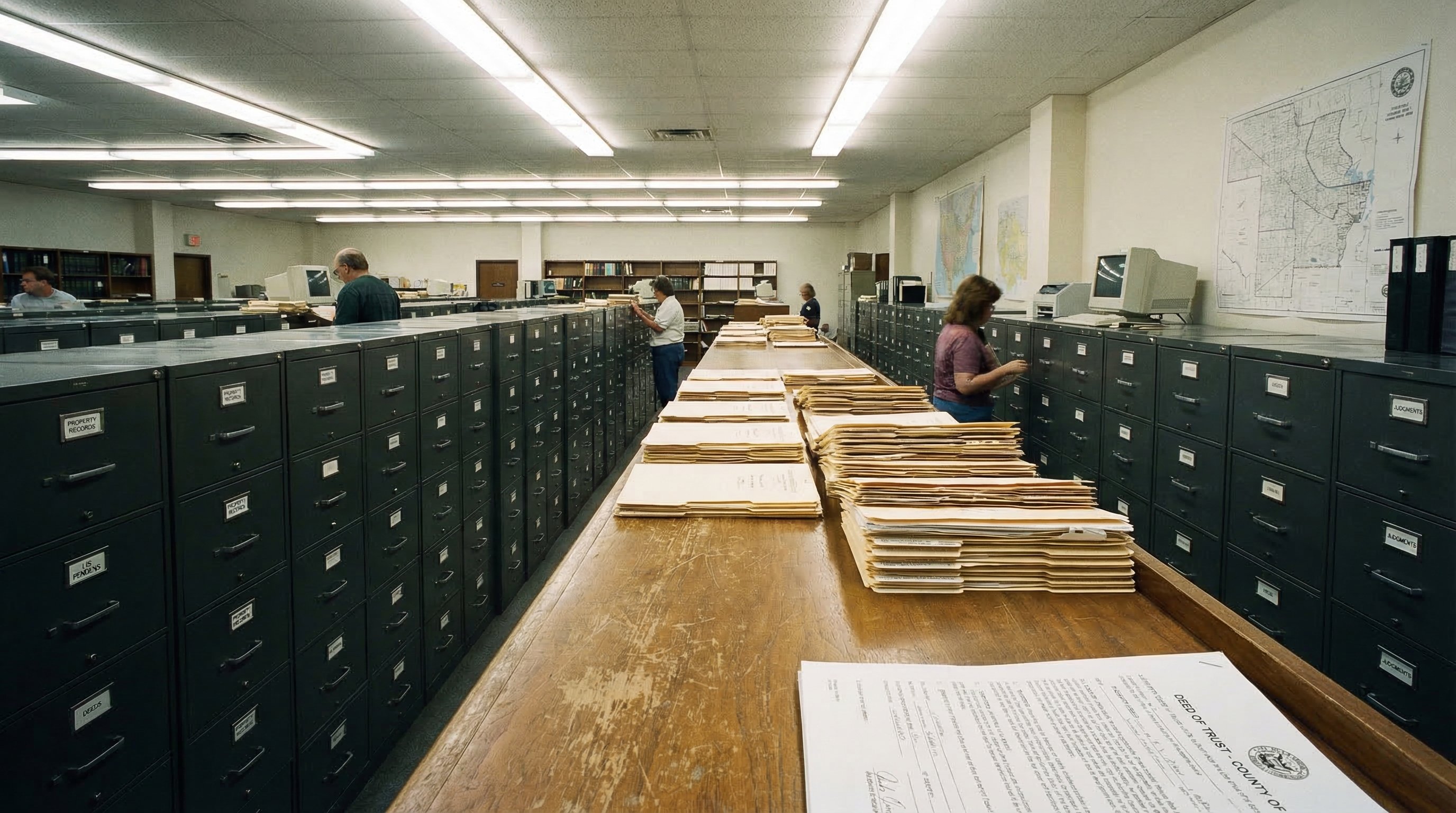
DistressIQ monitors 3,200+ counties nationwide — including all 62 New York counties — for 31 distinct distress signals. When a property shows a divorce-related legal filing AND tax delinquency AND extended vacancy, the platform surfaces it as a stacked signal lead. Those three-layer leads close at dramatically higher rates than any single signal in isolation.
This matters in New York because the state's high carrying costs — property taxes averaging $5,884/year statewide and among the highest in the nation — mean divorcing couples who are no longer maintaining a property fall behind fast. Tax delinquency often follows divorce by 6-12 months.
Free Weekly Alerts
See What's Distressed in Your Market
Get free weekly alerts — new distressed properties, motivation scores, and hot neighborhoods in your area. Addresses and contact info available inside DistressIQ.
Free forever · No credit card · Unsubscribe anytime
New York Markets to Focus On
New York's investor market is extraordinarily diverse across geography. Different areas generate different types of divorce leads:
New York City (Five Boroughs)
The market is split between co-ops (which require board approval for any transfer — a wildcard in divorce proceedings) and condos/houses. In Brooklyn, Queens, and the Bronx, you'll find more single-family and multi-family properties accessible to direct investors. Manhattan co-ops are complex due to the board approval requirement even in court-ordered sales.
Target neighborhoods for highest motivated seller probability: Jamaica (Queens), East Flatbush (Brooklyn), Co-op City (Bronx), St. George (Staten Island)
Long Island (Nassau and Suffolk Counties)
The classic suburban investor market. Average home prices in the $400K-$700K range with significant motivated seller potential in Hempstead, Brentwood, and Central Islip. High property taxes (Nassau ranks among the highest in the country) accelerate financial pressure during divorce.
Hudson Valley (Westchester, Rockland, Orange, Ulster, Dutchess)
Bedroom communities for NYC commuters. Median home prices $350K-$600K. Divorce rates in Westchester are consistent with statewide averages, and the suburban nature of the market (single-family homes, clear title) makes these among the cleanest transactions for investors.
Western New York (Erie, Niagara, Monroe Counties)
Buffalo and Rochester markets. Lower price points ($150K-$300K range) with higher distress rates. Erie County property taxes are significant, and motivated sellers in these markets often accept below-market offers for speed. These markets are particularly effective for investors working with smaller capital.
Capital Region and Central NY (Albany, Onondaga, Oneida)
Mid-sized city markets with state government employment stabilizing the economy but consistent divorce rates. Albany, Syracuse, and Utica all have investor-accessible price points and established wholesale networks.
What Makes a New York Divorce Lead High Quality
Not every divorce case generates a motivated seller. Before reaching out or making offers, evaluate these factors:
High-quality indicators:
- Contested divorce running 12+ months (attorneys' fees have accumulated significantly)
- Property has accumulated tax arrears in the past 12-24 months
- One party has already moved out (vacancy signal stacking)
- Multiple addresses on record for at least one spouse (relocation confirmed)
- Lis pendens filed AND no transfer activity for 6+ months afterward
- Property in a neighborhood with declining owner-occupancy rates
Lower-quality indicators:
- Uncontested divorce filed recently (may resolve quickly with refinance, not sale)
- High-equity, high-income household (they can afford to wait for full market value)
- Co-op property in NYC (board approval adds 60-90 days and risk of rejection)
- Estate/trust ownership rather than direct individual ownership
The stacking principle: The more distress signals layered on a single property, the more motivated the seller. A divorcing homeowner who's also 18 months behind on property taxes and whose neighbors report the property looks vacant is a qualitatively different conversation than a recently-filed divorce in a well-maintained home.
Approaching Divorcing Sellers with Respect
New York divorce proceedings are a matter of public record, but the circumstances behind those records involve real people in genuinely difficult situations.
The effective investor approach isn't "I saw you're getting divorced" — that's invasive and counterproductive. The framing that works:
- Lead with problem-solving: "I help homeowners who need a quick, clean sale get out from under a property without the hassle of listing fees, showings, and carrying costs while they wait for a buyer."
- Acknowledge the timeline pressure: "I know that sometimes people need certainty more than they need to maximize the last dollar. I can close in 10-21 days, cash, no contingencies."
- Respect the attorney relationship: In contested divorces, the attorney often controls the sale process. Approach professionally, provide references, and understand you may be presenting to the attorney first, not the client.
- Never reference the divorce directly unless they bring it up. You found the lead through public records, but the conversation is about their property needs, not their personal situation.

Building a Consistent New York Divorce Pipeline
One-off courthouse visits don't build a business. Here's the system:
Weekly tasks:
- Pull new lis pendens filings from ACRIS (NYC) and county clerk portals (upstate)
- Filter for residential properties in your target counties
- Cross-reference against property tax records for delinquency status
- Add qualified leads to your CRM with follow-up sequences
Monthly tasks:
- Check divorce case status for leads already in pipeline (cases move slowly — persistence matters)
- Review for any new court orders or lis pendens modifications
- Remove closed/sold properties that appear in ACRIS transfer records
Automation: The biggest efficiency gain comes from using a platform that handles the monitoring layer automatically. DistressIQ's New York coverage spans all 62 counties — from the Bronx to St. Lawrence County — and updates multiple times daily from county sources. When a property in your target area accumulates a divorce-related signal alongside other distress indicators, you get the alert rather than having to find it manually.
At $129/month for Starter access (or $89/month as a founding member), the platform pays for itself the first time it surfaces a lead you would have otherwise missed.
Key Takeaways
- New York processes ~57,000 divorces annually, many involving forced property sales under equitable distribution law
- New York Supreme Court indexes, ACRIS lis pendens records, and county clerk filings are the primary public data sources
- High property taxes and complex legal proceedings accelerate motivated seller behavior in New York
- The best leads stack divorce signals with tax delinquency, vacancy, and extended time-on-market
- NYC co-ops introduce board approval complexity — single-family and condo properties in the outer boroughs and upstate are more accessible for investors
- Approach divorcing sellers as problem-solvers, not opportunists — professional framing opens doors that aggressive tactics close
Frequently Asked Questions
Q: Are divorce proceedings public record in New York?
Yes. New York divorce cases are filed in Supreme Court and indexed in public court records. The case index is publicly searchable through SCROLL (New York State Courts) and NYSCEF for e-filed cases. The full case file may be sealed in certain circumstances (typically involving minor children or domestic violence), but the index entry and property-related lis pendens filings remain public. Court records and property records are maintained separately — the lis pendens filed against the property is searchable through county clerk systems like ACRIS.
Q: What's the difference between equitable distribution and community property in New York?
New York is an equitable distribution state, meaning marital assets are divided fairly but not necessarily equally. Courts consider the length of the marriage, each spouse's contributions, economic circumstances, and future earning capacity. Community property states (CA, AZ, TX, etc.) default to 50/50 splits. Equitable distribution tends to produce more negotiation and longer timelines — which increases the probability that a quick cash sale becomes an attractive option for both parties.
Q: How long do New York divorces take when there's real property involved?
Uncontested divorces with no property disputes can finalize in 3-6 months. Contested divorces involving real property commonly run 12-36 months, especially in NYC where court backlogs are significant. Estate assets, business ownership, retirement accounts, and high-value properties all add complexity. The longer the proceeding runs, the more motivated sellers become — legal fees average $15,000-$30,000+ in contested New York divorces.
Q: Can investors buy a property that's subject to a lis pendens in New York?
Yes, but title insurance becomes complicated. A lis pendens doesn't prevent a sale, but any buyer takes the property subject to the outcome of the litigation. In practice, investors typically wait until the divorce is finalized and the court order authorizes the sale — at which point the seller's attorney handles clearing the lis pendens as part of the closing. The window for maximum negotiating leverage is the period when the parties have agreed to sell but haven't listed yet.
Q: How do New York property taxes affect divorce leads?
New York has some of the highest property taxes in the country — Nassau County averages over $10,000/year, Westchester averages $14,000/year, and even upstate counties average $4,000-$6,000/year. When couples separate, one party often stays in the home but struggles to cover the full carrying cost on a single income. Tax arrears accumulate within 6-18 months, creating the stacked distress signal (divorce + tax delinquency) that generates the most motivated sellers.
Q: What's the best way to find divorce leads in New York City specifically?
ACRIS (Automated City Register Information System) at acris.nyc.gov is the most powerful free tool for NYC investors. It indexes every document recorded against every property in the five boroughs — including lis pendens from divorce proceedings, foreclosure filings, and transfers. Filter for lis pendens filed in the past 6-24 months with no subsequent transfer activity. Pair that with NYC's property tax records (available at nycpaymentplan.nyc.gov) to identify properties with accumulated arrears.
Q: Does DistressIQ cover all 62 New York counties?
Yes. DistressIQ monitors assessor-verified data from all 62 New York counties, updated multiple times daily. The platform stacks 31 signal types — including divorce-related legal filings, tax delinquency, vacancy indicators, and lis pendens activity — so you see which properties have multiple distress layers simultaneously. Coverage includes both NYC's five boroughs and all upstate counties from Long Island to the North Country.
Start Finding New York Divorce Leads Today
New York's combination of high carrying costs, equitable distribution law, and accessible public records makes it one of the more investor-friendly states for divorce lead sourcing — once you understand the system. The data is public. The signals are trackable. The window between filing and listing is real.
The question is whether you're monitoring it systematically or leaving those deals to investors who are.
DistressIQ monitors all 62 New York counties for divorce signals, stacking them automatically against tax delinquency, vacancy, and 28 other distress indicators. Founding member pricing: Starter $89/mo, Pro $174/mo, Elite $349/mo — locked for life while spots remain.
External sources: New York State Divorce Statistics (NYC Health), ACRIS Property Records (NYC Finance), New York Domestic Relations Law
The data behind this article
DistressIQ Monitors These Signals in Real Time
Pre-Foreclosures
NOD + NTS filings
Tax Delinquency
County treasurer records
Code Violations
Municipal inspection filings
Probate Filings
Superior Court records
Every lead is scored 0–100 for seller motivation based on signal type, duration, severity, and stacking. Nationwide coverage — every US county, updated daily.
Ready to find deals in your market?
See Live Distress Signals in Your County
Stop calling dead leads. Every lead in DistressIQ is scored 0–100 for seller motivation, with verified contact info included. Browse the free tier to see what's active in your market right now.
Browse Free Leads — No Credit Card