Pre-Foreclosure Leads Kentucky: What Smart Investors Miss About the Bluegrass State
Pre-Foreclosure Leads Kentucky: What Smart Investors Miss About the Bluegrass State
TL;DR: Kentucky requires lenders to file foreclosure complaints in circuit court before proceeding, creating a predictable 5-12 month pre-foreclosure window where homeowners actively seek alternatives to auction. The state's $5,000 homestead exemption and two-thirds appraisal floor shape which properties offer the best investor entry points. Jefferson County (Louisville) and Fayette County (Lexington) account for the majority of filings. DistressIQ tracks pre-foreclosure filings across all 120 Kentucky counties, updated daily from court records.

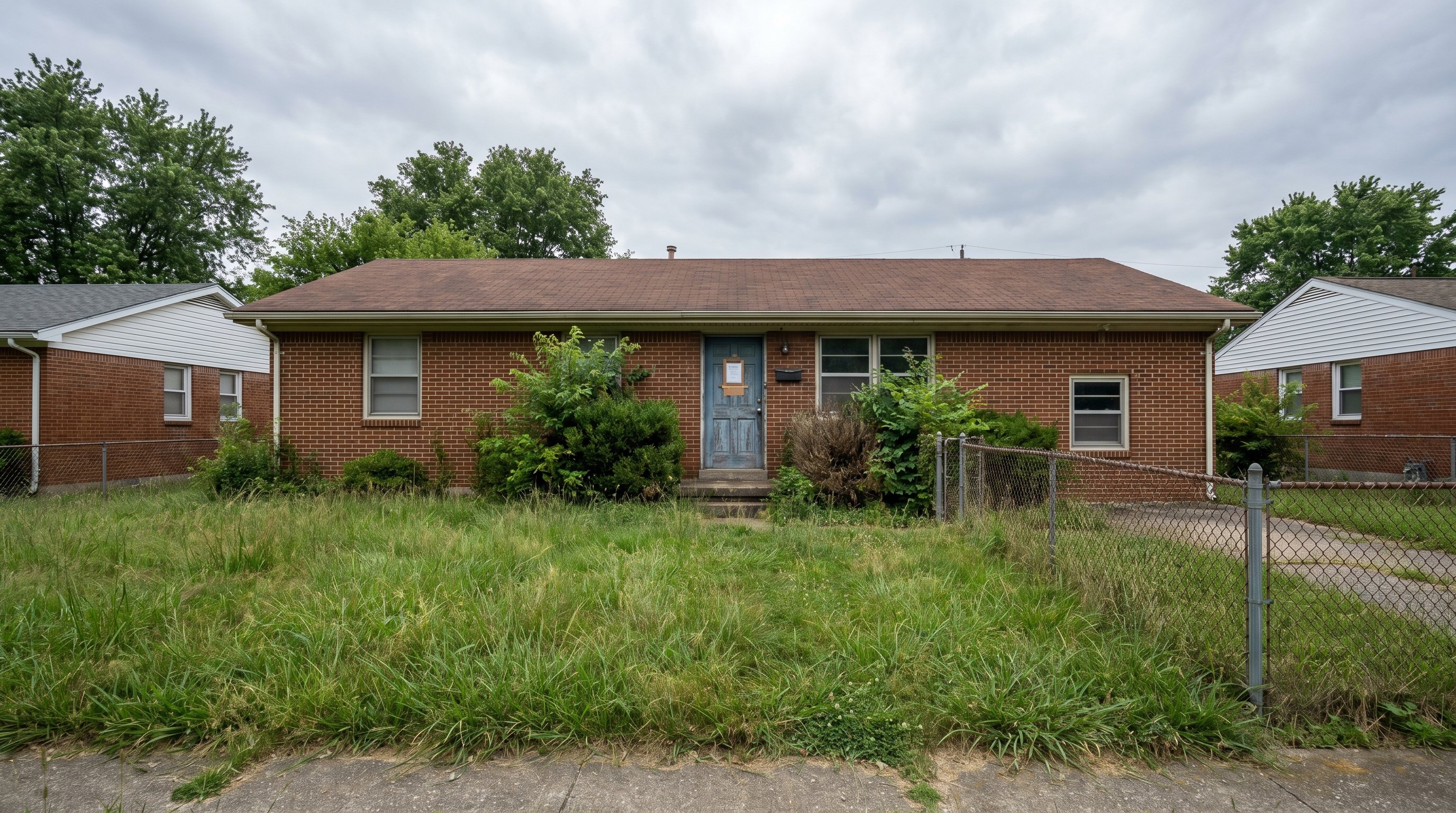
Most real estate investors skip Kentucky entirely. It's not on the coast. It doesn't dominate foreclosure headlines the way Florida or California do. But that gap is exactly where the opportunity hides. Kentucky's judicial foreclosure process means every single pre-foreclosure in the state passes through circuit court before anything else happens. That court filing is a public record. And most investors in this market are not looking for it.
The ones who are looking? They find deals in Jefferson County, Fayette County, and the quieter counties in between that retail investors and even experienced wholesalers walk right past.
What Pre-Foreclosure Actually Means in Kentucky
Pre-foreclosure starts when a homeowner falls behind on mortgage payments and the lender initiates the legal process to recover the property. In Kentucky, that process is different from the majority of states because lenders cannot skip the courthouse.
Kentucky is a judicial foreclosure state. The lender must file a complaint in the county circuit court, serve the homeowner with a summons, and obtain a court judgment before the property can be sold at auction. This requirement applies to every mortgage in the state. There is no non-judicial alternative.(Kentucky Homeownership Protection Center)
What this means for investors is straightforward: the pre-foreclosure window in Kentucky is a documented, court-tracked event. When a lender files a foreclosure complaint, that filing becomes part of the public court record. Investors who know where to look can find it before the property hits any other list.
The Kentucky Judicial Foreclosure Timeline
Kentucky's pre-foreclosure period runs approximately 5 to 12 months from the homeowner's first missed payment to the actual auction date. Federal law requires lenders to wait at least 120 days after a payment is delinquent before filing a foreclosure complaint, giving homeowners a four-month buffer before the legal process even begins.(American Default Management)
Once the complaint is filed, the clock moves through these stages:
Default notice (day 30+): The lender sends a written notice of default after the loan is typically 30 days past due. Most homeowners have already received calls and loss mitigation outreach by this point.
Foreclosure complaint filed (months 2-3): The lender files the complaint in the county circuit court. This is the first public record of the foreclosure. An "action pending" notice is simultaneously filed against the property deed, meaning anyone searching county records will see the encumbrance.
Service and response window (20 days): The homeowner is served a summons by the county sheriff or through a warning order attorney. Kentucky law gives homeowners 20 days to respond to the complaint. This window is critical. Homeowners who respond present an opportunity for negotiated short sales, deed-in-lieu arrangements, or direct purchase offers before the case moves further.
Court judgment (months 4-8): If the homeowner does not reach an agreement with the lender, the court enters a judgment of foreclosure. The case is referred to the Master Commissioner of the court, who takes over responsibility for conducting the sale.
Appraisal and notice of sale: Before the auction date is set, the property must be appraised. Kentucky law requires that the sale price meet at least two-thirds of the appraised value. If it does not, the homeowner retains a 12-month redemption period during which they can reclaim the property by paying the sale price plus interest.
Commissioner's sale (months 5-12): The Master Commissioner publishes the sale notice in a local newspaper for two to three weeks, posts it at the property, and conducts the auction at the county courthouse. Third-party bidders typically must pay a deposit immediately at auction and the balance within 30 days.
After the sale, there is a 10-day exception period during which any party can object to the sale on procedural grounds or price adequacy. The court then confirms the sale and the Master Commissioner delivers the deed.
Why the $5,000 Homestead Exemption Changes the Math
Kentucky has one of the lowest homestead exemptions in the country at just $5,000. This is not a detail. It directly affects the caliber of leads available to investors and the motivation level of homeowners in the pre-foreclosure window.
A homestead exemption protects a portion of a homeowner's equity from creditors. In states with high exemptions, homeowners may have more equity cushion and therefore less urgency to sell before foreclosure. In Kentucky, that cushion is thin. A homeowner with a $200,000 property and a $170,000 mortgage has $30,000 in equity, but only $5,000 of that is protected. The remaining $25,000 is exposed to the lender's deficiency claim if the property sells at auction below the loan balance.
This creates a specific type of motivated seller: the Kentucky homeowner who understands their equity exposure and needs to sell before the auction clears that equity entirely. These homeowners are not just behind on payments. They are actively running the math on what the auction will cost them versus a pre-foreclosure sale, and the numbers frequently favor a negotiated exit.
For investors, this is the window. A homeowner with genuine equity and genuine time pressure is one of the most motivated seller profiles in real estate investing.

Free Weekly Alerts
See What's Distressed in Your Market
Get free weekly alerts — new distressed properties, motivation scores, and hot neighborhoods in your area. Addresses and contact info available inside DistressIQ.
Free forever · No credit card · Unsubscribe anytime
Where to Find Pre-Foreclosure Leads in Kentucky

Kentucky has 120 counties, but pre-foreclosure activity concentrates heavily in a handful of population centers.
Jefferson County (Louisville): The state's largest county by population and pre-foreclosure volume. Louisville's metro housing market has seen significant distressed inventory activity, particularly in the southwestern neighborhoods near the Ohio River and the older brick homes in the Portland and Chickasaw areas. Jefferson County uses the Master Commissioner process for all foreclosure sales.
Fayette County (Lexington): The second-largest county and home to one of the most active real estate markets in the state. Fayette County's pre-foreclosure window attracts both local investors and out-of-state buyers looking for Bluegrass Country properties at below-market prices.
Kenton, Hardin, and Warren counties: These mid-sized counties (Cincinnati metro overlap for Kenton, Fort Knox proximity for Hardin, Bowling Green for Warren) generate consistent pre-foreclosure volume and are frequently overlooked by investors focused on Jefferson and Fayette.
Pre-foreclosure leads in Kentucky are found through the circuit court clerk's office in each county. Filings are public record. The challenge is that manually checking 120 county court systems is not practical for any working investor. The filings are not centralized. They are not indexed nationally. And by the time most investors find a lead through free public resources, it has already been worked by whoever found it first through direct court access.
The Signals That Separate Pre-Foreclosure Leads from Noise
Not every pre-foreclosure filing represents a viable investment opportunity. Kentucky homeowners enter pre-foreclosure for different reasons, and the signal behind the filing matters enormously for determining who is actually reachable and who is too far gone.
Missed payments with preserved equity: These are the strongest leads. The homeowner is behind but still has meaningful equity in the property. They need to sell, not auction. They are reachable because they have a financial incentive to negotiate. This is the profile where a direct purchase offer at 70-80% of after-repair value solves the homeowner's problem cleanly and gives the investor a functional property below market.
Loan modification failures: Federal loss mitigation requirements mean lenders must evaluate homeowners for loan modifications before moving to foreclosure. When a modification is denied or fails after a trial period, the homeowner is often in a more advanced state of distress and more motivated to sell quickly. These leads move faster.
Absentee owner pre-foreclosures: Properties where the borrower does not occupy the property as a primary residence represent a different lead profile. These homeowners are less emotionally attached to the property and less likely to attempt redemption. They are often more responsive to direct purchase offers and less likely to engage in lengthy negotiations.
Properties with code violations or deferred maintenance: If a pre-foreclosure property also has city code violations, the homeowner's carrying costs increase. Utilities, municipal fines, and repair obligations stack on top of the missed mortgage payments. These properties are often underpriced relative to their actual condition, creating a deeper discount for investors willing to factor rehabilitation costs into their offer.
How Kentucky's Appraisal Floor Affects Investor Strategy
Kentucky requires that auction sale prices meet at least two-thirds of the appraised value. When a property sells below that threshold at auction, the former homeowner retains the right to redeem the property within 12 months by paying the auction price plus interest. For investors, this means auction purchases below two-thirds of value carry redemption risk. Pre-foreclosure purchases avoid this problem entirely. When an investor buys directly from the homeowner before auction, there is no redemption right. The transaction closes, the deed transfers, and the investor owns the property outright.
The DistressIQ Advantage in Kentucky's Judicial Market
Kentucky's court-centered foreclosure process works in an investor's favor if they have direct access to the filings. Most investors in Kentucky are not monitoring circuit court records. They are working MLS listings, driving for dollars, or buying third-party lead lists that aggregate national data and arrive days or weeks after the filing. By the time a pre-foreclosure appears on a standard lead platform, it has been available through the circuit court clerk for weeks.
DistressIQ pulls pre-foreclosure data directly from Kentucky's circuit court records across all 120 counties. The platform updates daily and flags properties at the filing stage before they move to auction, then stacks additional distress signals against each property to help investors prioritize which leads to work first.
Frequently Asked Questions
How long does pre-foreclosure last in Kentucky?
Kentucky's pre-foreclosure period typically runs 5 to 12 months from the homeowner's first missed payment to the commissioner's auction sale. Federal law requires lenders to wait at least 120 days before filing a foreclosure complaint. After filing, the case moves through court service, response windows, and judgment stages before the Master Commissioner schedules a sale.
Can you buy a property during pre-foreclosure in Kentucky?
Yes. Investors can purchase directly from homeowners at any point during the pre-foreclosure window, including before the court judgment is entered. A direct purchase before auction avoids the redemption risk associated with auction purchases and eliminates the deficiency judgment exposure that affects some Kentucky homeowners after foreclosure sales.
What is a Master Commissioner in Kentucky foreclosures?
The Master Commissioner is a court-appointed official who handles the mechanics of a foreclosure sale after the circuit court enters a judgment of foreclosure. The commissioner orders the appraisal, publishes the notice of sale, conducts the auction at the county courthouse, and files the report of sale with the court. All foreclosure sales in Kentucky judicial foreclosures are conducted by the Master Commissioner, not the sheriff.
Does Kentucky allow deficiency judgments?
Kentucky allows deficiency judgments in foreclosures, but with restrictions. The lender can pursue a deficiency claim against the borrower for the difference between the loan balance and the sale price, but only if the borrower was personally served with the lawsuit or failed to answer the complaint. The low $5,000 homestead exemption means homeowners with significant equity face real exposure to deficiency claims if the property sells below the loan balance at auction.
What counties in Kentucky have the most pre-foreclosure activity?
Jefferson County (Louisville) and Fayette County (Lexington) account for the majority of pre-foreclosure filings in Kentucky. Kenton, Hardin, and Warren counties also generate consistent volume. Pre-foreclosure activity in Kentucky correlates strongly with population density, rental vacancy rates, and local employment conditions, particularly in counties near major employers and interstate corridors.

Finding pre-foreclosure leads in Kentucky before the auction requires understanding how the judicial process works and where the data lives. The circuit court filings are public, but most investors are not watching them. That gap is the opportunity.
DistressIQ tracks pre-foreclosure filings across all 120 Kentucky counties, updated daily from court records. Properties are scored by distress signal strength and ranked by motivation, so investors spend time on calls, not on research. Browse pre-foreclosure leads in Jefferson County, Fayette County, and every other Kentucky county at DistressIQ.
The data behind this article
DistressIQ Monitors These Signals in Real Time
Pre-Foreclosures
NOD + NTS filings
Tax Delinquency
County treasurer records
Code Violations
Municipal inspection filings
Probate Filings
Superior Court records
Every lead is scored 0–100 for seller motivation based on signal type, duration, severity, and stacking. Nationwide coverage — every US county, updated daily.
Ready to find deals in your market?
See Live Distress Signals in Kentucky
Stop calling dead leads. Every lead in DistressIQ is scored 0–100 for seller motivation, with verified contact info included. Browse the free tier to see what's active in your market right now.
Browse Free Leads — No Credit Card