Pre-Foreclosure Leads Tennessee: What No Upset Bid Period Means for Investors
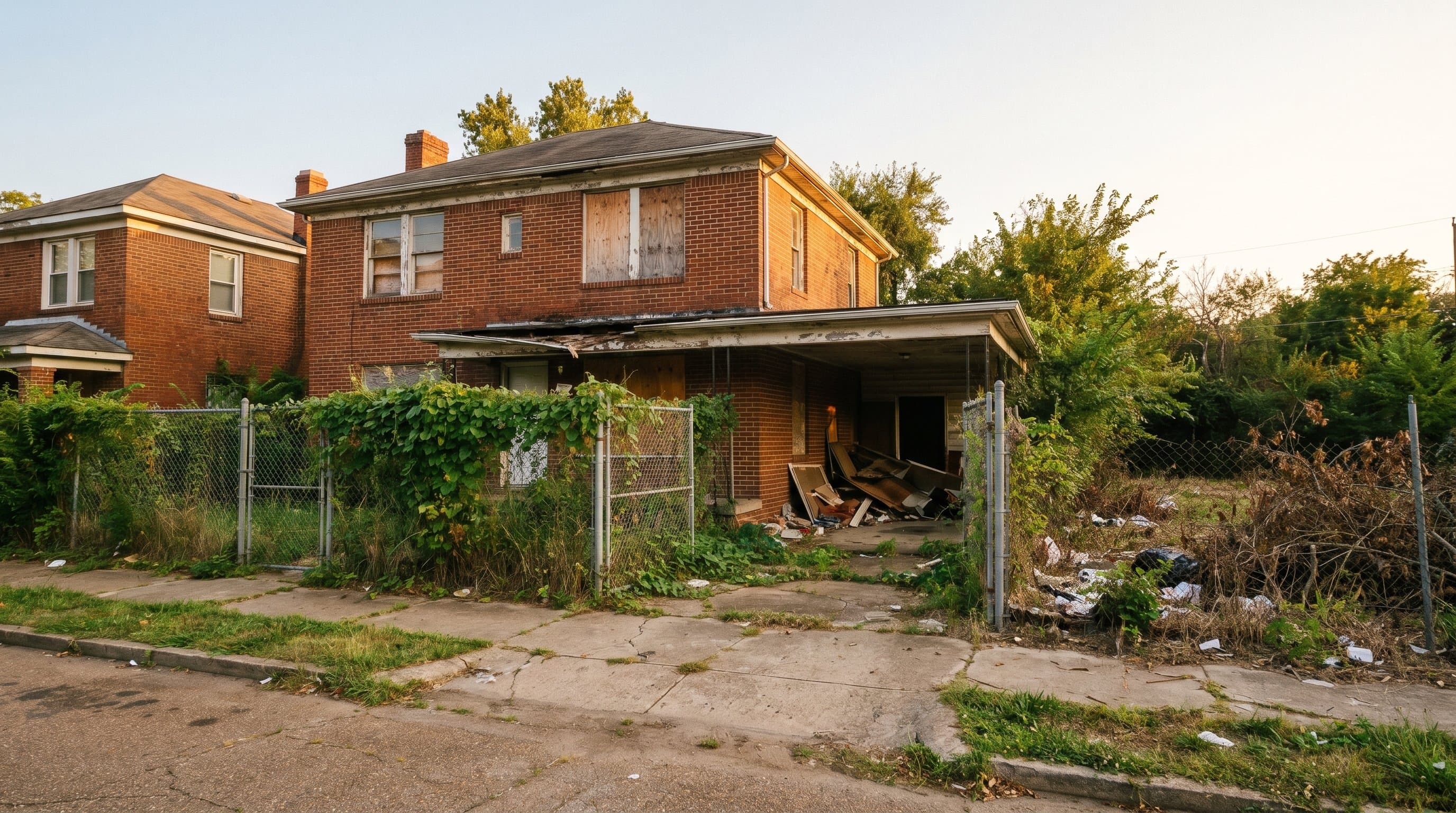
Pre-Foreclosure Leads Tennessee: What No Upset Bid Period Means for Investors
TL;DR: Tennessee's non-judicial foreclosure process runs 60 to 90 days from first missed payment to auction. The most important procedural detail for investors is the absence of an upset bid period: once the winning bid is accepted at a Tennessee foreclosure auction, the sale is final, no exceptions. That finality makes the pre-foreclosure window the only place to negotiate. The state has a two-year redemption right and allows deficiency judgments, which raises urgency for borrowers trying to avoid a public sale. Shelby County (Memphis) has the highest foreclosure concentration in the state, followed by Davidson County (Nashville) and Knox County (Knoxville). Investors working pre-foreclosure leads Tennessee should target those three counties first, with county-direct data as the only reliable way to reach sellers before the auction date locks in the final price.
There is a procedural detail buried in Tennessee foreclosure law that most investors learn the hard way. Unlike states where a winning bid at auction can be topped by a subsequent higher offer over the following days or weeks, Tennessee has no upset bid period. The moment the auctioneer accepts a bid and the hammer falls, that sale is final. The winning bidder's price is the price, and the deal is done.
That fact is not a footnote. It is the entire ballgame for how investors need to approach pre-foreclosure leads in Tennessee. The auction is not a starting point for negotiation. It is the end of the negotiation window. Everything an investor does in the Tennessee distressed property market either happens before the sale date or it does not happen at all.
Understanding this means understanding why the pre-foreclosure window in Tennessee is narrower in practice than it appears, even though the process runs a relatively fast 60 to 90 days from the first missed payment.
How Foreclosure Actually Works in Tennessee
Tennessee is a non-judicial foreclosure state, meaning lenders can foreclose without going through the court system, provided the mortgage or deed of trust contains a power of sale clause. The vast majority of Tennessee mortgages do. The lender initiates the process by filing a notice of default and then publishing the notice of sale in a local newspaper for three consecutive weeks, with the first publication appearing at least 20 days before the auction date.
Under federal servicing rules, the lender cannot officially begin the foreclosure process until the borrower is at least 120 days past due on mortgage payments. That 120-day window is the critical pre-foreclosure period, and it represents the only window where a direct investor-to-seller transaction is possible without competing at the courthouse steps.
Once the 120-day threshold is crossed, the notice of sale is published and the auction date is set. Tennessee law requires that the sale be held between 10 a.m. and 4 p.m. at the county courthouse. The county sheriff can set a minimum acceptable price, but that floor cannot be set below 50 percent of the property's fair market value.
Here is what the full timeline looks like from the homeowner's perspective:
Missed payment on day one. Late charges assessed between days 16 and 30. Servicer contacts the borrower and evaluates loss mitigation options between days 45 and 60. A demand or breach letter is sent between days 90 and 105. The loan is referred to foreclosure counsel between days 120 and 150. The property is sold at auction between days 150 and 415. The wide range on the back end reflects the fact that Tennessee's non-judicial process can move quickly once the lender is committed, but servicers have some flexibility in how aggressively they push the timeline.
The Two Details That Separate Tennessee From Every Other State
Most state-by-state foreclosure comparisons focus on timelines and redemption rights. Those matter, but two specific Tennessee details deserve their own explanation because they directly affect how investors should structure their outreach.
First, the absence of an upset bid period. In states like Georgia, North Carolina, or Illinois, a winning bid at auction is not necessarily the final price. Those states have statutory periods ranging from several days to several weeks during which other bidders or the lender itself can submit higher offers, and the sale does not close until that period expires. Tennessee has no such protection. The winning bid at the auction is the closing price. There is no second chance, no grace period for a higher offer to emerge. This makes pre-auction negotiation not just preferable but essential for any investor who wants to control the price rather than accept whatever the competitive auction environment produces.
Second, the right of redemption. Tennessee allows borrowers to redeem the property within two years after the foreclosure sale, unless that right has been explicitly waived in the deed of trust. Many Tennessee deeds of trust do waive the right of redemption, but not all. For investors who acquire properties at auction where the redemption right was not waived, the two-year redemption period means they take title subject to the former owner's buyback option, which complicates financing and holding strategies. Investors acquiring pre-foreclosure properties directly from the seller sidestep this complication entirely because the transaction closes before the auction and is not subject to redemption rights.
County-Level Concentrations: Where Pre-Foreclosure Leads Tennessee Cluster
Tennessee has 95 counties, but pre-foreclosure activity is not distributed evenly across them. Three counties generate the majority of distressed property volume, and understanding the dynamics in each is essential for building an efficient sourcing strategy.
Shelby County, which includes Memphis, has the highest foreclosure concentration in the state. The Memphis metro area has historically been one of the highest-foreclosure-volume markets in the entire South, driven by a combination of economic cycles, affordable housing stock that cycles quickly into distress, and a high density of investment properties. Foreclosure.com and ForeclosureDataHub both list Shelby County at approximately one in 1,800 homes in active foreclosure, well above the state average of one in 2,800. The median foreclosure list price in Tennessee is around $175,000, and Memphis properties skew lower, frequently appearing in the $70,000 to $130,000 range. This price point makes buy-and-hold rental strategies highly workable, with monthly rents in strong Memphis neighborhoods supporting solid cash-on-cash returns even after accounting for renovation costs.
Davidson County, which includes Nashville, has a different profile. The Nashville metro has seen rapid property appreciation over the past decade, and distressed properties in Davidson County tend to carry more equity and higher after-repair values than comparable properties in Memphis. The trade-off is price: entry points are higher, and the competition among investors for pre-foreclosure leads in the Nashville market is more active. Davidson County has approximately one in 2,200 homes in active foreclosure, and the average estimated market value of properties in pre-foreclosure runs significantly above the state median.
Knox County, covering the Knoxville metro, sits between Memphis and Nashville on both price and volume. The presence of the University of Tennessee creates steady rental demand, and the median entry price for distressed properties in Knox County is lower than Davidson County but higher than Shelby County. Knox County's foreclosure rate sits at approximately one in 2,500 homes, and the combination of university-driven rental demand and more moderate acquisition prices makes it an attractive market for investors focused on cash flow.
Rutherford County (Murfreesboro), Williamson County (Franklin suburbs), and Hamilton County (Chattanooga) round out the secondary tier of Tennessee foreclosure markets. These counties are growing rapidly and have seen increased investor activity as Nashville-priced buyers look outward for affordable inventory.
Free Weekly Alerts
See What's Distressed in Your Market
Get free weekly alerts — new distressed properties, motivation scores, and hot neighborhoods in your area. Addresses and contact info available inside DistressIQ.
Free forever · No credit card · Unsubscribe anytime
Why the Right to Cure Creates a Specific Outreach Window
Tennessee has a statutory right to cure that deserves special attention from investors working pre-foreclosure leads. Under Tennessee law, a borrower may cure a default and reinstate the loan at any time up to three business days before the foreclosure sale. However, this right can only be exercised once per 12-month period.
This creates a precise timing constraint for investor outreach. A homeowner who has already used their annual right to cure cannot stop the sale by simply paying the past-due amount in the final days before auction. They would need to bring the loan current through a full reinstatement or work out an alternative arrangement with the lender. For investors, this means that the three-business-day cutoff is a hard wall: outreach that arrives after that point cannot rely on the cure mechanism as a negotiating lever, because the borrower has no legal ability to simply pay their way out of the process at that stage.
For investors structuring deals with pre-foreclosure sellers, the most useful framing is not "pay what you owe" but "here is a path that eliminates the auction, protects your credit, and ends the process before it becomes public." The deficiency judgment consideration also factors in here. Tennessee allows deficiency judgments, which means a lender can pursue a borrower for the difference between what the property sold for at auction and the total amount owed on the mortgage. A homeowner who is facing a significant deficiency after a foreclosure sale has even more incentive to negotiate a pre-foreclosure resolution, because a direct sale for fair market value can eliminate that ongoing liability.
Tennessee's Tax Environment Adds Investor Appeal
Tennessee has no state income tax, which has made it a destination for investors and relocators from high-tax states like California, New York, and Illinois. This has driven demand for rental properties across the state, particularly in the Nashville and Memphis metros. For investors sourcing pre-foreclosure leads Tennessee, the absence of state income tax means that rental income is more fully retained, which improves the math on cash-flow-focused strategies.
The Shelby County Land Bank, which handles tax-delinquent properties in the Memphis area, runs periodic flash sales on qualifying properties. These sales are a distinct Tennessee mechanism: the Land Bank offers properties at reduced cost to buyers who commit to bringing them back into productive use within a defined timeframe. Properties sold through the Land Bank bypass the standard foreclosure auction process and involve a different set of eligibility criteria. For investors working pre-foreclosure leads in Tennessee, the Land Bank channel is worth monitoring as a parallel sourcing mechanism, particularly in neighborhoods where tax delinquency and mortgage distress overlap.
How to Work Pre-Foreclosure Leads Tennessee Efficiently
The operational principle for Tennessee pre-foreclosure is the same as every other state: get to the seller before the auction date, before the robocalls arrive, and before the county-direct data gets packaged and redistributed through bulk lead services. The difference in Tennessee is that the auction is final. There is no post-sale renegotiation, no upset bid period where a better offer can displace your position. The price you negotiate before the sale is the price you get.
County recorder data in Tennessee is public and accessible, but it is not centralized. Each county maintains its own records, and the update cadence varies. Investors building Tennessee pre-foreclosure pipelines need county-direct access that pulls from Shelby, Davidson, and Knox counties as a baseline, with Rutherford, Williamson, and Hamilton as secondary targets.
The signal stacking approach works particularly well in Tennessee because the overlap between code violations, tax delinquency, and mortgage distress is consistent across the major metros. In Memphis, the combination of code enforcement records and mortgage delinquency data frequently identifies properties where the owner has died or abandoned the property, creating an heir property situation that produces some of the most motivated sellers in the market.
The DistressIQ Approach to Pre-Foreclosure Leads Tennessee
DistressIQ monitors public records across Tennessee's 95 counties, with particular focus on Shelby County, Davidson County, and Knox County as the three highest-volume pre-foreclosure markets in the state. Pre-foreclosure signals are updated daily from county recorder sources, giving investors access to the data before the multi-week publication delay that affects most bulk lead services.
Every pre-foreclosure lead on the platform includes the property's distress history, assessor-verified valuation data, and a motivation score that reflects signal recency and severity. Investors searching pre-foreclosure leads Tennessee can filter by county, signal type, estimated equity position, and property characteristics before initiating outreach.
The Tennessee market rewards speed and specificity. Knowing the county, the signal type, and the approximate timeline to auction is enough to have a factual conversation with a seller that cuts through the noise of generic investor mailers. The investor who shows up with actual data about where the property sits in the process, what the auction will mean for the seller's deficiency exposure, and what a clean resolution looks like has a structural advantage in every conversation.
See pre-foreclosure leads currently active in Tennessee at distressiq.ai.


Frequently Asked Questions
How long does the foreclosure process take in Tennessee?
The non-judicial foreclosure process in Tennessee typically runs 60 to 90 days from the first missed payment to the auction date. Federal law requires servicers to wait at least 120 days past due before officially starting the foreclosure, so the full pre-foreclosure window is at least four months before the auction is scheduled.
What does no upset bid period mean for Tennessee investors?
Tennessee has no statutory upset bid period after a foreclosure auction. Once the auctioneer accepts a bid and the sale is completed, that price is final. There is no window during which a higher offer can displace the winning bid. This makes pre-foreclosure engagement essential for investors who want to control acquisition price rather than compete in the auction environment.
Does Tennessee allow deficiency judgments after foreclosure?
Yes. Tennessee allows lenders to pursue deficiency judgments against borrowers after a foreclosure sale if the sale price does not cover the full outstanding mortgage balance. This increases urgency for pre-foreclosure sellers, particularly those with loans significantly larger than their property's current market value.
What is the right of redemption in Tennessee?
Tennessee law allows a foreclosed borrower to redeem the property within two years after the foreclosure sale, unless that right has been waived in the deed of trust. Investors who purchase at auction in Tennessee should verify whether the redemption right was waived before planning their exit strategy, as a two-year redemption period complicates financing and holding timelines.
Which Tennessee counties have the most pre-foreclosure activity?
Shelby County (Memphis) has the highest concentration of pre-foreclosure activity in Tennessee, with approximately one in 1,800 homes in active foreclosure. Davidson County (Nashville) follows at approximately one in 2,200 homes, and Knox County (Knoxville) is third at approximately one in 2,500 homes. These three counties account for the majority of distressed property volume in the state.
When can a Tennessee homeowner cure their foreclosure?
Under Tennessee law, a borrower may cure a default and reinstate the loan up to three business days before the scheduled foreclosure sale. This right can only be exercised once per 12-month period. After that window closes, the only ways to stop the sale are a full reinstatement, a loan modification agreed to by the lender, or a direct purchase from an investor before the auction date.
Does Tennessee have a state income tax?
No. Tennessee does not levy a state income tax on earned or investment income. Property taxes apply, and the state has a high sales tax rate, but the absence of state income tax makes Tennessee attractive for investors and residents relocating from higher-tax states. Rental income is fully retained without state income tax subtraction.
Data for this article sourced from the Tennessee Housing Development Agency (foreclosure timeline stages), Tennessee Code Annotated Title 35 Chapter 5 (foreclosure procedures and right of cure), and ForeclosureDataHub (Tennessee county-level foreclosure rate statistics, 2026).
The data behind this article
DistressIQ Monitors These Signals in Real Time
Pre-Foreclosures
NOD + NTS filings
Tax Delinquency
County treasurer records
Code Violations
Municipal inspection filings
Probate Filings
Superior Court records
Every lead is scored 0–100 for seller motivation based on signal type, duration, severity, and stacking. Nationwide coverage — every US county, updated daily.
Ready to find deals in your market?
See Live Distress Signals in Your County
Stop calling dead leads. Every lead in DistressIQ is scored 0–100 for seller motivation, with verified contact info included. Browse the free tier to see what's active in your market right now.
Browse Free Leads — No Credit Card