Bankruptcy Leads California: How Investors Find Chapter 13 Filings Before the Market Does

Bankruptcy Leads California: How Investors Find Chapter 13 Filings Before the Market Does
TL;DR: Bankruptcy leads California represent homeowners who have filed Chapter 7 or Chapter 13 protection in federal court and cannot sell through conventional channels without court approval. Chapter 13 filers especially create a specific investor window: they have a confirmed repayment plan, need to sell to complete that plan, and are actively motivated to close before the case concludes. California's high filing volumes and elevated property values make the state one of the most productive markets for bankruptcy-focused investors. The best access point is PACER federal court records, cross-referenced against county assessor data and multi-signal distress platforms like DistressIQ.

Every year, tens of thousands of California homeowners file for bankruptcy protection in federal court. Most real estate investors never look at those records. That is a significant oversight because every single bankruptcy filing represents a homeowner who cannot sell through the normal MLS process, who is under court supervision, and who is legally prevented from defaulting further on their obligations. That combination of constraints is what turns a motivated seller into an urgent one.
Bankruptcy leads California operate differently from standard foreclosure leads. There is no lender initiating the default process, no trustee auction scheduled months in advance, and no public listing to compete over. Instead, there is a federal court case number, a Chapter assignment, and a homeowner who must navigate court approval to sell any real property attached to the case. For investors who know how to access and interpret these filings, the opportunity is hiding in plain sight.
What Makes California a Prime Market for Bankruptcy Leads
California consistently records over 40,000 bankruptcy filings per year across its four federal districts, making it one of the highest-volume bankruptcy states in the country. The majority of these cases are Chapter 13 reorganizations, particularly in expensive metro areas where homeowners use Chapter 13 to catch up on mortgage arrears while retaining their primary residence. This matters for real estate investors because Chapter 13 filers represent a distinct profile: they have passed the initial crisis point, they have filed a court-supervised repayment plan with the federal bankruptcy court, and they are actively working that plan. Many of them will need to sell before the plan concludes.
The alternative is Chapter 7, which involves asset liquidation rather than reorganization. Chapter 7 cases with real property attached to the schedules tend to be situations where the homeowner cannot afford to reaffirm their mortgage debt and must surrender the property to the bankruptcy estate. When a California homeowner files Chapter 7 with real estate, the trustee assigned to the case has legal authority over that property. The homeowner is motivated to find a buyer on their own before the trustee forces a liquidation sale. The equity situation is what drives the urgency: if the California homestead exemption does not fully cover the property's value, nonexempt equity exists and the trustee has an obligation to distribute it to unsecured creditors.
California's homestead exemption is among the most generous in the nation, with amounts reaching $600,000 or more in certain counties as of 2026. This protects many homeowners from losing their primary residence in bankruptcy, which means the cases most relevant to real estate investors are the ones where equity is either marginal or clearly nonexempt. Identifying those cases before the homeowner or trustee initiates a sale is where the investor edge lives.
How to Find Bankruptcy Leads in California

The primary tool for finding bankruptcy filings is PACER, the federal court's Case Management and Electronic Case Files system. PACER provides direct access to bankruptcy petitions, schedules, plan documents, and court dockets across all four California districts. The search process starts with the relevant bankruptcy court for the district where the homeowner filed.
California's federal bankruptcy jurisdictions are divided into four districts:
United States Bankruptcy Court, Central District of California covers Los Angeles, Orange, San Luis Obispo, Santa Barbara, Riverside, San Bernardino, and Ventura counties. This is the highest-volume bankruptcy district in the Western United States, with thousands of annual filings concentrated heavily in Los Angeles and Orange counties.
Northern District of California covers San Francisco, San Jose, Oakland, and the surrounding Bay Area counties. Cases here reflect Bay Area property values: high values create complex equity and exemption questions, and investors frequently encounter situations where nonexempt equity requires active trustee management.
Eastern District of California covers Sacramento and the Central Valley counties, including Fresno, Stockton, and Modesto. Elevated volumes appear in counties with diverse investor ownership histories. Procedural norms differ from coastal districts, and experienced investors factor those differences into outreach timing.
Southern District of California covers San Diego and Imperial counties. San Diego volumes are significant, and Imperial County's cross-border dynamics add complexity to valuation and exemption analysis.
Searching PACER for bankruptcy leads California involves querying by district, narrowing by case type, and identifying cases where real property appears in the schedules and statements. Each petition includes the debtor's name, address, schedules of assets and liabilities, and a statement of financial affairs that reveals whether real estate is owned. The property address in the petition is the key data point for cross-referencing.
The PACER search process does require an account, and there are per-page charges, but the information available is the most current and complete available anywhere. Setting up a targeted search for cases filed within a specific time window, with real property in the schedules, and with a Chapter 13 assignment provides a pipeline of verified motivated sellers that no other public record source can match.
The Acquisition Process for California Bankruptcy Cases
Once a bankruptcy case with real property attached has been identified, the acquisition process differs from a standard distressed property transaction. The most important distinction is that any sale of the debtor's real property requires court approval under 11 U.S.C. Section 363. This process is called a Section 363 sale, and it involves filing a motion with the bankruptcy court, providing notice to all creditors and interested parties, and obtaining a court order authorizing the sale.
For real estate investors, this creates both a challenge and an opportunity. The challenge is procedural: the transaction cannot close until the court signs the order. The opportunity is that most buyers and agents are unfamiliar with the process, which dramatically reduces competition. A real estate professional who understands bankruptcy procedure can move quickly while other investors shy away.
The optimal window for investor outreach is after the 341 meeting of creditors has occurred and the repayment plan has been confirmed by the court. The 341 meeting typically takes place 20 to 40 days after the bankruptcy filing. The most productive period for investor outreach is typically six to eighteen months into a confirmed plan, when the homeowner has established compliance but has also begun to feel the long-term weight of the repayment obligation. Life events during this window frequently push homeowners to reconsider whether retaining the property makes sense.
Homeowners in confirmed Chapter 13 plans who need to sell are highly motivated. They cannot refile bankruptcy for a significant cooling-off period, and they cannot simply stop making plan payments without risking dismissal. An investor who can offer a clean, fast, all-cash transaction that allows the homeowner to complete the bankruptcy and exit with a discharge has a compelling value proposition.
Free Weekly Alerts
See What's Distressed in Your Market
Get free weekly alerts — new distressed properties, motivation scores, and hot neighborhoods in your area. Addresses and contact info available inside DistressIQ.
Free forever · No credit card · Unsubscribe anytime
Cross-Referencing Bankruptcy Data with DistressIQ
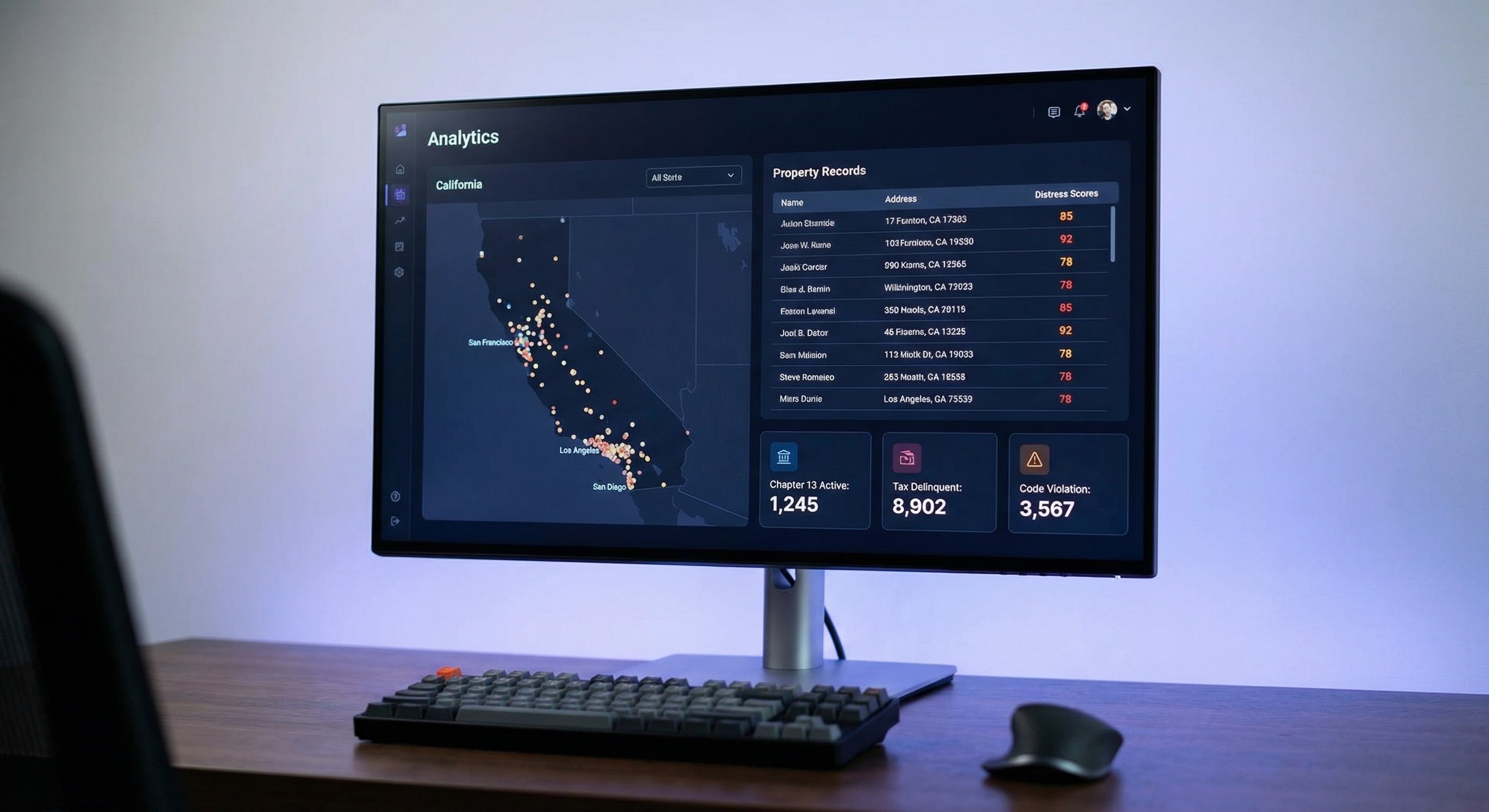
PACER provides the bankruptcy filing data, but cross-referencing that information against county records and multi-signal distress platforms completes the picture. Many bankruptcy cases overlap with other distress indicators, and the convergence of multiple signals on a single property typically signals a seller who is both motivated and under time pressure.
Running an address identified through PACER through DistressIQ reveals whether additional distress signals are present. Tax delinquency, code violations, lis pendens filings, and other indicators provide context that strengthens the investor's outreach pitch and helps prioritize which cases to pursue first. A homeowner who filed Chapter 13 and also has an outstanding tax delinquency and an active code violation is almost certainly more motivated to sell quickly than one whose bankruptcy is an isolated event.
The cross-reference strategy also works in reverse. An investor reviewing distressed property leads on DistressIQ who identifies a compelling opportunity can run a PACER search on the owner name to determine whether a bankruptcy case is active. If a case is found, the investor knows the owner is operating under court supervision and may be more receptive to a direct offer than the public record alone would suggest.
California Exemptions and Equity Situations That Create Urgency
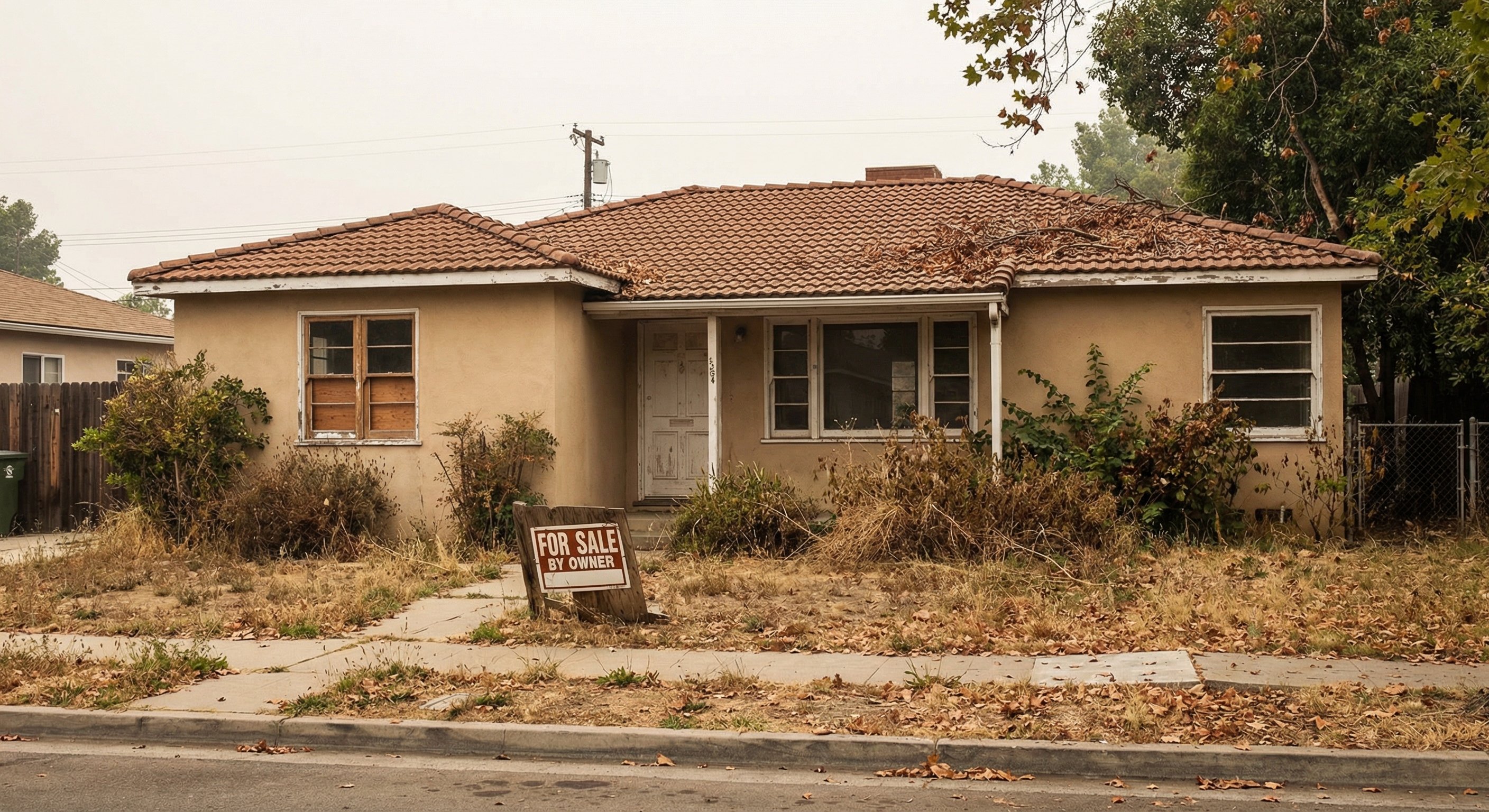
California's homestead exemption reaches $600,000 or more in high-value counties, which means many primary residences are fully protected in bankruptcy. The cases most relevant to real estate investors are those where equity is marginal or clearly nonexempt. When a Chapter 7 case carries nonexempt equity, the trustee assigned to the case has a legal obligation to liquidate the asset and distribute proceeds to creditors. This creates a defined timeline and a motivated homeowner who would prefer to sell on their own terms before the trustee forces a liquidation auction.
Timing Your Outreach for Maximum Effect
The bankruptcy process follows a predictable sequence in California. After the filing and automatic stay take effect, the 341 meeting of creditors is scheduled within 20 to 40 days and the plan confirmation hearing occurs approximately 60 to 120 days after filing. The investor outreach window opens most reliably between months 6 and 18 of an active Chapter 13 case, when homeowners have established compliance with the plan but are beginning to encounter life circumstances that challenge their ability to retain the property.
The homeowners most likely to sell during an active Chapter 13 case are those who have a confirmed plan in place, are in the repayment phase, and have experienced a qualifying life event that makes retention impractical. These situations are not always visible in the public record, but they are discoverable through direct outreach and conversation.
Why Most Investors Miss This Opportunity
The bankruptcy lead category remains underutilized by most real estate investors, and the reasons are straightforward. Bankruptcy court records are unfamiliar to agents and investors who did not train in commercial real estate or workout scenarios. PACER is a functional but archaic interface that charges per-page fees and does not present data in an investor-friendly format. The process of identifying cases, cross-referencing addresses, and navigating Section 363 sales requires procedural knowledge that most retail investors do not possess.
This is precisely why the opportunity exists. The investors who build competency in bankruptcy lead generation are competing against a dramatically smaller pool of informed buyers. A homeowner who needs to sell through a Chapter 13 plan and cannot find a buyer familiar with the process will often accept a below-market offer simply to complete the case. The investors who close these transactions consistently are not necessarily the ones with the most capital or the best negotiating skills. They are the ones who understand the process and can execute it without friction.
Find distressed property leads across all California counties , tax delinquencies, code violations, lis pendens, and other verified distress signals scored and ranked by motivation. Browse California leads free on DistressIQ
Frequently Asked Questions
What are bankruptcy leads?
Bankruptcy leads are properties where the homeowner has filed Chapter 7 or Chapter 13 protection in federal court. Unlike standard foreclosure leads, bankruptcy cases involve federal court supervision and require court approval before any sale of real property. Chapter 13 filers specifically have a confirmed repayment plan and frequently need to sell before completing that plan, which creates a distinct window of motivation that real estate investors can target.
How do bankruptcy leads differ from foreclosure leads?
Foreclosure leads involve a lender-initiated process leading to a trustee auction sale. Bankruptcy leads involve a debtor-initiated federal court process where the homeowner seeks protection and must obtain court approval to sell. The timelines, the decision-makers, and the negotiation dynamics are different. Foreclosure leads often involve properties already listed publicly. Bankruptcy leads frequently involve properties that never appear on the MLS.
What is the difference between Chapter 7 and Chapter 13 in California?
Chapter 7 is a liquidation case where the trustee may sell nonexempt assets to pay creditors. Chapter 13 is a reorganization case where the debtor proposes a repayment plan and retains property while making plan payments. Chapter 13 dominates California bankruptcy filings because high property values and the state's cost of living make reorganization more viable than straight liquidation for most homeowners. Chapter 13 filers are typically more motivated sellers because they have more to lose from case dismissal.
Where to Find California Bankruptcy Court Records
PACER (Public Access to Court Electronic Records) at ecf.canb.uscourts.gov provides direct access to all federal bankruptcy filings in California, including petitions, schedules, plans, and court orders. PACER accounts are free to establish, and usage fees are approximately $0.10 per page viewed. The four relevant districts are Central, Northern, Eastern, and Southern California.
What is the typical timeline for a Chapter 13 case in California?
A Chapter 13 case typically runs 24 to 36 months from filing to discharge. The automatic stay takes effect immediately upon filing. The 341 meeting of creditors is scheduled 20 to 40 days after filing. Plan confirmation typically occurs 60 to 120 days after filing. The most productive investor outreach window is typically between 6 and 18 months after filing, when homeowners have settled into the repayment plan but may be encountering life circumstances that change their ability to retain the property.
Finding Bankruptcy Leads with DistressIQ
DistressIQ aggregates distress signals including code violations, tax delinquencies, lis pendens filings, and other verified county records. Cross-referencing DistressIQ properties against PACER bankruptcy records helps investors identify cases where multiple distress signals converge, which typically indicates higher motivation and tighter timelines.
The data behind this article
DistressIQ Monitors These Signals in Real Time
Pre-Foreclosures
NOD + NTS filings
Tax Delinquency
County treasurer records
Code Violations
Municipal inspection filings
Probate Filings
Superior Court records
Every lead is scored 0–100 for seller motivation based on signal type, duration, severity, and stacking. Nationwide coverage — every US county, updated daily.
Ready to find deals in your market?
See Live Distress Signals in California
Stop calling dead leads. Every lead in DistressIQ is scored 0–100 for seller motivation, with verified contact info included. Browse the free tier to see what's active in your market right now.
Browse Free Leads — No Credit Card