Pre-Foreclosure Listings: The Investor's Guide to Finding and Using Them in 2026
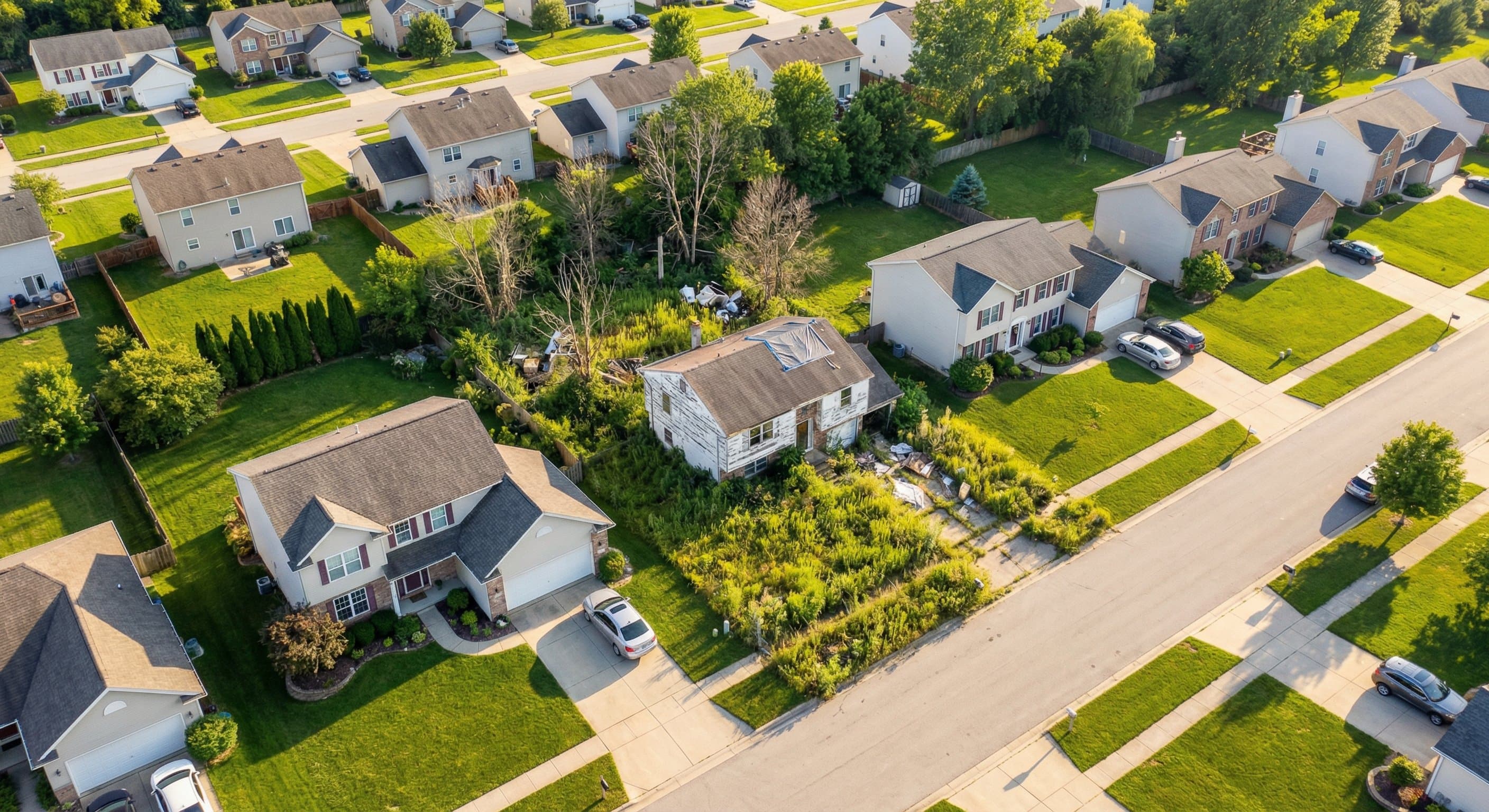
Pre-Foreclosure Listings: The Investor's Guide to Finding and Using Them in 2026
TL;DR: Pre-foreclosure listings are properties where homeowners have received a legal default notice but have not yet reached auction or bank ownership. These represent motivated sellers who often prefer a direct sale over losing the home at the auction block. Investors who find pre-foreclosure listings and evaluate them properly can secure deals below market value while helping owners avoid the credit damage of a completed foreclosure.

Most real estate investors hear the term "pre-foreclosure listing" and assume they need expensive subscription tools or county recorder access to find them. The reality is more nuanced. Pre-foreclosure is a legal status, not a listing category, and understanding how that status is created, tracked, and resolved is what separates investors who consistently find motivated sellers from those who waste time chasing properties that will never close.
What Is a Pre-Foreclosure Listing?
A pre-foreclosure listing refers to a property where the homeowner has defaulted on their mortgage and the lender has filed a Notice of Default (NOD) or Notice of Sale (NOS) with the county recorder. This legal filing starts the official foreclosure timeline, which varies significantly by state. At this stage, the property has not yet been sold at auction, and the owner still holds title.
The pre-foreclosure window is typically the most productive period for investors looking to work directly with motivated sellers. The homeowner is facing a concrete financial problem, often has equity in the property, and frequently prefers a direct sale that avoids the auction block. Properties sold before auction in the pre-foreclosure stage consistently net homeowners more than auction sales.
This is distinct from REO (Real Estate Owned) properties, which have already reverted to the bank after an unsuccessful auction, and from sheriff sale or trustee sale properties, which are at the auction stage itself. Pre-foreclosure sits earlier in the timeline, and that gap is where the best direct-to-seller deals exist.
How to Find Pre-Foreclosure Listings
Pre-foreclosure listings are not published on MLS or consumer sites like Zillow. The data exists in county recorder offices, but it is not aggregated into a searchable format anywhere that investors can access without effort. There are four main approaches.
County Recorder and Assessor Offices
Every county maintains a public record of all mortgage default filings. Most now publish these records online through the county recorder's website, but the format varies widely. 
Some counties post scanned PDFs with no search functionality. Others offer basic name or address search. Investors targeting a specific county can pull the current lis pendens and NOD filings directly, but this requires navigating dozens of incompatible systems. This manual process is exactly why most investors avoid it, and why those who do it consistently find less competition on these leads.
Third-Party Aggregation Platforms
Services like DistressIQ consolidate county-filed pre-foreclosure data across thousands of counties and present it as a searchable, filterable property map. The advantage is obvious: one search covers what would otherwise require navigating hundreds of county websites. The key differentiator between platforms is data freshness. Pre-foreclosure is a time-sensitive signal, and a filing that is three weeks old may already have resolved, been cured, or progressed to auction. Platforms that pull from county sources daily give investors a meaningful edge over those relying on weekly or monthly batch updates.
Court Records Searches
In judicial foreclosure states, pre-foreclosure filings appear in the county circuit court docket. These court systems often have online case search portals that investors can use directly. The information is public, but accessing it systematically across multiple counties requires either dedicated software or a significant time investment. Judicial foreclosure states include New York, New Jersey, Illinois, Florida, and Pennsylvania, among others. Investors working those markets should understand the court filing process as a primary sourcing channel.
Networking With Attorneys and Trustees
Real estate attorneys who handle defaults, foreclosure defense, and short sales see pre-foreclosure filings as part of their daily practice. Trustees handling non-judicial foreclosures also maintain active lists of upcoming sales. Building relationships with two or three attorneys in a target market can surface pre-foreclosure leads before they appear in public databases.
What Makes Pre-Foreclosure a Strong Distress Signal
Pre-foreclosure is not simply another way of saying "distressed property." The filing itself proves two things: the lender has initiated the legal process, and the homeowner has not yet cured the default. That combination narrows the field considerably compared to a property that is merely underpriced or in poor condition.
The signal is strengthened further when stacked with other distress indicators. A property with a pre-foreclosure filing, a recent code violation, a tax delinquency, and an absentee owner represents four independent data points converging on the same conclusion. Platforms that cross-reference multiple signal types help investors prioritize which pre-foreclosure listings deserve immediate attention versus which ones may have more complex resolution paths.
Pre-foreclosure sales consistently make up a measurable share of distressed property transactions in most metropolitan markets. Investors who work these listings report shorter time-to-close than those working auction properties, largely because the owner is still in the property and motivated to cooperate. Research from the Urban Institute's Housing Finance Policy Center documents this pattern across metro markets nationwide.
Free Weekly Alerts
See What's Distressed in Your Market
Get free weekly alerts — new distressed properties, motivation scores, and hot neighborhoods in your area. Addresses and contact info available inside DistressIQ.
Free forever · No credit card · Unsubscribe anytime
Evaluating a Pre-Foreclosure Property
Finding a pre-foreclosure listing is the first step. Knowing what to evaluate once the lead is identified is what separates productive investors from those who burn time on unworkable deals.
The most important calculation is the homeowner's equity position. If the outstanding mortgage balance is close to or above current market value, the deal is likely a short sale requiring lender approval. If the homeowner has meaningful equity but is simply cash-strapped, a direct purchase at a discount may be possible without lender involvement.
Timeline to auction is the second critical factor. Non-judicial foreclosure states like California and Texas can move from default notice to auction in as little as 60 to 90 days. Judicial foreclosure states typically extend the timeline to 180 days or longer. Knowing the applicable timeline gives investors a realistic sense of negotiating room and how urgently outreach should occur.
Property condition in pre-foreclosure varies more than in REO, since owners are still living in the property. Some are well-maintained; others show clear neglect. DistressIQ includes Street View and aerial imagery on every lead card, letting investors assess exterior condition and neighborhood context before making contact.
Occupancy status changes the outreach approach. Owner-occupied properties require a conversation with the homeowner, who is typically experiencing stress and needs to feel that the investor is a solution. Absentee-owned properties may involve a distant landlord already motivated to offload the asset.
Working Pre-Foreclosure Listings: A Practical Workflow

Initial contact should happen by mail, not phone. A well-crafted letter addressed to the property owner, referencing the specific situation without being aggressive, opens the conversation without creating the adversarial dynamic that phone calls can trigger. The letter should offer a straightforward path: a cash offer, no repairs, no commissions, and a fast close. Investors who include a self-addressed stamped reply envelope see higher response rates.
Follow-up phone calls should occur seven to ten days after the letter is sent. The goal of the first call is not to close, but to schedule a conversation. By the time a pre-foreclosure filing appears in a public database, weeks or months may have already passed. Investors who move quickly on new filings and do the preliminary research before making contact convert at a higher rate and generate less negative sentiment.
Common Mistakes Investors Make With Pre-Foreclosure Listings
Moving too slowly. By the time a pre-foreclosure filing appears in a public database, weeks may have already passed. Investors who wait to see a listing before acting are often responding to aged data. Platforms with daily county data updates are the most direct solution.
Contacting without understanding the deal structure. Reaching out to a homeowner without knowing whether they have equity, what the outstanding balance is, and what the property is worth wastes everyone's time. Investors who do the preliminary research before making contact convert at a higher rate.
Underestimating repair costs. Pre-foreclosure owners who have been in financial distress for months often stop maintaining the property. Deferred maintenance can easily cost $20,000 to $50,000 on a property that appears manageable from the outside.

Pre-Foreclosure Listings by State: What Changes
Non-judicial foreclosure states (including California, Texas, Georgia, Arizona, and Colorado) do not require court approval to proceed with a trustee sale. The process moves faster, which means the pre-foreclosure window is shorter and speed matters more.
Judicial foreclosure states (including New York, New Jersey, Florida, Illinois, and Pennsylvania) require the lender to file a lawsuit and obtain a court judgment. These states have longer statutory timelines, giving investors more negotiating room but also more competition from other investors who have found the same listing. The Consumer Financial Protection Bureau provides a state-by-state overview of foreclosure timelines and requirements.
Redemption periods add another layer of complexity. Some states allow homeowners to redeem the property after auction by paying the full amount owed plus interest and costs. Investors in those states need to account for redemption risk when evaluating deals, particularly if buying at auction rather than directly from the owner.
Frequently Asked Questions
Q: What is the difference between a pre-foreclosure listing and a foreclosure?
A pre-foreclosure listing refers to a property where the homeowner has received a default notice but still holds title and the property has not yet been sold at auction. A foreclosure is a completed process in which the lender has taken ownership (in a judicial state) or the property has been sold at auction (in a non-judicial state). Pre-foreclosure deals are negotiated directly with the homeowner; foreclosure and REO deals are negotiated with the bank or auction buyer.
Q: Can I buy a pre-foreclosure property with financing?
Most pre-foreclosure deals are structured as all-cash purchases because the transaction timeline is short and the property condition may not support conventional financing. Some investors use hard money loans to acquire the property, then refinance into conventional financing after closing.
Q: How long does the pre-foreclosure process typically take?
The pre-foreclosure window varies by state and ranges from approximately 60 days in fast-moving non-judicial states like Texas and California to 180 days or longer in judicial foreclosure states like New York and New Jersey. The clock starts when the lender files the Notice of Default or Notice of Sale with the county recorder. Investors who have daily access to county-filed data can identify properties earlier in this window than those relying on weekly data updates.
Q: Is a short sale the same as a pre-foreclosure?
Not exactly. A short sale occurs when the property sells for less than the outstanding mortgage balance and requires lender approval. Pre-foreclosure refers to the legal status of the property; short sale describes a specific transaction structure. Many pre-foreclosure deals are short sales, but not all require lender approval.
Q: What should I look for when evaluating a pre-foreclosure lead?
The three most important factors are the homeowner's equity position (whether a short sale is required), the timeline to auction in the specific county, and the property's current condition and occupancy status. Investors who research these three factors before making contact convert at higher rates and avoid wasting time on properties that are not actionable in their investment strategy.
Start Building Your Pre-Foreclosure Lead Pipeline
Pre-foreclosure listings represent one of the clearest signals of a motivated seller in real estate. Properties in this stage have documented financial distress, an active legal timeline, and an owner who has not yet resolved the situation through alternative means. Investors who have the right data, understand the legal process in their target markets, and approach owners with genuine professionalism consistently find deals that other investors miss.
DistressIQ surfaces pre-foreclosure filings alongside 11 million other active distress signals across 3,200-plus counties, updated daily from county sources. Every lead includes a motivation score, assessor-verified property data, and Street View imagery so investors can assess the property before making contact.

See verified pre-foreclosure listings in your target market at distressiq.ai.
This article is for informational purposes only and does not constitute legal, financial, or investment advice. Foreclosure laws vary by state and county. Investors should consult a licensed real estate professional and, where appropriate, an attorney familiar with foreclosure law in their target market before entering into any transaction.
The data behind this article
DistressIQ Monitors These Signals in Real Time
Pre-Foreclosures
NOD + NTS filings
Tax Delinquency
County treasurer records
Code Violations
Municipal inspection filings
Probate Filings
Superior Court records
Every lead is scored 0–100 for seller motivation based on signal type, duration, severity, and stacking. Nationwide coverage — every US county, updated daily.
Ready to find deals in your market?
See Live Distress Signals in Your County
Stop calling dead leads. Every lead in DistressIQ is scored 0–100 for seller motivation, with verified contact info included. Browse the free tier to see what's active in your market right now.
Browse Free Leads — No Credit Card