Why Your 'Bank Owned Properties Near Me' Search Keeps Returning the Wrong Leads
Why Your 'Bank Owned Properties Near Me' Search Keeps Returning the Wrong Leads
TL;DR: Most investors searching for "bank owned properties near me" are looking at properties that already sold to institutional buyers at scale. The actual opportunity sits two to three steps earlier in the distress cycle, before a property ever becomes REO. Investors who track verified distress signals like lis pendens filings, tax delinquency, code violations, and vacancy indicators find motivated sellers before the banks take ownership, with less competition and better margins. DistressIQ monitors these signals across every US county, updated daily from county records.
The Search That Sounds Like a Deal Hunter But Is Actually a Clearance Aisle
Every investor knows the feeling. You search "bank owned properties near me" and a platform fills your screen with listings marked 30%, 40% below market. You click through. You find a property you like. You call the listing agent.
The property is already under contract. Or it went pending last week. Or the list price was a mistake and the real number is market rate plus a $15,000 rehab estimate.
This is not bad luck. This is the nature of the search.
"Bank owned properties near me" is a high-volume keyword because it sounds exactly right. Investors think: distressed property, below market, motivated seller. What they are actually getting is the tail end of a process that started 120 to 180 days earlier, when a homeowner missed their first mortgage payment. By the time a property lands in REO inventory, the motivated sellers are gone, the institutional buyers have their scouts deployed, and what remains is picked over.
The DistressIQ team sees this pattern across thousands of investor searches every month. The investors who consistently find the best deals are not searching for what has already become bank owned. They are searching for what is about to become bank owned.
What "Bank Owned" Actually Means and Why the Timing Matters
REO stands for Real Estate Owned. When a lender forecloses on a property and auctions it at a trustee sale or sheriff sale, the bank sometimes bids the full loan amount. If no outside bidder tops the bank's minimum bid, the bank takes the property back. That property becomes REO inventory on the bank's books.
According to ATTOM Data Solutions, roughly 70% of REO properties sell to institutional investors with bulk purchasing programs. These buyers purchase portfolios of REO properties at scale, close in volume, and have dedicated asset management teams. Individual investors competing at auction or through REO agents on individual listings are frequently competing for properties with thinner margins and heavier renovation requirements.
The investors with the best cost-per-deal numbers are not at the REO stage. They are two to three steps earlier.
The pre-foreclosure window typically runs 30 to 90 days before a foreclosure auction, depending on state law and court processing times. During this period, the homeowner has received a notice of default and is actively or passively trying to sell. They are motivated. They are reachable. And most importantly, they have not yet been absorbed into the bank's REO machine.
This is the window that the "bank owned properties near me" search skips entirely.
The Five Distress Signals That Tell You a Property Is Heading to REO
Each of these signals is a publicly available record. Together, they form a map of where motivated sellers are concentrating before the banks claim the property.
Lis pendens. This is a recorded notice that a foreclosure lawsuit has been filed. It is public record at the county clerk's office and typically appears in county online search portals. A lis pendens filing means the pre-foreclosure window is open. The homeowner or their attorney has approximately 30 to 60 days to work out a sale or redemption before the auction date is set. Investors who find properties at this stage are often negotiating directly with motivated homeowners who want to avoid the auction.
Tax delinquency. Counties publish annual tax sale lists of properties with unpaid property taxes. Properties that appear on two or more consecutive tax delinquency lists are strong candidates for escalated action, including receiver appointment or judicial forfeiture in some states. Tax delinquent properties with additional distress signals on top of the tax issue are among the most motivated sellers an investor will encounter.
Code violations. City and county code enforcement offices maintain registries of properties with active violations related to vacancy, condition, or safety. Properties with multiple open code violations on top of a mortgage delinquency are frequently abandoned, which means the owner is often highly motivated to dispose of an asset they are no longer actively managing.
Probate filings. When a property owner dies, the estate must go through probate court before the property can be sold. Heirs often want a fast, clean transaction rather than becoming landlords or funding renovations from out of state. Probate properties with existing mortgage debt are a signal that the motivation is structural, not just circumstantial.
Absentee ownership and vacancy. Properties where utility disconnection records, postal service indicators, or field observation suggest the home is vacant are a separate category of motivated sellers. Absentee owners who have moved out are not emotionally attached to the property and frequently want the liability off their books quickly.
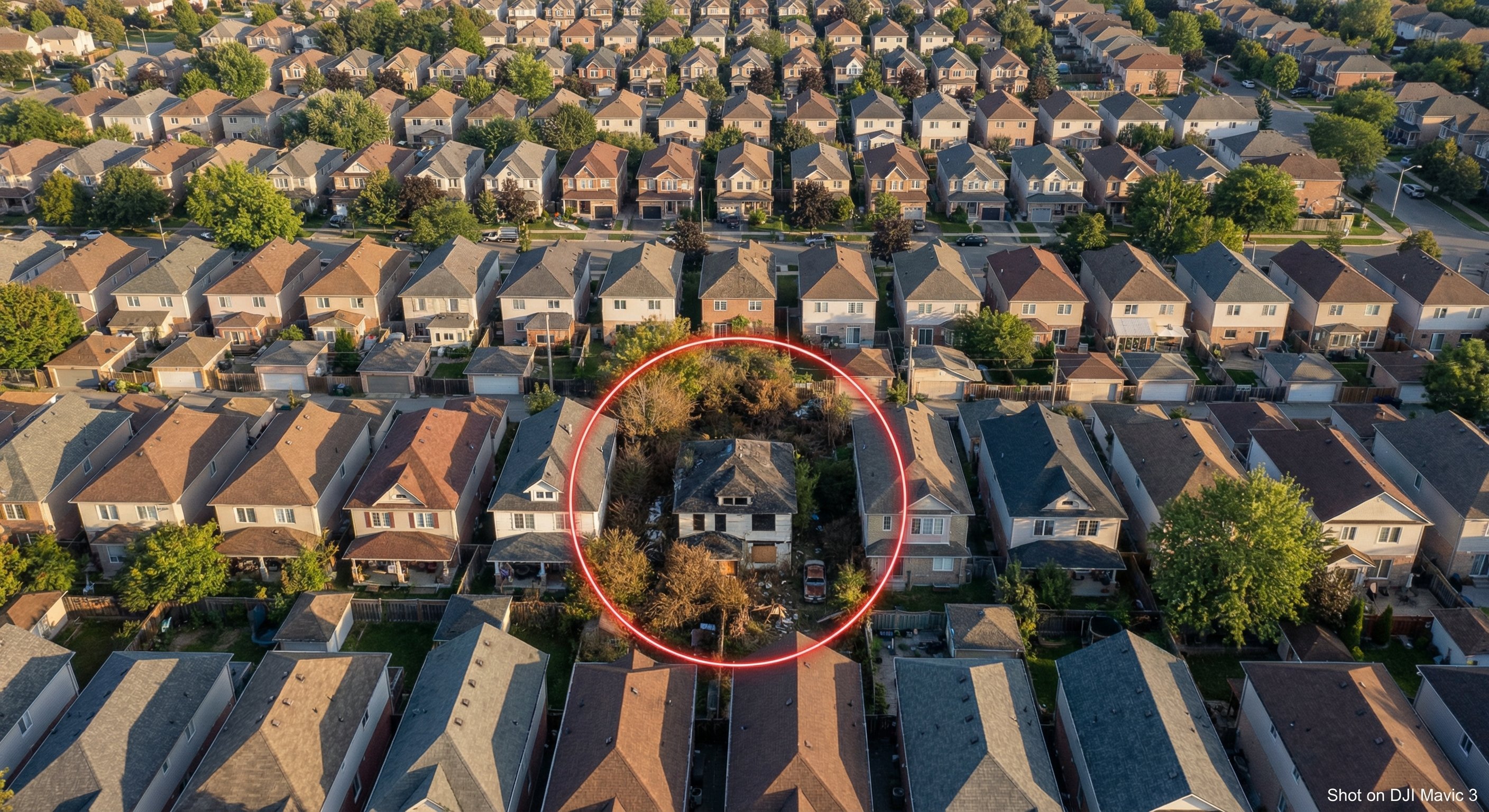
DistressIQ tracks all five of these signal types across every US county and cross-references them at the property level. A property with three signals is significantly more likely to reach auction than a property with one. Scoring these properties by motivation level helps investors know which to pursue first.
Free Weekly Alerts
See What's Distressed in Your Market
Get free weekly alerts — new distressed properties, motivation scores, and hot neighborhoods in your area. Addresses and contact info available inside DistressIQ.
Free forever · No credit card · Unsubscribe anytime
A Three-Step Method for Finding What REO Lists Miss
The investors finding the best deals in 2026 are not faster at checking REO portals. They are looking at a different stage of the process entirely.
Step one is to define your geographic target and pull all available distress signals for that area. Filter for properties with two or more simultaneous signals. A property with a tax delinquency filing AND a lis pendens notice AND a code violation is a much stronger prospect than one with a single signal. Multi-signal properties represent situations where multiple pressures are converging on one property and one owner.
Step two is to evaluate each property's equity position before reaching out. Use county assessor data to estimate what the property would be worth after a moderate renovation. Investors who calculate after repair value before making contact avoid the most common mistake in distressed property investing, which is negotiating a price that does not leave room for the renovation and carrying costs that follow.
Step three is outreach to the property owner or their representative before the auction date is confirmed. This is where the timing window matters most. Reaching a homeowner in the 60 days before a foreclosure auction is qualitatively different from reaching the same homeowner after the bank has taken title. After the bank owns the property, the negotiating position is entirely different. Before the auction, the homeowner still controls the outcome.

The Three Mistakes Investors Make When They Only Search REO Lists
The first mistake is assuming that REO listings represent the full universe of motivated sellers. They do not. REO listings represent a subset of distressed properties where the homeowner was unable to sell before the auction and the bank took title. This is the smallest and least advantageous segment of the distress spectrum for an individual investor.
The second mistake is relying on the major property aggregator platforms for REO inventory. Zillow, Realtor.com, and Redfin aggregate REO listings from MLS feeds, which means the best REO deals are often placed with institutional buyer networks directly by asset managers before they ever appear on a public aggregator. Individual investors on these platforms are frequently looking at properties that have been passed over multiple times.
The third mistake is confusing REO inventory with off-market opportunities. A property in REO is not off-market. It is on the bank's marketing list, typically with an REO asset manager, a listing agent, and a file of offers already submitted. True off-market distressed property opportunities exist at the pre-foreclosure stage, before the bank's disposition timeline begins.
What the Distress Signal Approach Actually Changes
The difference between searching REO listings and tracking distress signals is not a marginal improvement in deal flow. It is a structural shift in the competitive environment.
When you search for completed bank foreclosures, you are competing with every other investor who has the same search term, plus the institutional buying programs that have automated alerts set on every major REO portal. When you track distress signals at the county record level, you are often the only investor in your market who is looking at that data.

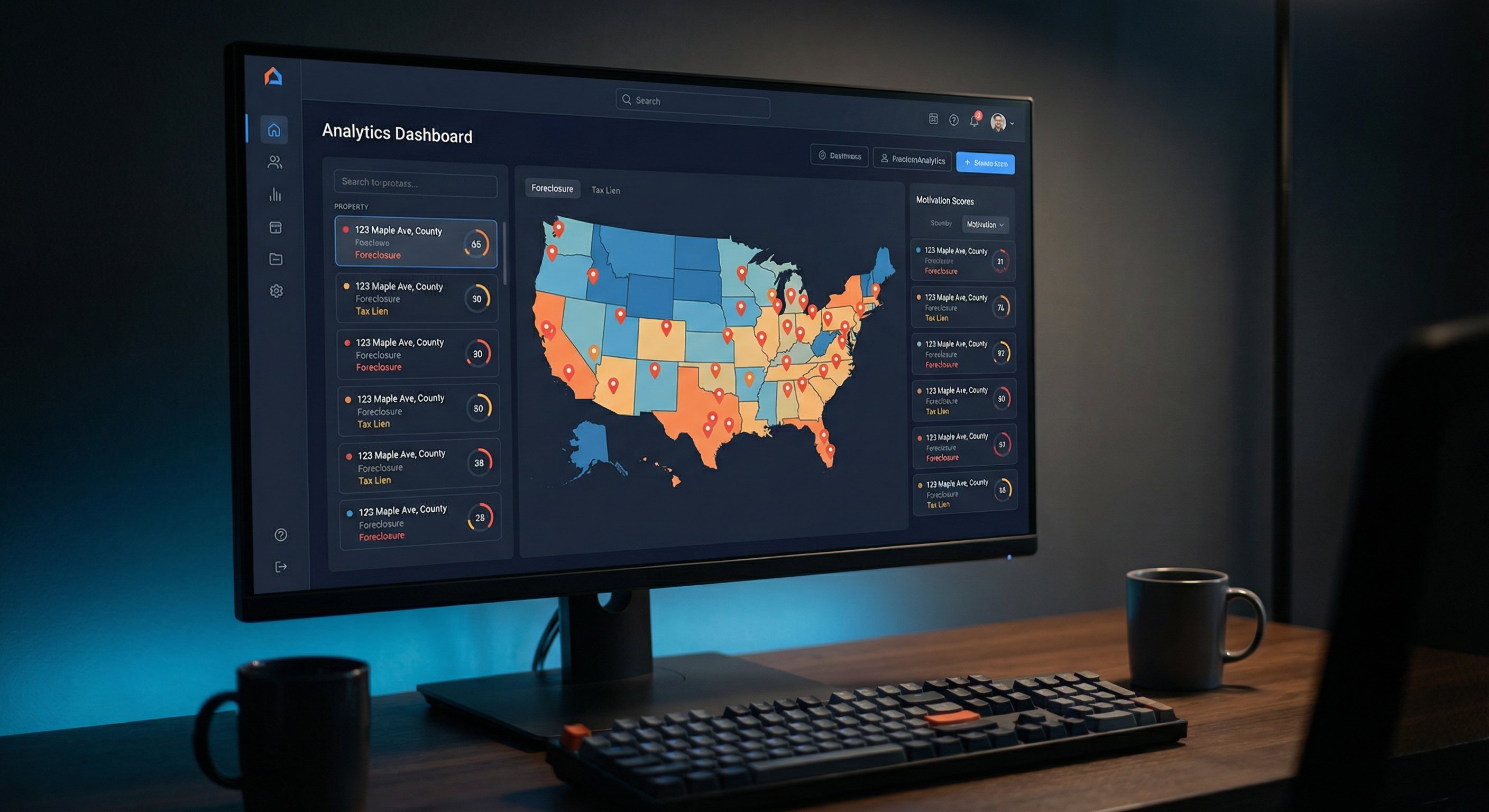
DistressIQ pulls county-direct property records across 3,200-plus counties and updates daily. Properties with verified pre-foreclosure filings, tax delinquency records, code violations, and vacancy indicators are scored and ranked by motivation level. Investors can browse the map and identify targets before the bank takes title, before the auction is scheduled, and before the institutional buyers have moved.
The properties on DistressIQ are not REO properties. They are the properties that REO is made from.
The Bottom Line
Searching for "bank owned properties near me" is not a bad strategy. It is an incomplete one. The deals that investors picture when they run that search exist, but they are at the end of a process where the best opportunities have already been absorbed by buyers with more infrastructure and faster closing timelines.
The investors who consistently close below market are not searching for what has already become bank owned. They are watching for what has not become bank owned yet.
The practical move this week: pull distress signal data for your target counties. Look at lis pendens filings, tax delinquency records, and code violation registries for properties that have multiple signals stacking simultaneously. Calculate after repair value before you call. Make contact in the pre-foreclosure window.
That is where the deals are.

Find motivated sellers before they become bank inventory — browse verified distress signals across every US county on DistressIQ, scored by motivation. Try it free at DistressIQ →
The DistressIQ platform tracks properties with pre-foreclosure filings, tax delinquency, code violations, and vacancy indicators across 3,200-plus counties, updated daily from county records. Investors who use the platform to identify multi-signal properties before the auction stage are operating in a different part of the market than investors competing for REO listings.
Frequently Asked Questions
What does bank owned actually mean?
Bank owned, or REO, means the lender took title to a property after it failed to sell at a foreclosure auction. The bank is now the seller. REO properties are typically sold in as-is condition, often at a discount to market value, but the selection is limited and competition from institutional buyers is significant. The best REO opportunities are usually not found on public aggregator sites.
Are there actually good deals in bank owned properties?
There can be, but the odds are lower than most investors assume. Institutional buyers with dedicated acquisition teams and bulk purchase programs compete directly for the best REO inventory, often closing faster and with fewer contingencies than individual investors. Properties that remain in REO inventory for more than 60 days often have significant deferred maintenance, title complications, or pricing that has already been adjusted for condition.
How do I find distressed properties before they become bank owned?
The most effective approach is to monitor public county records for the specific distress signals that precede bank ownership. Lis pendens filings at the county clerk's office, tax delinquency lists published by county tax collectors, and code violation registries at city inspection departments all provide advance notice of properties heading toward foreclosure. Platforms that aggregate these signals across multiple counties and score them by motivation level can significantly reduce the research time required.
What is the difference between REO and off-market distressed properties?
REO properties are listed on the bank's books and typically have an assigned asset manager and listing agent. Off-market distressed properties are properties where the owner is motivated to sell before a foreclosure auction occurs. Off-market opportunities exist in the pre-foreclosure window before the bank takes title. REO opportunities exist after the bank takes title. Pre-foreclosure and auction-stage properties are where individual investors most often find motivated sellers with realistic negotiating positions.
Is DistressIQ free to use?
DistressIQ allows investors to browse distressed property signals across every US county for free. Contact information, skip-traced owner details, and export features are available on paid plans. The free browsing tier gives investors access to verified distress signal data, motivation scoring, and aerial street view previews before committing to a paid plan.
The data behind this article
DistressIQ Monitors These Signals in Real Time
Pre-Foreclosures
NOD + NTS filings
Tax Delinquency
County treasurer records
Code Violations
Municipal inspection filings
Probate Filings
Superior Court records
Every lead is scored 0–100 for seller motivation based on signal type, duration, severity, and stacking. Nationwide coverage — every US county, updated daily.
Ready to find deals in your market?
See Live Distress Signals in
Stop calling dead leads. Every lead in DistressIQ is scored 0–100 for seller motivation, with verified contact info included. Browse the free tier to see what's active in your market right now.
Browse Free Leads — No Credit Card