Vacant Property Leads Virginia: What Makes the Commonwealth Different for Investors
Vacant Property Leads Virginia: What Makes the Commonwealth Different for Investors
TL;DR: Virginia's vacant property market is shaped by distinct geographic and economic forces: Northern Virginia's commuting-driven vacancies, Hampton Roads military relocations, Richmond's urban renewal pipeline, and Appalachian counties with aging housing stock. The state's Land Bank network, local code enforcement programs, and judicial foreclosure timeline create investor opportunities that don't exist in neighboring states. DistressIQ tracks vacant property signals across all Virginia counties, updated daily from county sources, so investors can focus on leads with verified vacancy and distress rather than chasing dead ends.
Most investors looking for vacant property leads in Virginia are making the same mistake: they search statewide for a general vacancy list and end up with a spreadsheet of addresses that don't respond to mailers, don't answer the phone, and don't convert.
The problem isn't Virginia's vacant inventory. Virginia has genuine pockets of long-term vacant and abandoned properties, particularly in markets where economic displacement has outpaced local absorption capacity. The problem is that most vacancy signals used to find these properties are stale, inaccurate, or so broad they include properties that aren't actually available to work.
This article covers the Virginia-specific market dynamics every investor needs to understand before targeting vacant property leads in the Commonwealth.
Why Virginia's Vacant Property Market Operates Differently
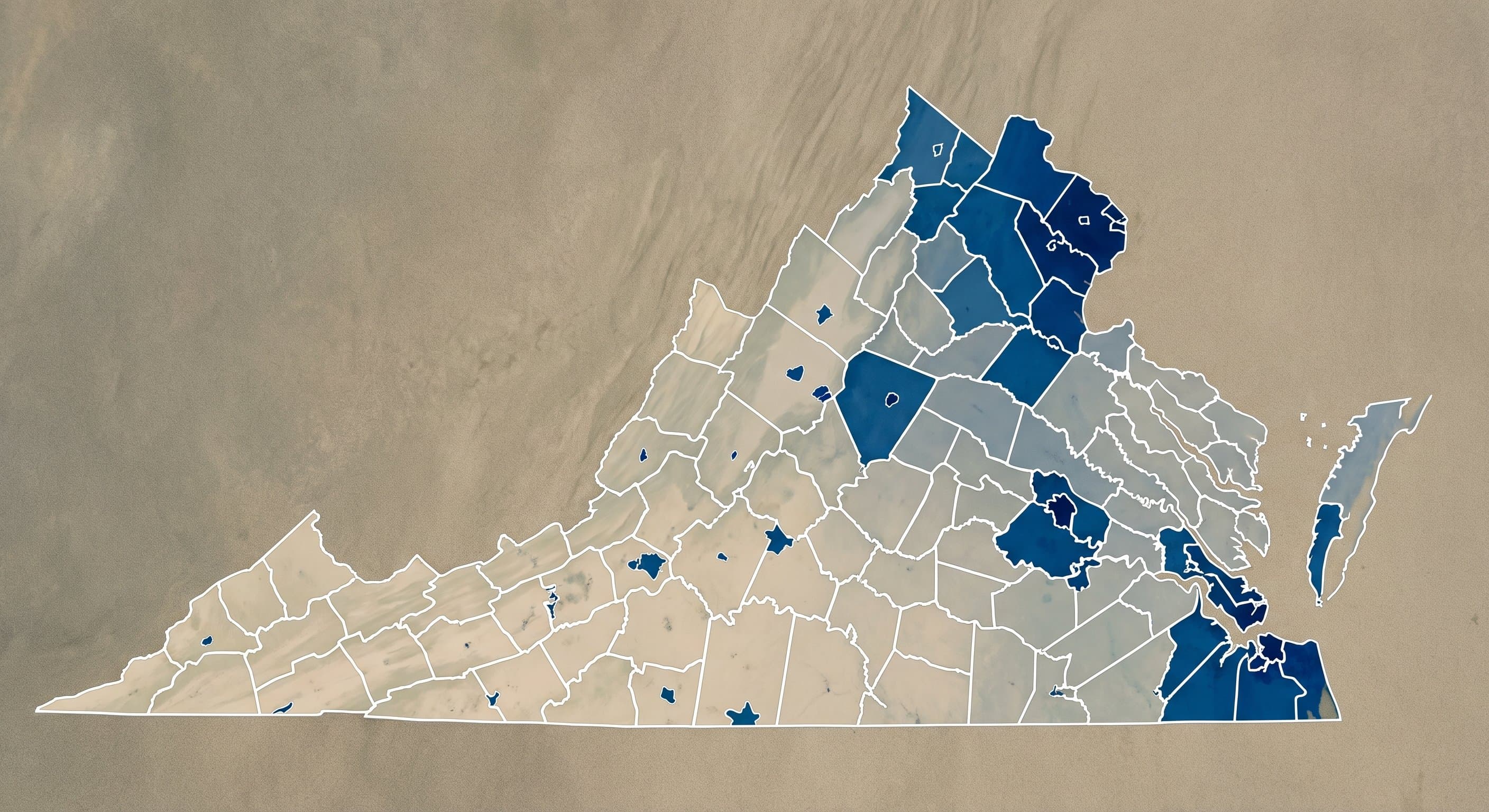
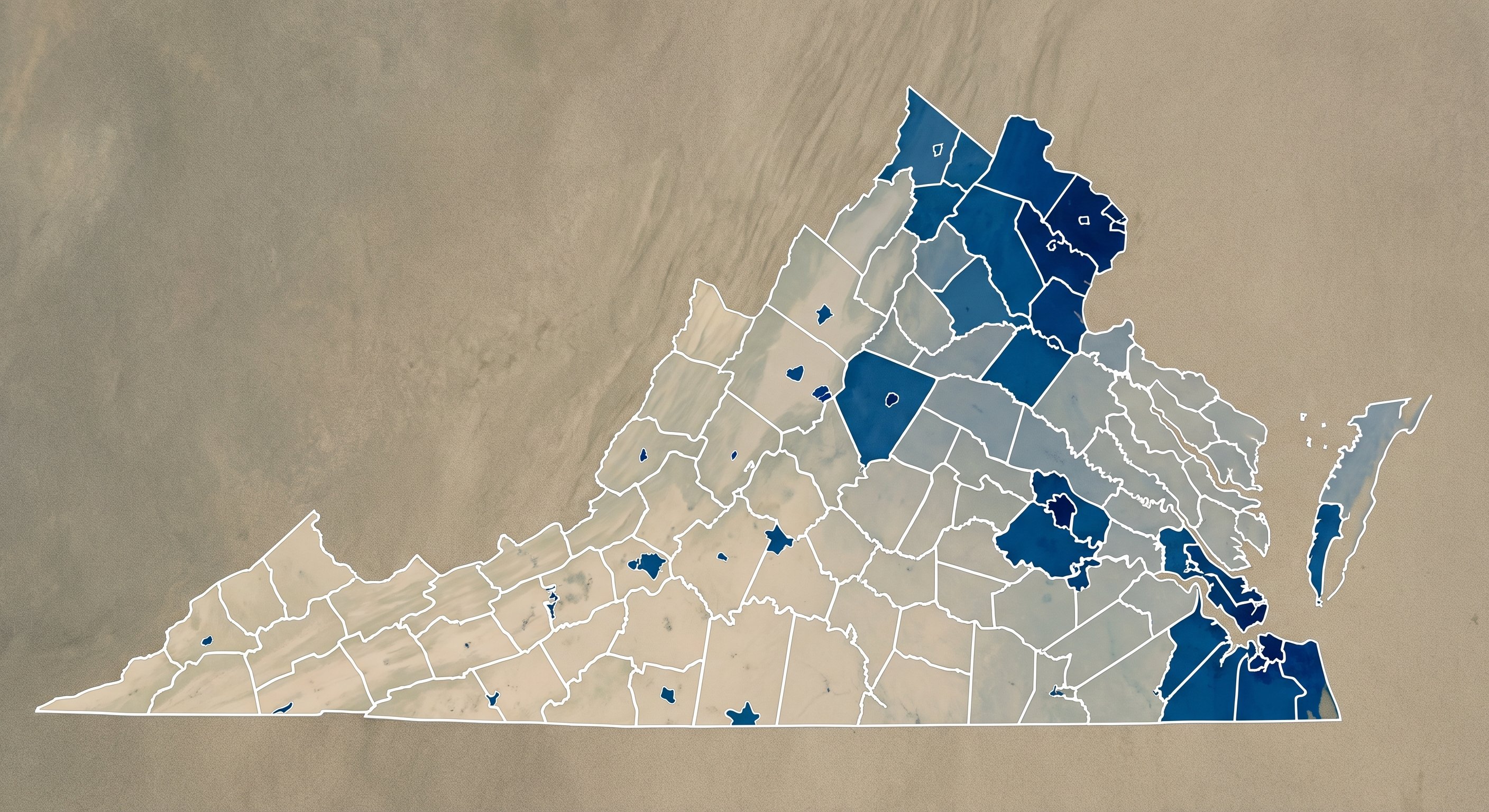
Virginia's 8.6 million residents are distributed across extreme geographic variation within a single state. No other state in this series has the population density contrast that Virginia manages: the Northern Virginia suburbs of Washington DC have some of the highest household incomes and fastest transaction velocity in the country, while southwestern Virginia's coal country has communities where population has declined every census since 1980.
This creates two distinct vacancy problems that require different investor approaches.
Northern Virginia has a vacancy problem driven by absorption timing, not abandonment. Homes in communities like Prince William County, Fairfax, and Loudoun sometimes sit vacant between lease terms, between owners, or because investor-owned rentals cycle through tenants faster than resale markets absorb them. These vacancies are short-duration and highly liquid. Investors buying in this corridor are typically competing with other investors for properties that move in 30 to 60 days.
Southwest and Southside Virginia is where the long-term vacant and abandoned inventory concentrates. Counties like Wise, Lee, Scott, Buchanan, and Dickenson have lost 20% to 40% of their peak population. Housing that was built for mining-era communities now sits partially or fully vacant with no realistic near-term buyer pool. Investors working these markets need a different strategy entirely: buy at tax sale prices, hold for land banking or timber rights, or focus on the rare cosmetic-rehab opportunity in town centers.
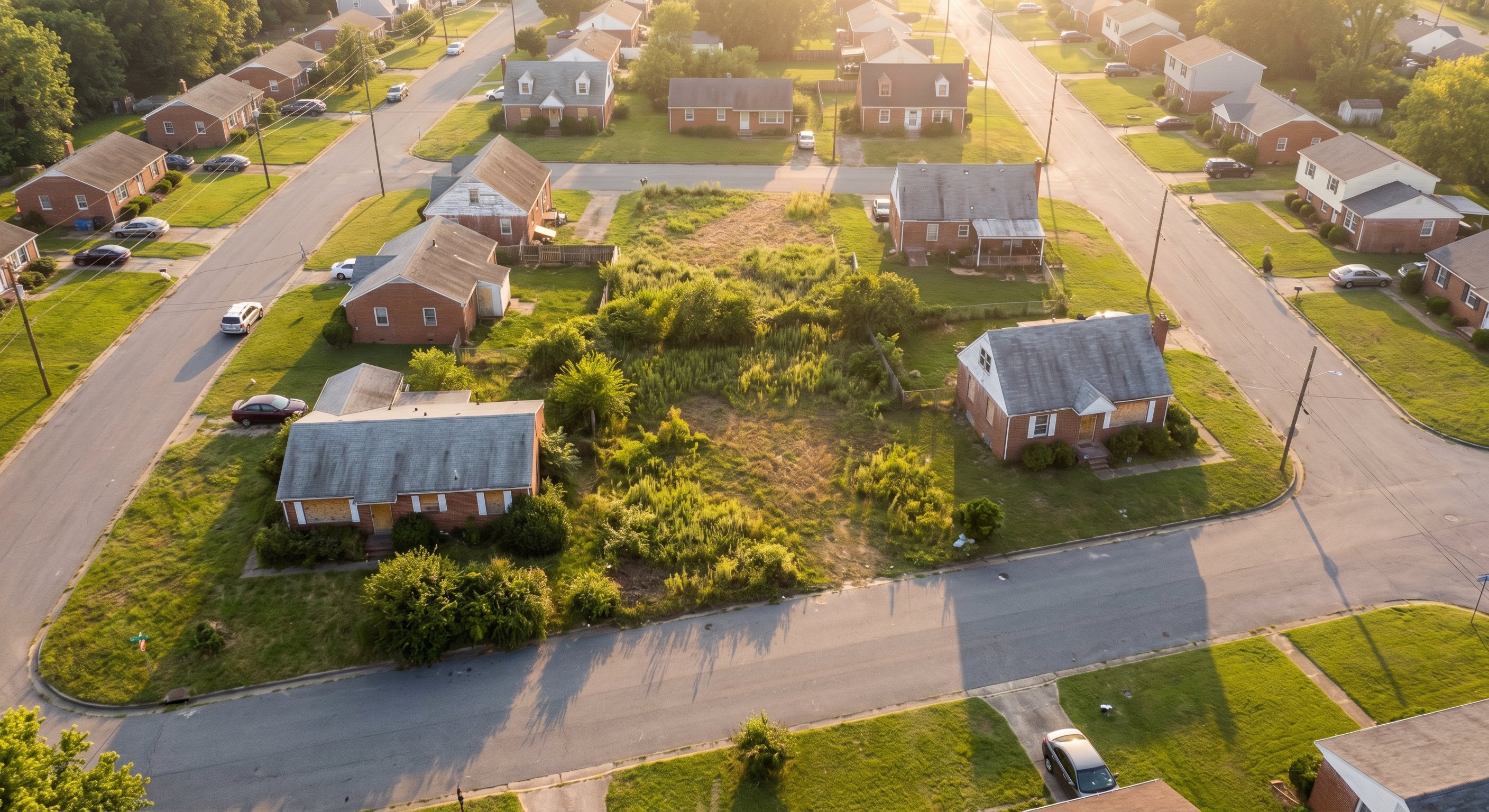
Richmond and Hampton Roads fall in the middle. These markets have the classic urban vacancy patterns associated with mid-sized Eastern cities: city-owned vacant lots, blight abatement programs, land bank inventory, and pre-foreclosure pipelines where properties sit vacant during the 60-day redemption window.
Understanding which of these three market types you're targeting in Virginia is the first and most important decision.
Where to Find Vacant Property Leads in Virginia: Primary Sources
Virginia's public record ecosystem is more fragmented than states like Georgia or Texas. There is no single statewide database investors can query for vacancy data. Instead, each locality maintains its own property and assessment records, and vacancy information is distributed across multiple datasets.
Virginia Land Bank Network
Virginia has an active Land Bank program operating across 15+ localities. Land Banks in Virginia include the Richmond Land Bank, the Hampton Roads Land Bank, and several smaller municipal land banks in localities participating in the Virginia Land Bank Act (Virginia Code Section 15.2-753). Land Bank-owned properties represent some of the most clearly motivated inventory in the state because these entities are specifically created to transfer vacant and blighted property back to productive use.
Finding Land Bank listings requires checking each locality directly, and there is no unified statewide portal. Investors working multiple Virginia markets need to maintain a monitoring system across each city's land bank or community development department.
Local Code Enforcement Records
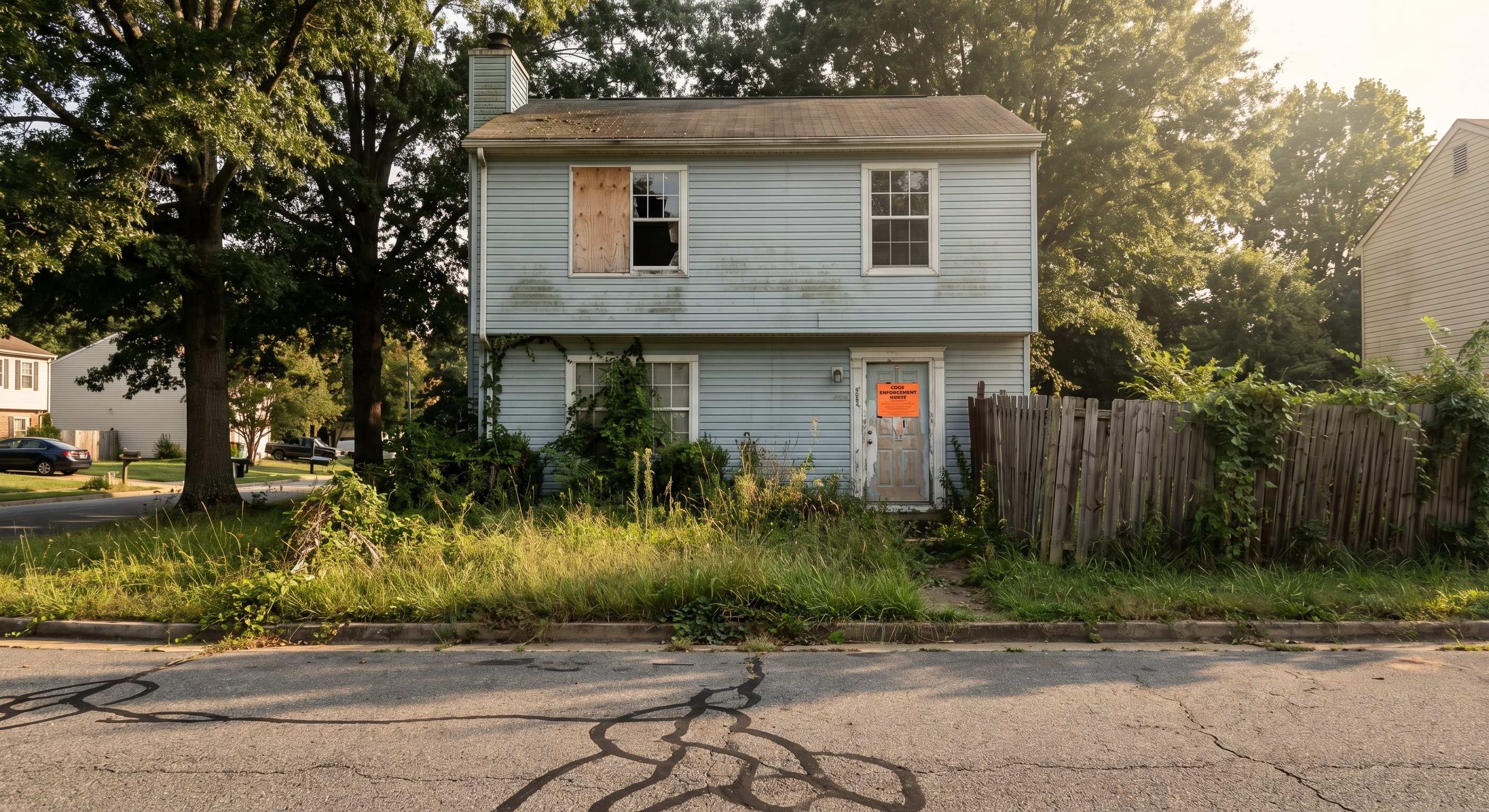
Virginia localities maintain code enforcement records that flag vacant properties under local blight and vacancy ordinances. In cities like Richmond, Norfolk, Newport News, and Roanoke, code enforcement actions on vacant structures create public records that signal both vacancy and owner motivation to resolve the situation.
These records are typically available through city planning or community development departments. Richmond's Property Maintenance Code enforcement list, for example, tracks vacant and blighted structures with active enforcement orders. Norfolk maintains a Vacant Building Registry under its urban renewal programs.
Virginia Tax Sale Records
Delinquent tax properties in Virginia follow either the tax lien or the tax deed process depending on the locality. Investors should understand that Virginia is primarily a tax deed state for non-judicial sales, but many localities use a hybrid approach where the locality can convert unpaid taxes to a lien sold at auction, with the winning bidder receiving a deed if the owner doesn't redeem within the statutory period.
The redemption period in Virginia for most tax sales is 12 months from the date of sale, which is longer than states like Georgia (one year from filing) but shorter than some neighboring states. This creates a predictable pipeline of distressed inventory becoming available 12 to 18 months after a tax sale.
Judicial Foreclosure Records
Virginia is a judicial foreclosure state, meaning all foreclosures go through the circuit court system. This adds time to the foreclosure process compared to non-judicial states, typically running 6 to 12 months from filing to sale date depending on court dockets and whether the borrower contests the action. Pre-foreclosure properties in Virginia often sit vacant for longer periods during this process because the court timeline creates a natural waiting period during which the property may be abandoned.
Circuit court records for each Virginia county and independent city are available through the Virginia Judicial System's case management system (https://selfhelp.vacourts.gov), and individual circuit court clerks maintain the official foreclosure filings.
Virginia's Distinctive Vacancy Corridors for Investors
Northern Virginia: The Commuter Corridor
Fairfax County, Prince William County, and Loudoun County represent Virginia's highest-volume residential markets. Vacancy here is predominantly short-term, driven by the same forces that affect any high-velocity suburban market: job-related relocations, lease-end turnovers, and investor portfolio rebalancing.
The investor opportunity in Northern Virginia's vacancy corridor is primarily in distressed pre-foreclosure properties rather than long-term vacant inventory. Properties that enter pre-foreclosure in this price range ($400,000 to $900,000+) represent significant equity positions, and the motivated sellers are often dealing with job loss, divorce, or inheritance situations rather than financial distress in the traditional sense.
DistressIQ's multi-signal approach is particularly valuable in this corridor because properties here may show only one or two signals at any given time before resolving on their own. Investors who can identify a property while it still carries a lis pendens filing or code enforcement notice in Northern Virginia are often competing against fewer buyers than in the same scenario in Florida or Arizona.
Hampton Roads: Military and Maritime Cycles
The Hampton Roads region (Norfolk, Virginia Beach, Newport News, Hampton, Portsmouth, Suffolk, Chesapeake) has a vacancy dynamic driven largely by military assignment cycles and the maritime industrial economy. When the Navy or the shipbuilding sector contracts, or when major commands relocate, a wave of PCS (Permanent Change of Station) moves creates temporary vacancy pressure in rental and owner-occupied markets.
Norfolk and Newport News have had persistent vacancy issues in neighborhoods adjacent to naval installations, where properties were built specifically to serve military housing demand and have faced reduced buyer pools as those installations' populations have fluctuated.
Investors targeting vacant property leads in Hampton Roads should monitor military installation news and Defense Department basing decisions as leading indicators of local vacancy spikes. The 2023 Base Realignment and Closure (BRAC) process and subsequent realignments have affected some Virginia military communities, and additional adjustments have been proposed in subsequent budget cycles.
Richmond: Urban Renewal and Neighborhood Rebirth
Richmond has one of the most active urban renewal pipelines of any mid-sized Eastern city. The Richmond Land Bank holds inventory in neighborhoods like Gilpin Court, Crewe, and Whitcomb, and the city's participation in HUD's Choice Neighborhoods Initiative has created a systematic redevelopment program that puts vacant city-owned properties back on the market through competitive developer RFPs.
The investor opportunity in Richmond is twofold. First, individual properties in transitional neighborhoods often sell at significant discounts to investors willing to complete renovations and either hold as rentals or resell to owner-occupants. Second, Richmond's land bank sells bundle packages to investors who want to acquire multiple adjacent vacant lots for side-yard consolidation or larger development projects.
Norfolk has a similar dynamic with its Vacant Building Registration program, which requires owners of long-term vacant structures to register annually or face escalating fees. Properties that accumulate multiple years of unpaid registration fees represent an escalating cost problem for owners who are motivated to sell.
Southwest Virginia: The Long-Hold Markets
In counties like Lee, Scott, Wise, Dickenson, Buchanan, Russell, and Tazewell, vacancy is a structural rather than a cyclical problem. Population loss has outpaced absorption for decades, and properties in these markets may sit on the tax rolls for years before entering the tax sale pipeline.
The investor who can succeed in Southwest Virginia's vacant property market is one who buys at tax sale prices, budgets for long holding periods, and understands that the eventual exit may be a timber rights sale, a land bank donation for the tax deduction, or a sale to an out-of-state buyer looking for rural acreage. Direct marketing to out-of-state property owners in these counties through tax records can also surface motivated sellers who inherited the property and live elsewhere.
Free Weekly Alerts
See What's Distressed in Your Market
Get free weekly alerts — new distressed properties, motivation scores, and hot neighborhoods in your area. Addresses and contact info available inside DistressIQ.
Free forever · No credit card · Unsubscribe anytime
Key Metrics for Virginia Vacant Property Investors
| Metric | Virginia | National Average | Notes |
|---|---|---|---|
| Median days on market | 28 days | 35 days | Northern VA inflates the average |
| Average vacancy rate | 8.3% | 10.8% | Below national average overall |
| Tax sale redemption period | 12 months | 6-12 months | Depends on locality |
| Foreclosure type | Judicial | Mixed | Circuit court filings required |
| Land Bank localities | 15+ | Varies | Active network statewide |
Virginia's overall below-average vacancy rate masks significant variation. Statewide averages combine Northern Virginia's tight inventory with Southwest Virginia's chronic vacancy, which means the statewide number tells investors very little about any specific submarket.
How to Work Vacant Property Leads in Virginia Effectively
The research phase matters more in Virginia than in states with more transparent and centralized property data systems. Investors who build a systematic approach to Virginia vacancy data gain a compounding advantage because most competitors are not doing the same work.
Step 1: Define your submarket. Northern Virginia, Hampton Roads, Richmond, or Southwest Virginia each require different data strategies, different offer models, and different exit timelines. Trying to work all four simultaneously dilutes focus.
Step 2: Monitor local code enforcement and Land Bank listings. Set up recurring monitoring for each locality's code enforcement updates, Land Bank inventory postings, and community development RFPs. Many Virginia localities publish these lists monthly or quarterly, and properties that appear in two or more consecutive cycles without resolution represent strong motivated-seller candidates.
Step 3: Layer distress signals. Virginia's judicial foreclosure process creates a natural signal layering opportunity. Pre-foreclosure lis pendens filings sit in circuit court records, and properties with active court filings combined with code enforcement flags or utility disconnection records represent the highest-confidence multi-signal opportunities. DistressIQ's motivation scoring across these signal types helps investors prioritize which properties warrant the time cost of full title research.
Step 4: Understand the exit before you enter. Northern Virginia vacant properties work for fix-and-flip or quick wholesale. Richmond distressed properties work for buy-and-hold or mid-term renovation resale. Southwest Virginia vacant properties require long-hold strategies or alternative exit structures.
How DistressIQ Supports Virginia Vacant Property Research
DistressIQ monitors distressed property signals across every Virginia county and independent city, updated daily from county and court record sources. For investors targeting vacant property leads in Virginia, the platform provides a unified view across signal types including code enforcement flags, pre-foreclosure filings, tax delinquency records, and vacancy indicators from utility service records where available.
The motivation scoring system ranks Virginia properties across distress signal combinations, helping investors identify which vacant properties are most likely to respond to outreach. Properties carrying multiple concurrent distress signals in Virginia's judicial foreclosure timeline have meaningfully higher seller motivation scores than properties with single-signal exposure.
Investors can browse Virginia distressed property maps and lists on DistressIQ before purchasing a subscription, with full contact and skip-trace data available on demand. The platform's coverage of all Virginia localities, including smaller cities and counties in Southwest Virginia where other platforms have limited data, makes it practical to run a statewide submarket surveillance program from a single interface.
Frequently Asked Questions
How do I find vacant property leads in Virginia?
Virginia does not have a centralized statewide vacant property database. Investors should combine three approaches: monitoring local Land Bank and code enforcement records for each target locality, tracking circuit court lis pendens filings in Virginia's judicial system, and using a property intelligence platform that aggregates distress signals across all Virginia counties. DistressIQ provides county-verified distress signal data across every Virginia locality in a single interface.
What is the foreclosure process timeline in Virginia?
Virginia is a judicial foreclosure state. The process typically takes 6 to 12 months from the initial filing to the foreclosure auction, depending on court docket conditions and whether the borrower contests the action. After a foreclosure sale, Virginia law provides a 12-month redemption period during which the former owner may reclaim the property by paying the full sale price plus interest.
Are Virginia tax sales competitive?
Tax sales in Virginia's most populated counties (Fairfax, Prince William, Loudoun) attract significant competition from investors. In Southwest Virginia and rural counties, tax sales are often less competitive with fewer registered bidders. The state uses a tax deed system with a 12-month redemption period, which means winning bidders at tax sale need to plan for a potential year-long redemption window before taking possession.
What is a Land Bank and how does it affect Virginia property investors?
Virginia Land Banks are public-private entities created under the Virginia Land Bank Act to acquire vacant, blighted, and tax-delinquent properties and return them to productive use. Properties owned by Virginia Land Banks are typically available for purchase through competitive listings or RFP processes. Richmond, Hampton Roads, and multiple other Virginia localities have active Land Bank programs.
Is Southwest Virginia worth investing in for vacant properties?
SW Virginia's vacant property market requires a specific strategy and realistic expectations. Properties in counties like Lee, Scott, and Buchanan are often available at very low acquisition costs through tax sales, but exit liquidity is limited. Investors who pair vacant lot acquisition with timber rights, land lease agreements, or eventual land bank disposition can build a long-term portfolio in these markets. This is not a quick-turn strategy.
Start Browsing Virginia Vacant Property Leads
Virginia's vacant property opportunity is real, but it rewards investors who do the submarket-specific research rather than applying a generic statewide approach. Whether you're targeting the fast-moving Northern Virginia pre-foreclosure corridor, Hampton Roads' military-cycle vacancies, Richmond's urban renewal inventory, or the long-hold plays in Southwest Virginia, the data foundation matters.
Browse all Virginia distressed property signals updated daily on DistressIQ — free to start, no credit card required.


The data behind this article
DistressIQ Monitors These Signals in Real Time
Pre-Foreclosures
NOD + NTS filings
Tax Delinquency
County treasurer records
Code Violations
Municipal inspection filings
Probate Filings
Superior Court records
Every lead is scored 0–100 for seller motivation based on signal type, duration, severity, and stacking. Nationwide coverage — every US county, updated daily.
Ready to find deals in your market?
See Live Distress Signals in Your County
Stop calling dead leads. Every lead in DistressIQ is scored 0–100 for seller motivation, with verified contact info included. Browse the free tier to see what's active in your market right now.
Browse Free Leads — No Credit Card