Tax Lien List Ohio: How the Certificate System Works (And Where Investors Focus)
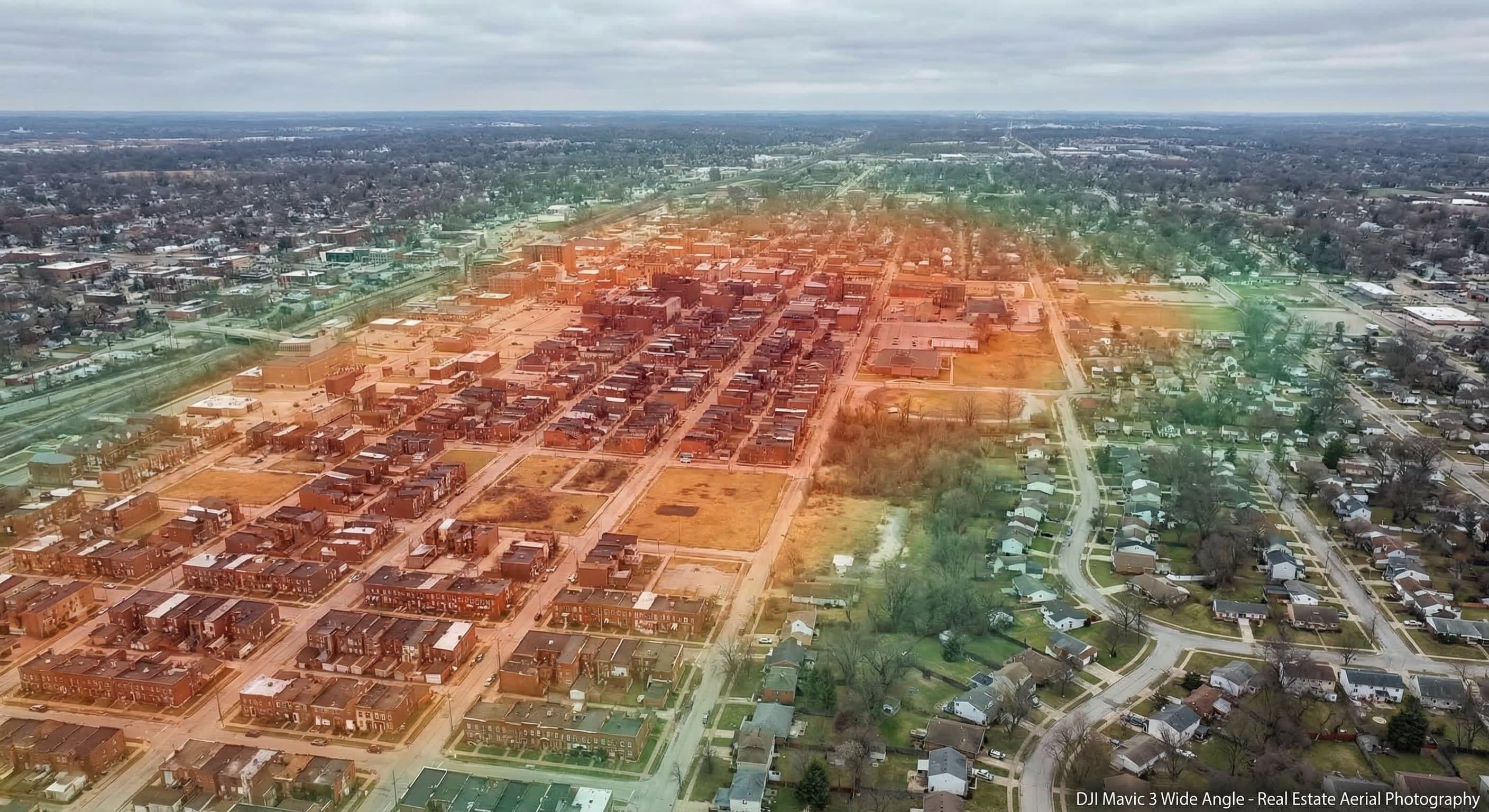
Tax Lien List Ohio: How the Certificate System Works (And Where Investors Focus)
TL;DR: Ohio is a tax lien certificate state governed by Ohio Revised Code § 5721. Counties sell annual tax certificates at public auctions — investors earn a fixed 18% annual interest rate set by state law, not bid down at auction. Property owners have up to one year to redeem. If unredeemed, lien holders can foreclose through Ohio courts. Cuyahoga, Franklin, Hamilton, and Summit counties carry the highest delinquency volume. No single statewide list exists — you work county-by-county or use a verified data platform.
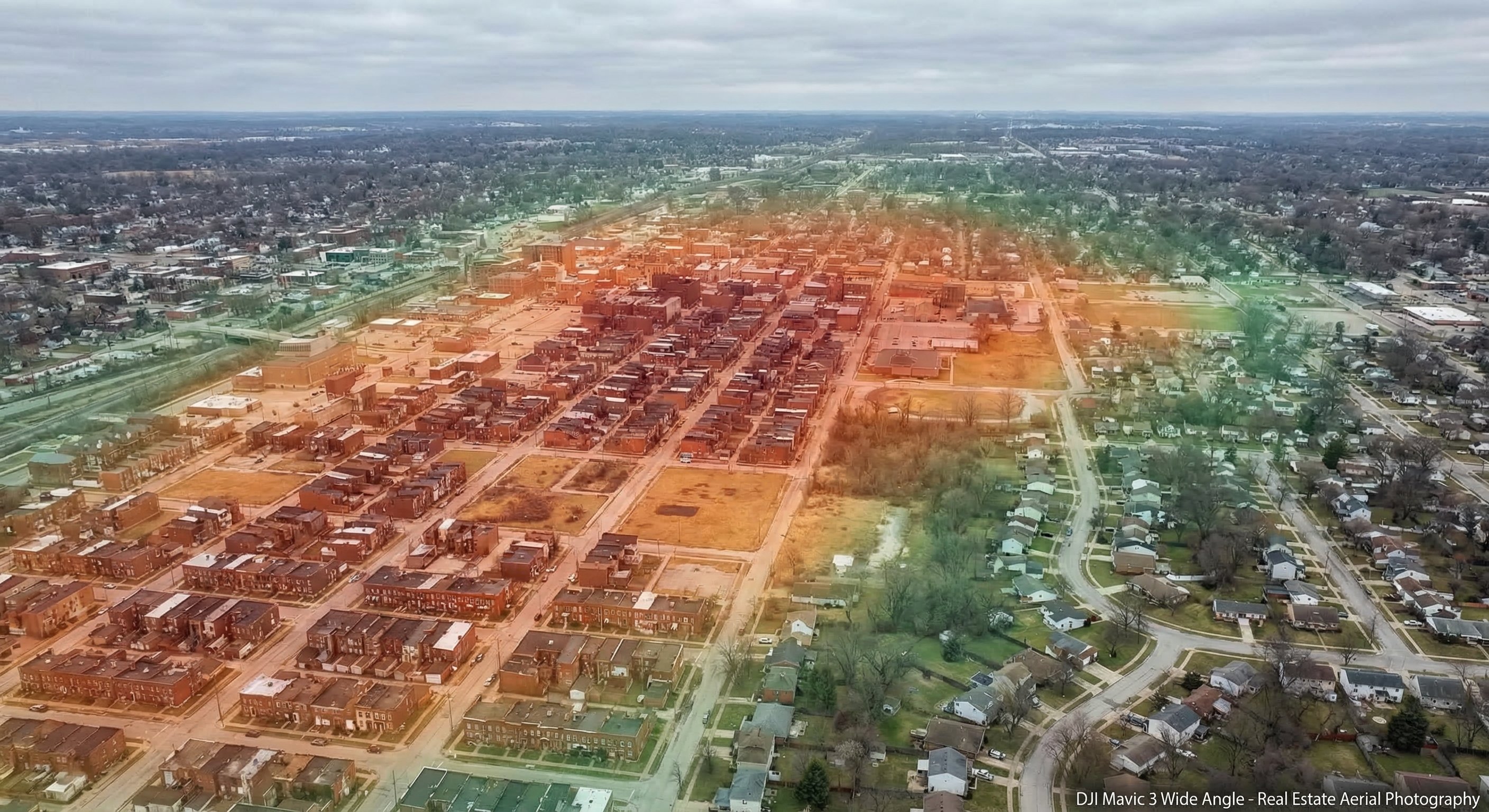
Ohio sits quietly in the middle of the Rust Belt with one of the most investor-friendly tax lien structures in the Midwest. The state's 88 counties collectively process tens of thousands of delinquent parcels every year — and unlike tax deed states where you're rolling the dice on clear title, Ohio's certificate system gives you a defined return while the property owner scrambles to redeem. If they don't? You've got a court-backed path to the deed.
But "Ohio has tax liens" is about as useful as "Ohio has weather." The specifics — which counties auction online versus in-person, when the sales happen, what the redemption process actually looks like, and where the inventory concentrates — are what separate informed investors from those who buy certificates in counties with no upside.
What Is Ohio's Tax Lien Certificate System?
Ohio operates as a tax lien state under Ohio Revised Code § 5721.30 through § 5721.43. When a property owner fails to pay real estate taxes, the county treasurer initiates a delinquency process that ultimately results in the placement of a tax lien on the property.
Rather than immediately seizing the property (as tax deed states do), Ohio allows counties to sell these delinquent tax liens as certificates at public auction. A private investor purchases the certificate — essentially paying the delinquent taxes on the owner's behalf — and receives in return:
- The right to collect the original delinquent amount
- 18% annual interest on their investment (set by state law — not bid down at auction)
- The legal standing to initiate foreclosure if the owner fails to redeem within the statutory period
That 18% fixed return, secured by real property, is genuinely attractive in any rate environment. The catch: liquidity is low. You're waiting at least one year for redemption to run its course, and significantly longer if you pursue foreclosure.
The redemption clock: Property owners typically have one year from the date of the certificate sale to redeem by paying all delinquent taxes plus accrued 18% interest. Some counties apply slightly different terms — always read the official sale materials for the specific county you're targeting.
Where to Find Ohio's Tax Lien Lists
Ohio's 88 counties each manage their own delinquent property lists. There is no single statewide database — the first friction point for out-of-state investors who assume a master "Ohio tax lien list" exists somewhere online.
1. County Treasurer Websites
Each Ohio county treasurer maintains a delinquent tax list updated throughout the year. Some publish it as a downloadable CSV or Excel file; others require an in-person request at the treasurer's office. Quality and accessibility vary significantly.
- Cuyahoga County: Cuyahoga County Treasurer — publishes annual delinquent list; online auction through SRI
- Franklin County: Franklin County Treasurer — publishes delinquent property data with parcel search
- Hamilton County: Hamilton County Treasurer — runs annual tax lien certificate sale
2. Third-Party Auction Platforms
Many Ohio counties now run online auctions through:
- SRI Tax Lien Services — used by Cuyahoga, Summit, Montgomery, and others
- GovEase — used by select Ohio counties
- RealAuction — used by a handful of additional counties
Check each county treasurer's site for their current platform. It changes.
3. Verified County Data Aggregators
For investors targeting multiple Ohio counties simultaneously, the county-by-county grind is slow. Platforms like DistressIQ aggregate assessor-verified tax delinquency data across 3,200+ counties nationwide — giving you a filtered, stacked view of Ohio delinquent properties searchable by county, assessed value, delinquency age, and overlaid with other distress signals like vacancy status, code violations, and absentee ownership flags.
For a deep look at the broader strategy, see our guide on how to find tax delinquent properties.
Ohio's Annual Tax Lien Certificate Sales: Timing and Format
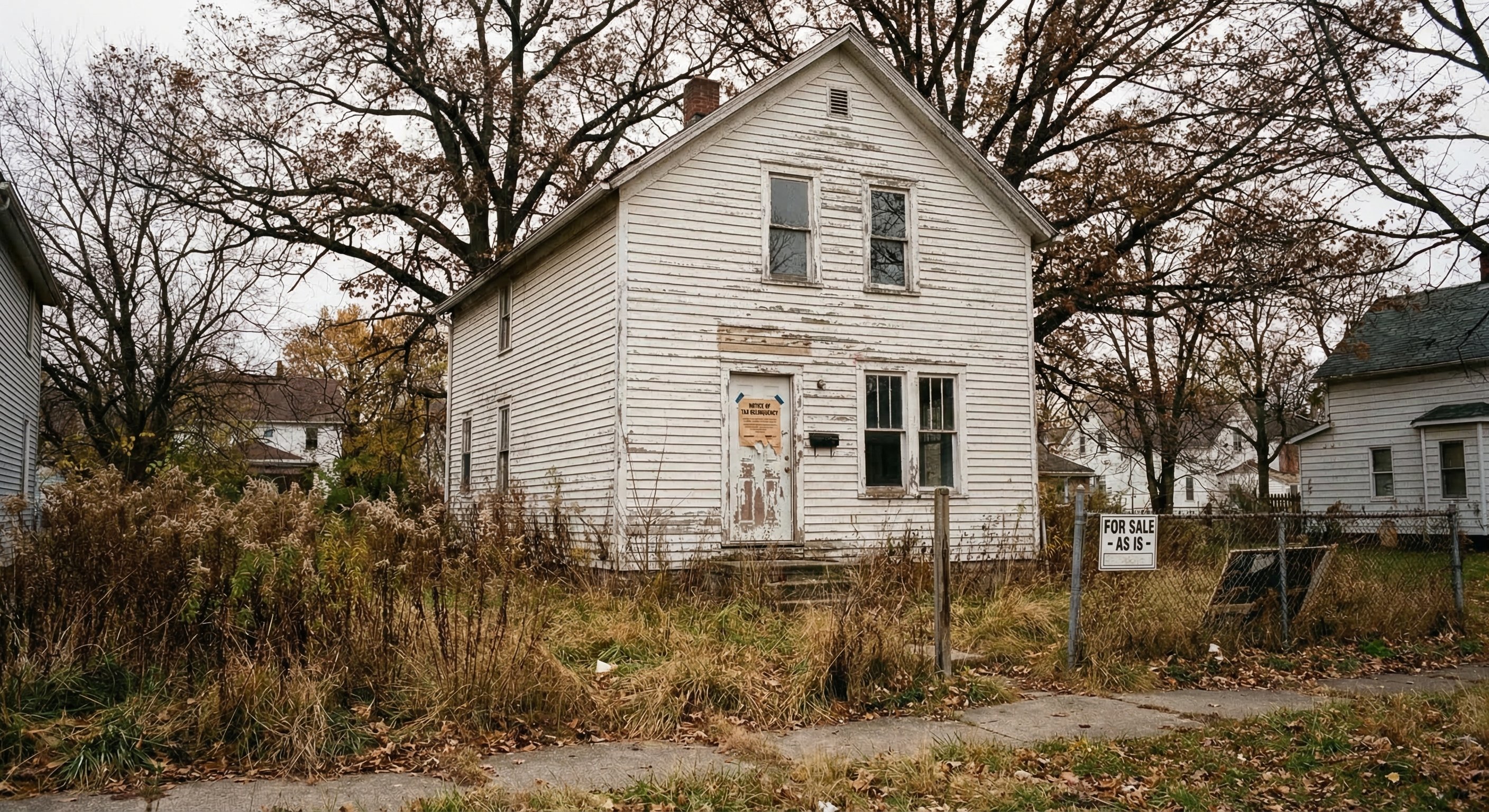
Ohio counties typically hold tax certificate auctions once per year, most falling in the September–December window, with some counties running into early spring. This means missing a county's sale date means waiting another full year.
Auction formats vary:
- Online auctions: Most large counties now use SRI, GovEase, or county-run online platforms
- Live in-person auctions: Some smaller counties still run traditional auction formats at the courthouse
- Over-the-counter (OTC) sales: Several counties offer OTC certificate sales for liens that went unsold at the primary auction — these can be particularly attractive because the investor picks from available inventory at their own pace
Registration requirements:
Most Ohio county auctions require advance registration (typically 7–14 days before the sale), proof of identity, and sometimes a good-faith deposit. Out-of-state investors can participate in most online auctions without physical presence, which has meaningfully expanded the investor pool over the past several years.
According to the Ohio County Treasurers Association, Ohio processes more than $1 billion in delinquent property tax collections in a typical fiscal year — a signal of how large the available inventory actually is across the state.
Free Weekly Alerts
See What's Distressed in Your Market
Get free weekly alerts — new distressed properties, motivation scores, and hot neighborhoods in your area. Addresses and contact info available inside DistressIQ.
Free forever · No credit card · Unsubscribe anytime
Key Counties for Ohio Tax Lien Investors
Not all of Ohio's 88 counties offer the same opportunity. Delinquency concentrates in specific markets, and understanding why helps you properly assess the risk-return balance.
Cuyahoga County (Cleveland)
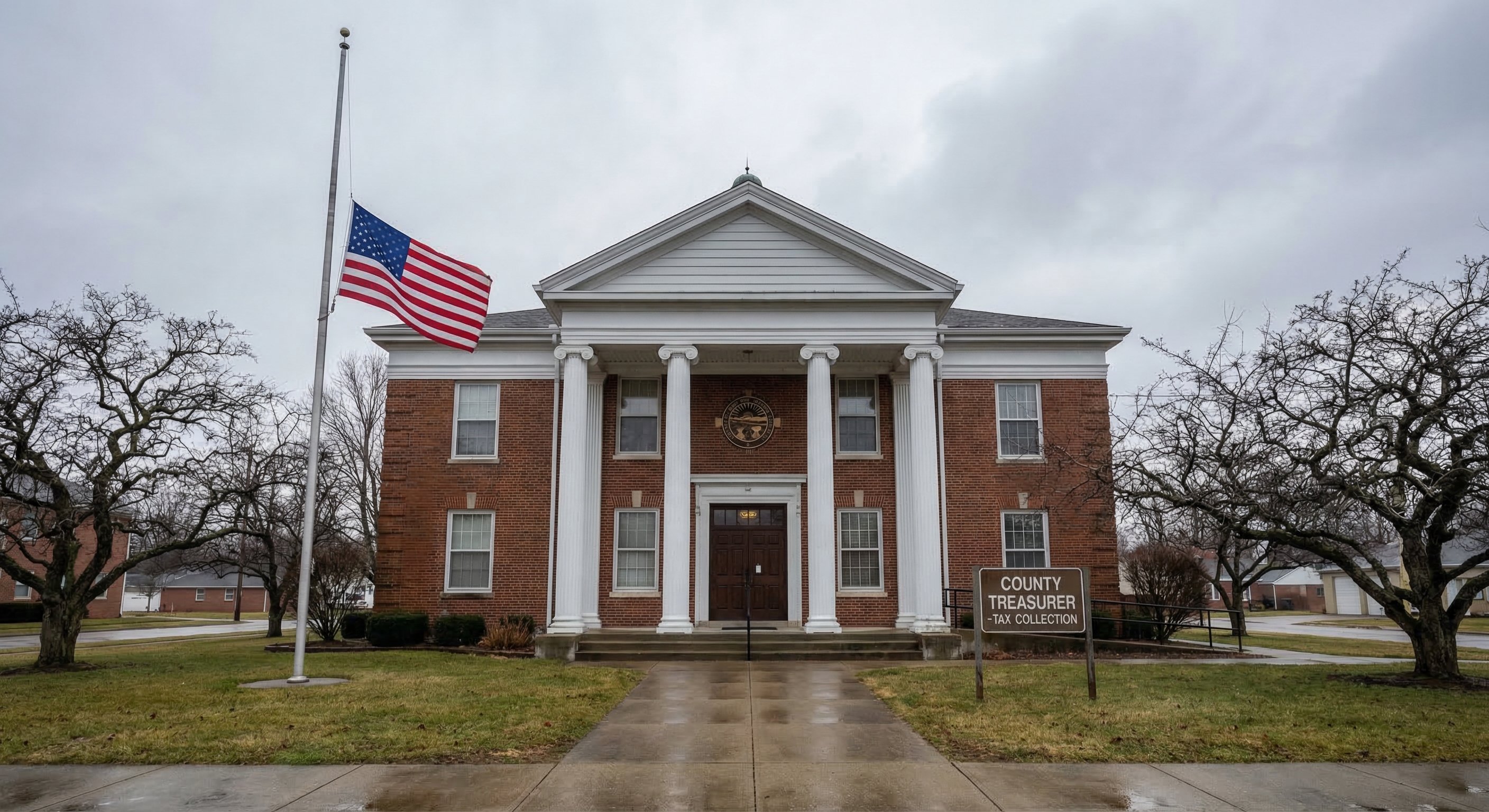
The highest-volume county in Ohio for tax delinquency by a significant margin. Cleveland's population decline over several decades left a legacy of vacant and abandoned properties that continues to generate substantial delinquency inventory. Cuyahoga's annual tax certificate sale is among the largest in the Midwest.
Investors will find large inventory — but also significant blight. Properties with environmental concerns, structural issues, and competing Land Bank claims are common here. The Cuyahoga County Land Reutilization Corporation (CCLRC) — Cuyahoga's land bank — is an aggressive buyer. Understand their acquisition strategies before assuming a certificate positions you for ownership.
Franklin County (Columbus)
Columbus is one of the few large Ohio cities actually gaining population, which changes the delinquency calculus meaningfully. Tax-delinquent properties in Franklin County have genuine upside in a market with sustained demand. The county's delinquency list skews toward older properties in east Columbus and Hilliard-area neighborhoods. Redemption rates here are higher (owners in growing markets want to keep their properties), so the 18% interest is more likely to run its full course.
Hamilton County (Cincinnati)
Cincinnati's revitalization story is real but uneven. Hamilton County offers a mix of urban core delinquencies — often tied to absentee landlords — and suburban foreclosure inventory bleeding in from surrounding counties. The county runs an annual certificate sale that draws consistent regional investor participation.
Summit County (Akron)
Akron has faced post-industrial challenges similar to Cleveland but at smaller scale. Summit County's delinquent list is substantial, and the county uses SRI for its online auction. Rubber industry legacy properties occasionally appear — check for environmental encumbrances before bidding.
Montgomery County (Dayton)
Dayton carries some of the highest distress signals per capita in Ohio. Tax delinquency in Montgomery County concentrates heavily in areas with elevated vacancy rates. For investors comfortable with Dayton-specific dynamics, the return profile can be strong.
Lucas County (Toledo)
Toledo's vacancy and blight situation mirrors Dayton's. Lucas County publishes its delinquent list and holds annual sales. Inventory is large, but careful property-level due diligence is essential given the extent of structural deterioration in harder-hit neighborhoods.
For context on how Ohio's delinquency profile compares to other Midwest markets, see our guide on tax delinquent properties in Ohio.
Ohio Tax Liens vs. Tax Deeds: Why This Distinction Matters
Ohio is not a tax deed state. This distinction is fundamental.
In a tax deed state (like Georgia or Texas), the county can ultimately convey a deed directly to a tax sale purchaser after a defined waiting period — a relatively clean path to ownership.
In Ohio's tax lien certificate system, getting from certificate to deed requires going through Ohio's court system to foreclose on the lien after redemption expires. That adds:
- Time: 12–24 months for a straightforward foreclosure following the redemption period
- Cost: Attorney fees, court filing costs, potential title complications
- Complexity: Ohio foreclosure law is procedural — you need a local real estate attorney who knows the county Common Pleas system
For most investors, this means Ohio tax lien certificates function better as a passive income instrument (the 18% return is real and reliable) than as a reliable acquisition pipeline. Some liens do lead to property — but treat that as the bonus scenario, not the primary plan.
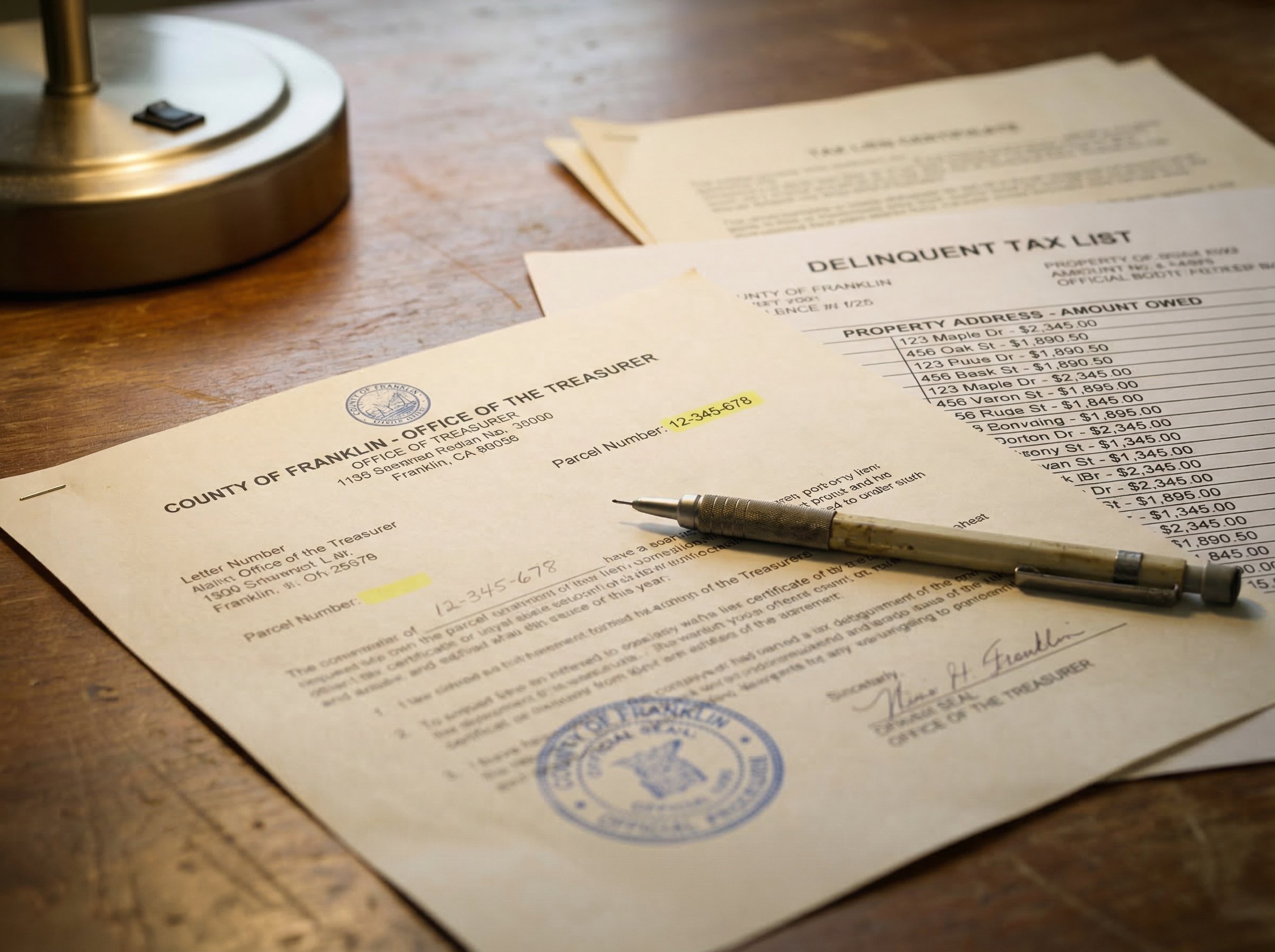
What Happens to Unredeemed Ohio Tax Certificates?
When the one-year redemption period expires without the owner paying, the certificate holder has the right — but not the obligation — to foreclose. Three options:
1. Foreclose: File for "foreclosure by tax certificate" under ORC § 5721.37 in the county's Common Pleas Court. If the court orders foreclosure, the property is sold at a sheriff's sale. Budget 12–24+ months for this process.
2. Do nothing: The certificate remains valid for its term. However, letting a certificate sit without action for an extended period can create complications — consult with a local real estate attorney about Ohio-specific time limits.
3. Sell the certificate: Ohio tax certificates are transferable. A secondary market exists, particularly for certificates in desirable markets. Some investors buy certificates specifically to resell them to parties who want the ownership path — a niche strategy but viable.
The Land Bank variable: Ohio county land banks operate under special statutes that can give them priority rights or expedited acquisition paths on tax-delinquent properties. In Cuyahoga, Franklin, Lucas, and Montgomery counties especially, research the land bank's current acquisition program before purchasing a certificate with ownership as the goal.
How DistressIQ Tracks Ohio Tax Delinquency
Ohio's 88-county structure creates genuine data fragmentation. Manually pulling delinquent lists from Cuyahoga one week and Franklin the next — then cross-referencing against vacancy rates, code violations, and lis pendens filings — is weeks of work that most investors simply don't do.
DistressIQ aggregates assessor-verified tax delinquency signals across all active Ohio counties and overlays them with 31+ other distress indicators: vacancy signals, lis pendens filings, code violations, absentee ownership flags, and more. The result: instead of a flat list of delinquent parcels, you're working with stacked distress scores — which properties are tax delinquent AND vacant AND owned by an out-of-state LLC.
That combination is the signal most likely to produce a motivated conversation. A property that's tax delinquent but occupied by an owner determined to save it? Low conversion probability. A property that's delinquent, vacant for 18+ months, and flagged for code violations? That's worth a letter and a phone call.

Ready to search Ohio's delinquent property signals? DistressIQ covers Ohio county-by-county with stacked distress data updated daily from county sources. Founding member pricing still available — Starter $89, Pro $174, Elite $349/mo. Start your free account at distressiq.ai
Key Takeaways
- ✅ Ohio is a tax lien certificate state — investors earn 18% annual interest, not direct deed rights at auction
- ✅ 88 counties run separate annual sales — no single Ohio tax lien list exists
- ✅ Interest rate is fixed at 18% per annum by state law — not bid down at auction
- ✅ Redemption period is typically 1 year from certificate purchase date
- ✅ Ownership path requires court foreclosure after redemption expires — budget 12–24+ additional months
- ✅ Cuyahoga, Franklin, Hamilton, and Summit are highest-volume counties
- ✅ Ohio Land Banks are aggressive players in delinquency — research their programs before targeting acquisition
- ✅ Online platforms (SRI, GovEase) have made Ohio certificates accessible to out-of-state investors
- ✅ Stacked distress signals — delinquent + vacant + absentee owner — dramatically improve conversion probability
Frequently Asked Questions
Q: Is Ohio a tax lien or tax deed state?
Ohio is a tax lien state. Counties sell certificates of lien at annual public auctions. Investors earn 18% annual interest on the unpaid taxes. Getting to actual property ownership requires filing for foreclosure by tax certificate through the county's Common Pleas Court after the one-year redemption period expires — typically adding another 12–24 months to the timeline.
Q: What interest rate do Ohio tax lien certificates pay?
Ohio sets the tax lien certificate interest rate at 18% per annum by state law (Ohio Revised Code § 5721.32). Unlike states where investors bid down the rate at auction, Ohio's rate is fixed — the auction determines who wins the certificate, not the rate of return. This makes Ohio one of the more predictable tax lien markets in the Midwest.
Q: How long does a property owner have to redeem an Ohio tax lien?
Property owners generally have one year from the date of certificate purchase to redeem by paying all delinquent taxes plus accrued 18% interest. Some county-specific variations exist — always review the official sale materials for the specific county before bidding.
Q: Can I find Ohio tax lien lists online?
Yes, but county by county. Each Ohio county treasurer maintains its own delinquent property list. Large counties like Cuyahoga, Franklin, and Hamilton publish theirs online — some as downloadable files. Smaller counties may require direct contact with the treasurer's office. Third-party platforms like DistressIQ aggregate this data across active Ohio counties in a searchable, filterable format.
Q: Which Ohio counties have the most tax-delinquent properties?
Cuyahoga County (Cleveland) has the largest volume by far, driven by decades of population loss and significant vacancy. Franklin County (Columbus), Hamilton County (Cincinnati), Montgomery County (Dayton), Summit County (Akron), and Lucas County (Toledo) also carry substantial delinquent inventory.
Q: Do Ohio land banks compete with private investors for tax liens?
Yes — particularly in Cuyahoga, Lucas, Montgomery, and several other counties. Ohio County Land Reutilization Corporations (land banks) are authorized to acquire tax-delinquent properties through expedited legal processes and sometimes have priority rights over private certificate holders. Research the specific land bank program for any county you're targeting before purchasing a certificate with ownership as the goal.
Q: What happens to an Ohio tax lien certificate after the redemption period expires?
If the property owner doesn't redeem within one year, the certificate holder can initiate foreclosure by tax certificate under Ohio Revised Code § 5721.37. The case is filed in the county's Common Pleas Court. If foreclosure is granted, the property proceeds to sheriff's sale. The complete process typically adds 12–24 months beyond the redemption period — and requires a local real estate attorney familiar with Ohio foreclosure procedure.
Final Thoughts
Ohio's tax lien market works — the 18% fixed rate is real, the inventory is large, and online auction platforms have made it accessible to investors who never set foot in the state. The complexity lies in the fragmented 88-county system and the honest reality that the path from certificate to deed runs through the court system.
For investors using Ohio certificates as a yield instrument, the math is straightforward. For those building an acquisition pipeline through tax lien foreclosure, patience and legal support are non-negotiable.
Either way, knowing where the delinquency concentrates — and which properties layer tax delinquency with vacancy, code violations, and absentee ownership — is the difference between working a promising list and building a profitable pipeline.
Sources: Ohio Revised Code § 5721 — Delinquent Lands | Ohio County Treasurers Association | Cuyahoga County Treasurer
The data behind this article
DistressIQ Monitors These Signals in Real Time
Pre-Foreclosures
NOD + NTS filings
Tax Delinquency
County treasurer records
Code Violations
Municipal inspection filings
Probate Filings
Superior Court records
Every lead is scored 0–100 for seller motivation based on signal type, duration, severity, and stacking. Nationwide coverage — every US county, updated daily.
Ready to find deals in your market?
See Live Distress Signals in Your County
Stop calling dead leads. Every lead in DistressIQ is scored 0–100 for seller motivation, with verified contact info included. Browse the free tier to see what's active in your market right now.
Browse Free Leads — No Credit Card