Tax Lien Investing for Beginners: A Practical Guide to Generating Steady Returns

Tax Lien Investing for Beginners: A Practical Guide to Generating Steady Returns
TL;DR: Tax lien investing lets beginners earn 8-18% annual returns backed by real estate, without owning property. The process works like this: when a homeowner fails to pay property taxes, the county places a lien against the property and sells the right to collect those unpaid taxes at a public auction. Investors buy tax lien certificates, the homeowner pays back the owed amount plus interest, and the investor collects the return. The main risks are bidding wars in low-supply areas and purchasing liens on properties with no equity. DistressIQ tracks active tax lien filings across every US county, updated daily, so investors can research upcoming auctions before attending.
Important note for beginners: This strategy requires patience and capital research. It is not a get-rich-quick tactic, but for investors who understand how tax lien auctions work, it can produce consistent, predictable income with a fraction of the effort required by traditional real estate investing.

Why Property Taxes Create an Investing Opportunity
Property taxes are the single most reliable obligation a homeowner has. Unlike a credit card bill or medical debt, which can be discharged in bankruptcy, delinquent property taxes follow the property itself. The lien stays attached to the title until it is paid.
Every year, across thousands of US counties, homeowners fall behind on property taxes for one reason or another: job loss, medical emergency, divorce, or simply poor cash flow management. The county does not wait indefinitely. After a legally required redemption period, the taxing authority sells the right to collect those unpaid taxes at a public auction. That sale is the tax lien certificate.
For investors, this creates a straightforward opportunity: buy the certificate, earn interest when the homeowner pays back what they owe, and in some cases, acquire the property itself if they do not. The returns, in most states, are fixed by statute and range from 8% to 18% annually. No tenants, no rehab budgets, no property management.
How Tax Lien Investing Works: The Step-by-Step Process
The tax lien investing process follows a predictable sequence. Understanding each stage is critical before committing any capital.
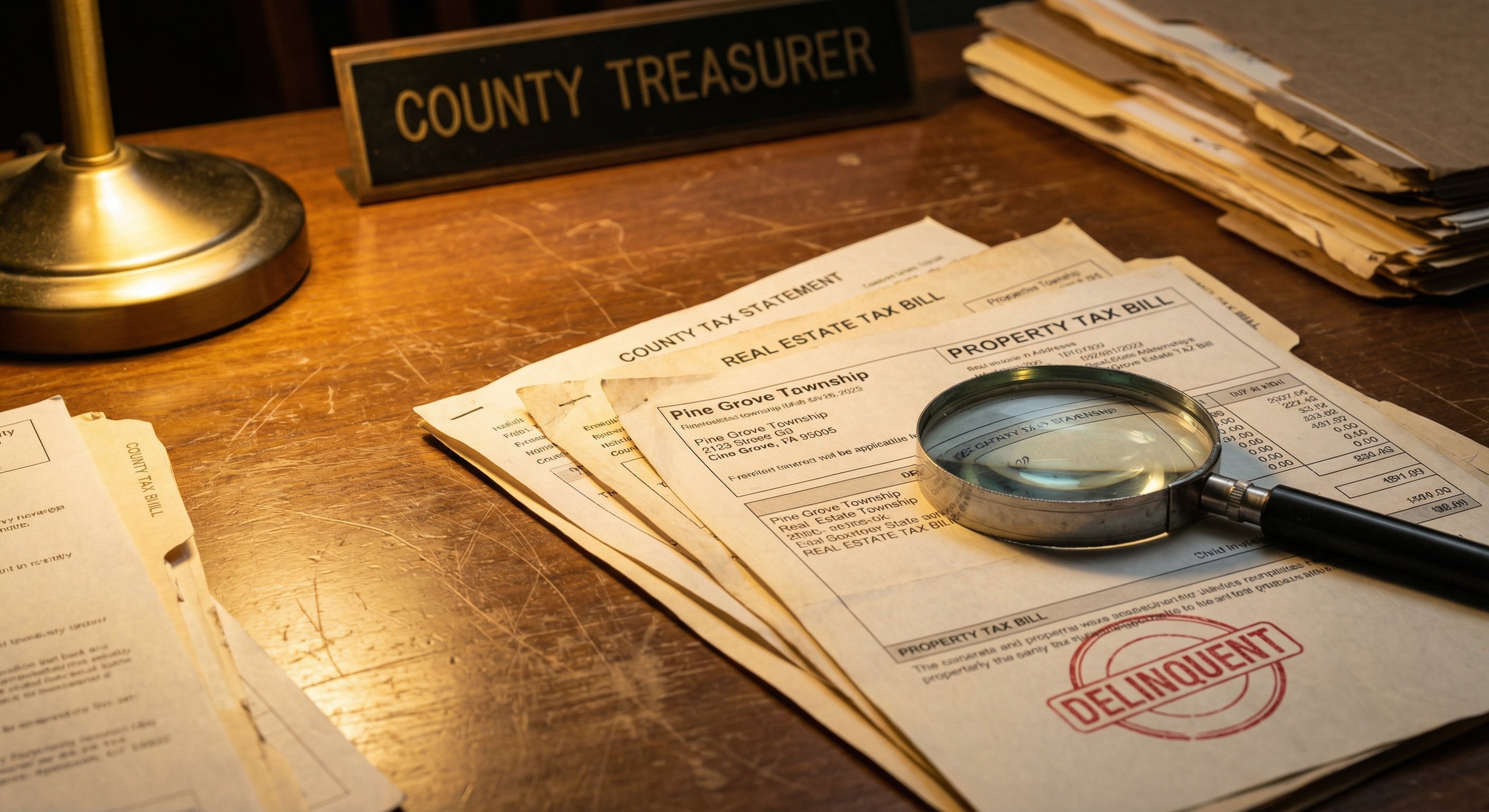
Step 1: The county identifies delinquent properties. Each year, counties compile a list of properties with unpaid property taxes, special assessments, and sometimes municipal utility liens. These lists are public record and are the starting point for any research.
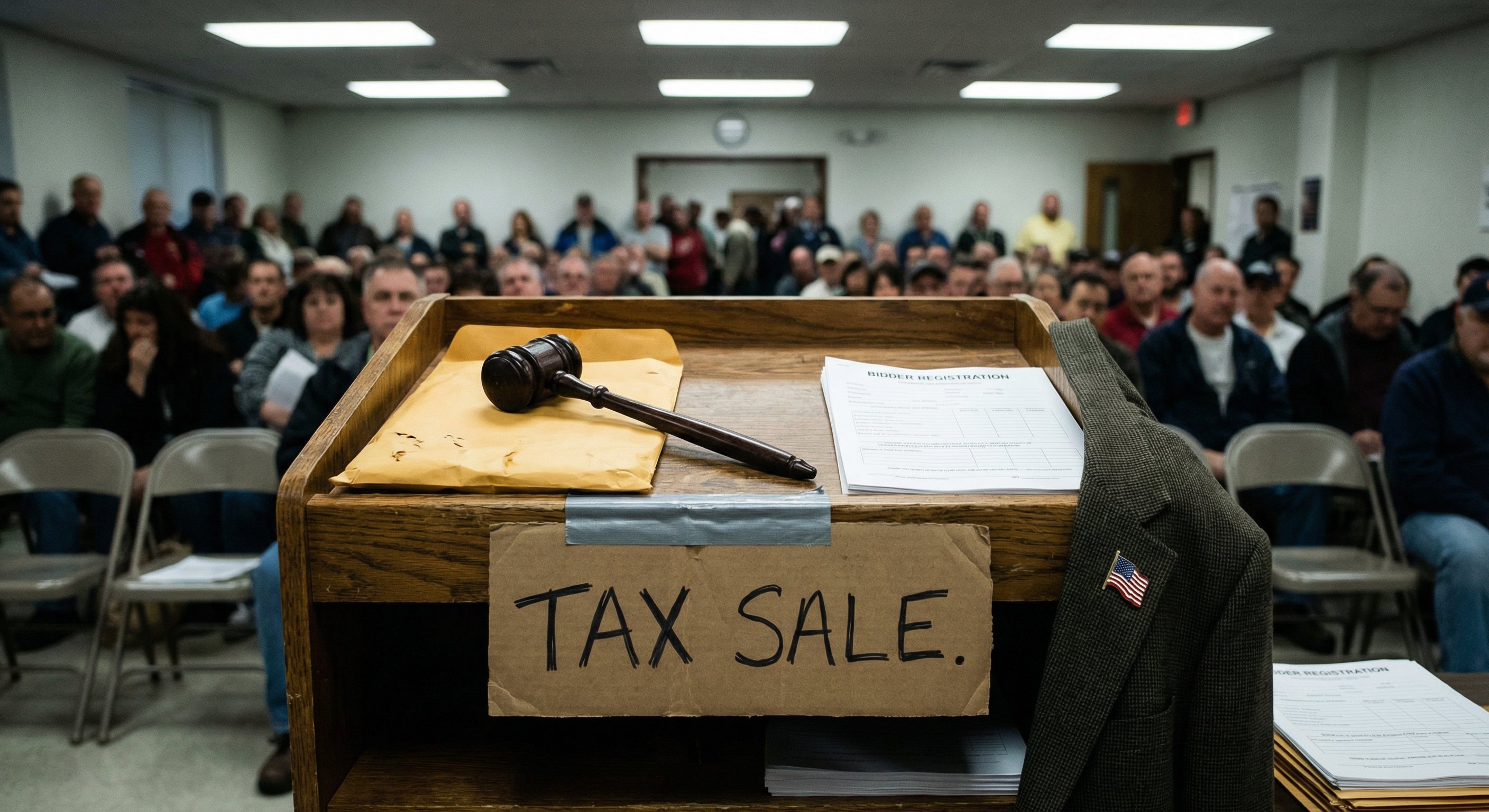
Step 2: The county holds a public auction. Most counties conduct tax lien certificate auctions annually, though some use a rolling quarterly schedule. Auctions are typically held at the county courthouse or online through the county treasurer's website. Investors must register in advance, and some counties require a deposit before bidding.
Step 3: Investors purchase certificates. At the auction, investors bid on tax lien certificates. In most states, the bidding works as a downward auction: the county starts with the maximum allowable interest rate (often 12-18%), and investors bid downward on the rate they will accept. The lowest rate wins. In states with high investor demand, some certificates sell at 0% interest, meaning the investor receives only the principal back with no additional return.
Step 4: The homeowner has a redemption period. After the certificate is purchased, the homeowner has a statutory window to repay the taxes owed plus accumulated interest. This period varies by state, from 30 days in some jurisdictions to two years in others. The clock starts on the date of the auction.
Step 5: The investor collects or forecloses. If the homeowner pays within the redemption period, the investor receives the principal plus interest at the rate specified on the certificate. If the homeowner fails to pay, the investor can initiate foreclosure and take ownership of the property.
The Two Types of Tax Lien States: Certificate vs. Deed
Not all states sell tax lien certificates. Investors must understand which type of state they are operating in, because the investment mechanics differ significantly.
Tax lien certificate states sell the lien itself at auction. The investor acquires a certificate representing the right to collect the debt plus interest. If the homeowner redeems, the investor earns the stated return. If not, the investor must go through a separate foreclosure process to take title. Certificate states include Florida, Texas, Illinois, Ohio, and approximately 20 others.
Tax deed states do not sell liens. Instead, the county sells the property itself at auction for the amount of unpaid taxes. The winning bidder receives a tax deed and takes ownership immediately, subject to any redemption period the state provides. Tax deed states include Arizona, Colorado, Nevada, and Washington.
The practical difference for beginners is substantial. In tax deed states, investors must be prepared to own the property immediately. In certificate states, ownership is only a fallback, and the redemption process is the primary path to profit.
Free Weekly Alerts
See What's Distressed in Your Market
Get free weekly alerts — new distressed properties, motivation scores, and hot neighborhoods in your area. Addresses and contact info available inside DistressIQ.
Free forever · No credit card · Unsubscribe anytime
The Math: What Tax Lien Returns Actually Look Like
Tax lien investing returns are often quoted in percentage terms that sound impressive but require context to evaluate properly. Here is what realistic returns look like in practice.
In Illinois, investors purchased tax lien certificates at the 2024 Cook County auction earning up to 36% annual interest on delinquent taxes. That figure represents the maximum allowable under Illinois statute, and it reflects the total return if the certificate is held for a full year. In Florida, maximum rates typically cap at 18%. In Ohio, rates are set at 12% plus a 2% penalty.
For a beginner, consider a practical example. A homeowner in Hillsborough County, Florida owes $3,200 in property taxes that have been delinquent for 14 months. The county sells a tax lien certificate at auction. An investor purchases it at a 6% interest rate. The homeowner redeems eight months later. The investor earns: $3,200 × 6% × (8/12) = $128 on a $3,200 investment. Annualized, that is roughly a 6% return, which outpaces most savings accounts but requires the capital to sit idle during the redemption period.
The returns become more attractive when redemption periods are long and homeowners are highly motivated. Some investors stack multiple certificates across a portfolio, compounding the effect. But a beginner should start small, track results carefully, and resist the temptation to deploy capital aggressively before understanding local market conditions.

Common Mistakes Beginners Make in Tax Lien Investing
The tax lien investing learning curve is real, and the mistakes are predictable. Knowing what they are before attending the first auction prevents the most costly errors.
Bidding against yourself at 0% interest. In high-demand counties near major cities, investor competition drives interest rates to 0% at many auctions. A beginner who pays face value and receives no interest has still profited nothing on the capital. The certificate becomes a bet on foreclosure and property acquisition, which is an entirely different investment thesis.
Ignoring property equity. A tax lien certificate is only as good as the property it is attached to. A lien on a property worth $50,000 with $48,000 in senior liens behind it may not be worth purchasing at any price, because the homeowner has no meaningful equity to protect. Beginners should research the title chain and any existing mortgages before bidding.
Not understanding local redemption timelines. Redemption periods vary not just by state but by county, and sometimes by the type of tax owed. Some counties allow redemption up to the moment of a foreclosure sale, not the auction date. Beginners who assume a fixed two-year window may be surprised when a homeowner redeems at the last possible moment, after the investor has already begun foreclosure proceedings.
Failing to verify the property exists and is accessible. Some delinquent properties are abandoned, inaccessible, or have environmental issues that make them worthless even at auction prices. A property with a tax liability of $8,000 that requires $40,000 in remediation is not a bargain at any price.
What DistressIQ Does for Tax Lien Investors
DistressIQ tracks tax lien filings across every US county, updated daily from county-direct sources. For investors researching tax lien opportunities, the platform provides a filtered view of properties with active tax delinquent status, allowing investors to narrow their research before attending a specific auction.
Rather than reviewing county records county by county, investors can browse a national map showing where tax delinquency rates are highest, filter by county, and drill into individual property records. Each lead includes the assessed value of the property, the amount owed, and any additional distress signals on file, such as code violations or pending court actions.
This allows investors to make more informed decisions about which certificates are worth pursuing. A property with a high assessed value relative to the tax debt is a stronger candidate than one where the debt exceeds equity.
The motivation score on each property also helps investors prioritize. Properties with multiple simultaneous distress signals often indicate a homeowner under significant financial pressure, which historically correlates with higher redemption rates.
Investors can browse the map and property records for free. Contact information and skip-traced owner details are available as an action on each lead, for investors ready to pursue direct outreach alongside their auction strategy.
Tax Lien States vs. Tax Deed States: Where to Start
For beginners, certificate states offer a gentler entry point than deed states. The ability to earn a fixed return simply by waiting for redemption, without taking physical ownership of a property, reduces the risk profile considerably.
Among certificate states, Illinois and Ohio are frequently cited as attractive for beginners because of their statutory interest rate structures and relatively deep auction volumes. Florida offers high transparency and a well-documented process, though competition in metropolitan counties can compress returns. Texas investors operate under a different structure entirely, where properties are sold directly at a foreclosure auction if taxes remain unpaid, rather than through a certificate purchase first.
DistressIQ covers tax lien activity in all 50 states, with detailed county-level breakdowns for the largest investor markets. Investors researching a specific county can see whether the county uses a certificate or deed system, the typical auction schedule, and the statutory interest rate range before committing time and capital to attend.
Frequently Asked Questions
Q: How much money do I need to start investing in tax liens?
Most county auctions allow investors to begin with a few thousand dollars per certificate. Some counties require a deposit to register, ranging from $500 to $5,000, which is refundable if no purchases are made. Investors can start with a single certificate in one county and expand from there. The key is to research the specific county auction rules before attending, since minimum bid amounts and registration requirements vary.
Q: What happens if the homeowner never pays back the taxes?
In certificate states, the investor has the right to foreclose on the property after the redemption period expires. Foreclosure is a legal process that requires filing in county court and can take six months to a year or longer, depending on the jurisdiction. In deed states, ownership is immediate upon winning the auction, but properties sold at tax deed auctions are often sold in as-is condition, with no guarantees about the property's physical state or title cleanliness.
Q: Are tax lien investments risk-free?
No investment is risk-free, and tax lien investing carries specific risks. The primary risks are: purchasing a certificate on a property with insufficient equity to make foreclosure profitable, losing capital to a 0% interest bid with no redemption, and acquiring a deed to a property that requires significant remediation. Researching each property before bidding and starting with smaller positions in states with longer redemption periods helps manage these risks.
Q: Can I invest in tax liens from out of state?
Yes. Many counties now conduct auctions online, making it possible to participate from anywhere. Some investors specialize in specific states and build expertise in local redemption timelines, auction formats, and county-by-county procedures. DistressIQ tracks tax lien activity across all 50 states, which is particularly useful for out-of-state investors who cannot easily visit county courthouses to review records in person.
Q: How do I find upcoming tax lien auctions in my target county?
County treasurer websites publish auction dates and lists of delinquent properties 30-60 days before each sale. Some counties publish the complete delinquent property list online; others require an in-person visit to the courthouse. DistressIQ aggregates county-level tax delinquent data to help investors identify which counties have the highest volume of delinquent properties, making it easier to narrow down research before visiting specific auction listings.
Is Tax Lien Investing Right for You?
Tax lien investing is not a passive hobby. It requires upfront research, an understanding of state-specific legal processes, and capital that can sit idle for months or years in some cases. For beginners willing to do the work, it offers a rare combination: fixed income-like returns, real estate backing, and a transparent statutory framework that makes the investment terms clear before capital is committed.
The counties with the highest tax lien volumes also tend to be the ones with the most distressed property activity overall. DistressIQ tracks those markets continuously, giving investors an ongoing research advantage as they build their auction expertise over time.
Start with one county. Learn the redemption timeline, the auction format, and the typical bid competition. Build a track record with a few certificates before scaling. That is how professionals in this niche have operated for decades: methodical, research-driven, and patient.
Browse current tax lien activity by county at DistressIQ, free, and research the markets where tax delinquent properties are creating the most auction opportunities.

The data behind this article
DistressIQ Monitors These Signals in Real Time
Pre-Foreclosures
NOD + NTS filings
Tax Delinquency
County treasurer records
Code Violations
Municipal inspection filings
Probate Filings
Superior Court records
Every lead is scored 0–100 for seller motivation based on signal type, duration, severity, and stacking. Nationwide coverage — every US county, updated daily.
Ready to find deals in your market?
See Live Distress Signals in Your County
Stop calling dead leads. Every lead in DistressIQ is scored 0–100 for seller motivation, with verified contact info included. Browse the free tier to see what's active in your market right now.
Browse Free Leads — No Credit Card