Pre-Foreclosure Leads Oklahoma: The 10-30 Day Window Most Investors Miss
Pre-Foreclosure Leads Oklahoma: The 10-30 Day Window Most Investors Miss
TL;DR: Oklahoma's non-judicial foreclosure process moves faster than most neighboring states. The critical pre-foreclosure window lasts roughly 10-30 days after a Notice of Default is recorded and before the auction date is set. Investors using generic lead lists typically work with data that is 30-60 days stale, missing the period when homeowners are most reachable. DistressIQ tracks Notice of Default filings across Oklahoma's 77 counties in real time, so investors can initiate contact during the window when homeowners are still actively exploring alternatives to auction.
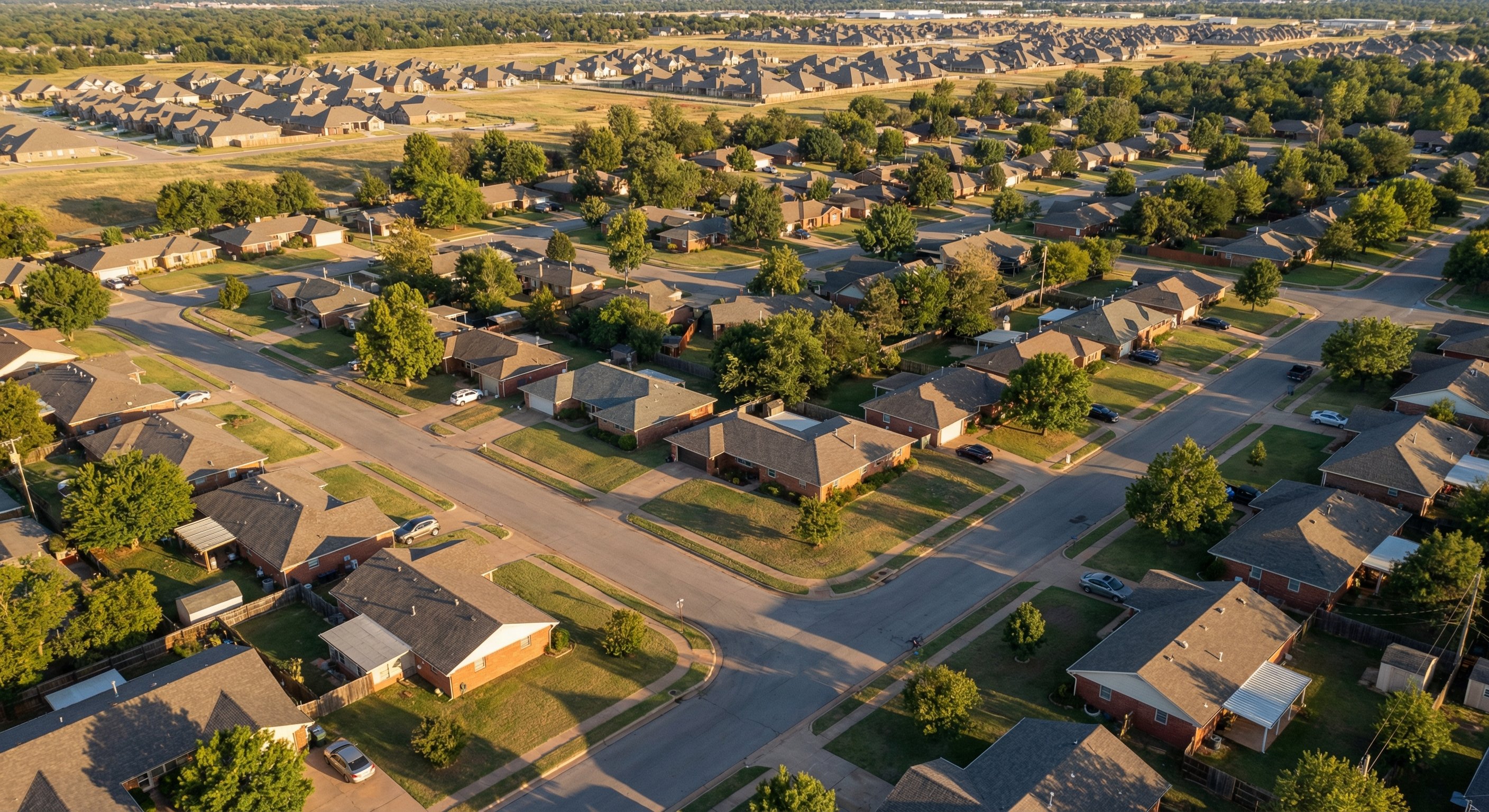
The Timeline Nobody Talks About
Most real estate investors know that pre-foreclosure investing means reaching a homeowner before the auction. What they do not know is how narrow that window actually is in Oklahoma.
In most Oklahoma counties, the pre-foreclosure period runs approximately 10-30 days after a Notice of Default hits public records and before the auction date is formally set. In some counties, that window compresses to fewer than 15 days. Texas, by contrast, has dysfunctional foreclosure backlogs that keep properties in pre-foreclosure limbo for 180+ days in some counties. Oklahoma does not have that backlog.
The practical consequence: an investor working pre-foreclosure leads in Oklahoma needs to move within days of a Notice of Default being recorded, not weeks. Most investors using MLS-sourced data or generic lead platforms do not have access to fresh enough information to act in that window. By the time a pre-foreclosure property appears on a standard portal, it is 30-60 days old and the homeowner has already mentally moved past looking for alternatives.
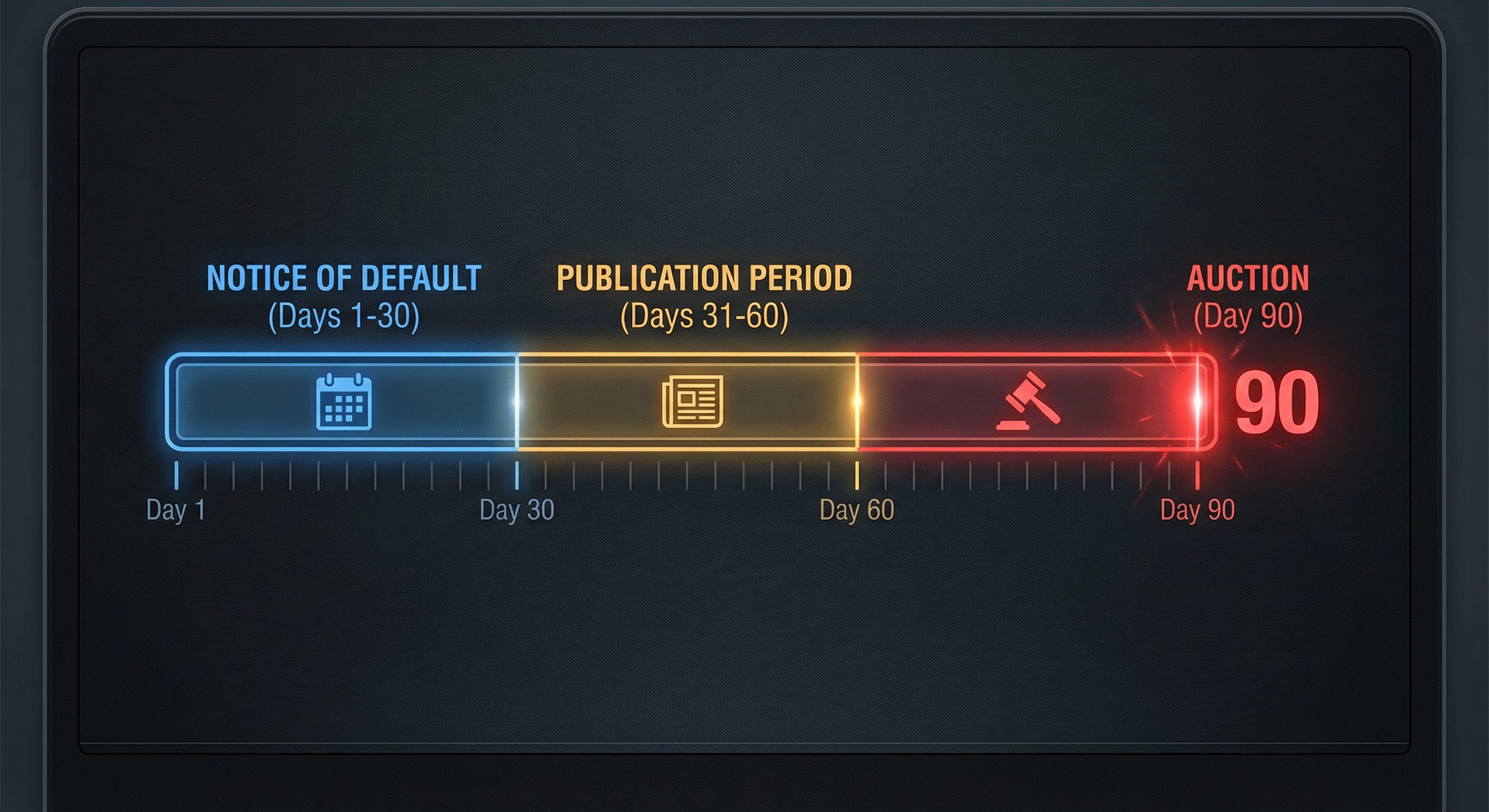
Oklahoma presents a specific opportunity for pre-foreclosure investing because of how the state structures its foreclosure process. The majority of Oklahoma counties use a non-judicial power-of-sale foreclosure, which means the lender can move from default to auction in as few as 90 days without court involvement. This creates a compressed timeline that rewards fast actors and penalizes investors working with stale data.
The state has 77 counties and approximately 1.5 million occupied housing units. Pre-foreclosure signals concentrate in five counties: Oklahoma County (Oklahoma City), Tulsa County (Tulsa), Cleveland County (Norman), Comanche County (Lawton), and Rogers County (Claremore). These five counties account for the majority of distressed property filings in the state and represent the highest volume opportunity for investors sourcing pre-foreclosure leads.
How Oklahoma's Non-Judicial Foreclosure Process Works
Oklahoma is primarily a non-judicial foreclosure state, governed by Title 46 of the Oklahoma Statutes. A non-judicial foreclosure means the lender does not need to go through the court system to sell a property at auction. Instead, the process follows the power-of-sale clause in the mortgage or deed of trust.
The sequence looks like this: the homeowner defaults, the lender records a Notice of Default with the county clerk, the trustee publishes notice in a local newspaper for three consecutive weeks, and the property is auctioned at a county courthouse steps 10-30 days after the final publication. From the Notice of Default to the auction, the total elapsed time is typically 90-120 days in most counties.
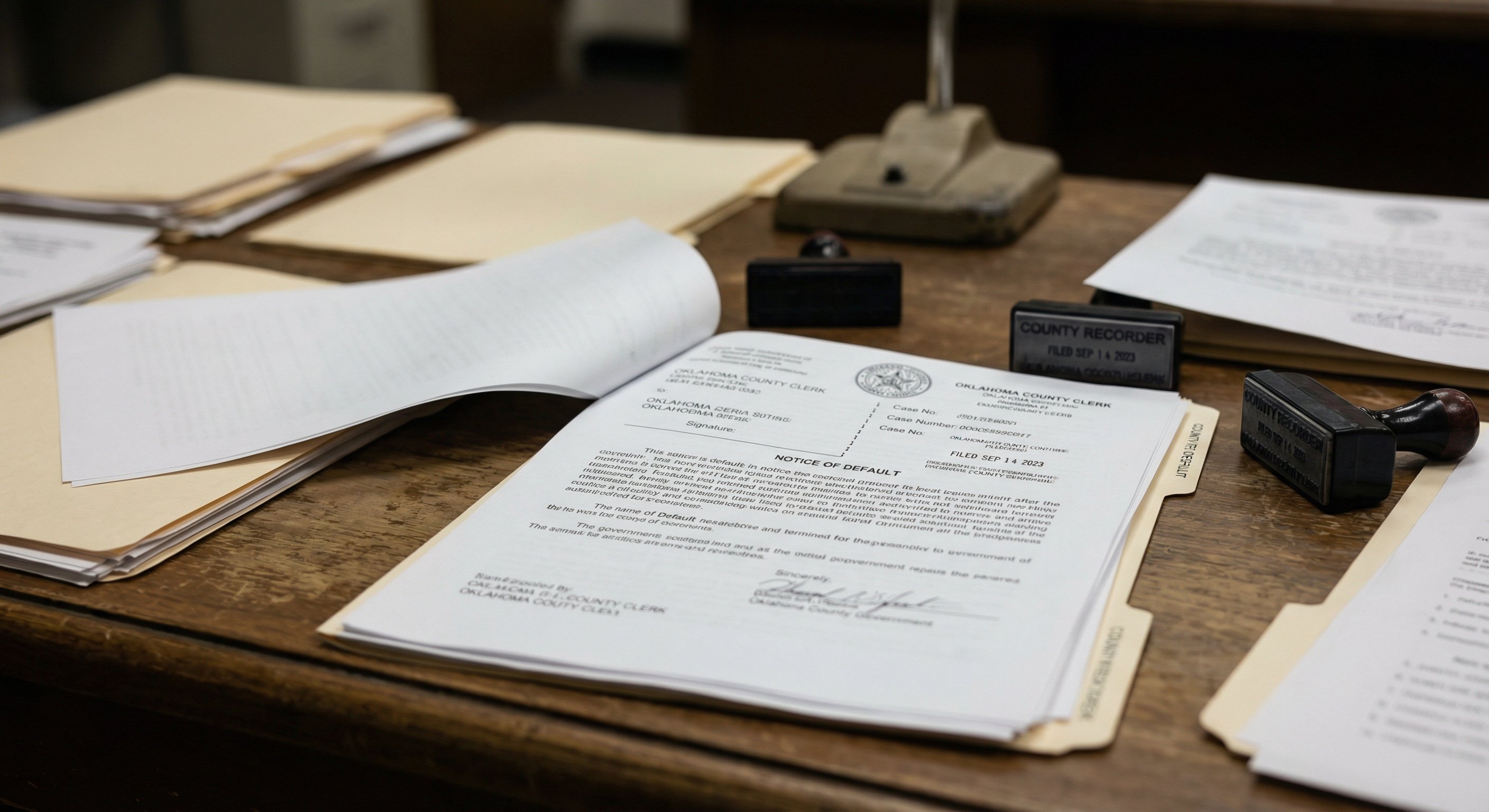
The Notice of Default is the critical document for pre-foreclosure investors. It signals that the lender has initiated the foreclosure process and that the homeowner has a defined window to bring the loan current, negotiate a modification, or sell the property before the auction. In Oklahoma, the Notice of Default becomes a matter of public record through the county clerk's office in the county where the property is located.
Once the Notice of Sale is recorded, the timeline accelerates significantly. The homeowner typically has very little recourse at that stage and is less likely to engage with investor outreach. The ideal contact window is the period between the Notice of Default and the Notice of Sale, which is generally the 30-90 day period after default when the homeowner is actively looking for solutions.
Why Oklahoma Lis Pendens Filings Create Hidden Opportunities
Most investors focus exclusively on Notice of Default filings when sourcing pre-foreclosure leads. That focus misses a significant secondary source of motivated sellers in Oklahoma.
Lis pendens, which translates to "notice of litigation," is a filed document that alerts potential buyers and lenders that a property is involved in a legal dispute. In Oklahoma, lis pendens filings appear on properties for several reasons: boundary disputes, mechanic's liens from unpaid contractors, title defects discovered during a sale, and divorce proceedings involving real property.
Mechanic's lien lis pendens filings represent a particularly underserved pre-foreclosure opportunity in Oklahoma. When a contractor files a lien against a property for unpaid work and then escalates that lien to a lis pendens filing, the property owner faces a title problem that blocks a conventional sale. Many of these homeowners are motivated to sell quickly to clear the title issue before it reaches a legal judgment.
DistressIQ tracks both Notice of Default filings and lis pendens filings as separate signal types, then stacks them together to surface properties where multiple distress indicators are present. A property with both a Notice of Default and an active lis pendens represents a highly motivated seller situation that most investors will not find using standard lead sources.
Free Weekly Alerts
See What's Distressed in Your Market
Get free weekly alerts — new distressed properties, motivation scores, and hot neighborhoods in your area. Addresses and contact info available inside DistressIQ.
Free forever · No credit card · Unsubscribe anytime
Why Most Investors Miss the Window in Oklahoma
The challenge with Oklahoma pre-foreclosure leads is not finding the properties. It is finding them fast enough to act.
County clerk records in Oklahoma are technically public. Any investor can go to the county clerk's website, search by document type, and find recent Notice of Default filings. The problem is that doing this across all 77 counties requires significant manual effort. County recorder websites vary in search functionality. Some counties have indexed records going back decades; others have poor search tools that make finding recent filings time-consuming.
Even for investors willing to do the manual work, the county clerk's records reflect the date the document was processed, not the date it became actionable. By the time an investor finishes checking multiple county recorder sites, compiles a list, and begins outreach, properties have often already moved to the Notice of Sale stage or beyond.
The alternative of using generic national lead platforms does not solve this problem. Most national platforms update their data on 30-90 day cycles. A property that was listed as pre-foreclosure 45 days ago may already have closed at auction or be scheduled for sale next week. The data freshness problem is the core issue.
DistressIQ addresses the freshness problem by monitoring Notice of Default filings from county recorder sources across Oklahoma's 77 counties on a daily basis. When a new Notice of Default is recorded in Oklahoma County or Tulsa County, it appears in DistressIQ as a pre-foreclosure signal within hours of the filing, not weeks later. Each lead is scored by recency of the distress signal and the presence of additional signals, so investors can prioritize outreach to the most recently filed properties.
Oklahoma County-by-County Breakdown for Pre-Foreclosure Leads
Pre-foreclosure volume in Oklahoma is not distributed evenly across the state. Understanding which counties produce the most pre-foreclosure activity and what the investor competition looks like in each helps investors allocate their outreach time effectively.
Oklahoma County (Oklahoma City metro) generates the highest volume of pre-foreclosure filings in the state. The Oklahoma City metro has experienced significant population growth since 2020, which has increased both purchase demand and investor activity. Competition for pre-foreclosure leads in Oklahoma County is higher than in other parts of the state. Investors working Oklahoma County pre-foreclosure leads should expect to face more competition from other buyers and should factor that into offer pricing.
Tulsa County is the second-highest volume market and has a distinct advantage: the Tulsa County clerk's office has invested in better online record search functionality compared to most other Oklahoma counties. Investors working Tulsa County pre-foreclosure leads can often access fresher data through manual research than in other counties, but the volume advantage still favors investors using platform-sourced data.
Cleveland County (Norman and surrounding areas) represents a middle-ground opportunity. Volume is lower than Oklahoma County or Tulsa County, but competition is also less intense. Cleveland County pre-foreclosure leads tend to be less heavily worked by other investors, making it a productive market for investors who want to build relationships with homeowners without immediately competing with five other cash offers.
Canadian County has grown rapidly as an I-40 corridor bedroom community for Oklahoma City. Pre-foreclosure volume is moderate but increasing. Canadian County is worth monitoring for investors who want to get ahead of a growing market before competition increases.
Rogers County and Comanche County represent smaller but viable markets for pre-foreclosure investing. Rogers County (Claremore) has a mix of rural and suburban properties. Comanche County (Lawton) has lower housing values, which means smaller margins on pre-foreclosure deals but also significantly less competition from institutional investors.
What to Look for in an Oklahoma Pre-Foreclosure Lead
Not all pre-foreclosure leads are worth pursuing. The most actionable leads share several characteristics that DistressIQ's scoring system is designed to surface.
The first factor is signal recency. A Notice of Default filed 10 days ago represents a fundamentally different opportunity than one filed 60 days ago. A recently filed notice means the homeowner is still in the active problem-solving phase, still researching options, and still open to an investor conversation. A notice filed 60 days ago typically means the homeowner has already exhausted their options or has decided to let the property go to auction.
The second factor is equity position. If the property has appreciated since the homeowner purchased it, or if the loan balance is significantly below current market value, the homeowner has a realistic path to a conventional sale or a short sale. An investor can offer to help facilitate that sale and earn a wholesaler fee. If the property is underwater, the negotiation dynamics are different and the homeowner may be less motivated to work with an investor.
The third factor is signal stacking. A property with a Notice of Default AND a lis pendens filing AND a code violation represents a more complex motivated-seller situation than a property with a single distress signal. Multi-signal properties often indicate a homeowner who has been managing a difficult situation for an extended period and is more receptive to a clean cash offer.
DistressIQ's motivation scoring system evaluates each of these factors across multiple signal types to generate a 0-100 score that helps investors prioritize their outreach queue.
How to Work Pre-Foreclosure Leads in Oklahoma Effectively
Reaching a homeowner in pre-foreclosure requires a different approach than calling a cash-buyer lead or mailing a bandit sign response. The homeowner is experiencing financial stress, and the conversation needs to acknowledge that reality while offering a genuinely useful path forward.
The most effective outreach approach in Oklahoma pre-foreclosure is a combination of direct mail and phone follow-up. Send a letter that explains the investor's ability to purchase the property quickly, provides a phone number, and offers to answer questions without any obligation. Then follow up by phone 5-7 days later.
The content of the letter matters. Avoid language that sounds like a sales pitch. Instead, focus on the specific situation: "I understand you may be facing some challenges with your property at [address]. I work with homeowners in similar situations and I may be able to help you avoid the auction. If you are interested in a conversation, please call me at [number]."
The homeowner who is facing foreclosure and does not want to lose their property may still be reachable. They may not answer the phone on the first call, but a respectful, pressure-free letter followed by a phone call creates an opportunity. The homeowner who has already accepted the auction outcome is unlikely to engage regardless of outreach approach.
Oklahoma's non-judicial foreclosure process does not require lender approval for a short sale in most cases, which means a pre-foreclosure sale can close faster in Oklahoma than in many other states. A typical pre-foreclosure sale takes 45-75 days to close in Oklahoma, compared to 90-120 days for a short sale in a judicial foreclosure state.
Title issues are the most common reason pre-foreclosure deals fall apart in Oklahoma. Mechanic's liens, unpaid property taxes, and HOA assessments all create clouds on title that must be resolved before closing. Investors should order a preliminary title search on any pre-foreclosure lead before making an offer.

Browse Oklahoma pre-foreclosure leads scored by motivation -- see DistressIQ leads in Oklahoma County, Tulsa County, Cleveland County, and surrounding counties. DistressIQ monitors Notice of Default filings across Oklahoma's 77 counties, updated daily from county sources. Browse free on DistressIQ.
For investors who prefer to work county-by-county without a platform, the Oklahoma County Assessor property search tool (okcounty.org) provides owner and property data for Oklahoma County. Tulsa County offers a comparable tool through tulsacounty.org. These manual approaches work for investors focused on one or two counties, but the time investment per county makes it impractical for investors working multiple markets simultaneously.
Frequently Asked Questions
How long does pre-foreclosure last in Oklahoma?
The pre-foreclosure period in Oklahoma typically runs 90-120 days from the Notice of Default to the auction date in most counties. This is faster than Texas or California, where judicial foreclosure processes can extend the pre-foreclosure period to 180+ days. The critical action window is the 10-30 days between the Notice of Default and the Notice of Sale, when the homeowner is most reachable and motivated to find an alternative to auction.
How do I find pre-foreclosure properties in Oklahoma?
Pre-foreclosure properties in Oklahoma are recorded as Notice of Default filings with the county clerk in the county where the property is located. Investors can access these filings through individual county clerk websites or through platforms like DistressIQ that aggregate Notice of Default filings across all 77 Oklahoma counties. The Oklahoma County Assessor's property search tool also provides ownership and mortgage data that helps identify likely pre-foreclosure candidates.
Can you stop a foreclosure in Oklahoma?
A homeowner can stop a foreclosure in Oklahoma by bringing the loan current, negotiating a loan modification or forbearance agreement with the lender, executing a short sale, or selling the property through a pre-foreclosure sale before the auction date. An investor who can close quickly and offer a clean path to resolving the default can provide genuine help to a homeowner in this situation. Oklahoma's non-judicial foreclosure process does not require court approval, which can make a negotiated pre-foreclosure sale faster than in judicial states.
What is the redemption period in Oklahoma?
Oklahoma does have a statutory redemption period that allows the borrower to reclaim the property after a foreclosure sale in certain circumstances. The redemption period varies by county and depends on whether the foreclosure was judicial or non-judicial. For non-judicial foreclosures in most Oklahoma counties, the redemption period is relatively short, often 30-60 days after the sale. An investor who purchases at auction should budget for potential redemption activity in the weeks following the sale.
What counties in Oklahoma have the most pre-foreclosure activity?
Oklahoma County (Oklahoma City), Tulsa County (Tulsa), and Cleveland County (Norman) generate the highest volume of pre-foreclosure filings in the state. These three counties account for the majority of distressed property activity. Canadian County, Rogers County, and Comanche County represent smaller but less competitive secondary markets. Investors seeking lower competition should consider these secondary markets, while those seeking volume should focus on Oklahoma County and Tulsa County.
The data behind this article
DistressIQ Monitors These Signals in Real Time
Pre-Foreclosures
NOD + NTS filings
Tax Delinquency
County treasurer records
Code Violations
Municipal inspection filings
Probate Filings
Superior Court records
Every lead is scored 0–100 for seller motivation based on signal type, duration, severity, and stacking. Nationwide coverage — every US county, updated daily.
Ready to find deals in your market?
See Live Distress Signals in Your County
Stop calling dead leads. Every lead in DistressIQ is scored 0–100 for seller motivation, with verified contact info included. Browse the free tier to see what's active in your market right now.
Browse Free Leads — No Credit Card