Pre-Foreclosure Leads Nevada: How to Find Pre-Foreclosure Properties Before the Auction
Pre-Foreclosure Leads Nevada: How to Find Pre-Foreclosure Properties Before the Auction
TL;DR: Nevada uses a non-judicial foreclosure process governed by NRS Chapter 107, which moves significantly faster than judicial foreclosure states. The Notice of Default must be preceded by a 30-day written notice under NRS 107.500, and Nevada has no redemption period after the auction sale, which means once the Notice of Trustee Sale is recorded, the timeline is unforgiving. Clark County generates the bulk of Nevada's pre-foreclosure volume, with Reno and Washoe County adding steady deal flow. Investors who find pre-foreclosure leads Nevada before the Notice of Trustee Sale is recorded are working with a motivated seller pool that has fewer legal alternatives than homeowners in redemption-period states. DistressIQ tracks Notice of Default filings across all Nevada counties, cross-referenced with other distress signals, so investors can prioritize properties where the homeowner is most likely to negotiate before the auction date is set.
Why Nevada's Foreclosure Process Is Different From Most States
Most investors know that foreclosure timelines vary by state. What fewer investors understand is exactly how much those differences matter to deal structure.
Nevada is a deed-of-trust state, not a mortgage state. This distinction is not semantic. In a mortgage state, the lender goes to court to foreclose. In a deed-of-trust state like Nevada, a trustee holds legal title to the property on behalf of the beneficiary, and the foreclosure sale can occur entirely through an administrative process under NRS 107.080 without judicial involvement. This makes Nevada's process faster, cheaper for the lender, and more unforgiving for the homeowner.
The practical consequence for investors is a compressed pre-foreclosure window. Nevada homeowners have less time to work out alternatives compared to judicial foreclosure states like New York or Illinois, where court-supervised processes can stretch 12 to 18 months. When a Nevada homeowner misses payments and the lender initiates the NRS 107.500 notice process, the Notice of Default is typically recorded shortly after, and the auction can follow within weeks of the Notice of Trustee Sale being set.
Nevada also has no redemption period. After the trustee's sale is completed, the former homeowner cannot repurchase the property by paying off the loan, as they can in many other states. This removes one exit path that a distressed homeowner might otherwise use to keep the property, which means that once a Nevada homeowner enters the pre-foreclosure window, the urgency to resolve is genuinely higher than in states with redemption rights.
For investors, this creates a narrower but more motivated deal pipeline. Nevada pre-foreclosure leads Nevada are not the same as pre-foreclosure leads in Ohio or New Jersey. The speed of the process means that by the time most investors find out about a Nevada pre-foreclosure property through free county search tools, the Notice of Trustee Sale may already be recorded and the window for negotiating directly with the homeowner is closing fast.

The Nevada Pre-Foreclosure Timeline: NRS Chapter 107 Step by Step
Understanding Nevada's pre-foreclosure window requires knowing the statutory steps, not just the general sequence.
Under NRS 107.500, the lender or loan servicer must provide written notice to the borrower at least 30 calendar days before recording a Notice of Default. This 30-day window is often missed by investors who only monitor county recorder filings. The written notice goes directly to the homeowner and informs them of their default status and their right to pursue loss mitigation options. For an investor who knows this window exists, it is the first opportunity to reach a motivated seller before the Notice of Default is even publicly recorded.
After the 30-day period elapses without resolution, the lender can record the Notice of Default with the county recorder. This is when the pre-foreclosure formally appears in public records. NRS 107.087 specifies the required content of the Notice of Default, which must include the names of the borrower and beneficiary, the property address, the nature of the default, and the election to proceed with the sale.
Once the Notice of Default is recorded, NRS 107.080 requires that the Notice of Trustee Sale be recorded at least 21 days before the actual auction date. This is the point of maximum urgency. The homeowner has typically exhausted most loss mitigation options by this stage, and the trustee's sale is calendared. This is the window when Nevada homeowners are most likely to accept a direct purchase offer from an investor who can close quickly with cash or a short-sale-approved transaction.
The trustee's sale itself happens at the county courthouse or at the property address, as specified in the Notice of Trustee Sale. Unlike judicial foreclosure states where the sale must be confirmed by a court, the Nevada trustee's sale is final when completed. The winning bidder at the sale acquires title immediately, subject only to limited redemption rights that rarely apply to residential transactions.
For investors looking for pre-foreclosure leads Nevada, the practical sequence is: 30-day NRS 107.500 notice to homeowner, then Notice of Default recorded, then Notice of Trustee Sale set at least 21 days out, then auction. The investor who reaches the homeowner during or immediately after the Notice of Default recording, before the Trustee Sale is set, has the best negotiating position.
Clark County and Washoe County: Where Nevada Pre-Foreclosure Volume Concentrates
Nevada has 16 counties, but pre-foreclosure volume is heavily concentrated in two: Clark County and Washoe County.
Clark County, which contains Las Vegas, Henderson, North Las Vegas, and Boulder City, accounts for roughly 70 percent of Nevada's total pre-foreclosure activity. The Las Vegas metropolitan area experienced one of the most severe housing crashes in the country during 2008 and 2009, and while the market has recovered significantly, the area still generates some of the highest per-capita foreclosure rates in the Mountain West. The combination of high investor concentration, short-term rental and vacation rental market volatility, and a large population of buyers who stretch to purchase in an appreciating market makes Las Vegas a consistent source of pre-foreclosure leads Nevada investors can rely on.
Washoe County, centered on Reno, is Nevada's second-largest county and generates the bulk of the remaining pre-foreclosure volume. Reno's market has grown significantly since 2015, driven partly by tech workers relocating from California, and the surrounding suburban and semi-rural areas in Washoe County produce a different deal profile than Las Vegas. Properties in the Reno-Sparks area tend to have larger lot sizes, more single-family detached construction, and a higher proportion of owner-occupied single-family homes compared to the higher-density townhome and condo market in Las Vegas Henderson corridor.
The remaining 14 Nevada counties are rural and produce minimal pre-foreclosure volume individually, but the counties bordering Clark County and those along the I-80 corridor between Reno and Elko occasionally surface properties worth investigating, particularly in counties like Lyon County and Carson City where the housing market has less liquidity and homeowners have fewer refinancing or sale alternatives when distress hits.
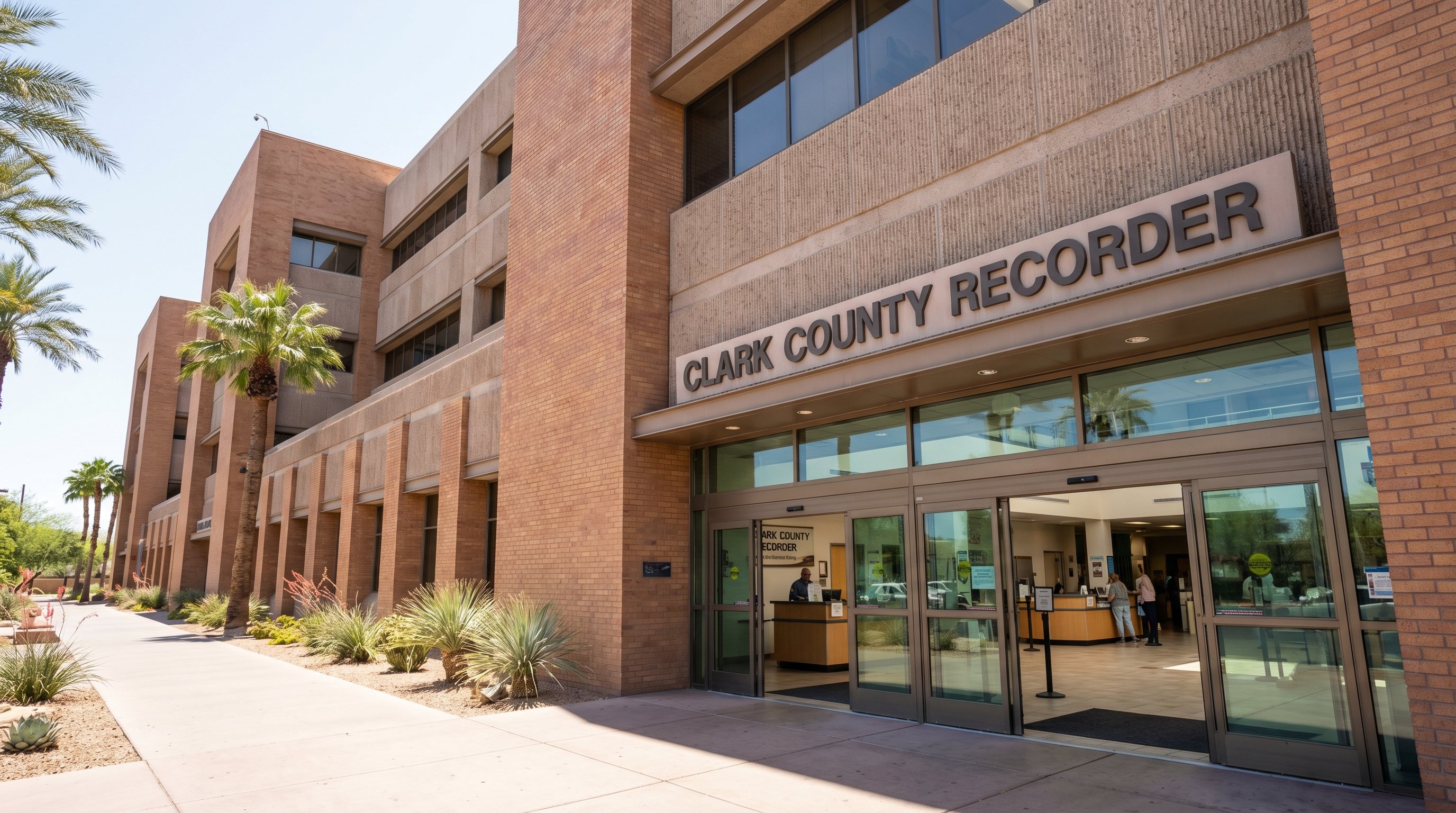
For investors focused on Nevada, Clark County is the primary market. The Notice of Default filings in Clark County are recorded with the Clark County Recorder, and the recorder's office provides an online search portal for public records. Investors building a Nevada pre-foreclosure sourcing system should start with Clark County.

Free Weekly Alerts
See What's Distressed in Your Market
Get free weekly alerts — new distressed properties, motivation scores, and hot neighborhoods in your area. Addresses and contact info available inside DistressIQ.
Free forever · No credit card · Unsubscribe anytime
How to Find Pre-Foreclosure Leads Nevada: County Direct vs. List Services
The two approaches to sourcing Nevada pre-foreclosure leads are county-direct research and aggregated list services. Most investors use both, but understanding the tradeoffs determines how much of the available pipeline they actually capture.
County-direct research means searching the Clark County Recorder online portal for newly recorded Notices of Default and Notices of Trustee Sale. The Clark County Recorder's office provides document search functionality that allows users to query filings by document type and date range. For an investor willing to check the portal every day or every few days, this approach surfaces new filings as soon as they are recorded.
The limitation of county-direct research is coverage. Nevada has 16 counties, each with its own recorder system, format, and update schedule. A daily check of Clark County is manageable. A daily check of all 16 counties is not. Rural county recorder offices in Nevada may not have online search portals at all, and documents may be available only through in-person visits or phone inquiries during business hours. For investors who want comprehensive Nevada coverage without building a full-time research operation, the practical approach is to focus on Clark and Washoe as primary sources and treat the rural counties as occasional supplements.
Aggregated list services compile Nevada pre-foreclosure filings from county recorders and resell the data in structured lists. The tradeoff is speed. By the time a filing is captured by a county recorder, transmitted to the list service, processed into their database, and delivered in a digest email, the Notice of Default may already be 30 to 60 days old. For a Nevada pre-foreclosure property, 30 to 60 days can mean the difference between reaching a homeowner who is still considering options and reaching one who has already accepted that the auction is inevitable and is no longer taking calls.
The investors who close the most Nevada pre-foreclosure deals are the ones who see new NOD filings within days of recording. Speed is not a tactical advantage in Nevada. It is the baseline requirement for accessing the most motivated segment of the pre-foreclosure seller pool.
DistressIQ aggregates Notice of Default filings from all Nevada counties and updates daily, providing investors with new pre-foreclosure leads Nevada before they appear in aggregated list service digests.
Evaluating Nevada Pre-Foreclosure Deals: What Changes From Other States
Once you have identified a Nevada pre-foreclosure property, the evaluation process shares similarities with other states, but several factors are specific to Nevada's market.
The statutory timeline matters for deal structuring. Nevada's 30-day pre-NOD notice period under NRS 107.500 creates a brief window before the Notice of Default is recorded when the homeowner is already in default but the public record has not yet reflected it. An investor who reaches a homeowner during this window may be negotiating with someone who has not yet fully accepted the situation and may still believe they can bring the loan current. This is a harder negotiation but potentially a more motivated one if the lender has not yet escalated to formal default recording.
After the Notice of Default is recorded, Nevada homeowners have limited time before the Notice of Trustee Sale is set. Unlike states with extended redemption periods, there is no post-sale redemption period to account for. This creates a hard deadline that both parties understand, which can actually simplify negotiations. The homeowner knows the auction date is approaching. The investor knows the homeowner has fewer legal alternatives. Both parties are motivated to reach a deal before the sale occurs.
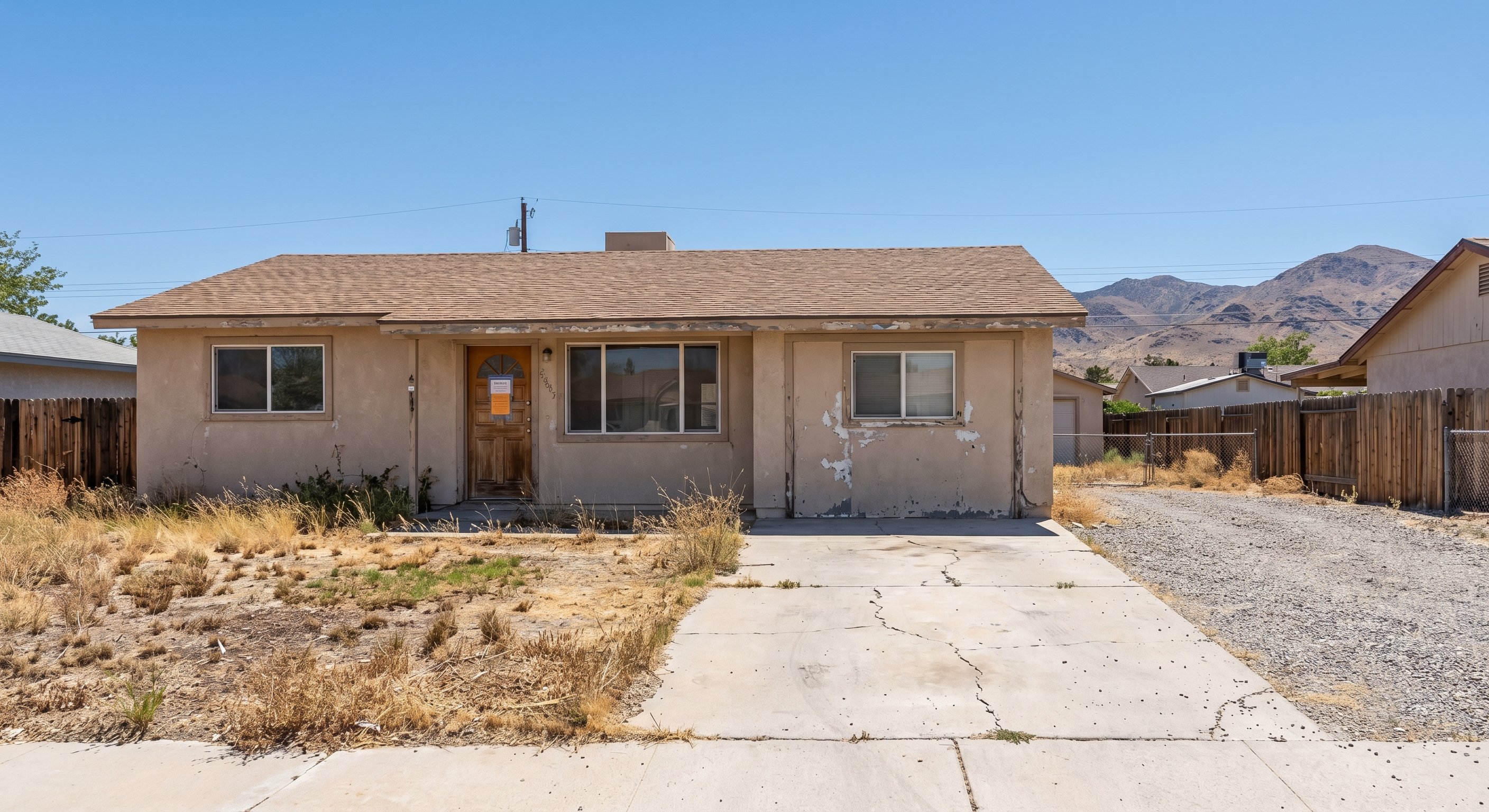
Property condition in Nevada pre-foreclosure homes varies significantly by submarket. Las Vegas Henderson corridor properties tend to be newer construction tract homes built during the post-2012 boom, often with HOA obligations that continue accruing during the pre-foreclosure period and become part of the payoff negotiation. Reno-area properties tend to be older and may have deferred maintenance that reflects differently in an investor's repair cost estimate. In both markets, the investor should account for the fact that Nevada HOAs can record liens against properties very quickly, and HOA liens in Nevada can have superpriority status that survives a trustee's sale, which is a critical legal issue that affects title clearance.
Title issues deserve extra attention in Nevada pre-foreclosure transactions. Nevada's deed-of-trust system means that junior liens and encumbrances are generally eliminated at the trustee's sale if the sale is properly noticed and conducted. However, certain liens, including federal tax liens and some HOA superpriority liens, may survive the sale. A preliminary title report is not optional for a Nevada pre-foreclosure deal. It is the document that identifies what the investor is actually buying.
The Nevada investment property market after a pre-foreclosure sale tends to recover relatively quickly in Clark County, where population growth and housing demand support rapid resale. Investors who acquire properties at pre-foreclosure and complete renovations typically find a liquid resale market, though the renovation-to-resale timeline should account for Nevada's contractor capacity constraints in a high-demand construction environment.
The Honest Case for Nevada Pre-Foreclosure Investing in 2026
Nevada pre-foreclosure investing in 2026 is most effective in the 30 to 60 day window immediately following Notice of Default recording, when the homeowner is actively exploring a sale but the auction date has not yet created maximum urgency. Investors who track new NOD filings across Clark and Washoe counties daily are finding more opportunities than those relying on periodic list service digests.
DistressIQ tracks pre-foreclosure filings across all Nevada counties, updating daily from county recorder sources. Browse pre-foreclosure leads Nevada scored by motivation signal density at https://distressiq.ai.
Frequently Asked Questions
How long does pre-foreclosure last in Nevada?
Nevada's pre-foreclosure period is shorter than most states because of its non-judicial foreclosure process. From the first missed payment to the Notice of Default recording, lenders must provide at least 30 days of written notice under NRS 107.500. After the Notice of Default is recorded, the Notice of Trustee Sale must be set at least 21 days before the auction. In practice, the full pre-foreclosure window from first payment default to auction is typically 90 to 120 days, but it can move faster if the lender accelerates the timeline or if the homeowner does not respond to loss mitigation outreach.
Is Nevada a judicial or non-judicial foreclosure state?
Nevada is a non-judicial foreclosure state. Most residential loans in Nevada are structured as deeds of trust rather than mortgages, which allows the foreclosure process to proceed through an administrative trustee's sale under NRS Chapter 107 without court involvement. This makes the process faster than judicial foreclosure states and explains why Nevada pre-foreclosure timelines are shorter than states like New York, New Jersey, or Illinois, which require court confirmation of any foreclosure sale.
What is NRS 107 in Nevada?
NRS 107 refers to Nevada Revised Statutes Chapter 107, which governs deed-of-trust foreclosures in Nevada. NRS 107.080 establishes the trustee's power of sale and required notice procedures. NRS 107.085 imposes additional restrictions on the trustee's power of sale for residential properties. NRS 107.087 specifies the required content of the Notice of Default. NRS 107.500 requires lenders to provide at least 30 days of written notice to the borrower before recording a Notice of Default. Understanding these statutes is essential for investors evaluating Nevada pre-foreclosure properties because the statutory requirements directly determine the timeline and the quality of the title that transfers at the trustee's sale.
Does Nevada have a redemption period after foreclosure?
No. Nevada does not have a statutory redemption period for residential properties after a trustee's sale is completed. This means the winning bidder at the sale acquires title immediately and the former homeowner cannot reclaim the property by paying off the loan after the sale. This is different from states like Arizona, which allows a 90-day post-sale redemption period, or California, which allows a redemption period in certain circumstances. Nevada's lack of a redemption period increases the finality of the transaction and makes it more important for investors to conduct thorough due diligence before bidding at the auction or purchasing directly from the homeowner in pre-foreclosure.
What Nevada counties have the most pre-foreclosure activity?
Clark County, which contains Las Vegas, Henderson, North Las Vegas, and Boulder City, accounts for approximately 70 percent of Nevada's total pre-foreclosure filings. Washoe County, centered on Reno, is the second most active market. The remaining 14 rural Nevada counties generate minimal pre-foreclosure volume individually, though Lyon County and Carson City occasionally surface properties worth investigating. Investors building a Nevada pre-foreclosure sourcing strategy should focus on Clark County as the primary target market, with Washoe County as a strong secondary market.
Can you buy a Nevada pre-foreclosure property with financing?
Yes. Unlike auction purchases that typically require cash, pre-foreclosure transactions in Nevada allow conventional financing, hard money loans, or private money because the transaction occurs before the trustee's sale and the homeowner still holds title. Financing is generally only viable on properties in decent condition that meet lender appraisal requirements. Properties in poor condition, which make up a significant portion of pre-foreclosure inventory, typically require hard money or all-cash purchases regardless of the investor's financial profile.

DistressIQ tracks pre-foreclosure filings across all Nevada counties, updating daily from county recorder sources. Browse pre-foreclosure leads Nevada ranked by motivation score at https://distressiq.ai.
The data behind this article
DistressIQ Monitors These Signals in Real Time
Pre-Foreclosures
NOD + NTS filings
Tax Delinquency
County treasurer records
Code Violations
Municipal inspection filings
Probate Filings
Superior Court records
Every lead is scored 0–100 for seller motivation based on signal type, duration, severity, and stacking. Nationwide coverage — every US county, updated daily.
Ready to find deals in your market?
See Live Distress Signals in Nevada
Stop calling dead leads. Every lead in DistressIQ is scored 0–100 for seller motivation, with verified contact info included. Browse the free tier to see what's active in your market right now.
Browse Free Leads — No Credit Card