Lis Pendens List New York: How Investors Navigate the Empire State's Slow-Moving Court Process
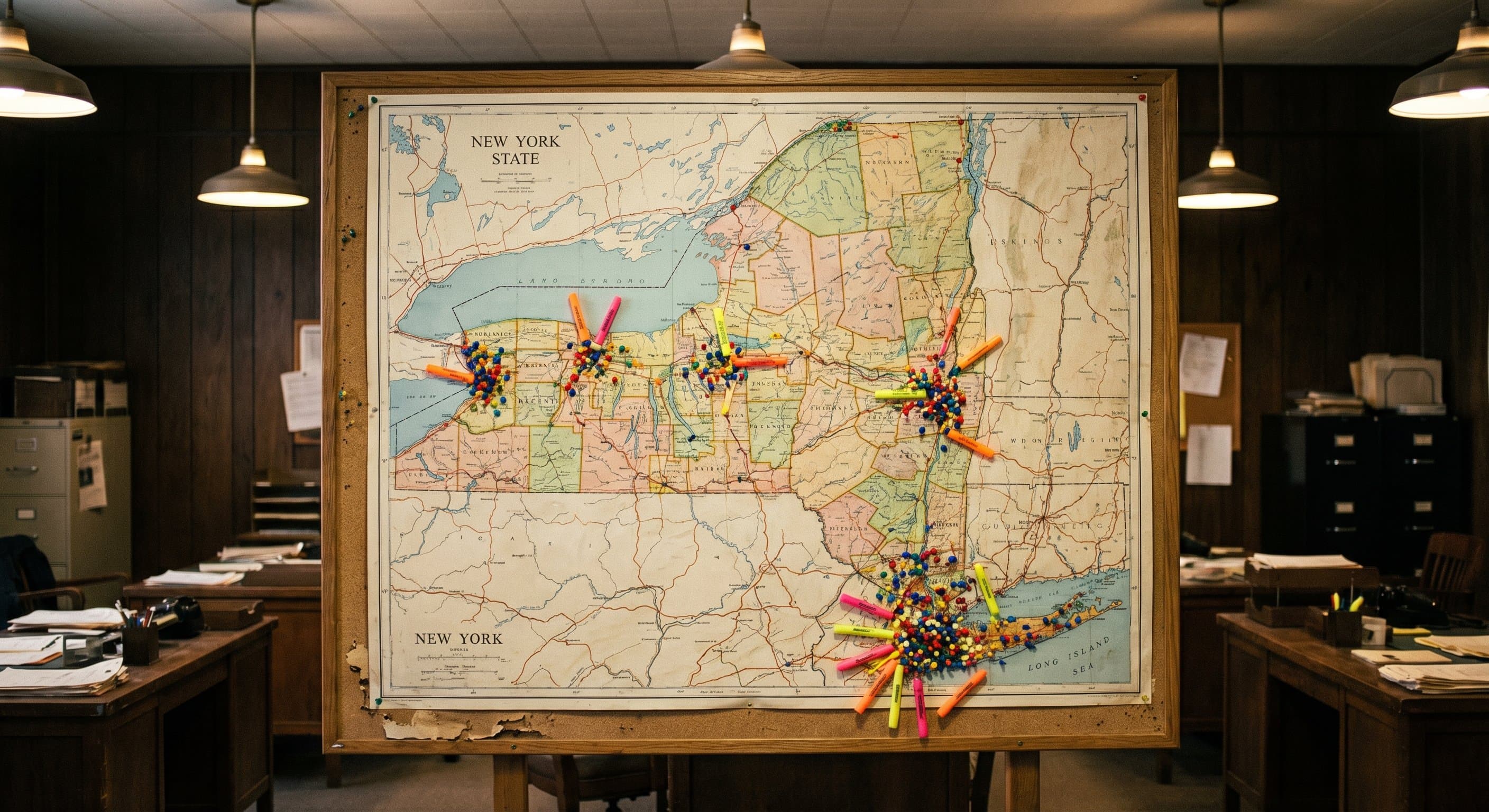
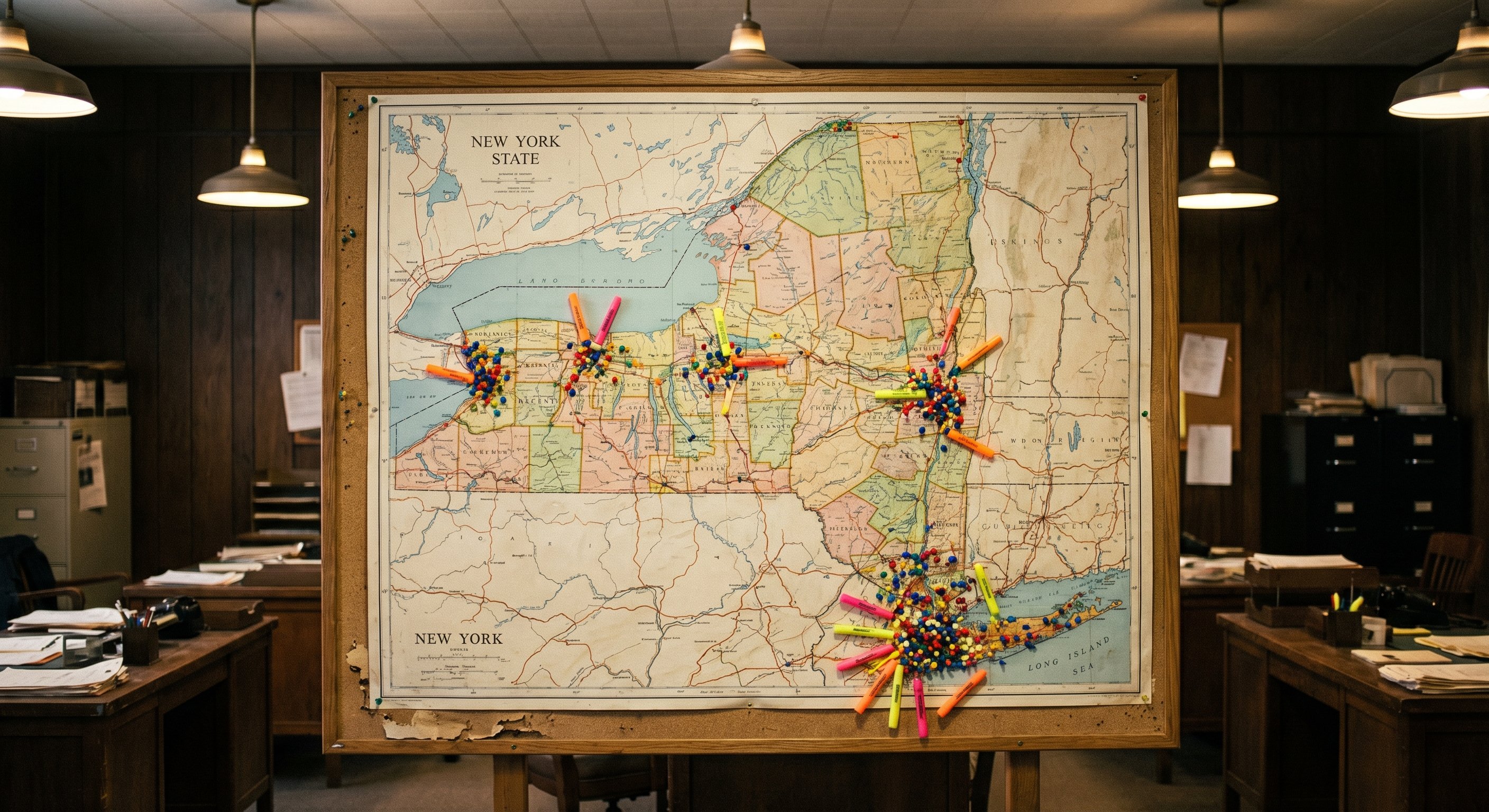
TL;DR: New York is a judicial foreclosure state, which means every foreclosure runs through Supreme Court and lis pendens filings routinely sit for 12 to 36 months before a property reaches auction. That extended window gives investors a rare working advantage: months of lead time to locate owners, negotiate directly, and structure deals before the auction block arrives. The key is accessing county clerk records directly or using a platform that monitors filings across New York's 62 counties, with special focus on Queens, Kings, and Bronx, which account for the bulk of the state's distressed inventory.
The lis pendens is not just a legal filing. It is a calendar. In most states, a lis pendens means an auction is weeks away. In New York, it means the case just entered a court system that moves in years, not months.
For investors who understand how New York's judicial process actually works, that delay is not a problem. It is the opportunity.
What a Lis Pendens Actually Means in New York
A lis pendens is a public notice filed with the county clerk declaring that a lawsuit affecting a property's title is pending. In New York, lenders cannot foreclose without filing one. It creates what the law calls a "cloud on title," which prevents the homeowner from selling or refinancing during the proceedings.
The filing typically happens when a homeowner is three to four months behind on mortgage payments. At that point, the lender's attorney takes two simultaneous actions: filing the Foreclosure Complaint in Supreme Court and filing the Lis Pendens Notice with the county recorder's office.
The critical detail for investors is timing. Unlike non-judicial states where auction dates arrive within 60 to 120 days of default, New York homeowners in pre-foreclosure typically have 12 to 36 months before a referee sale according to court data, with New York City boroughs routinely stretching to three to five years due to court congestion.
That means a lis pendens filed today in Brooklyn or Queens represents a deal window that will not close for 1,000 days or more.
Why New York's Court Process Creates an Investor Edge
New York's foreclosure process runs entirely through the court system under Real Property Actions and Proceedings Law (RPAPL) Article 13. The lender must file in New York Supreme Court and navigate mandatory procedural steps before any sale can occur.
The 90-Day Pre-Filing Notice (RPAPL 1304): Before a lender can even file a foreclosure complaint, it must send written notice to the borrower at least 90 days in advance. This is separate from and in addition to the federal 120-day delinquency requirement. Every day of that notice period is a day the homeowner is exposed to direct investor outreach.
The Mandatory Settlement Conference (CPLR 3408): Once a foreclosure complaint is filed, New York law requires a settlement conference within 60 days of proof of service. The court-supervised conference gives homeowners and lenders a chance to negotiate a loan modification, short sale, or other workout. These conferences routinely stretch across multiple sessions over several months, and courts can order continuances for a year or longer.
Discovery, Motions, and Judgment: Contested cases enter a discovery phase with extensive litigation. The lender must file a Request for Judicial Intervention to schedule the mandatory conference. Motions for summary judgment may follow. A Judgment of Foreclosure typically enters between months 18 and 30 of the process, with the referee's sale scheduled 60 to 120 days after judgment.
The New York State Department of Financial Services reports an average of 445 days for a foreclosure case to conclude statewide, but published court data and market commentary consistently place New York among the slowest jurisdictions in the country, with some NYC cases extending to five to seven years due to pandemic-era backlog and ongoing court congestion.
The Borough-by-Borough Breakdown: Where the Volume Actually Is
New York's foreclosure inventory is not spread evenly across the state. The bulk of lis pendens filings concentrate in the five NYC boroughs and the surrounding suburban counties.
| Borough (County) | Estimated Foreclosure Timeline | Key Investor Consideration |
|---|---|---|
| Brooklyn (Kings) | 3 to 5+ years | Highest volume; court backlog severe |
| Queens (Queens) | 3 to 5 years | Large residential mortgage inventory |
| Bronx (Bronx) | 3 to 5+ years | High distressed housing volume |
| Manhattan (New York) | 2 to 4 years | Lower volume; complex commercial cases |
| Staten Island (Richmond) | 2 to 4 years | Smaller court system; faster than other boroughs |
Outside the city, Nassau and Suffolk counties on Long Island carry significant volume, as does Westchester. Northern counties and upstate markets move at varying speeds depending on local court dockets.
For investors targeting volume, Queens and Kings counties should be the first priority. These two boroughs account for the highest lis pendens filing counts in the state and represent the deepest pool of pre-foreclosure opportunities.
Free Weekly Alerts
See What's Distressed in Your Market
Get free weekly alerts — new distressed properties, motivation scores, and hot neighborhoods in your area. Addresses and contact info available inside DistressIQ.
Free forever · No credit card · Unsubscribe anytime
How to Search Lis Pendens Records in New York
Accessing New York's lis pendens records requires understanding the state's fragmented court structure. There is no single statewide database that investors can query in real time.
County Clerk Records: Each of New York's 62 counties maintains lis pendens filings through its county clerk's office. In New York City, these are split by borough. Investors researching Queens or Kings County properties need to contact those specific county clerk offices directly. This is time-intensive for single-property research but essential for understanding local filing patterns.
Commercial Aggregation Services: Several services maintain lis pendens databases by county. The most established commercial services update daily from courthouse researchers who file records within hours of submission. These services allow investors to search by county and date range, filtering for records filed within the last 30, 60, or 90 days to surface the freshest opportunities.
DistressIQ Platform: Rather than piecing together filings county by county, investors can use a platform that aggregates lis pendens signals across New York's 62 counties and cross-references them with other distress markers including code violations, tax delinquency, and probate filings. This signal stacking approach surfaces properties that appear in multiple distress categories simultaneously, which historically correlates with higher motivated-seller probability.
What Investors Actually Do With a New York Lis Pendens Lead
The extended timeline in New York changes the investment approach. In a fast non-judicial state, the strategy is often to wait for auction and bid at the sale. In New York, that approach is impractical given multi-year timelines. The working strategy is direct outreach during the pre-foreclosure window.
Contact the homeowner early. New York homeowners in pre-foreclosure have four documented paths available to them: refinance, sell, declare bankruptcy, or face eviction at auction. The settlement conference process creates a defined window where the homeowner is actively engaged with their financial situation and exploring options. A direct, respectful offer to purchase can compete with the lender's modification proposals.
Verify title before making any offer. Lis pendens filings can involve multiple lienholders. A property may carry a first mortgage, a second mortgage, tax liens, and judgments from creditors. Title research through the county clerk is essential before presenting an offer. DistressIQ cross-references multiple signal types to help investors assess which properties carry multiple liens before spending time on outreach.
Account for New York's deficiency judgment rules. New York permits deficiency judgments, but the lender must apply within 90 days of the sale and the court determines fair market value at that time (RPAPL 1371). Investors who win at auction must factor in potential deficiency exposure, particularly in markets where property values have not fully recovered.
Factor the homestead exemption. New York's homestead exemption under CPLR 5206 varies by county, ranging from $150,000 to over $300,000. This affects how much equity a distressed homeowner may have available to negotiate a short sale or deed-in-lieu arrangement.
What Makes New York Different From Other States
Most real estate investment content is written for non-judicial states like Georgia, Texas, or Michigan, where foreclosure timelines run 37 to 120 days. New York does not work that way, and investors who apply those expectations will misread the market.
The most important differences for a lis pendens list investor are:
The window is measured in years, not weeks. A property entering lis pendens in Queens today will not reach auction for 36 months or longer. Investors have time to work the deal properly, but they also need patience and capital that can remain deployed for extended periods.
The settlement conference creates a structured negotiation environment. Homeowners in New York are required to participate in court-supervised settlement discussions. This means many will be motivated to reach a resolution and may be more receptive to a direct purchase offer as an alternative to continued litigation.
Court filings are public but not centralized. There is no single statewide portal. Investors must build a workflow that covers each target county's filing system or use a service that aggregates across all 62 counties.
No post-sale redemption right. Once a property sells at auction in New York, the former homeowner has no right to redeem it by paying the full amount owed. This eliminates the redemption risk that exists in some other states, making auction purchases more predictable from a timeline standpoint.

Key Takeaways for New York Lis Pendens Investing
- New York's judicial process keeps properties in pre-foreclosure for 12 to 36 months on average, with NYC boroughs routinely stretching to 3 to 5 years, creating an unusually long working window for investor outreach
- The mandatory settlement conference (CPLR 3408) creates a defined period where homeowners are actively negotiating, making them more receptive to direct purchase offers
- Queens and Kings counties hold the highest lis pendens volume; focus initial research there
- Always verify title through the county clerk; multi-lien properties are common in high-debt markets like New York City
- Platforms that aggregate county-level filings across all 62 New York counties and cross-reference with other distress signals save significant manual research time
How to Access a Current Lis Pendens List for New York
DistressIQ monitors lis pendens filings across more than 3,200 counties nationwide, including all 62 New York counties. The platform stacks lis pendens signals alongside tax delinquency, code violations, probate filings, and other distress markers to surface properties most likely to have motivated sellers before they reach auction.
Investors looking for New York pre-foreclosure leads can browse verified distress signals by county at distressiq.ai.
Starter plans begin at $89 per month.
Frequently Asked Questions
How long does a lis pendens last in New York?
A lis pendens remains active throughout the entire foreclosure process, which in New York averages 12 to 36 months from filing to referee's sale, and can extend to three to five years or longer in New York City due to court congestion. The lis pendens is only vacated if the homeowner cures the default, the lender withdraws the action, or the case is settled through a loan modification or short sale agreement.
Can a homeowner sell a property with a lis pendens in New York?
No. A lis pendens creates a cloud on title that prevents the homeowner from selling or refinancing the property without either clearing the foreclosure action or obtaining the lender's explicit consent. This effectively locks the property into the court process until the foreclosure resolves.
What is the difference between lis pendens and pre-foreclosure in New York?
In New York, these terms largely describe the same window. Lis pendens is the legal notice filed when a foreclosure lawsuit begins. Pre-foreclosure refers to the overall period from when the homeowner falls behind (typically 90 to 120 days) through the filing of the lis pendens and beyond. The term "pre-foreclosure" covers a slightly broader window than the lis pendens filing date specifically.
How do I search lis pendens records by county in New York?
Lis pendens records are filed with each county clerk's office. In New York City, this means separate filings for each borough. Investors can search manually through individual county clerk databases or use commercial aggregation services that compile filings from all 62 counties. Platforms like DistressIQ update daily and cross-reference lis pendens filings with other distress signals for prioritization.
Does New York allow deficiency judgments after foreclosure?
Yes. Under RPAPL 1371, lenders may seek deficiency judgments within 90 days of the referee's sale. The court determines fair market value at the time of sale, and the deficiency amount equals the difference between that value and the total debt owed. Investors purchasing at auction should factor potential deficiency exposure into their underwriting.
What is the homestead exemption for New York homeowners facing foreclosure?
New York's homestead exemption under CPLR 5206 varies by county, generally ranging from $150,000 to over $300,000. This exemption protects a portion of the homeowner's equity in bankruptcy and foreclosure proceedings. Higher equity positions can make short sale negotiations more complex, since the lender must approve any sale that does not cover the full loan balance.
The data behind this article
DistressIQ Monitors These Signals in Real Time
Pre-Foreclosures
NOD + NTS filings
Tax Delinquency
County treasurer records
Code Violations
Municipal inspection filings
Probate Filings
Superior Court records
Every lead is scored 0–100 for seller motivation based on signal type, duration, severity, and stacking. Nationwide coverage — every US county, updated daily.
Ready to find deals in your market?
See Live Distress Signals in Your County
Stop calling dead leads. Every lead in DistressIQ is scored 0–100 for seller motivation, with verified contact info included. Browse the free tier to see what's active in your market right now.
Browse Free Leads — No Credit Card