Lis Pendens List Florida: What Investors Need to Know in 2026

TL;DR: A Florida lis pendens is a public legal notice recorded with the county clerk the moment a lender files a foreclosure lawsuit. Florida's judicial foreclosure process means this notice appears at the start of the formal legal action, giving investors a longer window to locate the owner and negotiate a pre-sale than non-judicial states provide. The state's unlimited homestead exemption means many homeowners caught in lis pendens have real equity to work with and a genuine incentive to find an exit before auction. DistressIQ aggregates lis pendens signals across Florida counties, updated daily.

What Is a Lis Pendens in Florida?
Most real estate investors learn about foreclosure opportunities at the auction stage. That is the worst time to compete. The better window opens months earlier: the moment a lis pendens gets filed.
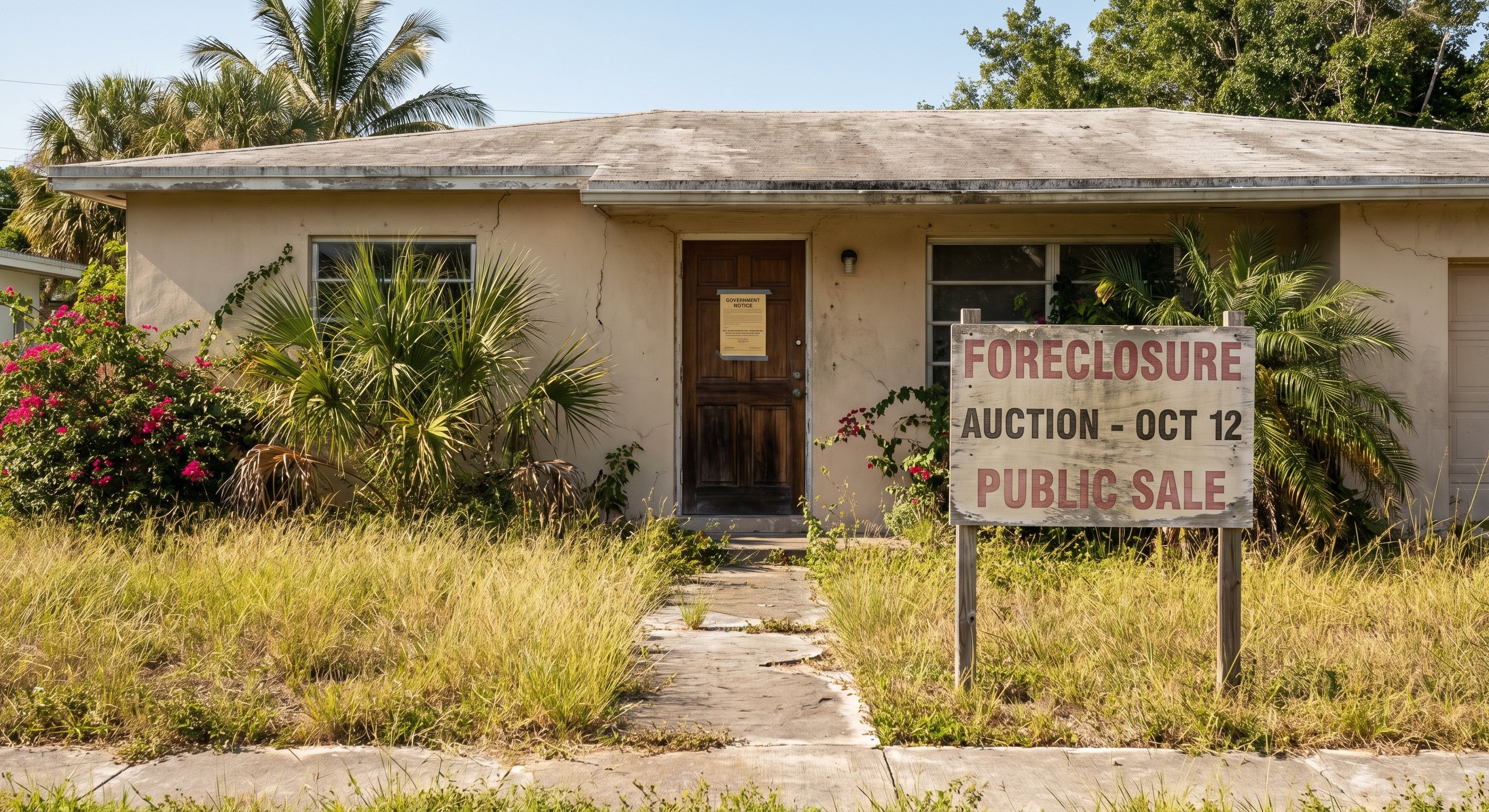
Lis pendens is Latin for "pending lawsuit." In Florida, it is a public legal notice recorded with the county clerk the moment a lender files a foreclosure lawsuit. The notice tells anyone searching county records that title to the property is clouded by active litigation. Once recorded, the owner cannot sell or refinance without paying off the underlying debt first.
For investors, this is not a problem. It is the signal. A lis pendens on a Florida property means the owner is in formal default, the lender has begun the court process, and the countdown to auction has started. The homeowner is looking for a way out. That is the investor's entry point.

The key distinction is timing. In Florida's judicial foreclosure system, lis pendens is filed when the lawsuit begins. That is not the same as the notice of default in Texas or Georgia, which does not appear until much later in a non-judicial process. Florida investors enter the picture earlier in the owner's distress timeline. There is more time to negotiate, more equity available, and a more motivated counterparty.
An uncontested case moves from lis pendens filing to final judgment in roughly 6 to 18 months, with 135 to 180 days from filing to auction as a reasonable baseline for planning purposes. Contested cases, bankruptcy filings, and loss mitigation reviews extend that timeline considerably.

Florida's Judicial Foreclosure Process vs. Other States
Florida is one of the minority of states using a judicial foreclosure process, meaning every foreclosure goes through the court system. This has direct implications for how investors source and evaluate leads.
In judicial states, the lis pendens is recorded at the start of the lawsuit. In non-judicial states like Texas, the equivalent notice does not appear until much later in the process, if at all. Texas lenders can accelerate the loan and set a sale date without a court proceeding, meaning the lis pendens-equivalent window is compressed or absent entirely.
This is the practical difference between Florida and Texas as an investor market. Texas moves faster at the auction stage. Florida gives investors more time before the auction stage arrives. Neither is inherently better , but the strategy and timeline are not the same.
Florida's homestead exemption adds another layer. The state's constitution protects unlimited equity in a primary residence , subject to acreage limits of one-half acre inside a municipality or 160 acres outside. This matters for investors because homeowners with significant equity have more to lose from a completed foreclosure and more incentive to negotiate a pre-sale that pays them above what the auction would likely yield. A motivated seller with equity is a better negotiating partner than a distressed owner with no skin in the game.
What Happens After Lis Pendens Is Filed in Florida
Once a lis pendens is recorded, the legal process moves through defined stages. From the investor's standpoint, the most important stages are the ones that determine what options the owner still has.
Federal regulations generally prohibit lenders from starting the formal foreclosure process until the borrower is at least 120 days past due. During that pre-filing window, the homeowner may be working with the servicer on a loan modification. Once the lis pendens is filed, the servicer has less incentive to continue those negotiations and the legal process takes over.
After lis pendens is recorded, the homeowner is formally served with the lawsuit and has 20 days to file a response. If no response is filed, the lender can request a default judgment. After final judgment, the court sets a sale date , typically 20 to 35 days out. The sale is conducted by the county clerk, with the highest bidder posting 5 percent immediately and the balance by the next business day.
For investors, the critical window is between lis pendens filing and the auction. During this period, the homeowner is under legal and financial pressure but still has title to the property and the ability to sell outright. A clean sale before the auction nets the owner whatever proceeds remain after the foreclosing lender is paid off , often more than they would receive at a depressed auction price after legal fees and auction costs are settled.
This is the math that makes pre-sale negotiations viable. It is also the reason investors who find lis pendens properties early can present homeowners with a genuine solution rather than a last resort.
Free Weekly Alerts
See What's Distressed in Your Market
Get free weekly alerts — new distressed properties, motivation scores, and hot neighborhoods in your area. Addresses and contact info available inside DistressIQ.
Free forever · No credit card · Unsubscribe anytime
How Investors Use Lis Pendens as a Lead Source
The lis pendens signal is only useful if investors can act on it efficiently. In Florida, that means accessing county clerk records across 67 counties , and the process is not uniform.
Each county clerk maintains its own online docket system. Miami-Dade, Broward, and Palm Beach counties conduct their auctions online. Smaller counties may still use older docketing systems. Aggregating this data manually is time-consuming work that most investors do not have bandwidth for at scale.
DistressIQ addresses this by aggregating lis pendens signals across Florida counties alongside other distress indicators, including tax delinquency, code violations, probate filings, and absentee owner records, in a single interface. The goal is to let investors build a Florida lis pendens list without spending hours navigating disparate county clerk systems, and to cross-reference lis pendens with other signals that indicate how motivated and reachable the owner actually is.
The workflow: set a Florida county filter, apply lis pendens as a distress filter, and sort by recency.
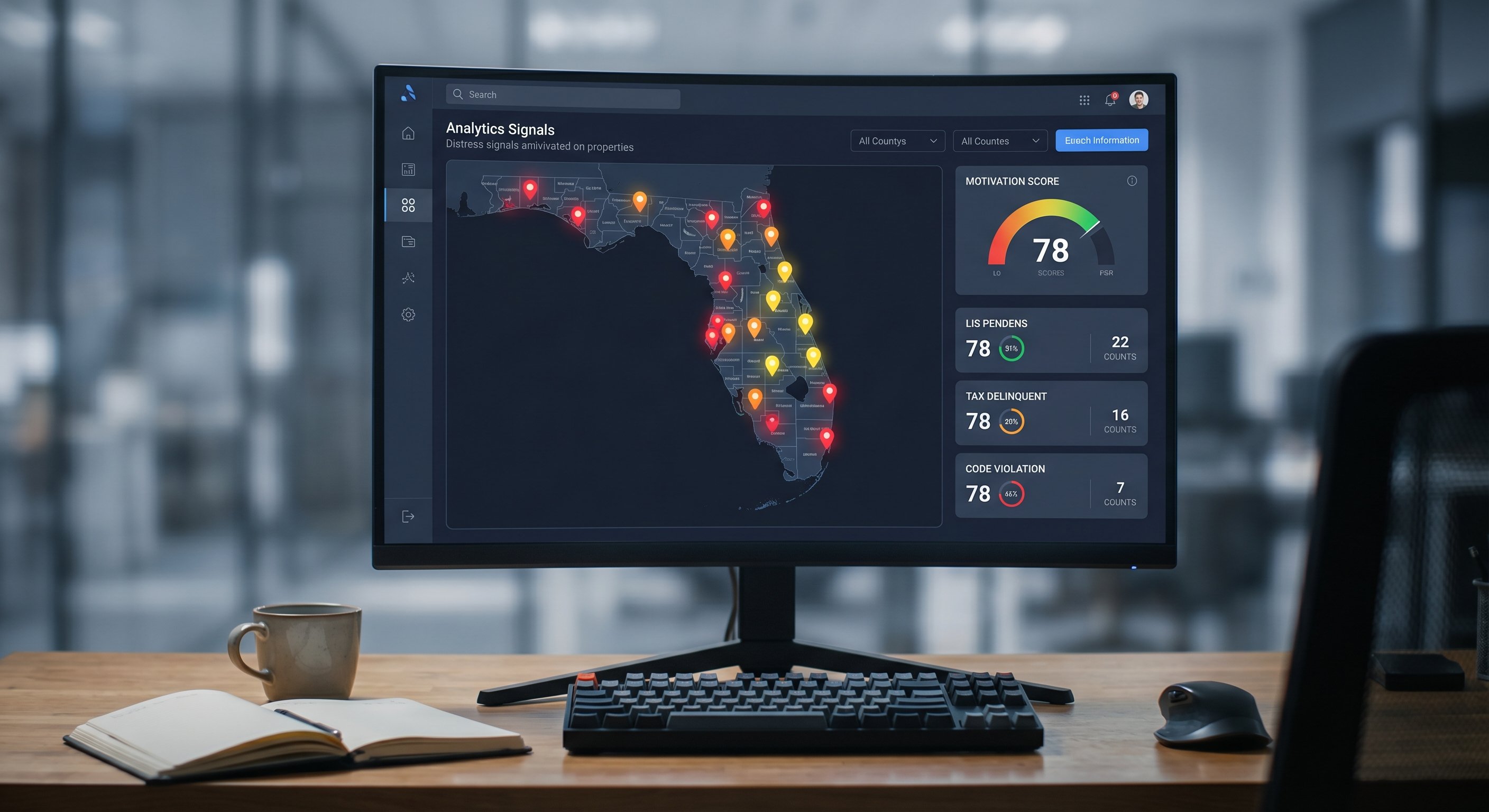
Cross-referencing with tax delinquency helps identify properties where the owner may be behind on both the mortgage and property taxes, a combination that signals deeper financial distress and faster movement toward auction.
When evaluating a lis pendens property, the most important number is the outstanding loan balance against estimated market value. Florida's homestead exemption means many homeowners have equity cushion, but that equity only converts to negotiating room if the loan balance is well below the property value. Properties where the loan balance approaches or exceeds estimated value require a different strategy.
Where to Find Florida Lis Pendens Records
Direct access to Florida lis pendens filings is available through each county clerk of court's website. Most counties provide online docket search where users can filter by document type and date range. Manually checking each clerk's site works for one or two markets but does not scale to a statewide search. Third-party services that update weekly or monthly mean a lis pendens filed last week may not appear in a report for 20 to 30 days.
DistressIQ pulls from county clerk records directly and updates on a daily basis, so Florida lis pendens lists reflect filings within 24 to 48 hours of recording. This freshness matters most in high-volume markets like Miami-Dade, Broward, and Palm Beach, where dozens of new filings appear each week.
How to Evaluate a Florida Property With Lis Pendens
Start with the basics: property type, assessed value from the county tax assessor, outstanding loan balance if available through public records, and whether the owner appears to be an occupant or an investor themselves. Absentee owners , properties where the mailing address differs from the property address , tend to be more reachable and more motivated, since they are not living in the property.
Cross-reference the lis pendens with other distress signals. A property that has both a lis pendens and a tax delinquency is experiencing pressure from multiple directions. That combination tends to move faster toward auction and often indicates a more motivated seller.
Florida's homestead exemption means the owner's financial situation matters as much as the property condition. A homeowner with significant equity and a temporary income disruption is a very different negotiating partner than an owner who is judgment-proof and has no equity cushion. The first scenario is where pre-sale negotiations work. The second often requires a different approach.
Frequently Asked Questions
Q: What does lis pendens mean for a Florida homeowner?
A: When a lis pendens is recorded against a Florida property, it signals that the owner is in formal default on the mortgage and the lender has filed a foreclosure lawsuit. Title is legally clouded, which means the owner cannot sell or refinance without paying off the debt first. This does not automatically mean the homeowner will lose the property , many owners negotiate loan modifications, pursue short sales, or sell before the auction. The window for those solutions closes as the auction date approaches.
Q: How long does it take for a foreclosure to go to auction in Florida after lis pendens is filed?
A: An uncontested Florida foreclosure case typically takes 135 to 180 days from the lis pendens filing to the auction date. Contested cases, bankruptcy filings, and active loss mitigation negotiations can extend this to two years or longer. The variability depends on the specific county court docket and whether the homeowner is represented by counsel.
Q: Can a homeowner remove a lis pendens in Florida?
A: Yes. The lis pendens is removed when the underlying foreclosure lawsuit is resolved, through a dismissal, a successful loan modification, a reinstatement, a completed short sale, a deed in lieu of foreclosure, or a payoff of the outstanding debt. If the foreclosure proceeds to final judgment and auction, the lis pendens is cleared by the sale itself.
Q: Is Florida a judicial foreclosure state?
A: Yes. Florida requires all foreclosures to go through the court system. This contrasts with non-judicial states like Texas and Georgia, where lenders can foreclose without a court proceeding. The judicial process in Florida creates a longer timeline from default to auction and generates the public lis pendens record that investors use to identify opportunities early.
Q: How is a lis pendens different from a notice of default?
A: A lis pendens is specific to judicial foreclosure states and is filed when the lender commences a lawsuit. A notice of default is associated with non-judicial foreclosure states like Texas and California and appears earlier in the default process. In non-judicial states, lenders can accelerate the loan and set a sale date without a court proceeding. The practical difference for investors is that Florida's lis pendens appears at a more formal legal stage and carries a more significant title clouding effect.
See Florida Lis Pendens Signals Updated Daily
DistressIQ tracks lis pendens filings across Florida counties alongside other verified distress signals , tax delinquency, pre-foreclosure, code violations, and more. Browse the map, filter by signal type, and build a targeted Florida lis pendens list without checking a dozen county clerk websites. Property records include assessor-verified data , the same records county governments use to calculate property taxes.
See distressed properties in Florida on DistressIQ
DistressIQ covers 3,200+ counties nationwide, updated daily from county records.
The data behind this article
DistressIQ Monitors These Signals in Real Time
Pre-Foreclosures
NOD + NTS filings
Tax Delinquency
County treasurer records
Code Violations
Municipal inspection filings
Probate Filings
Superior Court records
Every lead is scored 0–100 for seller motivation based on signal type, duration, severity, and stacking. Nationwide coverage — every US county, updated daily.
Ready to find deals in your market?
See Live Distress Signals in Your County
Stop calling dead leads. Every lead in DistressIQ is scored 0–100 for seller motivation, with verified contact info included. Browse the free tier to see what's active in your market right now.
Browse Free Leads — No Credit Card