How to Find Bankruptcy Leads in Real Estate (2026 Investor Guide)

How to Find Bankruptcy Leads in Real Estate (2026 Investor Guide)
TL;DR: Bankruptcy filings are public federal court records accessible through PACER and district court portals. Real estate investors find bankruptcy leads by monitoring Chapter 7 liquidation cases — where a trustee may sell property quickly — and Chapter 13 reorganization cases where homeowners struggle to keep up with repayment plans. The most efficient approach combines PACER searches, county assessor cross-referencing, and a distress signal platform that flags bankruptcy filings before the competition calls.

Every year, over 400,000 bankruptcy cases are filed in the United States — and a meaningful portion involve real estate. For investors who know how to find bankruptcy leads, these filings represent property owners who may need to sell quickly, often below market value. The window is narrow, the competition is thin compared to foreclosures, and many sellers genuinely need a clean way out.
But bankruptcy real estate is also one of the most misunderstood lead sources in the industry. The process is more legally complex than a standard distressed sale, the strategy shifts depending on which chapter type is filed, and most investors either skip it entirely or reach out at the wrong moment. This guide breaks down exactly how to find bankruptcy leads, what each chapter type means for your deal strategy, and how to convert these leads before the window closes.
What Is a Bankruptcy Lead in Real Estate?
A bankruptcy lead is a property tied to an owner who has filed for federal bankruptcy protection. When someone files, they're required to disclose all assets — including real estate — to the bankruptcy court. Depending on the chapter type and how much equity the property carries, that real estate may need to be sold as part of the case resolution.
There are two chapter types you'll encounter most often as a real estate investor:
Chapter 7 (Liquidation): The filer's non-exempt assets are sold to pay creditors. If the property has equity above the state's homestead exemption threshold, a court-appointed bankruptcy trustee may sell it. Trustees are legally obligated to maximize creditor recovery — and they're often motivated to close quickly.
Chapter 13 (Reorganization): The filer keeps their assets but commits to a 3–5 year repayment plan approved by the court. When those payments become unmanageable — which happens frequently — the case may convert to Chapter 7, or the filer may sell voluntarily to exit the debt cleanly. Chapter 13 failures create a second wave of motivated sellers that most investors never see.
Both chapter types create real estate opportunities, but they require different approaches and different timelines.
Where Bankruptcy Filings Live (and How to Access Them)
Bankruptcy is a federal process governed by U.S. federal courts. All filings are public record. Here's where the data lives:
PACER (Public Access to Court Electronic Records)
PACER is the official federal court system portal. Every bankruptcy filing in every U.S. district is indexed there. You can search by debtor name, case number, filing date range, or district.
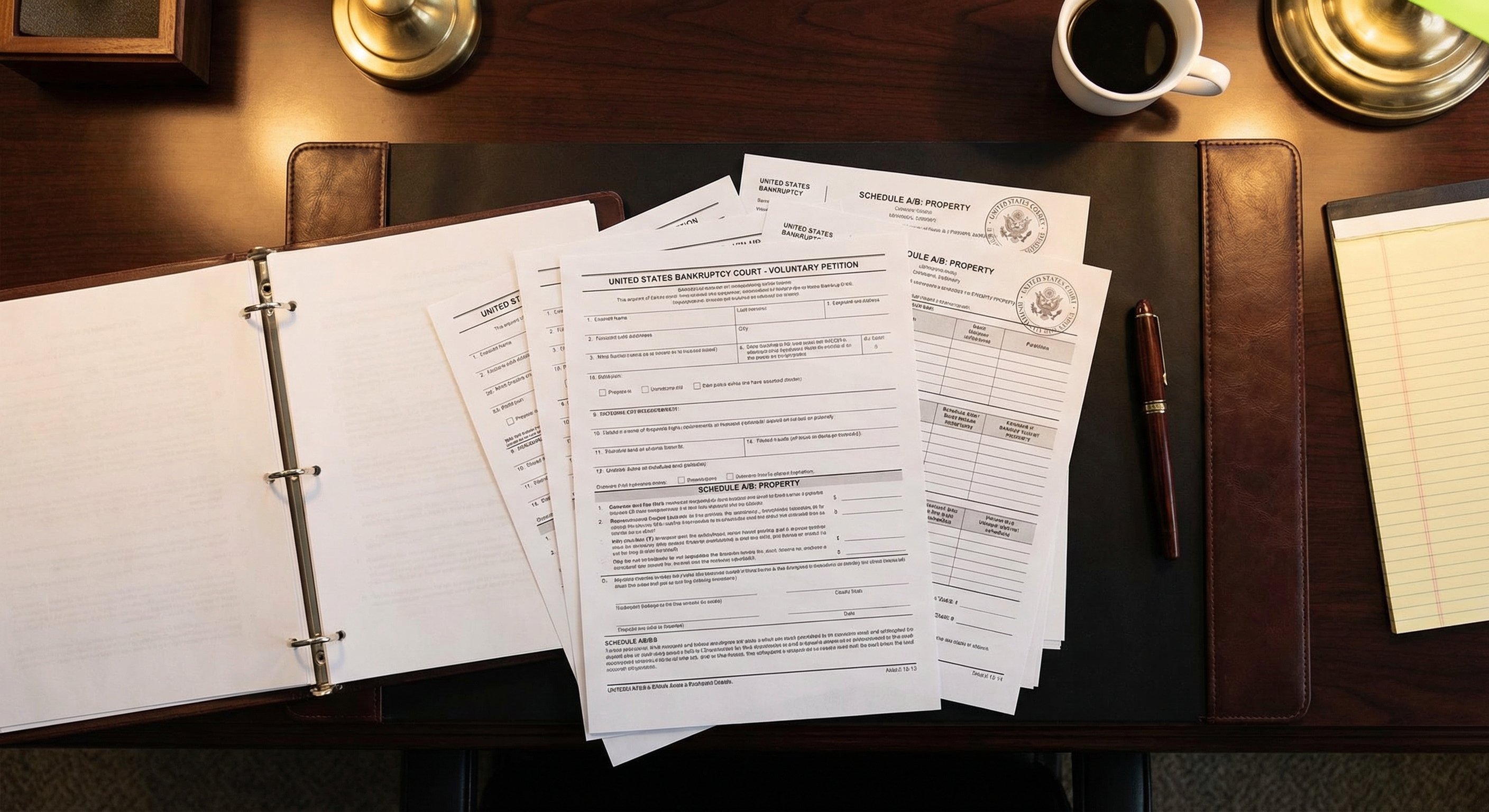
Cost: $0.10 per page, with a quarterly $30 cap for most users. What you get: Case filings, asset schedules (including real property listed on Schedule A/B), trustee assignments, case status, and sale notices. The limitation: PACER is document-heavy. Converting raw filings into a workable lead list requires significant manual effort — downloading PDFs, pulling addresses, cross-referencing with property ownership data.
Individual Federal Bankruptcy Court Portals
Each federal judicial district maintains its own bankruptcy court with a searchable online docket. Many offer more user-friendly search interfaces than PACER. Search "[your state] bankruptcy court online records" to find the relevant portal for your target market.
County Recorder and Assessor Records
When a bankruptcy trustee proceeds toward a property sale, notices often appear in county recorder records. Monitoring recorder data is one way investors spot bankruptcy-adjacent activity without navigating federal court systems — though it catches activity later in the process.
Distress Signal Platforms
The most scalable path to bankruptcy leads is a platform that monitors bankruptcy filings across your target counties and cross-references them against property ownership data automatically. Rather than searching PACER zip code by zip code, you get a ranked lead list that surfaces bankruptcy-flagged properties alongside other distress signals.

Chapter 7 vs. Chapter 13: Your Strategy Shifts by Filing Type
Buying in Chapter 7
In a Chapter 7 case with real estate above the state's homestead exemption, a bankruptcy trustee takes control of the asset. The trustee's job is not to help the homeowner — it's to maximize recovery for creditors. That creates a specific dynamic:
- Trustees want fair market value or better, confirmed by a BPO or appraisal
- Properties are sold through a court-approved process — trustee sale, auction, or listing via court-approved broker
- You can submit offers directly to the trustee or their appointed real estate agent
- The bankruptcy court must approve the sale, which typically adds 3–8 weeks to the closing timeline
Your edge: Trustees value certainty and speed over top dollar. An all-cash offer with a short inspection period and no financing contingency beats a higher financed offer in most trustee negotiations. Know your comps cold and come prepared to close fast.
Buying in Chapter 13
Chapter 13 is where many sophisticated investors find their best bankruptcy opportunities. The filer is still the legal property owner — you're dealing directly with a motivated individual, not a court-appointed intermediary.
When Chapter 13 reorganization plans fail (which happens in roughly 30–40% of cases, according to U.S. Courts data), the filer faces two outcomes: case conversion to Chapter 7 or voluntary sale. Both create a seller who needs to move.
Your edge: Build relationships early. Reach out before the plan fails. A soft, empathetic approach — focusing on options, not pressure — works far better than a hard pitch. These are people who tried to save their home. They need a clear exit, not a lecture.
Free Weekly Alerts
See What's Distressed in Your Market
Get free weekly alerts — new distressed properties, motivation scores, and hot neighborhoods in your area. Addresses and contact info available inside DistressIQ.
Free forever · No credit card · Unsubscribe anytime
The Automatic Stay: What Investors Must Know
When a bankruptcy petition is filed, an automatic stay immediately goes into effect. The stay stops all creditor collection actions — foreclosures, repossessions, lawsuits, and contact about debts — without court permission.
This has direct implications for your outreach strategy:
- You cannot directly contact a represented bankruptcy filer about their property in connection with the bankruptcy — contact goes through their attorney
- You cannot proceed with any purchase of the property without court approval
- Any sale must be disclosed to the court and approved before closing
What you can do:
- Send general real estate marketing that doesn't reference the bankruptcy filing
- Contact the bankruptcy trustee directly in Chapter 7 cases — they're the authorized party
- Work through a real estate attorney experienced in bankruptcy sales to facilitate court-approved transactions
Practical guidance: Partner with a bankruptcy-experienced real estate attorney in your market before pursuing these leads. The first deal takes longer while you learn the process. By the third deal, you'll move through it efficiently — and your competition won't know how.
Timing the Bankruptcy Lead Window
Timing matters more in bankruptcy than almost any other distressed lead type.
| Phase | Timing | What's Happening |
|---|---|---|
| Filing | Day 0 | Automatic stay active; owner exploring options, not ready |
| Early post-filing | Days 30–90 | Reality setting in; Chapter 13 filers evaluating plan feasibility |
| Sweet spot | Days 60–180 | Motivation peaks; voluntary sales and trustee processes accelerate |
| Late stage | 6+ months | Chapter 7: trustee sale process underway; Chapter 13: conversion risk escalating |
For Chapter 13, a second window opens 12–24 months into the case, when payment plan failures accelerate and filers realize the reorganization won't hold. This is when voluntary seller motivation spikes — and when most investors aren't looking.
Stacking Bankruptcy with Other Distress Signals
A bankruptcy filing alone tells you someone is in financial distress. It doesn't tell you:
- Whether the property has meaningful equity above the exemption threshold
- Whether property taxes are also delinquent (compounding the exit pressure)
- Whether a lis pendens has been filed, meaning the lender is also moving
- Whether the property has gone vacant (the owner may have already left)
Investors who close deals on bankruptcy leads don't filter on the single signal — they stack signals. A property showing bankruptcy + tax delinquency + 2+ years of non-owner-occupancy is a fundamentally different opportunity than a Chapter 13 filer who's still living there and current on taxes.
According to PACER statistical data, the median Chapter 7 asset case takes 4–6 months from filing to closure. For investors, the actionable window is even shorter when competing buyers are monitoring the same court records.
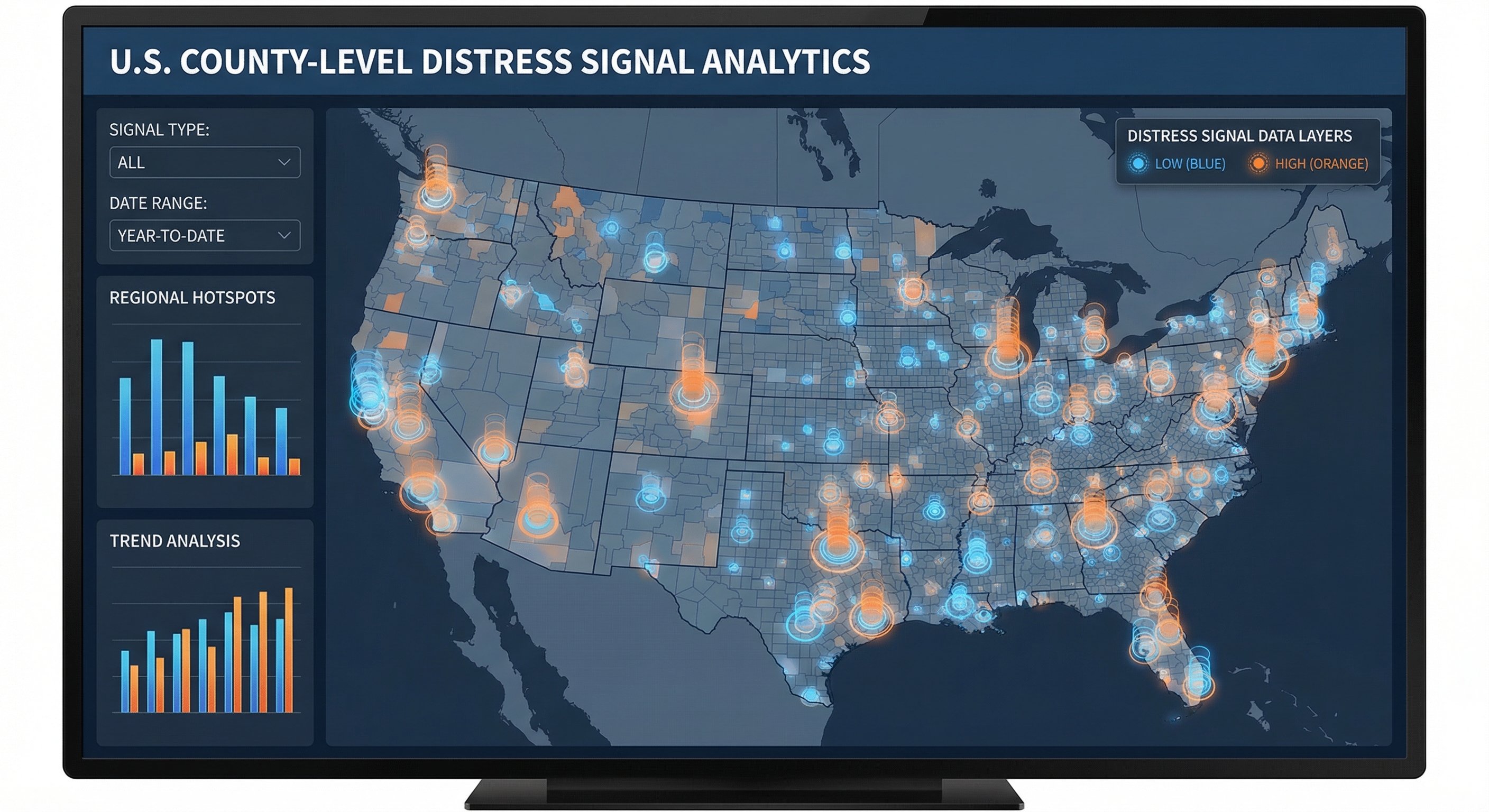
DistressIQ tracks 31 distress signal types — including bankruptcy filings — cross-referenced with assessor-verified property data across 3,200+ counties nationwide. When a bankruptcy filing appears alongside stacked signals on the same property, it rises automatically to the top of your lead queue. Updated multiple times daily from county sources.
Ready to see bankruptcy leads stacked against tax delinquency, lis pendens, and vacancy across your target counties? Founding members lock in 30% off for life — fewer than 50 spots remain. Starter $89, Pro $174, Elite $349/mo. Start your free trial at DistressIQ.
Building a Bankruptcy Lead Pipeline: Step by Step
Step 1: Define your district. Identify which federal bankruptcy court districts cover your target market. Most states have multiple districts (Northern/Southern, Eastern/Western). Find the district portal at uscourts.gov/court-locator.
Step 2: Set up PACER monitoring. Search for Chapter 7 and Chapter 13 filings with real estate listed on Schedule A/B. Filter by your target geographic area and filing date range. Set up case monitoring for active cases.
Step 3: Cross-reference with county assessor records. Pull the property address from the filing and verify ownership, estimate equity using assessed value vs. mortgage balance, and check tax payment status. Assessor-verified data is more reliable than MLS estimates for this purpose.
Step 4: Identify chapter type and trustee. For Chapter 7, locate the appointed trustee's contact information in the case docket — they're the decision-maker. For Chapter 13, you're targeting the debtor directly, through appropriate legal channels.
Step 5: Time your outreach. 60–90 days post-filing for Chapter 13 filers showing signs of strain. Immediate trustee contact for Chapter 7 cases listing real property with equity.
Step 6: Automate the top of funnel. Manual PACER research yields 5–15 leads per week at best. A platform monitoring bankruptcy filings at scale lets you work a county-level pipeline of 50–200+ qualified leads per month.
Key Takeaways
- Bankruptcy filings are public federal records — accessible through PACER and individual district court portals at low cost
- Chapter 7 leads to trustee-controlled sales where cash offers with speed win over higher financed bids
- Chapter 13 creates individual motivated sellers — especially when reorganization plans fail 12–24 months in
- The automatic stay limits direct outreach — always work with a bankruptcy-experienced attorney in your market
- Stacking bankruptcy with tax delinquency, vacancy, and lis pendens transforms raw filings into a prioritized lead list
- The 60–180 day post-filing window is your best entry point for Chapter 13 sellers before the decision gets made for them
Frequently Asked Questions
Q: Can I buy a property directly from someone who is in active bankruptcy?
Yes — but the transaction requires court approval. In Chapter 7, you negotiate with the court-appointed trustee who controls the property. In Chapter 13, the debtor can sell with court approval as part of their reorganization plan. Always work with a real estate attorney who has bankruptcy transaction experience before pursuing these deals.
Q: Are bankruptcy leads better than pre-foreclosure leads?
Neither is universally better — they serve different investor profiles and strategies. Bankruptcy leads often carry more equity and have longer pre-sale windows than late-stage foreclosures. However, the legal complexity is meaningfully higher. Investors with attorney relationships and cash buying capacity tend to perform well with bankruptcy leads; investors earlier in their career may find pre-foreclosure leads faster to convert.
Q: How do I find specifically Chapter 7 bankruptcy properties with real estate?
Search PACER for Chapter 7 cases in your target district. Look for filings where Schedule A/B (the asset disclosure) lists real property. Filter by filing date and geographic area. Cross-reference the property address against county assessor records to estimate equity and check for stacked distress signals.
Q: What is the homestead exemption and how does it affect my strategy?
The homestead exemption is the amount of home equity a bankruptcy filer can protect from liquidation. Exemption amounts vary dramatically by state — from $0 in some states to unlimited in Texas and Florida. If the filer's equity falls below the exemption threshold, the trustee cannot force a sale. Knowing your state's exemption amount helps you quickly evaluate which Chapter 7 filings are likely to result in a property sale versus those that will be discharged without any real estate transaction.
Q: How long does a Chapter 7 real estate sale typically take?
According to U.S. Courts data, the median asset Chapter 7 case runs 4–6 months from filing to closure. The real estate component specifically involves trustee evaluation, BPO or appraisal, sale method approval by the court, marketing period, and closing. Motivated trustees with a ready all-cash buyer can compress this to 2–3 months in some cases.
Q: Is it legal to send direct mail to bankruptcy filers?
With appropriate legal guidance, general real estate marketing to people who have filed bankruptcy is permissible — the automatic stay targets creditor collection actions, not all communication. However, if the filer has legal representation (which most do), any contact that references the bankruptcy or related debts should be routed through their attorney. Consult a real estate attorney in your state before implementing any direct outreach to bankruptcy filers.
Q: How does DistressIQ surface bankruptcy leads differently than PACER?
DistressIQ monitors bankruptcy filings at the county level and cross-references them against assessor-verified ownership records, property tax payment history, lis pendens filings, and 28 additional distress signal types. Instead of downloading PACER documents and manually looking up each property, you receive a prioritized lead list showing which bankruptcy properties also carry stacked signals — the combinations most likely to produce a motivated seller and a closeable deal. Coverage spans 3,200+ counties, updated multiple times daily.
External Resources
- PACER — Public Access to Court Electronic Records — official federal court filing portal
- U.S. Courts: Bankruptcy Basics — official overview of Chapter 7, 11, 12, and 13 processes
- U.S. Courts Bankruptcy Statistics — national filing volume and case outcome data
Looking for bankruptcy leads stacked with tax delinquency, lis pendens, and vacancy signals across your target counties? Learn how DistressIQ tracks 31 signal types across 11M+ active distress records — updated daily from county sources.
The data behind this article
DistressIQ Monitors These Signals in Real Time
Pre-Foreclosures
NOD + NTS filings
Tax Delinquency
County treasurer records
Code Violations
Municipal inspection filings
Probate Filings
Superior Court records
Every lead is scored 0–100 for seller motivation based on signal type, duration, severity, and stacking. Nationwide coverage — every US county, updated daily.
Ready to find deals in your market?
See Live Distress Signals in Your County
Stop calling dead leads. Every lead in DistressIQ is scored 0–100 for seller motivation, with verified contact info included. Browse the free tier to see what's active in your market right now.
Browse Free Leads — No Credit Card